
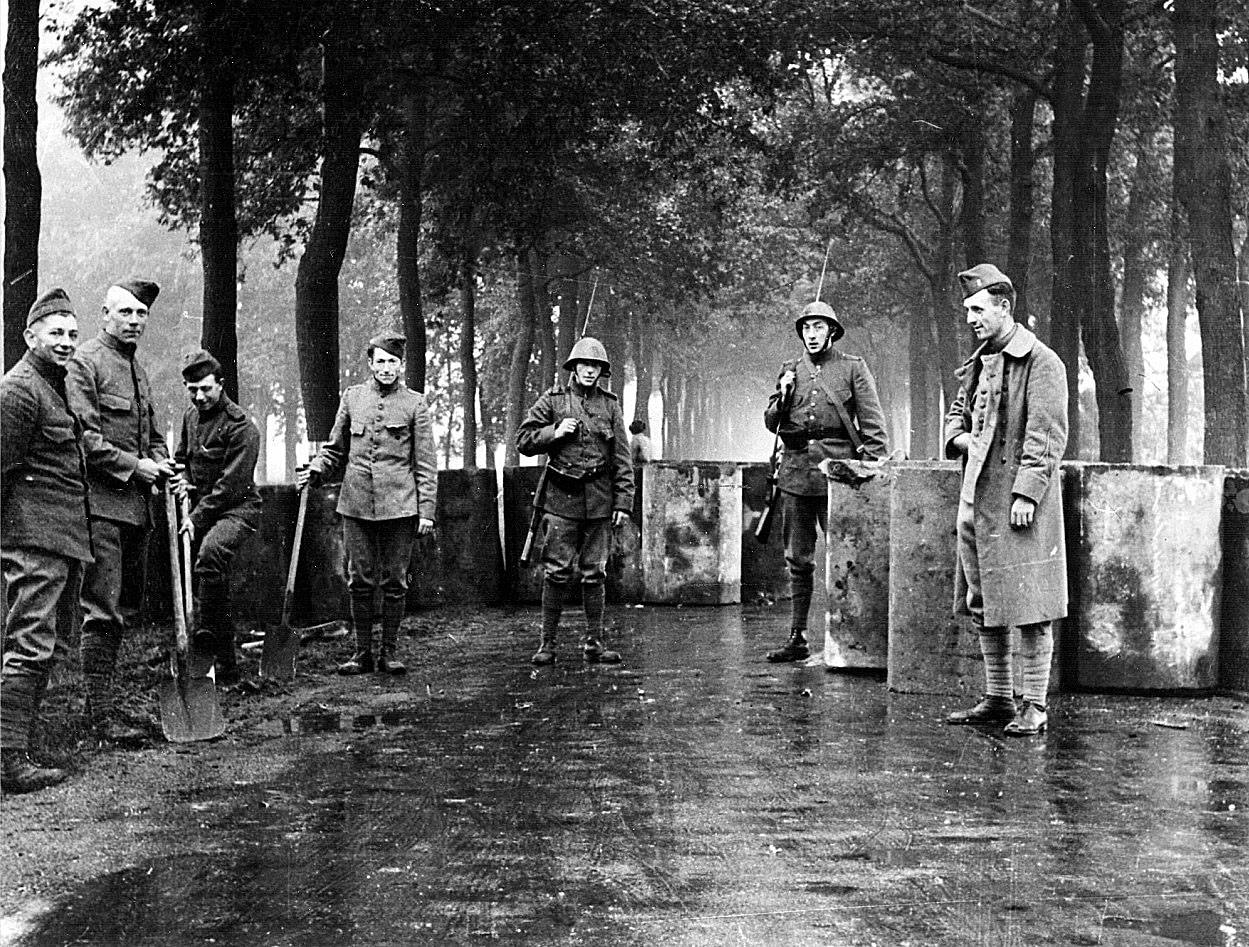
On 10 May 1940 German army units entered Aalten, beginning an occupation that would last almost five years. The war had already made itself felt in Aalten: in April 1939 a 36-man border-guard detachment was stationed in the municipality, around 1 September hundreds of men from Aalten left for their garrison stations, and as late as 9 May 1940 the municipal architect was ordered to erect roadblocks on several roads.
In the early morning the heavy drone of passing aircraft could be heard. The Dutch soldiers positioned around farms offered no resistance. A few days later Dutch prisoners of war were seen being transported to Germany in open lorries. Four men from Aalten were killed at the Grebbeberg. A group of five hundred returning prisoners of war received an enthusiastic welcome at the festival hall before continuing their journey by train.
Two hundred and fifty children from Rotterdam stayed here during the summer months, and again in 1941. Many people, including young people, went to work in Germany because the pay was good. Numerous goods were already rationed. Food production came under control, for which Aalten was divided into three districts, each under a local bureau holder.
People in hiding
In the summer of 1942 the first people in hiding arrived in Aalten to evade compulsory labour in Germany. Shortly before that, the first group of employees from Dutch Button Works in Bredevoort had posed neatly dressed for a photograph in connection with their deployment to Germany. A group from the Driessen textile factory was also sent.
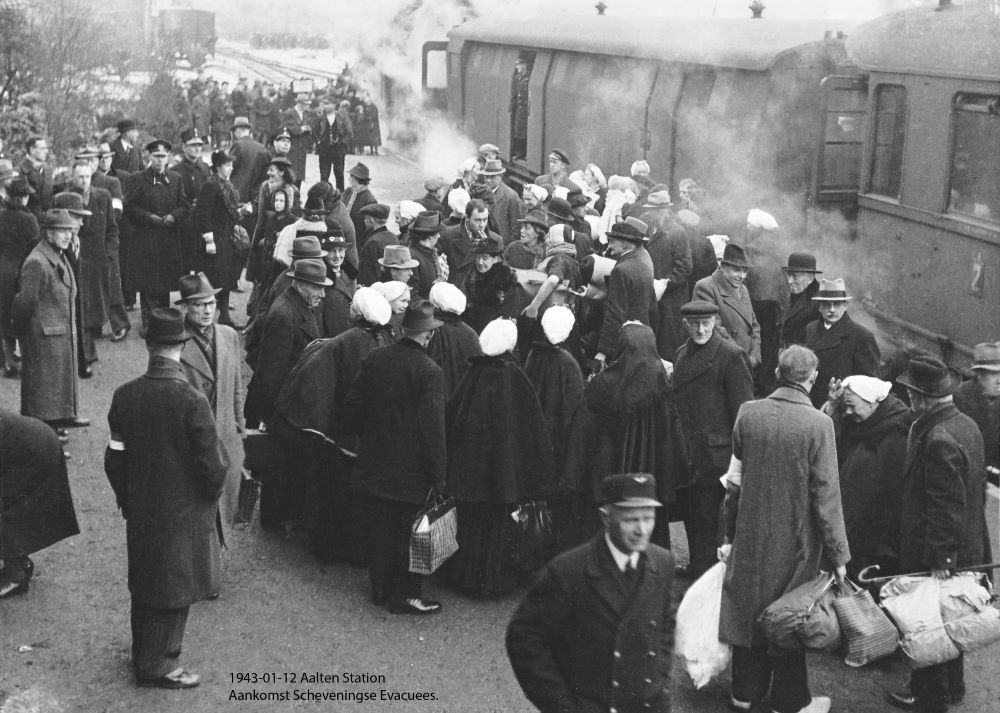
Around five hundred evacuees from Scheveningen found accommodation here in January 1943. Almost all belonged to the Reformed Church. In Winterswijk there were eight hundred evacuees, all Dutch Reformed. Once every three weeks a minister from Scheveningen stayed here and also conducted a church service.
Hostages
The Germans increasingly stepped up pressure to make men carry out digging work. The most intimidating measure came on 18 October, when twelve hostages were detained. The following day 550 men left for Zevenaar. Ten days later another seven men were taken hostage and 250 people reported for duty. Protestant ministers and Roman Catholic clergy had issued an appeal to show 'mercy and neighbourly love towards those who are in immediate danger of death'.
In a circular, a representative group of local residents pressed for a system of rotation. Such a system was introduced. A minister would remain in Zevenaar continuously to provide support and pastoral care. At the same time, a clandestine stencil circulated calling on people to consider 'whether it is responsible to cooperate in the enemy's defensive works, as a result of which far more than eleven lives (…) will later be lost.'
The final months
Some episodes from the final three dark months: individual people continued to come in search of food, while a committee called 'Help for the West' managed to collect several cartloads, mainly of grain. Dr Der Weduwen succeeded in bringing sick people from the Rees camp to the emergency hospital at Avondvrede on Hogestraat. Serious cases were taken to a hospital set up in the boys' boarding school at Harreveld. Der Weduwen was killed when his car was strafed from the air.
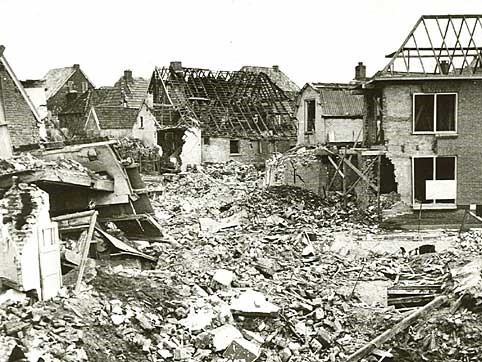
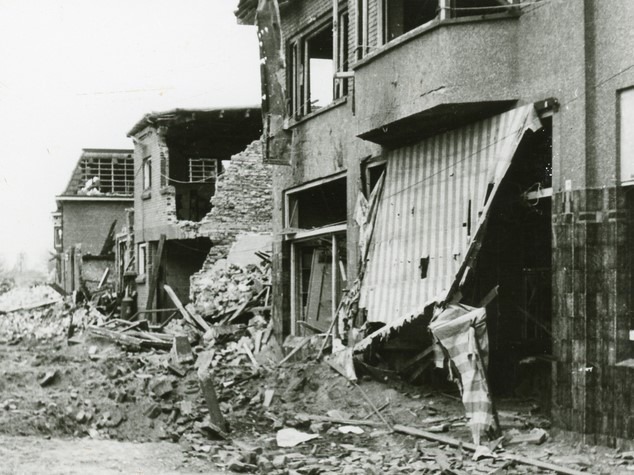
People were killed in air raids on the Roman Catholic church and presbytery, on farms between Grevinkweg and Elshoekweg, at the corner of Prinsenstraat/Bredevoortsestraatweg, and most severely on 24 March in a bombing raid aimed at the Gebr. Driessen textile factory and the Aalten Tricotagefabriek, in which eighteen people were killed. Material damage was extensive on each occasion.
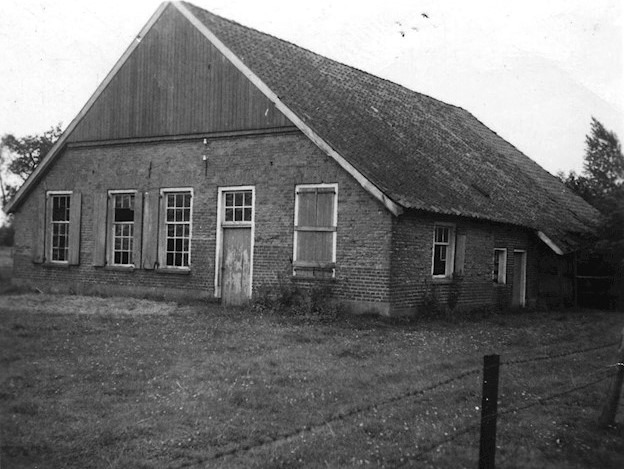
A drama unfolded around a resistance group hiding in the abandoned farm 'De Bark'. Nearby, German soldiers were billeted at 'Somsenhuus' while seven Allied airmen were in hiding there. The total number of military personnel in Aalten at this time has been estimated at about four thousand.
Liberation
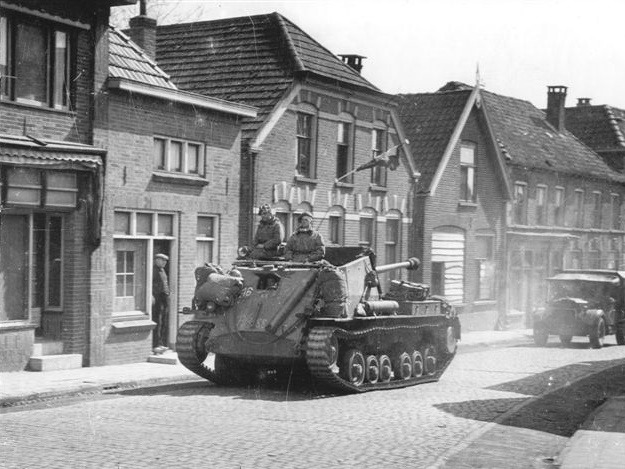
In the final days of March it was clear that the end was near. How fierce would the fighting be? Many people left the village, while others sought shelter in their cellars. German soldiers were still roaming the area. Then, early on Good Friday, 30 March, British tanks rolled into Aalten — remarkably, from the direction of Germany. German troops still put up fierce resistance in places. Ten British soldiers were killed that day, while seven people in Barlo died when a shell struck an air-raid shelter. Sorrow and joy mingled: Aalten had been liberated.

Corrections and additions
Have a correction or addition? Leave a comment below. We incorporate relevant information into the profile and then remove comments that have been processed. Your email address will not be published.
Leave a comment