Herenstraat 4, Aalten (Oct 1944 – Feb 1945)
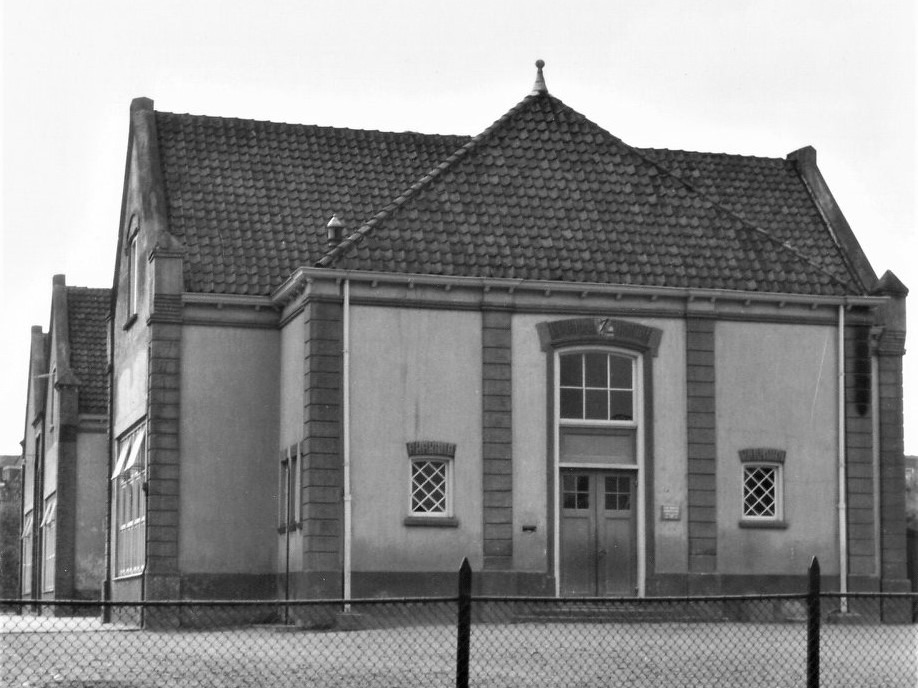
During the occupation, a ‘Fallschirm-Armee Waffenschule’ was based for a short period, from October 1944 to February 1945, in the Public Primary School on Herenstraat in Aalten.
After the Normandy landings, Hitler wanted to launch a large-scale counterattack on the Western Front as soon as possible. He hoped this would bring the Allies to a standstill and give Germany time to complete its ‘secret project’: the development of weapons of mass destruction.
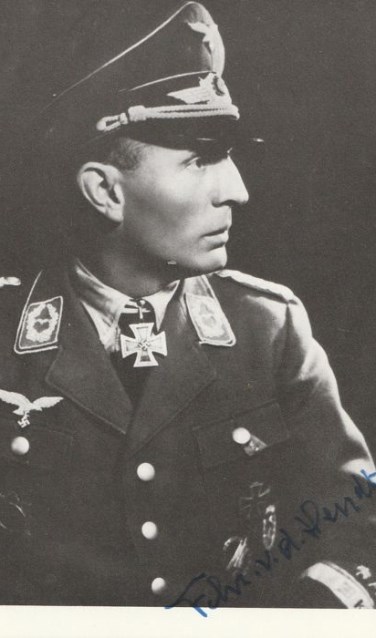
The Germans made preparations in a very tactical manner and the necessary combat units were assembled. This is also the case in Aalten. Here, Freiherr Von der Heydte had to put together a Kampfgruppe in preparation for a special deployment in this new offensive. In these months, Aalten was overrun by German troops. They requisitioned almost all school buildings for the quartering of these troops.
School for paratroopers
The so-called ‘Fallschirm-Armee Waffenschule’ (October 1944 – February 1945) was established in the public school on the Herenstraat. The majority of the Germans were also billeted here. Non-commissioned officers and officers were billeted with civilians in Aalten.
The school was intended to train aspiring officers of the German paratroopers in practice and prepare them for work at the front. In addition, experienced instructors gave courses on how to disable the enemy’s armoured vehicles with the resources and weapons that the Germans had at the time. Finally, a special Kampfgruppe (combat unit) was formed for a special mission: a parachute deployment behind Allied lines during the Ardennes Offensive. At its peak, about 1200 German paratroopers were gathered in Aalten. They formed the so-called ‘Kampfgruppe Von der Heydte’.
German paratroopers were billeted everywhere in Aalten and surrounding villages. Not only in large school buildings but also privately in people’s homes. The soldiers had to go to the district office that was located in the town hall. Here they received a certificate of quartering, as they called it at the time, and continued their way to the address where they were allowed to stay. In addition, almost all cafés in Aalten were used by the German troops and converted into so-called kasinos. Not to watch films here, but to entertain the soldiers in their spare time with fun and trinkets.
Strict regime
There was a strict regime among the German troops. Valuable time was efficiently used to turn this mixed group into a real Kampfgruppe as soon as possible. Every morning the troops were expected to complete a march of about 10 km on an empty stomach. Furthermore, shooting exercises were held on some training grounds around Aalten and the battle groups were trained in fighting in wooded areas.
An eyewitness saw German paratroopers in sports kit on their way to the ‘t Walfort swimming pool. There, the paratroopers jumped from a raised platform into loose sand. On landing, they performed a so-called parachute roll to break their fall. They had to master this manoeuvre before making a parachute jump, in order to reduce the risk of injury.
After Von der Heydte had left the so-called Kampfgruppe, Hauptmann Von Hütz took over command of the Waffenschule in Aalten. During the remaining period, this new battle group deployed a number of operations. These were described as very harsh by both the Allies and the Germans themselves.
Images