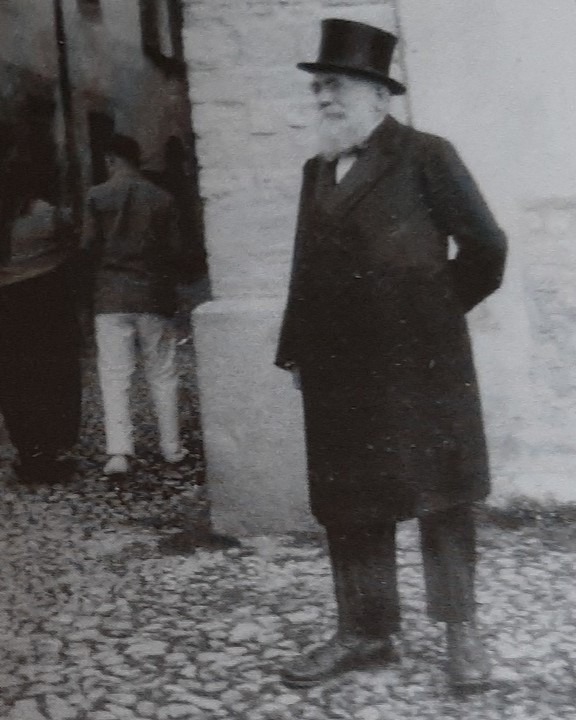
Gerrit Hendrik Heinen (Aalten, 01-08-1851 – Aalten, 26-09-1930) werd geboren aan de Varsseveldsestraat in Aalten. Zijn ouders waren Jan Willem Heinen en Antonetta Piepers.
At the age of nineteen, Gerrit Hendrik left for Warnsveld, returning to Aalten a year later in 1871. In 1877, he left once again—this time for Rotterdam, to learn the trade of house painting and decorating. Two years later, he ended up in Amsterdam. There, he started a painting business and, within a few years, employed more than a hundred journeymen.
Heinen received commissions for wall and ceiling murals, including for the Doelen Hotel and Central Station in Amsterdam, and the railway stations in Enschede and Antwerp.
Schiller
Heinen “made it”, so to speak, and invested in real estate. Hotel-Café Schiller on Rembrandtplein was the go-to meeting place for the property trade, and Heinen was consequently a frequent face there.
Daar werkte destijds ook Gerrit Jan Prins uit Aalten, de latere eigenaar van het café aan de Prinsenstraat. Door bemiddeling van Heinen werd op 1 april 1901 de officiële opening gevierd van ‘Sociëteit Schiller Prins’ in aanwezigheid van de heer Schiller uit Amsterdam. In 1902 schonk Heinen vier wandschilderingen, samen de vier jaargetijden vormend, voor de nieuw aangebouwde serre van Schiller.
Heinen bleef ook Aalten vaak bezoeken. Hij was een levensgenieter, stedeling en natuurlijk kunstenaar in het decoratieve. Hij droomde ervan om van Aalten een kunstplaats te maken en stelde enkele werken beschikbaar aan de Oudheidkamer. De drommen mensen bleven echter uit.
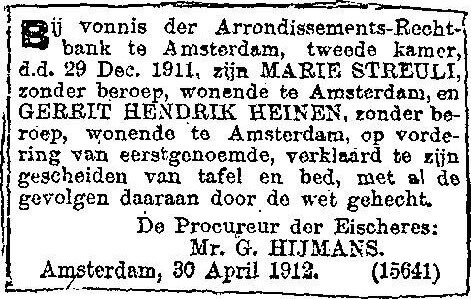
On one of his travels abroad, Heinen met the Swiss Marie Streuli. He married her in 1880, and together they had nine children. They lived on Keizersgracht. Gerrit Hendrik Heinen was the father of, among others, Marie Heinen, who became the director of the Nationaal Bureau voor Vrouwenarbeid (National Bureau for Women’s Labour). Gerrit Heinen and Marie Streuli divorced in 1911.
Photography
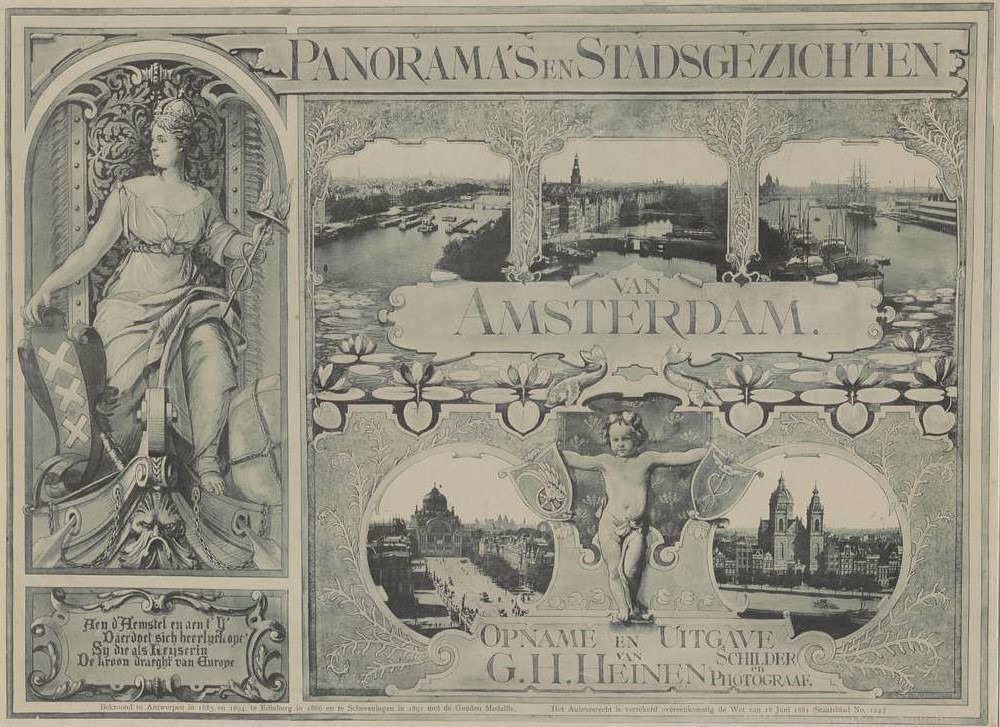
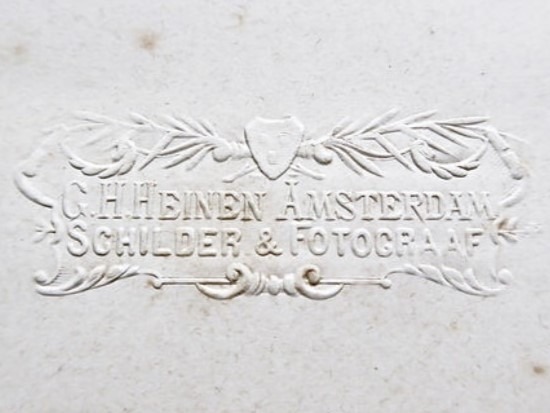
In 1894, Heinen took a series of photographs of Amsterdam, which he published independently under the title ‘Panoramas and Cityscapes of Amsterdam’, featuring 26 prints. For his photography, he chose high vantage points, such as the Rijksmuseum, Central Station, the Paleis voor Volksvlijt (Palace of Popular Industry), and the Doelen Hotel, as well as the Nieuweramstel water tower and the attics of ordinary residential houses. Murals painted by Heinen can still be seen inside Amsterdam Central Station today.
Heinen earned so much money as an entrepreneur that he was able to retire in 1913. He did, however, continue to paint bas-reliefs. He spent the final years of his life in Italy, where he met Pietro Armati, an Italian painter whom he brought to Aalten and helped secure commissions.
The painter died in Aalten in 1930. He was buried at Berkenhove Cemetery.