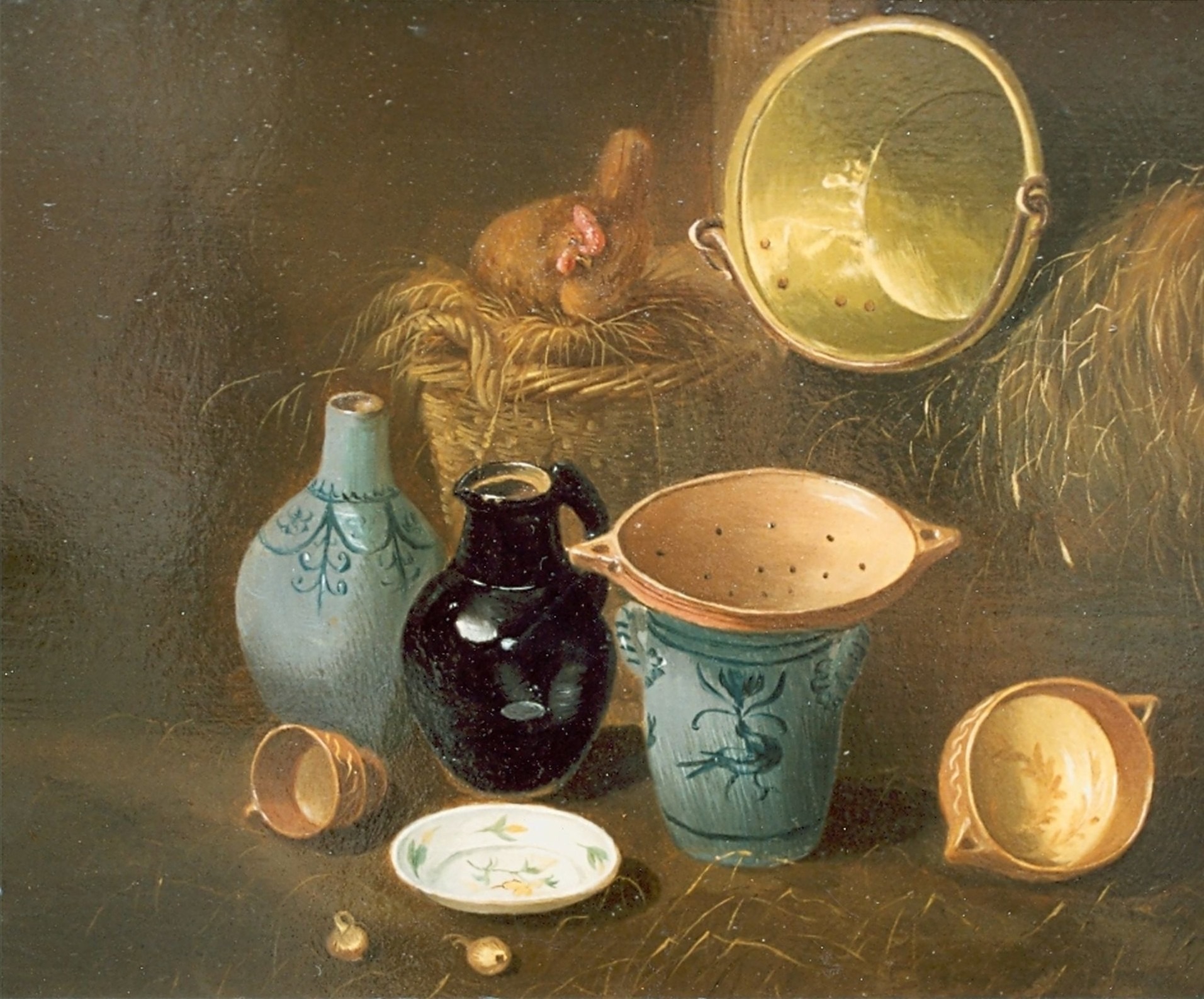
1857–1913
Profile
- Forenames
- Wilhelm Albertus
- Surname
- Lammers
- Born
- Dale, 3 April 1857
- Died
- Ginneken, 4 February 1913
- Occupation / role
- Painter
- 3 April 1857
Born
Dale
- 4 February 1913
Died
Ginneken
Family
Parents
Albertus Lammers
1824
Only family relationships reviewed by Old Aalten are shown.
- Wilhelm Albertus Lammers1857–1913
- Albertus Lammers1824
Sources
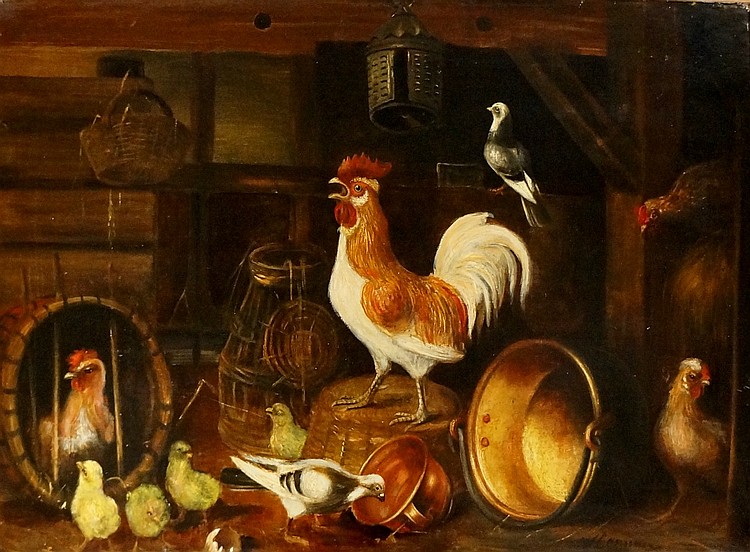
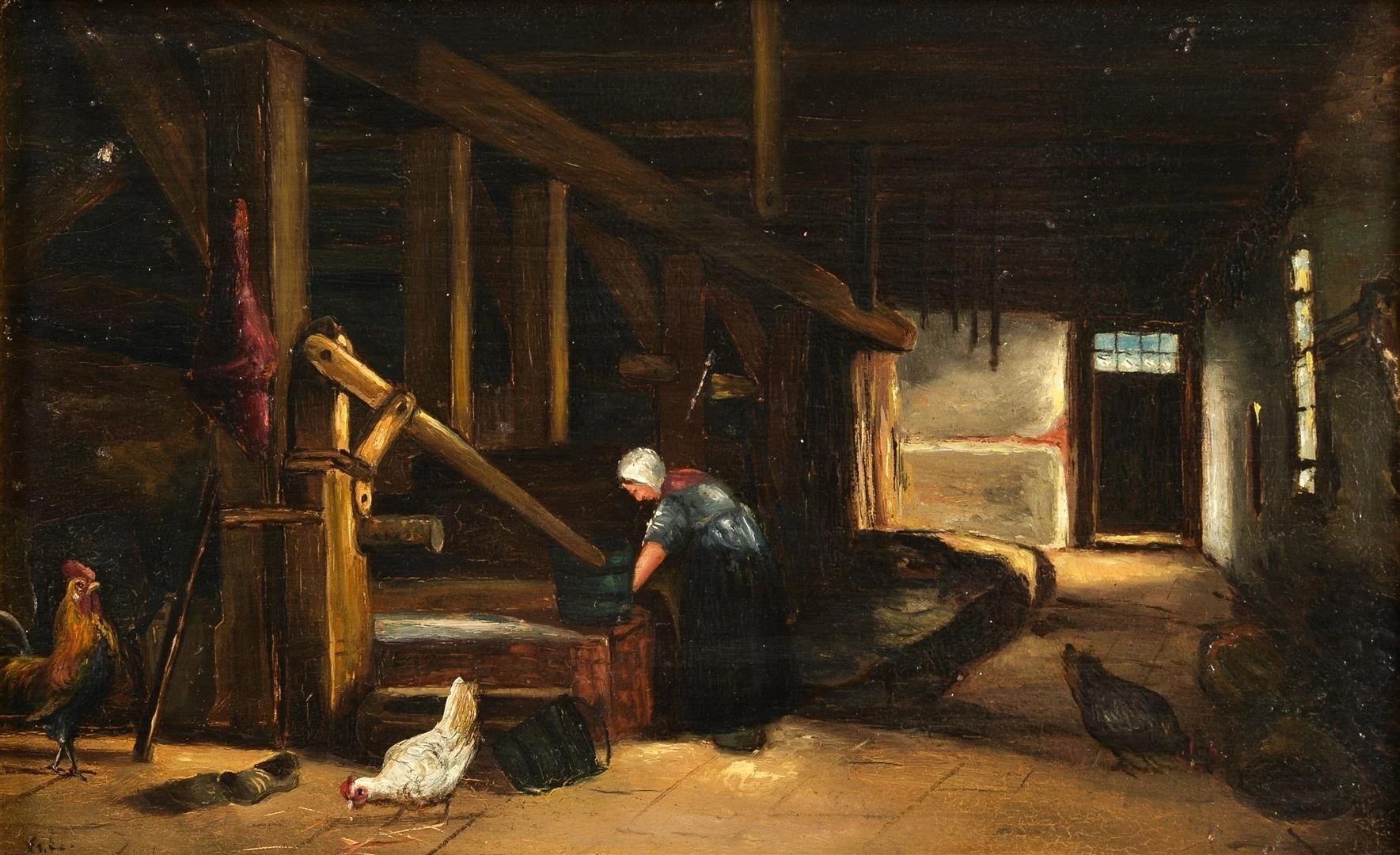
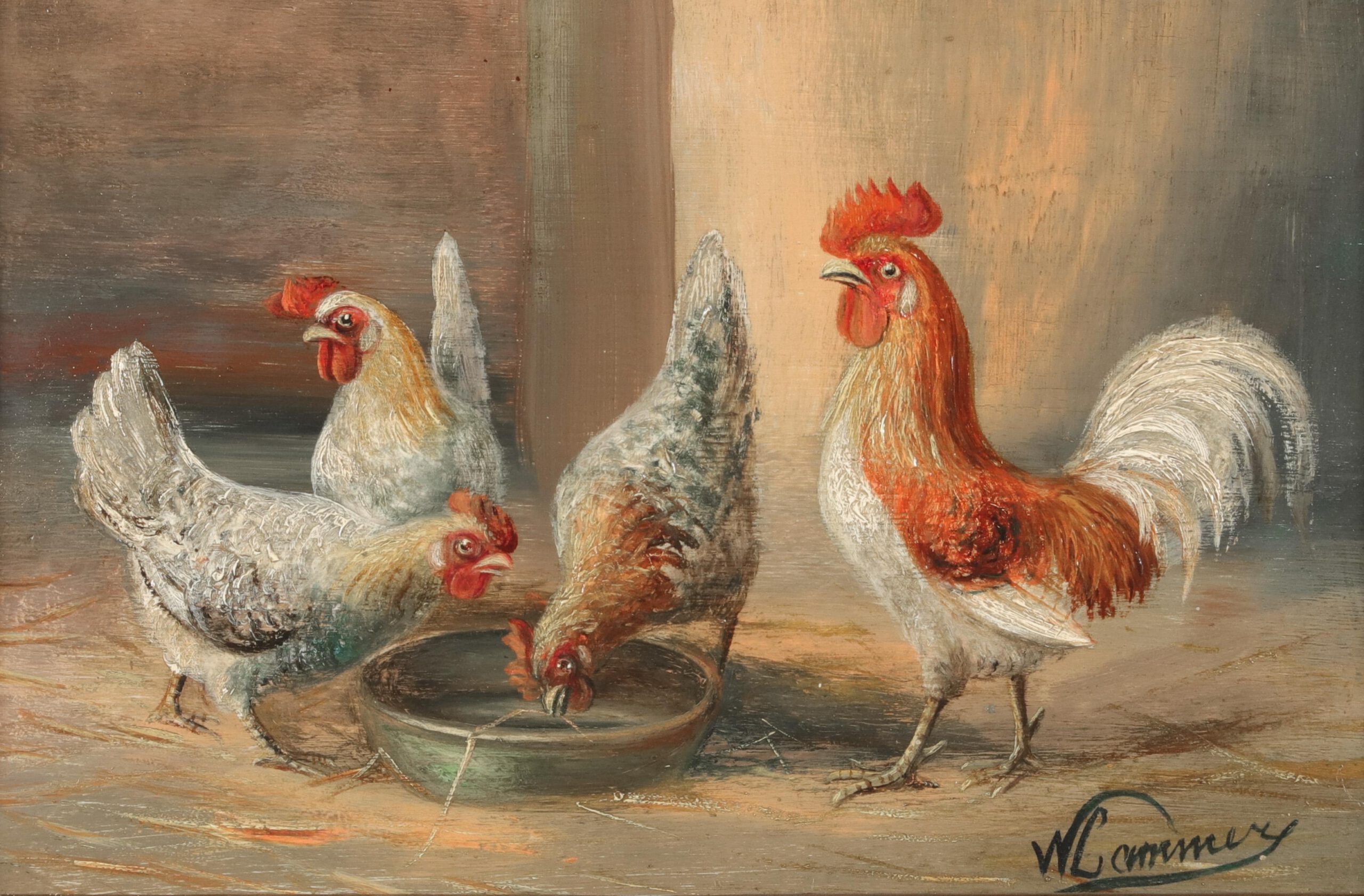
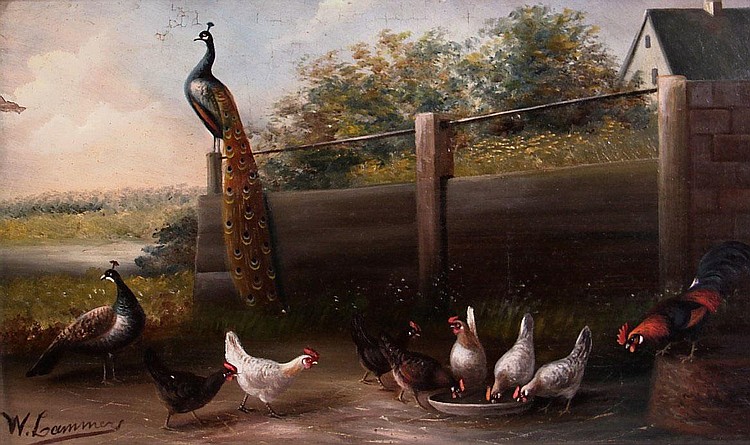
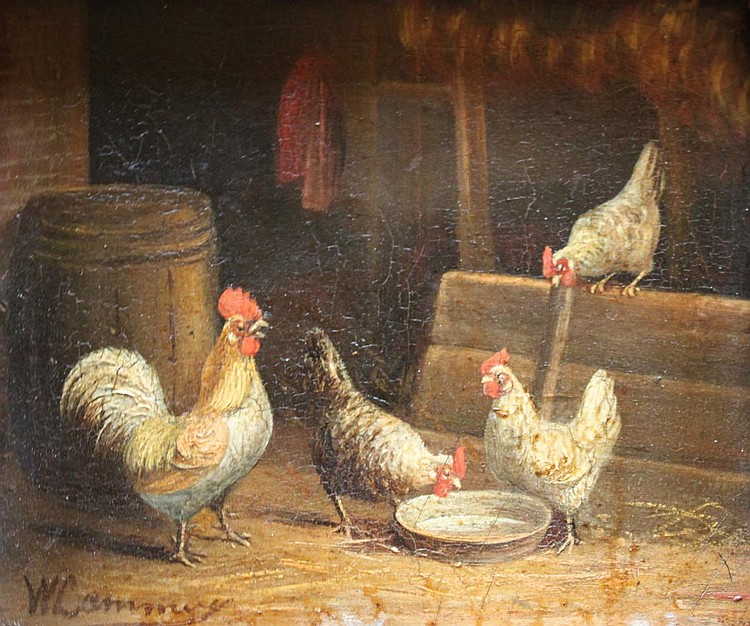
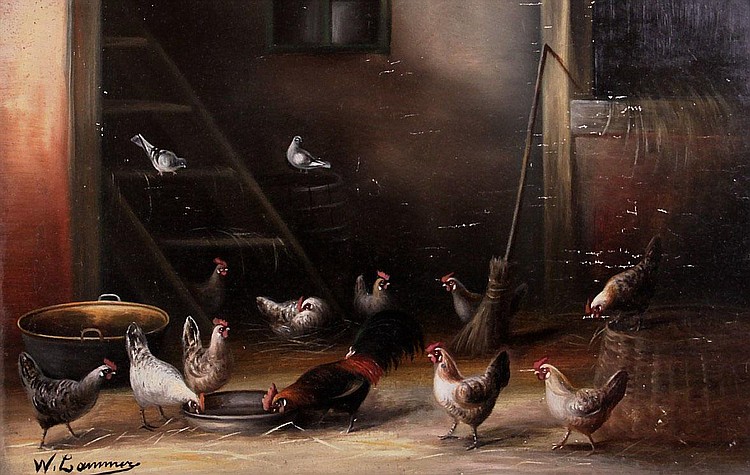
Wilhelm Albertus (Willem) Lammers (Aalten, 1857 – Ginneken, 1913) was a Dutch painter with a remarkable specialisation: poultry scenes. Until the end of the 19th century, hardly any attention was paid to the living conditions of poultry. Chickens typically slept in a farm barn or in trees. The painter managed to capture this vividly on canvas.
Lammers was born on 3 April 1857 at Schulenkamp farm in the rural district of Dale near Aalten, the son of Albertus Lammers and Theodora Huls. The family moved several times within Aalten, first to Kerkstraat, then to Dijkstraat and Hoekstraat. Willem Lammers initially worked as a shoemaker. In 1880 he moved to Gaanderen, and a few years later he was living in Amsterdam.
In 1887, the Court-Martial in ‘s-Hertogenbosch sentenced him to four months of military detention for desertion. Upon his registration, his occupation was recorded as painter, his religion as Roman Catholic, his height as 1.66 m, with blonde hair, blue eyes, and a curly beard.
On 24 July 1890, Lammers married Wilhelmina van den Akker in Breda. The couple lived briefly in Aalten (Dijkstraat) and moved to Breda in April 1891. Eight children were born there: seven daughters—one of whom was stillborn—and one son. Lammers passed away on 4 February 1913 in Ginneken (municipality of Breda).
Arts
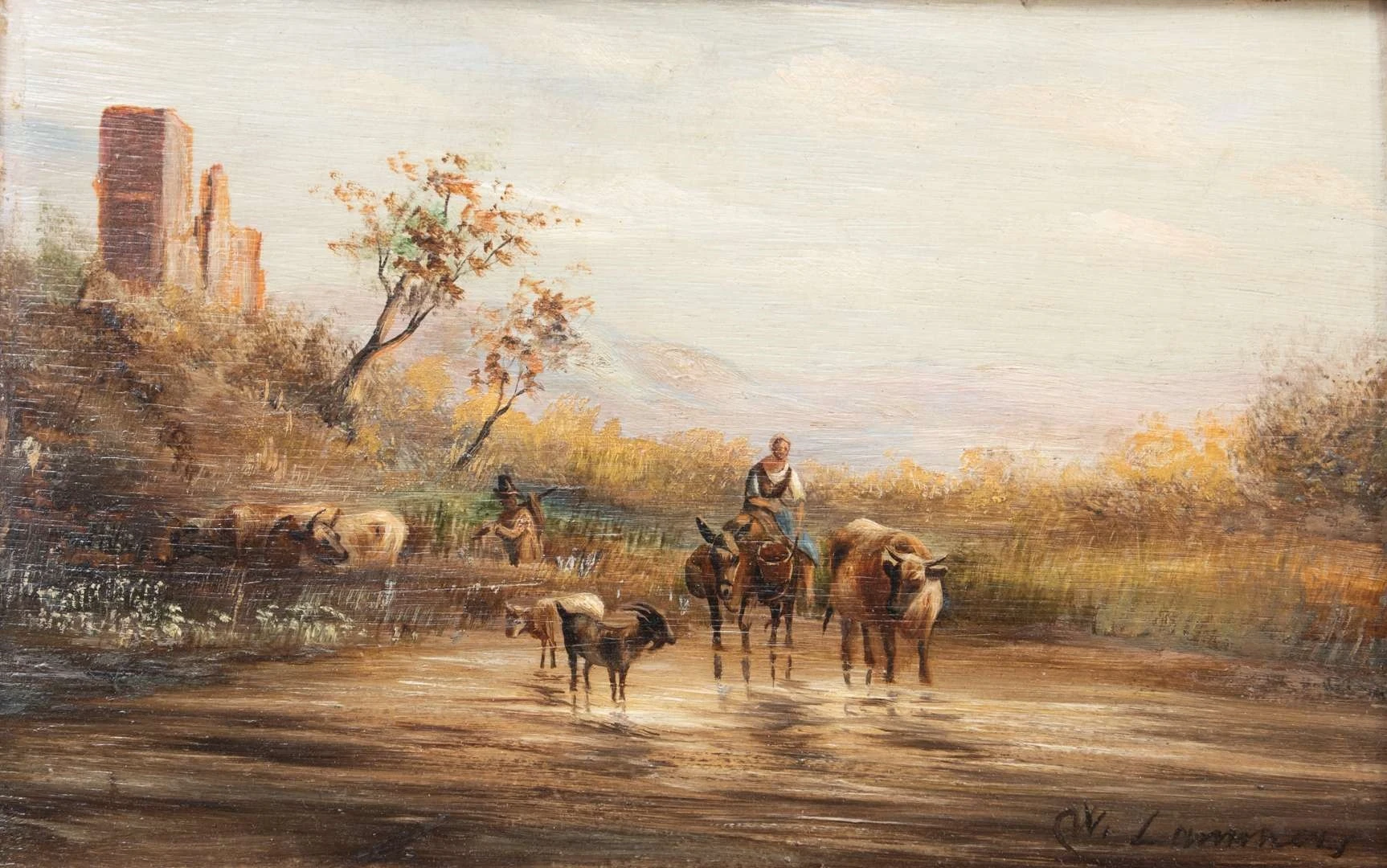
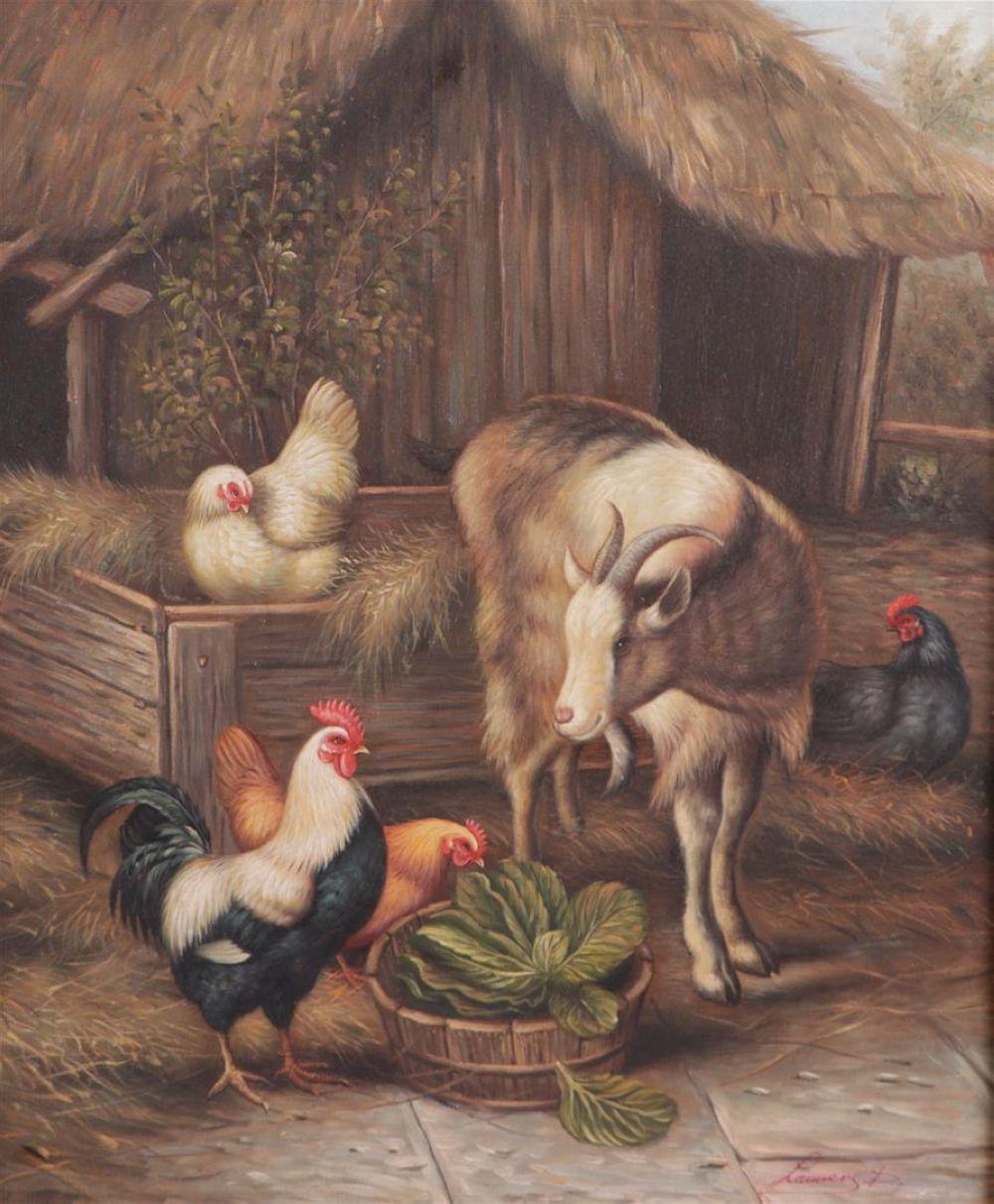
As an artist, Lammers was self-taught. He worked mainly in oil on canvas or panel, mostly in small to medium formats. His scenes depict chickens, chicks, and cockerels in their daily environment: around the feeding area, by the haystack, or inside a barn. He signed his work as “W.A. Lammers”, “W. Lammers”, or with the monogram “W.L.”.
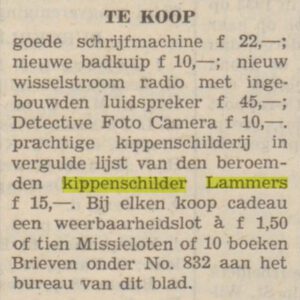
Werk
A selection of the work of Wilhelm Albertus Lammers: