Overview
Two so-called TB reclining pavilions dating from the early twentieth century stand in the Vestingpark in Bredevoort. They belonged to the former St Bernardus Roman Catholic Sanatorium, where tuberculosis patients were treated from 1907 to 1933.
Tuberculosis, commonly known at the time as 'consumption', was one of the leading causes of death in the Netherlands in the nineteenth and early twentieth centuries. The disease was infectious, often fatal and responsible for about a quarter of all deaths. As no medicines were yet available, treatment consisted mainly of rest, healthy food, fresh air and sunlight.
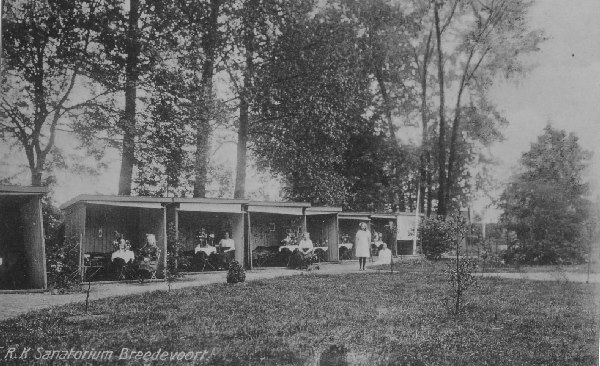
Sanatoria were established throughout the Netherlands as institutions for long-term care. An important part of the treatment consisted of so-called reclining pavilions: wooden structures with one open side facing the sun, where patients spent hours or even the entire day in bed — often wrapped in blankets against the cold.
St Bernardus Sanatorium
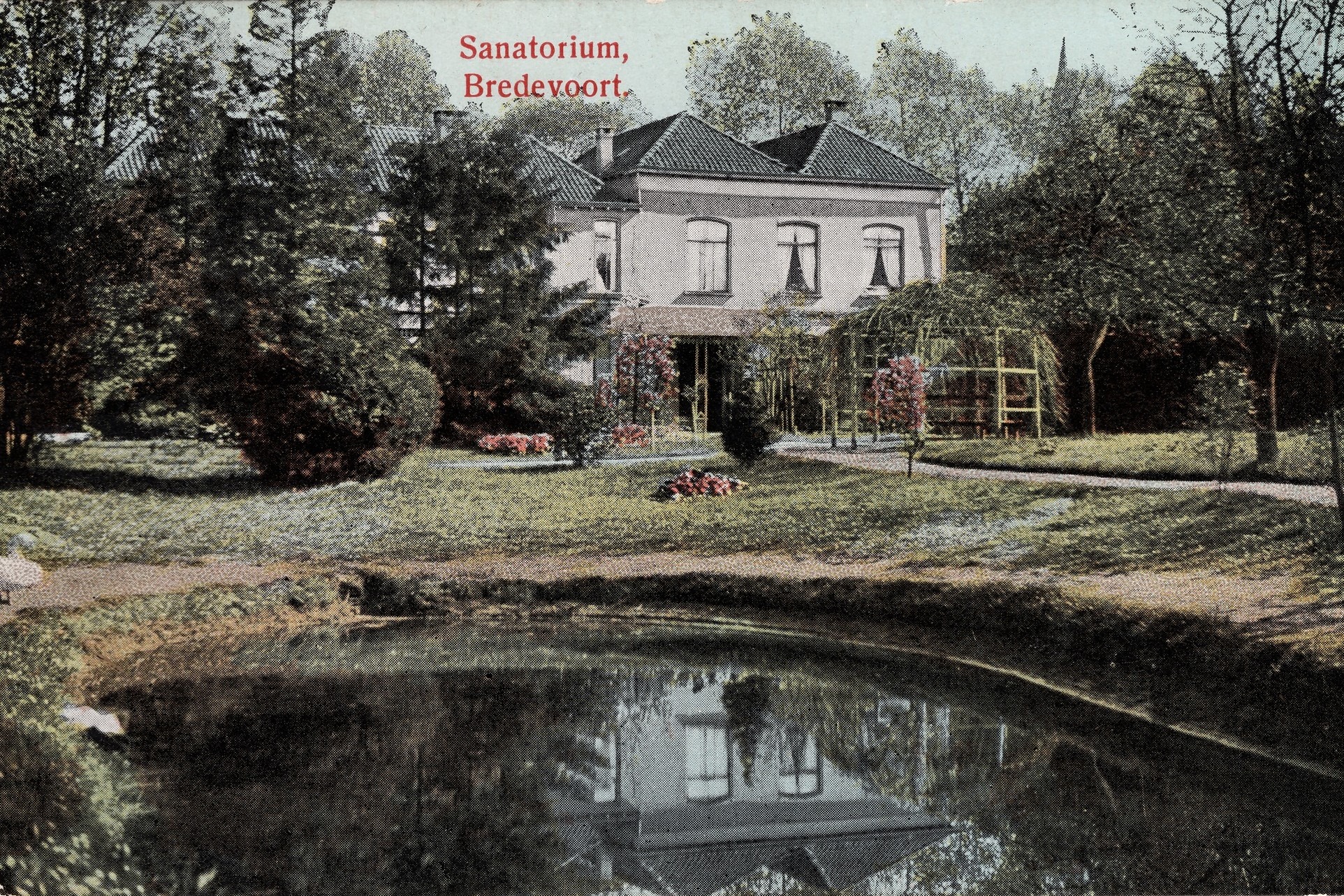
The St Bernardus Roman Catholic Sanatorium was founded in 1897 on the initiative of Father Bernardus Mulders. Using his own capital, he bought the former estate manager's house of the Roelvink family and had it converted into a convent and care institution. Nursing care was entrusted to the Franciscan Sisters of Thuine.
From 1907 onwards, patients from all over the country came to Bredevoort. At least ten wooden reclining pavilions were erected in the large garden behind the building, now the Vestingpark, each with its open side facing south. Patients lay in these pavilions during the day, even in winter, as a text on a postcard from 1909 shows. Each pavilion contained two couches, a table and a chair.
The sanatorium archives show that between 1907 and 1916 an average of about twenty patients were present each year. In some years more than 7,000 nursing days were recorded.
Two reclining pavilions survived
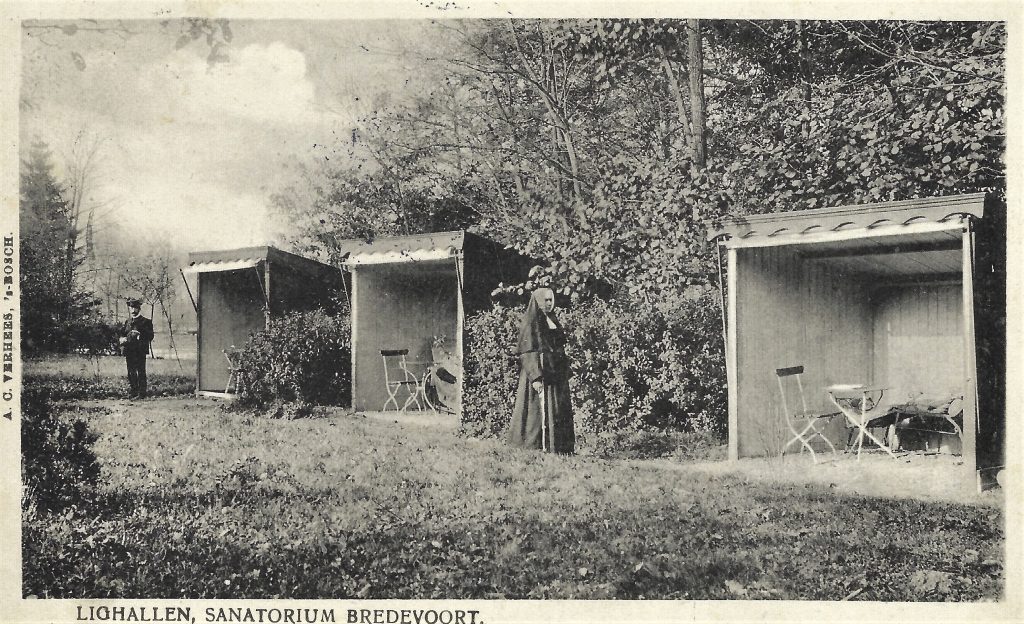
Only two of the original reclining pavilions have survived. Because of their historical significance as examples of a building type that has almost completely disappeared — both because of the vulnerability of the materials and because the sanatorium function vanished — they have been designated a national monument.
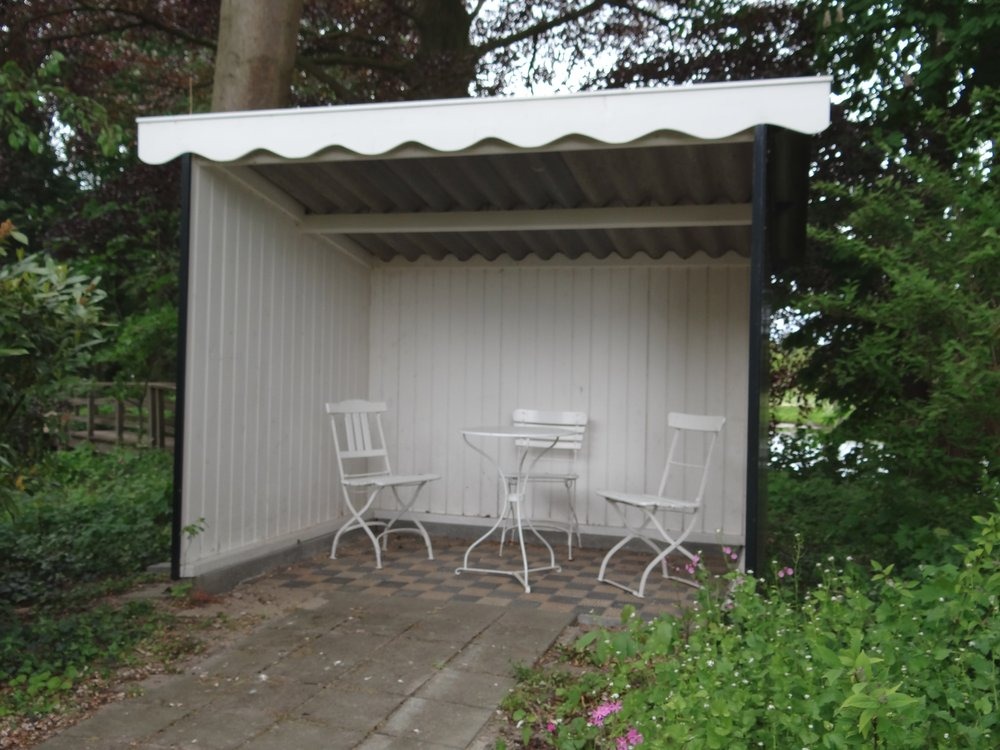
They are simple wooden structures with a mono-pitched roof, three closed sides and an open front. Both pavilions have a tiled floor made up of black and beige tiles in an irregular pattern. The tiles have a geometric motif. Decorative bargeboards have been fitted at the front: the eastern pavilion has an ornately carved board, while the other has a simpler wave motif.
Restoration & accessibility
In 2025 the pavilions were reconstructed. The old structures were in poor condition. The carpentry for the reconstruction was carried out by two students on the restoration carpentry programme at the Gelders Restoration Centre in Velp. Volunteers and local businesses were responsible for rebuilding and finishing the pavilions. The paintwork was carried out in a historically appropriate colour scheme.
The reclining pavilions can be viewed freely in the Vestingpark, directly behind the former St Bernardus Sanatorium on 't Zand in Bredevoort. The park is open to the public from sunrise to sunset.
Corrections and additions
Have a correction or addition? Leave a comment below. We incorporate relevant information into the profile and then remove comments that have been processed. Your email address will not be published.
Leave a comment