
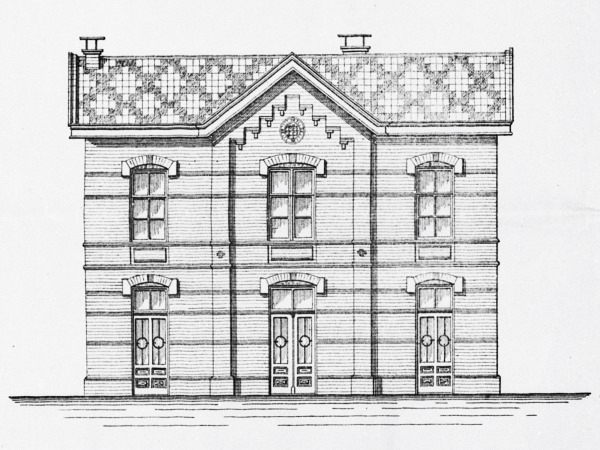
On 15 July 1885, Aalten gained its railway connection. With the opening of the Winterswijk–Zevenaar local railway, the town and surrounding rural districts were connected to a much larger transport network. Passengers could travel more quickly through the Achterhoek and farther afield, while freight transport gained new possibilities as well.
Plenty of plans
The arrival of the railway was not a sudden idea. As early as 1865, there was discussion of a railway from Zutphen via Aalten, among other places, to the Prussian border. Another proposal appeared in 1872, this time for a route from Gelsenkirchen via Bocholt and Aalten to Zutphen.
Neither plan was carried out. More about these earlier projects can be found in North-South Line.
The GOLS
On 18 June 1881, the Geldersch-Overijsselsche Lokaalspoorweg-Maatschappij was founded, usually known simply as the GOLS. The company aimed to connect various places in the Achterhoek and Twente by local railways.
For the Winterswijk–Zevenaar line, a route north of Aalten was initially planned. Because of the terrain around Bredevoort and Aalten, the alignment was changed and the railway was built on the southern side of Aalten.
Construction of Aalten station began in 1884. It was built to the larger GOLS station design, with a ticket office, waiting room, goods store and a residence for the stationmaster, among other facilities.
15 July 1885
On 15 July 1885, the Winterswijk–Zevenaar railway opened. From that moment, trains stopped at Aalten.
Eastwards, the line ran to Winterswijk; westwards it passed through places including Varsseveld, Terborg, Doetinchem, Wehl and Didam to Zevenaar. There the local railway connected with the existing national rail network.
Lintelo also received a halt on the same day. Bredevoort had to wait longer. Bredevoort station, actually situated in Haart, did not open until 1 May 1899.
Passengers and freight
The railway connection mattered not only for passengers. Aalten station was also equipped for freight traffic, giving the town a direct rail connection for incoming and outgoing goods.
For Aalten, the connection came at a time when the textile and horn industries had already been developing for decades. The railway did not create those industries, but it did improve the connections used by entrepreneurs, traders and other travellers.
The railway also became visible in the streetscape. Stationsstraat linked the old town with the new station. Railway staff and workers came to live and work around the tracks.
A lasting connection
The station changed over time. In 1919, the building was enlarged: the left wing was doubled in size, a low wing was added on the right, and the central section gained an extra floor.
The railway line opened in 1885 is still used by passenger trains today. The connection laid out on the edge of Aalten in the late nineteenth century therefore remains part of daily travel between Aalten, Winterswijk, Doetinchem, Arnhem and beyond.