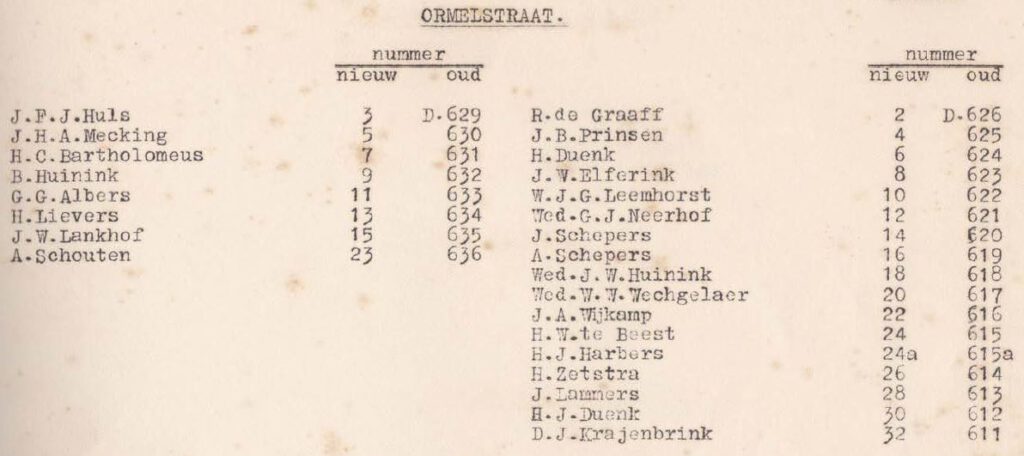
“Ormelstraat in Aalten is named after ‘fat Ormel’, because he had a row of houses built there. Ormel could supply the bricks cheaply, because he had his own brick kiln on the Haart. I don’t know where it stood, but our neighbour GatJan from ‘De Stoffer’ used to go and work there, walking to and from the Haart every day.
Ormel lived at De Kleuver on the Haart. He had a round brick chimney built onto the pigsty, just like a factory chimney—not as tall, but still around eight metres high. Besides being a farmer, Ormel was also polder master of the Slingebeek water board. When he came to inspect somewhere, he would sit on a little dogcart drawn by a white horse. He simply stayed seated in the cart, so he could look over the whole stream and hold the horse at the same time.
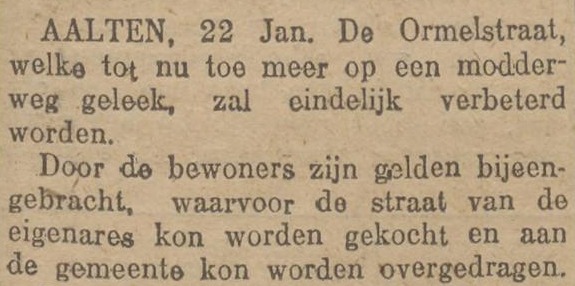
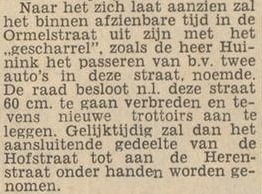
Ormelstraat remained unpaved for a long time. First a path of fieldstones was laid down the middle; later these were replaced by bricks. But there were two posts at the end, so a wagon or horse-drawn cart could not get through. At that time, workers from Bredevoort travelled to Driessen’s factory at Het Blik and cycled through Ormelstraat every morning and evening.
One morning, old Ebbers and his boys were cycling through the street again when suddenly a door of one of the houses opened and a woman threw the contents of a chamber pot straight across the road. Some of it landed on Ebbers’s bicycle handlebars. Hanging from those handlebars was a red handkerchief, and inside that handkerchief Ebbers had tied up his sandwiches for lunch. I’d almost say ‘enjoy your meal’, but Ebbers went and found himself something else to eat that afternoon.”
Grandfather Lensink, 1982, Brevoort — translated from the local dialect