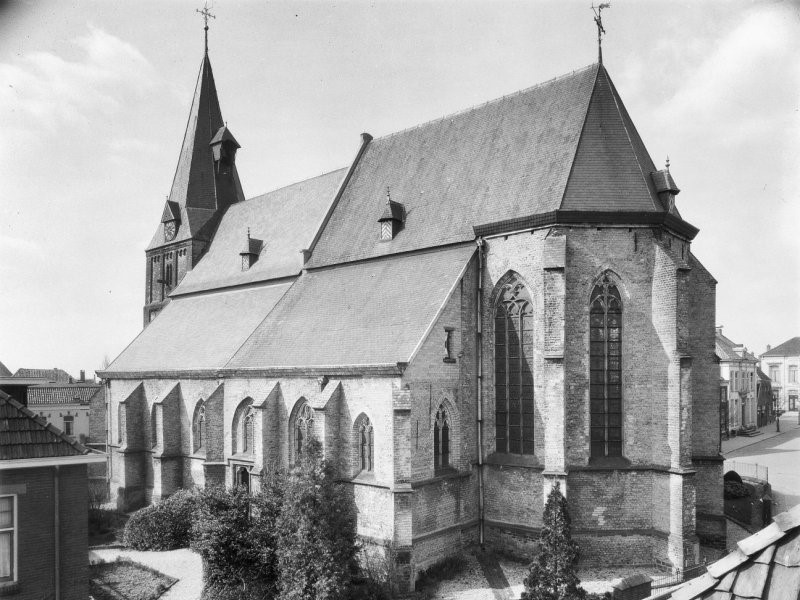
De Graafschapbode, 19 March 1887
From time to time the newspapers report fragments about the secession of Gangel and his church council, about suspension, dismissal, the church doors being kept closed, rioting, soldiers, hussars and so on. Yet with all this, the matter continues at a snail’s pace. When will anything change? One person says things will remain as they are; another says the church may stay closed for another six weeks; a third speaks of compromise. But in the meantime no progress is made. What can be done?
A clear explanation of the matters, decisive action, indeed taking possession of the church. All well and good, but show us the way to achieve this. Well, through this writing, we wish to attempt to set you on the right track and point out the path the congregation must take.
Mr Gangel, formerly minister of the Dutch Reformed congregation in Aalten, seceded together with his church council — in other words, he cast off what he called the Synodical yoke. Beforehand, three members of the church council, who also served as churchwardens, had resigned from the council while retaining their positions as churchwardens. The classis, acting in place of the church council, subsequently suspended these men as members of the Dutch Reformed Church in Aalten and later removed them.
It goes without saying that when someone has been dismissed as a member of the church, there can no longer be any question of being allowed or able to retain the management of the church, etc. After all, churchwardens are not owners of the church and its assets, but are merely elected by the notables as managers; see: General Regulations on the management of ecclesiastical assets and funds of the Reformed congregations in the Netherlands and the supervision thereof: 1 Oct. 1870.
These churchwardens are currently preventing the ministry of lawful ministers who must appear before the congregation, thereby withholding gifts from the poor and effectively preventing the collection of offerings for the maintenance of public worship.
For two Sundays now, the congregation has come to a closed church door, and twice lawful ministers have been prevented from performing their duties. We admire the calmness of the congregation in this matter, but we cannot guarantee that this will remain so for much longer. The parties are becoming increasingly sharp and hostile toward one another; it causes strife between members of the same household, and there is no longer any talk of brotherhood.
Who is the cause of this? None other than these churchwardens and the grieving consistory with their leader, Gangel.
But does the congregation have no rights? Certainly. The right rests with the members of the congregation, in the following manner: The lawful voting members elect the notables, the notables elect the churchwardens, and these take upon themselves the management. Where the churchwardens have now resigned of their own accord, or have been dismissed or removed from office, the election of new churchwardens must proceed without delay.
In the case of Aalten, the congregation will first have to supplement or completely renew the list of notables, and these new notables will appoint the Messrs. churchwardens. These new churchwardens take over the management from the old ones, and matters are settled. In the event of resistance to this lawful order, one can turn to the classical board and further to the provincial board.
If all this is of no avail, as seems to be the case in Aalten, and the dismissed churchwardens keep the doors of the communal property closed, then the members simply act as the rightful claimants and take possession of the church. By this, we do not mean to conquer the church by force, for there is no question of conquest when one is the rightful owner, but one should then call upon the judicial (civil) power. A church must not remain closed to the people on regular days of worship as long as there are churchgoers and lawful ministers to attend. See further on this the Church Regulations of 1 October 1870.