
by Charles Sanders
Filling-station owners in Aalten, twelve kilometres from the German border, had little reason to smile. Even National Police patrol cars were now driving past their pumps to buy petrol across the border. And example breeds imitation: several National Police group commanders had already asked their colleagues in Aalten how much could be saved by filling up abroad.
Petrol in Germany was up to fifty cents per litre cheaper, making the drive east well worth the effort. Private motorists in the border region had been filling up almost exclusively in Germany since November 1986, when the Netherlands introduced an eleven-cent increase in fuel duty.
But filling-station owners found it harder to accept that the police were following the ordinary motorist.
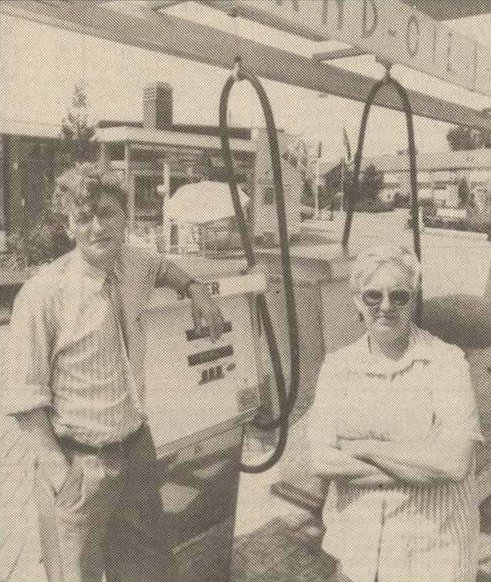
H.J. Kobus was one of them. His filling station on Bocholtsestraatweg was hardly selling petrol at all.
“I cannot blame ordinary people; the price difference is simply too large. But the police going to Germany — surely that is not right. They are paid from public money, after all. Now my tax money is benefiting German filling-station owners. If that isn’t absurd…”
Adjutant Boesaard of the Aalten National Police group saw things very differently. For him, the rule was simple: save money wherever possible and do not pay more than necessary.
“The idea arose naturally when we renewed our vehicle fleet,” he said. “Previously our cars ran on LPG, which is cheaper in the Netherlands than across the border. We have to run our operation with limited resources, so why should we pay fifty cents more per litre than necessary?
“The filling-station owners should not exaggerate. In the other direction, plenty of Germans come to Aalten to buy LPG, diesel and cigarettes. It is not one-way traffic.”
The woman behind the counter at Hameland filling station in Aalten confirmed that Germans did indeed come to her for diesel and cigarettes. Yet she too objected to the Dutch police becoming customers of German competitors.
“A private individual, fine. But a government organisation? Disgraceful.”
That last word, the article predicted, would be heard from many filling-station owners in Groningen, Drenthe, Overijssel, Gelderland, Brabant and Limburg in the months ahead. Many National Police groups stationed near the border were considering buying petrol in Germany.
Group commander Dix of the National Police in Losser, for example, said:
“At present we still drive diesel cars, but if we replace them with petrol vehicles, we too will fill up in Germany. Only costs matter, and every saving helps.”
The General Inspectorate of the National Police in Voorburg welcomed efforts to reduce fuel costs. The fact that Dutch filling-station owners were being bypassed was not the police’s fault, spokesman A. Folgerts argued.
“We did not create this problem; the government did,” he said. “The government made petrol more expensive. If our National Police groups along the border are creative enough to fill up abroad, we say: do it.
“The 400 National Police groups have recently been allowed to draw up their own budgets. Naturally, an adjutant cannot buy cakes with money intended for fuel, but there is considerable freedom. Money saved in this way can be used for worthwhile purposes: more patrols, or computerising police stations. It depends on the priorities of the group commander.”