
Work (research) in progress!
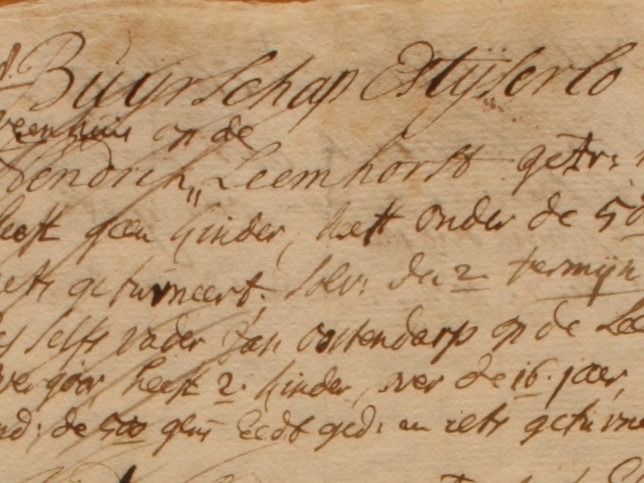
Aalten, Bredevoort and the surrounding rural districts were formerly subdivided into wards. Each ward had an appointed ward master. Their task was to pass official notices and other instructions from the central administration in Bredevoort to the residents of their ward. We have found records of the wards in the rural district of IJzerlo for the years 1748 and 1784.
In the archival records of the Liberale Gifte of 1748, all houses in IJzerlo are listed by ward, including their residents. The Liberale Gifte was a special levy of 2% of a person’s assets, imposed to cover the additional defence costs resulting from a French invasion of the Southern Netherlands in 1745–1747. Anyone owning less than 500 guilders did not have to pay the levy, but could make a voluntary contribution — hence the name.
In 1784, a list was compiled for each rural district of all ‘able-bodied men’ aged 18–50, arranged by ward. It appears that the ward boundaries were adjusted somewhat between 1748 and 1784, as was the order in which the wards were numbered.
1748 • Liberale Gifte
First Ward
Second Ward
- Devenhuus
- Roelofshuus
- ?
- ?
- Kuijerman
- Stokhorst
- Overkempink
- Tuunte
- Aalbers
- Westendorp
- Somsenhuus
- Eekink
- Japikshuus
- De Prins
Third Ward
- Heideman
- Rengelink
- Ansink
- De Woerd
- Hoftijzer
- Klumpenhouwer
- Seinhorst
- Kerkhof
- Welink (Kuijperstee)
- Koskamp
- Oude Loo
Fourth Ward
1784 • Able-Bodied Men
Source: list of all ‘able-bodied men’ aged 18–50 living in the rural district of IJzerlo in 1784, arranged by ward. The farm where each person lived is shown in brackets where known, subject to possible errors. Transcription: Remco Neerhof.