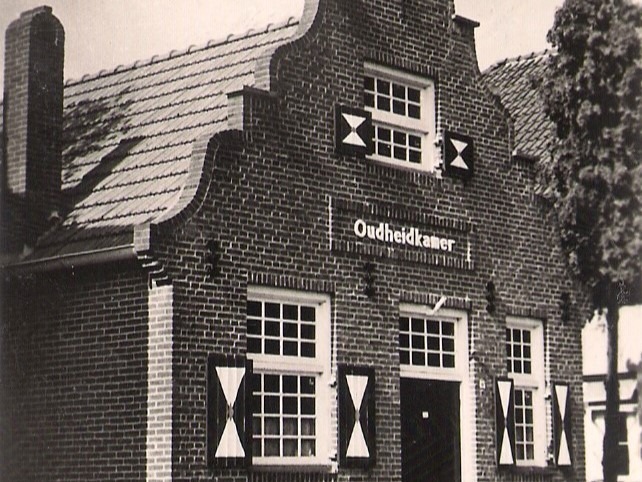
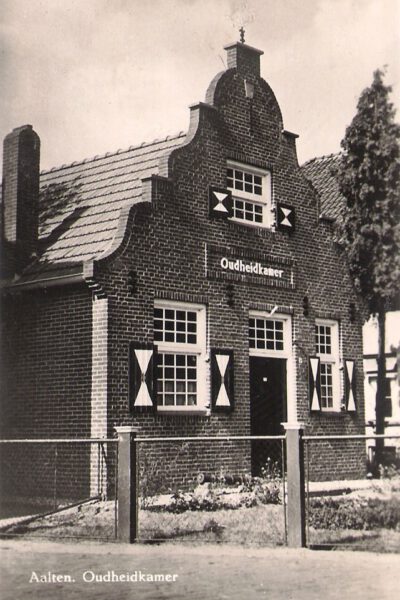
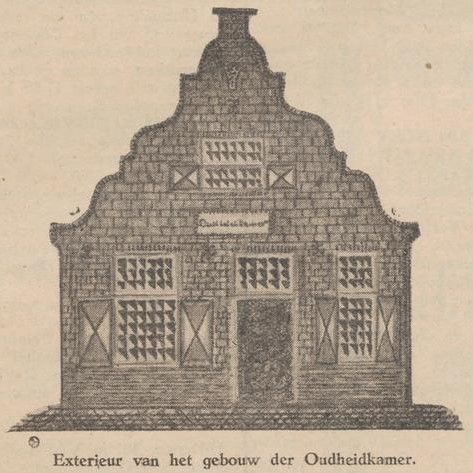
In April 1935 Aalten’s local history collection acquired its first purpose-built museum on Dijkstraat. The modest building was more than a place to store objects: its interior was designed to give visitors a tangible impression of everyday life in Aalten and the surrounding countryside. Just over twenty years later, the building had to make way.
From Landstraat to Dijkstraat
The Oudheidkamer had opened in 1930 on the upper floor above G.J.J. Degenaar’s lunchroom on Landstraat. Historical and folkloric objects from Aalten and the surrounding area were displayed there, some donated and others loaned to the collection.
Space was limited. On the initiative of Aaltens Belang, plans were therefore made for a museum of its own. Committee member Jos Driessen made a plot beside his villa on Dijkstraat available. The new museum building was officially opened in April 1935.
A farmhouse kitchen as a museum room
At the opening, chairman Jos Driessen explained that the original plan for one large museum room had been abandoned. The front section was furnished as an old Gelderland farmhouse kitchen, with a box bed, folding table, pottery, copperware and household objects once commonly found on local farms. Much of the rest of the collection was displayed in the room behind it.
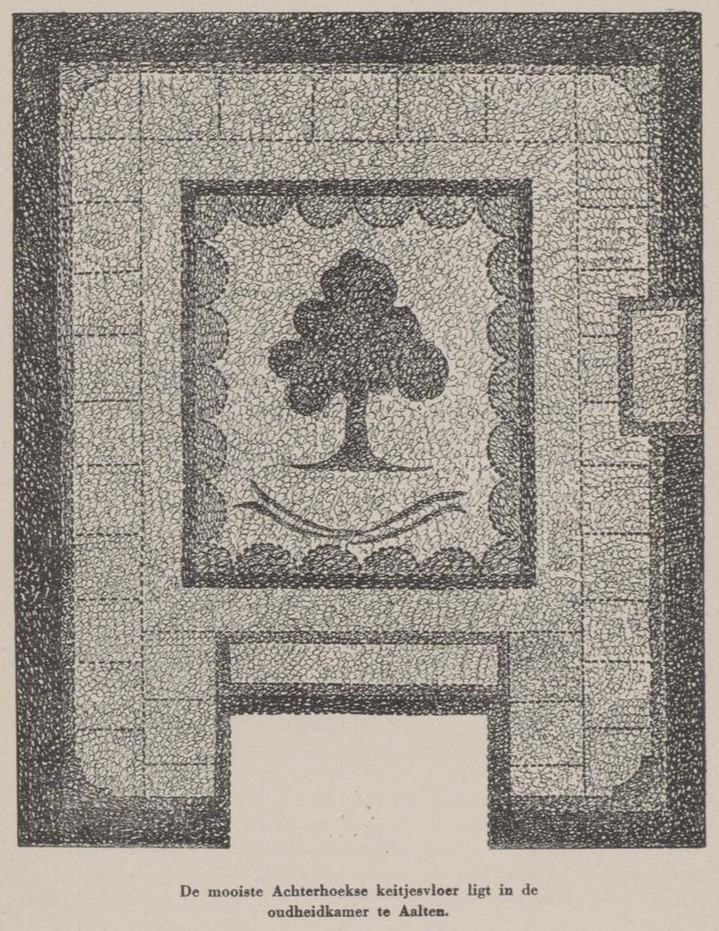
A notable feature was the floor made from small pebbles. Joh. Benning laid out the lime tree from Aalten’s coat of arms in the floor. The fireplace and the rest of the farmhouse-kitchen interior were deliberately used as part of the museum display.
The fireback
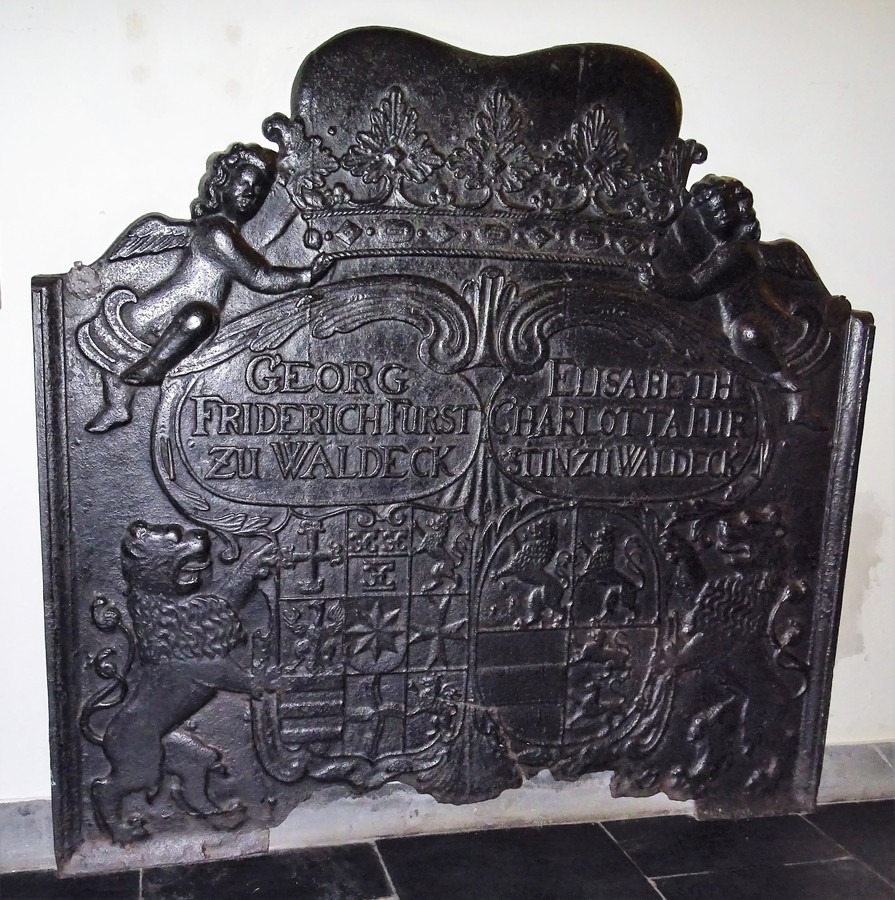
Among the more remarkable objects was an old cast-iron fireback which had previously been installed in a house on Hoekstraat. Through the efforts of Joh. Degenaar it came into the Oudheidkamer’s collection. It bears the names of Georg Friedrich of Waldeck and Elisabeth Charlotte of Nassau-Siegen. Exactly how the object eventually reached Aalten was already a subject of investigation in 1935.
Small building, growing collection
Even at the opening it was clear that the Oudheidkamer owned more objects than the building could display. A planned weaving room, for example, could not be fitted in. The committee hoped for further growth, more members and financial support. At the same time, the museum was presented as a new attraction for Aalten and as a way of preserving local heritage for future generations.
The museum has to leave
The land beneath the museum had never formally been sold or donated to the association. When the plot changed hands in 1955, the Oudheidkamer had to leave. The collection was temporarily stored in the H. Driessen & Zn. textile factory on Hofstraat. In February 1956 the committee reported that it had not yet found a satisfactory solution for rehousing the museum.
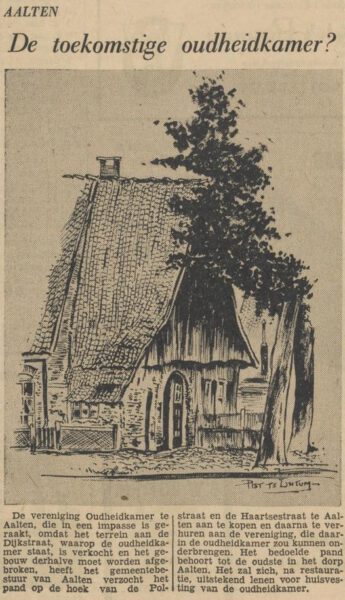
One possibility was the historic Luutenshuus. The association asked the municipality to buy the building and rent it to the Oudheidkamer. The collection was eventually housed in the Frerikshuus on Markt, together with the Freriksschure behind it.