Overview
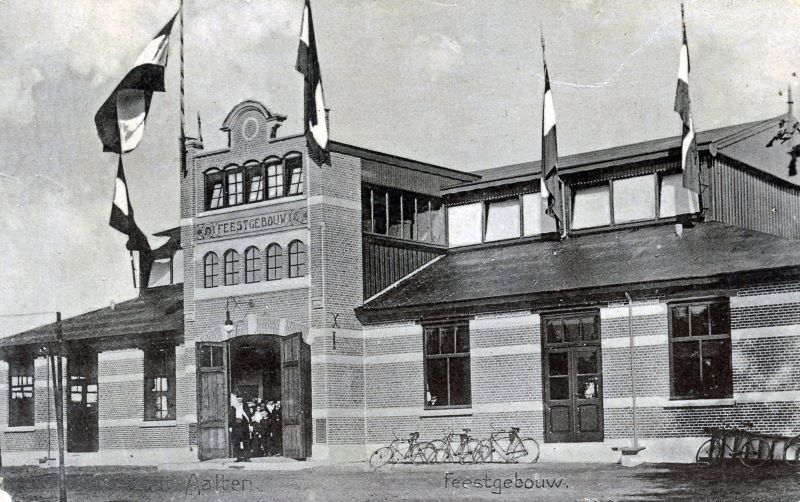
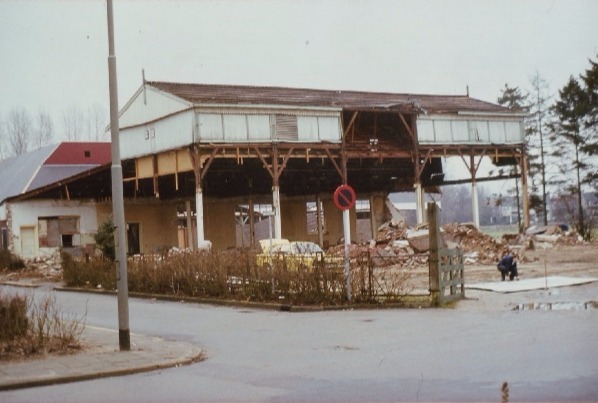
Aalten’s Feestgebouw stood on the site now occupied by the car park of De Hofnar, formerly activity centre De Pol.
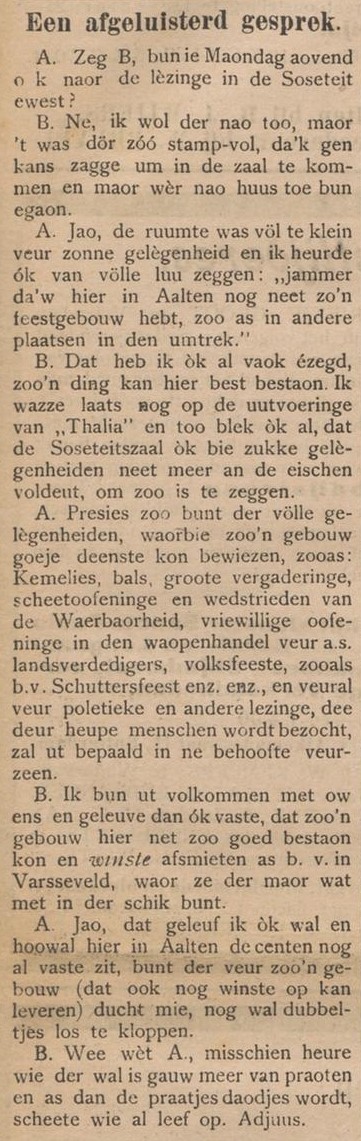
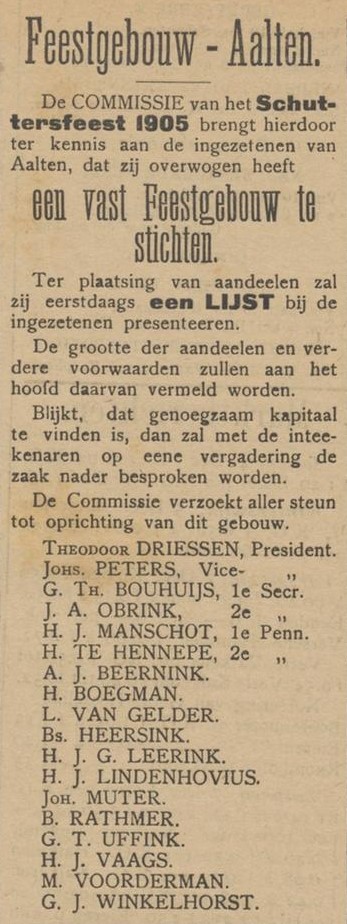
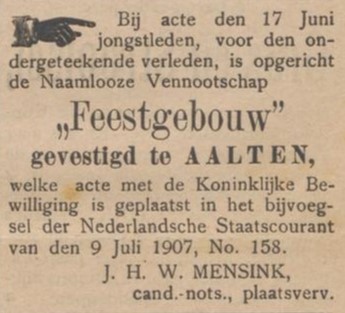
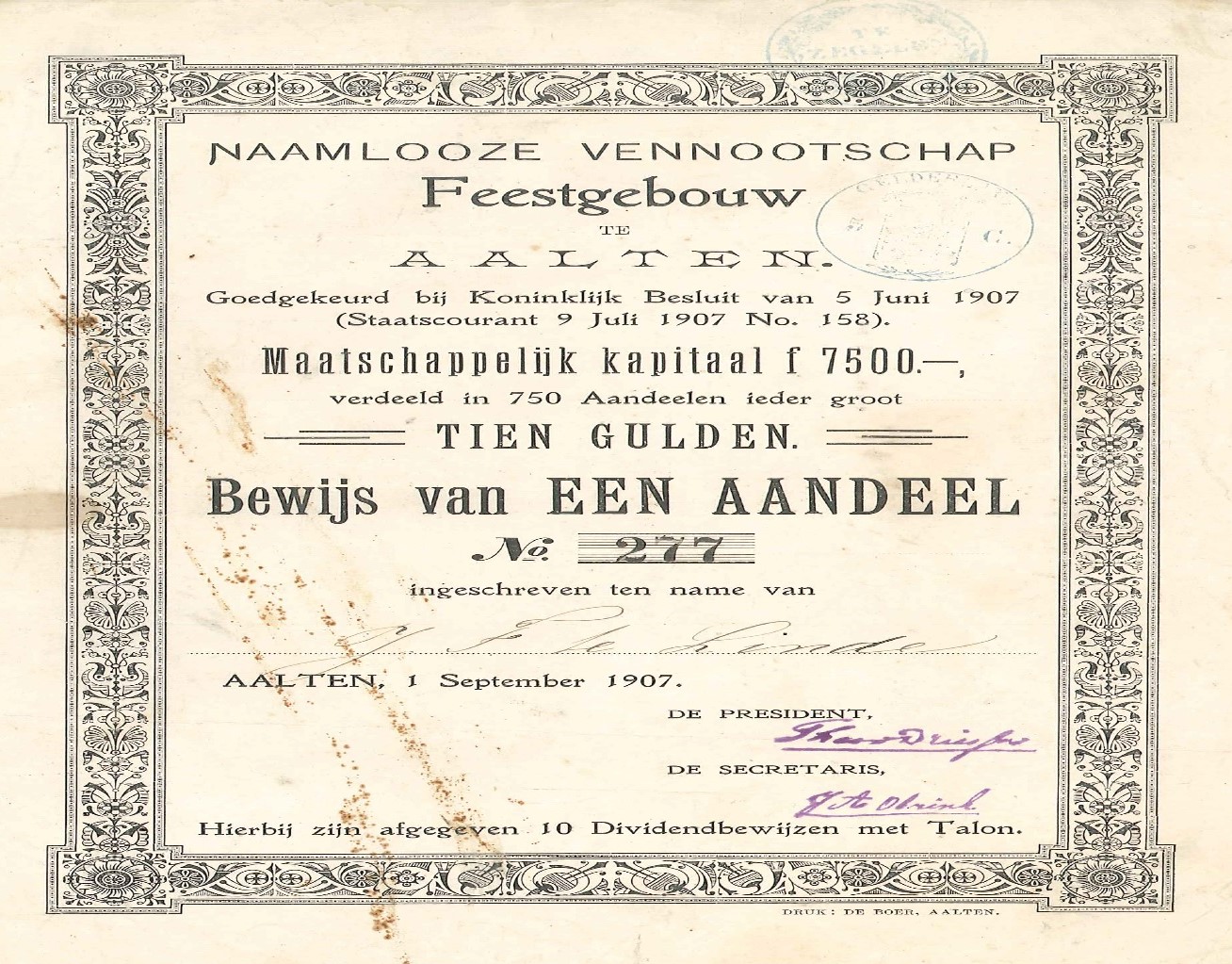
In 1906, representatives of the labour movement, including Joh. Obrink and G.J. Winkelhorst, joined forces with the marksmen’s association ‘Eendracht Maakt Macht’ in an ambitious plan to establish the ‘N.V. Feestgebouw’.
A prominent place in the community
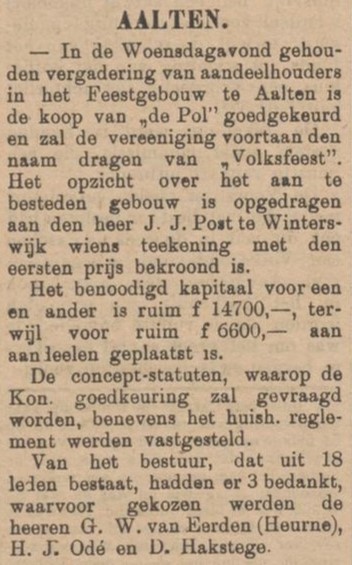
Funding was raised through the issue of shares. A total of 750 shares at ten guilders each brought in 7,500 guilders, a substantial sum at the time. Wealthier residents of Aalten bought sheets containing ten shares, known as a ‘talon’. These could later be redeemed. Some shareholders never did so, effectively donating their investment to make construction of the Feestgebouw possible.
The plan came to fruition that same year and co-founder Theodoor Driessen became the first president. The impressively large building, particularly for a small place such as Aalten then was, was entirely in keeping with its time. It was designed by architect J.J. Post of Winterswijk and opened in September 1907. For almost seventy years it would occupy a prominent place in Aalten’s community life.
Shelter for French refugees
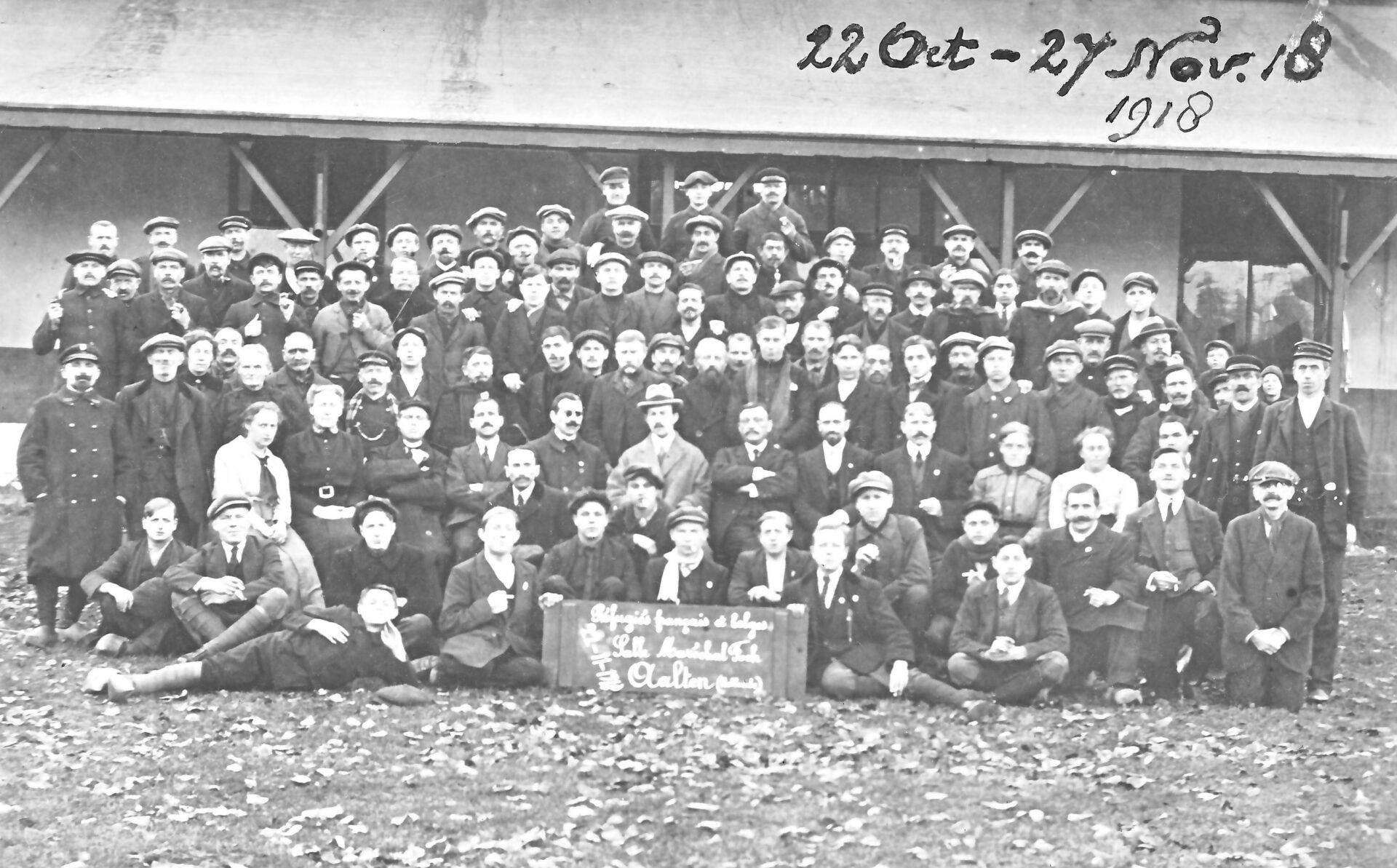
Towards the end of the First World War, a wave of refugees arrived from northern France, mainly French civilians but also Belgians. On 26 October 1918, Aalten’s mayor was informed that, as in other Gelderland towns, the municipality had to accommodate a large number of refugees.
It was decided that the men would be housed in the Elim building and the women and children in the Feestgebouw. Arrangements were also made to provide food and drink. For the occasion, the Feestgebouw was renamed Salle Maréchal Foch, after France’s famous commander-in-chief.
Films and music
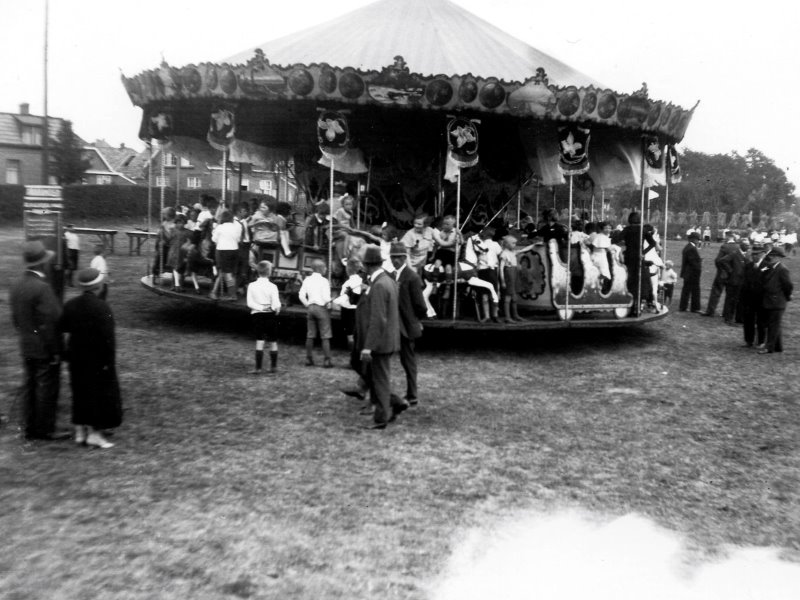
A fair used to be held behind the Feestgebouw. Films were already being shown there in the 1930s, which was not without risk: film stock was made of highly flammable nitrocellulose. Firefighters were therefore always present during screenings.
The Feestgebouw also became Aalten’s pop venue. From the 1960s onwards, many memorable concerts were organised there by groups including Fly In, Nirwana and Attica. Performers included Earth, Wind & Fire, Herman Brood & His Wild Romance, Kayak and the Dutch rock group Normaal.
The Feestgebouw was demolished in 1977 to make way for activity centre De Pol, now known as De Hofnar.
Photos
Newspaper reports