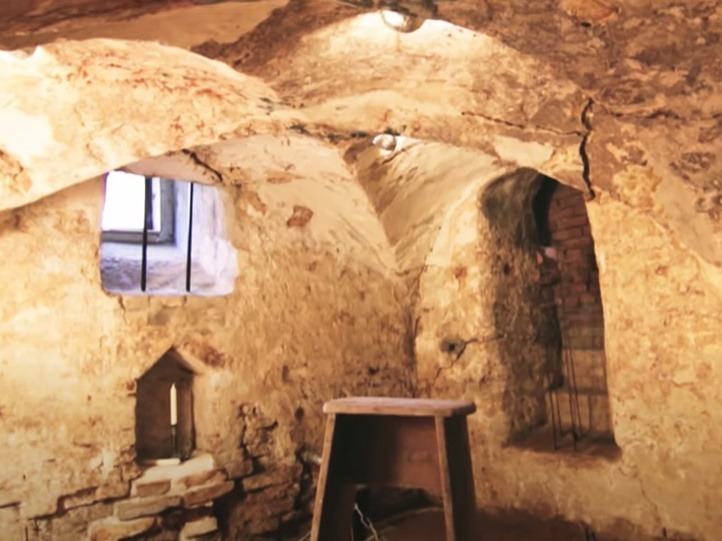
The late-medieval Merfelt Cellar belonged to a borgmanhuis (townhouse of a knight) where Adolf van Merfelt, a borgman of Bredevoort, resided in former times. The cellar of this townhouse is both rare and ancient. The method by which it was vaulted is highly unusual for a private dwelling: it features four cross vaults with a central supporting pillar.
In 2014, the Merfelt Cellar was nominated for the Aalten Municipality Heritage Prize. The reason for the nomination was the meticulous care and respect for historical character and the use of authentic materials during its restoration.
The restoration work on the cellar took place over several years. The highlight of the project was the repair of the vaulting, which ensured the long-term stability of the cross vaults.
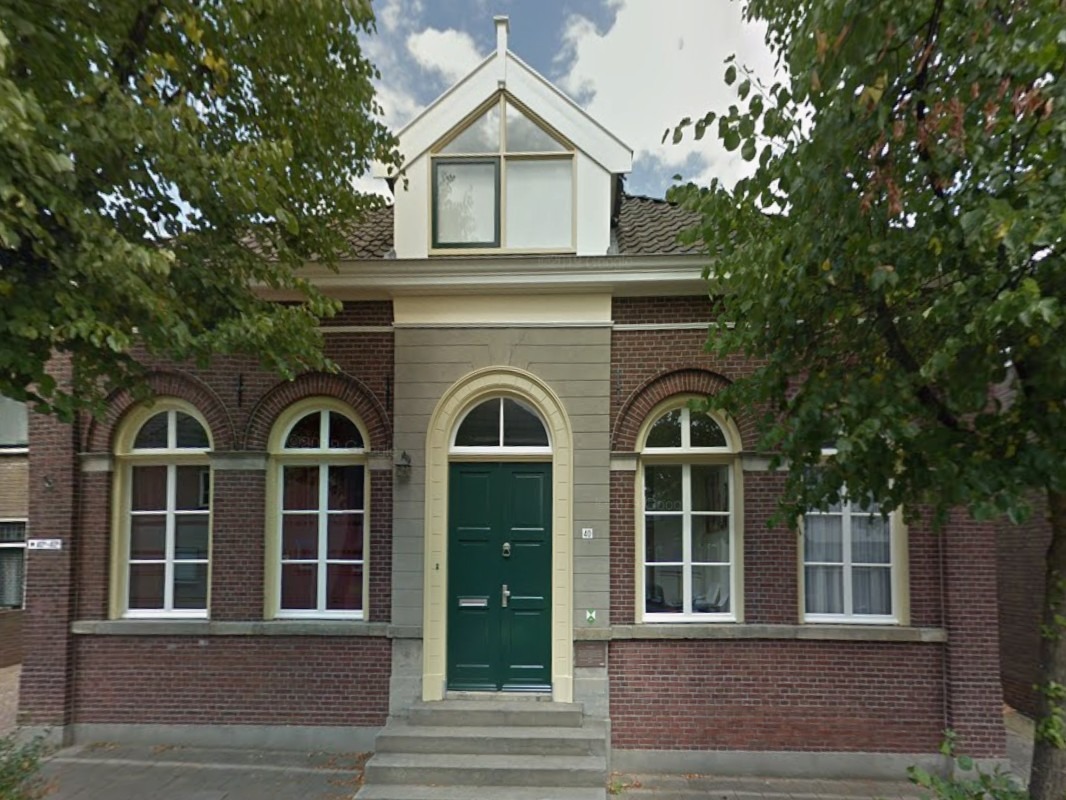
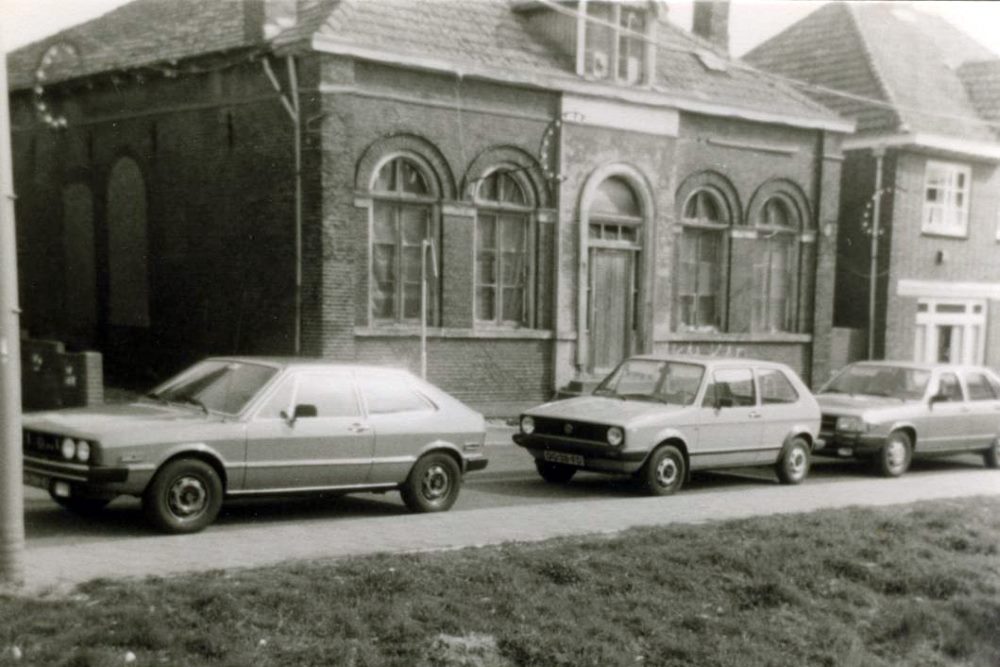
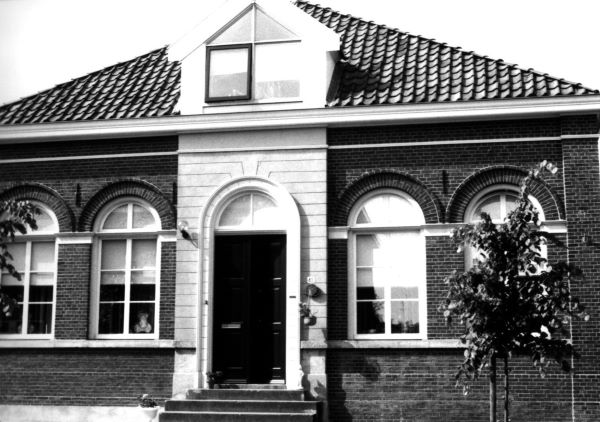
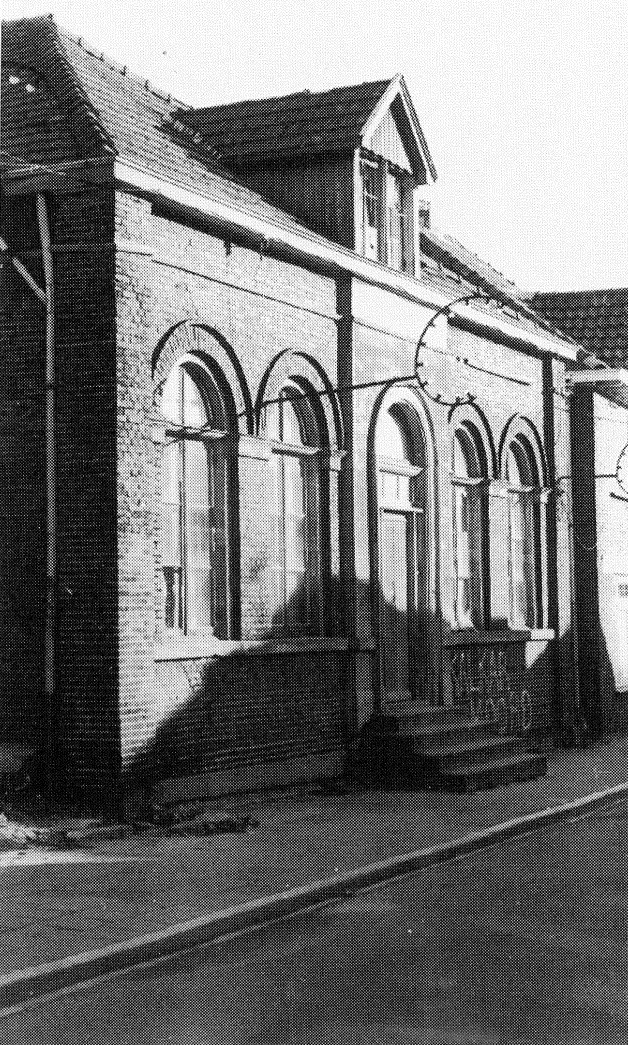
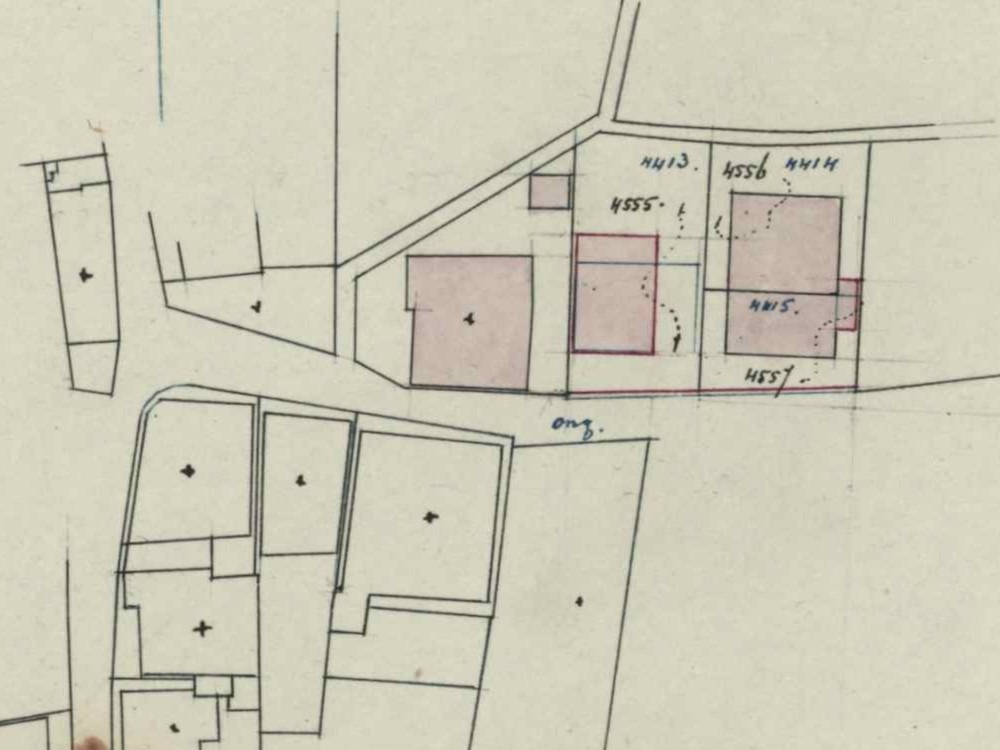
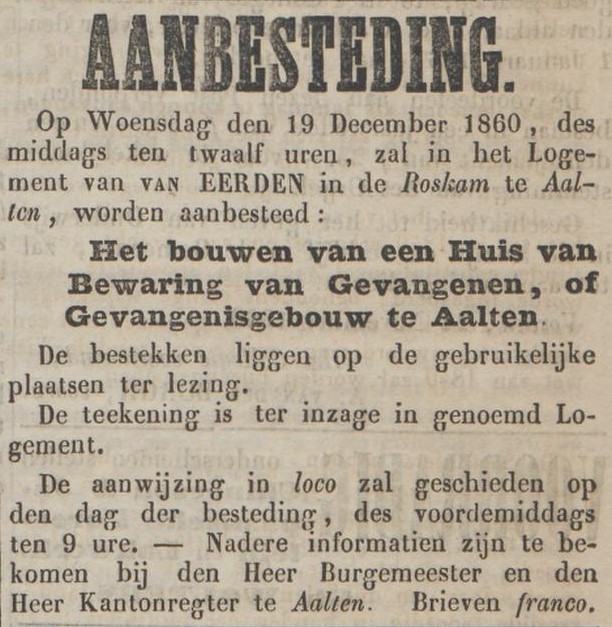
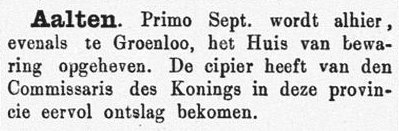
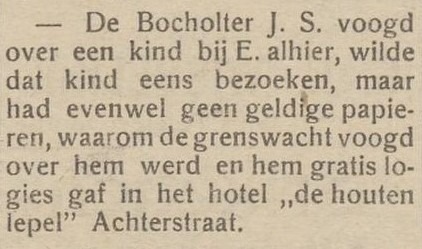
The former prison on Prinsenstraat in Aalten was built in 1861 in Neoclassical style as a cantonal house of detention, featuring six cells and a gaoler’s residence. In 1886, its cantonal status was revoked, but the building remained in use as a municipal prison until the Second World War. Today, the property is a private residence.
Een inventarislijst uit 1933 noemt nog ‘meubilair en overige goederen behorend tot de gevangenis in de Achterstraat’ (de oude naam van de Prinsenstraat). Vóór 1861 bevond het plaatselijke cachot zich aan de Landstraat.
In 1937, G.H. Rots described in a series of articles how things were handled in Aalten in earlier times. Regarding the old prison, he wrote:
“For cantonal court matters, one did not have to walk far. After all, the cantonal judge sat in our good village, and the cantonal court was held in the town hall. The prison in Aalten was also equipped for the detention of prisoners for longer than twenty-four hours. A gaoler was appointed for this purpose, and for many years Wessel te Brake held this post. To ensure the proper fulfillment of the feeding and care of the prisoners, he had to sign a contract and provide several sureties. As a matter of interest, we publish the transcript of this contract here:
Between the Board of Supervision of the house of detention in Aalten on the one hand, and Wessel te Brake, gaoler of the prisoners residing in Aalten, on the other, the following contract has been entered into today regarding the maintenance of the prisoners during the year 1862, at the price of fifty cents per prisoner per day.
Article One.
The Contractor undertakes to provide feeding and nursing for the prisoners in the aforementioned house, providing each of them daily with:
A. Four ounces of rye bread made of pure baked flour.
B. Three measures of warm drink consisting of one part fresh milk and four parts boiled water.
C. At midday, a nutritious midday meal at least in accordance with the dietary standards established for prisoners in general.
D. In the evening, two and a half ounces of well-baked rye bread as above and two and a half measures of warm drink, consisting of four parts boiled water and one part fresh milk with five wigtjes [units of weight] of coffee and the necessary chicory.
E. Further necessary drinking water.
Article Two.
The various food items must be of good quality and prepared as required, and shall always be subject to the approval of the Board of Supervision, by whose judgment the Contractor shall abide.
Article Three.
The Contractor shall also be required, in occurring cases, to provide sick prisoners with such food and drink as the medical practitioner shall prescribe, with the exception of medicines.
Article Four.
The Contractor shall be paid within two months after the submission of his three-monthly or annual declaration.
Article Five.
In the prescribed declaration and statements, he may charge for the day of arrival of the prisoners, but not for the day of departure. However, if the prisoners have already enjoyed the midday meal upon their arrival and stay only until the following day, so that only supper and breakfast are provided, or if they should depart again on the day of their arrival, so that only the midday meal is provided, only half a nursing day may be declared in such cases. For the maintenance of children temporarily confined with their parents, half the contract price may be charged for each full nursing day. Mention of this must be made in the Remarks column and the nominative statement.
Article Six.
The Contractor must always submit separate declarations and nominative statements for the maintenance costs of police prisoners, which are borne by the municipalities to which they belong. Should it be necessary in special cases to light or heat the prison, the Contractor must provide for this in such a manner as the Board of Supervision shall prescribe.
Article Seven.
The costs of stamps and registration of the contract, as well as the stamp duties of the mandates when these exceed ten guilders, shall be borne by the Contractor.
Article Eight.
Should any dispute arise concerning the correct understanding and execution of the foregoing provision, the same shall be judged and decided by the King’s Commissioner in the province, without appeal to any other authority.
After reading the above terms, the Contractor, Wessel te Brake, declares to have understood them all well, to follow them, and for the proper fulfillment of his commitment to provide as sureties Jan Wegchelaar, messenger, and Jan te Hoonte, constable, both residing in Aalten, who are also present here and declare that they are well aware of the obligations to be fulfilled by the Contractor, hold themselves jointly and severally liable with him for the execution thereof, and renounce all exceptions that might be raised by them as sureties. And the Contractor and his sureties have also signed this.
Done at Aalten, 10th Dec. 1861. 1861. The Board of Supervision of the house of detention in Aalten, (signed) F.W.J. IMMINK (President) (signed) L. ROELVINK, Secretary.
The Contractor and the sureties: (signed) W. TE BRAKE (signed) J. WEGCHELAAR (signed) J. TE HOONTE.
The document was registered in Groenlo. The costs for this were 20 cents plus 38 surtax, making 28 cents in total.”
Owners
Overview is incomplete.
Year
Plot
Owner
Description
1862
I-2633 I-2634
The Board of Supervision of the cantonal prison of Aalten
280 m² prison, yard 205 m² house, yard
1891
I-4414 I-4415
The Municipality of Aalten
269 m² house of detention & yard 185 m² house & yard
1893
I-4556 I-4557
The Municipality of Aalten
265 m² house of detention & yard 179 m² house & yard
1941
I-5611 I-4557
The Municipality of Aalten Antonius Johannes Veldhuis, merchant
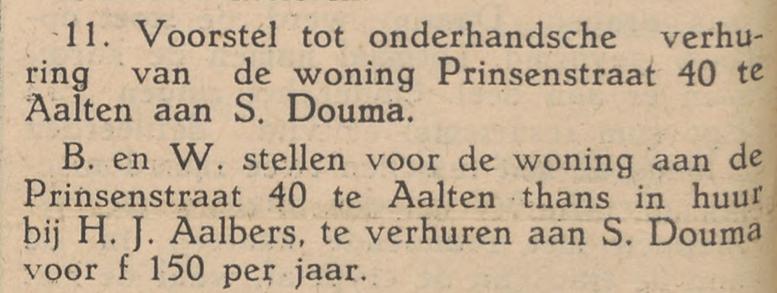
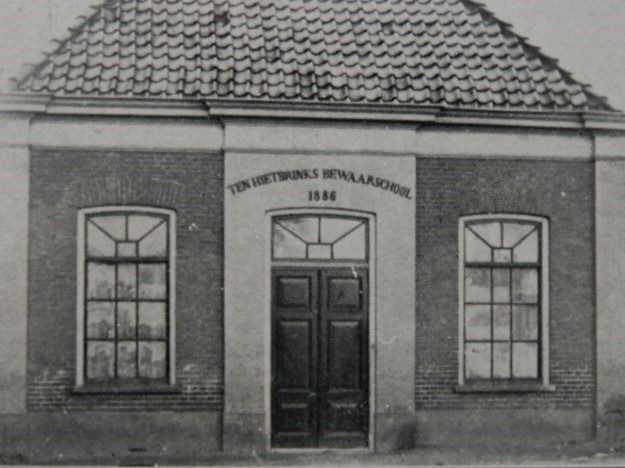
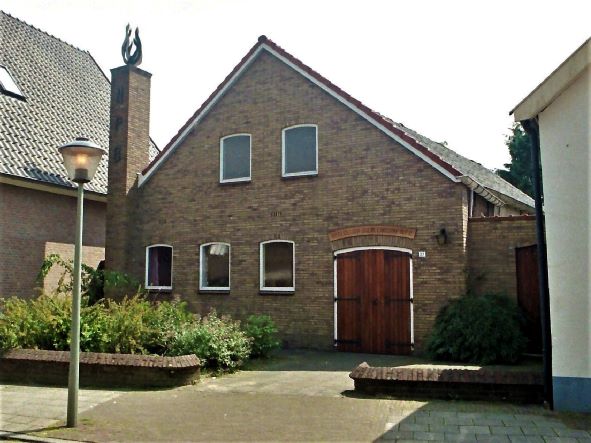
The Ten Hietbrink Bewaarschool was a nursery school in Prinsenstraat in Aalten. The school was named after the Ten Hietbrink family, who were closely involved in its inception and management. Later, the Nederlandse Protestantenbond (Dutch Association of Protestants) held its church services here. Today, the address houses the Euregional Historical Documentation Centre.
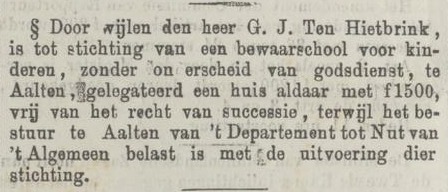
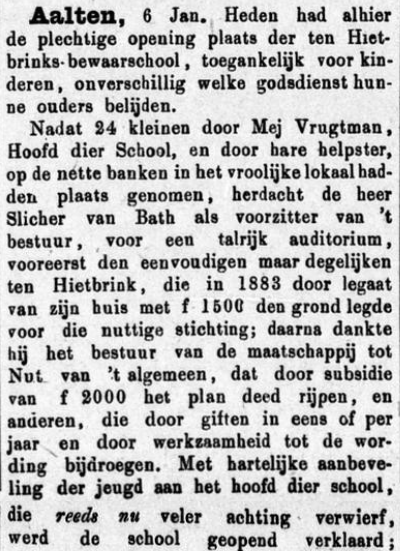
The nursery school was opened on 6 January 1887, at a time when the first forms of early childhood education were increasingly gaining ground in the Netherlands. Before then, children were often not admitted to primary school until they reached the age of six.
The little school possessed one large classroom with a wooden floor, a sandpit behind the building, and simple play materials, such as car tyres. Behind the school stood a shed which also formed part of the play area.
War Years
During the years of the German occupation (1940–1945), the measures taken against Jewish residents also affected the Ten Hietbrink Bewaarschool. Jewish children attended the school until 1941, but from 1 September 1941, they were compulsorily expelled, in line with the anti-Jewish decrees.
School Life
Memories from former pupils provide a picture of school life during the 1940s and 1950s:
The head of the school was Miss Stokreef; alongside her, Miss Annie is also mentioned.
Strict discipline prevailed, described by former pupils as “potty-discipline”.
In addition to learning and playing, school trips were also organised, for instance in 1946 to the Loohuisbos.
Owners
Overview is incomplete.
Year
Plot
Owner
Description
1832
I-1059 I-1060
Hermanus Hietbrink, labourer
148 m² house & yard 17 m² house
1882
I-3714
Gerrit Jan ten Hietbrink, merchant
185 m² house & yard
1888
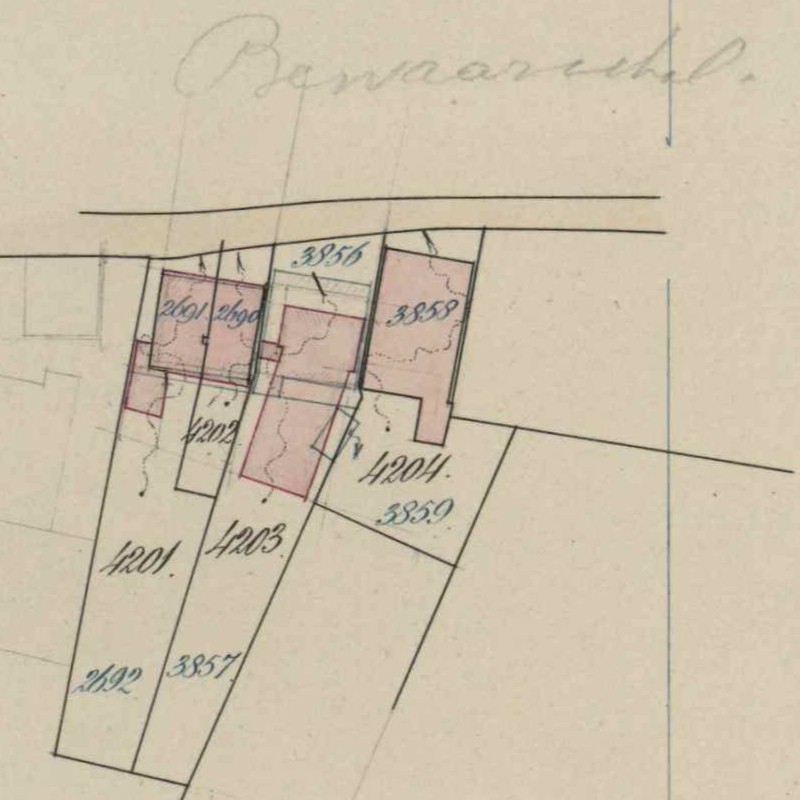
I-4203
The Departmental Nursery School of the Departement tot Nut van ‘t Algemeen
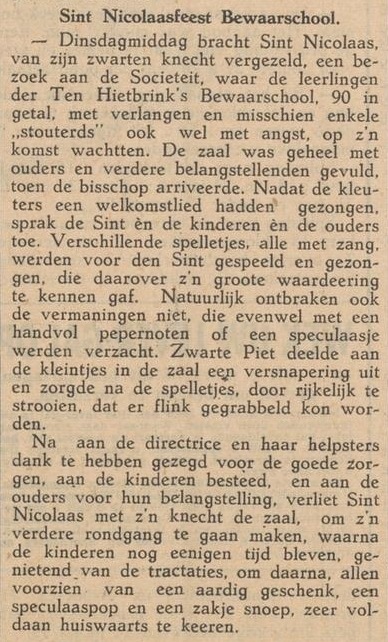
Building of the Dutch Association of Protestants, AaltenExcerpt from cadastral map, 1888 (plot I-4203)Arnhemsche Courant, 8 December 1883Graafschapbode, 8 January 1887Aaltensche Courant, 8 December 1939
Beheer toestemming
Deze website gebruikt cookies voor een optimale ervaring en analyse van bezoekgegevens. Ga je hiermee akkoord? Zonder toestemming werken sommige onderdelen van de site mogelijk minder goed.
Functioneel
Always active
De technische opslag of toegang is strikt noodzakelijk voor het legitieme doel het gebruik mogelijk te maken van een specifieke dienst waarom de abonnee of gebruiker uitdrukkelijk heeft gevraagd, of met als enig doel de uitvoering van de transmissie van een communicatie over een elektronisch communicatienetwerk.
Voorkeuren
De technische opslag of toegang is noodzakelijk voor het legitieme doel voorkeuren op te slaan die niet door de abonnee of gebruiker zijn aangevraagd.
Statistieken
De technische opslag of toegang die uitsluitend voor statistische doeleinden wordt gebruikt.De technische opslag of toegang die uitsluitend wordt gebruikt voor anonieme statistische doeleinden. Zonder dagvaarding, vrijwillige naleving door je Internet Service Provider, of aanvullende gegevens van een derde partij, kan informatie die alleen voor dit doel wordt opgeslagen of opgehaald gewoonlijk niet worden gebruikt om je te identificeren.
Marketing
De technische opslag of toegang is nodig om gebruikersprofielen op te stellen voor het verzenden van reclame, of om de gebruiker op een site of over verschillende sites te volgen voor soortgelijke marketingdoeleinden.