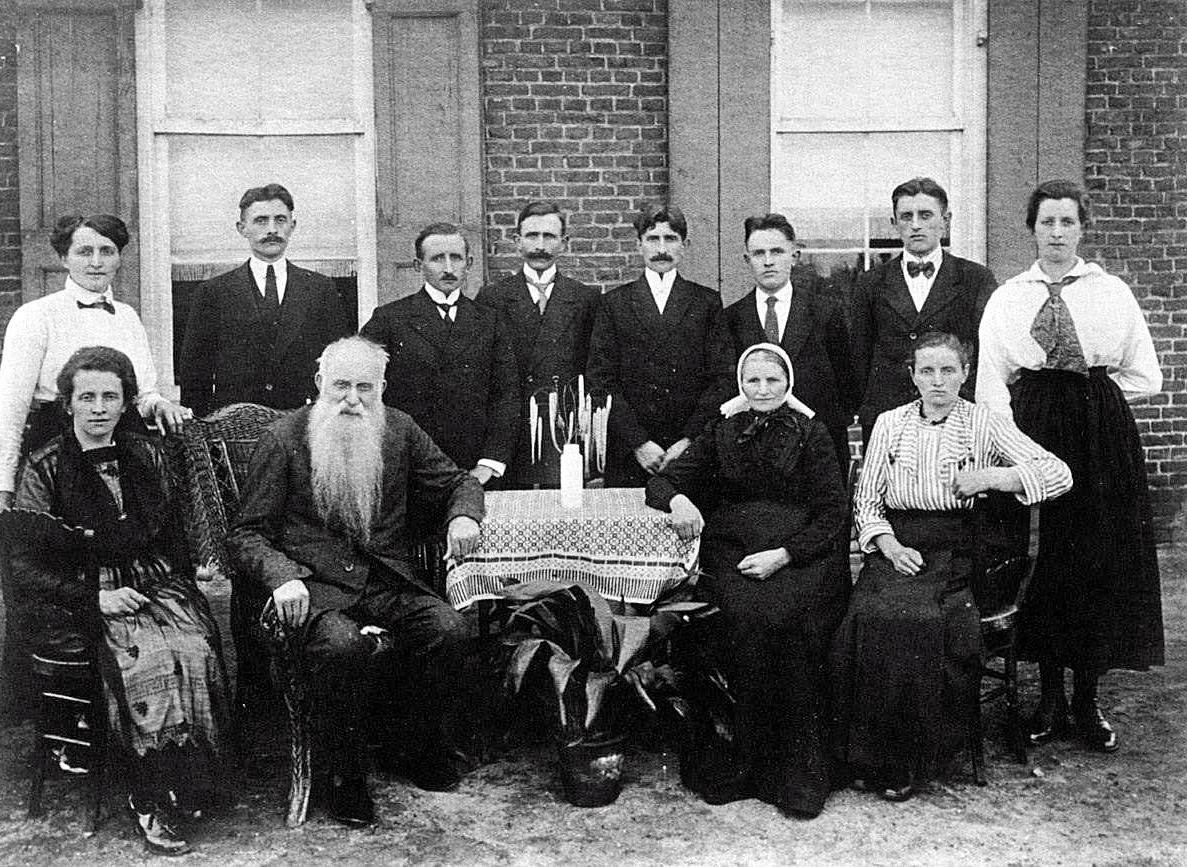
Researching your family history is a fascinating hobby. Whether you’re looking to learn more about your ancestors, discover family connections, or are curious about your genetic heritage, modern tools like online archives, family tree websites, and DNA tests make it easier than ever. In this article, we will discuss some popular family tree websites, (digital) archives and DNA tests. We compare some well-known providers and see how they can enrich your research.
In compiling this article, we have made a selection of resources and services in the field of family tree research and DNA testing, based on our own experiences and preferences. Although there are many other options available, with this selection we hope to offer a practical and accessible basis, without overwhelming you with all the options available. Of course, other resources and platforms can also be valuable, depending on personal needs and interests.
Family tree websites
Family tree websites are online platforms that allow you to research and record your family history. They often provide access to historical records such as birth, marriage, and death certificates, population records, and other records. These websites make it easy to build your digital family tree and share it with family members.
Some popular platforms for family tree research include MyHeritage, FamilySearch, Genealogy Online, Geneanet , and Geni, each with its own characteristics, advantages, and disadvantages. Below, we’ll discuss our two favorite family tree websites.
MyHeritage
MyHeritage is a versatile international platform that makes genealogical research simple and accessible. It offers powerful tools such as DNA matching and automated family tree updates. With a paid account, you can search historical records, build your family tree, and link DNA results to your family history. MyHeritage also offers unique features like AI tools to enhance or colorize family photos. MyHeritage is suitable for both beginners and experienced genealogists.
A major downside of MyHeritage and many other family tree websites, in our opinion, is that each user builds and manages their own family tree. Although this may seem attractive at first glance, in practice it is very inefficient and increases the risk of errors. MyHeritage offers powerful features like Smart Matches and Record Matches, which allow users to easily pull in data from other family trees and sources to expand their own. While this process can significantly speed up research, it also carries the risk of misinformation being adopted, as not all users carefully verify information before adding it to their family tree. This allows errors from a single family tree to spread throughout the community, which in our experience also occurs on a large scale.
Another downside of MyHeritage is that duplicates in the family tree are not automatically flagged. And if a user discovers duplicates on their own, it is not possible to simply merge them. This then has to be done ‘manually’, which can not only be a time-consuming and frustrating process, but also leads to errors.
FamilySearch
FamilySearch is a free international platform operated by the Church of Jesus Christ of Latter-day Saints. It is a powerful tool for genealogical research and provides access to one of the largest genealogical databases in the world, with millions of historical documents (including Dutch ones), including civil status records, church records, censuses, immigration registers, and other sources.
A critical feature of FamilySearch is that all users work together on a single global family tree, rather than managing their own version individually. Users can ask questions and exchange information with other FamilySearch users, which helps to identify and correct errors more quickly. This ensures an increasingly better and more complete family tree.
FamilySearch stands out for what we believe to be superior user-friendliness and clarity. Linking and reviewing automatically found sources is easy and fast, allowing data to be reliably recorded. A particularly useful tool is the one-click feature that gives you a one-click overview of your relationship to a specific person in the family tree, provided one is present. Additionally, FamilySearch flags duplicates and provides an easy way to merge them, further aiding the accuracy of the family tree.
Key features and differences:
MyHeritage
- Free account offers only limited features, advanced features are only available with a paid subscription (from approx. €73/year)
- User-friendly
- Individual family trees: inefficient and error-prone
- Compatible with DNA test results from other providers
FamilySearch
- Completely free
- Superior user-friendliness
- Collaborative family tree: efficient and ‘self-correcting’
- Identified duplicates can be easily merged
- No integration with DNA data
Archives
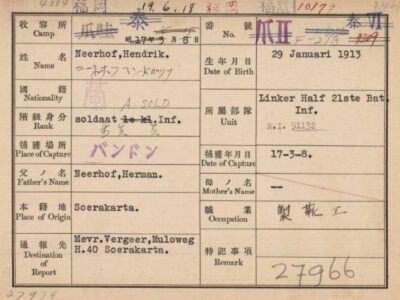
Digital archives are an indispensable source for genealogical research. They make it possible to easily find information about ancestors and relatives, such as birth, marriage and death dates, addresses and occupations. For in-depth research, it may be worthwhile to physically visit heritage institutions to view original documents.
Below we have listed a number of digital and physical archives that are particularly useful for Achterhoek genealogists:
- WieWasWie (‘WhoWasWho’): One of the most widely used websites in the Netherlands for genealogical research. WhoWasWho offers access to a large amount of historical personal data from Dutch archives, such as the civil registry, population registers and church archives.
wiewaswie.nl
- Heritage Centre Achterhoek and Liemers (ECAL): Among other things, it provides access to scans of family cards from the Achterhoek and Liemers region (1823-1910). On these family cards, the residents/households per house were registered.
ecal.nu
- Genealogy domain: Contains a large number of transcriptions of baptism, marriage and burial books (DTB) from the Achterhoek, as well as archives on taxes, real estate and jurisdiction, including those of the Heerlijkheid Bredevoort.
genealogiedomein.nl
- Achterhoek Ancestors: Website with data of more than 5,000 people from the Achterhoek, mainly from Aalten, Bredevoort, Dinxperlo and Winterswijk, who emigrated to the United States in the 19th century. The database has been compiled by Yvette Hoitink.
netherlandsgenealogy.com
- Delpher: An online platform with millions of digitized historical newspapers, books and magazines from the Netherlands. You can find personal ads, family messages, and background information about ancestors and historical events.
delpher.nl
- Euregional Historical Documentation Centre (EHDC): Has an extensive collection of historical archive material from the Achterhoek, both physical and digital. The EHDC can also help with genealogical research. Visit the EHDC in the Naobershuus, Prinsenstraat 27 in Aalten.
hdcaalten.nl
DNA tests

A DNA test is an accessible and scientific way to analyze genetic information. The process is simple and user-friendly. After your order, you will receive a test kit by post. This test kit contains some test tubes to collect saliva samples. You send this back in the included return envelope, and a few weeks later you can view the results online.
The most important insights that a DNA test offers are:
- Ethnic origin: The test shows where your ancestors came from. This is shown as percentages by region, such as Northwest Europe, Scandinavia, or the Mediterranean.
- Family ties: Your DNA is compared to that of others in the provider’s database, so you can discover distant cousins, or other relatives, whether they live down the street from you or on the other side of the world. The test also indicates how closely related you are.
- Joint Family Tree Research: Many providers offer tools that allow you to link your DNA results to external family tree websites, which can further enrich your genealogy research.
It is worth mentioning that the results are not a snapshot, but remain available. This means that when relatives take a DNA test later, you will also see these new matches. The database is constantly growing, which increases the chance of new discoveries.
Well-known DNA test providers
There are various providers of DNA tests on the market, each with their own characteristics. Below we compare two providers that are popular in the Netherlands, and therefore give a good chance of matches, namely MyHeritage and FamilyTreeDNA:
MyHeritage
- Price: from €89 (limited time offers excluded)
- Advanced features are only available through a paid subscription (starting at approx. €73/year)
- User-friendly interface
- Integration with MyHeritage family tree software
FamilyTreeDNA
- Price: from €79 (one-time fee)
- No subscription fee, but results remain available, including new matches
- In-depth genetic analyses possible (e.g. Autosomal, Y-DNA, mtDNA)
- Ability to download DNA profile and integrate it into third-party family tree websites, including MyHeritage
Tips
- Choose the right tools
The choice of a specific platform depends on personal goals, preferences and the desired functionalities. Many genealogists use multiple platforms to get the most complete picture of their family history.
- Do you want to discover your ethnic origins and find relatives? Then a DNA test from MyHeritage or FamilyTreeDNA is a good choice.
- Do you want to expand your family tree with historical documents and family stories? MyHeritage and FamilySearch provide valuable support.
- Do you want to combine both genealogical research and DNA matching? MyHeritage is a versatile option, possibly in combination with FamilyTreeDNA and/or FamilySearch.
- Start small
Start with what you already know about your family, such as names, dates of birth, and places. Supplement this with what you can find out from family members. This approach helps you to bridge the period between the present and the moment when public archives are available. Due to privacy legislation, many population archives are only public after 50 to 100 years. By reconstructing past generations through oral tradition and personal documents, you will lay a solid foundation for further research in the public archives.
- Check sources
Don’t blindly copy information from other family trees. Check the sources and verify the information before adding it to your family tree. Check the origin of the data, prefer original sources over secondary information and be alert to inconsistencies. By working carefully, you contribute to an accurate and reliable genealogy.
- Choose the right DNA test
For the examination of immediate family ties, an autosomal DNA test is usually sufficient. For in-depth genealogical research or tracing specific lineages in your family, such as the male line (Y-DNA) or female line (mtDNA), additional tests are suitable. Choose the test that suits your research needs.
- Stay curious
Genealogical research is a process of discoveries and sometimes unexpected twists and turns. Enjoy the journey!
More information
On the website of the MEB Centre for Family History you will find much more information about genealogical research and DNA tests.
- Basic knowledge for beginners
- Terminology and meaning
- Handy step-by-step plan
- Comprehensive Resource Overview