Stationsstraat 7, Aalten
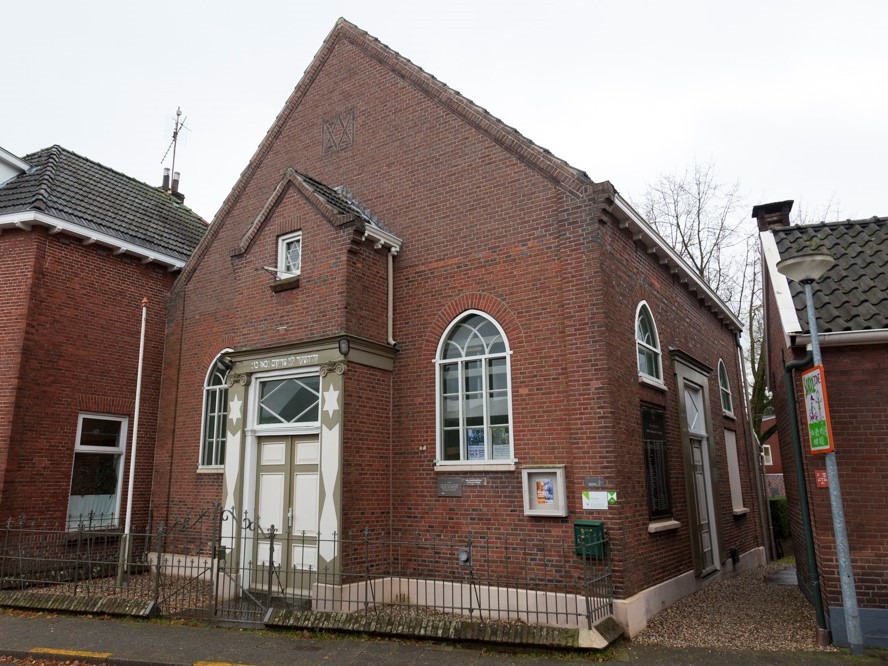
In the centre of Aalten is a small, well-restored, and beautifully furnished synagogue, which formed the centre of Jewish life in this Achterhoek municipality for nearly a century. The building is currently owned by a foundation, the Friends of the Aalten Synagogue.
By the mid-19th century, the Jewish congregation in Aalten had grown so much in number that a residential house became too small for the weekly Sabbath services. The community wanted their own shul, not only for religious services but also for the education of the youth. Consequently, a synagogue was built in 1857. It was a simple rectangular building with no architectural distinction, yet functional for the Jewish congregation in Aalten, which was still far from wealthy but strictly Orthodox. Nothing is known about the architect.
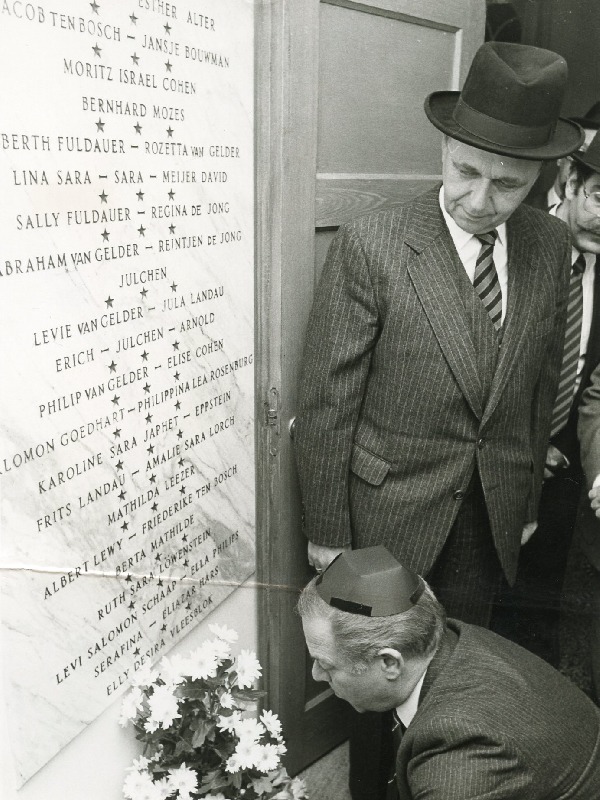
The synagogue became the centre of a lively community life, which lasted until the catastrophe that befell all Jewish communities during the years of the German occupation. The members of the congregation who were unable to go into hiding in time were deported and murdered.
World War II
During the occupation, two attempts were made to set fire to the synagogue. The synagogue was largely plundered and gutted to convert the building for ammunition storage. While the interior of the building was destroyed, the Torah scrolls and ritual objects were hidden in time and thus preserved. After the war, the scrolls of the law were returned to the building. The synagogue was repaired, funded by the proceeds from the sale of the chazzan’s house (since 1948, the congregation could no longer afford the salary for a cantor).
However, a large proportion of the congregation members who survived the war moved elsewhere, meaning the Jewish community had no chance to flourish again. Increasingly, they failed to achieve the required number of men (minyan) to hold services. The synagogue fell into disuse and was in danger of falling into decay.
Restoration
In 1984, the building was sold to the Friends of the Aalten Synagogue Foundation (Stichting Vrienden van de Aaltense Synagoge). This foundation took on the responsibility for a thorough restoration. On 29 December 1986, the synagogue was rededicated with a solemn Hanukkah celebration.
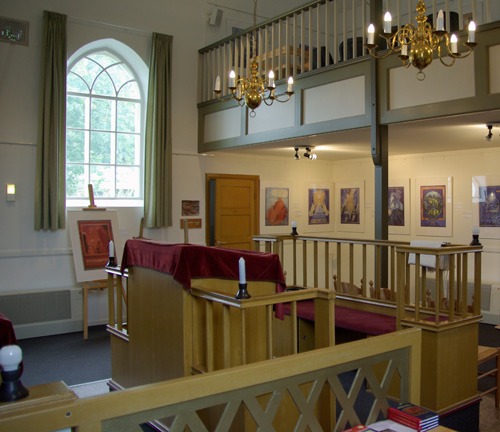
There are features well worth seeing on both the interior and the exterior. Inside, these include the Holy Ark, four Torah scrolls, the Tablets of the Law, the ner tamid, the menorah, the hanukkiah, the bimah, the women’s gallery, and the mikveh. On the exterior, these comprise the inscription above the door, the mezuzah, and the plaque on the right-hand side of the outer wall.
The Aalten synagogue can be visited regularly during the summer months.