Category: Police

  • Aalten Police

    Aalten Police

    Landstraat 18

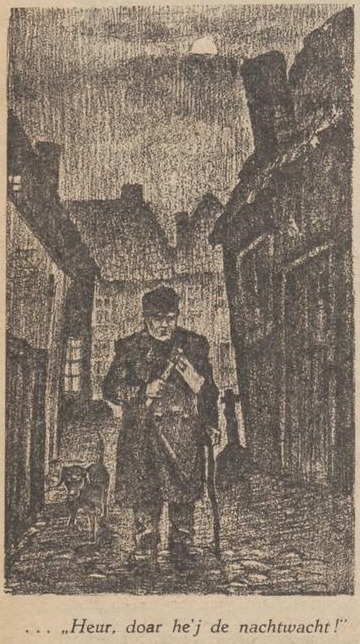
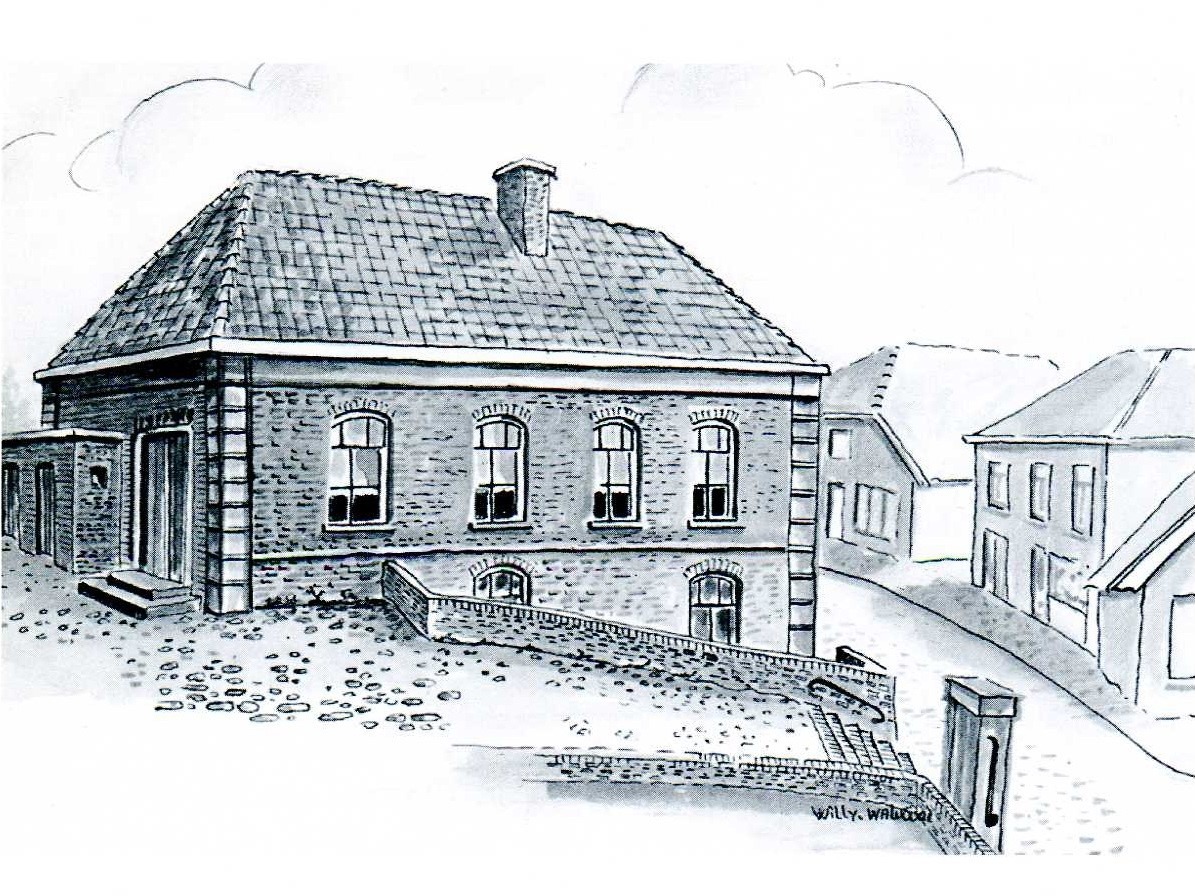
    The first known predecessor of a police station in Aalten can be found on Landstraat, in the building that currently houses Ter Maat barbershop.

    The accompanying drawing of the building in question was made by the Aalten artist Willy Walvoort, who passed away in 2018. He wrote: “The village school in 1824. Above: the entrance was on the church hill. Below: on Landstraat, the night watch, prison, and fire brigade.”

    It is (as yet) unknown until when the night watch and/or constables had their headquarters here. We also do not yet know which other addresses served as police stations before 1941.
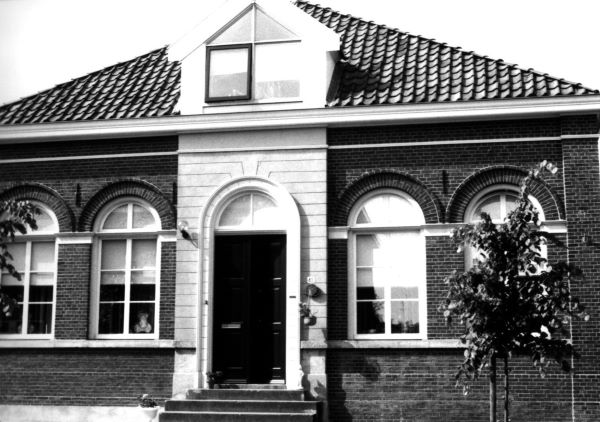
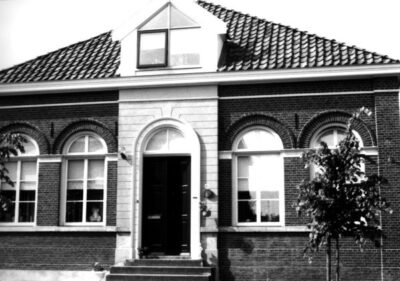
    Markt 3

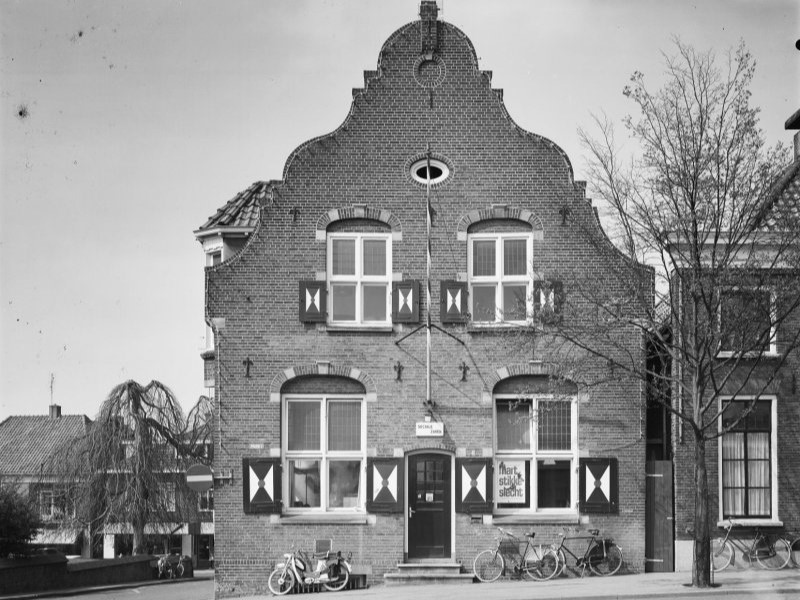
    In 1941, the Aalten municipal police moved into the characteristic building with the elegant bell gable at Markt 3. When the station was put into use, Chief Constable Wijnands was the head of the Aalten police. In 1947, the municipal police transitioned into the national police.

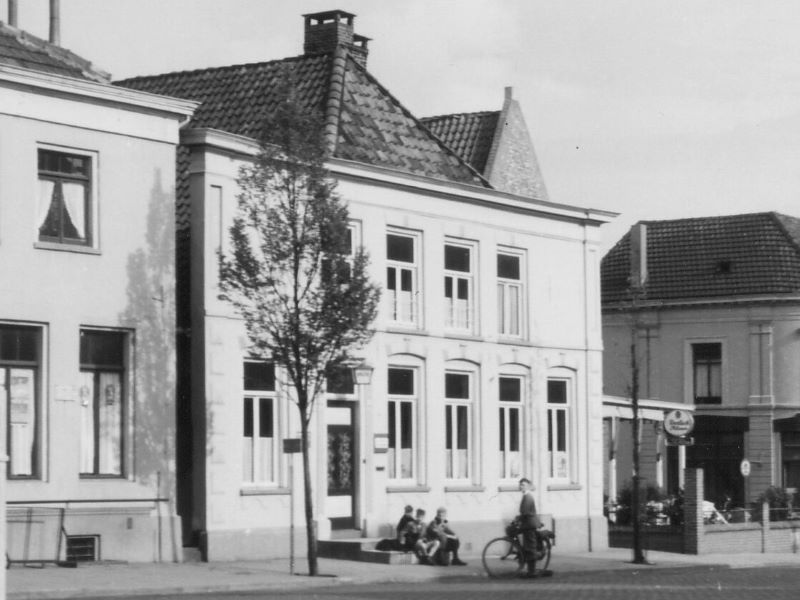
    After the war, the municipal services suffered from a lack of space. In 1949, the municipality of Aalten therefore purchased a building on the opposite side of the Markt (number 4) to house the police station.

    The Social Services office was housed in Markt 3. Today, the building is still part of the Aalten town hall.

    Markt 4

    The building at Markt 4 was privately inhabited before the war and had a notorious reputation in Aalten during the war, as it had served as the clubhouse for the NSB (National Socialist Movement). After the war, the building fell under the Management department of the Council for the Restoration of Rights. They sold the building to the municipality of Aalten in 1949, and the local police station was established there.

    In 1969, the Tubantia newspaper reported that the municipality of Aalten had informed the Government Buildings Agency that they were terminating the lease of the police station. The municipal services were once again bursting at the seams and desperately needed the space. The police moved to a new station on Polstraat.

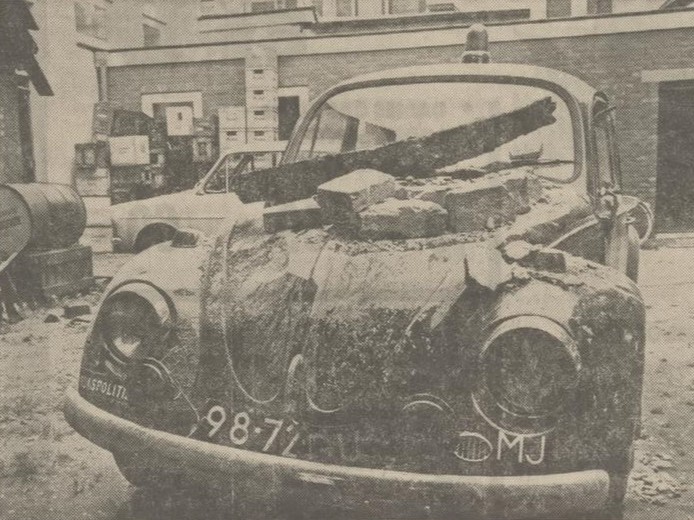
    Shortly before the move, the garage collapsed behind the police station, which was located on Peperstraat.

    The building at Markt 4 now houses the catering establishment De Geste.
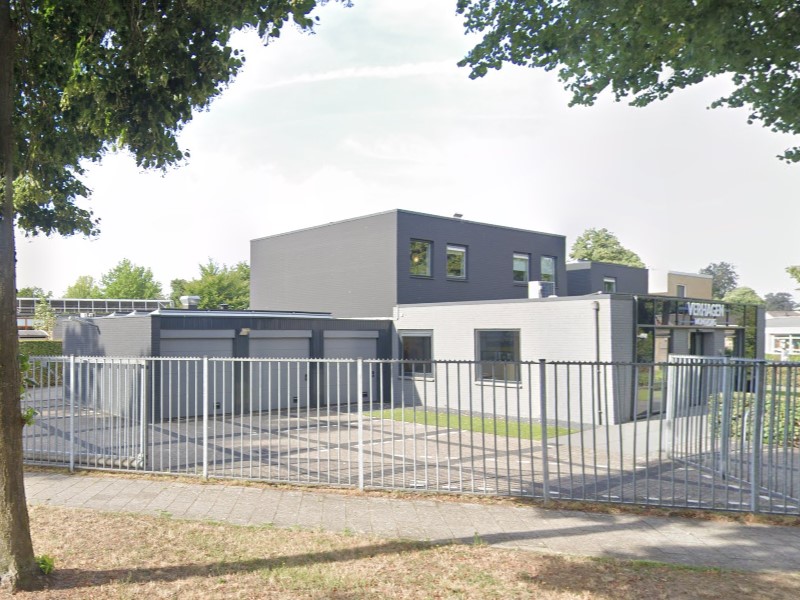
    Polstraat 36

    As early as February 1963, the site on the corner of Polstraat and Bonifaciusstraat was purchased by the municipality of Aalten, including the small farmhouse of the widow Scholten. It was likely already the intention then to demolish it and realize a new police station and a number of houses on the site.

    In 1965, the Aalten municipal council discussed the private sale of a section of the building plot, measuring 1,500 square metres, for the construction of a group and district office for the National Police (Rijkspolitie) in Aalten.

    It would take until the early 1970s before the new police station was completed. The Aalten police remained stationed here until 2018, when they moved to the Köstersbulte. A dental practice has since established itself in the former police station on Polstraat.

    Köstersbulte 2

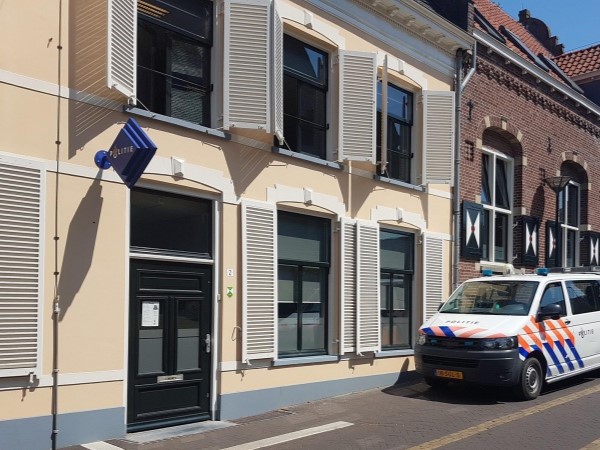
    Since 2018, the police have had a support point in the town hall, with its own entrance on Köstersbulte. The support point serves as a workplace for community officers during their shifts. There are no official opening hours. If someone wishes to file a report, for example, it is advised to make an appointment.

    In the last century, this building housed the Oberink drapery shop for decades.
  • Jan Steven Schaars Prins

    Jan Steven Schaars Prins

    State Constable

    Jan Steven Schaars Prins was born in Aalten on February 23, 1817, the son of farmer Laurens Prins and Anna Elisabeth Hiebink. In 1823, the family lived at the address Aalten 3, currently Kerkstraat 5, and his father was listed with the profession of innkeeper.

    On April 20, 1843, Jan Steven Schaars Prins married Johanna Walvoort. Together they had three children. After Johanna passed away in 1851, he remarried Berendeken Walvoort in 1853. They had six children together.

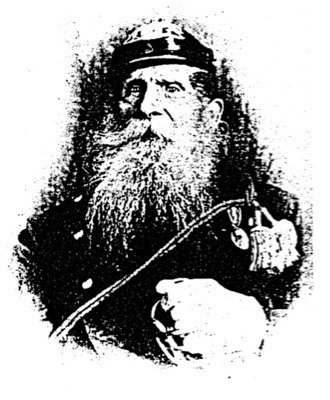
    From 1858 to 1885, Jan Steven Schaars Prins was a state constable in Aalten. The mere mention of his name was enough to strike fear into people’s hearts. The youth would retreat into their shells when his name was mentioned, and it was used to get naughty rascals to go to bed.

    But adults also held him in awe. He was an imposing figure, which in itself helped to restore order. And when he took action, order was restored immediately.

    Schaars Prins was, so to speak, a powerhouse who had faced many a challenge. He often went out alone to cite dangerous poachers, but he also demonstrated his strength against criminals. Reportedly, he was once overpowered by poachers in the Aaltense Goor and tied to a tree. He was freed by a passerby several hours later.

    In 1876, Schaars Prins received an honorable distinction from King Wilhelm I of Prussia for courageous behavior shown the previous year during the arrest of two German murderers who had escaped from the prison in Bocholt.

    Jan Steven Schaars Prins passed away on August 23, 1893, in Aalten.

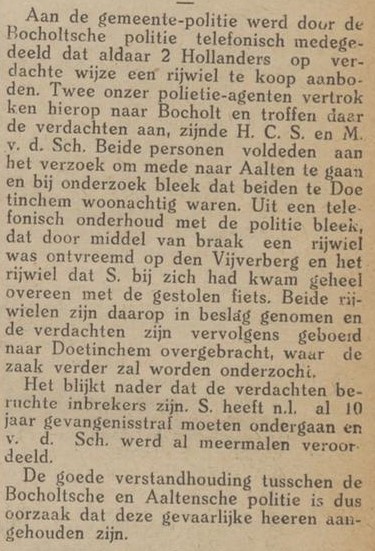
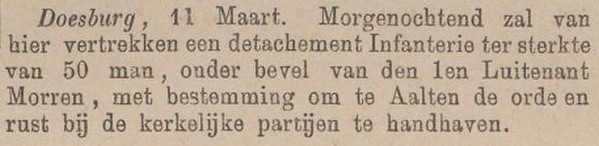
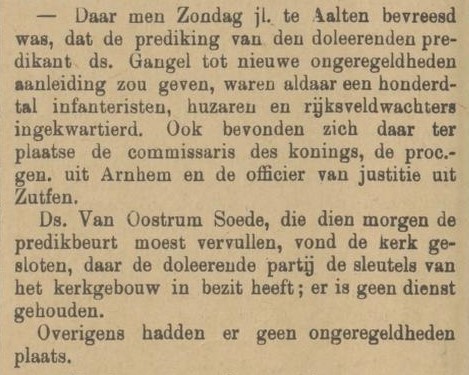
    Newspaper reports

    Sources


  • Police Station

    Police Station

    Polstraat 36, Aalten (relocated)

    The local police station was based here until 2018. Today, the building houses a dental practice.

    In February 1963, the Municipality of Aalten purchased the land on the corner of Polstraat and Bonifaciusstraat, which at the time occupied a small farm belonging to the widow Scholten. It is likely that the intention was already to demolish the farm and develop a new police station and a number of houses on the site.

    In 1965, the Aalten municipal council discussed the private sale of a section of the building plot, measuring 1,500 square metres, for the construction of a group and district office for the National Police (Rijkspolitie) in Aalten.

    It was not until the early 1970s that the new police station was completed. The Aalten police remained at this location until 2018, when they moved to the Köstersbulte.

    Features


    Cadastral no.I-11909
    FunctionHouse
    Year of construction1971
    Listedno
  • Night Watch & Constables

    Night Watch & Constables

    In 1937, G.H. Rots described in a series of articles how things were done in Aalten in former times. Regarding the ‘night watch’ and the constables (veldwachters) in Aalten, he wrote the following:

    “When the population of Aalten had found rest in the arms of Morpheus, they were watched over at night. The night watchman made his rounds and, accompanied by his faithful dog and with a thick rattan cane in hand, patrolled Aalten’s streets. He also served as a ‘knocker-up’; that is, if certain people needed to be woken early, he was the man who ensured it happened.

    For many years, the night watchman carried a rattle, and every time the tower clock was heard, the rattle was spun and the night watchman called out the hour that had struck. For example, at twelve o’clock, he would cry: ‘The clock has twelve, twelve has the clock!’. It was eventually realised that such customs were not conducive to the residents’ night’s rest, and the practice was subsequently abolished.

    Voor controle waren op enkele punten van ’t dorp controleklokjes bevestigd waarvan de werking zoodanig was dat de overheid kon constateeren of de nachtwachts hun plicht hadden gedaan. In woelige tijden of wanneer de overheid het noodig achtte, werd de nachtwacht versterkt door een ‘wacht’. Elk rot (= wijk/buurt) moest een manschap leveren en moest de wacht worden betrokken. De ‘wacht’ was in het gebouw waar nu de kapperszaak van den heer ter Maat is.

    The permanent night watchman thus had the assistance of these men, and they accompanied him on patrol. When it was pitch black, it sometimes happened that such a greenhorn assistant-watchman lost his way and ended up in a refuse heap or a manure pit. It is well known that this circuit through the village—the rattling aside—was not entirely silent, and one could hear the night watchman approaching from afar. For thieves and other ruffians, this was the signal to take to their heels or go into hiding.”

    Sinds 1 januari 1915 behoort de nachtwaker in Aalten tot het verleden. Eén van de laatste nachtwakers in Aalten was Jan te Slaa, bekender als dorpsomroeper ‘Jan met de Panne‘.

    spine-chilling stories

    “De oude nachtwachts konden griezelige verhalen doen van wat ze ’s nachts al zoo beleefd hadden. De hoorder van deze verhalen trok ‘de groezel ovver de hoed’. Zoo wist men te vertellen dat ‘achter de heggen in het Heuksken’ elken nacht een in ’t wit gekleede vrouw rondzwierf. En dan dat geheimzinnige licht in het knekelhuisje op het kerkhof. Ook ontmoette men soms geheimzinnige dieren, die Aalten’s straten onveilig maakten. En dan de ‘veurspooksels’ van brand. Als er brand kwam in ‘t dorp had soms een der nachtwachts weken te voren al een ‘roode gloed’ boven de plek van den brand gezien. En dat gebeurde nog wel eens want op het gebied van branden had Aalten een zekere ‘bekendheid’. Het is wel is gebeurd dat er drie dagen achtereen brand uitbrak. Den ‘rooden gloed’ zal dan nog wel eens gezien zijn.

    The belief in witches and ghosts had not entirely vanished in the last century, so these ghost stories were often believed. According to folk belief, witches held meetings at night, and in the Aalter Esch, there was a spot used as a nocturnal witch’s dwelling. That piece of land, situated roughly halfway between the Linde and the Lichtenvoordscheweg, was called the ‘heksenbeddestëe’ (witches’ bedstead). It was a patch of no man’s land that no one claimed. The night watchmen were not afraid of any of this, and through their heroic stance against these mysterious things, they commanded great respect from the population. Undeniably, quite apart from the above, the night watchman performed good service, and many viewed the abolition of the night watch with regret.”

    Constables

    “En dan de politiebewaking. Als Rijks-Veldwachter was bekend Jan Steven Schaars Prins. Het noemen van zijn naam was al voldoende om de schrik er in te krijgen. De jeugd kroop in haar schulp als zijn naam genoemd werd en de ondeugende rakkers kon men er mee naar bed krijgen. Maar ook voor grooteren was Schaars Prins iemand voor wien men ontzag had. Zijn verschijning alleen al werkte mee om de orde te herstellen en als hij aanpakte dan was de orde direct hersteld.

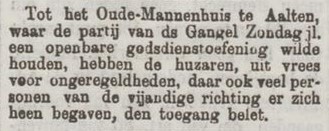
    A formidable man, then, who certainly faced his share of trouble. Often he set out alone to fine dangerous poachers, but he also showed his strength against more serious criminals. The arrest of two escaped German murderers in 1875 earned him an honourable distinction from the German government.

    On one occasion, he is said to have been overpowered by superior force; poachers in the Aalter Goor tied him to a tree, and he was only freed a few hours later by a passer-by.

    In the middle of the last century, Jan te Hoonte and Constable Beernink were known as the municipal police. They were appointed at a salary of 145 guilders a year. Not too many official reports (proces-verbalen) were drawn up, for if a case had to be heard at the court in Zutphen, they had to make the journey to Zutphen on foot as witnesses. Fining a poacher, however, was another matter, as it yielded an extra reward, which was quite welcome alongside the aforementioned salary.

    The constable went to the town hall in the morning to ask if there was ‘anything special’ to report. Sometimes it was a message for a local resident, but usually, the Mayor had nothing on the agenda, and the constable would go to tend his farm; if something significant happened, one could find the constable out in the fields.”

    Sources


    • ‘From Aalten’s past’, by G.H. Rots, Aaltensche Courant, 26 November 1937 (Delpher)
    • Het Vaderland, 7 March 1876 (Delpher)
  • Gerrit Heersink

    Gerrit Heersink

    Constable

    Gerrit Heersink was born on 13 May 1846 in Hummelo, the son of day labourer Jan Willem Heersink and Berendina Eenink. On 8 May 1873, he married Aleida Gesina Prinsen in Aalten. Nine children were born from this marriage.

    Heersink served as a ‘veldwachter’ (rural constable) in Aalten for nearly five decades. He lived with his family on the Kattenberg, on what is now Berkenhovestraat. His brother Lammert ran a bakery just a stone’s throw away.

    In early 1920, Gerrit Heersink moved to Haaksbergen, where he passed away on 27 December 1920 at the age of 74.

    Gerrit Heersink (1846–1920), wearing the medal awarded to him in 1912 to mark his 40th anniversary of service as a constable.
    Gerrit Heersink (1846–1920), wearing the medal awarded to him in 1912 to mark his 40th anniversary of service as a constable.
    Gerrit Heersink in 1912, on the occasion of his 40th anniversary in office as a constable in Aalten.
    Gerrit Heersink in 1912, on the occasion of his 40th anniversary in office as a constable in Aalten.