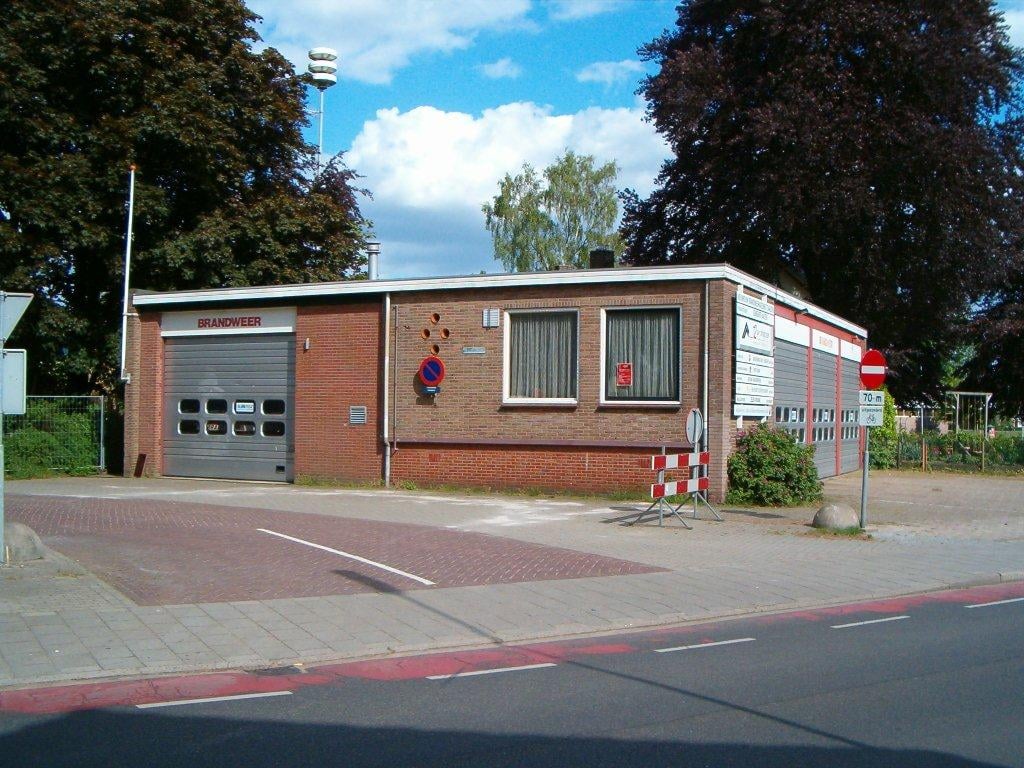
Tramstraat 1, Aalten
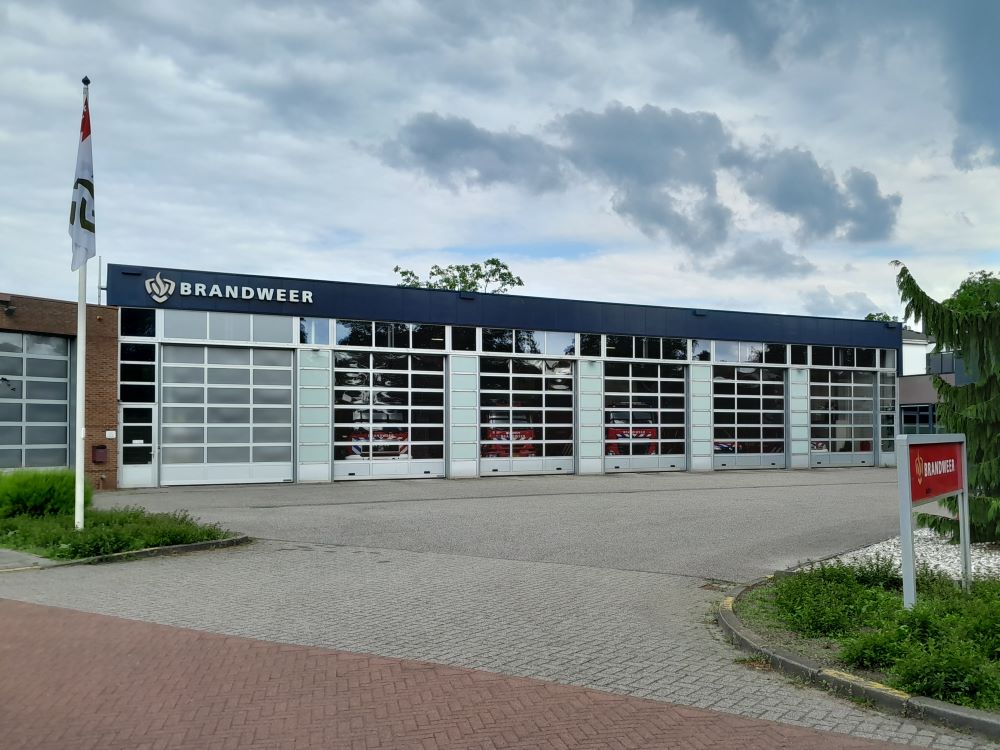
In 1889, the ‘Regulation on the Fire Engine Service and the extinguishing of fires in the municipality of Aalten’ was established by the municipal council. Article 1 of that regulation states: ‘Every male resident from the 18th up to and including the 59th year of age is, subject to the exceptions to be mentioned hereafter, called upon and liable for service with the fire engines’. The fire brigade therefore consisted entirely of volunteers, appointed and dismissed by the Board of Mayor and Aldermen.
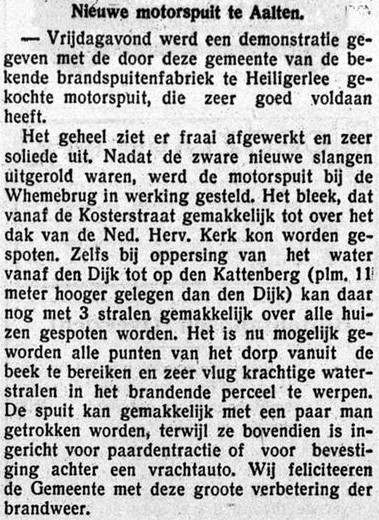
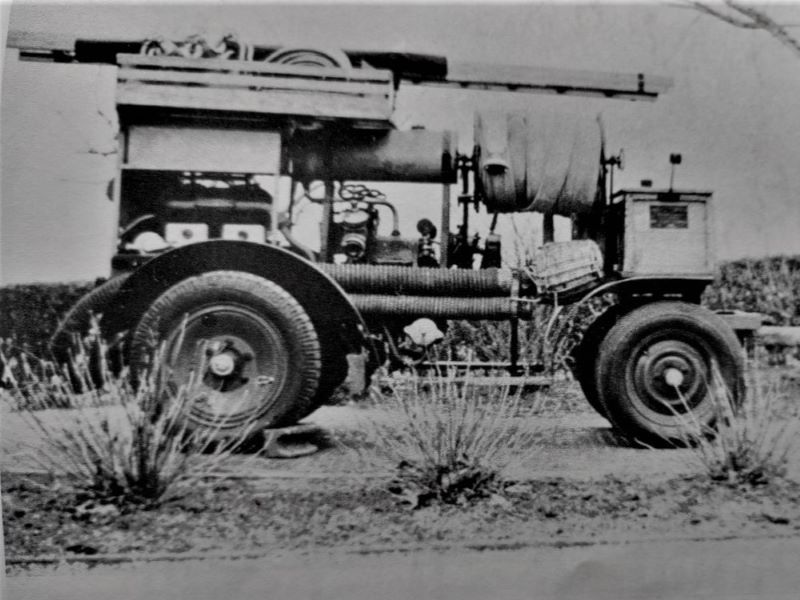
On June 19, 1925, the first meeting of the newly appointed corps of Firemasters took place. Over time, the available equipment was modernized. For example, a motorized pump was purchased in 1930, followed by an ‘auto-tractor’ in 1933, which made it possible to transport this pump to the fire.
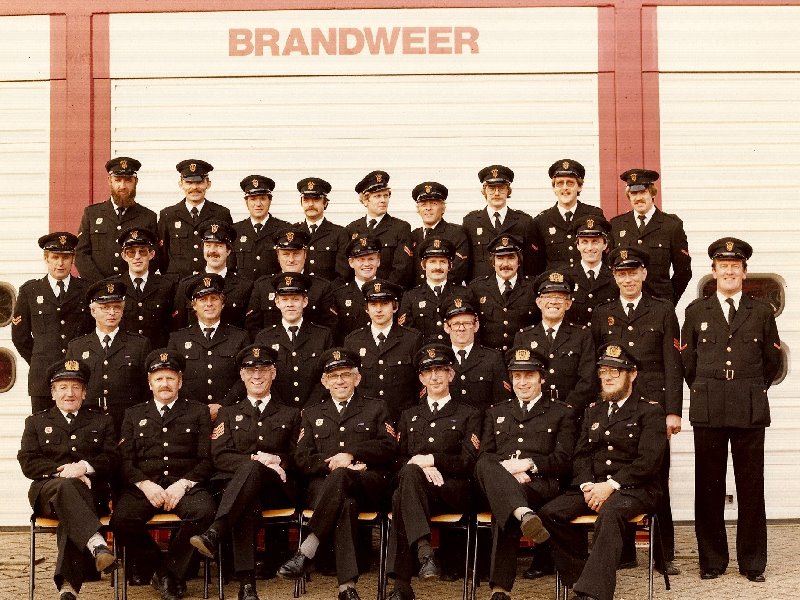
During the eighties and nineties of the last century, increasingly close cooperation developed between the fire brigades in the Achterhoek and the Cooperation Association of East Gelderland, known as the Achterhoek Region from 1995 onwards.
In 1987, the Bredevoort fire group, which until then had been part of the corps, was disbanded. A centralization of command structures in Doetinchem was established, so that the Aalten volunteer fire brigade lost its actual independence.
The fire brigade in the 19th century
In 1937, G.H. Rots described in a series of articles how things were done in Aalten in former times. Regarding the Fire Brigade, he wrote:
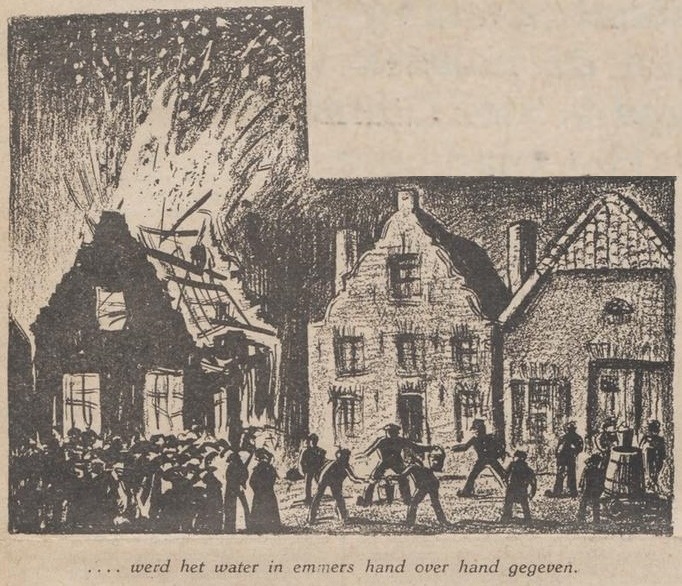
“The performance of the modern fire brigade, as was again evident during the large factory fire in Winterswijk, makes our thoughts return to the primitive fire-extinguishing methods of former days. A fire brigade did exist in the middle of the last century, and in their own way, they made serious attempts to fight a fire or prevent it from spreading, but they had to make do with the tools they had.
The first form of firefighting was to throw buckets of water onto the fire. From existing wells and pumps, the water was passed in buckets from hand to hand. When the well was empty, one had to wait until the supply was replenished. If the fire broke out near the stream, one could, of course, continue scooping. There were reserve wells where a quantity of water was always kept, and on the Market Square stood a row of large barrels filled with water on mobile chassis, which were immediately driven to the scene of the disaster by a designated driver.
The introduction of hand pumps brought some improvement. The water could now be sprayed at least ten meters high to keep roofs and houses wet. Later still, another improvement came with the addition of the so-called booster, a suction and pressure pump placed at the water supply, which forced the water through hoses to the pump engines. Behind the town hall were the buildings for storing these fire-extinguishing tools.
The firemasters (for an organized fire brigade had already existed for many years) had as a sign of their dignity a copper rod, a kind of scepter, or an oval copper plate, which adorned the chest of the firemaster in the event of a fire.
The many fires that plagued Aalten caused the city council to look for ways to prevent fire, for the new lamps fed with petroleum, which had to serve for lighting in the evenings on the threshing floor near hay and straw, were dangerous. An article was added to the police regulation, mandating that in the vicinity of hay or straw, on threshing floors and in stables, workshops, etc., where highly flammable material was present, lighting had to be done with closed lanterns. Whether it helped much? Fires continued to occur regularly thereafter, and each time one heard the dismal sound of the fire bell.”
Fire engines
The website ‘Brandweer Voertuigen Online’ contains an overview of fire vehicles that served with Dutch fire brigades, including Aalten and Bredevoort:
Sources
- Heritage Centre Achterhoek and Liemers
- ‘From Aalten’s Past’, by G.H. Rots, Aaltensche Courant, 19 November 1937 (via Delpher)

Leave a Reply