
Located in the Vestingpark in Bredevoort are two so-called TB reclining pavilions (lighallen) dating from the early 20th century. They belonged to the former St Bernardus Roman Catholic Sanatorium, where tuberculosis patients were treated from 1907 to 1933.
Tuberculosis, commonly known at the time as “consumption”, was one of the leading causes of death in the Netherlands during the 19th and early 20th centuries. The disease was infectious, often fatal, and responsible for approximately a quarter of all deaths. Since no medication yet existed, treatment consisted primarily of rest, a healthy diet, fresh air, and sunlight.
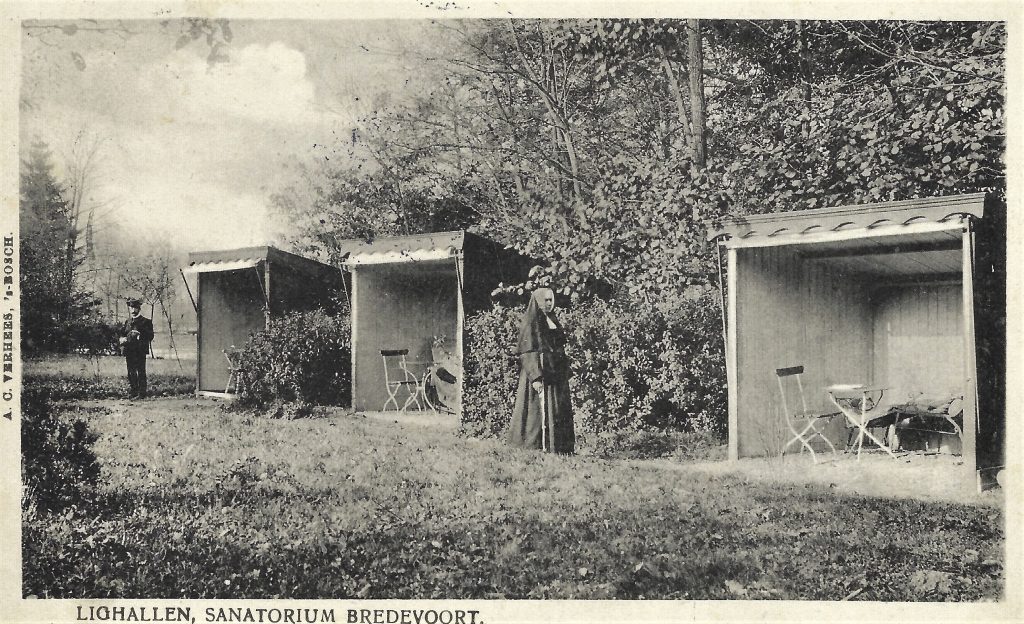
Sanatoria—rest homes for long-term care—were established all over the Netherlands. A key component of the treatment was the use of reclining pavilions: wooden structures with one open side facing the sun, where patients spent hours or even the entire day in bed—often wrapped in blankets against the cold.
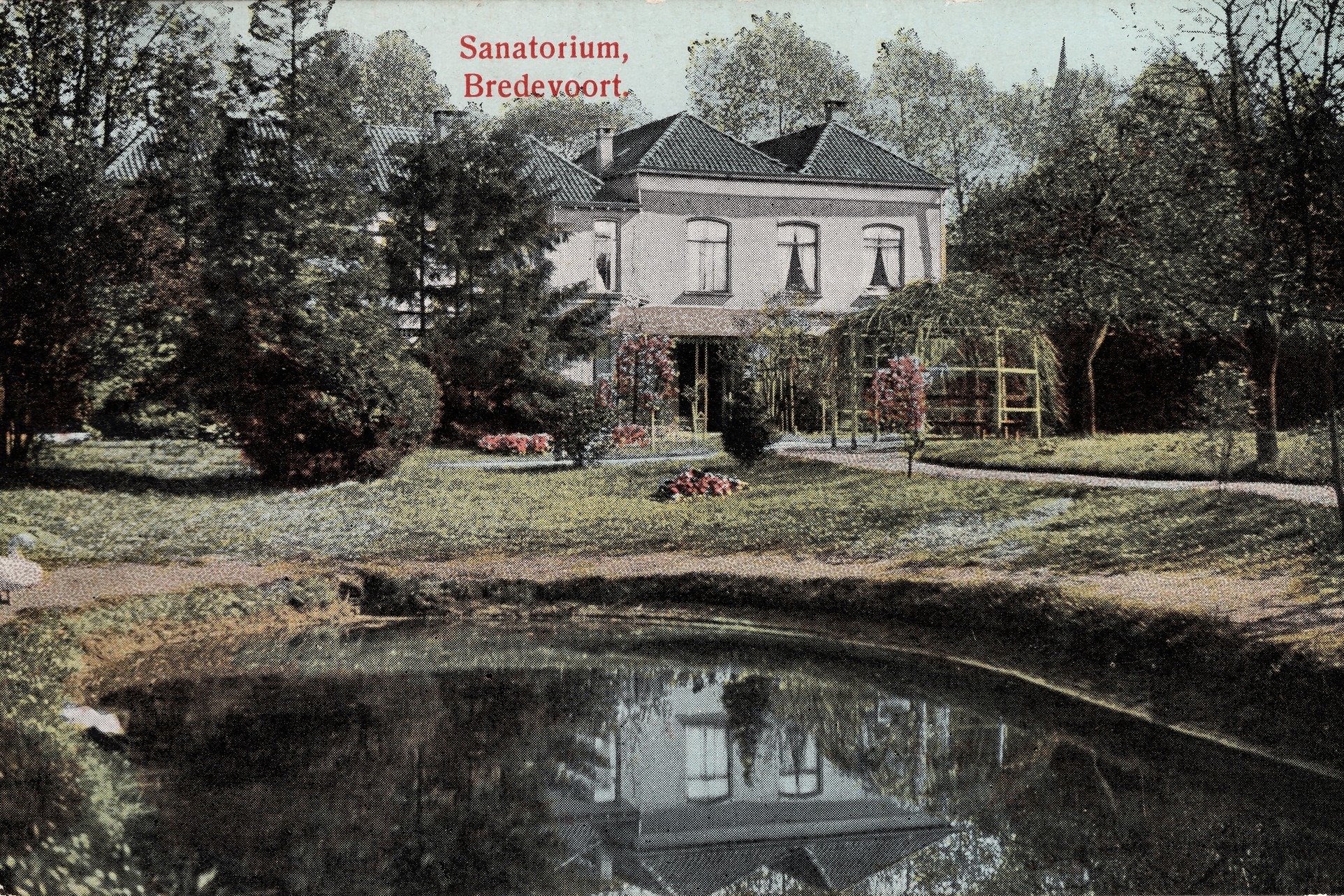
St Bernardus Sanatorium
the St Bernardus Roman Catholic Sanatorium was founded in 1897 on the initiative of Father Bernardus Mulders. Using his own capital, he purchased the former estate manager’s house of the Roelvink family and had it converted into a convent and care facility. The nursing care was entrusted to the Franciscan Sisters of Thuine.
From 1907 onwards, patients from across the country came to Bredevoort. In the large garden behind the building, now the Vestingpark, at least ten wooden reclining pavilions were erected, each with its open side facing south. Patients lay in these pavilions during the day, even in winter, as evidenced by the text on a postcard from 1909. Each pavilion contained two couches, a table, and a chair.
Sanatorium archives show that between 1907 and 1916, an average of about twenty patients were present annually. In some years, more than 7,000 nursing days per year were recorded.
Two Pavilions Preserved
Of the original pavilions, only two have survived. Due to their historical significance as examples of a building type that has almost entirely vanished—owing to the fragility of the materials and the obsolescence of the sanatoria—they have been designated as a Rijksmonument (National Monument).
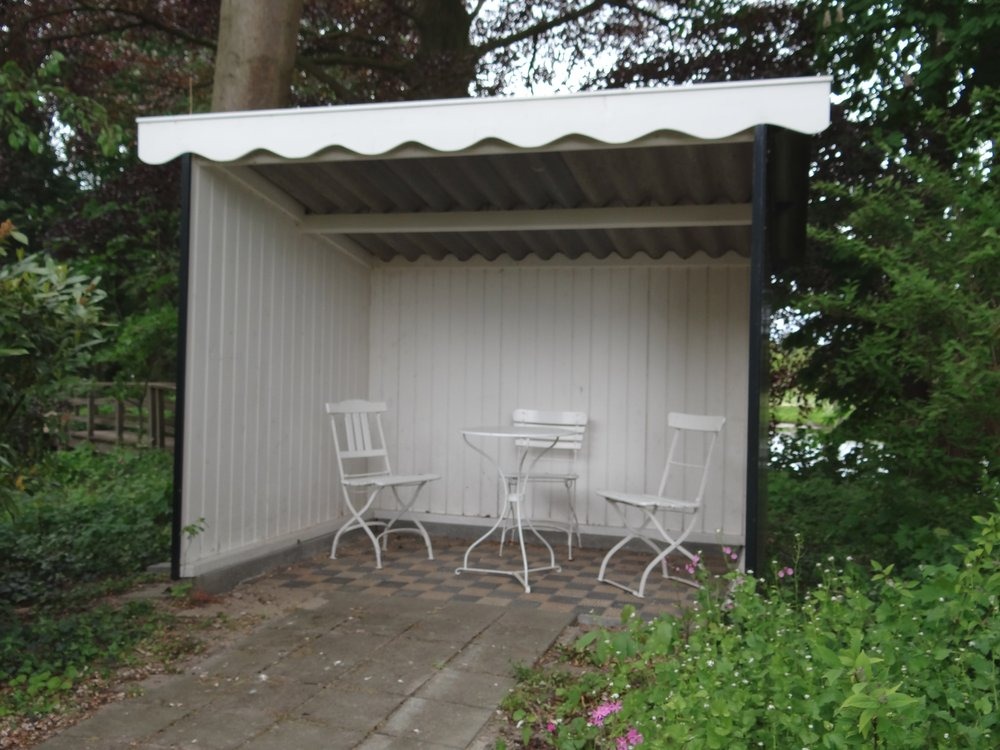
The structures are simple wooden buildings with a mono-pitched roof, three closed sides, and an open front. Both pavilions feature a tiled floor consisting of black and beige tiles in a random pattern with a geometric motif. Decorative bargeboards are fitted to the front: the eastern pavilion has an ornately carved trim, while the other features a simpler wave pattern.
Restoration & Accessibility
The small halls were reconstructed in 2025. The original halls were in poor condition. The carpentry for the reconstruction was carried out by two students from the restoration carpentry program at the Gelderland Restoration Center in Velp. Volunteers and local businesses handled the rebuilding and finishing. The paintwork was executed in a historically accurate color scheme.
The pavilions can be viewed freely in the Vestingpark, directly behind the former St Bernardus sanatorium at ’t Zand in Bredevoort. The park is open to the public from sunrise to sunset.
Sources
- Aalten Vooruit – Sanatorium with reclining pavilions in the garden of St Bernardus
- Aalten Vooruit – TB reclining pavilions in Vestingpark completely renewed
- Bredevoort.nu – Have you voted yet?
- Rijksmonumenten.nl – Monument 508024: St Bernardus and reclining pavilions