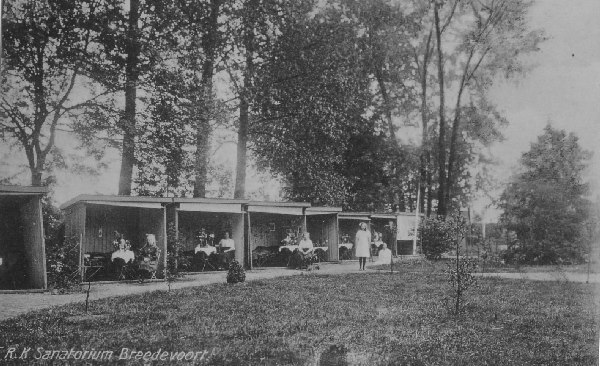
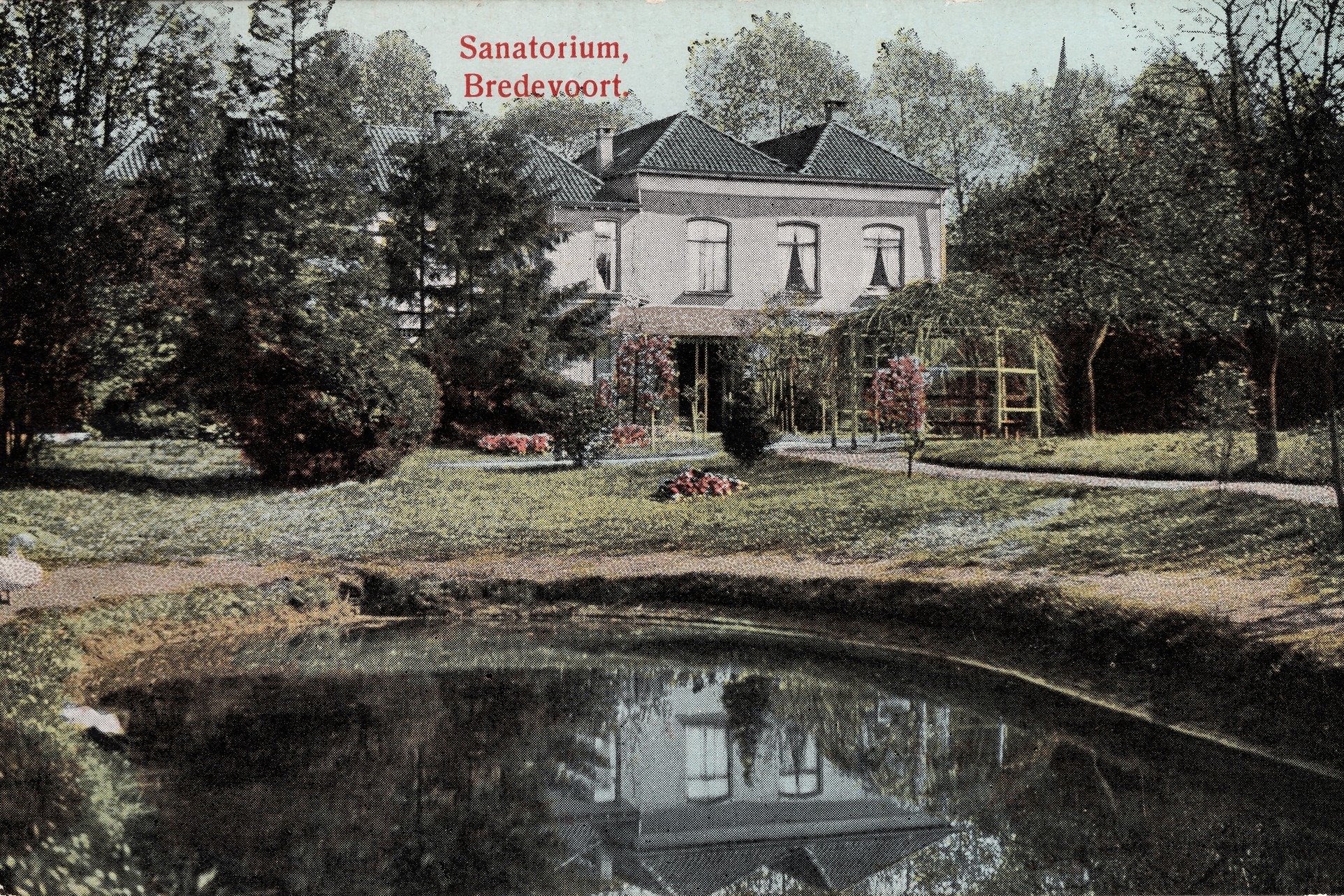
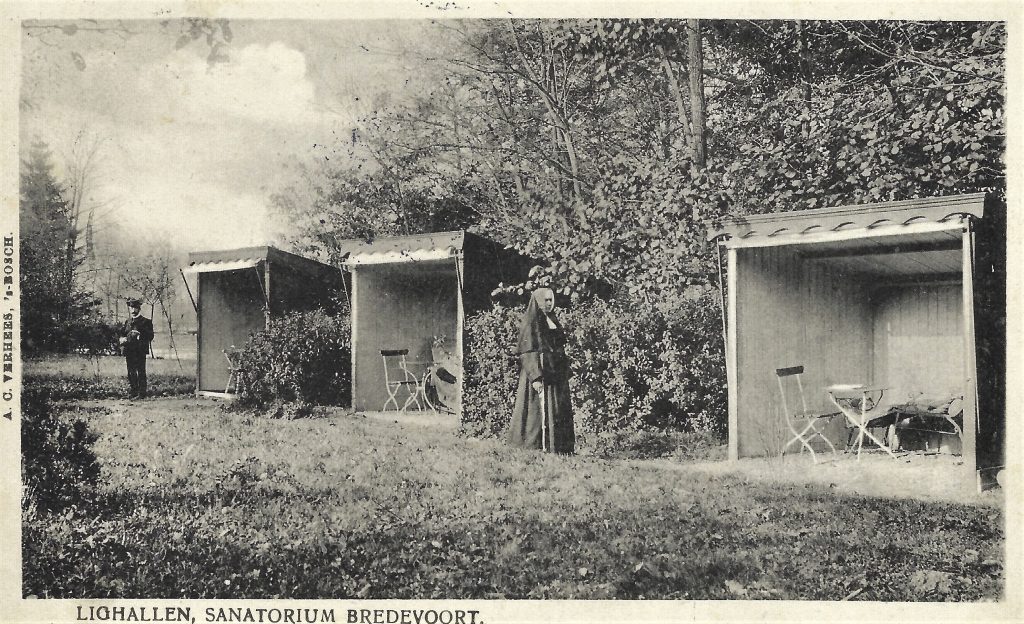
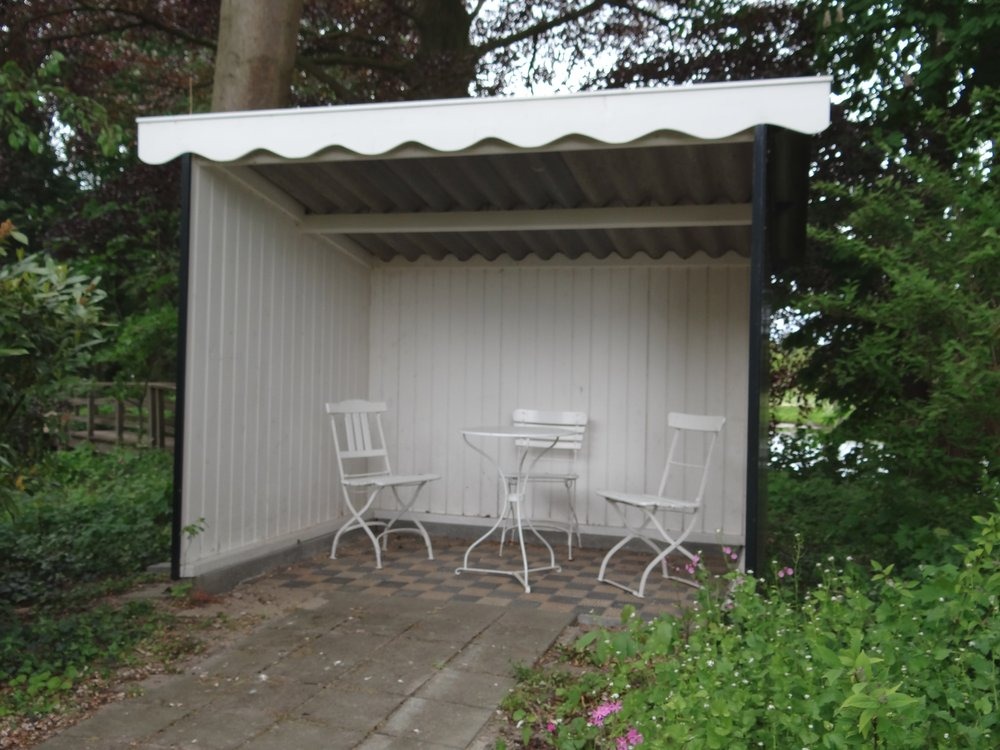
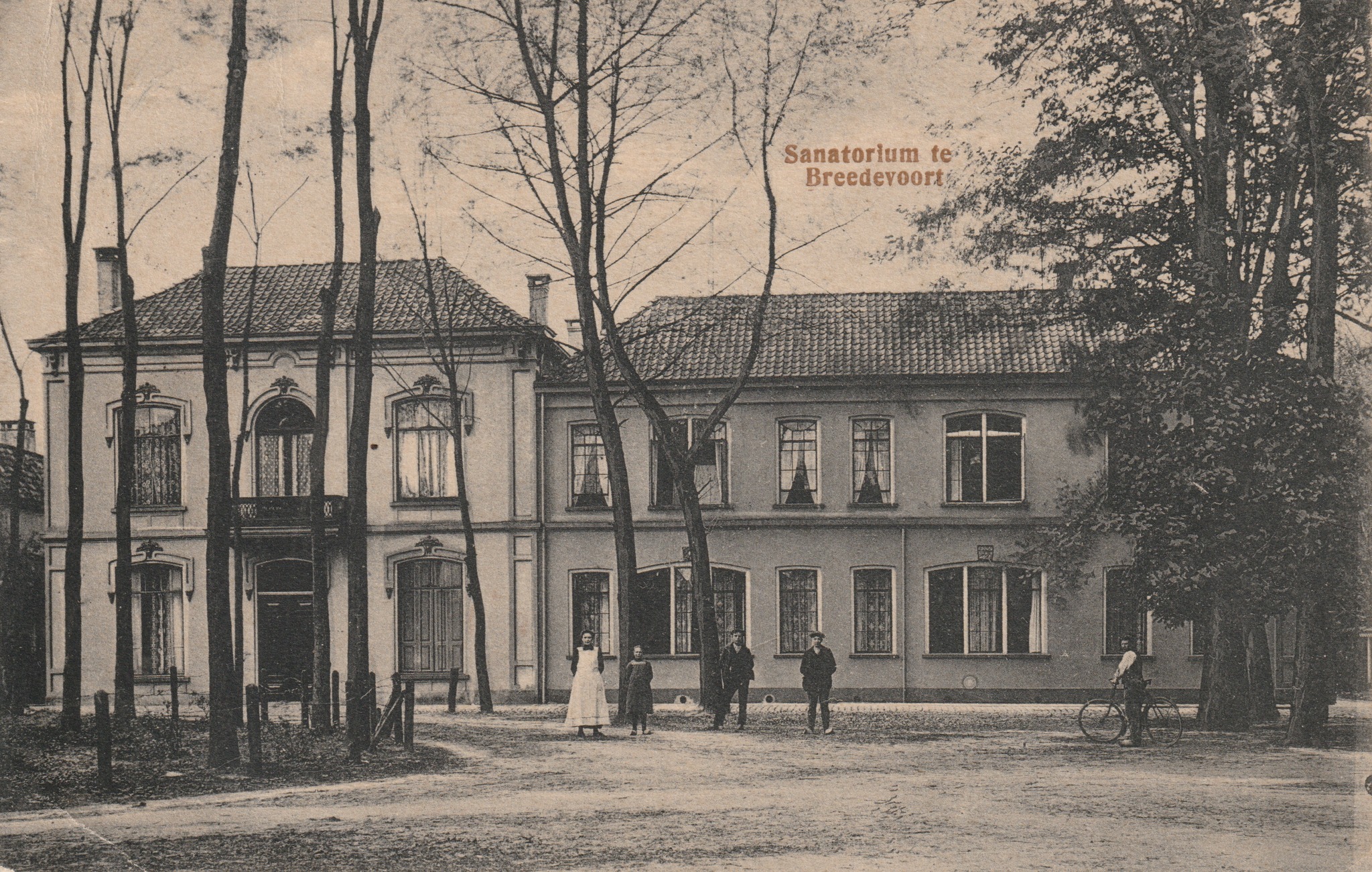
Located in the Vestingpark in Bredevoort are two so-called TB reclining pavilions (lighallen) dating from the early 20th century. They belonged to the former St Bernardus Roman Catholic Sanatorium, where tuberculosis patients were treated from 1907 to 1933.
Tuberculosis, commonly known at the time as “consumption”, was one of the leading causes of death in the Netherlands during the 19th and early 20th centuries. The disease was infectious, often fatal, and responsible for approximately a quarter of all deaths. Since no medication yet existed, treatment consisted primarily of rest, a healthy diet, fresh air, and sunlight.
Sanatoria—rest homes for long-term care—were established all over the Netherlands. A key component of the treatment was the use of reclining pavilions: wooden structures with one open side facing the sun, where patients spent hours or even the entire day in bed—often wrapped in blankets against the cold.
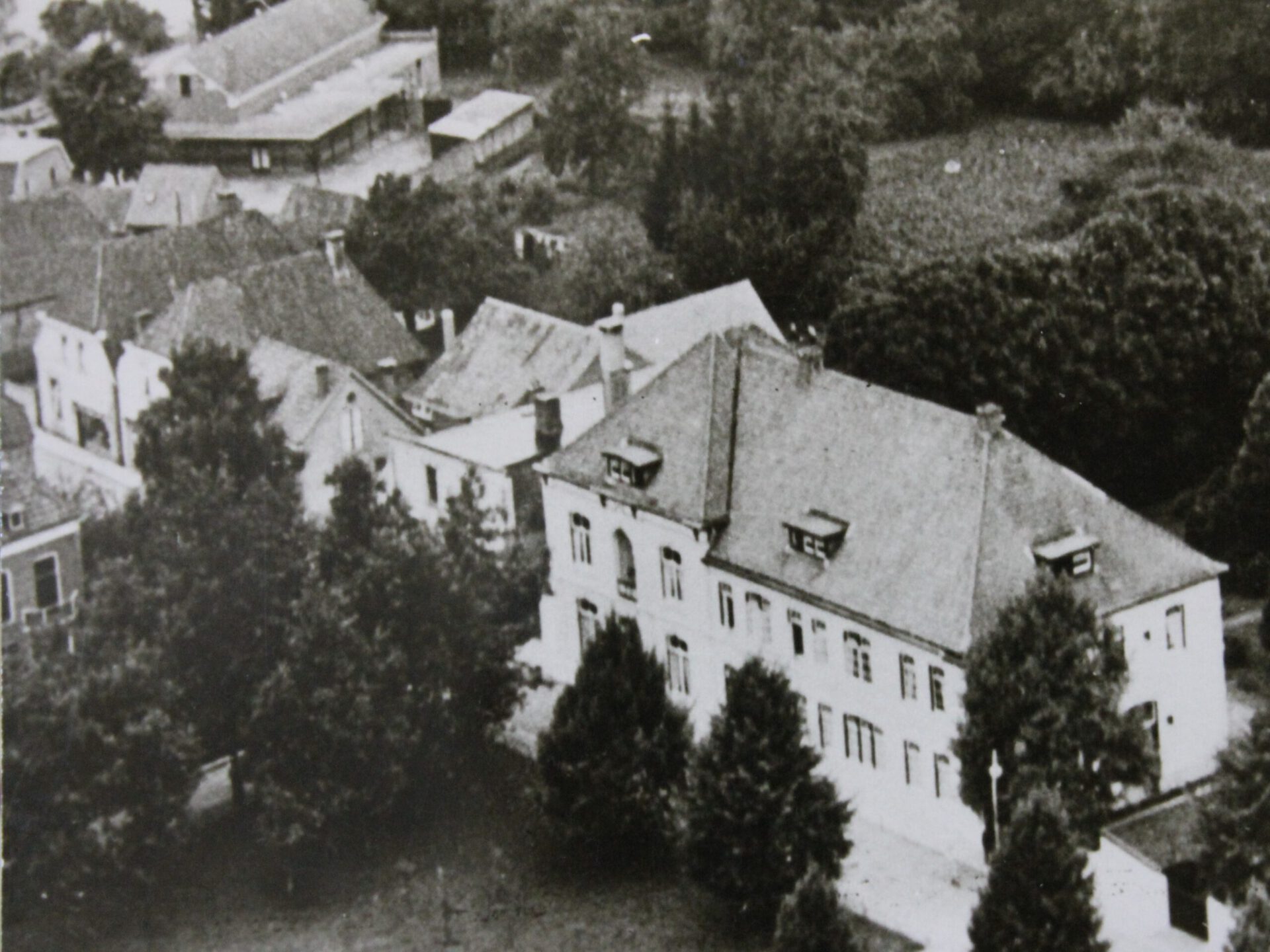
St Bernardus Sanatorium
the St Bernardus Roman Catholic Sanatorium was founded in 1897 on the initiative of Father Bernardus Mulders. Using his own capital, he purchased the former estate manager’s house of the Roelvink family and had it converted into a convent and care facility. The nursing care was entrusted to the Franciscan Sisters of Thuine.
From 1907 onwards, patients from across the country came to Bredevoort. In the large garden behind the building, now the Vestingpark, at least ten wooden reclining pavilions were erected, each with its open side facing south. Patients lay in these pavilions during the day, even in winter, as evidenced by the text on a postcard from 1909. Each pavilion contained two couches, a table, and a chair.
Sanatorium archives show that between 1907 and 1916, an average of about twenty patients were present annually. In some years, more than 7,000 nursing days per year were recorded.
Sanatorium St Bernardus, Bredevoort
Two Pavilions Preserved
Of the original pavilions, only two have survived. Due to their historical significance as examples of a building type that has almost entirely vanished—owing to the fragility of the materials and the obsolescence of the sanatoria—they have been designated as a Rijksmonument (National Monument).
The structures are simple wooden buildings with a mono-pitched roof, three closed sides, and an open front. Both pavilions feature a tiled floor consisting of black and beige tiles in a random pattern with a geometric motif. Decorative bargeboards are fitted to the front: the eastern pavilion has an ornately carved trim, while the other features a simpler wave pattern.
Picture postcard from 1909
Restoration & Accessibility
The small halls were reconstructed in 2025. The original halls were in poor condition. The carpentry for the reconstruction was carried out by two students from the restoration carpentry program at the Gelderland Restoration Center in Velp. Volunteers and local businesses handled the rebuilding and finishing. The paintwork was executed in a historically accurate color scheme.
The pavilions can be viewed freely in the Vestingpark, directly behind the former St Bernardus sanatorium at ’t Zand in Bredevoort. The park is open to the public from sunrise to sunset.
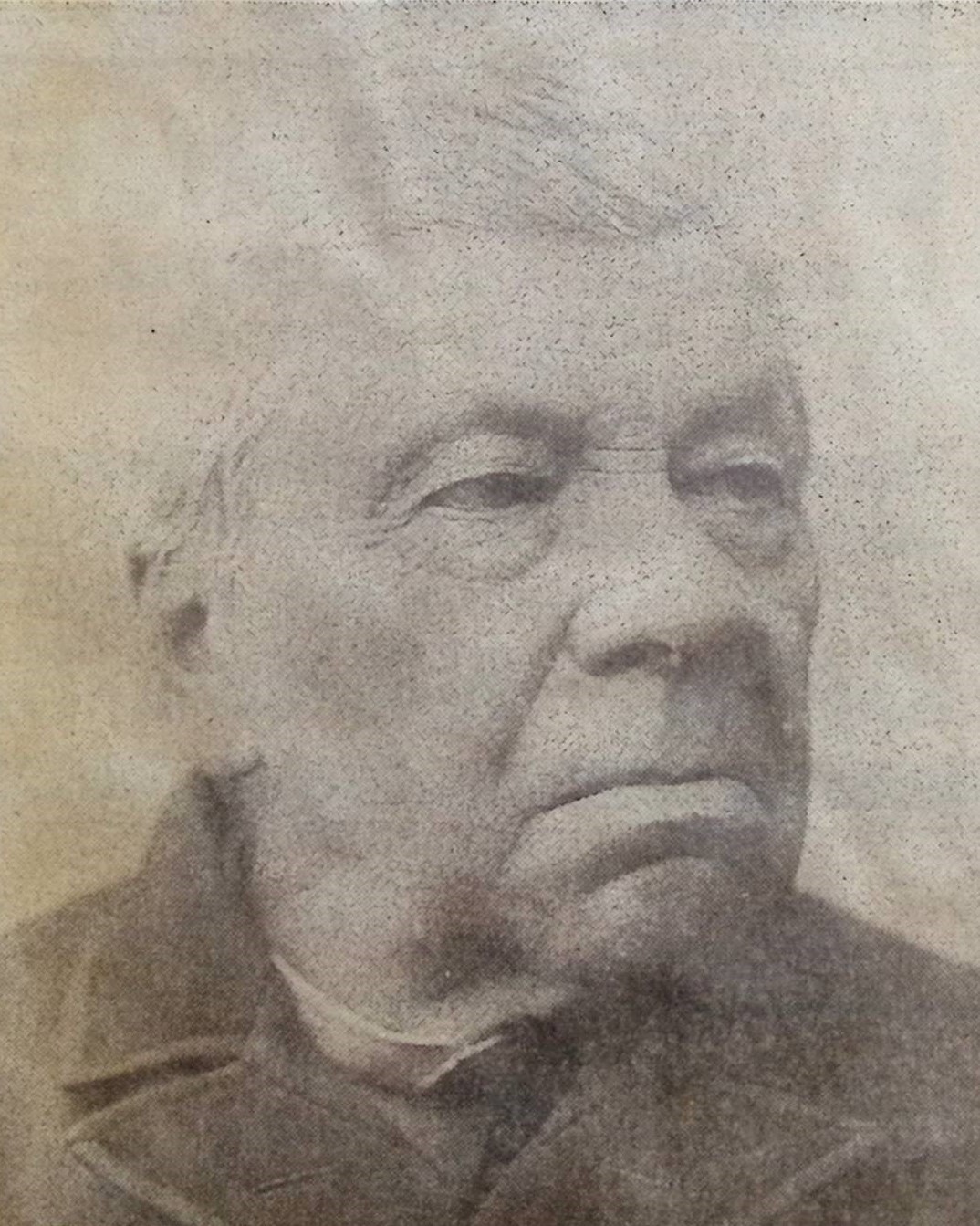
Servaas van Leuven was a medical doctor in Aalten from 1836 to 1896. He was born on 12 March 1811 in Kampen, the son of Jan Adrianus van Leuven, a tailor, and Johanna Maria Huijzer. Van Leuven passed away in 1898 at the age of 87.
On 1 May 1836, Van Leuven arrived in Aalten to succeed the surgeon Adolph Wechgelaar, who had died shortly before. Initially, he established himself at Wechgelaar’s residential address on Dijkstraat.
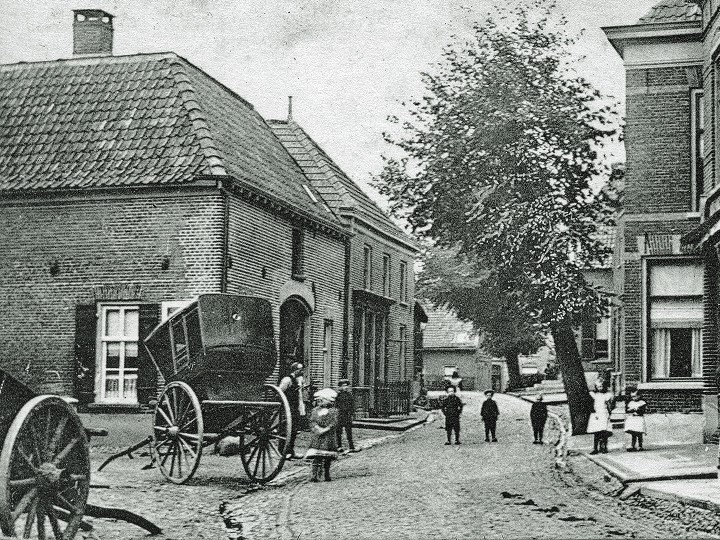
On 18 May 1838, he married Henriette Wilhelmina Christina Theodora Rost in Aalten, the daughter of the retired captain Johann Christian Rost. In 1839, the couple moved to Peperstraat. Not long after, they settled permanently on Bredevoortsestraatweg. Opposite their home, on the corner with Peperstraat, was the livery stable where Doctor Van Leuven’s horse and carriage were kept.
The couple had no fewer than ten children. Two of them passed away at a very young age and were buried in the burial mound at ’t Smees.
Work as a doctor
Servaas van Leuven was a valued and respected doctor who for decades played a vital role in local healthcare.
For sixty years, he carried out his often demanding and exhausting work with great dedication. He particularly excelled in the field of obstetrics through his diligence and devotion to duty. At all hours of the night, in winter cold and storms, his assistance was never sought in vain, even in his advanced years.
In an era when medical assistance in the Achterhoek was scarce, he was regarded by many as a saving grace. He delivered thousands of babies and offered pro bono care and advice to many of the less fortunate.
Final years and passing
After more than sixty years in practice, Van Leuven ended his medical work in 1896 at the age of 85.
Servaas van Leuven passed away on 24 November 1898 in Aalten and was buried at the Old Cemetery on Varsseveldsestraatweg.
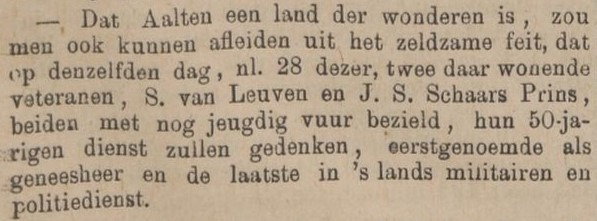
On the left, the building that formerly stood on the corner of Bredevoortsestraatweg and Peperstraat (where Pepper 8 is located today). This was the livery stable where Doctor Servaas van Leuven kept his horse and carriage in the late 19th century. Zutphensche Courant, April 17, 1886
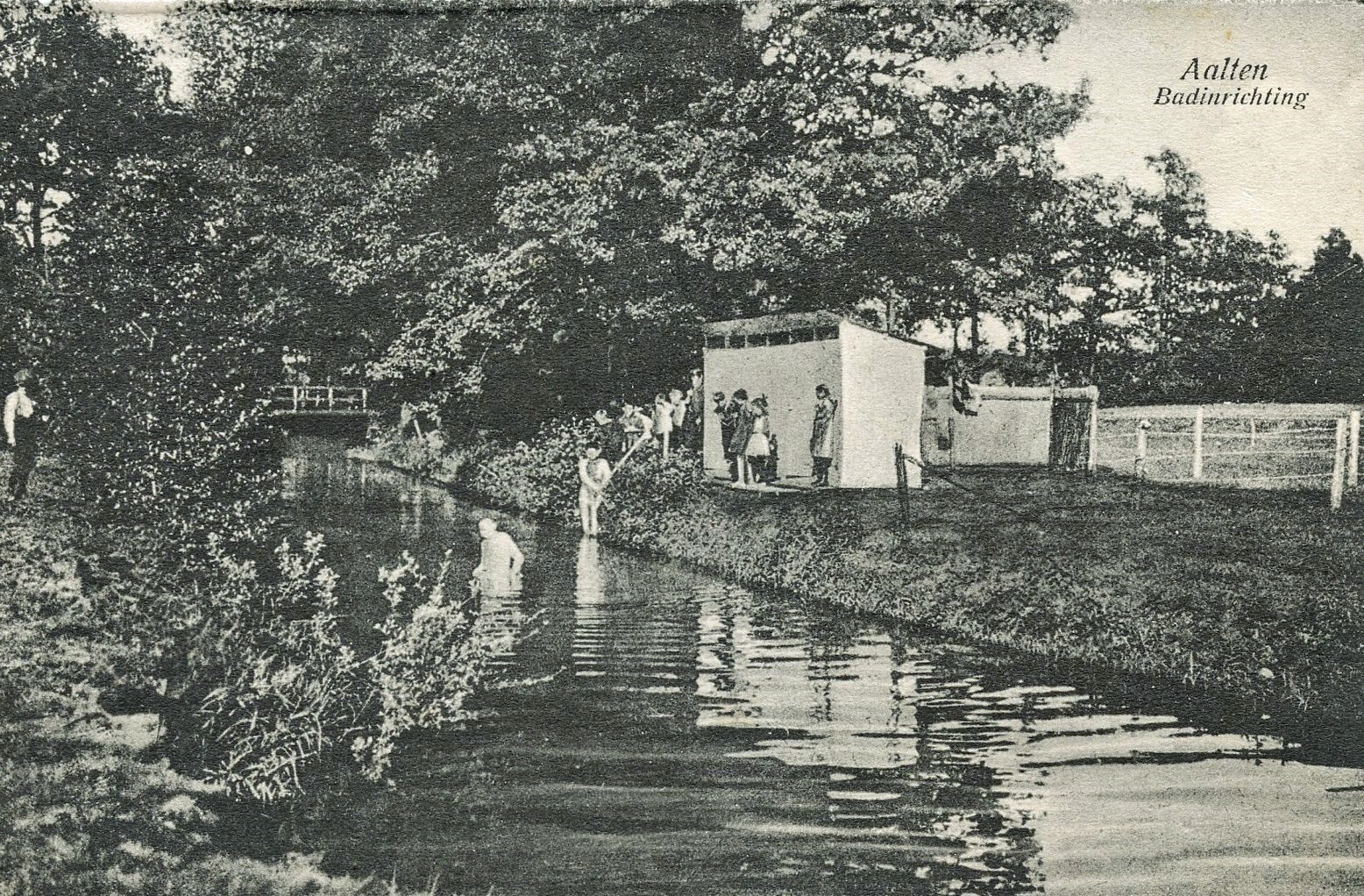
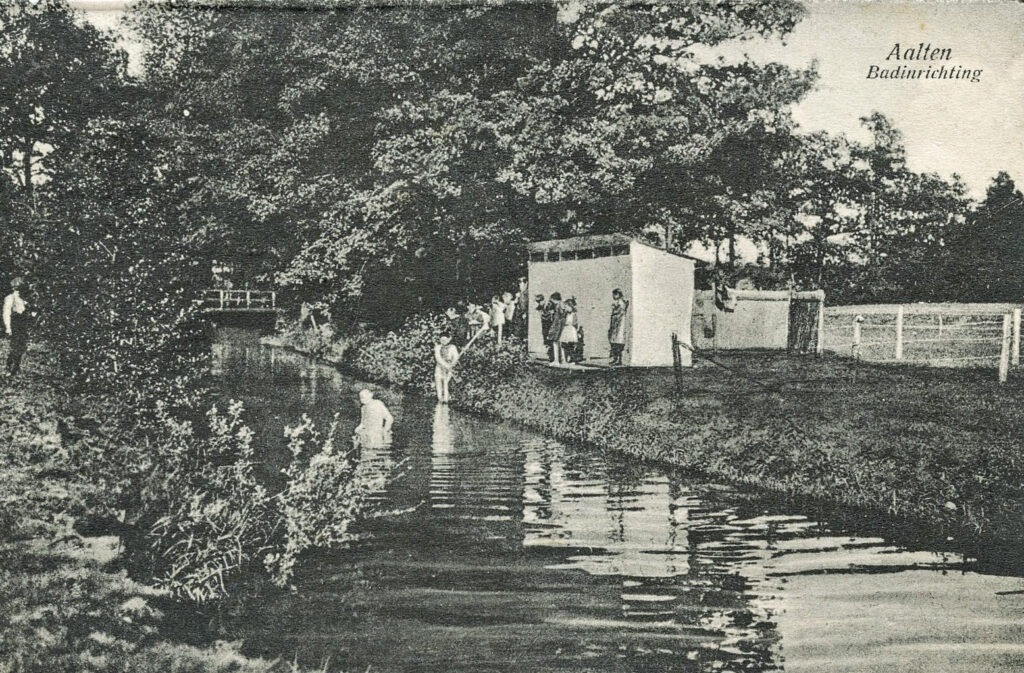
Before the construction of formal bathing facilities, the people of Aalten sought cooling in the Slingebeek during warm days.
As early as 1906, local interest group ‘Aaltens Belang‘ searched for a suitable place to swim. The location had to be reliable, but the stream was occasionally too shallow. The most suitable spot was found to be the pool at De Pol, where the water mill once stood. Swimming once took place there within a casing, a type of weir. Around 1920, people could “enter the water” in the stream near Nannielaantje (Smeeslaantje); however, the water board removed the weirs from the stream.
Bathing facility near the Smeeslaantje in Aalten, 1924
In 1920, the municipality purchased a site between Aalten and Bredevoort known as ‘Oosterman’ with the intention of establishing a new general cemetery there. This plan was later reconsidered. On 4 July 1930, during a meeting of the municipal council, the question was raised whether the Mayor and Aldermen were inclined to submit proposals regarding the establishment of a municipal bathing and swimming facility.
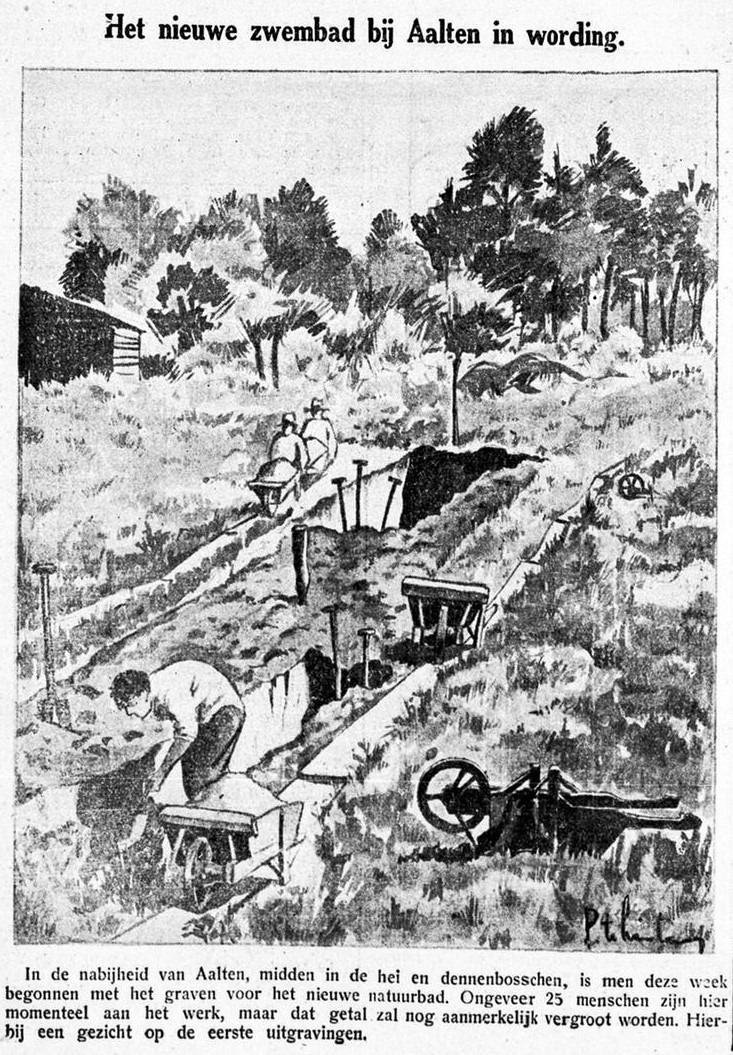
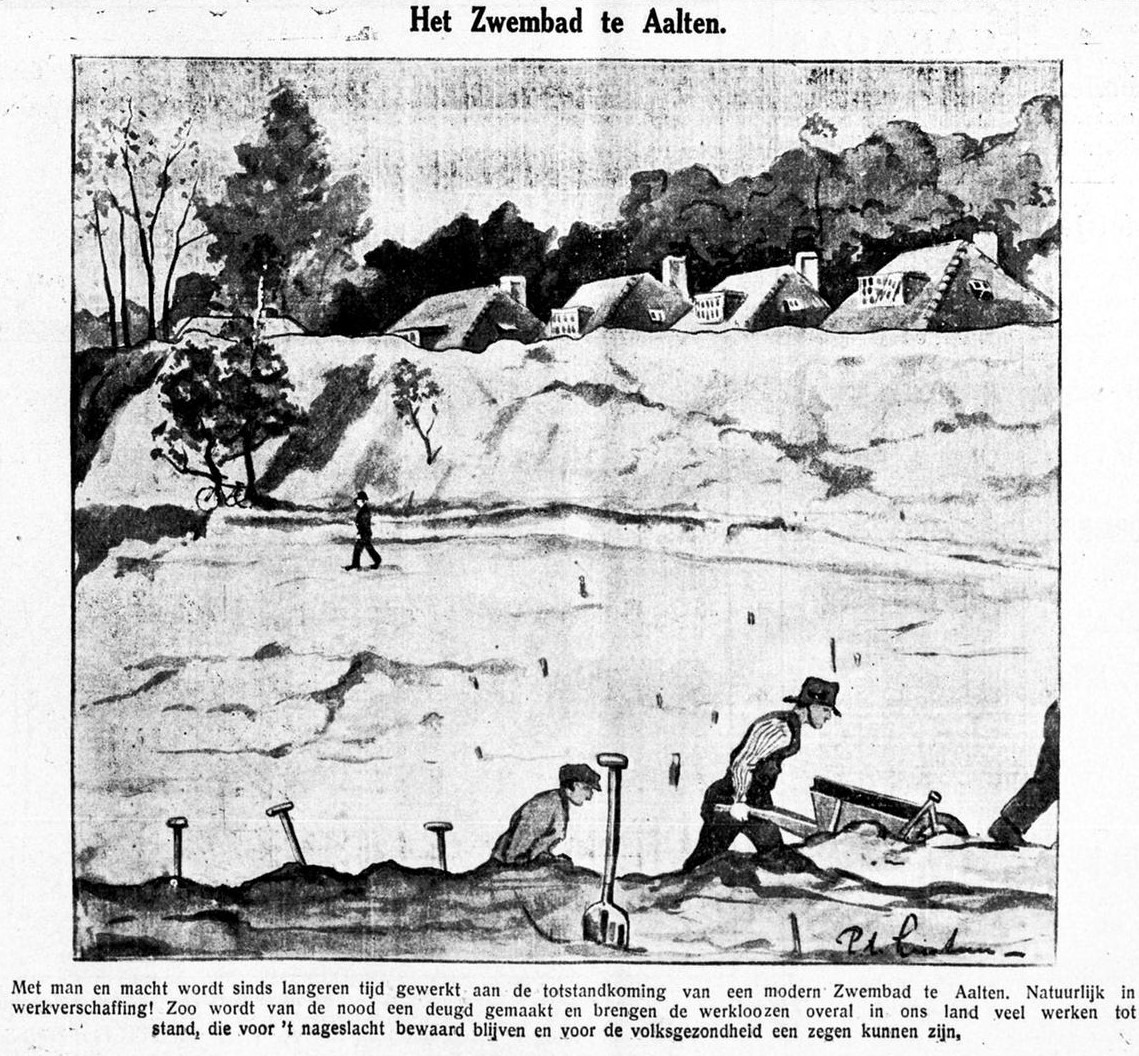
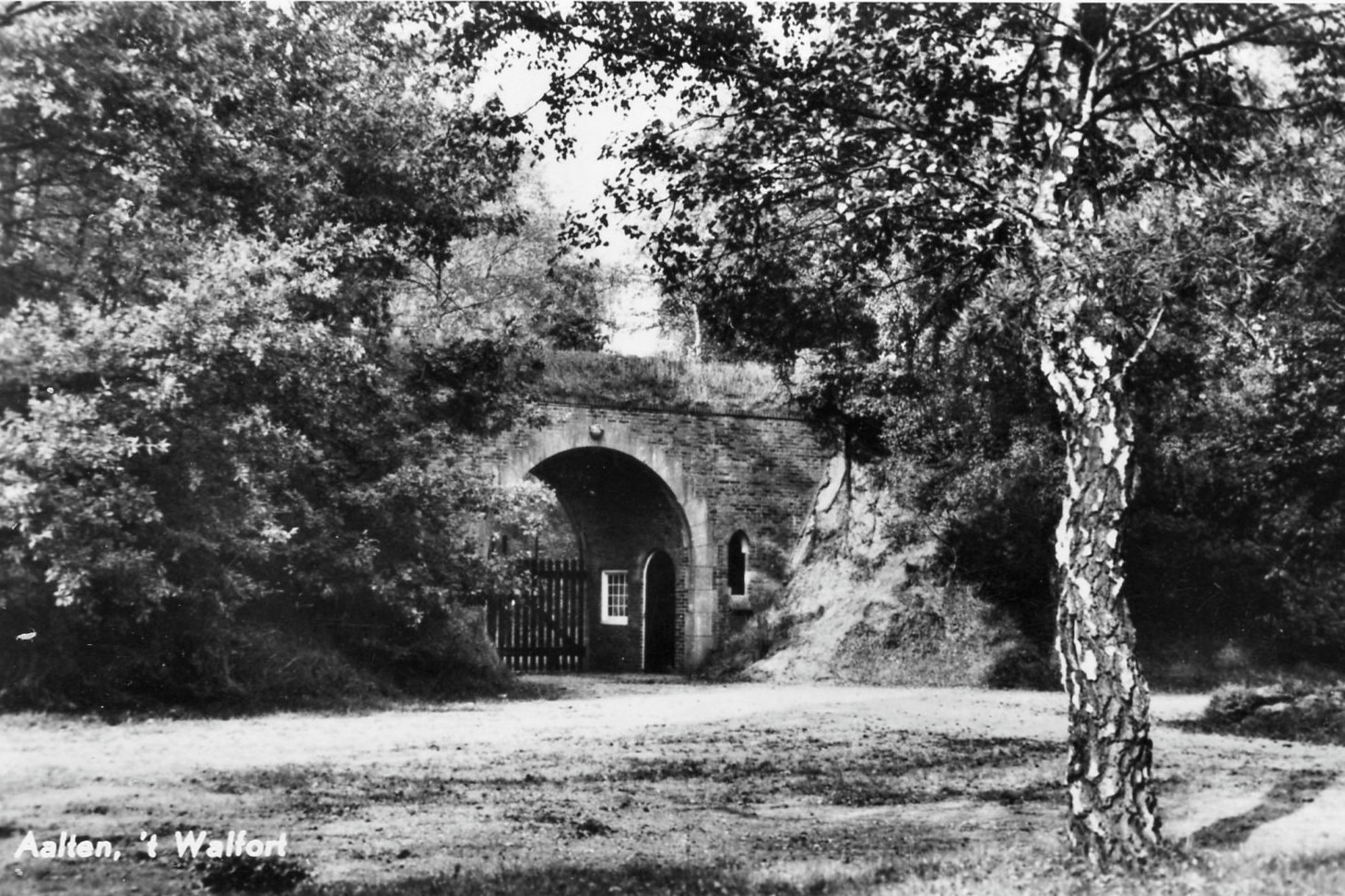
In 1933, it was decided to construct a swimming pool on the Oosterman site. Seventy unemployed individuals were deployed as part of the job creation scheme, and the work was completed under the direction of D. Roenhorst of the Nederlandse Heidemaatschappij. Using wooden wheelbarrows with iron-rimmed wheels and shovels, the sand was moved to the sides, creating an earthen embankment around the pool. The construction costs amounted to approximately 14,500 guilders. On 23 June 1934, the ‘Walfort’ swimming pool was opened with swimming and diving demonstrations provided by the Winterswijk water sports association and the women’s swimming club ‘Inter Nos’ from Amsterdam.
Newspaper reports
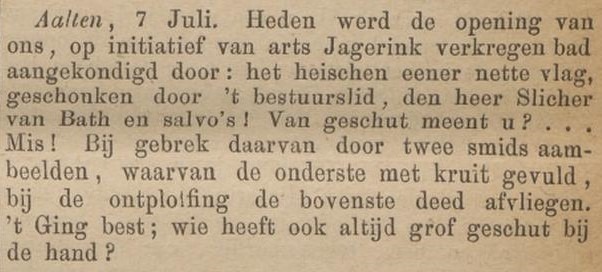
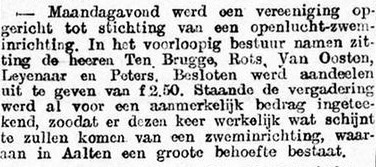
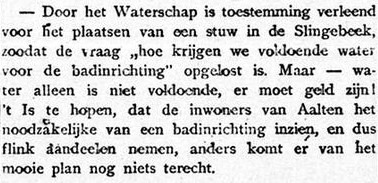
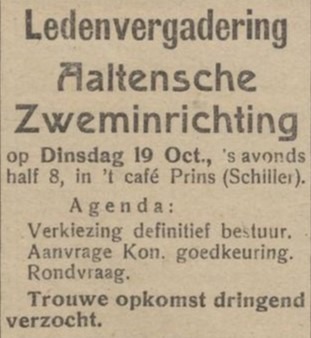
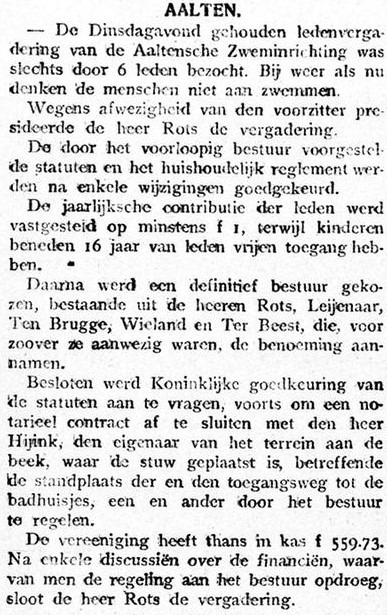
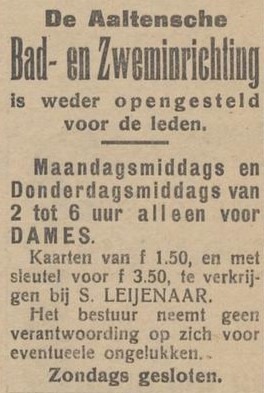
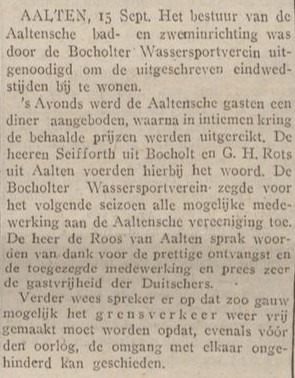
Zutphensche Courant, 11 July 1885De Graafschapbode, 1 June 1920De Graafschapbode, 22 June 1920Aaltensche Courant, 15 October 1920
De Graafschapbode, 22 October 1920Aaltensche Courant, 11 May 1923
Zutphensche Courant, 16 September 1925De Graafschapper, 4 August 1931
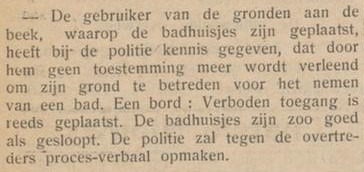
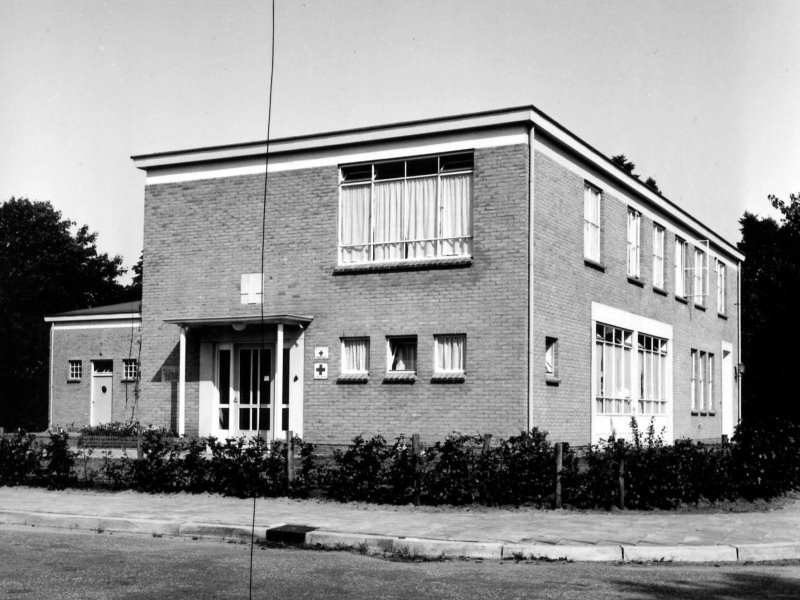
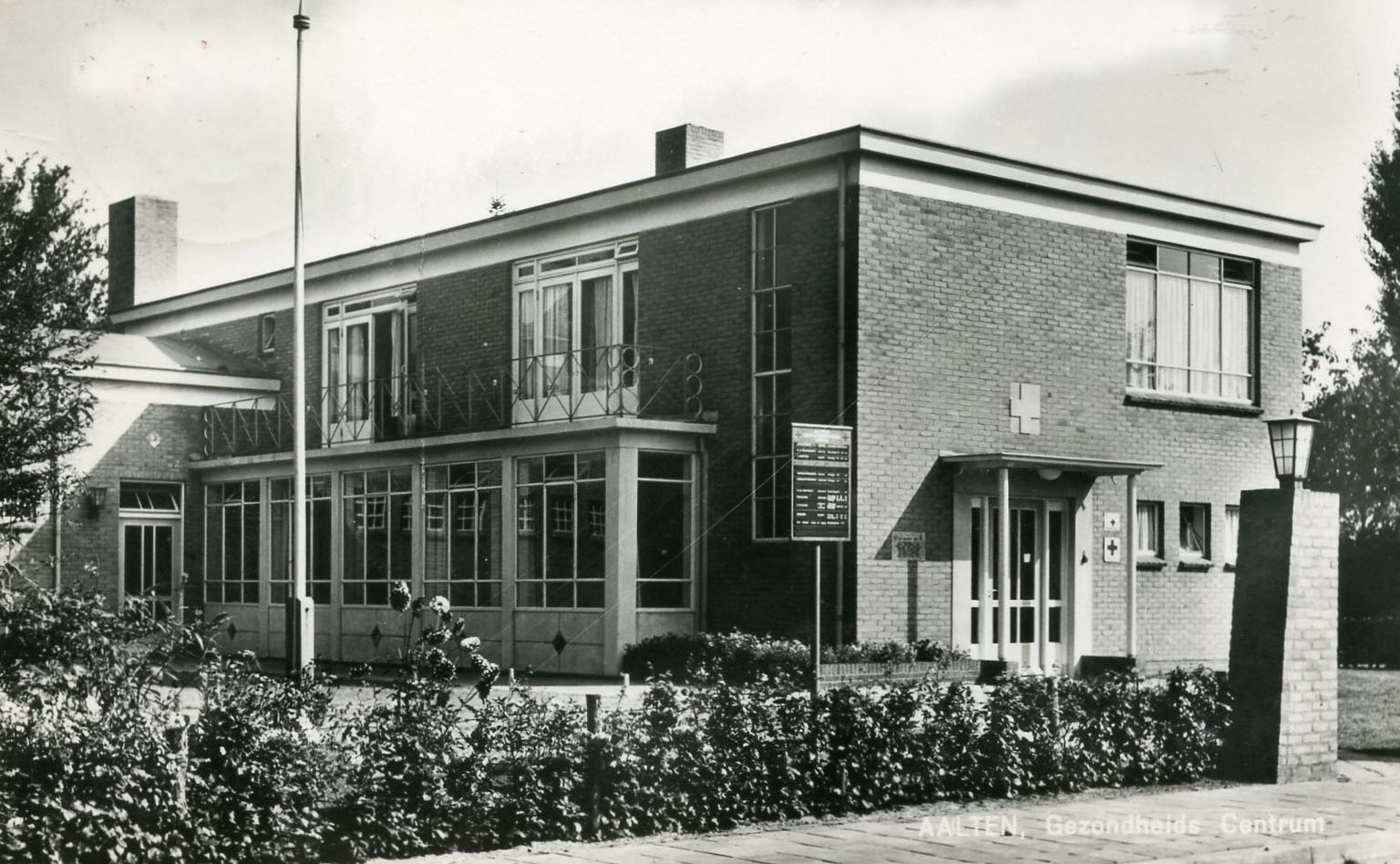
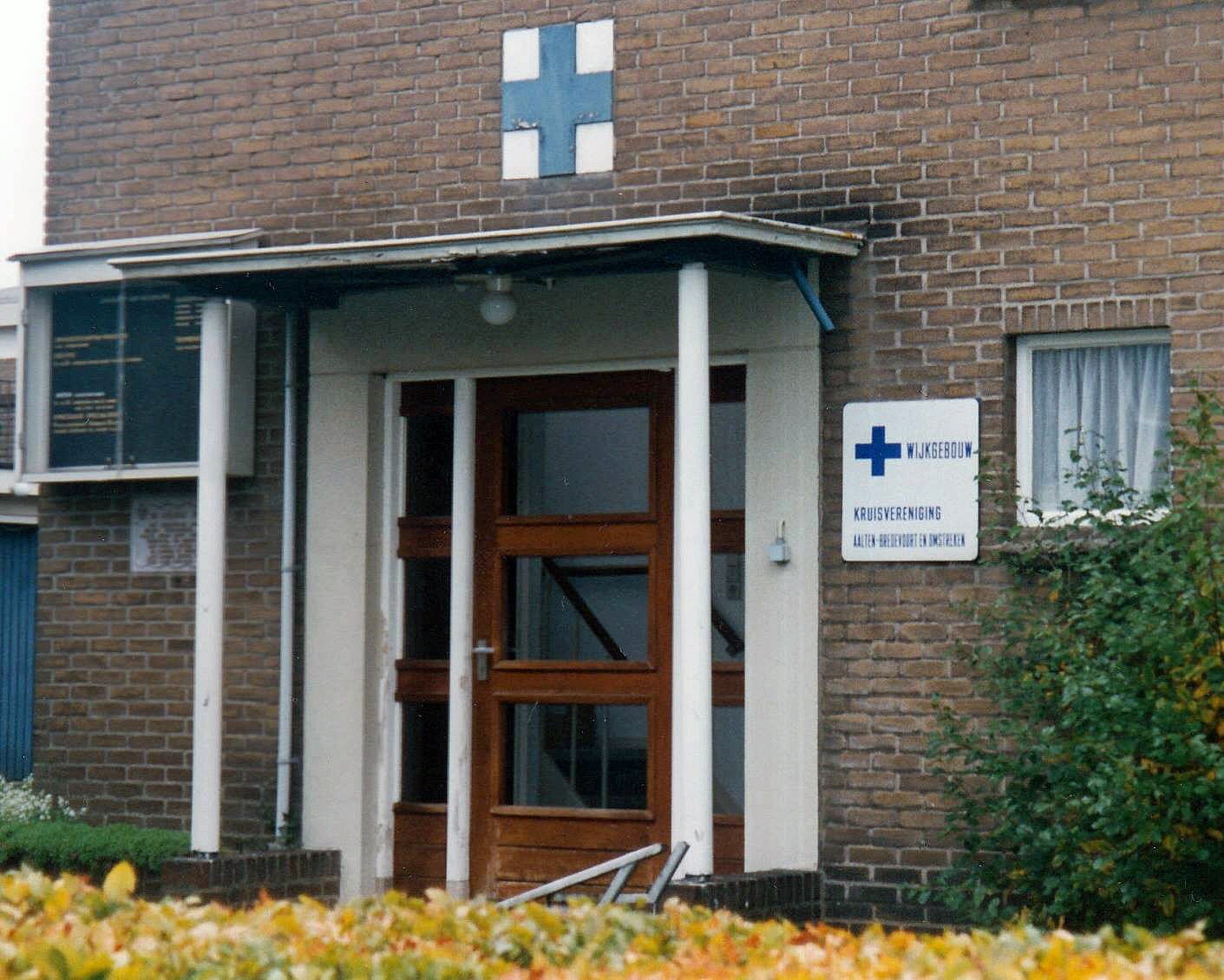
The first stone for the former community center and bathhouse at this location was laid in 1952. The building was constructed on land belonging to the late Mayor Monnik, part of his residence, the villa ‘Zonneheuvel‘. Upon his retirement as mayor, he had stipulated that these grounds should be made available to the population of Aalten.
Zutphens Dagblad, 29 August 1952:
First stone laying of the community center
Wednesday was a joyful day for the board of the “Aaltens Gezondheidscentrum” foundation, as the first stone was laid for the community center and bathhouse.
The chairman, Mr. M. Ackerman, called this stone laying a symbol of the fruitful cooperation between the Orange-Green and Green Cross. Mayor van Veen gave a congratulatory speech, and Dr. H. Knol spoke on behalf of the Red Cross.
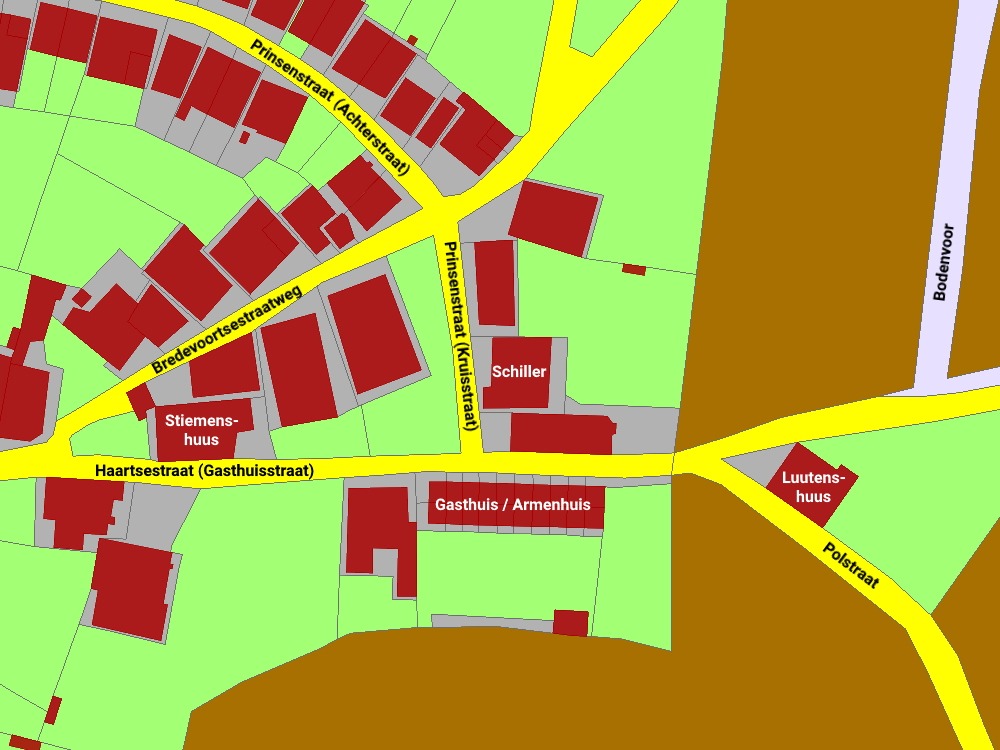
For centuries, the Gasthuis (also referred to as the Armenhuis or almshouse) served as a refuge for the poor, the sick, and the elderly in Bredevoort. From 1641 until approximately 1930, the institution occupied various locations within the city walls. The current Gasthuisstraat owes its name to this establishment.
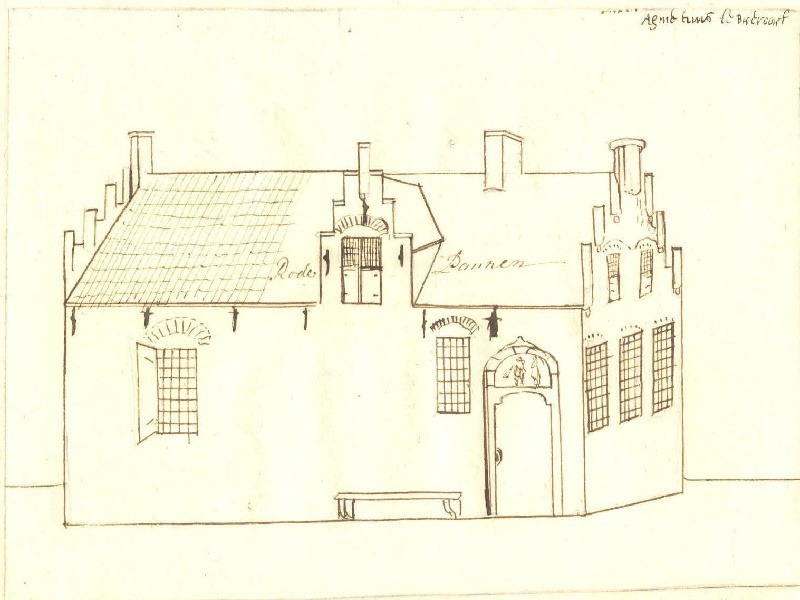
The house of Misslich (Agnietenhuis)
Almshouse / Agnieten House (Mislich’s house)
The earliest known mention of an almshouse in Bredevoort dates to 1641. It occupied the old borgmanshuis (a fortified town house) and the orchard behind it, formerly belonging to Wolf Mislich, then Governor of the Lordship of Bredevoort. In 1639, Mislich drafted a will bequeathing his house and entire estate—valued at 15,000 guilders, a significant fortune at the time—to the poor relief of Bredevoort.
Following his death in 1639, the will was executed, giving rise to the local saying: “De armen van Bredevoort bunt rieke” (The poor of Bredevoort are rich).
The House of Misslich, also known as the Agnietenhuis, was presumably located in the vicinity of the later Ambthuis. Rental income from the property benefited the poor, and besides the Widow Mislich, two other families lived in the main house, while three smaller dwellings in the backyard were occupied by the needy.
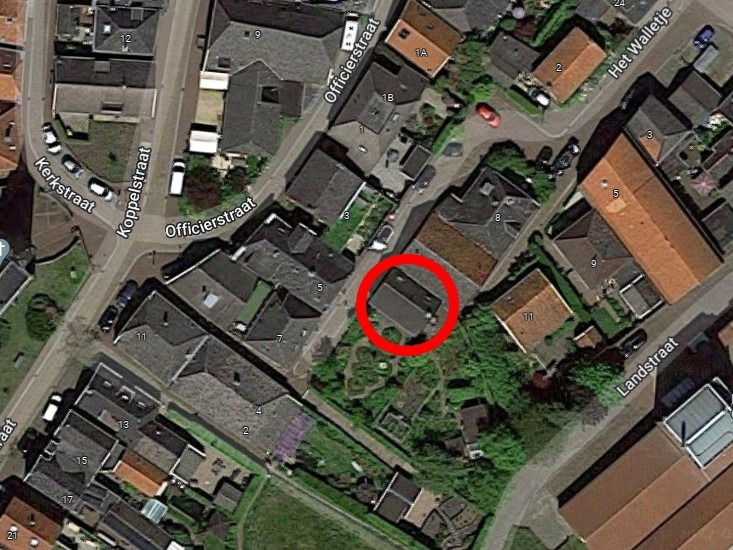
The location of the second almshouse on ‘t Walletje
‘t Walletje
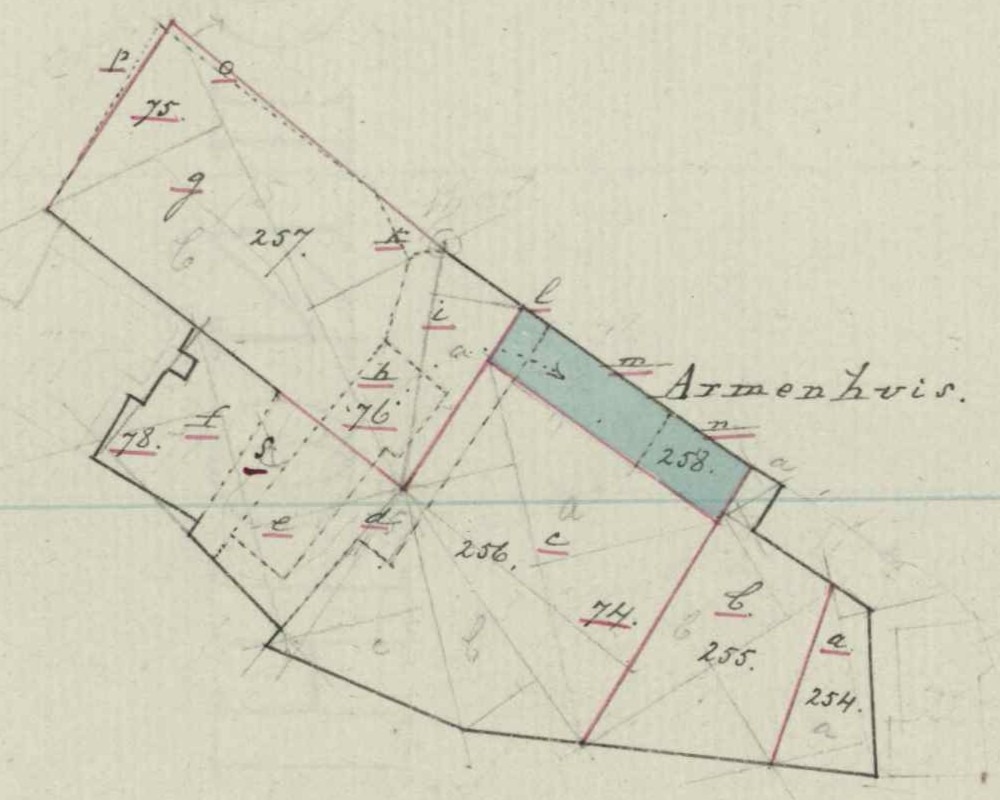
Around 1800, records regarding the Mislich house become silent. An 1832 cadastral map shows the ‘Armen Gasthuis van Bredevoord’ located at ’t Walletje, in the extension of the Vismarkt (cadastral plots B126-B129). This complex consisted of four dwellings, ranging in size from 22 to 26 m².
Gasthuisstraat
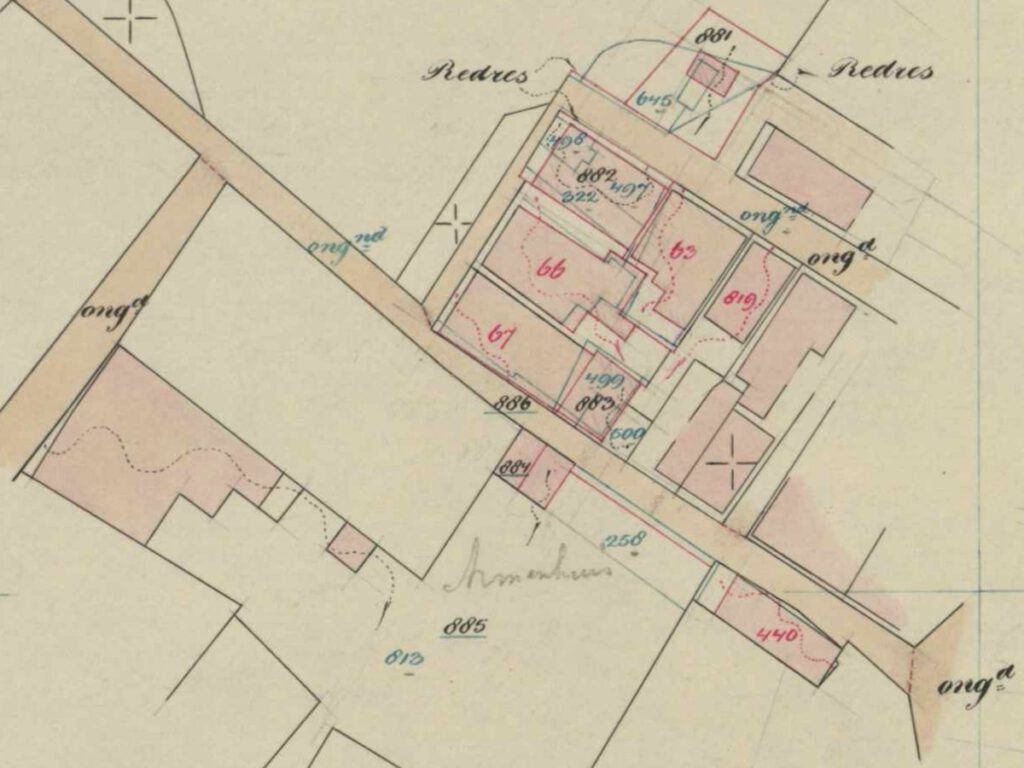
The third and final almshouse was built in 1844 on the Gasthuisstraat and consisted of eight dwellings. The land was purchased from the Hof van Barnsveld, a former borgmanshuis.
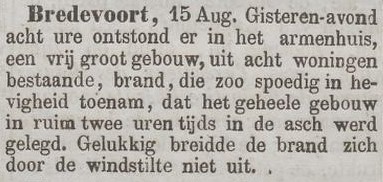
On 14 August 1879, this building burned down completely, though it was subsequently repaired. In 1911, the almshouse underwent a thorough renovation, though it remained incomplete; the houses were eventually sold off and demolished one by one. In 1897, the Sint Bernardus building was purchased, where nursing care was provided around the turn of the century.
The Almshouse at the Gasthuisstraat – Fragment cadastral map, 1847
De Tijd, 18 August 1879
Fragment cadastral map, 1934 (plot B-884/885)
Residents
Population registers recorded each household on separate cards. Below is an overview of the inhabitants of the almshouse on the Gasthuisstraat over time:
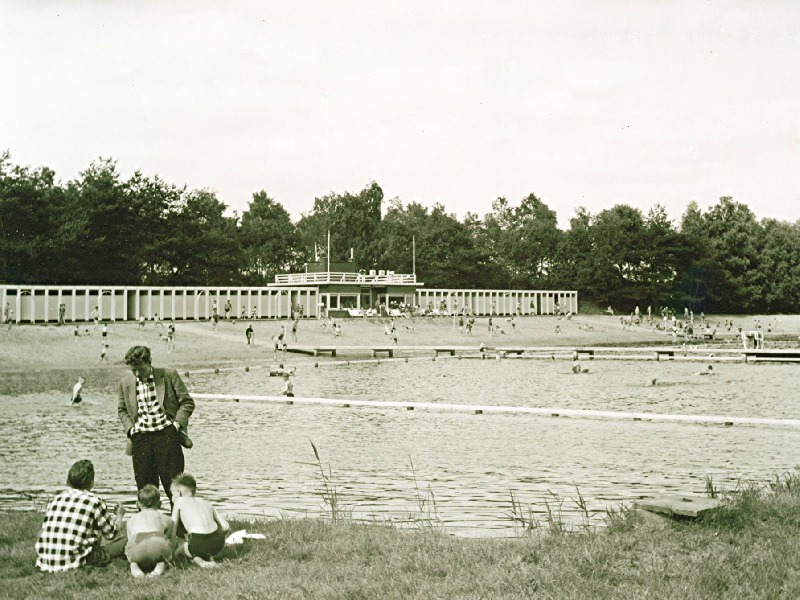
‘t Walfort Swimming Pool is located halfway between Aalten and Bredevoort and features an indoor pool and an outdoor pool with a sandy bottom (natural pool). The outdoor pool was constructed during the crisis years of the last century as a job creation project. The swimming pool was initially assigned the address Hessenweg 4.
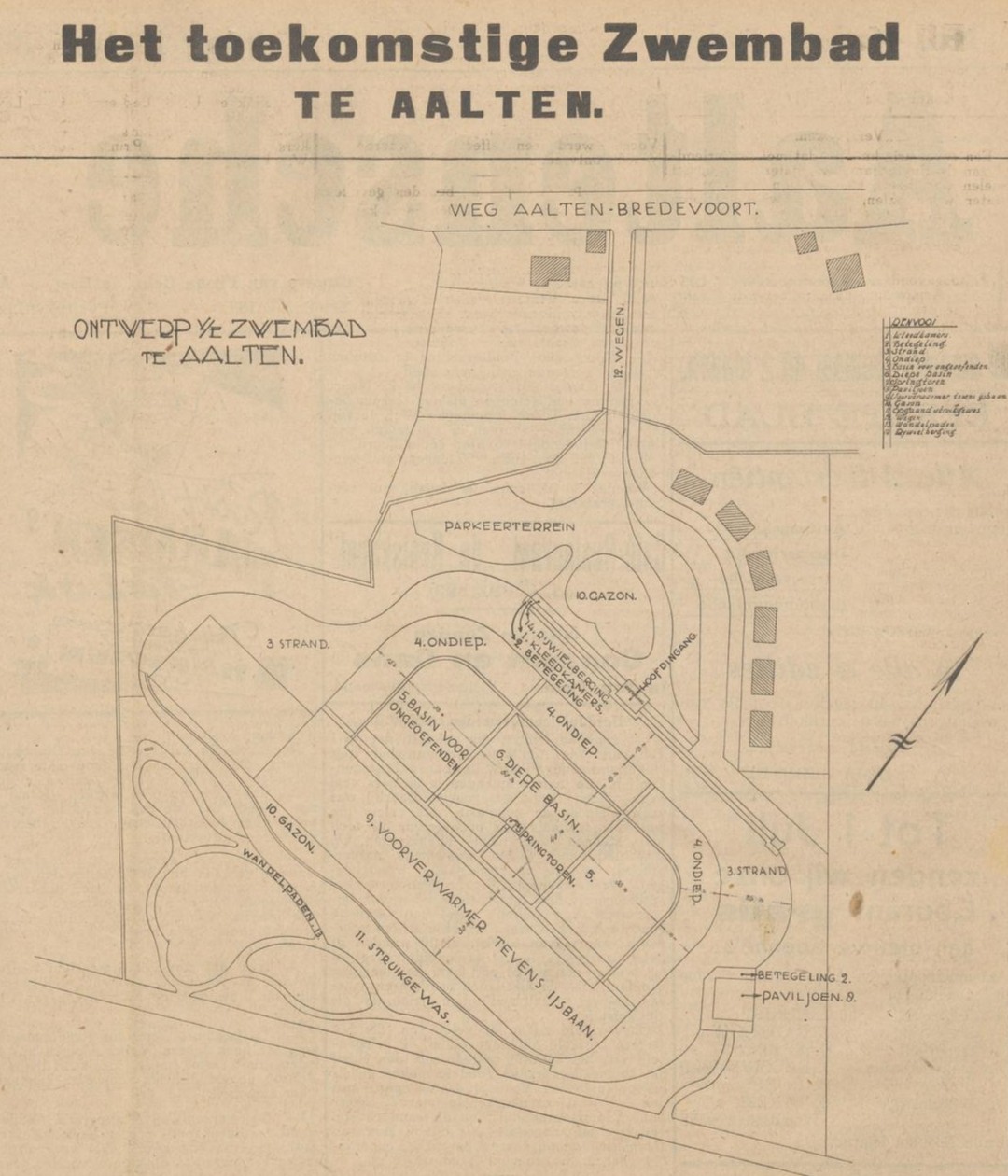
On June 10, 1933, the Aalten municipal council decided“to create a large modern Swimming and Sunbathing Pool, with a long wide beach on the Dennenoord site”. Approximately one hectare of meadow was added to that site, bringing the total area to about 4.5 ha.
Established
On July 17, 1933, the first spade went into the ground. Approximately one hundred unemployed people participated in the creation of the natural pool. In total, they moved no less than 45,000 m³ of sand using only wheelbarrows. The sand from the pool was used to raise the embankment that surrounds the pool.
The swimming pool was fed by spring water and constantly refreshed from three wells, which had been drilled to a depth of 15 meters. The excess water was diverted into a small ditch, which eventually flowed into the Slingebeek stream.
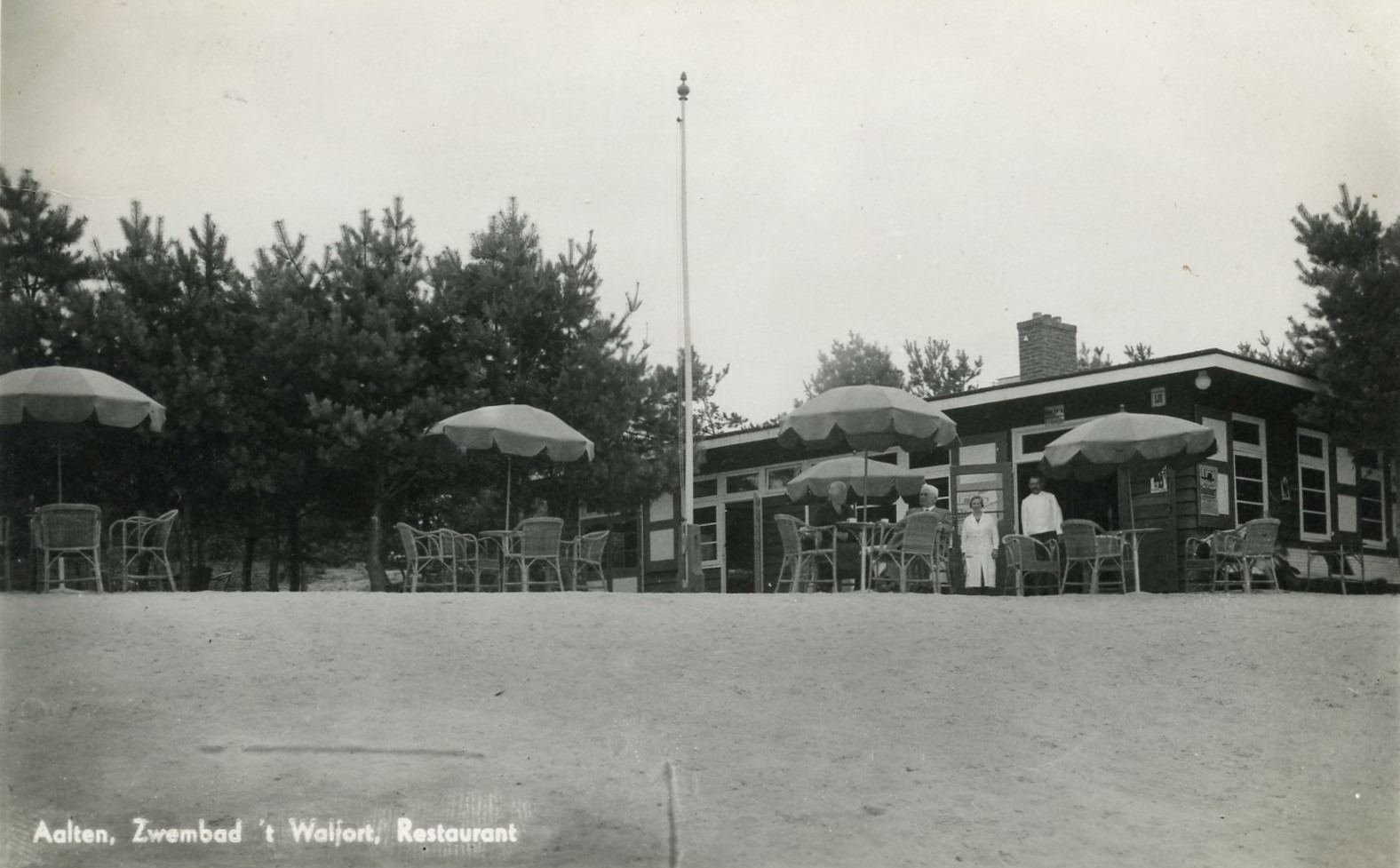
There was a pavilion that served as a simple catering facility and also housed the necessary ‘machinery’. This wooden building had served elsewhere in the municipality until 1928 as housing for the Military Police. After these police troops were withdrawn, the municipality had moved this ‘barracks’ to Dennenoord, “where it could be used by those in need of rest to enjoy the pine air.”
Opening
The Graafschapbode of June 22, 1934, contained an extensive report of the opening. Here we read, among other things, the following:
“Thus, the opening of the ‘t Walfort Swimming Pool in Aalten, located on the road between Aalten and Bredevoort, fringed by heavy trees, amidst a piece of old Achterhoek history, has now become a fact. It had been long awaited and the finishing took more time than originally expected. Now it lies there in its full glory, ready to receive thousands of visitors. At this opening, we may express our joy that this piece of work has now been put into use in such a way that we can give it our full cooperation and sympathy.”
Among the many invited guests were “the Board of Mayor and Aldermen, the executors and contractors (J. de Nooij in Bennekom, who performed the ground drilling; De Vries, Harlingen sanitary works; Kroese, Enschedé: making the pulse wells; Van Lochem, Ten Have, and the other Aalten contractors and executors), Ir. Ratelband, Messrs. Tilbusscher and Rollman, the Mayors and Aldermen of Winterswijk, Wisch, Lichtenvoorde, Dinxperlo, Gendringen and Bocholt, the numbers 2 of the double lists for the board, the members of the Council, the heads of schools, Miss Ten Heuvel of the Christian Domestic Science School and Miss Vreeman, Head of the Nursery School, the Ministers, Priest, Leader of the Israelite Community, Chairman of the Christian Reformed Church, the Doctors, Veterinarians, Postmaster, National Tax Collector, Notary, Station Master, the boards of Aaltens Belang, Bredevoorts Belang and the Neighborhood Interests, the board of Floralia, the Chief Overseer and the Overseers of the Netherlands Heath Company, Dr. L.A. Veeger, Public Health Inspector in Nijmegen, Dr. Bloemendaal, Pharmaceutical Inspector in Velp, who performed the water testing also in connection with Weil’s disease, the National Inspector of Job Creation, the board of the Winterswijk Water Sports Association, the press, the Directors of the Municipal Utilities (Gas Factory, Slaughterhouse), the former Secretary, the former Aldermen Ten Dam and Obbink, the municipal police and the marechaussée, the board of the Dutch Swimming Federation and the boards of the gymnastics associations in Aalten and Bredevoort.”
Speech by Mayor Monnik
The official opening was performed by Mayor A.J.W. Monnik. In his opening speech, he said, among other things:
“Thanks to the illustrious example of our sister municipality Winterswijk, the thought also arose here: ‘would it not be possible to establish a bathing and swimming facility on our own municipal grounds?’ The world crisis, which is felt so severely in the businesses in our municipality, required our municipal administration to repeatedly look for substantial, preferably useful work projects, in order to provide labor to the many unemployed who are so sensitively affected by the crisis.”
“The local authority also has a duty to ensure the proper conduct of bathing life, so that no abuses can creep in. Under the guise of hygiene, immorality is unfortunately increasing in our country and leading to moral decay. Let us ensure that the healthy, pure, fresh air of life, given to us by God to serve Him and thus be happy, is not polluted into an atmosphere in which healthy living becomes a complete impossibility.”
Subsequently, the chairman of the ‘t Walfort Bathing and Swimming Facility Foundation, Mr. M. Ackerman, also gave a speech in which he addressed the staff of the new swimming pool, among others:
“Mr. Happel, we are pleased to welcome you as our pool manager. We also wish the other gentlemen and Miss Top that they may work pleasantly under their chief, Mr. Happel, for the prosperity of our beautiful facility.”
“While the mayor cut the ribbon, the music association De Eendracht played two verses of the Wilhelmus. Then they proceeded through the main entrance and there the beautiful foundation lay in all its beauty before the eyes of the guests. Following this, a tour of the grounds was made under the guidance of Messrs. Tilbusscher and Rollman, Municipal Architect and Municipal Overseer. Afterwards, everyone gathered in the Pavilion, where refreshments were offered and where Ir. Ratelband gave an explanation of the technical part.
At 7 o’clock this evening, all the unemployed who gave their strength to the realization through job creation have been invited with their wives. The mayor will give a speech, refreshments will also be offered to them, and then a tour of the grounds will also be made with them.”
Mixed Swimming
Mixed bathing was initially prohibited, meaning men and women each had their ‘own’ side. In 1946, a request from ‘Roman Catholic Youth and Class Organizations’ was discussed in the municipal council. The council decided, as a trial and after consultation with the swimming pool board, “that mixed swimming and staying on the beach in swimwear is permitted, provided that strict supervision is maintained and unconditional action is taken against any excesses”.
Opening on Sundays
Until 1958, ‘t Walfort swimming pool was closed on Sundays. A year earlier, a proposal to open the pool on hot Sundays had been voted down. A few weeks later, on a sweltering Sunday afternoon, hundreds of Aalten residents stormed the pool to swim en masse—contrary to the prevailing rules. In April 1958, the municipal council decided that the pool could be opened on summer Sundays from 2 to 4 o’clock.
Indoor Pool
In 1995, ‘t Walfort swimming pool was expanded with an indoor pool, consisting of a competition pool, recreational pool, instruction pool, and a toddler pool. The competition pool measures 25×12.5 meters and has five lanes.
Owners
This overview is incomplete.
Year
Plot
Owner
Description
1852
C-1540
Jan Baron van Pallandt
36,380 m² heath
1860
C-1540
Hendrik Willem Oosterman, farmer
36,380 m² heath
1874
C-1540
Jan Willem Oosterman, farmer
36,380 m² heath
1923
C-4414
The Municipality of Aalten
38,190 m² heath & pines
1937
C-4625
The Municipality of Aalten
44,040 m² swimming pool & pavilion
1968
C-5237
The Municipality of Aalten
46,836 m² natural pool, pavilion, garage
1985
P-163
The Municipality of Aalten
8,570 m² house, forest, swimming pool, cultivated land
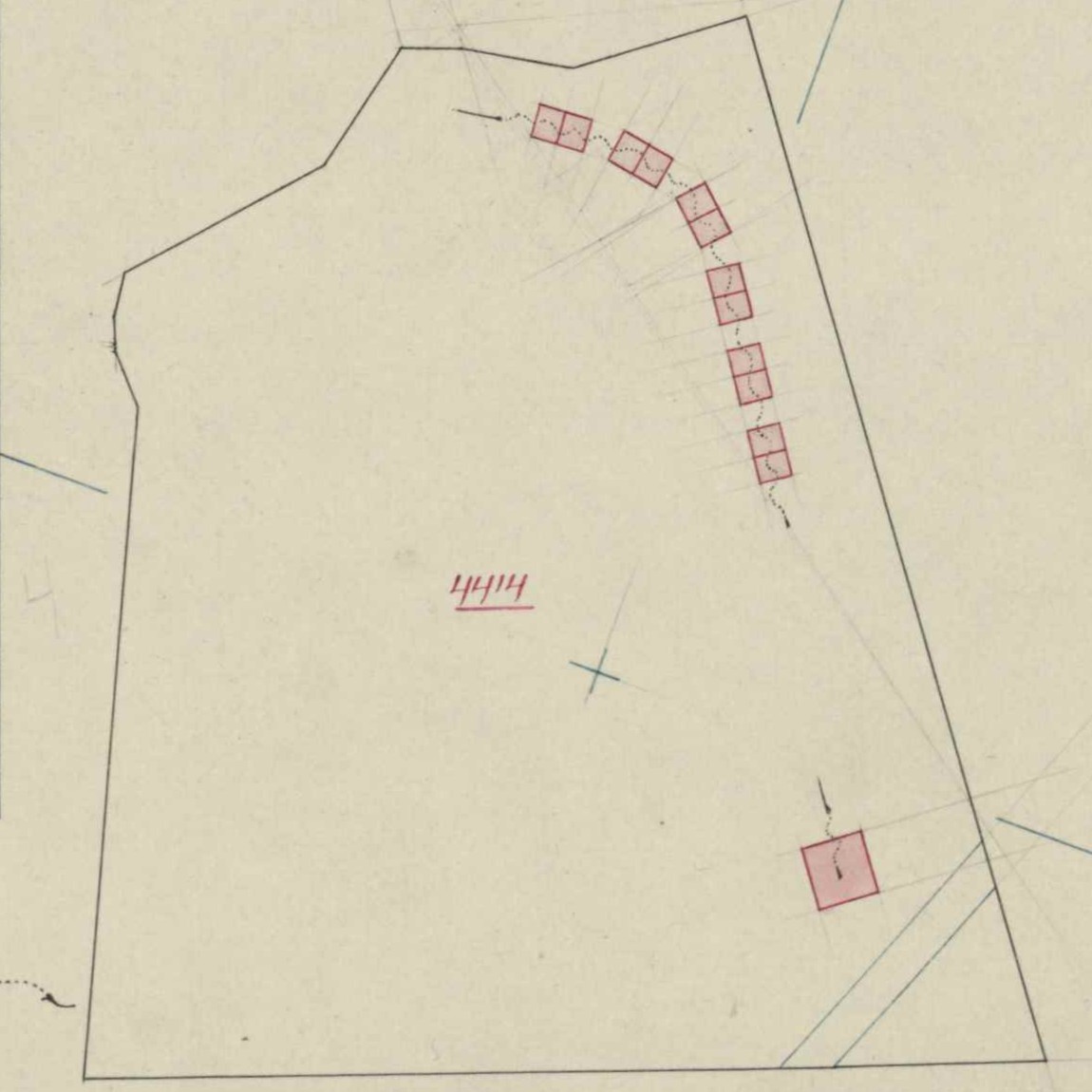
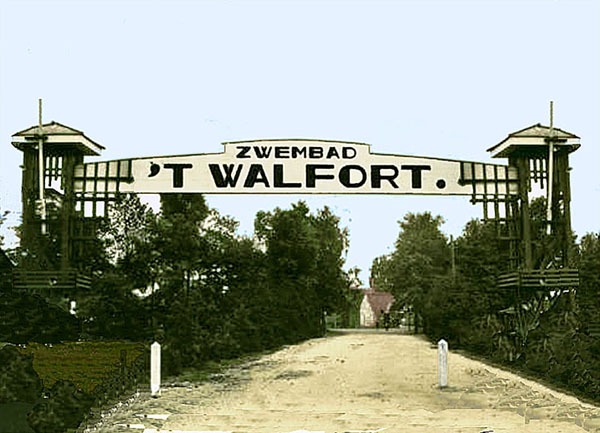
Fragment of cadastral map, 1928 (parcel C-4414)Aaltensche Courant, June 16, 1933Graafschapbode, August 4, 1933Graafschapbode, October 23, 1933Entrance gate ‘t Walfort Swimming Pool, 1934Entrance gate ‘t Walfort Swimming Pool, later‘t Walfort Swimming Pool, Restaurant
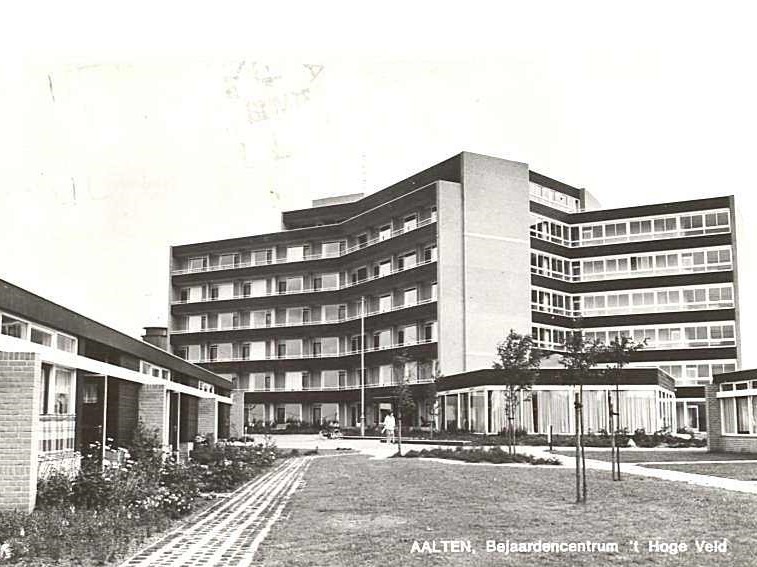
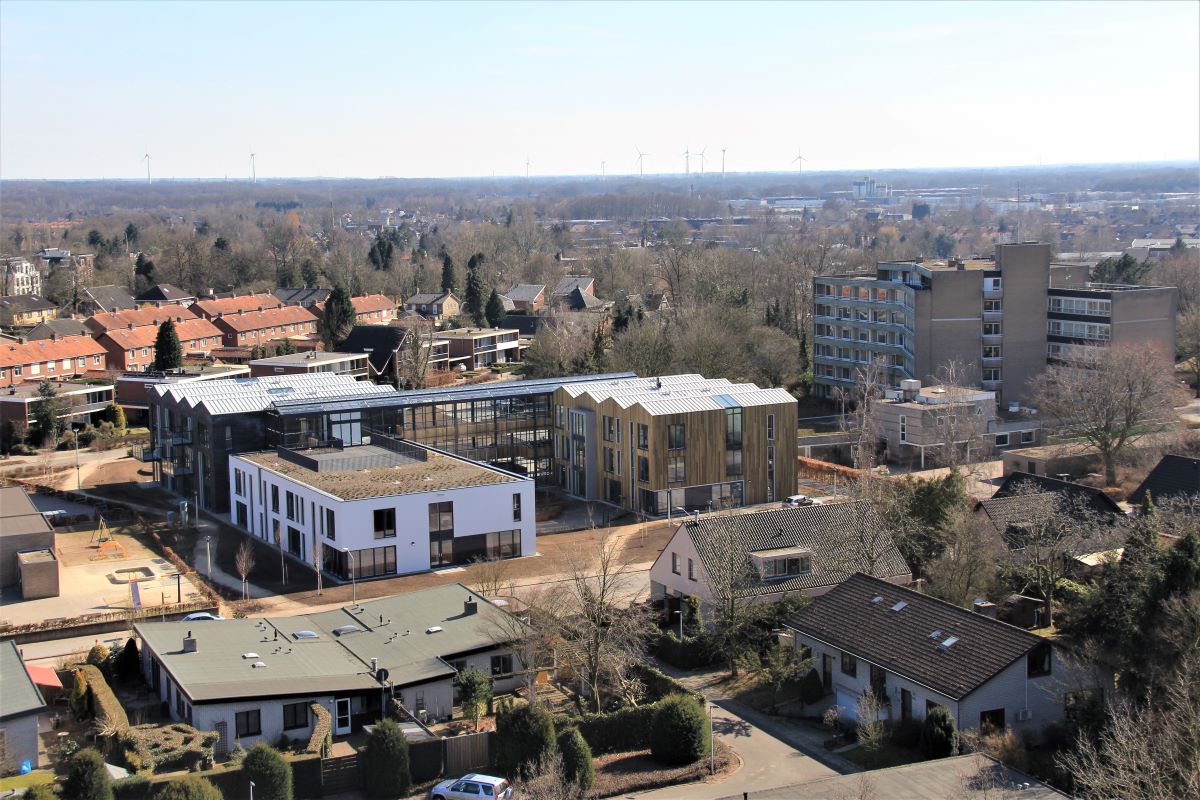
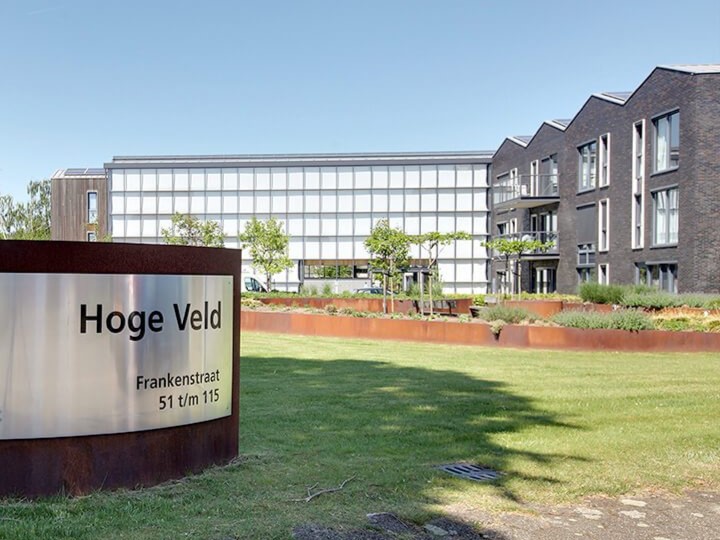
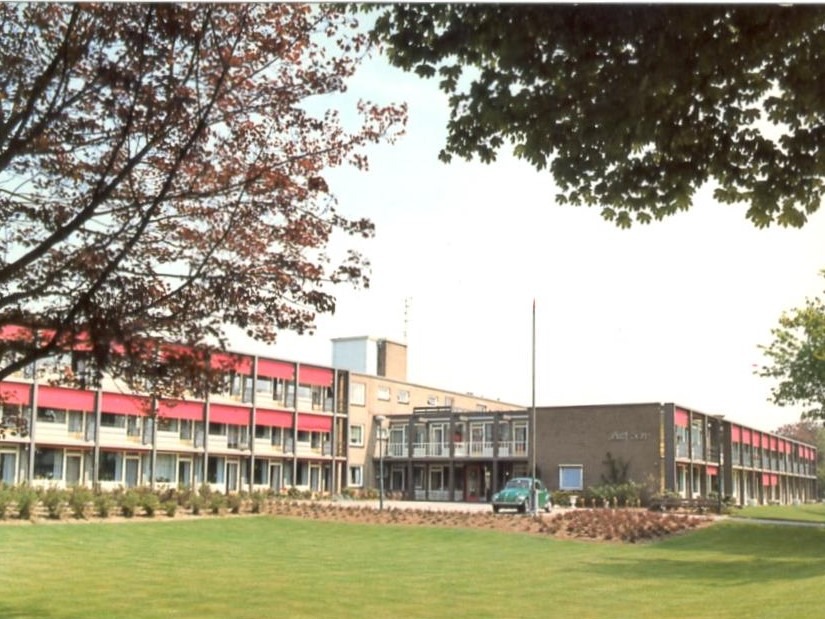
The ‘t Hoge Veld residential care center in Aalten opened in 1970 as the successor to the Avondvrede rest home on Hogestraat. The building accommodated dozens of elderly residents and was a recognizable nursing home in Aalten for decades. In 2018, the complex was demolished and replaced by new construction.
In 1967, the Reformed congregations of Aalten, Bredevoort, and Lichtenvoorde jointly established the Reformed Foundation for the Aalten Senior Center. This foundation was later renamed the ‘t Hoge Veld Senior Center Foundation. In 1970, the residents of the Avondvrede rest home on Hogestraat moved to the newly built ‘t Hoge Veld senior center in Aalten.
High-rise construction
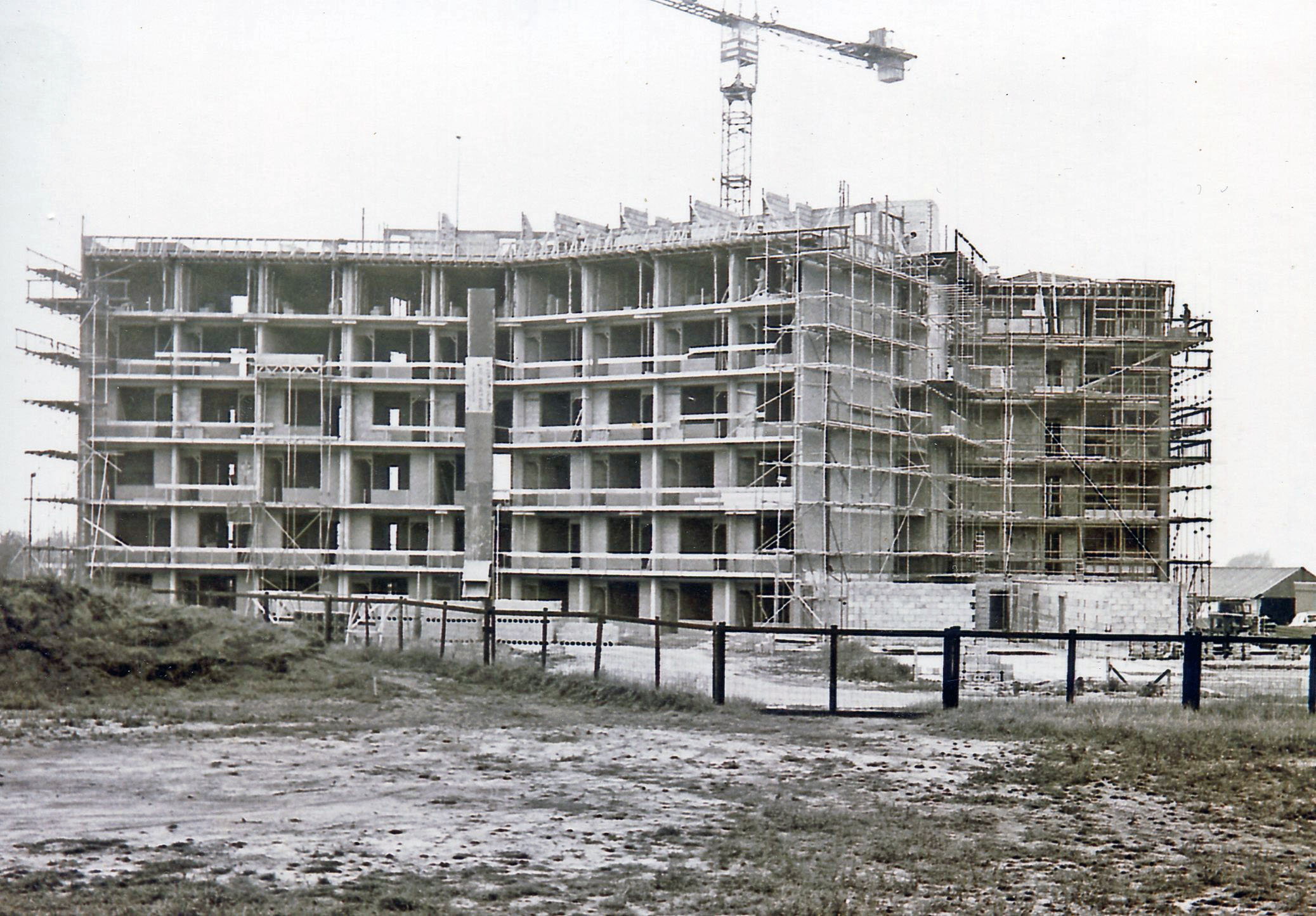
The new building was a six-story structure. At the time, this was considered quite spectacular in Aalten, as there was hardly any high-rise construction in the village. The only tall buildings were the Landbouw silo and the water tower. From the top floor of ‘t Hoge Veld, one had a beautiful view over Aalten and the surrounding area.
During construction, some elderly residents remarked: “If they add a slide, we can go straight to the cemetery across the street after we die.” Later, the residents felt very positive about it. They enjoyed the view and the excellent care provided in this nursing home.
The main building contained 78 single rooms and 11 double rooms. Additionally, there were 12 sheltered housing units.
Demolition and new construction
In 2018, the apartment block and the sheltered housing units were demolished to make way for new (lower) residential care center buildings and luxury homes in a park-like setting.
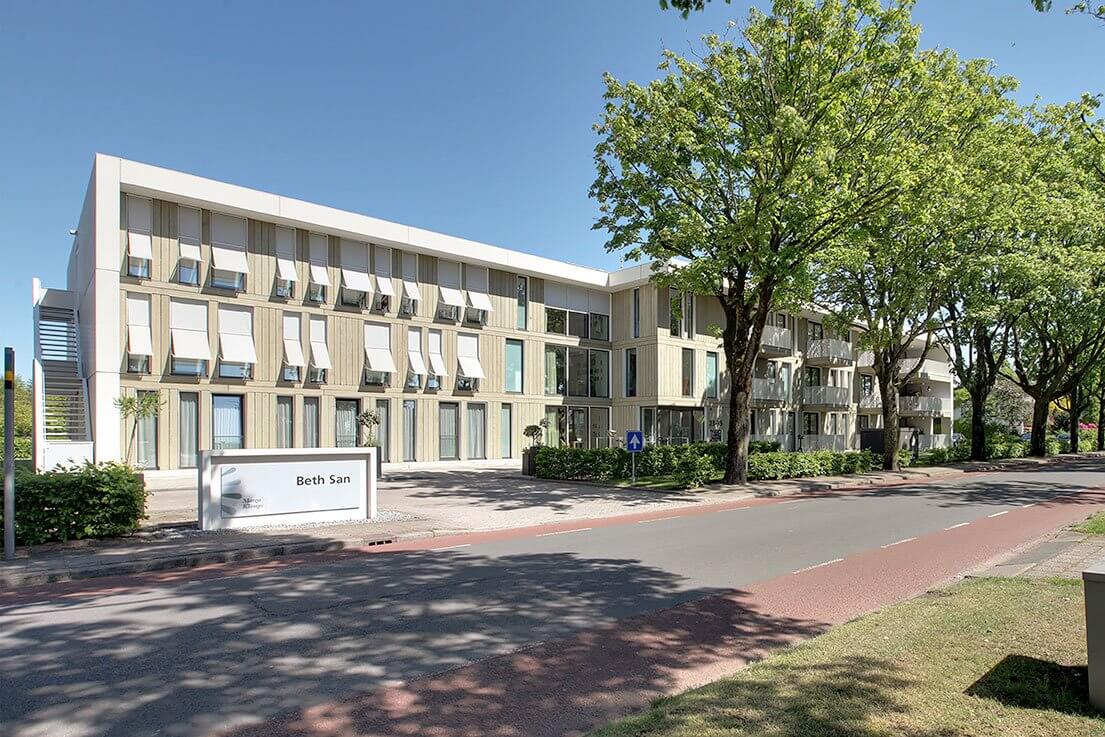
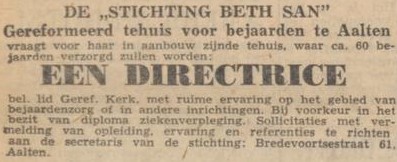
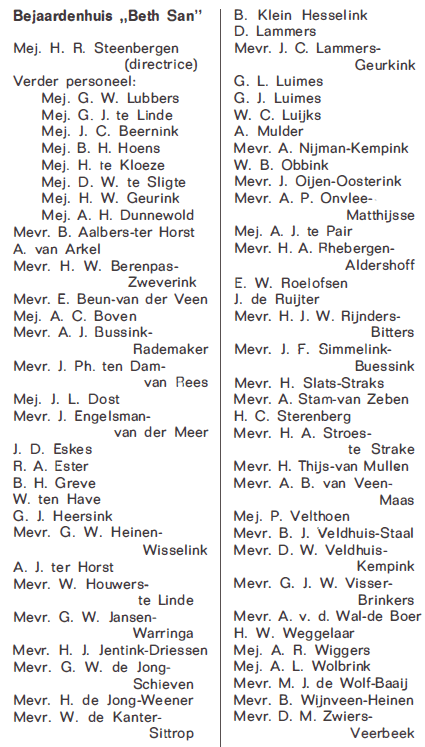
Beth San Residential Care Center on Ludgerstraat in Aalten was opened in 1960 as a ‘Reformed home for the elderly’. After fifty years, the complex no longer met the requirements of the time and the care center, along with the associated sheltered housing, was replaced by a new building. The opening of the new Beth San took place in 2013.
The initiative for Beth San came from the diaconate of the Reformed Church in Aalten. The name means ‘House of Rest’. In 1957, over 12,000 m² of land was purchased between Ludgerstraat and the section of Eligiusstraat that was yet to be constructed. The buildings were designed by architects Gjalt van der Zee (1901-1994) and Ir. Cornelis Veerling (1912-1997) from Bolsward.
The main building consisted of 63 single rooms, 4 double rooms, and 8 rooms for live-in staff. In addition, 12 sheltered housing units were built. The total investment amounted to over 1 million guilders.
At its opening in 1960, Beth San provided accommodation for more than seventy residents. The home was considered a modern facility for its time, featuring central heating and provisions for independent seniors in the sheltered housing units.
Renovation and New Construction
Five decades after its opening, the complex no longer met current standards. The complex was demolished and replaced by a new residential care center, which opened in 2013.
The new Beth San consists of two buildings with thirty apartments and five group homes for people with dementia. The group homes are small-scale in design and offer 24-hour care and support. Additionally, the center features a restaurant, an exercise garden, and spaces for activities and social gatherings, such as exercise classes for seniors (MBVO) and an internet café.
Next to Beth San, a residential building for independent seniors was erected, featuring thirteen apartments and an underground parking garage. This complex replaced the sheltered housing units that previously stood there.
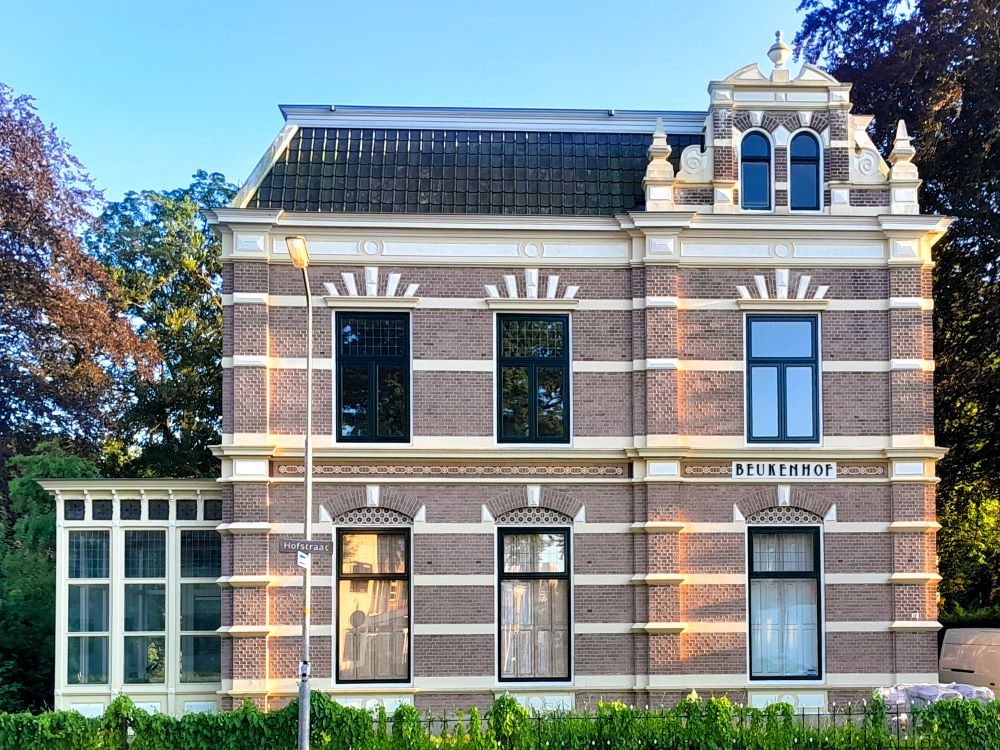
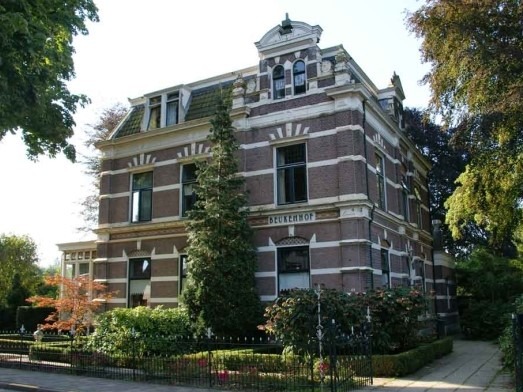
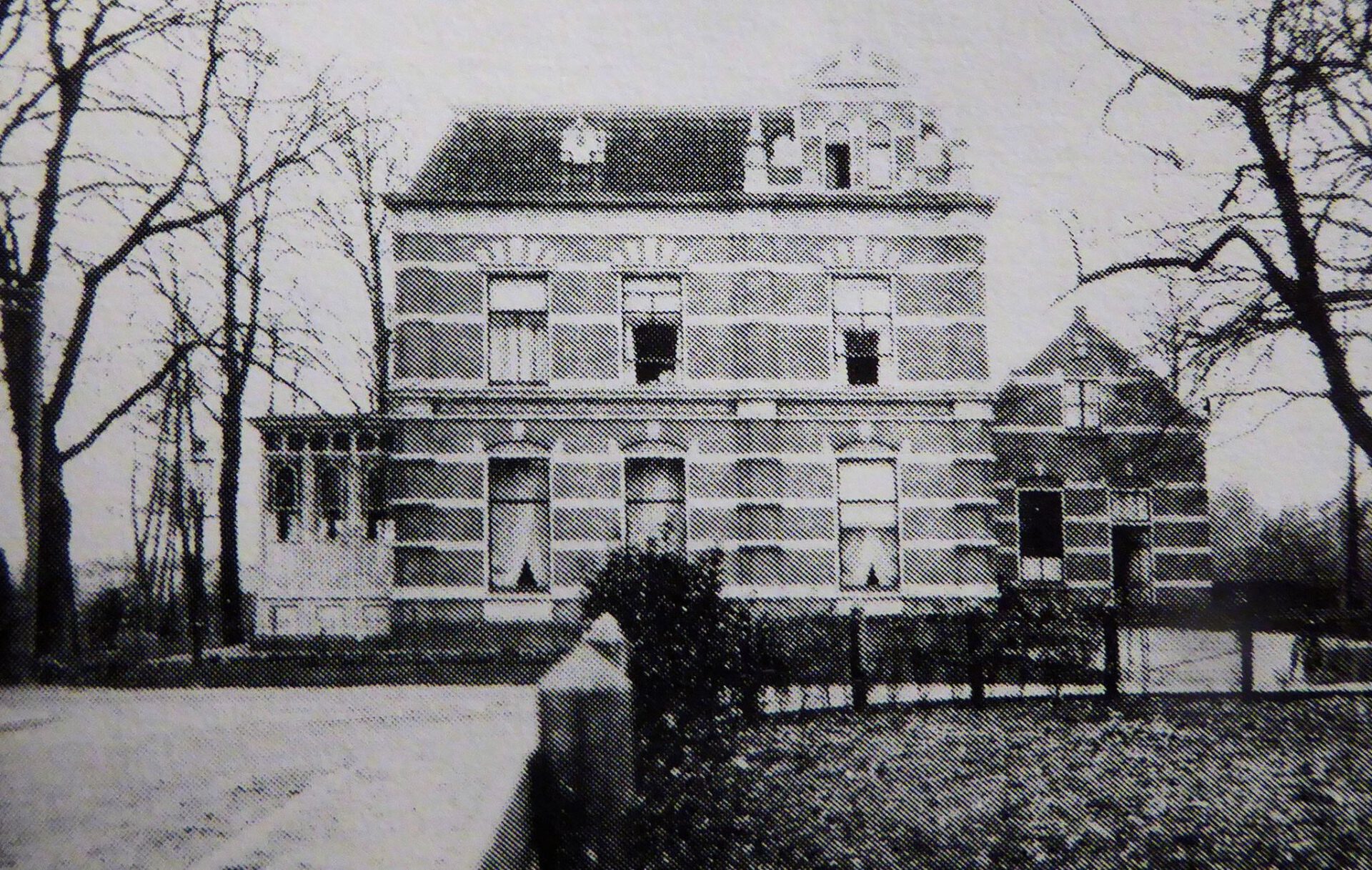
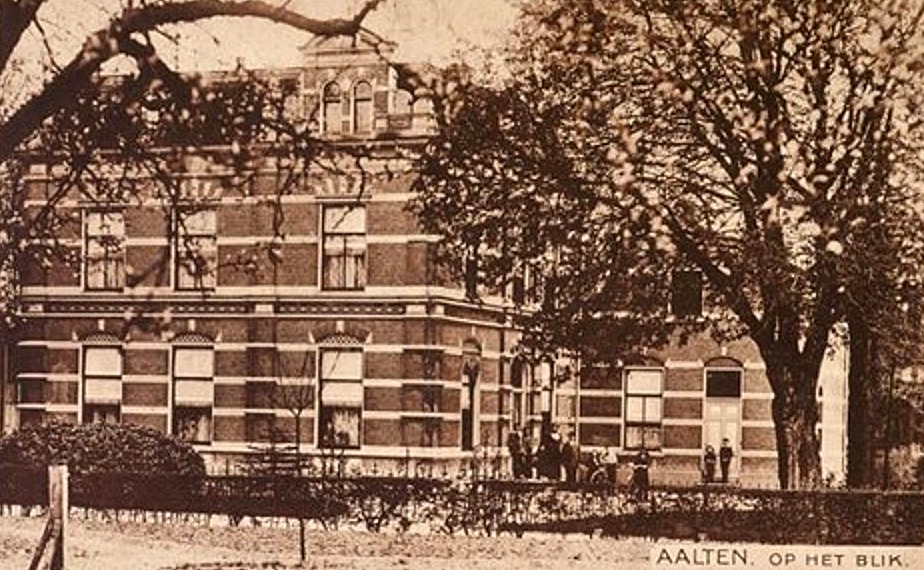
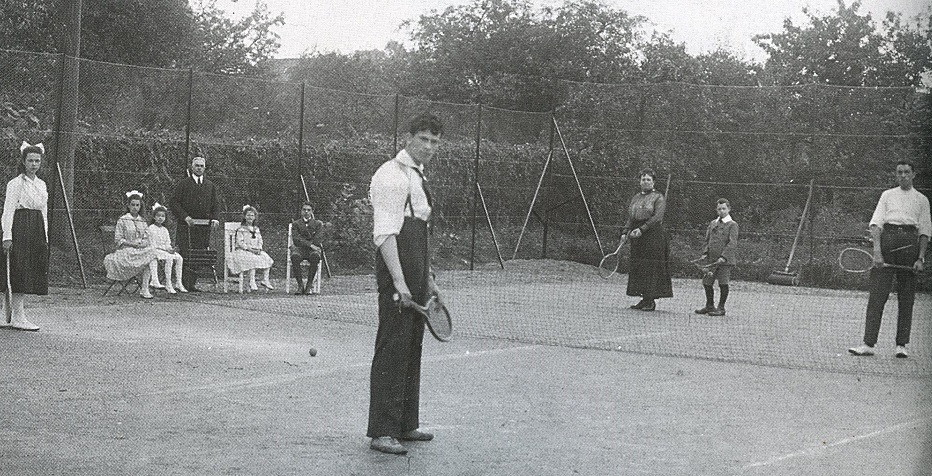
This director’s villa was built in 1893–1894 by textile manufacturer Herman Driessen, concurrently with the former steam weaving mill situated next door. In later years, the stately villa served as a foster home for Estinea for a long time. Behind the house once lay what was likely the first tennis court in Aalten.
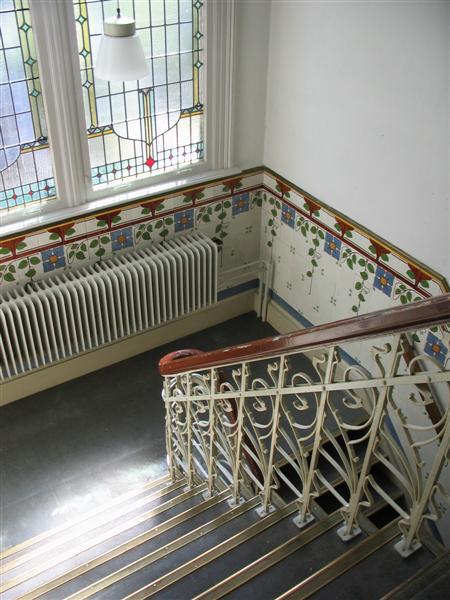
The villa is constructed in a Neo-Renaissance style and features 10 bedrooms across the first and second floors. It is a national monument and retains many monumental details, including a very fine staircase with original Art Nouveau-patterned tiles and various original stained-glass windows. This characteristic property is currently in private hands and is undergoing restoration.
In 2015, Jalf Flach wrote to Old Aalten:
“I recently rediscovered a text I wrote 25 years ago following an interview with Mrs Bella Driessen. In 1893, the Hofstraat was still called ‘Het Blik’, and in that year, a steam weaving mill and a house were erected there, which would be occupied by members of the Driessen family for the next 75 years. It was not until 1953 that the house was named ‘Beukenhof’ by one of its residents. But by then, the house already had an eventful history behind it.
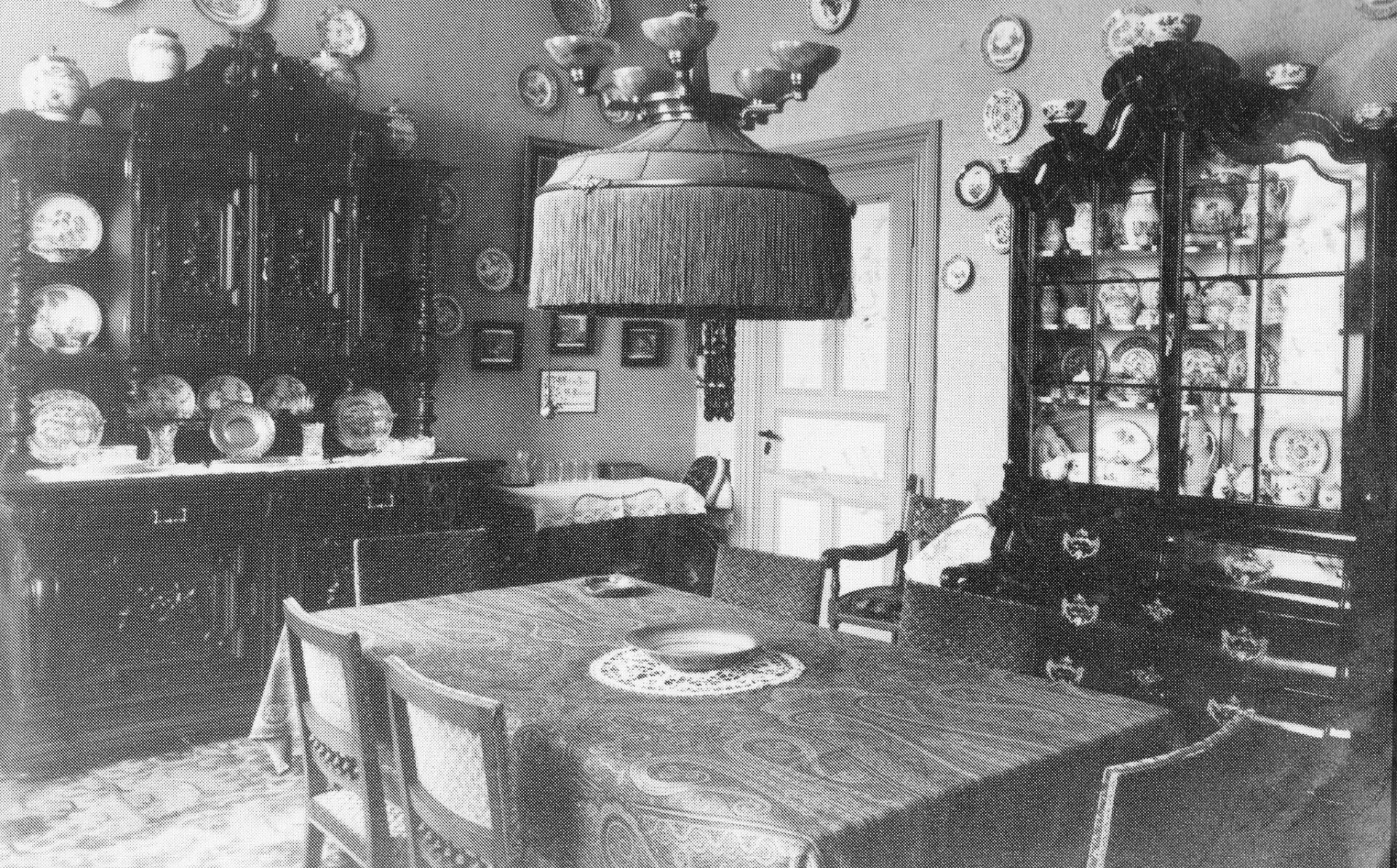
Bella Driessen lived in the house from her early childhood until 1969, when the factory closed and the house changed hands. That is a period of over 60 years. In those days, the Beukenhof was a true patrician residence, as is evident from the interior photograph she kindly lent me. In later years, she occupied the small house that had been built onto the main building, which, much to her sorrow, was demolished in 1976 when the house was converted into a foster home. That brought an end to what was colloquially and irreverently referred to as ‘Bella’s pimple’.
Mrs Driessen’s stories about the war years were fascinating. There were a couple of magnificent stained-glass windows in the stairwell. One depicted the weir on the Smees, and the other, the cathedral of Malmédy, from where her mother originated. After a German soldier had first shot through them because of a breach of blackout regulations, they were completely destroyed during a bombing raid on Aalten. For the remainder of the war, planks were nailed over them, and the residents, billeted German soldiers, and evacuees had to find their way in the dark.
After the war, simpler stained-glass windows were installed, which still adorn the staircase in an Art Nouveau style today and, together with the beautiful tiles and wrought-iron bannisters, give the building a unique character.”
Staircase (photo provided by Jalf Flach)Dining room (photo provided by Jalf Flach)1920. The Driessen family playing a game of tennis on what was likely the first tennis court in Aalten, behind the Beukenhof. (photo from “De Slinge(r)bal. 1946-1996. 50 years of Altec tennis club”)
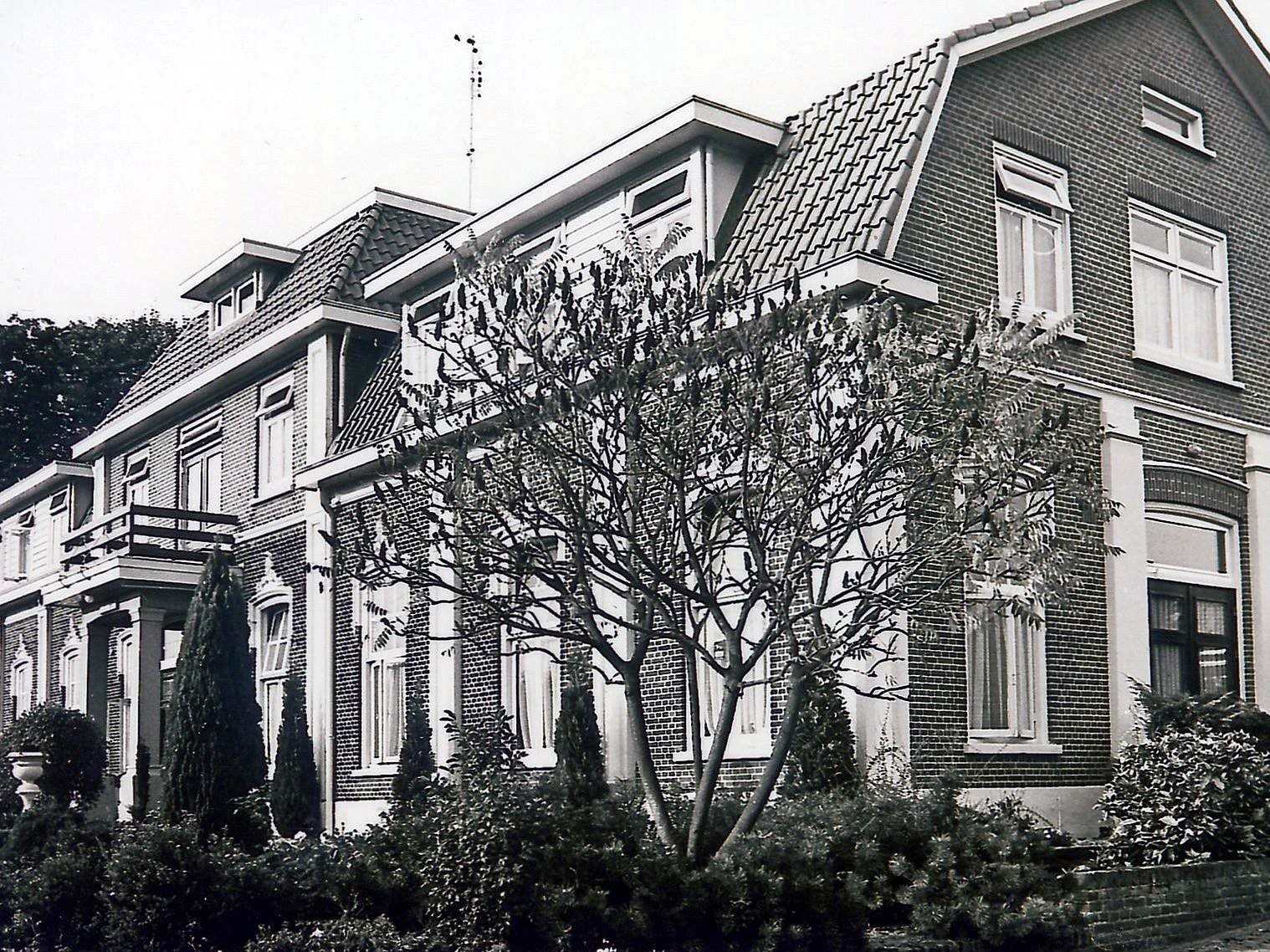
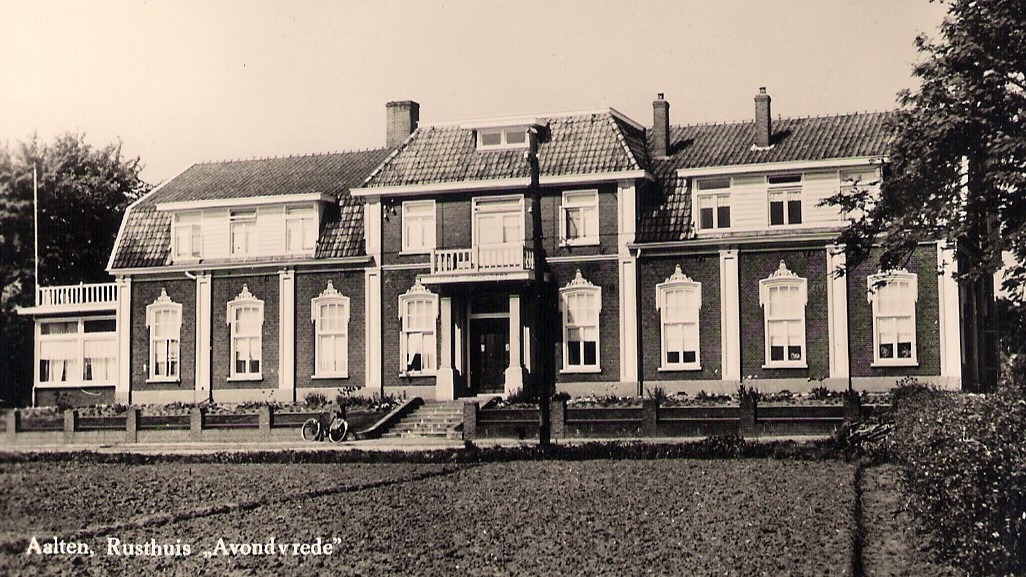
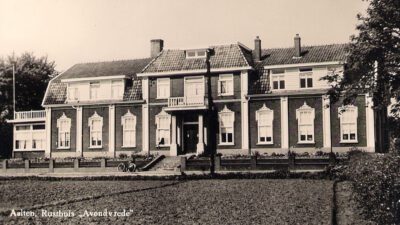
Avondvrede Rest Home on Hogestraat was opened in 1885 as the ‘Home for Elderly Men and Women’ of the Reformed Church in Aalten. Over time, the building served various functions: a nursing home, a temporary hospital, and later a group home. Today, the premises are used as a residential location by care provider Estinea.
The home was opened in October 1885 and was partly set up as a farm. Residents who were able to do so worked on the accompanying lands to provide for their own maintenance. Until 1904, the Reformed Church also managed a Guesthouse / Poorhouse on the former Gasthuisstraat (now Haartsestraat). In that year, its residents moved to the rest home on Hogestraat.
Hospital
In 1904, the Dutch Reformed Association for Nursing was founded. A few years later, this association took the initiative to establish a hospital within the rest home. The hospital was opened in the course of 1909. It was intended for patients with non-contagious diseases, particularly acute conditions. Nursing costs ranged from f 0.80 to f 1.50 per day.
In the first year, twelve patients were admitted, four of whom passed away, totaling 166 nursing days. In 1910, there were eight patients with 222 nursing days, and in 1911, seven patients with 343 nursing days. The number of patients decreased in the following years, and the number of nursing days became significantly lower. In 1912, there were only 59 nursing days. The year 1915 still counted 134 nursing days, and 1916 only 35 with two patients. Data from the period thereafter is missing.
In the early 1930s, plans were again made to house a hospital in the rest home, but the crisis years made further implementation difficult. During World War II, the building functioned as an emergency hospital for a period of time.
From Avondvrede to ’t Hoge Veld
In 1935, the building was renovated and modernized and given the name ‘Avondvrede’. In 1967, the Reformed churches of Aalten, Bredevoort, and Lichtenvoorde jointly established the Reformed Foundation for Elderly Centers Aalten, later renamed the ’t Hoge Veld Elderly Center Foundation. The last residents of Avondvrede moved to the newly built ‘t Hoge Veld elderly center in Aalten in 1970.
Cederhof
After the departure of the elderly residents, the building was given a new purpose. On November 2, 1970, it was officially opened as a group home under the name Cederhof, the first residential facility in Aalten for people with intellectual disabilities. The building is currently used as a residential location by care provider Estinea.
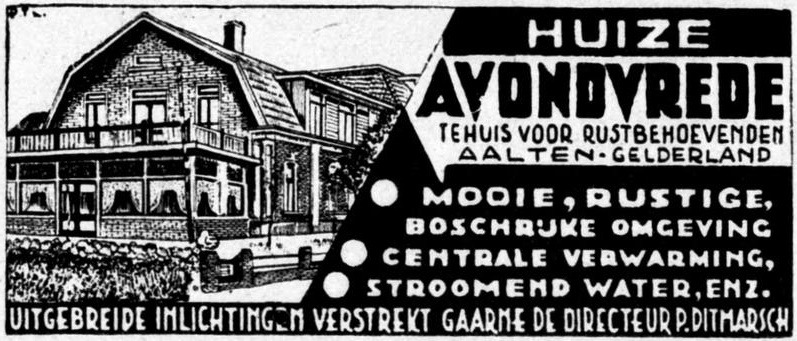
Advertisement for ‘Huize Avondvrede’, by Piet te LintumAaltensche Courant, July 11, 1916De Graafschapper, December 8, 1937Residents of Huize Avondvrede, 1967
St Bernardus House is a distinctive building on ’t Zand, the central square of Bredevoort. The building has a rich history, having served as a residence, a sanatorium, and a nursing home.
Het pand werd oorspronkelijk gebouwd in opdracht van Jan Satink, luitenant-kolonel in het Staatse leger, Regiment Nationalen. Het verrees op de plek waar ooit de voorburcht van het kasteel Bredevoort heeft gestaan. In 1800 kwam het huis door vererving in bezit van de familie Roelvink. Arnoldus Florentinus Roelvink, telg uit deze familie, was vanaf 1813 burgemeester van Bredevoort.
In 1897, the building was purchased by Father Bernardus Mulders. The priest was a man of means and acquired the former steward’s house with his own funds. His goal, he wrote, was to offer “his poor children” a Catholic education. Because Catholic schools were costly at the time, he devised a clever solution: he brought nuns to Bredevoort, who established a convent and a sanatorium in the steward’s house. Nuns were an economical option as they received no salary, having dedicated their lives to God.
Onder beheer van de Zusters Franciscanessen van Thuine werd het ‘R.K. Sanatorium St. Bernardus Gesticht’ opgericht. Het klooster-sanatorium noemde hij naar zijn eigen patroonsheilige, Sint Bernardus van Clairvaux. Met de winst van het sanatorium begon de pastoor een lagere school: de Sint Joannesschool.
The sanatorium was intended for wealthy patients, as the nursing costs were high, ranging from f 1.50 to f 2.20 per day. Medical expenses and pharmacy costs were charged at 10 guilders per month. Second-class patients paid f 7.50.
Vanaf 1907 kwamen mensen uit het hele land naar Bredevoort om in het sanatorium te herstellen. Zij verbleven er vaak maandenlang. Overdag lagen zij in bed in een lighal, ook in de winter; helemaal ingepakt. In de tuin van Sint Bernardus, nu het Vestingpark, stonden minstens tien van deze lighallen met hun open zijde naar de zon gericht. Twee daarvan zijn bewaard gebleven en hebben de status van rijksmonument.
The sanatorium remained in use until 1933. Afterwards, the building was repurposed as a nursing home for the elderly. In 1938, the Sisters of Thuine were succeeded by the Sisters of St. Joseph from Amersfoort. The last sisters left Bredevoort in 1985.
In 1988 volgde een grootschalige renovatie en uitbreiding van het gebouw door Stichting Verzorgingstehuis St. Bernardus. Het bejaardentehuis verhuisde uiteindelijk in 2008 naar het nieuwgebouwde Ambthuis.
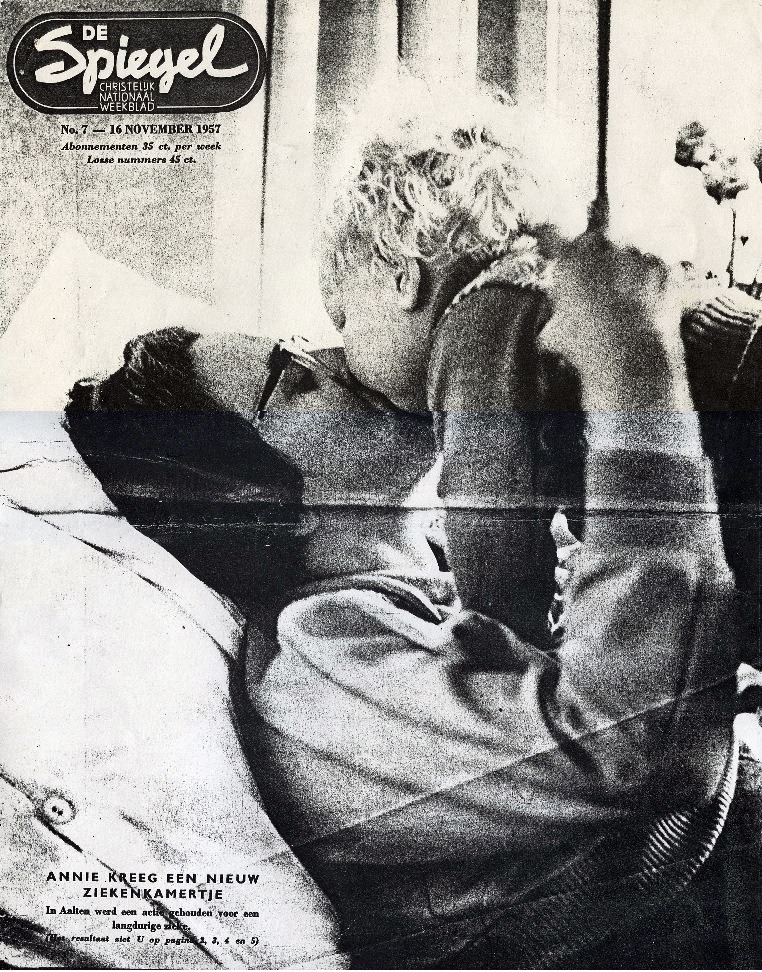
Christian National Weekly De Spiegel, November 16, 1957
Slowly and carefully, she was lifted out of the ambulance. Strong men’s arms carried the stretcher step by step across the yard, where some withered leaves were driven along by the fresh autumn wind until their progress was halted by the wire mesh stretched around the chicken run. Step by step the men went further, past the people who had sought some shelter from the wind under the roof of the open barn. And Annie smiled at all those people, for it was a particularly joyful day for her. Today she received her new, own little room! And these people and many more had seen to that.
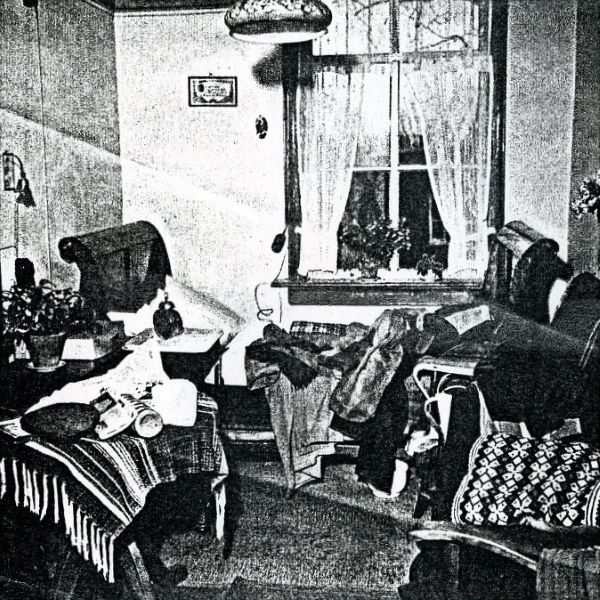
The stretcher was set down. Annie looked aside and then… then suddenly there was a tear in her eye, which she hastily wiped away. But another one came, and another… Oh, this – no, she had not expected this after her absence! A whole new little house with two French doors through which she saw a new table – and chairs – and her little radio stood next to her bedstead on a brand-new bookcase and then a beautiful lamp – and… and… once again the emotion became too much for her and as she was carried inside, she let her tears of joy and gratitude flow freely…
Would there be no solution!
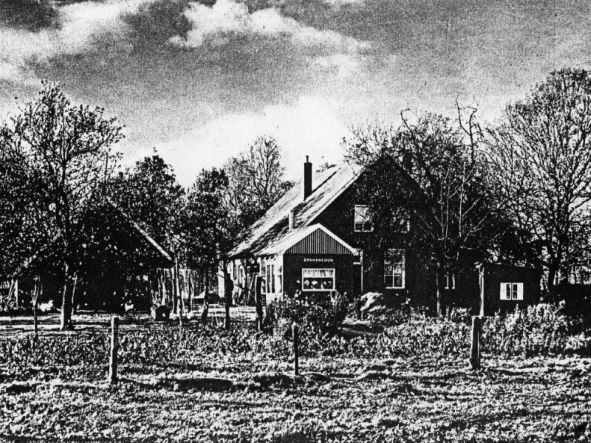
It must have been about half a year ago that Hendrik Arentsen, clothier in Aalten, visited Annie Smees for the umpteenth time. She had been bedridden for so long, so very long – for as many as fifteen years – and humanly speaking, no cure was possible anymore. Arentsen looked around. The room where the sickbed stood was pleasant enough in terms of space, but he knew it was damp and that at ten o’clock in the morning, the sun bid farewell to Annie for the day.
The story of Annie Smees and Operation Sunshine in De Spiegel, November 16, 1957
The girl needed sunshine, and she did not receive it in this room.
What a pity, the clothier thought, that this girl, who already sees so little of the outside world, cannot receive a bit more sunshine. Could no solution be found for that? Could no other room be found? Would no other room be available for the girl? – He talked about it with father and mother Smees, but these elderly people did not know either. After all, had it not gone well for so many years? For three months of each year, Annie had lain in the small garden house, and for the rest of each year, she lay in this room.
Was there then no other place at all in the farmhouse where Annie’s bedstead could face south? “Our bedroom,” said mother Smees, “but then again, that has no window looking south.” Well, that became more difficult. Especially since the farmhouse is not owned by the Smees family. Nevertheless, Mr. Arentsen kept thinking about it. Annie had to have sunshine. If only he and all those friends, family, and acquaintances who visited her regularly could give her that! It had to be possible somehow.
Donations poured in
And it worked! It worked much better than Annie’s friends had expected. For when permission was given to exchange the room of father and mother with that of Annie and to furnish it as a cozy sickroom with a large window, a chimney, wallpaper, and floor covering, then the donations poured in.
At birthdays and weddings, from private individuals and businesspeople, everyone who belonged to Annie’s family, friends, and acquaintances was immediately prepared to respond to Arentsen’s appeal and to contribute a stone (or sometimes a large stone) to the costs that had to be incurred. Thus Operation “Sunshine” was born, and the amount of one thousand guilders involved in the improvement and furnishing of the room was soon exceeded and grew to two thousand guilders!
But that was wonderful! Why, Annie’s friends thought, should we not do it completely right at once? Let us give her a whole new little room as a gift! And while talking, they finally came up with the idea of having a removable, portable, and double-walled wooden house made. After all, mother, the only one who cared for her day and night, was already nearly sixty-nine years old, and if Annie ever had to be nursed by someone else, she could beautifully take her little house with her.
Because people love her
So it was decided, and so it happened. The little house was built and its interior furnished. Girls from the Christian Agricultural Domestic Science School of Aalten bought and made the curtains from their saved money, the teachers provided them with hand-printed motifs, the Orange-Green Cross donated the rug, the Luimes firm gave, in addition to a financial contribution, the beautiful bookcase on which the modern radio set could stand, which Annie had previously received from a reader of De Spiegel after an appeal for postcards had appeared in our magazine and these people had visited Annie personally.
Furthermore, there were gifts and donations from… oh no, let us mention no more names, for otherwise we might skip someone, and besides, it is not at all the intention of all Annie’s friends that their names be made known. These gifts, this bringing of sunshine to a girl who has been struggling with her back since she was eleven or twelve years old due to an unfortunate fall while playing, where surgical intervention could be of no avail, all this selfless love and this tangible sympathy was given to her because people love her, because they wanted to put into practice the neighborly love commanded by the Lord Jesus.
Touching neighborly love
This report should therefore be seen in that light. Amidst all the misery to be found in this world, the devouring of one another through jealousy or feelings of hatred, the shouting of “I won’t stand for that!”, the… well, all that ugly and nasty stuff that so many people inflict on their neighbor, in the midst of that, this beautiful thing, this giving of touching neighborly love, suddenly happens in the Gelderland Achterhoek.
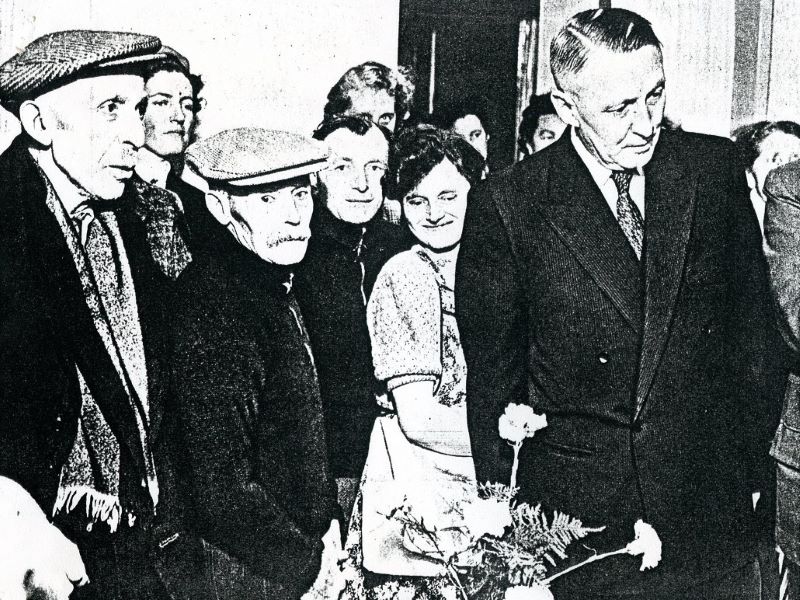
When the mayor of Aalten and Mr. Arentsen spoke, the little room was full of family and friends.
“It is by no means the intention to squeeze money out of you,” Mrs. Te Loo from Bredevoort wrote to us, “but we found this spontaneous sympathy for the sick Annie Smees so lovely and so heartwarming that we thought: we must write this to De Spiegel. It could be an example for others.” And so it is indeed!
Before Annie arrived with the ambulance, we took a look around. We saw her previous sickroom, where almost no sun comes and from which she saw practically nothing of the road. The road, which is already a long way from the farmhouse. The room is also located entirely on the other side of the house, so that Annie also saw nothing of the activities performed by her parents, brother, and sister around the farmhouse, and as a result, she also had little contact with her housemates.
We also looked at her “summer house,” which stands in the garden. It is no larger than a gazebo. If her bedstead was in it, one chair could fit with difficulty. Moreover, it was not easy for her mother to have to go outside once every night during the three months that Annie lay there.
Unencumbered property
No, then her new room is better in every respect. Through a door, the little house is directly connected to her parents’ bedroom, Annie has a better view of the road and the yard, and the sun can shine in unhindered from morning until late in the afternoon.
When she was carried inside – as we already wrote – several family members and friends were there to be present at the handover. We saw the mayor of Aalten, her physician, Dr. H. Knol with his wife, Alderman Te Roele, the chairwoman of the Red Cross, Aalten branch, Mrs. Van Egmond, and many more. They all came to congratulate Annie on her new residence and to listen to the deed that Mayor Van Veen read out and handed to her. It contained the following:
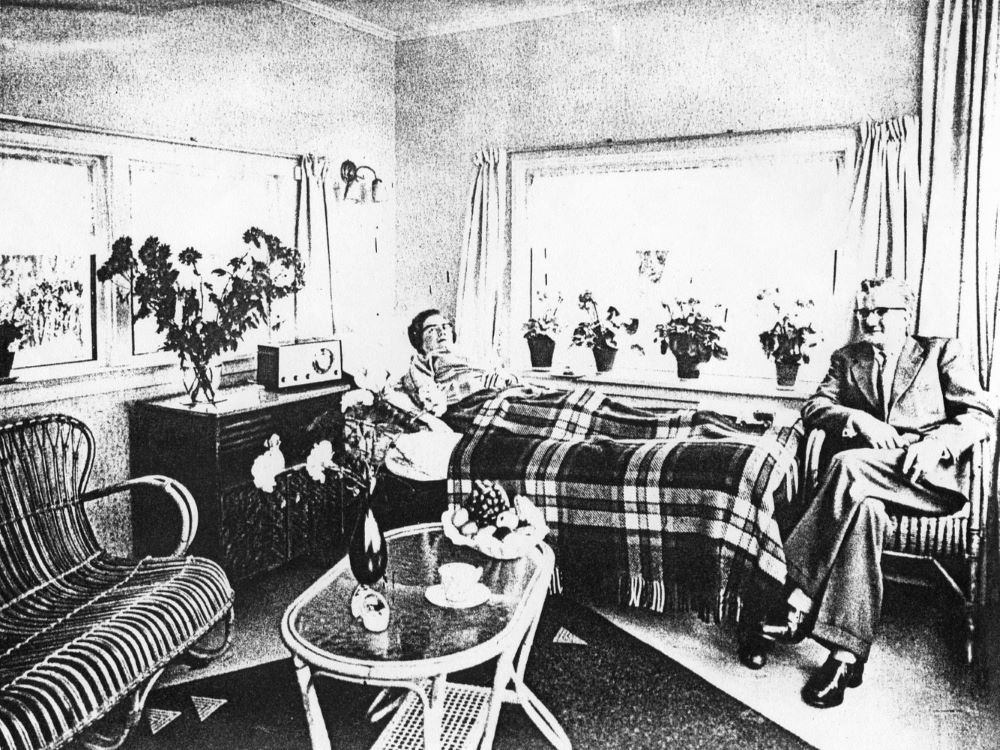
“On this day, the first of Nov. 1957, was transferred in unencumbered property by the Honorable (“yes, that is me, Annie, how do you like that?” the mayor laughed) E.S. van Veen, mayor of the municipality of Aalten, to Miss Annie Smees, Heurne 4, also municipality of Aalten, a double-walled and tile-roofed wooden building, measuring over three by four meters, with double windows, mantelpiece, asbestos chimney, tiled terrace, electrical installation with accessories, balatum, carpet with two rugs, chair, bench, table, book furniture, lamp, oil heater with 200-liter tank. All this is the result of a campaign conducted among friends, family, and interested parties under the motto ‘Operation Sunshine’.”
Mother Smees also had to shake many hands and receive congratulations.
A blessing to many
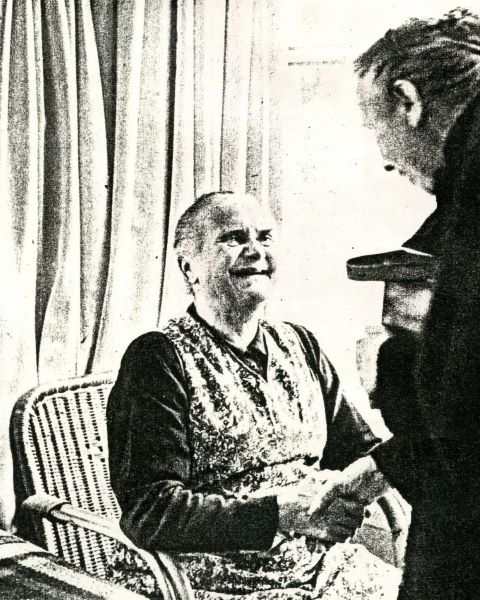
Annie Smees in her new little room, on the right Mr. H. Arentsen.
“It has overwhelmed Anneke,” said her parish minister, Rev. R. Siertsema, “therefore she cannot find words to thank you all and has requested me to do so.” “Let us also not forget,” Mayor E.S. van Veen said a little later, “that although Annie has this cross to bear, she nevertheless manages to let many who visit her go away again with a joyful and grateful heart. Unconsciously, she has been a blessing to many people, and I am sure she will continue to be so.”
Annie lay there perfectly happy, the red cyclamens bloomed on the windowsill, flowers scented the whole room, and her folded hands lay in the mild light of the joyfully shining autumn sun.
The original article is also available as a PDF (click here).
Annie and her sister Mina moved in 1970 to a sheltered housing unit of the Cederhof, Hogestraat 80. The sickroom then served as a storage room for several more years.
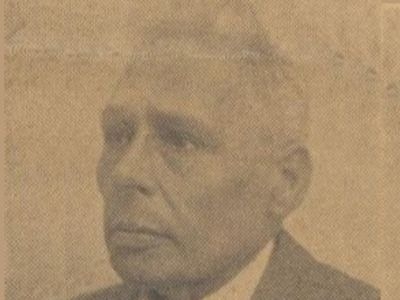
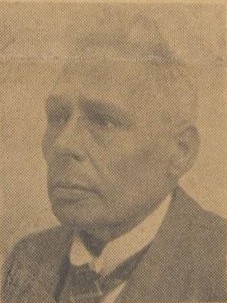
Evert Jan van Schaik (1881–1947) was a doctor in Aalten from 1912 to 1946. He was renowned for his expertise, dedication and humility, always prioritising the welfare of his patients and the community. Van Schaik remained unmarried and passed away in 1947 at the age of 65.
Evert Jan van Schaik was born on 30 November 1881 in Wapenveld, in the municipality of Heerde, the son of Paul van Schaik, a minister in the Christian Reformed Church, and Maria van de Kamp. Due to his father’s profession, the family relocated several times during his early childhood: first to Hoofddorp (1882), then to Middelharnis (1884) and later to Nieuw-Lekkerland (1890).
After completing primary school, Evert Jan attended the Reformed Gymnasium in Amsterdam. He subsequently studied medicine at the Municipal University of Amsterdam, where he obtained his medical degree in 1912.
Doctor in Aalten
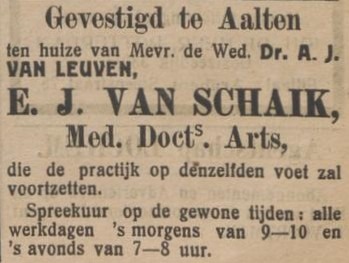
On 9 December of that same year, 1912, he settled in Aalten, taking over the general practice of Doctor Van Leuven, who had passed away shortly before. Initially, he resided at the De Roskam hotel on the Landstraat. A few years later, he moved to the former Roman Catholic presbytery on the Dijkstraat, where four of his unmarried sisters later came to live with him.
Much like his predecessor, Doctor Van Schaik quickly gained appreciation for his expertise and commitment. He enjoyed the deep trust of his patients and built a solid reputation. His approach to his work was characterised by thorough conscientiousness. He took almost no holidays, running his practice for years on end without even considering taking time off.
Although he dedicated himself almost entirely to his medical practice, he also took an interest in church and state affairs. This interest was backed by extensive knowledge, though he chose not to seek the spotlight.
Recognition and Final Years
In 1937, on the occasion of his silver jubilee as a general practitioner in Aalten, a committee formed by local residents organised a celebration in his honour. Van Schaik was praised for his faithful devotion and quiet strength, as someone who never sought prominence but always put his patients and the community first. His great humility made him a beloved figure to many.
However, the demanding practice took a heavy toll on his strength. A few years after his jubilee, he received assistance from Doctor D.N. Visser. As his health declined, Van Schaik gradually handed over more of his workload. In January 1946, he retired from his medical duties permanently, at which point Doctor Visser took over the practice entirely.
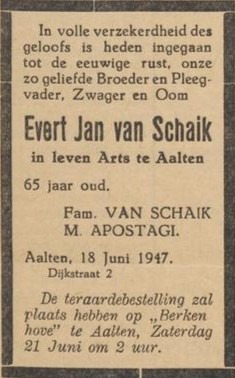
Evert Jan van Schaik passed away in Aalten on 18 June 1947 at the age of 65. He was laid to rest at the Berkenhove cemetery.
Dr. Evert Jan van Schaik (1881–1847)De Graafschapper, 11 December 1912Aaltensche Courant, 20 June 1947
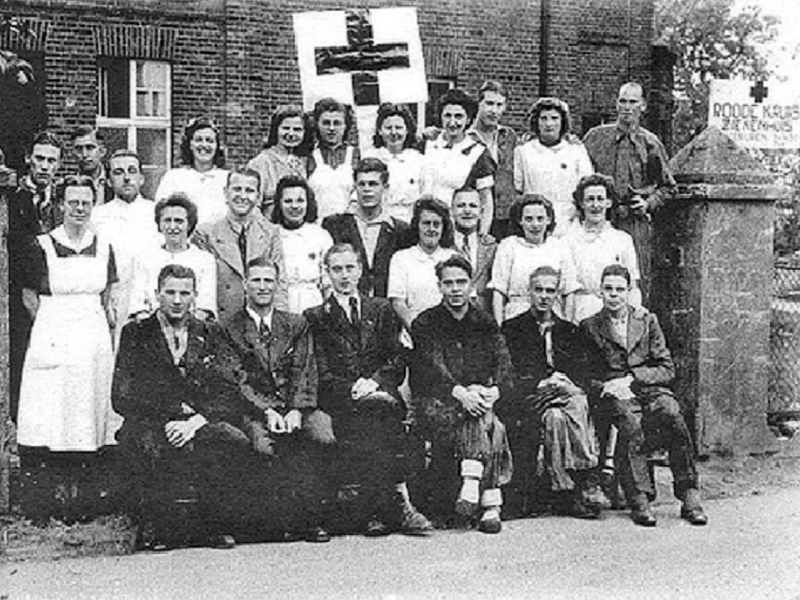
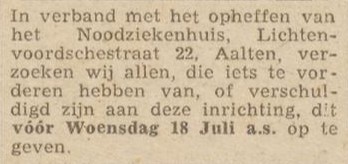
Now that the emergency hospital in Aalten is closing its doors, it is fitting for us to pause for a few moments to reflect on the origin and work of this institution, which served as a blessed outcome for countless Dutch forced labourers and prisoners from concentration camps. As is known, the initiative for its founding was taken under the auspices of the Red Cross, by Dr J. der Weduwen and Mr Cl. Driessen.
Staff of the Aalten Emergency Hospital
The necessity for its establishment became acutely apparent at the end of November, when some of the victims of the train bombardment near Bocholt had to be admitted in Aalten. When Dr J. der Weduwen arrived at the Avondvrede retirement home on 5 December 1944 with 22 liberated prisoners from Rees, the situation presented nearly insurmountable difficulties. Beds, food, and trained staff—everything was lacking.
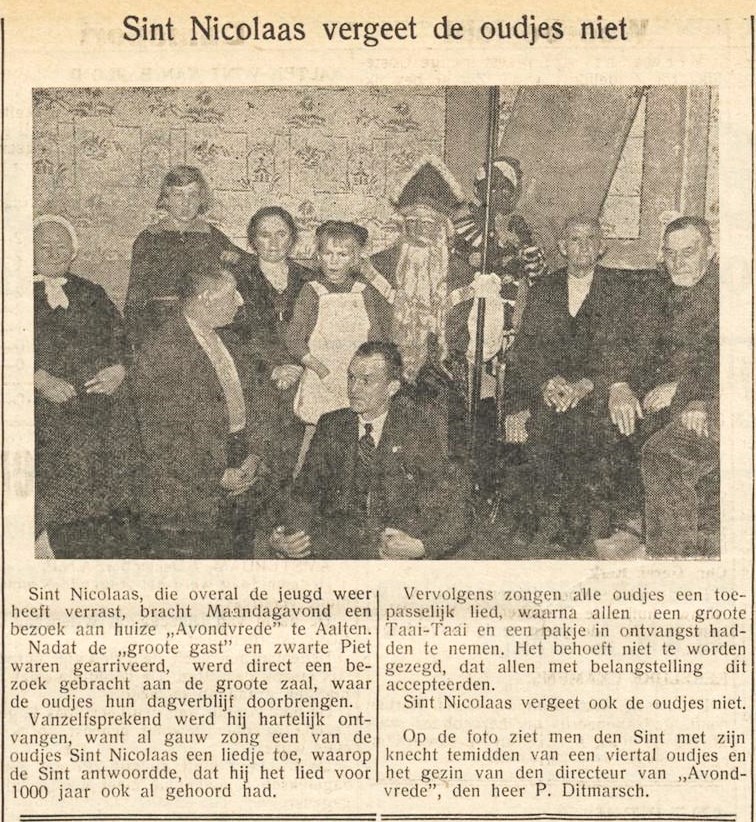
The residents of the home, on that memorable St. Nicholas Eve for the ex-prisoners, brotherly shared their pancakes, oliebollen (doughnuts), and chocolate (!) with the newcomers. By exerting every effort, they succeeded in providing the battered patients with proper care. Mr and Mrs Ditmarsch, deeply moved by the fate of these people, did everything possible.
With emotion, many will remember Sister A. Bol, who died of diphtheria and performed true miracles for her patients during this time. After her death, it proved necessary, given the danger of contagion, to attach expert personnel to the emergency hospital. Sister Schaafsma and Sister Doesburg were entrusted with the management under the supervision of Dr P. Hogenkamp, who took over the medical work of Dr der Weduwen following the tragic passing of this beloved doctor.
Avondvrede Retirement Home, Hogestraat, Aalten
Although more space was made available at Avondvrede, the capacity of the hospital proved too small, as one also had to take into account war victims from the local area; therefore, the hospital was relocated to the Patrimonium building. In cooperation with the U.V.V., I.K.O., and the Red Cross, the material side of the work was taken care of. After the final bombardment, the Patrimonium building became unusable, and it was decided to liquidate the hospital, as the majority of the patients, under the leadership of Sister Schaafsma, preferred to leave for the North.
Sister Doesburg remained at her post with a few patients, and the hospital was moved back to Avondvrede. From there, they departed once more—joined by a number of victims from the bombardment in Bocholt—to the building on the Lichtenvoordsestraat, which still serves as an emergency hospital today. About twenty patients were housed in the cellars there. Enormous support was received from the surrounding hamlets.
De Graafschapper, 14 July 1945
In the beginning, the conditions were extremely primitive. Later, everything improved. Special praise is due to the girls of Aalten, who performed nursing work without any prior training. Just before the liberation, some victims of the liberation battles were admitted. An unforgettable moment was, of course, the arrival of the first ‘Tommy’ (British soldier) who was brought into the hospital.
And now the work has come to an end. The large stream of repatriates, for whom they had prepared as their final task, did not arrive, and the now well-equipped emergency hospital is disappearing in these coming days. (Why not make it a permanent hospital?) A piece of Aalten’s war history is hereby concluded, but many will continue to remember this work with gratitude.
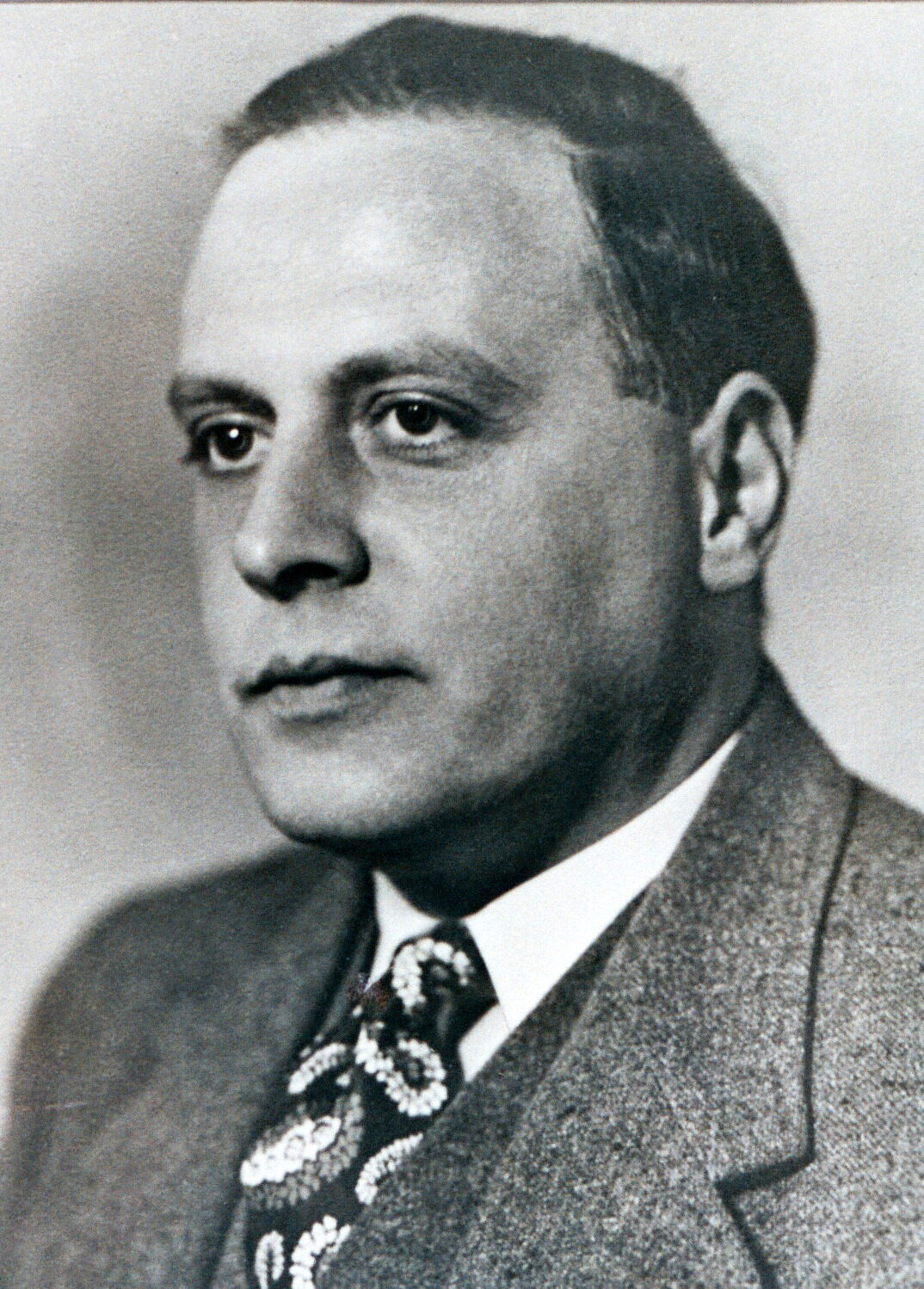
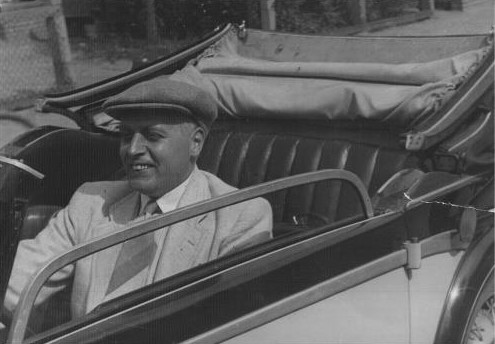
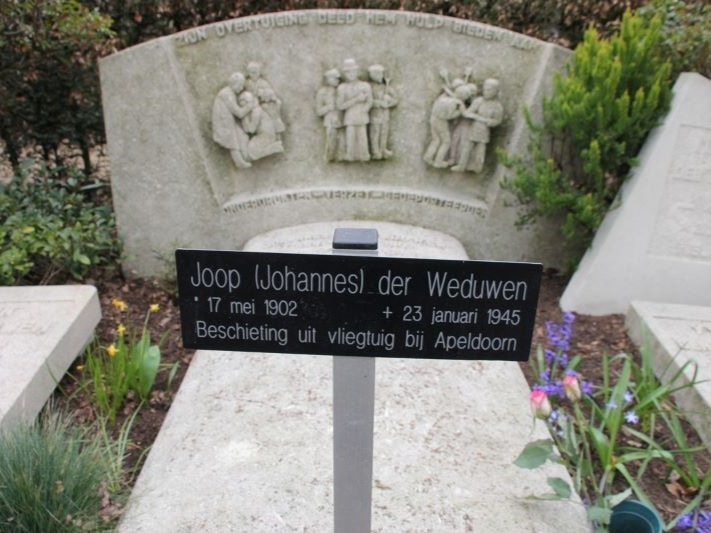
Johannes (Joop) der Weduwen was a popular general practitioner in Aalten. On January 23, 1945, he came near Apeldoorn to die after being shot at by an Allied plane, at least according to the German authorities.
Joop der Weduwen was born on May 17, 1902 in Aalten. He studied at the Gymnasium in Doetinchem, later at the University of Utrecht, where he took his medical exam and then obtained his doctorate in medicine. He showed himself to be a worthy successor to his father and established himself here as a doctor.
From the beginning of the war, Joop der Weduwen became involved in the resistance in the Achterhoek. He actively offered help to people who were wanted by the Germans. His family included two young men who refused to do labor service. If English planes were shot down and the crew was injured, he offered them medical assistance. For a robbery at the distribution office in Borculo , his car was ‘stolen’. He helped Jewish people in hiding on various farms in the area. He also played a role in the abandonment of the Jewish baby ‘Wíllem Herfstink’ at the house of resistance leader ‘Uncle Jan’ Wikkerink.
Assistance to forced labourers
In the last winter of the war, Joop der Weduwen felt closely involved with the forced labourers who had to do their slave work under inhumane conditions, especially in Camp Rees . That camp was just across the border in Germany. As a representative of the Dutch Red Cross, he negotiated with Peter Röhrig, the commander known as the executioner of Rees to remove the sick and wounded.
He tried to transfer as many people as possible to Aalten, where ‘Huize Avondvrede‘ on the Hogestraat had been set up as an emergency hospital. Many were also transported by car from the GP to the Emergency Hospital in Harreveld. Some sick people stayed at his home temporarily and then went into hiding.
On 19 January 1945, Doctor Der Weduwen, accompanied by two SS men from the Rees camp, left for The Hague for an official meeting with high-ranking German officers and the mayor there. On behalf of the Red Cross, he pleaded for better conditions for the forced labourers, many of whom came from The Hague and Rotterdam. The men had to spend the nights on the bare floors in draughty and damp wooden sheds, had meager clothes and hardly got anything to eat. To improve their inhuman existence somewhat, he asked for straw bags, among other things.
Fateful return journey
During the return trip to Aalten, on January 23, 1945, the car he was in was fired upon by an Allied fighter plane near Apeldoorn around five o’clock in the afternoon, at least according to the German authorities.
His lifeless body was found badly mutilated in a dry ditch, where he had tried to take cover. He had lost a lot of blood and had died on the spot. The car was undamaged. There were strong rumors that the Germans deliberately attacked him because he had become too troublesome. Joop der Weduwen was 43 years old.
Willem van Houtum, Apeldoorn’s war chronicler, wrote about it in his diary on 23 January:
“A doctor from Aalten, who interfered a lot with the condition of the deportees in Rees, died of German indifference. The doctor left for The Hague last Friday with two Germans in a car. He wanted to plead with high authorities for the improvement of the treatment of our compatriots in Rees and so on. It was to no avail. As a result, they returned on Tuesday. They were shot at by an English plane on the concrete road near Hoog Soeren. The doctor got out of the car in a hurry to take cover but collapsed badly injured. The two Germans took away the wallet, wallet and so on and drove on to the Ortskommandant in Apeldoorn. He refused to transport the doctor because it was a civilian. So the two Krauts drove on to Aalten and handed over the wallet and so on to the doctor’s wife. This in turn could not provide transport either. She called in the help of a family member in Apeldoorn. With the help of the police, he succeeded in having the body (the doctor had died of excessive blood loss) transferred to Aalten. Due to the many shelling, the concrete section of the Amersfoortseweg near Hoog Soeren is already popularly called ‘Dodenweg’.”
Police report
Tuesday 23 January 1945, 17.00 hours, report no. 23. Informs Zegers in Nieuw Millingen that a man has just been shot dead by guns. A car is also on fire. Criminal Investigation Department, Feldgendarmerie, Pol. Officer and L.B.D. notified. The body is picked up by the L.B.D. (= Air Protection Service) and transferred to the hospital on the Sprengenweg.
Wednesday 24 January 1945, 5.45 p.m., report no. 24. With regard to the mutation of the report of the order police of 23-01-1945 at 17.00 hours, detective Adema reports that the body of the said person was picked up by the L.B.D. and laid out in the morgue of the hospital on the Sprengenweg. It has been identified as Dr. Johan der Weduwen, living at Landstraat 4, in Aalten. His brother-in-law Wissink, living at Stationsstraat 25 here, has been informed of this, who takes care of warning the family and the funeral.
Funeral
On Saturday, January 27, Joop der Weduwen was buried with great interest to Berkenhove cemetery in Aalten. The procession counted at least 1000 people. Previously, a funeral service had been held in the Old Helena Church under the leadership of Rev. J.D. Stegeman, emeritus pastor in Aalten. On behalf of the forced labourers, Mr Dijkgraaf from The Hague spoke a word of thanks and farewell.
Friends, patients and villagers had a special memorial stone made in front of his grave in gratitude and to honor him. The text on the monument reads: “His conviction made him offer help to the oppressed – resistance – deportees.”
His name is also mentioned on the memorial stone for the fallen in the organized resistance on the Markt in Aalten, next to the Old Helena Church.
On March 31, 2023, a Stolperstein was laid in front of the house where Joop der Weduwen lived, Landstraat 41 in Aalten.
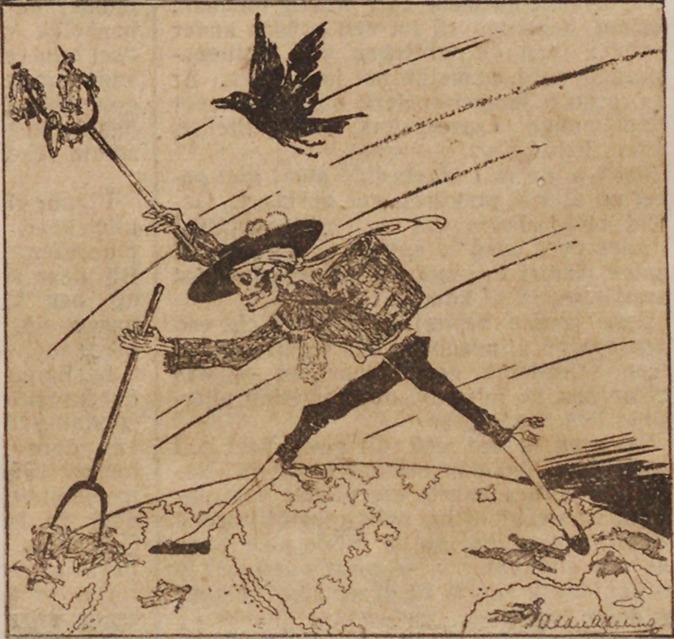
At the end of May 1918, the first reports appeared in Dutch newspapers regarding a ‘mysterious illness’ in Spain. Although its origins likely lay elsewhere, it was soon referred to as the Spanish Flu. This pandemic held the country in its grip for nearly two years and claimed 38,000 lives. In 1920, the disease vanished as enigmatically as it had arrived.
The municipality of Aalten did not escape the Spanish Flu either. The number of fatalities here is estimated at approximately 60, out of a population of roughly 10,000 at the time.
Newspaper reports
Aalten, 16 October 1918 – “The Spanish sickness is increasing in scale in Aalten. In many households, one or more family members are confined to bed. It is also markedly noticeable in schools, where many children are absent. Consequently, the Christian school on Breedevoortsestraat has been closed. Fortunately, the illness has not yet taken a malignant course. Lung conditions have only occurred in a few individuals.” De Standaard
Cartoon from 1918–1919. Newspaper clipping, collection Scheltema
Aalten, 29 October 1918 – “The Spanish flu, which at first was sometimes spoken of jestingly, is now appearing alarmingly in places. So too here in our municipality. Among the very numerous cases, several have resulted in death, sometimes so suddenly that people pass away within a few days. Indeed, the number of reported deaths at the town hall here has never been as high in a single day as was the case yesterday, when no fewer than eleven death certificates were filed. There is general widespread sympathy for the households where death has made such an unexpected entrance.”
Bredevoort, 29 October 1918 – “Whereas until now the Spanish flu was actually only known by name here, as people were recovered within a couple of days, it has now become quite different and has taken on a more serious character. Already several victims have died of this illness, while many are seriously ill. The public school was closed yesterday (Monday morning).” Aaltensche Courant
Aalten, 5 November 1918 – “The flu continues to rage here with the same severity and claim its victims. Yesterday, four persons in this municipality died of the disease.” De Graafschapper
Aalten, 20 February 1919– “In the municipality of Aalten, the Spanish flu has now broken out for the third time. The illness has been confirmed in many families, with some cases already resulting in death.” Arnhemsche Courant
Aalten, 5 March 1919– “The Spanish flu continues to demand sacrifices in Aalten. The number of cases remains significantly high, while numerous deaths occur.” Arnhemsche Courant
Miracle Cures
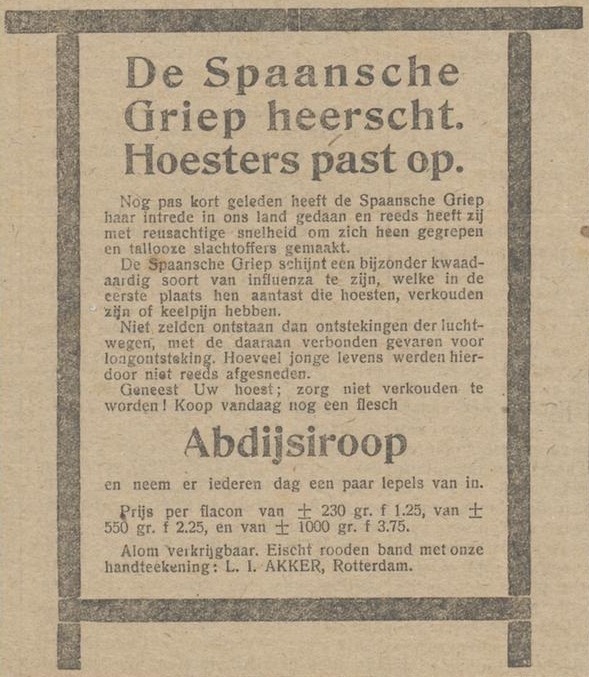
Entrepreneurs also saw commercial opportunities and sold all kinds of remedies for the flu, such as ‘Abbey Syrup’, which was essentially nothing more than sugar water with cinnamon. Other promoted treatments included “sublimate injections, fumigations with nitrous acid, eucalyptus oil, sugar beets…”
Advertisement in De Graafschapper, 27 December 1918
Would you be so kind as to publish the following? Thank you very much in advance.
There are many people in the municipality – fortunately – who support the cause of Nursing through an annual contribution. Through all these annual contributions, the cause can be maintained. But among those many people, there are also many who regard their annual contribution as a subscription, through which they have secured the right to the help of the Sister in case of illness or accident. And that view is definitely wrong.
And do you know what the consequence of that view is? This: that when such people have enjoyed the help of the Sister for a short or long period, they never think of gladdening the Committee for Nursing with an extra gift as an offering of gratitude. Why should we do that? such people then say; after all, we pay every year when the lists are presented to us!
If only those who cannot afford to pay did so, there would be nothing to say against it. But even those who are more amply, and even very amply, endowed with earthly goods, do the same. Do such people not understand that in this way the Committee for Nursing must always struggle with a deficit? And if this deficit is then supplemented by the diaconate of the Reformed Church, is the calculation so difficult to make that those people more amply endowed with earthly goods, who sometimes enjoy the help of the Sisters for weeks, even months, ultimately receive a handout from the funds of the diaconate? And is that what they want?
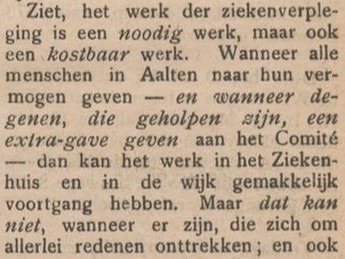
See, the work of nursing is a necessary work, but also a costly work. When all people in Aalten give according to their means – and when those who have been helped give an extra gift to the Committee – then the work in the Hospital and in the district can easily proceed. But that is not possible when there are those who withdraw for all sorts of reasons; nor as long as there are those who believe that for a single mark as an annual contribution, they can be helped daily at home by the Sisters for 3 months or more.
The Sisters do not mind going to the furthest borders of the municipality, but the distances are great; the Sisters have only one body each; and so everyone can understand that it is impossible to reduce the workforce, but also, that it is definitely necessary when giving not to ask if there are even smaller coins than half-cents, but rather, whether it is not possible to give a bit more than usual for this good cause, especially when the Sisters have provided much help to us or our home.
And if I do not ask for too much space, this as well: When the roads are bad, and when the weather is bad, and if the arrival of the Sisters in the hamlets is desired during bad roads and bad weather, would it then not be possible to have them collected by carriage or to give her permission to come by carriage? For Sisters too, weather and road can be too bad for cycling. A sister recently said: “I soon noticed that the people here in Aalten are friendly and helpful.” Would the people in Aalten not want to show that too, by sending or providing a carriage in bad weather and on bad roads?
And then finally. Is there no more old linen in Aalten for the Sisters? To date, nothing has been received at the Hospital. Come, housewives, check your cupboards once more and gladden the Sisters in the Rest Home with old linen.
And as a very last point. There is also no more money for the linen cupboard. And the linen cupboard must be replenished.
I hope that many will quietly read what is written in this piece. May the Lord grant all who read this a blessed Easter.
On behalf of the Committee for Nursing: BARNEVELD, Secretary. Aalten, March 1910.
P.S. With joy I can report the receipt of: 2 packages of old linen, f 6.– for use of the operating room and f 18.– from a patient who has been under the care of the Sisters for some time. Would a change for the better be coming?
Submitted, outside the responsibility of the editorial board.
M. de R.
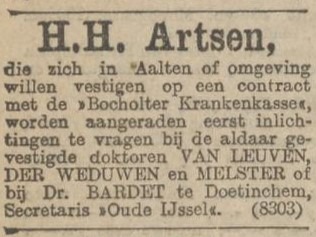
The “doctors’ issue”, which has already set so many pens in motion at home and abroad and caused such turmoil in so many minds and hearts, originally belonging to Bocholt, has been transferred from there primarily to Aalten, and has genuinely taken on a fiercer character than the generality of mankind could have imagined.
On the 13th of this month, we were made aware of a letter of the following content:
Wir erklären dasz wir van 15 März 1910 an, die Nothfalle der mitglieder und derer angehörige Ihrer kasse nur gegen fünffacher Kampfestaxe, behandlen wollen.
Aalten, 10 März 1910. (w. g.) WEDUWEN, E.J.A. MELSTER, VAN LEUVEN.
Following this, we requested and obtained an interview with our aforementioned doctors on Monday the 14th of this month. We requested the gentlemen to specify to us what did and what did not constitute an “emergency” (Nothfall). Dr der Weduwen declared that this could only be decided by experts; Dr Melster intimated that a proper answer could not easily be given, as a whole book could be written on the subject. Furthermore, it appeared that there was no complete agreement on the matter between the three aforementioned gentlemen, since Dr van Leuven accepted more cases as an “emergency” than his colleagues here.
We urged that a list of “emergencies” be provided to us, so that we might say to our fellow members: “In the stated cases you may turn to the local physicians, and you will, albeit at an insanely high price, receive treatment.” This request was not complied with; Dr der Weduwen even declared that they were not even authorised to do so, and that the Medical Association (Maatschappij van Geneeskunde) and the Leipziger Verband had to pass judgment on the matter.
One of our number posed the question of whether the workers concerned could then not be treated at their own expense, whereupon Dr der Weduwen again intimated that this was also impossible, for, so this gentleman declared, we are waging a struggle against the health insurance funds (krankenkassen) and cannot do so otherwise than by fighting against the members of those funds.
Nieuws van den Dag, 3 February 1910
This prompted one of our number to observe that we, members of the health insurance funds, were in an even worse condition than a farmer’s dog or pig. After all, if one of these animals falls ill, the owner goes to the vet and… treatment takes place. For us honest, industrious workers, treatment was out of the question.
To the question of one of our number, whether the health insurance funds or we had placed a single straw in the doctors’ path whereby they were justified in refusing us their aid, an answer in the negative was given, with the addition: “We cannot do otherwise,” to which we replied: “You can, but you will not.” We finally brought the conference to a close because we had formed the conviction that no result could be achieved with these unwilling doctors.
On Saturday 19 March, we were made aware of an official copy of the following letter:
Abschrift
Die unterzeichneten erklären, dasz sie seitens der in den Bocholter Fabriken beschäftigten, Holländischen arbeiter, besonders in den letzten woche auszerordentlich viele klagen vernomen haben, über die art der ärztlichen behandlung und versorgung der Holländischen fabrikarbeiter seit anfang dieses jahres. Die leute beklagen sich darüber, dasz die qualität der neuen ärzte eine mangelhafte sei, und das sie aus diesem grunde kein vertrauen mehr zu diesen haben könnten. Sie bedauern weiterhin lebhaft, dasz es ihnen unmöglich geworden ist, sich von ihnen alten vertrauten ärzten behandeln zu lassen.
Die leute erklären fast ausnahmslos, dasz sie es nicht wagen dürften, sich über die bestehende zustände zu beschweren, weil sie der sicheren Uberzeugung sind dann gekündigt zu werden, oder sonst auf irgend welche weise schweren miszhelligkeiten ausgesetzt zu werden. Weiterhin beklagen sich die arbeiter darüber, dasz sie in fallen von vorhandener Unarbeitsfähigkeit, oder Wiedererlangung der arbeitsfähigkeit von die neuen ärzten in Bocholt keine bescheinigung hierüber erlangen könnte.
In einer gestern stattgefundenen conferenz zwischen die Aaltener ärzten und einer deputation Holländischer, in Bocholt beschäftigter fabrikarbeiter, erklärten die letzteren, dasz zur zeit in den Holländischen grensbezirken Katzen und Hunden und Schweine besser ärztlich versorgt wurden als die menschen.
Die unterzeichneten sind jederzeit bereit vorstehende angaben, eidlich zu erhärten und auf wunsch weitere einzelheiten mundlich zu protokoll zu geben.
Aalten, den 15 März 1910.
(gez.) WEDUWEN, Arzt „ MELSTER, „ „ VAN LEUVEN, „ Der Burgemeister J. No. 712 C. Bocholt, den 18 März 1910.
The content of the above copy is unacceptable to us. We shall shortly hold a general meeting, at which all interested parties over the age of 18 may be present. We specially invite our local doctors to attend this meeting.
We hope that these men of such high scientific standing will not be conspicuous by their absence. From the hearing of both sides, it will then be possible to make clear whether there is any truth in the above letter, and if so, what. We declare even now that the final assertion in that letter is one of the most gross lies spoken within our memory.
Grateful for the space granted, we have the honour to remain,
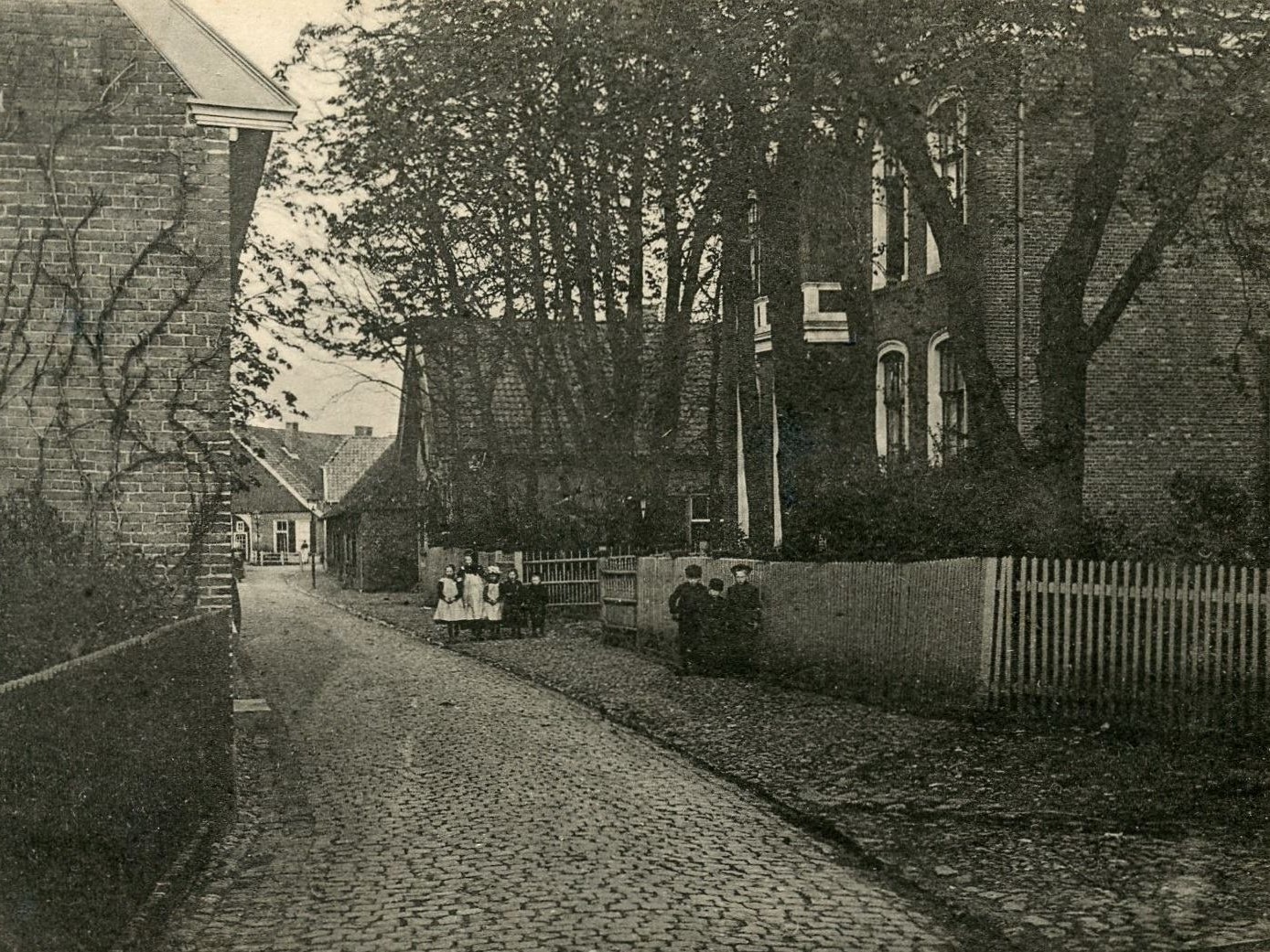
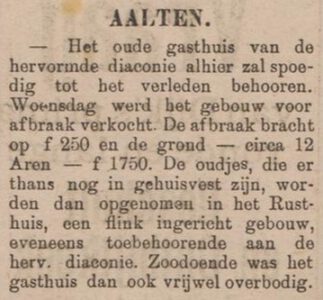
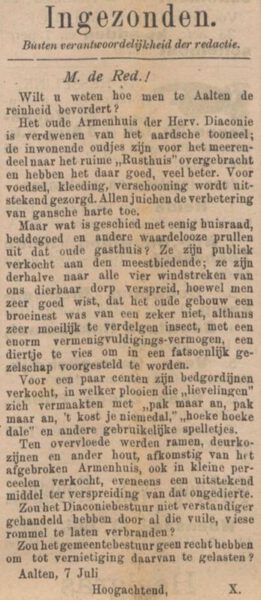
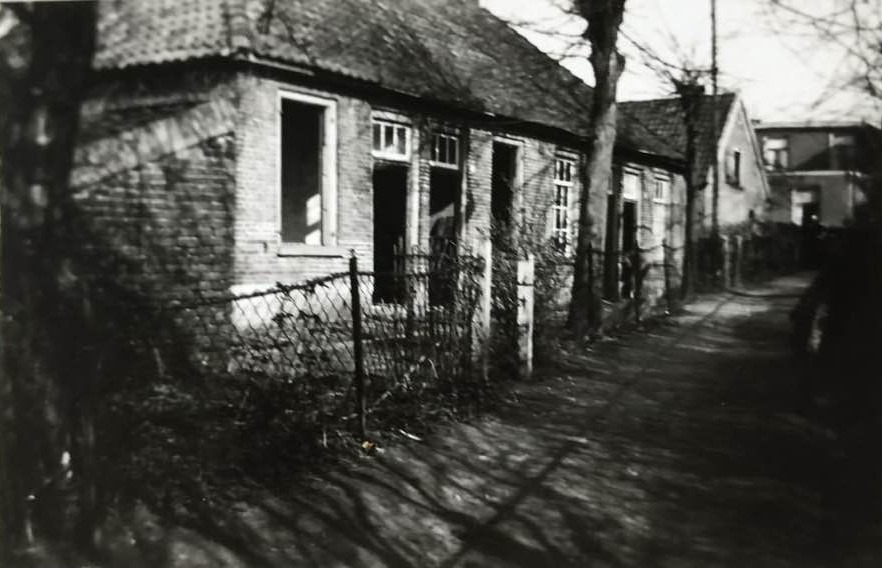
The Almshouse (‘Gasthuis’) was an institution run by the Reformed diaconate (charitable board) located on what was then Gasthuisstraat, now known as Haartsestraat, in Aalten.
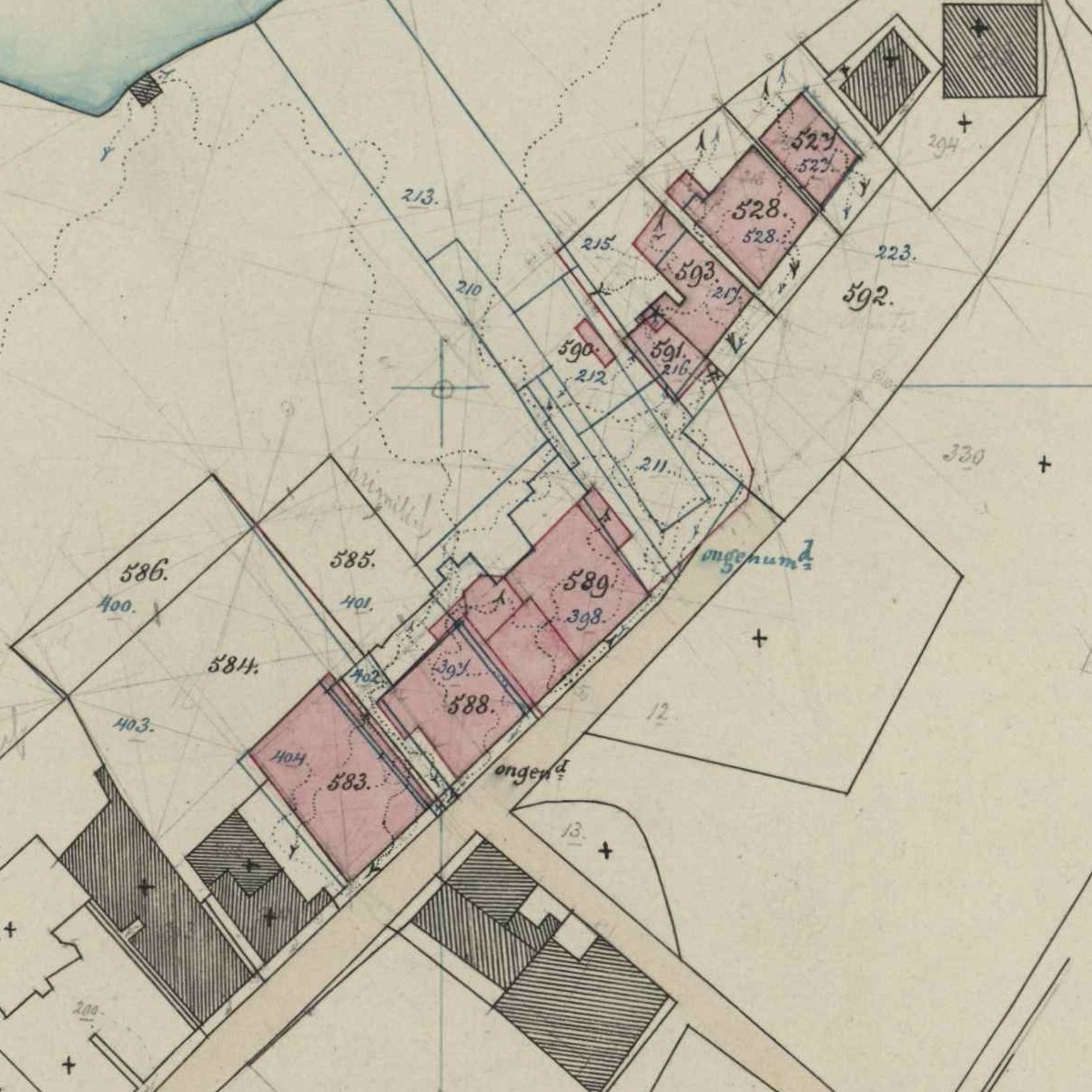
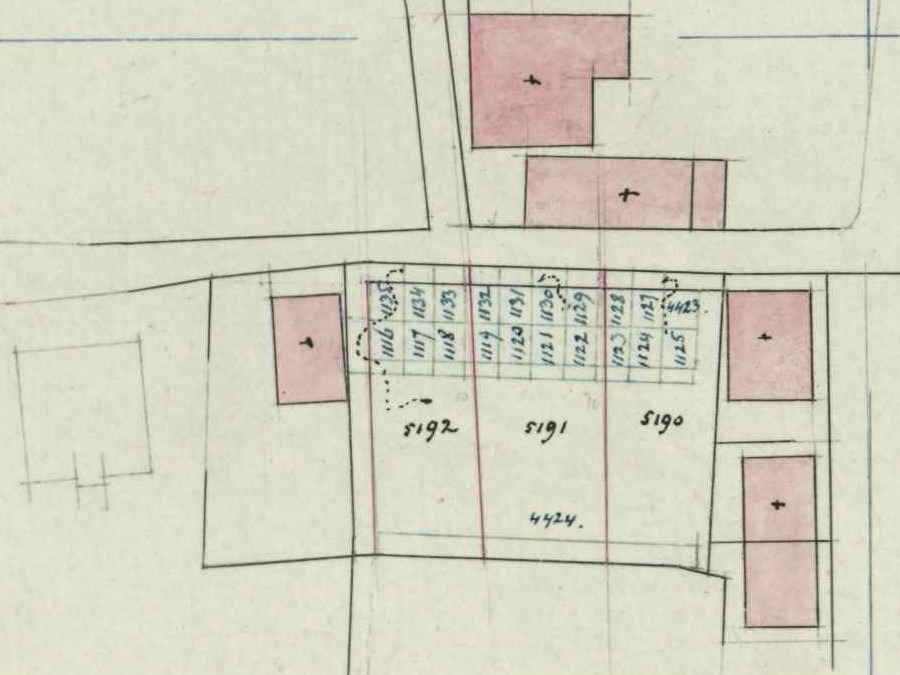
On the 1832 land registry map (cadastre) shown on the right, the exact location is visible, situated approximately where Haartsestraat 14 to 18 stands today.
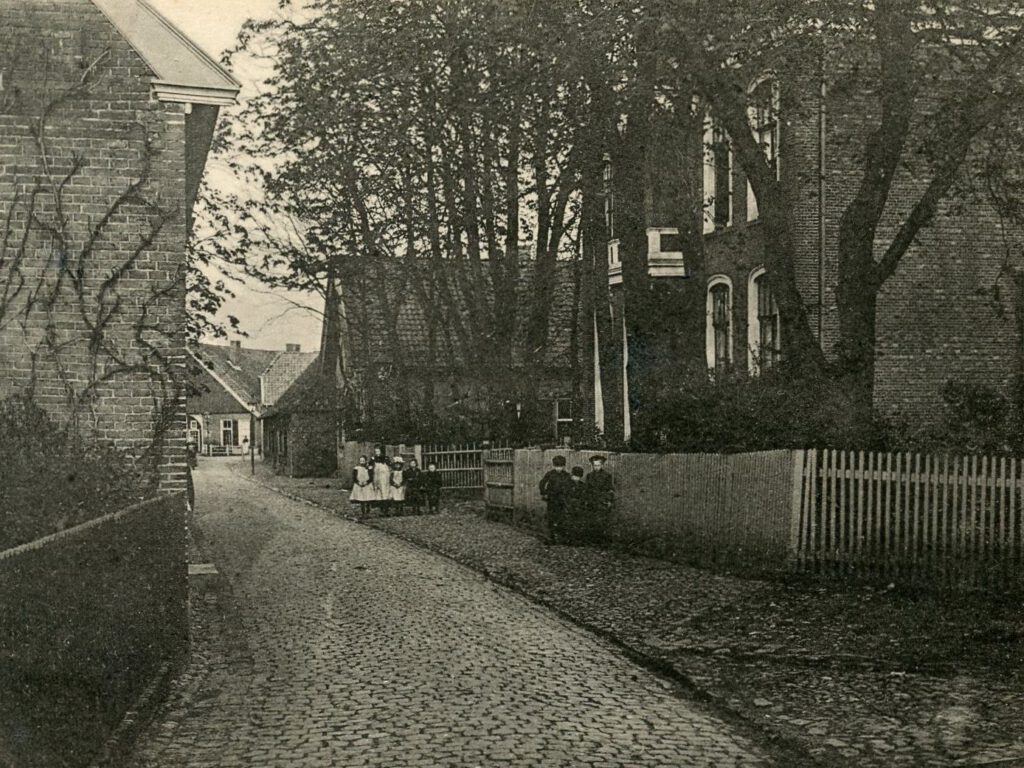
Bovenstaande foto toont de Gasthuisstraat rond 1900. Rechts, voorbij de burgemeesterswoning – het latere postkantoor – zien we nog net een gedeelte van het Gasthuis. Helemaal achteraan zien we ook nog net het Luutenshuus.
The Almshouse contained ten rooms on the street side and ten on the garden side, each with a floor area of 17 to 22 m². Each room was equipped with two box-beds (bedsteden). Occupants shared a privaat (toilet) between several rooms. In the garden, many residents also kept a ‘sikkestal’ (a small shed for a goat).
The residents were not only among the poorest members of the population but were also generally the least educated. Consequently, the Almshouse and its surroundings were frequently the scene of shouting matches and petty quarrels. The residents were often the targets of harassment by the local youth of Aalten.
One of the residents would deliver wheelbarrows of fine white sand door-to-door for a penny, which people used to strew across their stone floors. Once he had earned a few pence, he would quickly spend it on a borrel (a small glass of gin) before starting to ‘save up’ for the next one.
In 1904 werd het Gasthuis afgebroken. De oudjes er op dat moment nog woonden verhuisden naar het Rusthuis aan de Hogestraat.
Owners
This overview is incomplete.
Year
Plot
Owner
Description
1832
I1116 – I1135
the Reformed Poor of Aalten
House Numbering
In the population register, every room or household is listed on a separate family card. The overview below provides links to the first family card in the population register for each period that corresponds to the almshouse on Haartsestraat. From there, one can browse further to find all residents for that specific timeframe.
An extensive table listing all residents is planned for the future to assist genealogists in identifying former occupants. Please note: records may contain errors.
Aalten had vroeger ook nog een katholiek gasthuis. Het Armenpad tussen de Hogestraat en de Stationsstraat, één van de typisch Aaltense Gängeskes, herinnert hier nog aan.
Features
Cadastral no.
I-8761/8762/ 13144/13140
Function
Almshouse
Year of construction
unknown
Demolition
1904
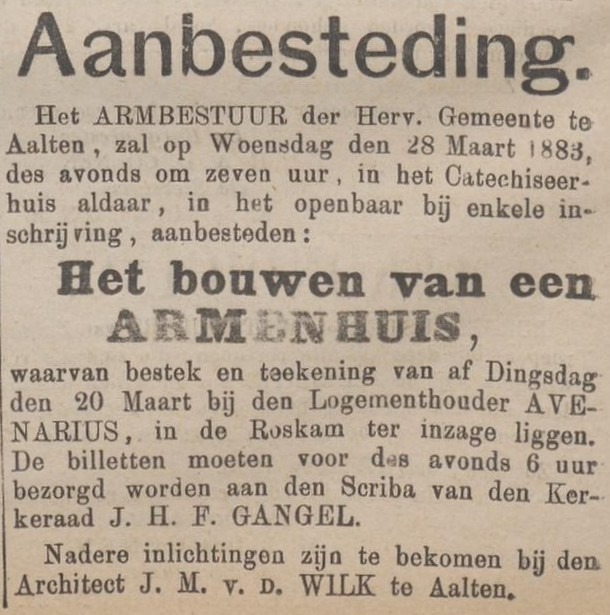
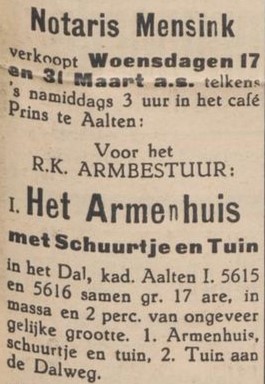
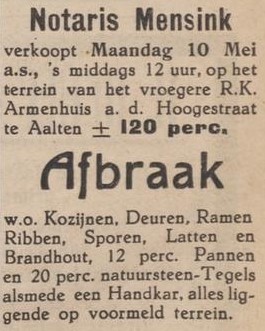
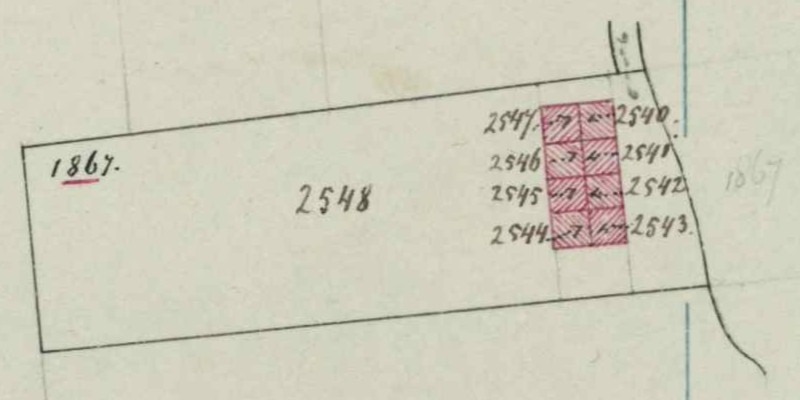
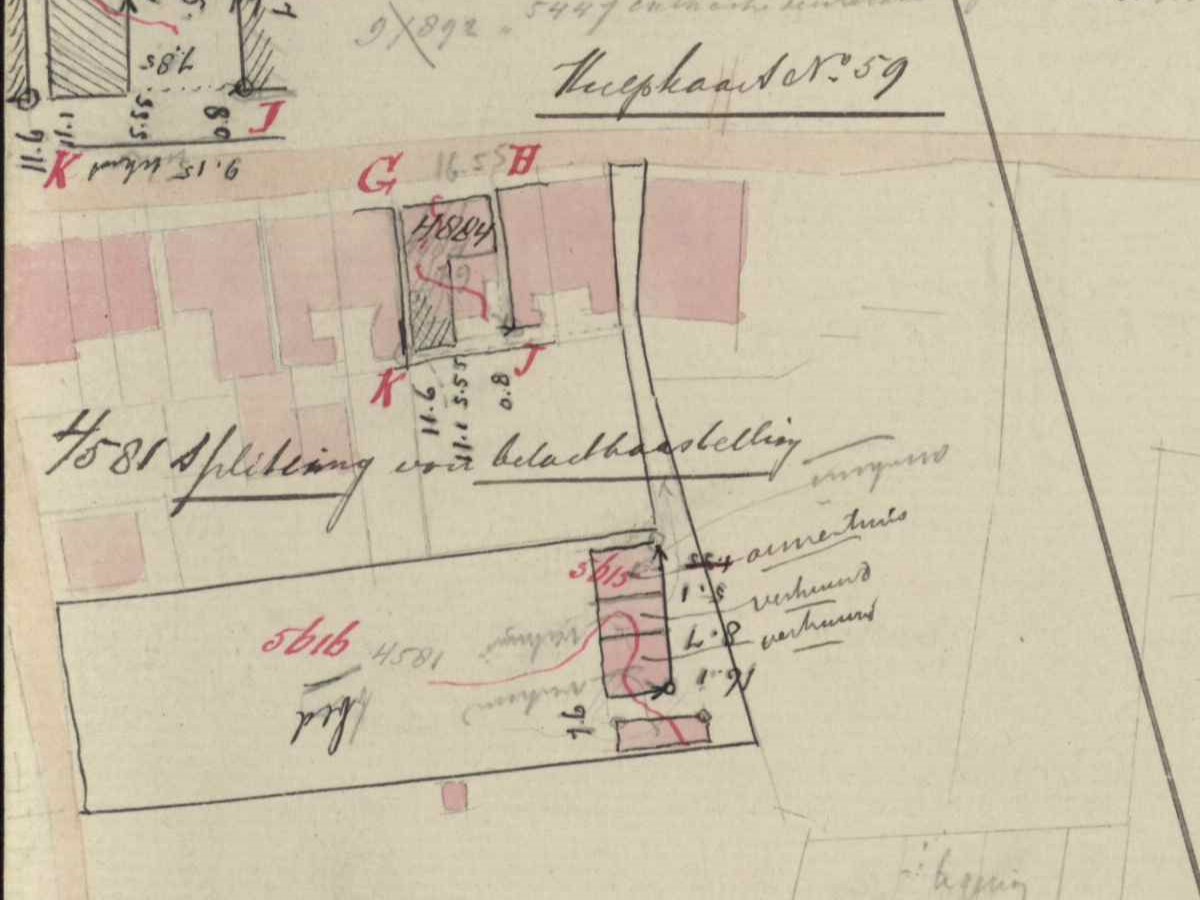
Land Registry 1832, Source: hisgis.nlFragment cadastral map, 1905Zutphensche Courant, 19 March 1883Nieuwe Winterswijksche Courant, 25 May 1904Aaltensche Courant, 9 July 1904
Het Armenpad, dat de Hogestraat en de Stationsstraat met elkaar verbindt, is één van de typisch Aaltense Gängeskes. De naam herinnert aan het rooms-katholieke gasthuis (armenhuis) dat hier ooit stond.
Dit armenhuis bestond uit acht kamers van elk 4 bij 4 meter en stond op grond van Dr. Hartman. De bewoners ontvingen steun van de Rooms-Katholieke Kerk, die hen voorzag van kleding en voedsel. Daarnaast hadden ze een klein tuintje, waarin ze bijvoorbeeld een geit konden houden. In 1937 kwam er een einde aan het gasthuis, toen de familie Hartman besloot de bewoners niet langer op hun grond te laten wonen.1
Around 1912, the eight dwellings were reconfigured into four dwellings.
Behalve het katholieke gasthuis had Aalten vroeger ook een hervormd gasthuis aan de huidige Haartsestraat.
14 m² house & yard (8x) including house numbers, between brackets after plot number)
1894
I-4581
the Roman Cath. poor of Aalten
1.600 m² almshouse, barn & yard
1913
I-4581
the Roman Cath. poor of Aalten
1,700 m² house, almshouse, barn and yard
1914
I-5615 I-5616
the Roman Cath. poor of Aalten
40 m² almshouse 1.660 m² house, barn and farmland
Residents
The overview below contains a link to the corresponding family card in the population register for each period and room/household from 1860 to 1910.56 What we noticed: it appears that residents occasionally changed rooms; the residents were mostly single women (widows); and many had Bocholt as their place of birth. Our research is still ongoing, errors excepted!
Deze website gebruikt cookies voor een optimale ervaring en analyse van bezoekgegevens. Ga je hiermee akkoord? Zonder toestemming werken sommige onderdelen van de site mogelijk minder goed.
Functioneel
Always active
De technische opslag of toegang is strikt noodzakelijk voor het legitieme doel het gebruik mogelijk te maken van een specifieke dienst waarom de abonnee of gebruiker uitdrukkelijk heeft gevraagd, of met als enig doel de uitvoering van de transmissie van een communicatie over een elektronisch communicatienetwerk.
Voorkeuren
De technische opslag of toegang is noodzakelijk voor het legitieme doel voorkeuren op te slaan die niet door de abonnee of gebruiker zijn aangevraagd.
Statistieken
De technische opslag of toegang die uitsluitend voor statistische doeleinden wordt gebruikt.De technische opslag of toegang die uitsluitend wordt gebruikt voor anonieme statistische doeleinden. Zonder dagvaarding, vrijwillige naleving door je Internet Service Provider, of aanvullende gegevens van een derde partij, kan informatie die alleen voor dit doel wordt opgeslagen of opgehaald gewoonlijk niet worden gebruikt om je te identificeren.
Marketing
De technische opslag of toegang is nodig om gebruikersprofielen op te stellen voor het verzenden van reclame, of om de gebruiker op een site of over verschillende sites te volgen voor soortgelijke marketingdoeleinden.