
Overview
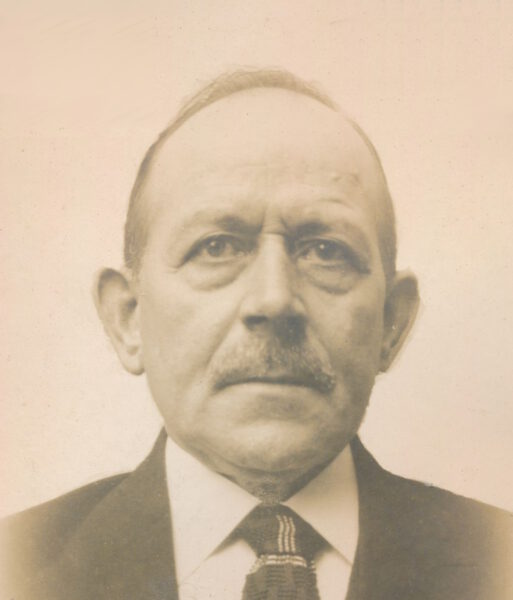
Johan Obbink was born on January 23, 1869, at the Rikkert farm in the Aalten rural district of Heurne. He was a twin brother of the theologian and court chaplain Herman Theodorus Obbink. On June 25, 1891, he married Berendina Hendrika Sondern from Groot Heinen in Lintelo. Together they had three sons and two daughters.
In 1919, he purchased the Nieuw Slaa farm together with his son Hendrik Willem and went to live there.
Social contributions
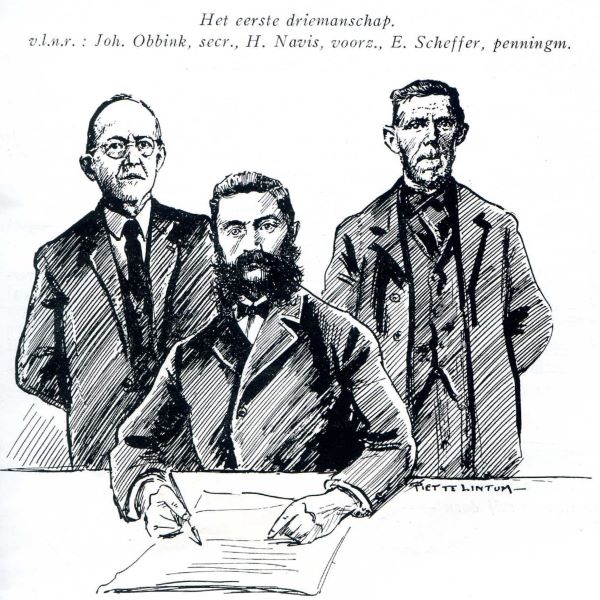
Johan Obbink held a prominent position in public life in Aalten for many years. For instance, in 1896 he was one of the founders of the Coop. Dairy Factory and in 1898 of the Coop. Agricultural Association, institutions which he served as a board member for many years. On his initiative, the Coöp. Farmers’ Credit Bank was founded in 1903, where he served as cashier for more than a quarter of a century.
Furthermore, Obbink was chairman of the ‘De Graafschap’ Ring of Farmers’ Credit Banks, a member of the Provincial Council of Gelderland, a commissioner for the P.G.E.M., and a member of the local committee of the Gelderland Agricultural Crisis Support Foundation, a council member and later alderman for the municipality of Aalten, a board member of the Mutual Farmers’ Insurance Fund, polder master of the “De Baakse Beek” water board, co-founder of the Association of Purchasing Societies in Gelderland, a member of the Supervisory Board of the State Agricultural Winter School in Winterswijk, and president-churchwarden of the Dutch Reformed Church in Aalten.
The interests of the agricultural population in particular were always at the forefront for him, which led to Obbink being not only honored but also feared for the fierce tenacity with which he fearlessly defended his opinions. It was precisely this trait that certainly made him a pioneer for the ideals he set, and in his struggle for them, Obbink achieved a great deal.
For his exceptional services, Obbink was appointed Knight of the Order of Orange-Nassau by H.M. the Queen.
Johan Obbink passed away on May 9, 1957, at the age of 88, at home in the Aalten Heurne. He was buried at the Old Cemetery on the Varsseveldsestraatweg in Aalten.
Funeral
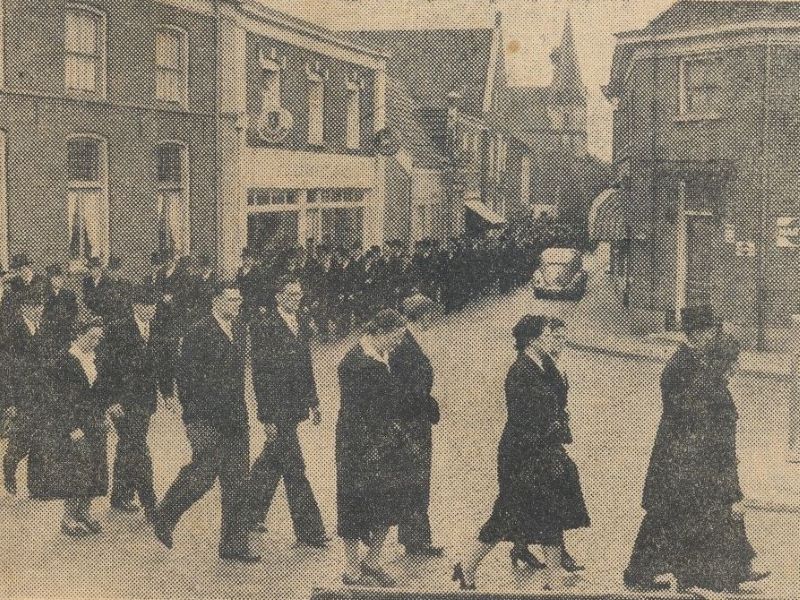
His funeral took place with a very large attendance. The funeral service was held in Old St Helen’s Church, led by Rev. D. Groeneboer. On behalf of the municipal government, the service was attended by Mayor E.S. van Veen and Alderman J. te Roele; furthermore, the attendees included many directors of the organizations in which Mr. Obbink had played an active role, from local, regional, and national circles.
After the funeral service, a long procession, in which numerous floral arrangements were carried, departed for the cemetery at half past two. Upon arrival, the coffin containing the remains was carried to the final resting place by neighbors of the Obbink family.
Here, Mayor E.S. van Veen spoke on behalf of the municipality. The mayor described Mr. Obbink as a community man in the broadest sense of the word.
Mr. T.G. Elkink from Ruurlo, chairman of the De Graafschap Ring of Farmers’ Credit Banks and Obbink’s successor, spoke in a similar vein. Elkink outlined the great influence Johan Obbink had among farmers; even outside Aalten, Mr. Obbink’s voice often had a predominant and decisive influence.
On behalf of the national association of farmers’ credit banks, Mr. H.J. Hendriksen, deputy director of the Raiffeisenbank in Utrecht, spoke: “The name of Johan Obbink is recorded in the annals of this bank, for it is with gratitude that we commemorate the blessed work performed by three, at most four, pioneers for hundreds of thousands of farmers, and of these pioneers, Mr. Obbink from Aalten was not the least.”