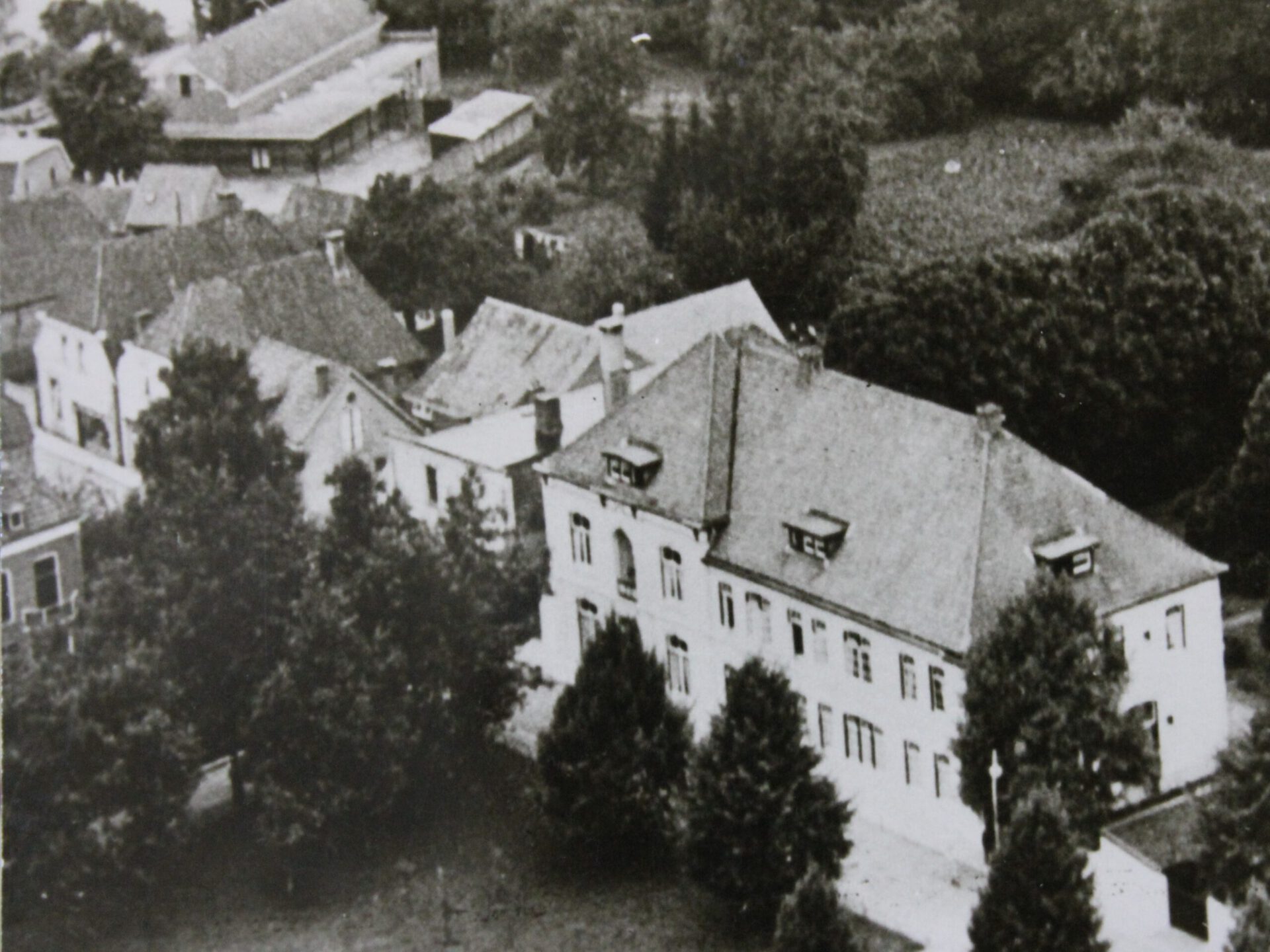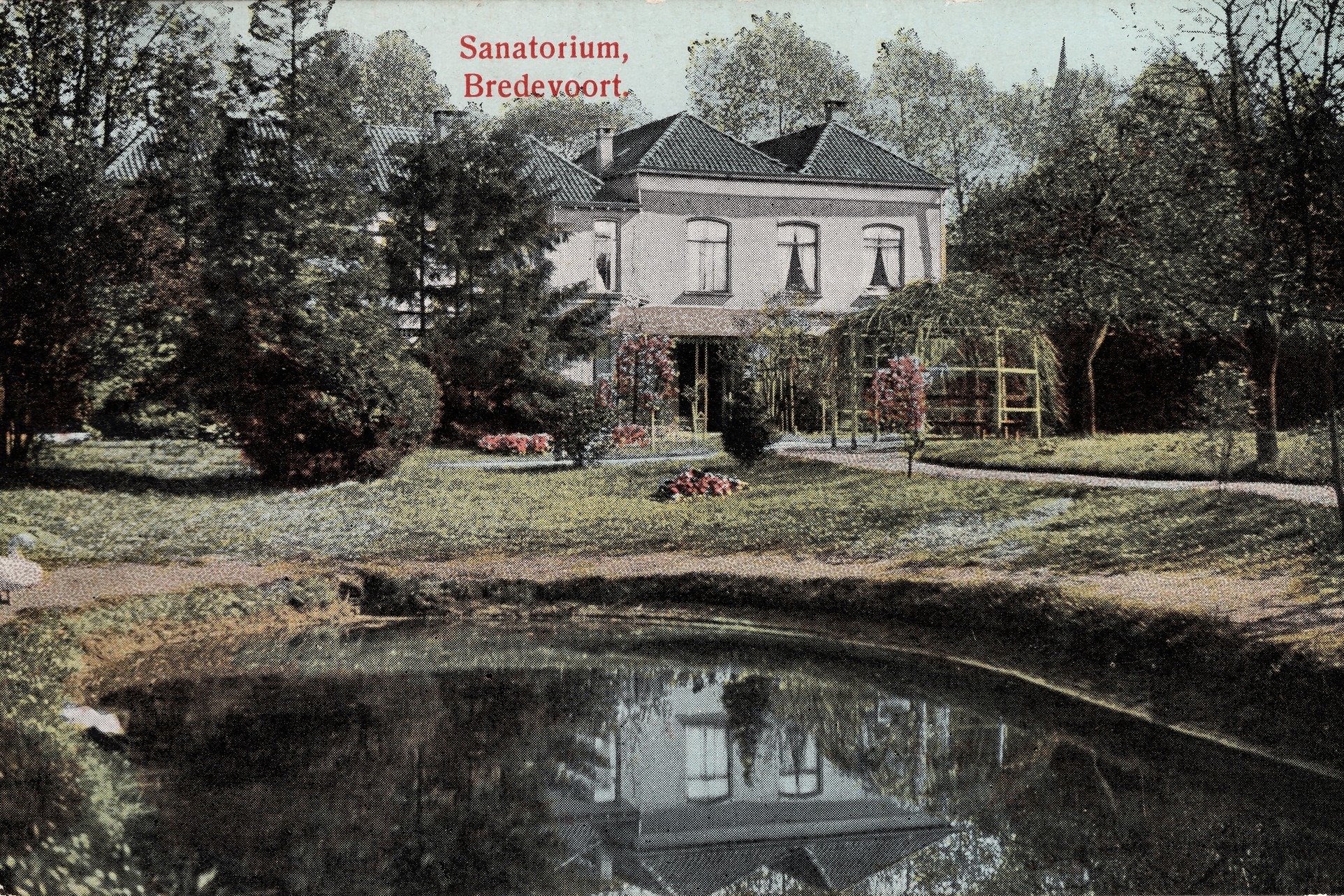
St Bernardus House is a distinctive building on ’t Zand, the central square of Bredevoort. The building has a rich history, having served as a residence, a sanatorium, and a nursing home.
The building was originally commissioned by Jan Satink, a lieutenant colonel in the States Army, Regiment of Nationals. It was erected on the site where the outer bailey of Bredevoort Castle once stood. In 1800, the house passed into the possession of the Roelvink family through inheritance. Arnoldus Florentinus Roelvink, a scion of this family, served as the mayor of Bredevoort from 1813.
In 1897, the building was purchased by Father Bernardus Mulders. The priest was a man of means and acquired the former steward’s house with his own funds. His goal, he wrote, was to offer “his poor children” a Catholic education. Because Catholic schools were costly at the time, he devised a clever solution: he brought nuns to Bredevoort, who established a convent and a sanatorium in the steward’s house. Nuns were an economical option as they received no salary, having dedicated their lives to God.
Under the management of the Franciscan Sisters of Thuine, the ‘R.K. Sanatorium St. Bernardus Gesticht’ (Roman Catholic St. Bernardus Sanatorium Institute) was established. He named the convent-sanatorium after his own patron saint, Saint Bernard of Clairvaux. With the profits from the sanatorium, the priest started a primary school: the Sint Joannesschool.
The sanatorium was intended for wealthy patients, as the nursing costs were high, ranging from f 1.50 to f 2.20 per day. Medical expenses and pharmacy costs were charged at 10 guilders per month. Second-class patients paid f 7.50.
From 1907, people from all over the country came to Bredevoort to recover in the sanatorium. They often stayed for months. During the day, they lay in bed in a sun lounge, even in winter; completely wrapped up. In the garden of St. Bernardus, now the Vestingpark, there were at least ten of these sun lounges with their open side facing the sun. Two of them have been preserved and have the status of a listed building.
The sanatorium remained in use until 1933. Afterwards, the building was repurposed as a nursing home for the elderly. In 1938, the Sisters of Thuine were succeeded by the Sisters of St. Joseph from Amersfoort. The last sisters left Bredevoort in 1985.
In 1988, a large-scale renovation and expansion of the building followed by the St. Bernardus Nursing Home Foundation. The nursing home eventually moved in 2008 to the newly built Ambthuis.
Since 2020, the building has had a new destination: it is used as the boutique hotel & brasserie De Heerlyckheid.
Owners
This list is incomplete.
| Year | Plot | Owner | Description |
|---|---|---|---|
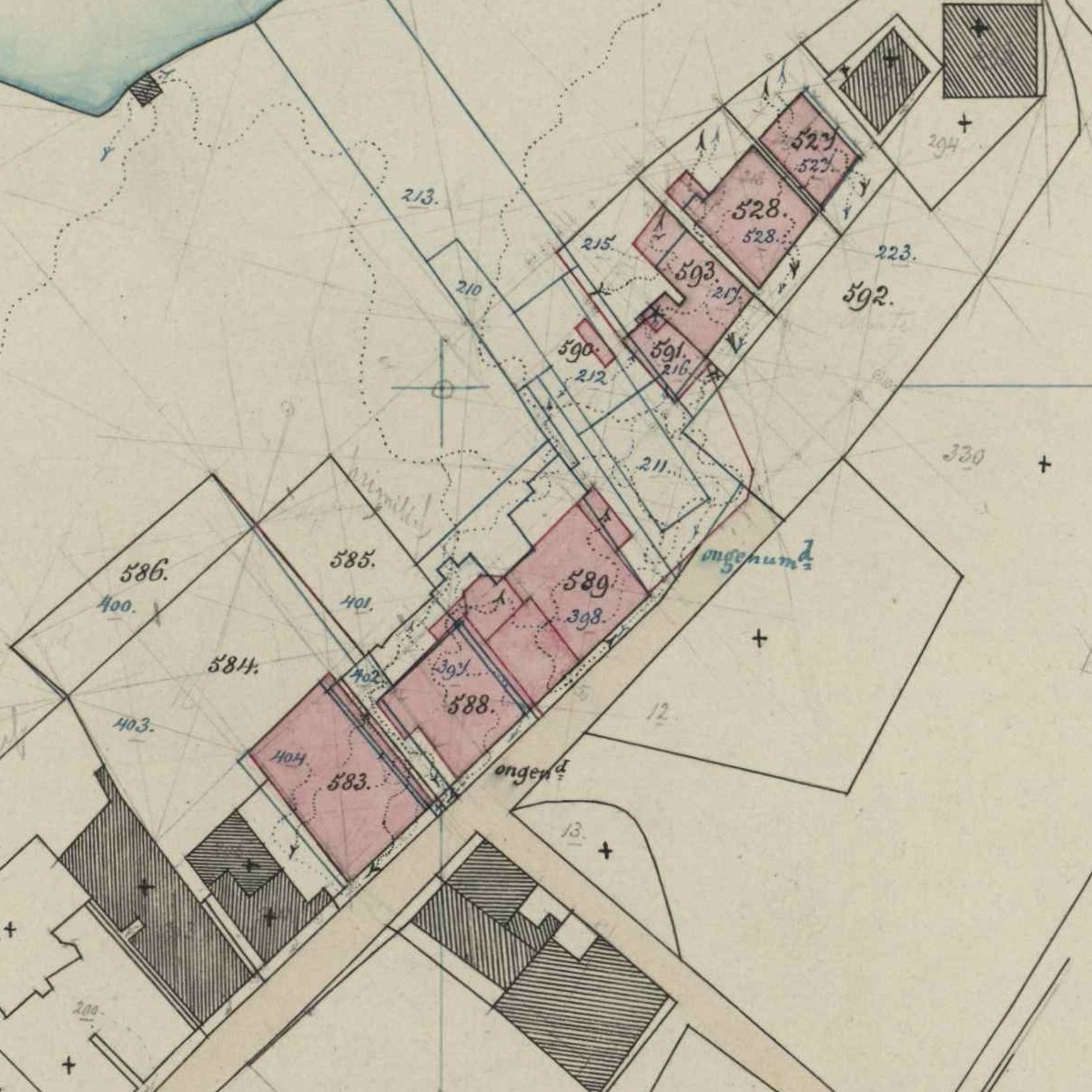
| 1832 | B-209 B-208 | Arnoldus Florentinus Roelvink, mayor of Aalten and Bredevoort in Bredevoort | 550 m² house & yard 220 m² house & yard |
| 1877 | B-397 B-380 | Bernard Andries Roelvink, clerk at the cantonal court | 235 m² house & yard 552 m² house & yard |
| 1887 | B-588 B-589 | Leonard Roelvink, mayor | 240 m² house & yard 280 m² coach house, kitchen, stables & yard |
| 1898 | B-588 B-589 | Hermann Schepers, shoemaker | 240 m² house & yard 280 m² coach house, kitchen, stables & yard |
| 1901 | B-734 | R.C. church of Bredevoort | 21.023 m² house, sheds, yard & garden |
| 1909 | B-792 | R.C. church of Bredevoort | 13.373 m² house, hospital, shed & garden |
| 1952 | B-979 | R.C. church of Bredevoort | 13,538 m² house, stable, hospital & garden |
| 1988 | B-1265 | St. Bernardus Nursing Home Foundation | 2.760 m² “BWT” |