In the early 1980s, Poland was in the midst of a severe economic crisis. There were great shortages, and many basic necessities were rationed. Under the motto ‘Help the Poles through the winter’, aid campaigns were set up throughout the Netherlands. One of these was the ‘Pak van je hart’ (A Load off your Mind) solidarity campaign, in which lorry drivers collaborated with churches to provide the Polish population with food and clothing parcels. Aalten was not to be left behind and organised several aid shipments to the small town of Koronowo.
In December 1981, the following article appeared in a newspaper:
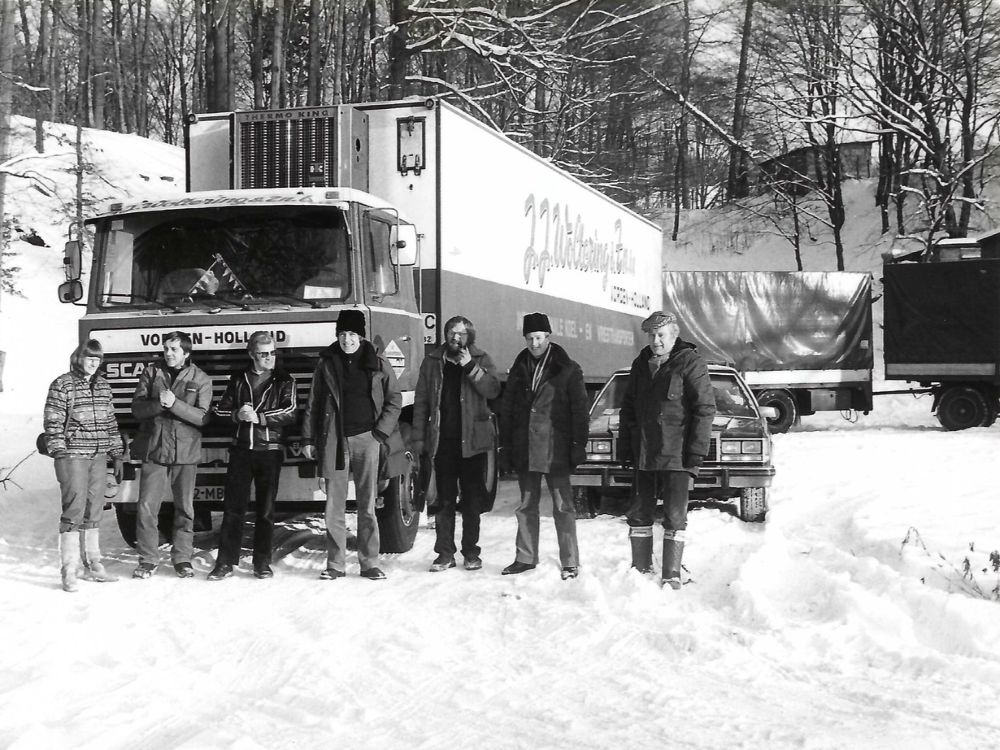
Tonny Westerveld, of Bevrijding 49, was one of the people who took part in the transport to Poland as a relief driver. The drivers of the first two lorries were Dick Kuiperij and Henk Neerhof. For Tonny Westerveld, who despite having ten years of experience as an international haulage driver, it was the first time he had driven to Poland.
On Saturday 18 December, the convoy departed at three o’clock in the morning, and seven hours later, they arrived at Helmstedt at the border between the Federal Republic of Germany and the GDR (East Germany). The formalities there took quite some time, as it was about two o’clock in the afternoon before they were able to leave.
Approximately three hours later, they reached the Polish border. Things went much faster there. The officials were required to open parcels, which they did with a few, but otherwise they finished very quickly—perhaps partly due to the many official documents with municipal stamps that could be shown, as Westerveld surmised.
The journey through Poland was hindered by heavy snowfall during the final few hundred kilometres. About 50 kilometres across the border in Łagów, they stayed overnight, but not at the location previously agreed upon; when they reported to the police, they were told they could spend the night at a different establishment.
On Sunday afternoon at around half past four, the convoy arrived in Bydgoszcz, where they were joined by a female guide, Mirca. The committee members had already been in contact with her a few weeks earlier, and she was well-informed about the situation.
In Koronowo
It was around eight o’clock on Sunday evening when they arrived in Koronowo. The priest they reported to was stunned when he saw the two large lorries; he could hardly believe his eyes, thinking that no one was allowed to enter the country.
The Aalteners requested help for the following morning. “You do wonder how long it will take to unload,” says Westerveld. Both vehicles were carrying 34 tonnes of cargo: 12 tonnes of clothing and 22 tonnes of foodstuffs. Of this, 28 to 29 tonnes were to be unloaded in Koronowo. The remainder was to be unloaded in Bydgoszcz. However, by the next morning, 12 Poles were ready to help, and by ten o’clock, that number had grown to about thirty.
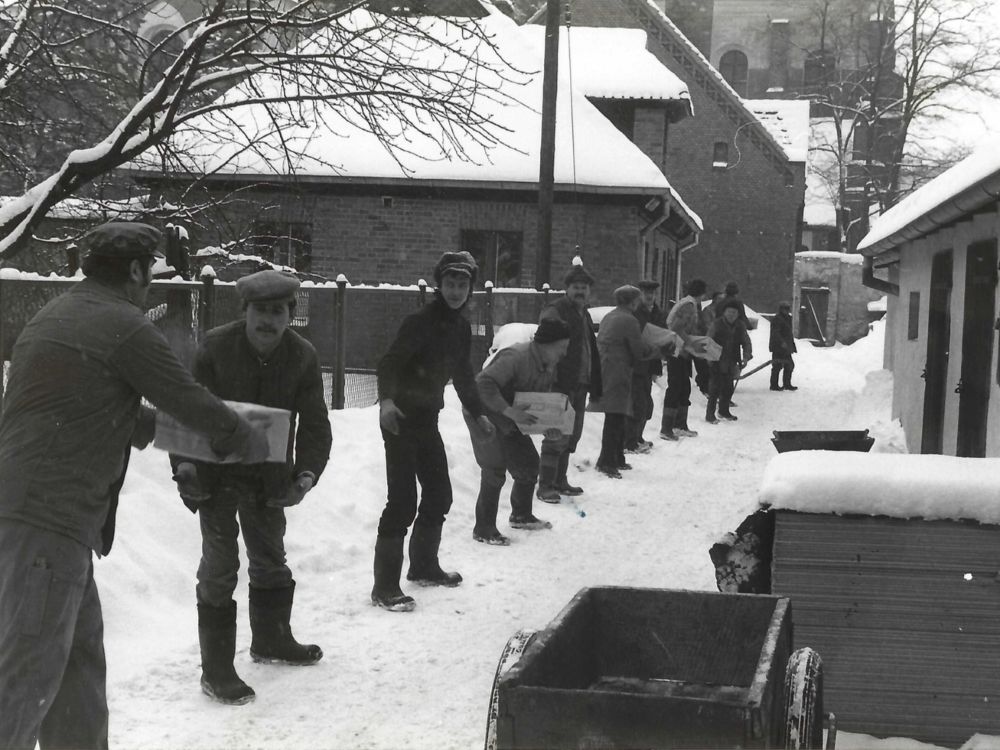
“The people there were busy with something they didn’t quite understand,” as Westerveld put it. They were utterly amazed. By twelve o’clock, the goods destined for Koronowo had been unloaded, and the return journey via Bydgoszcz could begin. There, they met the minister of the Evangelical congregation, who looked at the Aalteners with no less astonishment than the priest from Koronowo. He had not yet expected any aid, and with increasingly bewildered looks, he watched the items being removed from the vehicles and piled up before his eyes. Finally, the medicines and syringes they had brought were delivered to the Warminsky Hospital in Bydgozcz.
The Return Journey
For the drivers, the question now was: how do we get out of the city as quickly as possible? But hospital staff were already waiting with a car to guide the Aalteners along the shortest route out of the city towards Poznań. They spent the night in their vehicles at a car park somewhere. It was very cold—about 23 to 24 degrees below zero.
On Tuesday morning, the journey continued after breakfast. They had brought various food supplies for the road. When visiting the homes of Polish residents, the meals they brought were heated up, but they could also fry an egg or make coffee themselves along the way if necessary.
About eighty kilometres from the border, they discovered an English motorist whose car had broken down. However, the Aalteners were unable to help him. To their great surprise, they saw a vehicle from the Dutch roadside assistance (ANWB) passing by. The situation was explained to the occupants, and the problem was subsequently resolved. The roadside assistance officers belonged to the large convoy that had returned to the Netherlands earlier, but they had been in Poland for about nine days because some had lost their passports and had travelled to Warsaw to make arrangements.
When asked: “What is the atmosphere like in Poland?” the answer was: “Fearful.” The people are unimaginably afraid. But it was immediately added: “They are also exceptionally hospitable.” On Wednesday 23 December at one o’clock in the afternoon, the two lorries and their occupants arrived safely back in Aalten.