
Hans Vultink was born in Aalten on 13 June 1937. From the café run by his parents, he went on to become one of the greatest Dutch carom billiards players of the twentieth century. He was particularly successful in the balkline disciplines, in which he ranked among the world’s leading players for many years. His career brought him three world titles, several European championships and an exceptional number of Dutch national titles.
Hans was the son of Frans Vultink and Marie Goosen. His father ran the family business on what was then Dijkstraat, at present-day Plein Zuid 14. Hans therefore quite literally grew up with a billiard table close at hand.
He was introduced to billiards at about the age of six. His talent did not come entirely out of nowhere: his father Frans was himself regarded as a fine billiards player and taught Hans the fundamentals of the game.
The war disrupted ordinary family life. On 30 March 1945, the day Aalten was liberated, a British tank struck a German landmine near Dijkstraat. The explosion caused a fire and Café Vultink was completely destroyed. The family had been evacuated at the time and escaped unharmed.
After the war, Frans Vultink had a new café, restaurant and hotel built on the same site. Hans later recalled that the business had been rebuilt by 1949. It was at the billiard table in the new family establishment that he continued to develop his game.
Teenage billiards prodigy
It became clear at an early age that Hans possessed exceptional talent. On one occasion, when a player in his father’s billiards team was unavailable, Hans was allowed to take his place. His opponents were much older and more experienced, but the young Vultink proved more than capable of holding his own.
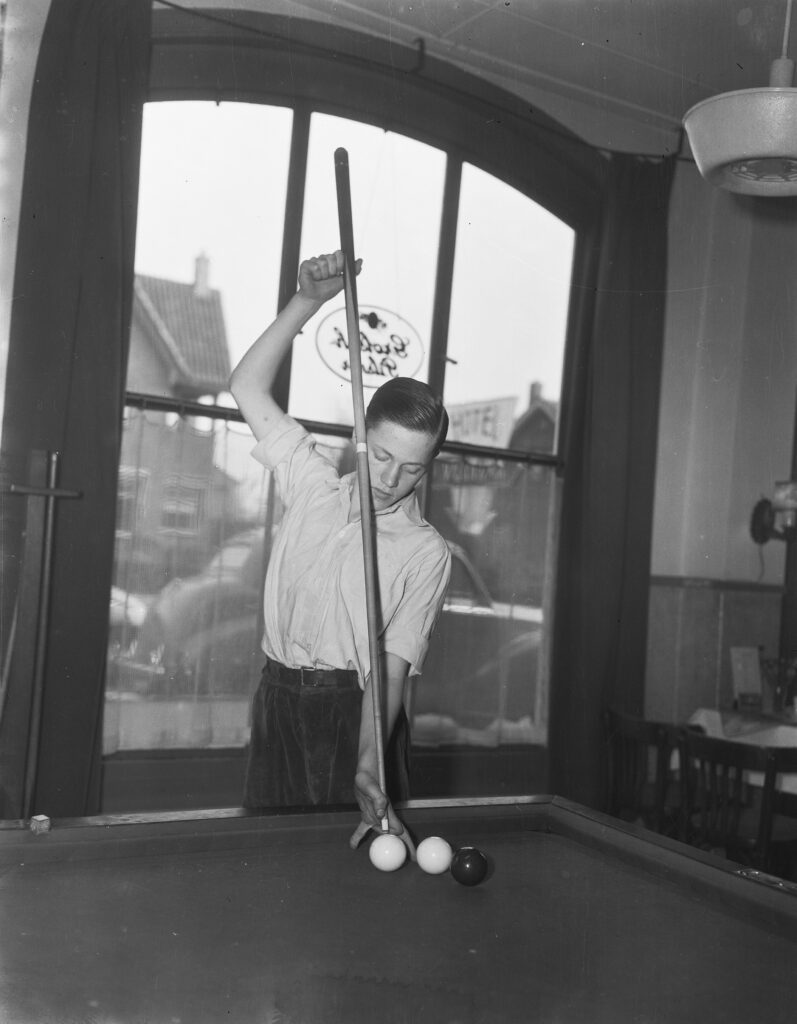
According to his own recollections, he became champion of the eastern Gelderland region at the age of fourteen. A year later, his game had developed to such a level that he completed an entire match in a single visit to the table.
His talent was already attracting attention beyond Aalten during these years. In March 1953, De Achterhoek described the young Vultink as a junior billiards champion after he had won a strongly contested tournament in Aalten. In November of the same year, a photographer from the Anefo press agency travelled to Aalten to produce an extensive photographic feature on the young billiards prodigy.
Long before his international successes began, Vultink had therefore already become a notable figure in Dutch billiards.
Reaching the Dutch top division
During the 1950s, Vultink worked his way up to the highest level of Dutch billiards. An important turning point came during the 1959–60 season, when the Dutch Billiards Federation appointed Belgian professional player Marcel Van Leemput as a coach for the country’s leading players.
Their first encounter was a sobering one. Van Leemput believed that, despite already competing in the top division, Vultink still had a great deal to learn technically. He changed, among other things, his stance and stroke, effectively making him start again from the basics.
At first, the changes had a negative effect on his results. Vultink had to unlearn his old habits and temporarily performed less well. Van Leemput had warned him that he would need to persevere, however, and he proved to be right. With his improved technique, Vultink took the next step towards the Dutch and, ultimately, the international elite.
His main specialities became the technically demanding balkline disciplines, in which great precision is required to keep the balls under control within the marked sections of the table.
First international successes
During the 1960s, Vultink became an established figure on the international billiards circuit. In 1967 he won the European 47/2 balkline title in ’s-Hertogenbosch. That same year, he finished runner-up at the 47/2 World Championship in Cairo.
He competed during an exceptionally strong era. In the Netherlands his rivals included such leading players as Piet van de Pol, Henk Scholte, Tiny Wijnen and Henk de Kleine. Internationally, he faced players including Raymond Ceulemans, Jean Marty and Dieter Müller, and later Ludo Dielis.
From the beginning of the 1970s, Vultink entered the peak period of his career. According to the centenary history of the Royal Dutch Billiards Federation, he was the dominant Dutch player between 1972 and 1985.
The outstanding year of 1973
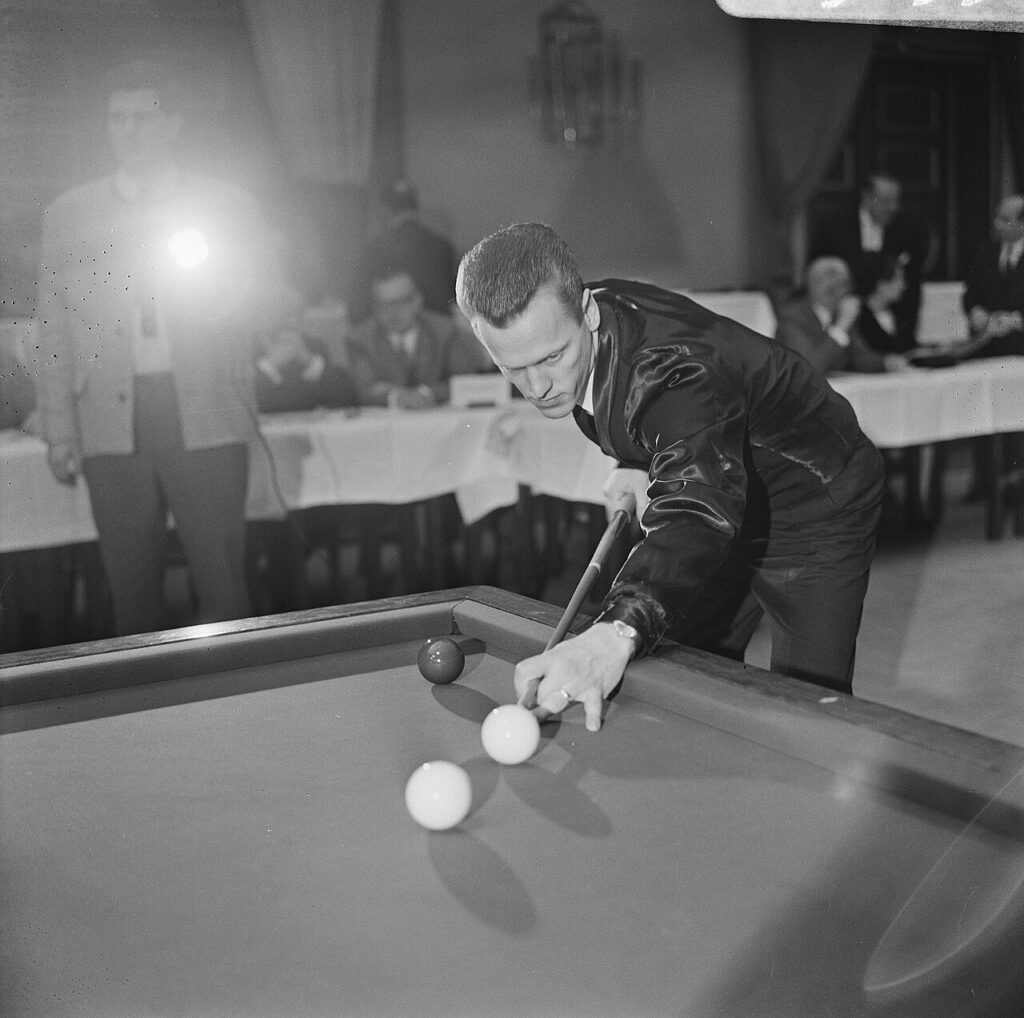
The year 1973 was one of the most important of Vultink’s career. He first became Dutch 47/2 balkline champion in Neede. Then, in April, he won the European title in the same discipline in Geneva, Switzerland.
His greatest success followed only a few weeks later. From 24 to 27 May, the 47/2 World Championship was held in the West German city of Krefeld. Vultink entered the final round with Dieter Müller as his main rival. Vultink fell behind in the decisive match, but a closing run of 168 points turned the contest in his favour. It secured him his first world title.
His performance throughout the championship was impressive. He finished with an overall average of 86.53 and recorded a continued run of 735 points during the tournament.
World champion in Buenos Aires
A year later, Vultink had to defend his world title. The 1974 47/2 World Championship was held in Buenos Aires in August. Once again, the player from Aalten proved the strongest. With eleven match points from six matches, he finished ahead of Argentina’s Osvaldo Berardi and successfully retained his world title.
Vultink had now won the 47/2 balkline World Championship in two consecutive years. Earlier in January 1974, he had also added the European 47/1 title in Düsseldorf to his list of achievements.
The perfect game in Rotterdam
The absolute high point came in March 1975 at the 47/1 Balkline World Championship in Rotterdam. The 47/1 discipline is regarded as one of the most difficult forms of classical carom billiards. Yet Vultink produced a performance there that became one of the most celebrated moments in Dutch billiards history.
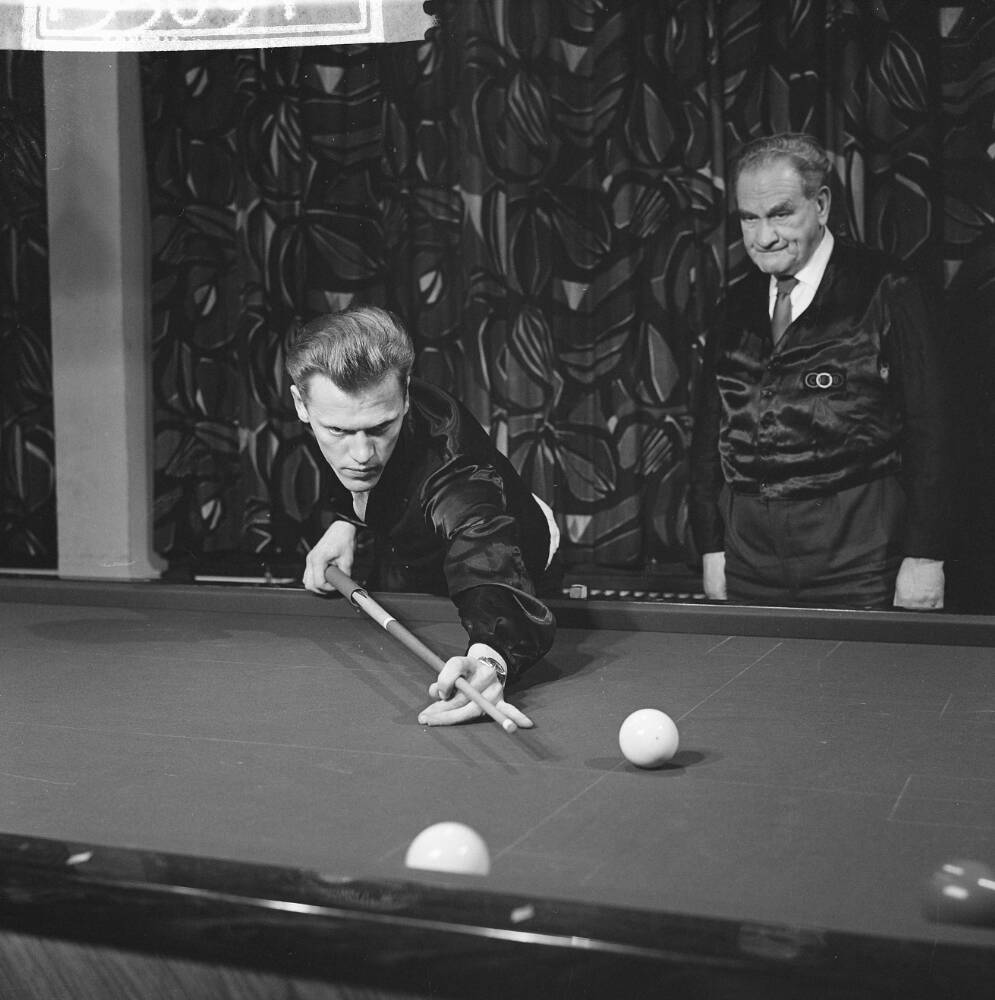
In his match against Argentina’s Osvaldo Berardi, he scored the required 300 points in a single visit to the table. In other words, he came to the table once and completed the entire match without missing. Vultink went on to become world champion with an overall average of 42.76, a world record at the time. Completing a 300-point match in a single visit was itself an extraordinary record performance.
Rotterdam gave him his third world title in three consecutive years: Krefeld in 1973, Buenos Aires in 1974 and Rotterdam in 1975.
Knight of the Order of Orange-Nassau
Vultink’s achievements were also recognised beyond the world of billiards. In 1975, Hans Vultink was appointed a Knight of the Order of Orange-Nassau.
The official history of the Royal Dutch Billiards Federation credits Vultink with 44 Dutch top-division titles, won in 109 national finals, in addition to four European titles and three world titles.
Later publications also mention totals of 52 Dutch and seven European championships. These figures are based on a different method of counting his titles. For his Dutch top-division career, this article follows the official figures given by the Royal Dutch Billiards Federation.
Whichever categories are included in the total, Vultink’s record ranks among the greatest in the history of Dutch carom billiards.
Not a full-time professional
Remarkably, Vultink achieved his sporting successes without being a full-time professional billiards player. He later explained that making a living from billiards alone had never been a realistic option for him. Alongside his sporting career, he was also a businessman, working among other things in the hire business and later with gaming and amusement machines.
Billiards nevertheless took him to many parts of the world. He competed in tournaments and gave exhibition matches throughout Europe and South America, as well as in Australia, New Zealand and elsewhere.
His international standing earned him the description ‘Dutch billiards ambassador’. In 1984, the phrase also became the title of a book about his life and career, written by Olaf Erikson.
Football alongside billiards
Billiards was not Vultink’s only sport. He began playing football for AD in Aalten and later played for PW in Enschede and Grol in Groenlo.
He took football seriously even after he had reached the international elite in billiards. Years later, he fondly recalled days when he would play a football match in the morning and then drive straight to an important billiards tournament.
It was typical of his individual approach to top-level sport. Vultink did not always prepare in the way one might expect of a world champion, but relied heavily on his own instincts and experience.
The end of an exceptional career
Vultink continued to compete at the highest level in the Netherlands well into the 1980s. In 1986, he brought his career in top-level billiards to an end.
It marked the conclusion of a career that had begun more than thirty years earlier at his father’s billiard table in Aalten. The young player who had been photographed as a billiards prodigy in 1953 had gone on to win three world championships and become one of the defining figures in the history of Dutch billiards.
Vultink remained closely connected with the Achterhoek region afterwards. For many years, he and his wife Gertie lived in the hamlet of Hupsel, between Groenlo and Eibergen.