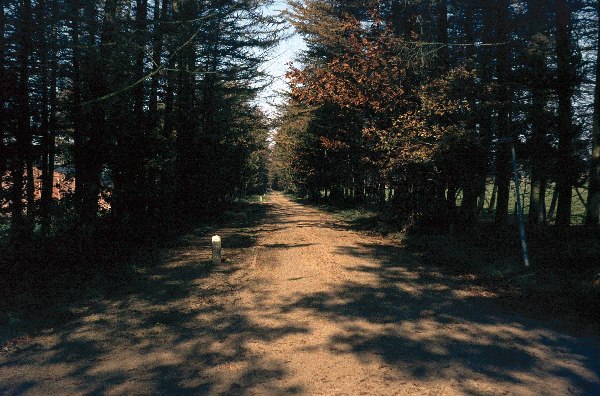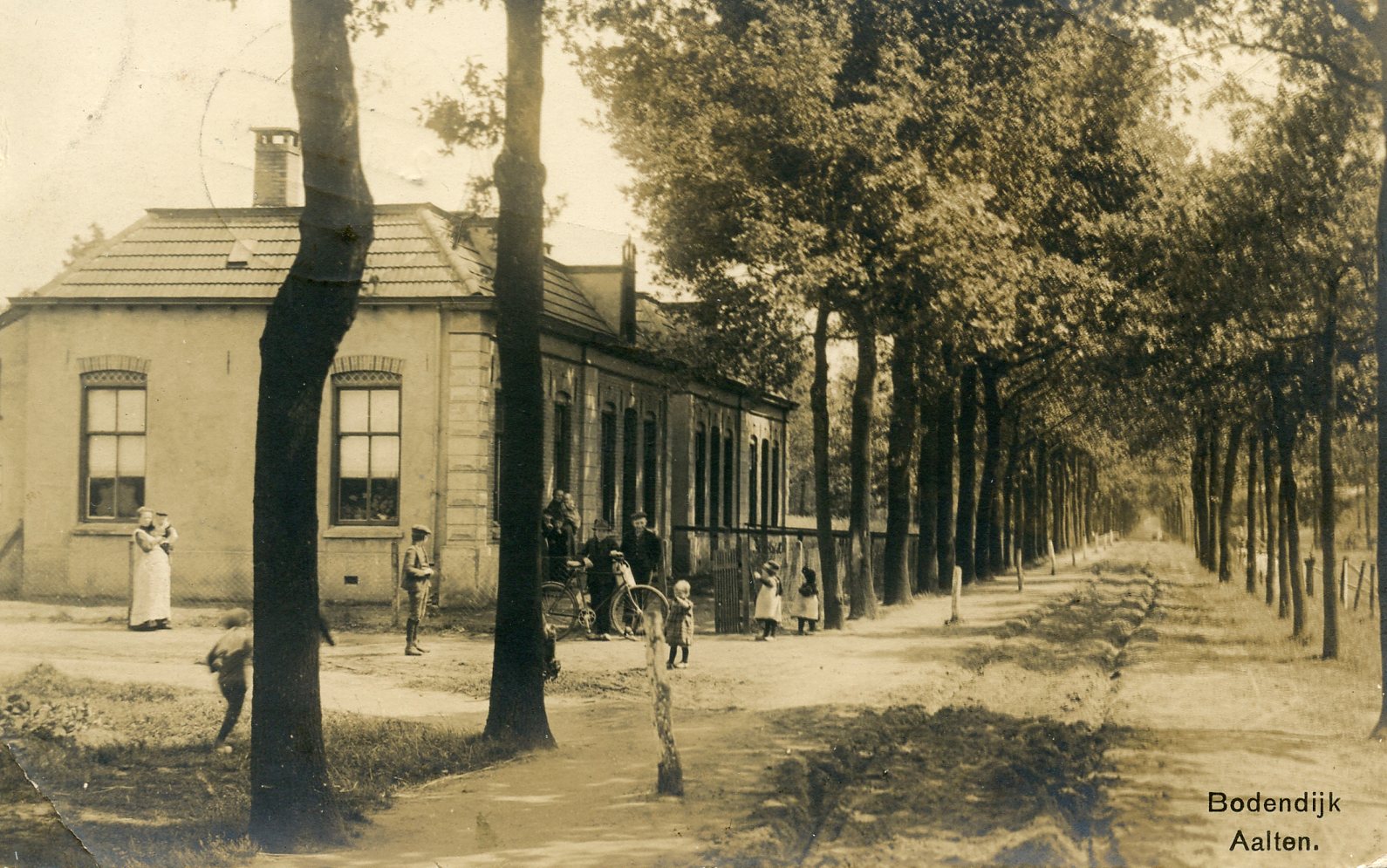
For centuries, Bodendijk in Aalten formed part of the main hessenweg between the Münsterland and Zutphen. From today’s Plein Zuid, Bodendijk ran almost perfectly straight for 3 kilometres – apart from a bend near De Kiefte – across the Kieftsheide to the Kesenbulte. Part of the road is now called Kiefteweg, roughly from Griesdijk to Kesenbulte.
Bodendijk was traditionally the main road from Aalten to Bocholt. Before Bocholtsestraatweg was built, it was the only road link to Germany. It was therefore no coincidence that, after the Reformation – when Catholics in the Netherlands were not permitted to practise their faith – the Bishop of Münster had the Kruiskapel built here in 1675, on the German side of the road.
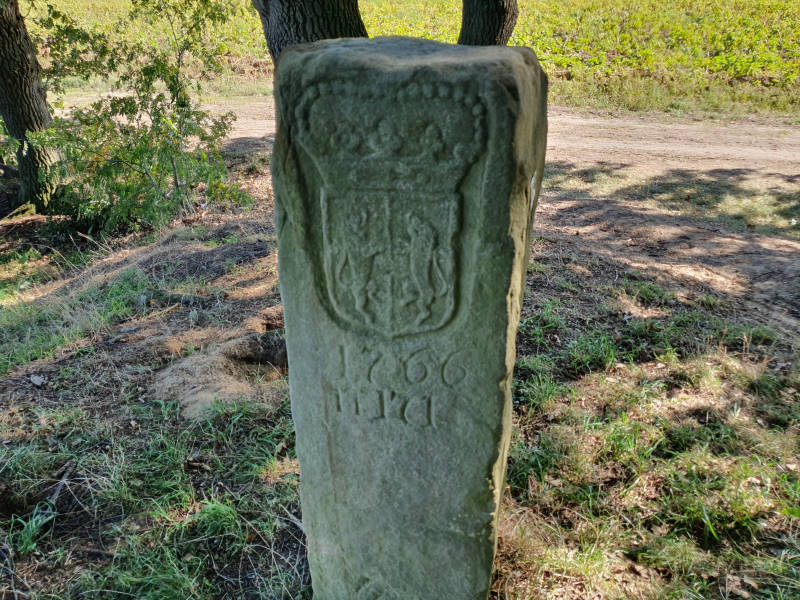
For many years, the customs office was located at De Kiefte farm. In 1859 it was moved to the present border crossing on the new road to Bocholt, now Hamelandroute. At Kesenbult there is now a so-called green border crossing, which can only be crossed on foot or by bicycle.
Messenger services and the name
The name Bodendijk recalls the former messenger service to Bocholt. Messengers from Anholt Castle travelled along Bodendijk to Aalten and then on to Bredevoort. They travelled on horseback. Just across the border at Kesenbulte, they would sometimes turn right and travel to Bredevoort via the Ringkampsbulten, but this was a dangerous route. The body of one such rider was once found buried in the Ringkampsbulten. What happened to him there remains unknown. The route along Bodendijk was considerably safer. Coaches carrying important travellers also occasionally used Bodendijk.
Kieftsheide
Bodendijk ran across the Kieftsheide in the Aaltense Heurne. A kieftsheide is heathland with self-seeded pine trees (in GermanKiefer). If this growth was not cleared, a pine wood developed. There was such a wood near the Ongena was one. Around 1630, a so-called Engelsche Schans (‘English redoubt’) was constructed there. For a long time, people wondered what the holes in the ground near the wood meant. They turned out not to be postholes but obstacle pits, dug to trip attacking cavalry horses. No attacks ever took place there, although cavalry exercises were held. Among the finds are buttons from a cavalry uniform.
Modern development
The houses at Bodendijk 37–43, near the present junction with Koopmanstraat and Nijverheidsweg, are said to have been built using blackened bricks that could still be salvaged after the fire at the Catholic church in Dijkstraat. The houses were therefore rendered white. They are still standing today.