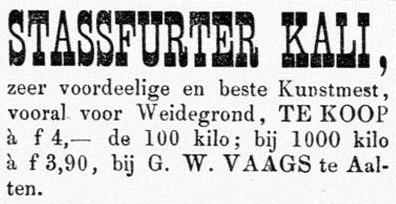
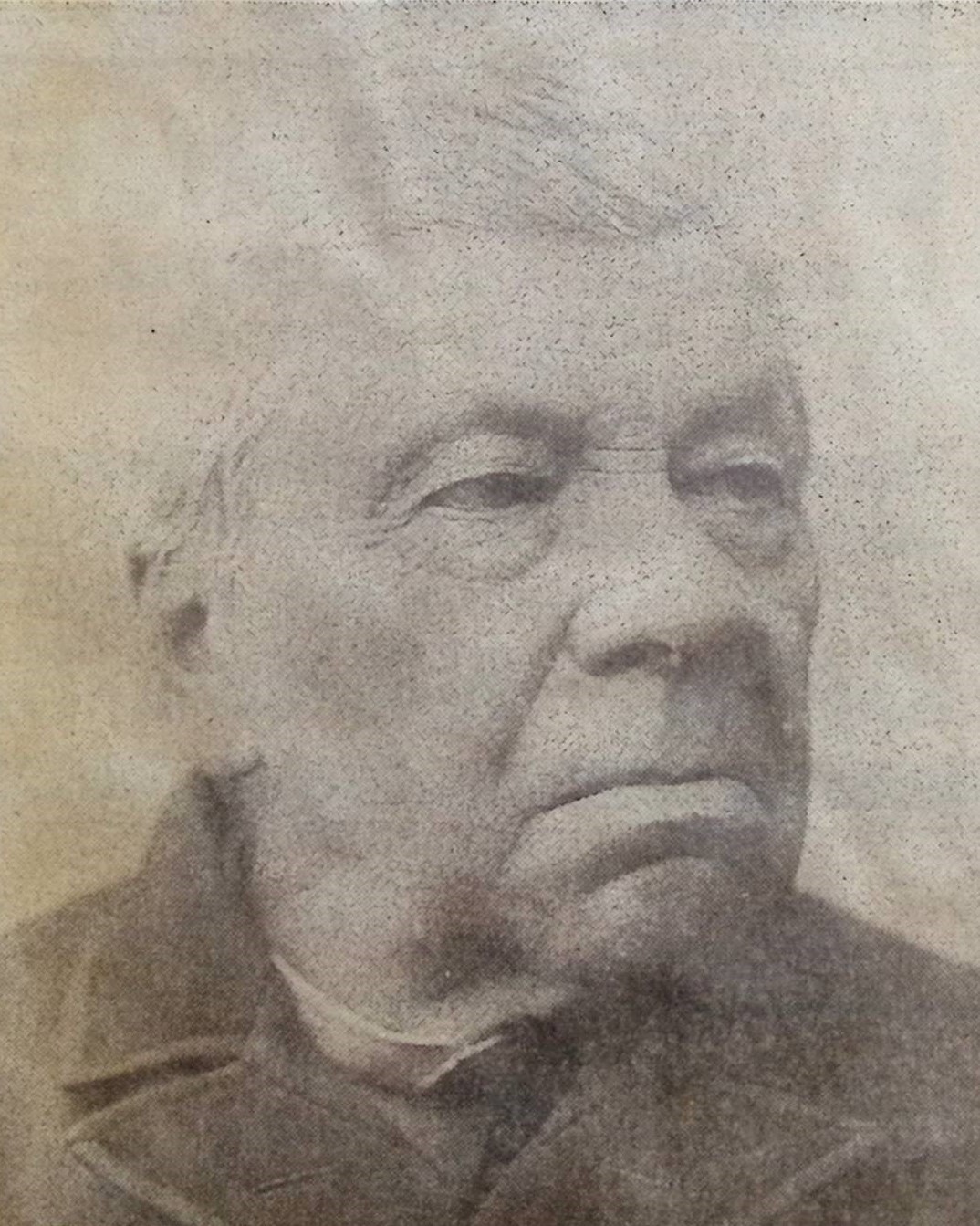
In the 19th century, courier services were indispensable for trade and communication between villages and towns. In 1849, Jan Hendrik Heijink (1816-1888) began a courier service between Aalten and Zutphen. Heijink was the owner of a farm that still bears the same name and is located on the Heijinkdijk, which was named after it. A ledger from this service has been preserved. Anyone who studies its contents with attention feels the past almost coming to life.
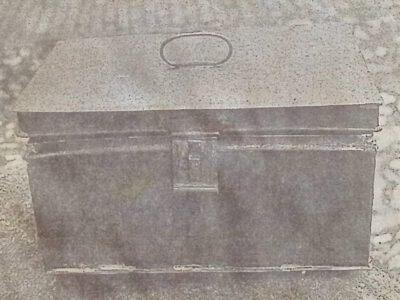
Behind the small, yellowed handwriting, people emerge, providing an impression of life in the mid-19th century. One can envision the courier traveling with his wagon over the then largely unpaved roads of the Achterhoek. In the summer, when the sun shone abundantly, it sometimes seemed like a pleasure trip. But in winter, he was often exposed to rain and hail, and the journey sometimes led over muddy roads where the wheels sank deep into the wagon ruts.
Center of Trade
One could see people bringing goods for transport: small entrepreneurs having their products transported to the ‘capital’ of the Achterhoek, and larger merchants delivering bales, packages, crates, and barrels to be transported further via Zutphen. Shopkeepers received bales of coffee, bags of salt, chests of tea, and barrels of stockfish, while prominent citizens had wine and books delivered in this manner.
In the mid-19th century, Zutphen was the most important city in the Achterhoek and a center of trade and transport. From Zutphen, products from the Achterhoek were transported further towards the west of the country. At the same time, goods from the west arrived in Zutphen via the rivers.
Ledger
Heijink usually recorded a trip “To Zutphen” once a week. The distance between Aalten and Zutphen was approximately an eight-hour journey. At the end of the year, he prepared an overview of the costs associated with this service. Under the heading “Paid for traveling in 1849,” he regularly mentioned the costs of “sustenance” along the way:
“January 10 By me on journey 3.80; January 17 By me on journey 5.75; February 7 By me on Journey 7.00; February 12 By Me on Journey 10.21.”
These amounts are remarkably high in relation to the rates Heijink charged his customers. For example, he charged f 1.60 for the transport of five chests of tea, f 1.00 for “100 cans of oil,” and f 1.40 for a 360-pound barrel of syrup. Based on this, it is likely that he stayed overnight in Zutphen and only returned to Aalten the following day with a new load.
The horses also required feed, and sometimes the journey was made with two wagons. In such cases, “Jentink had to provide extra horses.” On other occasions, it was Hiddink or Drenthel. Heijink noted, for example:
“February 7 Jentink extra horses to Groenlo 1.20; February 19 Hiddink extra horses 1.00; Two wagons sustenance Oats on Journey 14.00; February 27 By me consumed and oats together 12.00.”
In addition, he naturally incurred other costs:
“January 5 Bussink reset two horseshoes 1.35; January 16 Bussink one pair of new shoes and one pair reset 0.85; January 20 For Bussink a pair of new hoops on the front wheels and on the small leathers and the wheels on the dump carts paid together 21.10; January 25 Hoopman Bros. a pair of new hoops on the rear wheels, crown bands, and for the rear bands paid together 25.50; March 5 Paid for a new cover on the wagon 0.50; For the making 0.50.”
The Middle Class
Heijink’s customers consisted largely of local tradespeople, which provides an interesting picture of the Aalten middle class in the mid-nineteenth century. Foodstuffs and household items formed the majority of the imported articles. Coffee and sugar were not yet delivered in packages of 250 or 500 grams, as they are today. These and other products were delivered in bales to the shopkeepers, who weighed the desired quantities for their customers themselves.
Below is a list of goods that Willem te Gussinklo, a shopkeeper at the Market, had delivered via courier Heijink:
“March 7 5 Leyden cheeses; March 12 2 barrels of fish, 1 small chest of heifers (likely meaning: vases), 2 baskets of earthenware; March 16 2 bales of rice, 3 bales of coffee, 1 small barrel of raisins, 2 small baskets of figs; April 18 package of textiles; April 19 3 bags of linseed; April 25 1 barrel of sugar, 2 small baskets of rock candy, 1 barrel of currants, 2 bales of coffee, three packages of paper.”
Salt was delivered in bags, while syrup, oil, soda, laundry blueing, chicory, and soap were brought in barrels. Tobacco arrived in barrels as well as in bales, packages, or baskets. Notable is the mention of “3 straw bloaters”. It is possible that the bloaters, in a certain quantity or weight, were packed in straw.
Flax Cultivation and Rapeseed Oil
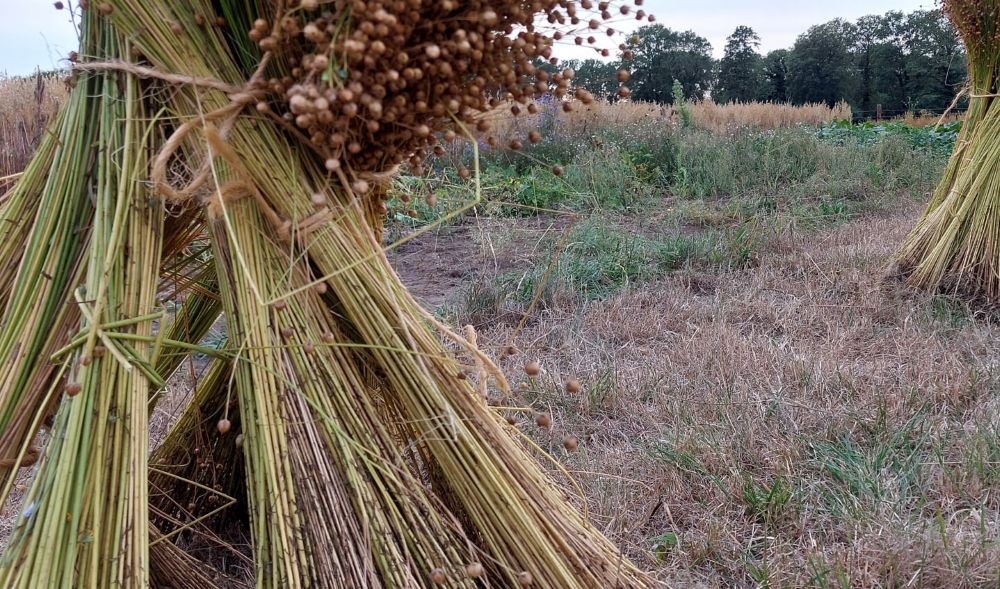
The importance of flax cultivation in this region is clearly evident from the large quantities of linseed that shopkeepers stocked in the spring of 1849: in March and April, this amounted to 27 bags and 3 barrels. For one of the customers, the weight of three bags is mentioned: five hundred pounds. Additionally, farmers would have harvested seeds from their own flax crops. The flax was sown in the spring and harvested in the summer. After the necessary processing, it was spun and then woven. Sheets and shirts were made from the best quality. When used for outer clothing, such as a jacket or smock, it was first dyed by the black or blue dyer.
Other products, which were delivered throughout the year, were rapeseed oil and patent oil, which was primarily used for lighting. Rapeseed oil also served as cooking fat, including for finger-thick buckwheat pancakes.
Customers
Manufacturer Heinrich Driessen used the courier service weekly for the delivery of bales of cotton, yarn, potash, machinery, and occasionally an anker of wine. The woven fabrics were taken to Zutphen to be transported further from there.
Among Heijink’s customers was also the Aalten surgeon and man-midwife Servaas van Leuven, who had goods such as “a small chest, a small basket, a small barrel, and a pound of corks” transported.
Shopkeepers
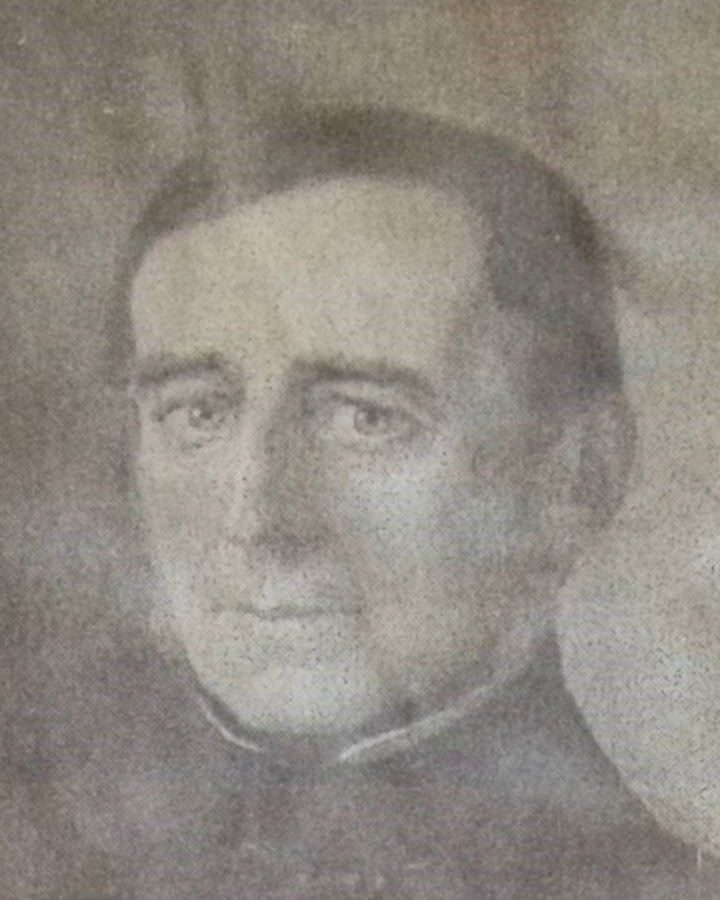
The most important customers included the grocers Willem te Gussinklo and his brother Bernardus Engelbartus te Gussinklo, Gerrit Willem Vaags, Bernardus Hendrikus Becking, and Hendrikus Brethouwer, who often collaborated with Burchard D.G. Muller.
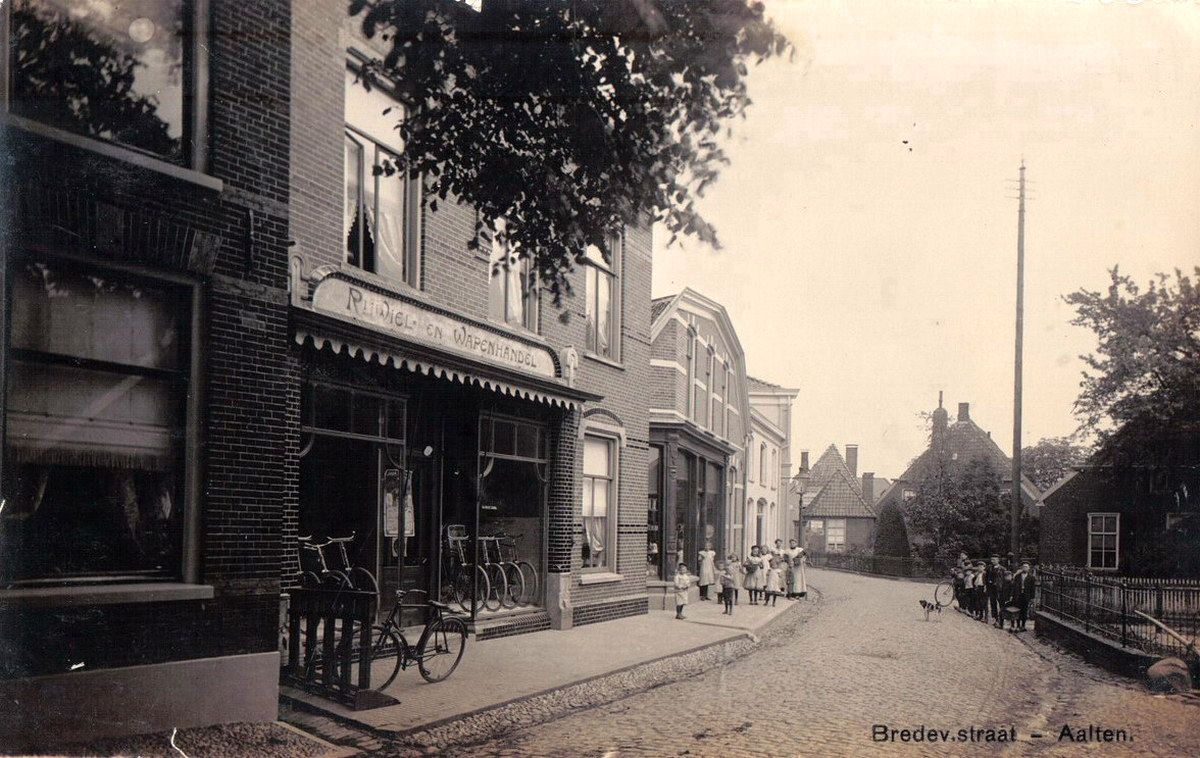
It is not always easy to attribute the delivered items to the correct customers. For instance, in addition to Bernardus Hendrikus Becking, Hendrik Jan Becking is also mentioned, as well as Becking Bros. and J. Becking. The ledger frequently records only the surname.
The same applies to the name Vaags. Besides Gerrit Willem Vaags, ‘Turner’ Vaags and Lodewijk Vaags also appear, but often only ‘Vaags’ is mentioned. Lodewijk Vaags was a baker and lived at the beginning of the Gasthuisstraat, the current Haartsestraat. He received exclusively flour, sometimes groat flour. Another baker was Degenaar, to whom also only flour was delivered. ‘Turner’ Vaags was a chair turner – he regularly received bundles of rushes to provide chairs with new mats.
Gerrit Willem Vaags: ‘Gerrit of Everything’
Gerrit Willem Vaags lived at the beginning of the Dijkstraat. According to the family tree, he was known as a grain merchant, but also as ‘Gerrit of Everything’ – a nickname referring to the versatility of his assortment. A look at the ledger confirms this image: it shows that he had, among other things, Leyden cheeses, small chests of candles, bales of coffee, packages of paper, small barrels of laundry blueing, a barrel of syrup, 400 rapeseed cakes, a basket of nails, and a small basket of rock candy delivered. Pipes, potash, herbs, vinegar, tobacco, zinc wire, almanacs, corks, and chicory were also part of his assortment. Truly ‘of everything’, indeed.