Overview
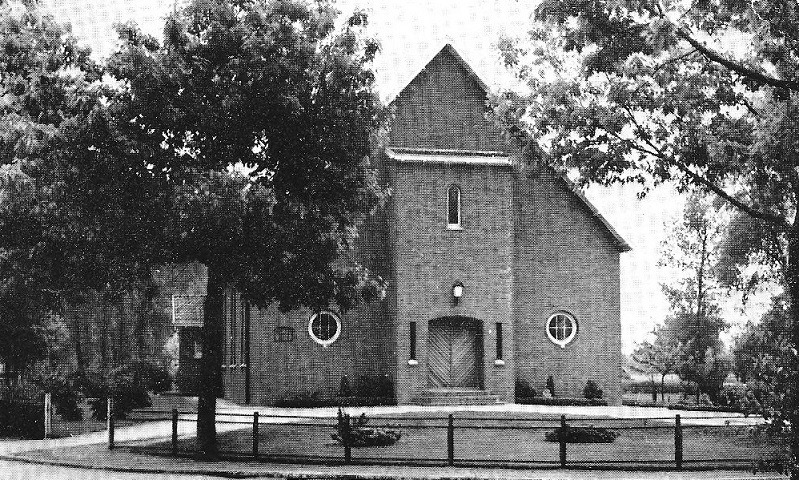
The Koppelkerk is a landmark, former Reformed church in Bredevoort, situated on the corner of Koppelstraat and Prins Mauritsstraat. Built in the austere style of the Delft School, the building was constructed between 1947 and 1948 and currently serves as a centre for arts and culture.
Until World War II, the Reformed congregation of Bredevoort had to travel to Aalten to attend church services. After the war, the congregation acquired its own land on the site known as De Koppele. Located near the filled-in moat, the ground first had to be raised because it was low-lying and often marshy. The name Koppelkerk refers to this area.
The church was designed by architect W. Geels. The foundation stone was laid in 1947, and the building was officially opened in 1948.
Extensions and tower
Over time, several extensions were added to the original church:
- In 1956, the tower was built clandestinely, initially without planning permission.
- In 1958, architect W. van der Zee from Aalten added the concrete tower crown, which increased the tower’s height by approximately five metres.
- In 1966–1967, architect Willem Hebly, also from Aalten, designed an extension at the rear to accommodate meeting rooms.
- In 1988, the tower was fitted with a church bell, cast by the De Klok bell foundry in Aarle-Rixtel.
Architecture
The Koppelkerk is set back within a spacious garden and stands out due to its simple yet powerful design. The church provides a clear example of Protestant church architecture from the immediate post-Second World War period. Its authentic character has been well preserved in both its main structure and its detailing.
New purpose
In 2013, the building was designated a municipal monument (locally listed building). Shortly afterwards, the church lost its original function. Following consultations, the church council granted permission for the building to be repurposed. In 2015, the former church was converted into a multi-purpose centre for arts and culture.
Today, the Koppelkerk plays a prominent role in the cultural life of Bredevoort:
- Arts are showcased through rotating exhibitions and concerts.
- Intellectual depth is offered via lectures, debate evenings, and talks.
- In the book café, styled as a living room lined with bookshelves, monthly literary cafés are held.
Images