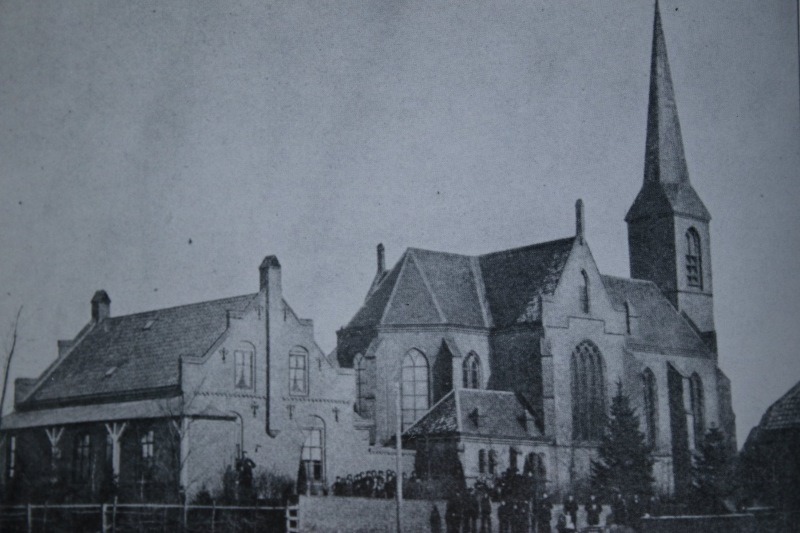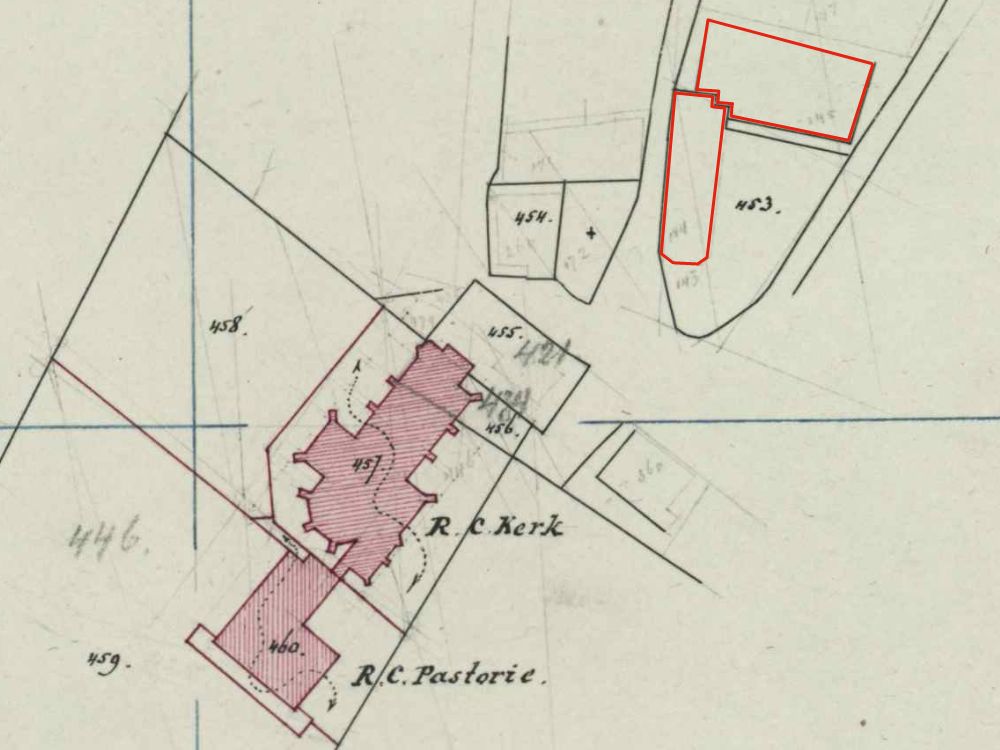
The Catholic Church of the Sacred Heart and Saint George (H. Hart en H. Georgiuskerk) has stood on the old Ossenkop bastion in Bredevoort since 1876. Designed by architect Alfred Tepe, it is a single-nave, Neo-Gothic church and is designated a municipal monument (locally listed building).
Until the end of the 16th century, the Roman Catholics of Bredevoort worshipped in the old St George’s Church (Sint Joriskerk) on the Markt. Following the siege of Bredevoort and the introduction of the Reformation in 1597, they were forbidden from holding church services. For a long period, they used the Kruiskapel (Cross Chapel), located just across the border in Germany.
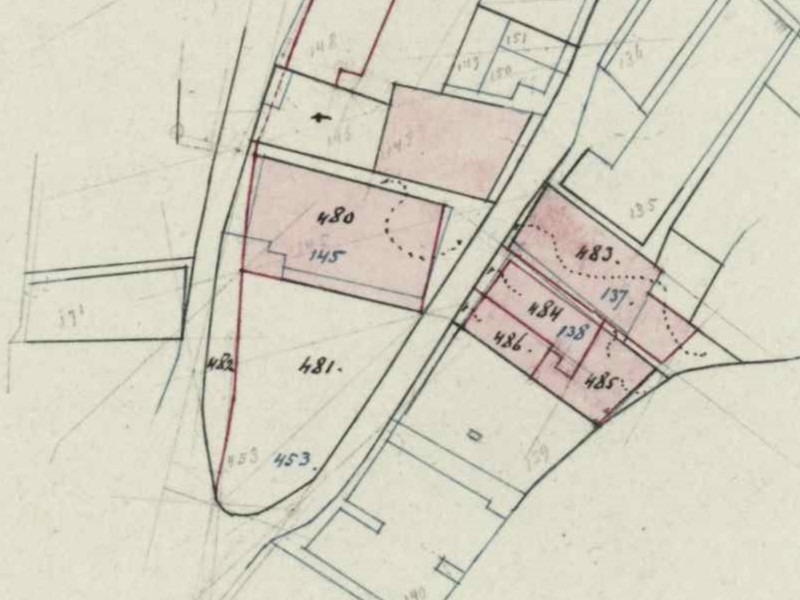
In 1798, a Roman Catholic church was established once again in Bredevoort. This first small church stood opposite the current building, on the plot now known as Koppelstraat 9. It consisted of two knocked-together houses whose roofs had been removed and walls raised. The altar was made of brick, and the walls were painted white to give the building an ecclesiastical appearance. In 1855, the church was elevated to the status of a parish.
The Current Church
In 1871, A.E. Smorenburg became the parish priest in the fortified town and was tasked by the bishop with building a new church. After the fortifications of Bredevoort were largely dismantled during the nineteenth century, Saint George’s Church (Sint-Georgiuskerk) was built on the curtain wall between two bastions. As a result, the church still stands slightly higher than the surrounding streets.
The parish received part of the Ossenkop bastion (1,420 m²) from the municipality of Aalten for free, including the surrounding section of the moat and quay. The remaining 1,420 m² was purchased for 795.20 guilders. The initial design for Bredevoort was drawn up by Pierre Cuypers, modelled on the church in Ruurlo. Ultimately, Alfred Tepe’s 1874 design was executed instead, with A. Ubbink serving as the building contractor.
The construction of the church required 230,000 bricks and 150 mud (hectolitre) of lime. The first 100,000 bricks were brought in on wheelbarrows by parishioners from Barlo in Germany, who wished to demonstrate their solidarity with Dutch Catholics in this way. The remaining bricks were presumably fired in the brick kiln on the Haart. Construction began in 1875, and the church was consecrated by Father Smorenburg as early as 3 October 1876. The old church was subsequently demolished and the land sold.
Renovation and Extension
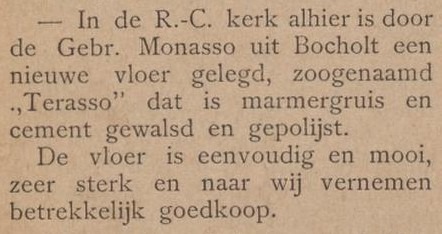
In 1897, under Father Mulder, the church was renovated and expanded with a clock and three bells. A year later, a terrazzo floor was laid by Felice Monasso from Bocholt, and the walls were painted by Muermans and Son from Roermond, including a depiction of Christ and the Apostles in the Garden of Olives.
Closure for Worship
Saint George’s Church was closed for worship (deconsecrated) in the spring of 2021 and sold to a social entrepreneur.