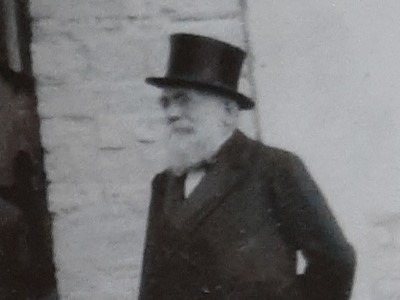
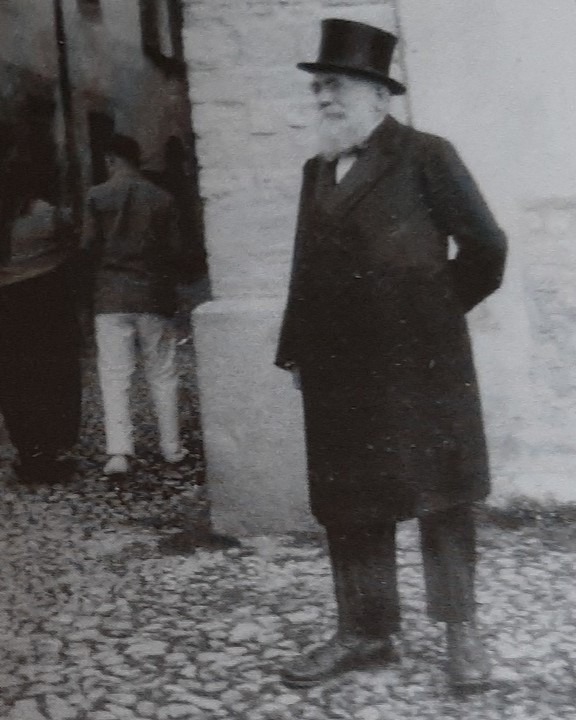
Gerrit Hendrik Heinen (Aalten, 01-08-1851 – Aalten, 26-09-1930) was born on Varsseveldsestraat in Aalten. His parents were Jan Willem Heinen and Antonetta Piepers.
At the age of nineteen, Gerrit Hendrik left for Warnsveld, returning to Aalten a year later in 1871. In 1877, he left once again—this time for Rotterdam, to learn the trade of house painting and decorating. Two years later, he ended up in Amsterdam. There, he started a painting business and, within a few years, employed more than a hundred journeymen.
Heinen received commissions for wall and ceiling murals, including for the Doelen Hotel and Central Station in Amsterdam, and the railway stations in Enschede and Antwerp.
Schiller
Heinen “made it”, so to speak, and invested in real estate. Hotel-Café Schiller on Rembrandtplein was the go-to meeting place for the property trade, and Heinen was consequently a frequent face there.
At the time, Gerrit Jan Prins from Aalten—who would later own the café on Prinsenstraat—also worked there. Through Heinen’s mediation, the official opening of ‘Sociëteit Schiller Prins’ was celebrated on 1 April 1901, attended by Mr Schiller from Amsterdam. In 1902, Heinen gifted four murals, which together depicted the four seasons, for Schiller’s newly built conservatory.
Heinen continued to visit Aalten often. He was a bon vivant, a city dweller, and naturally an artist in the decorative arts. He dreamed of turning Aalten into an art destination and donated several works to the local museum (Oudheidkamer). However, the crowds of people failed to materialise.
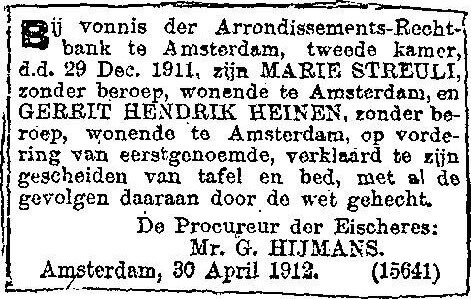
On one of his travels abroad, Heinen met the Swiss Marie Streuli. He married her in 1880, and together they had nine children. They lived on Keizersgracht. Gerrit Hendrik Heinen was the father of, among others, Marie Heinen, who became the director of the Nationaal Bureau voor Vrouwenarbeid (National Bureau for Women’s Labour). Gerrit Heinen and Marie Streuli divorced in 1911.
Photography
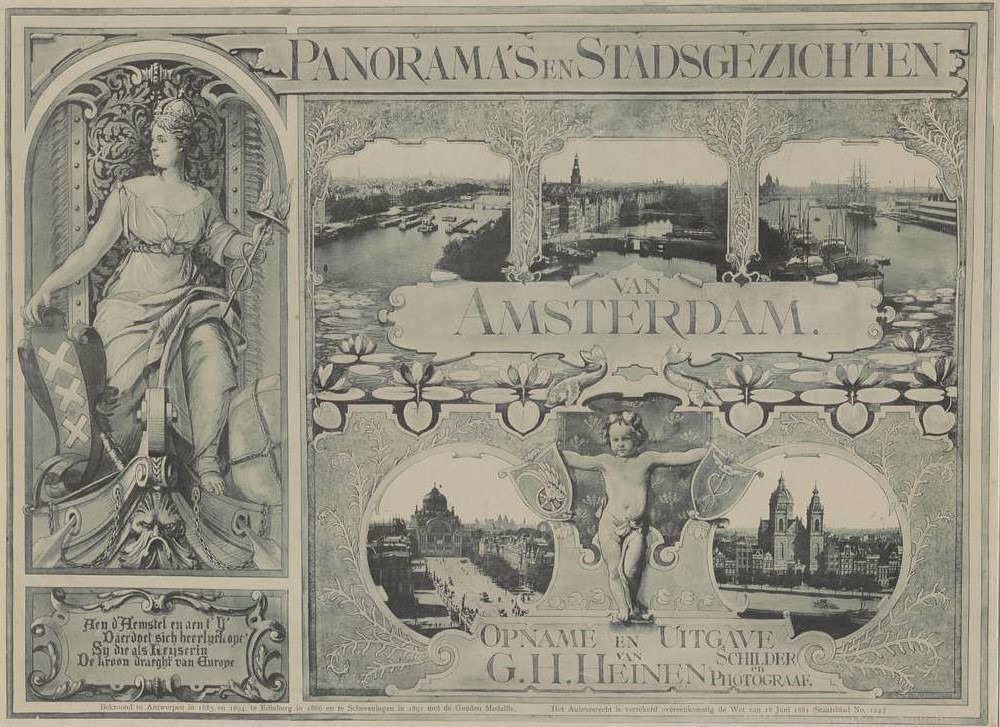
In 1894, Heinen took a series of photographs of Amsterdam, which he published independently under the title ‘Panoramas and Cityscapes of Amsterdam’, featuring 26 prints. For his photography, he chose high vantage points, such as the Rijksmuseum, Central Station, the Paleis voor Volksvlijt (Palace of Popular Industry), and the Doelen Hotel, as well as the Nieuweramstel water tower and the attics of ordinary residential houses. Murals painted by Heinen can still be seen inside Amsterdam Central Station today.
Heinen earned so much money as an entrepreneur that he was able to retire in 1913. He did, however, continue to paint bas-reliefs. He spent the final years of his life in Italy, where he met Pietro Armati, an Italian painter whom he brought to Aalten and helped secure commissions.
The painter died in Aalten in 1930. He was buried at Berkenhove Cemetery.

Leave a Reply