Old Aalten

Category: Mayors

  • Izaak Antonie de Moor

    Izaak Antonie de Moor

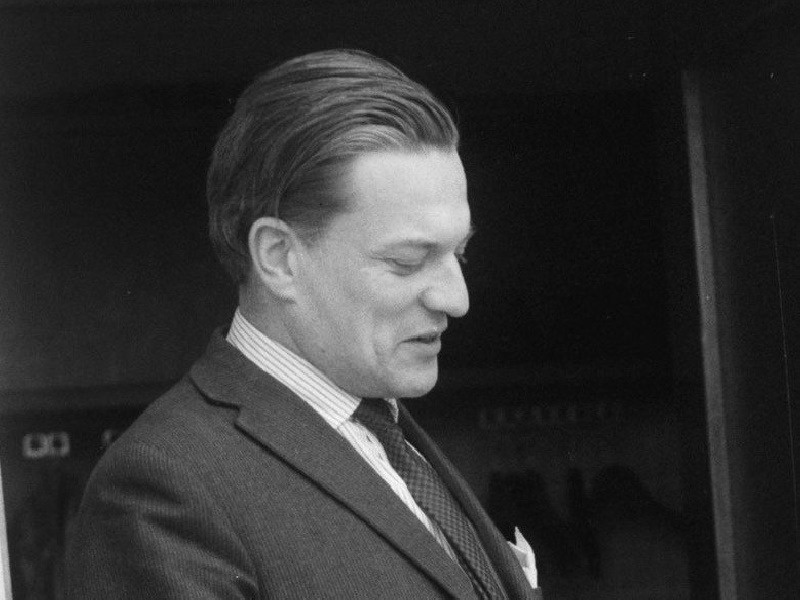
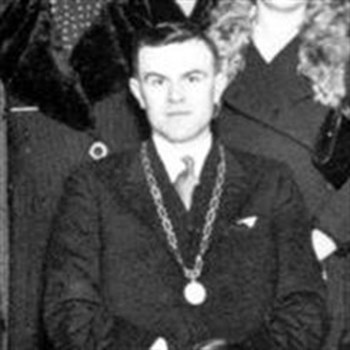
    Izaak Antonie de Moor, born on May 31, 1905, in Goedereede, was appointed mayor of Breskens in 1939. In 1941, he joined the N.S.B. there. After ‘Dolle Dinsdag‘ (Mad Tuesday), he fled to Aalten, where he took over the mayoral duties from September 18, 1944, during the period when Mayor Monnik was in hiding. When things became too difficult for him a few days before the liberation, he fled to Grijpskerk, where he was arrested upon liberation. After 1½ years of internment, he was provisionally released.

    On March 10, 1947, De Moor stood trial before the war tribunal in Groenlo. The charges were as follows: group leader and sub-district leader of the N.S.B., neighborhood head of the N.V.D., member of the N.A.F. during his term in Breskens; taking the oath of allegiance to Mussert; organizing N.V.D. training afternoons; threatening the municipal messenger J.J. Bliek; applying for a weapons permit from the Representative of the Reich Commissioner; stating, when returning Dutch soldiers to Germany as prisoners of war: “They deserve no better; they have done nothing but sabotage”; distributing the publications Volk en Vaderland and De Zeeuwsche Stroom; cooperating with the labor deployment for coastal defense works; and providing a training course for mayors in Goes.
    The term of office in Aalten

    The summons regarding his term of office in Aalten included the following charges: cooperating with the O.T. labor deployment in Zevenaar and Bocholt; calling in the assistance of the Landwacht to check for people in hiding, for the requisitioning of bicycles, and for the arrest of a person in hiding at Te Giffel. Furthermore, the accused dismissed all municipal officials who were in hiding and informed the Sicherheitspolizei in Doetinchem of the arrest of three individuals, including B.H. Wikkerink, for engaging in illegal activities. Finally, he called in the assistance of the Grüne Polizei stationed in Aalten in connection with the arrest of the Baruch family, a Jewish family in hiding.

    The accused explained that by accepting the office of mayor in Aalten, he had intended to be of as much service as possible to the population. The president: “You have given all your strength to the German, and thus enemy, cause for the destruction of both the Dutch material and spiritual resistance. When you saw in Breskens who and what the Germans were, you should no longer have acted as mayor in Aalten.” The accused: “I had to choose between being a member of the Landwacht or a mayor. I had no desire for the Landwacht.” The president: “You could also have chosen another path: neither.”

    The discussion then turned to why the accused had been present on October 10, 1944, when the S.S. had conducted a raid in Aalten and the detained persons were brought to the community center. The accused: “The S.S. intended to cordone off the churches. I knew this would cause much unrest in Aalten, so I tried to make amends where possible. In some cases, I was able to do something in favor of those detained.” The accused denied having ordered the arrest of the six hostages. “In the report to Doetinchem,” the accused stated, “I did declare it. The late Mr. v.d. Glas, the Landwacht commander, gave the order to arrest the hostages. As mayor, I was required to report it.”

    The president: “Why did you attempt to compile a new population register, when you knew that the old one had been deliberately disappeared? You were in every respect a mindless tool in the hands of the Germans.” Furthermore, the speaker pointed out how dangerous it was to inform Vossers that the municipal secretary, Bijlsma, had made off with the municipal papers and documents, and to tell the aforementioned Vossers where B. was likely located. President: “You were a convinced and fierce member of the N.S.B.” The accused: “Not fierce, I was an idealist. I considered it my calling and task to do something for the Dutch people.”

    After the various points of the indictment during his term in Breskens were addressed, the arrest of the Baruch family, who were in hiding in Aalten, was finally discussed. The accused admitted to having acted incautiously. He had mentioned it in a conversation with the Grüne Polizei. The president: “You knew yourself what kind of beasts the G.P. were.” The accused: “It did not sink in at that moment. I was able to prevent the Oberleutnant from having the three Jews in question shot. At my insistence, they were to be transported to Doetinchem. As the liberation approached, they were able to remain in Aalten. And upon my departure, I told Tilbusscher that the Jews could be released immediately, which is what happened.”

    Verdict

    The accused, who had no defense counsel, said in his closing statement that he is now back in the workforce. He appealed for the clemency of the Tribunal. “I have had a lesson for life. Moreover, my house in Breskens was bombed, and my 17 years of pension are gone. I was a civil servant heart and soul; I admit to having been completely wrong. Give me the opportunity now to care for my family again,” he exclaimed.

    After deliberation, the president stated that it would be fair to impose an internment longer than the pre-trial detention. However, the Tribunal wished to take into account the circumstances in which the accused currently finds himself. The following measures were imposed upon him: internment equal to the pre-trial detention; disqualification from holding any public or semi-public office; deprivation of both voting rights; and confiscation of his radio.

    De Moor passed away on February 17, 1984, at the age of 78, in Warnsveld.
  • Ruurd Faber

    Ruurd Faber

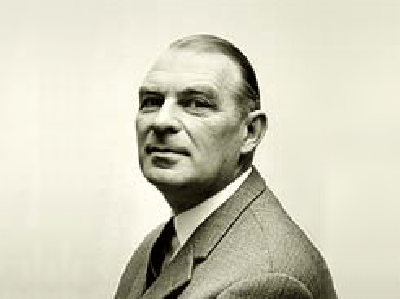
    Ruurd Faber (Veenhuizen, 28-08-1912 – Assen, 07-07-1992) was a Dutch politician representing the ARP. He was born the son of Anne Faber (1875–1948; from 1932 director of the first asylum of the Rijkswerkinrichtingen [state labour colonies] in Veenhuizen) and Hermina Klein (1879–1973). On 15-05-1941, he married Aukje Fokje Wijngaard (The Hague, 27-05-1918) in Assen.

    At the beginning of his career, Faber worked as an inspector for a life insurance company. During the Second World War, he was involved in the resistance, for which he was arrested and imprisoned in the detention centre in Assen. Following the liberation, he was released and subsequently became head of the Politieke Opsporingsdienst (POD – Political Investigation Service) in Assen. After some time, Faber became a prosecuting officer (Officier-fiscaal) at the Assen Chamber of the Bijzonder Gerechtshof (Special Court of Justice) in Leeuwarden. Later, he also held other positions at the Ministry of Justice and the Ministry of Social Work.

    In 1960, he became Mayor of Ulrum, and from 1962 to 1963 he additionally served as acting Mayor of Leens. In 1965, Faber was appointed Mayor of Dantumadeel. There, he gained a reputation as a “large-calibre social worker”.

    In 1971, he succeeded Hendrik Haverkamp as Mayor of Aalten and held this position until 1975.

    Ruurd Faber passed away in 1992 at the age of 79.

    He was succeeded as Mayor of Aalten by Doeke Bekius.

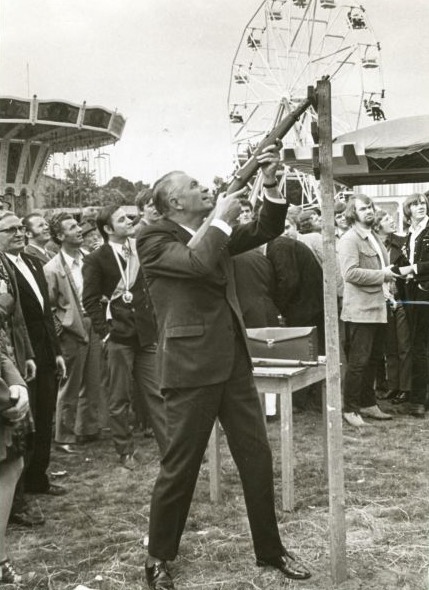
    Mayor Faber fires the first shot at the 1971 Marksmen's Festival (Schuttersfeest)
    Mayor Faber fires the first shot at the 1971 Marksmen’s Festival (Schuttersfeest)

    Leestip


    ‘Van Maire Stumph tot Burgemeester Stapelkamp’, door Leo van der Linde

  • Doeke Bekius

    Doeke Bekius

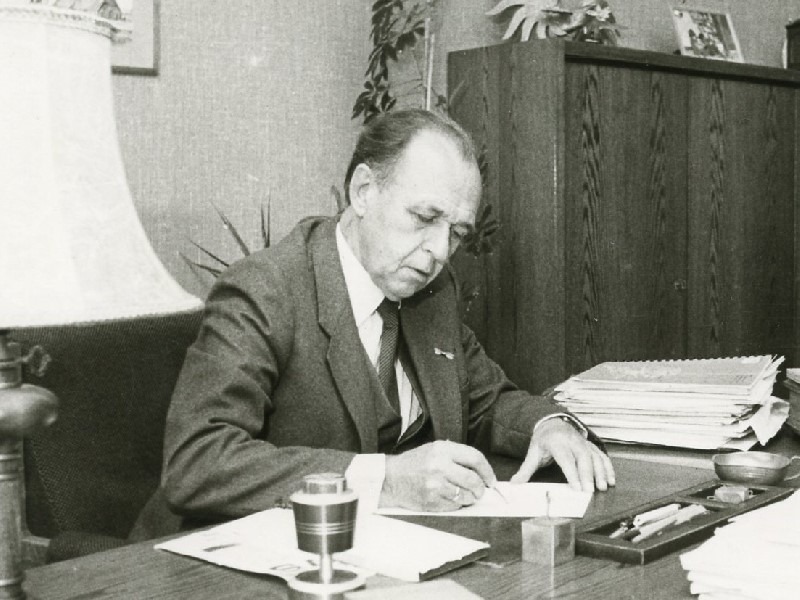
    Mayor (1976–1988)

    Doeke Bekius (Gauw, 14 November 1922 – Haart, 8 June 2013) was a Dutch politician, representing successively the Anti-Revolutionary Party (ARP) and the Christian Democratic Appeal (CDA).

    Bekius was born and grew up in the Frisian village of Gauw, near Sneek. After completing his ULO (advanced elementary education), he joined the municipality of Wymbritseradeel at the age of sixteen, a rural municipality surrounding Sneek that comprised 28 villages. In 1946, he moved to the municipality of Zutphen. With the experience gained there, he accepted the position of Head of General Affairs at the municipality of Apeldoorn in 1951. In July 1961, he became Mayor of Westdongeradeel, which was followed in December 1966 by his appointment as Mayor of Kollumerland en Nieuwkruisland.

    Mayor in the municipality of Aalten

    In mid-1976, Bekius accepted the mayoralty of the municipality of Aalten, succeeding Mayor Faber. He considered the small town of Bredevoort to be a gift, an inspiring assignment. In 1988, he was appointed ‘honorary drossard’ (eredrost) there.

    After his retirement, he continued to reside within the municipality of Aalten. He remained a member of both Bredevoorts Belang and Haarts Belang (local community interest groups). Furthermore, he dedicated himself to the Vereniging van Kleine Kernen (VKK – Association of Small Communities) Gelderland. At the end of 1987, he started there as an advisor to the board; he soon joined as a board member and subsequently served as its chairman for many years.

    Bekius lived and passed away in the hamlet of Haart, in the municipality of Aalten. On 14 June, his funeral took place in his birthplace of Gauw.

    He was succeeded as Mayor of Aalten by Tijme Bouwers.

    Leestip


    ‘Van Maire Stumph tot Burgemeester Stapelkamp’, door Leo van der Linde

  • Evert Sickens van Veen

    Evert Sickens van Veen

    Mayor (1946–1967)

    Evert Sickens van Veen (Hijkersmilde, 04-10-1902 – Winterswijk, 03-05-1976) was a Dutch politician representing the CHU (Christian Historical Union).

    He was born the son of Jan van Veen (1855–1917; a farmer) and Matje Prins (1867–1943). He attended the gymnasium but suffered from health problems and left the school prematurely to undergo a health cure in Switzerland. After subsequently working in the agricultural sector in France for a period, he returned to the Netherlands in 1926. He became an unpaid apprentice (volontair) at the municipality of Schoonebeek, and in mid-1930 he was appointed as an administrative officer at the town clerk’s office of the municipality of Stad Hardenberg. Two years later, he transferred to the municipality of Gramsbergen, where he rose to the position of chief administrative officer.

    On 25 March 1931, Evert Sickens van Veen married Johanna Jacoba Strating in Oosterhout (North Brabant).

    In late 1937, Van Veen was appointed Mayor of Nijeveen. In September 1943, he went on sick leave, at which point the Mayor of Meppel, Geert Wisman, also became acting Mayor of Nijeveen. Early in 1944, Van Veen was dismissed, but he later returned to his post as Mayor of Nijeveen. Furthermore, in late 1945, he served as acting Mayor of Ruinerwold for several months.

    In 1946, Van Veen was appointed Mayor of Aalten, succeeding Mayor Monnik. Van Veen retired from his post there in November 1967 and passed away in 1976 at the age of 73. He is buried at Berkenhove Cemetery.

    Van Veen was succeeded as Mayor of Aalten by Hendrik Hieltje Hans Haverkamp, LLB.

    Leestip


    ‘Van Maire Stumph tot Burgemeester Stapelkamp’, door Leo van der Linde

    Sources


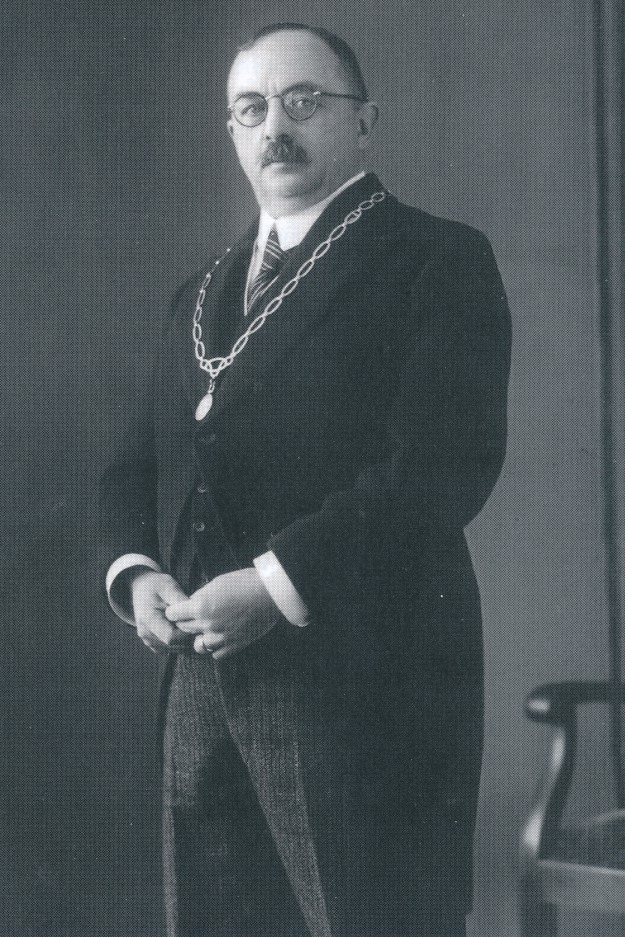
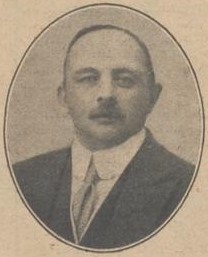
  • Adriaan Johannes Willem Monnik

    Adriaan Johannes Willem Monnik

    Mayor (1910–1945)

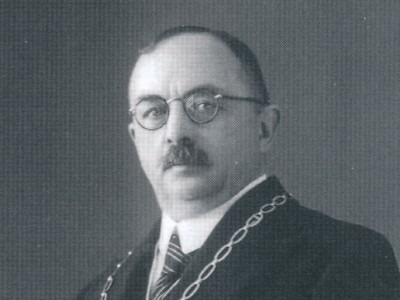
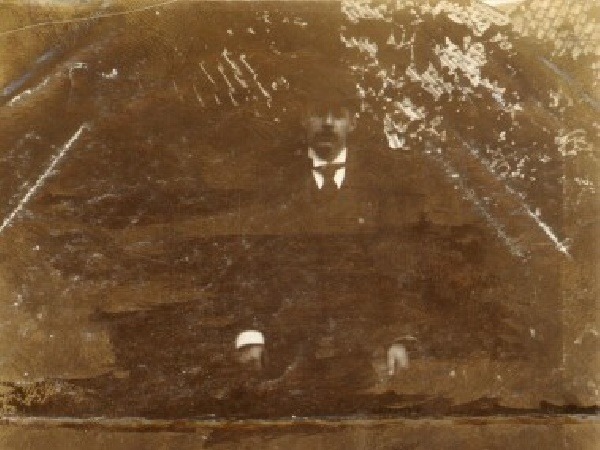
    Adriaan Johannes Willem Monnik was born on 19 November 1879 in Vorden, the son of Adriaan Johannes Wilhelmus Monnik, a medical doctor, and Anna Hendrika Blotkamp. On 22 May 1913, he married Louise Wilhelmina de Waal Malefijt (born in Zeist, 17 August 1881) in The Hague. She was the daughter of Jan Hendrik de Waal Malefijt, Minister of the Colonies, and Frederica Sophia Wilhelmina Couvée.

    Monnik was appointed Mayor of Aalten in 1910, succeeding Willem Carel Tack.

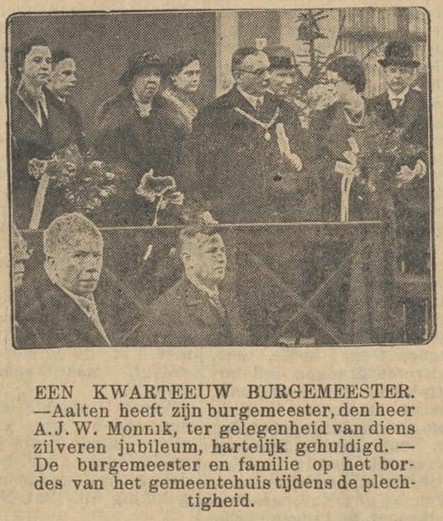
    He served as Mayor of Aalten for no less than 35 years. The Monnik family lived in villa Zonneheuvel on Bredevoortsestraatweg in Aalten, on the site where the indoor swimming pool would later be built.

    In 1944, Mayor Monnik received orders to ensure that 500 men from Aalten report to Zevenaar to be deployed in digging military defences. He and his municipal officials took the collective decision to refuse and go into hiding together. The civil register (bevolkingsregister) was moved to safety.

    During his period in hiding, Monnik was replaced by I.A. de Moor, the former Mayor of Breskens who had fled from there along with many other NSB (Dutch Nazi Party) members. Following the liberation, Monnik returned to his post as mayor and retired on 1 November 1945.

    In 1946, Monnik was appointed a Knight in the Order of Orange-Nassau.

    On 2 August 1951, he passed away at the Bronovo Hospital in The Hague following an operation. He was buried at Berkenhove Cemetery.

    He was succeeded as Mayor of Aalten by Evert Sickens van Veen.

    Interview on his 25th anniversary in office

    On the occasion of Mayor Monnik’s 25th anniversary in office, De Graafschapbode published an interview with the jubilarian on 8 March 1935, reproduced below in a slightly abridged form:

    When we are seated in the spacious mayoral office, our first question is naturally: “Could you tell us something about your very earliest years, school education, and so forth?” We learn that Adriaan Johannes Willem Monnik was born on 19 November 1879 in Vorden. His first two school years were spent at the Christian school in his birthplace. Then, a governess came to the house. One room was fitted out as a schoolroom, and here the young pupil, alongside just one fellow classmate, was prepared for the gymnasium.

    Following this primary education, he attended the Christian gymnasium of the Reverend Van Lingen in Zetten for three years. His studies had to be interrupted at that point for health reasons and were later resumed at the H.B.S. (modern secondary school) in Zutphen. He then attended the lectures of Professor Hugo de Vries at the Municipal University of Amsterdam for a year.

    Appointed Mayor of Aalten

    “It was always my ambition,” Mr Monnik tells us, “to become a mayor one day, and when the vacancy in Aalten arose, I was appointed Mayor of Aalten on 23 February 1910.” Following his swearing-in on 2 March, Mr Monnik was installed as mayor here on 15 March 1910. The senior alderman (wethouder), Z.G. van Eerden, delivered the installation address. The mayor concluded his reply by stating, among other things: “I shall do what is a mayor’s duty.”

    At that time, Mr B.H. Vaags was the town clerk (gemeente-secretaris), and the aldermen were Messrs Z.G. van Eerden and W. te Gussinklo. The council was composed as follows: F.H. Somsen, Th.A.M. Driessen, Sal. Gussinklo, L. Heusinkveld, H.A.J. Luiten (Sondern), J.P. Obbink, H.J. Veldhuis (Vels), Wander Nijhof, J.H. Veldkamp (Bredevoort), and A.P. Slicher van Bath.

    Until his marriage, Mr Monnik lodged with the Misses Vaags on the Kattenberg.

    Key decisions and events

    The mayor believes he recalls that his first decision was the purchase of the old Heijmans house on the corner of Koelmansteeg, to widen the entrance to Koelmansteeg (now Stationsstraat). The old minutes books are fetched, and indeed, it is correct (our mayor’s memory is, in passing, exceptionally good): this corner house was purchased for 3,500 guilders, allowing for a proper entrance to Stationsstraat.

    Then, on 27 April 1910, followed the opening of the tramway, the G.W.S.M. line B (Lichtenvoorde, Bredevoort, Aalten, Bocholt).

    Right from the start in 1910, his passion for public health became apparent when several dwellings were declared unfit for human habitation. “I have never involved myself much in politics; I feel much more drawn to public health, housing, and the like,” the town’s father figure remarks in passing.

    Later in 1910, we saw the construction of the Koembrug, the first concrete bridge in Aalten, as well as the public school renovation and the reorganisation of the police force (Mr Blom became chief rural constable at the time). The appointment of a foreman for the municipal labourers also dates from this period.

    In 1911, the abolition of German currency was brought up, though it was not until July 1914 that this was implemented. Due to the large number of labourers who went to work in the factories in Bocholt at the time, all of whom were registered with a German health insurance fund (Krankenkasse), a complex insurance issue had arisen, which was also resolved now.

    In March 1911, a weekly market for vegetables, chickens, eggs, and fish was introduced. The improvement of the drainage of De Goor also took a major step forward with the establishment of the Baaksche Beek Water Board. An old covenant had stipulated that the Veengoot ditch could not be deepened, making drainage of De Goor impossible. The creation of the Water Board allowed for a change. In 1911, Lankhofstraat and Ormelstraat were also laid out.

    It would take us too far to deal with every year in such detail. We shall walk through the subsequent years at a slightly accelerated pace and mention them more as chronological milestones. In 1912, we find the retirement of rural constable Heersink.

    On 22 May 1913, Mr Monnik married L.W. de Waal-Malefijt. His lodgings with the Misses Vaags were exchanged for villa Zonneheuvel.

    On 21 February 1914, the council decided to build new schools in IJzerlo and on De Haart. On 13 March of the same year, the schoolmaster’s house in Aalten followed. In February, house construction on Haartseweg was also commenced.

    On 1 August, we see the beginning of the Great War, which brought numerous hardships. Gradually, all foodstuffs and provisions became scarcer, leading us into the era of rationing. What an immense amount of work and trouble that entailed! During that period, we supplied 1,000,000 kilograms of rye, making us one of the largest rye-supplying municipalities in the country.

    In September 1914, the ordinance on pub closing hours came into force, and the “blacklist” was introduced. On 31 October, the budget post for night watchmen was scrapped, and by 1 January 1915, the night watchman in Aalten belonged to the past.

    In late 1917, the council expressed its approval in principle for taking over the gasworks. The decision to acquire it was taken on 19 December 1918. 1918. The council took over the gasworks for 115,000 guilders, plus 29,602.87 guilders for the pipes, gas meters, etc. The date of transfer was 2 May 1919.

    Following the armistice, when the prisoners of war arrived at the border, it was rumoured that 30,000 of them would be coming here. Fortunately, they took another direction in Bocholt. Nevertheless, we received our share in November 1918, namely Frenchmen and Italians, who were housed in the Community Hall and in the factory of the N.V. Textiel Mij. textile company. The people were starved. “We experienced something rather peculiar with those Italians,” the mayor tells us. “We had given them all some of our excellent soap, of which we had a large stock at the time, so they could wash themselves properly, but by the following day, all the soap had been eaten by the Italians!”

    On 26 February 1920, the Oosterman plot was purchased with the intention of creating the new cemetery there. This plan did not go ahead. Later, in 1922, another site was designated for this purpose: the present-day Berkenhove Cemetery.

    In August 1920, a start was made on the official naming of streets. The first was Oranjestraat in Bredevoort. August also saw the tendering for Gendringseweg.

    On 19 May 1922, the cattle market was moved to the inner market square. In recent years, however, the cattle market has been restored to its former glory. This year also saw the introduction of the meat inspection service, with Dr Rexwinkel appointed as inspecting veterinary surgeon. On 11 April, the slaughterhouse was taken over by the municipality.

    Then we come to the most recent years, which are still fresh in all our memories. Various roads were paved during these years: Sondernweg and Haartseweg in 1929. A ring road was constructed on 24 August 1928, and now the Walfort open-air lido, a project of the very last few years.

    The Aldermen over these 25 years

    It is quite interesting to look back at which aldermen we have had during these 25 years. In 1910, as previously mentioned, they were Z.G. van Eerden and W. te Gussinklo. Following the death of Van Eerden, Mr Theod. Driessen became alderman in May 1916, stepping down again in 1918. We then had Mr F.H. Somsen for a brief spell. From 2 September 1919 to 4 September 1923, the aldermen were Messrs H.J.J.G. ten Dam and Joh. Obbink. Mr F.H. Somsen then took the place of Mr ten Dam (4 September 1923), and on 8 March 1926, Mr A. Brethouwer succeeded Mr Obbink. Messrs Somsen and Brethouwer remain in office as aldermen to this day.

    As town clerk, Mr S. Bijlsma succeeded his predecessor, Mr B.H. Vaags, on 1 February 1930. On 29 January 1924, the municipal treasurer, Mr F.H. Freriks, retired. Mr F. Heisterman was then appointed as treasurer. At the Municipal Works department, following the passing of Mr J. Brill, Mr Tilbusscher became the municipal architect, assisted by Mr H. Rollman.

    Other roles of the jubilarian

    Alongside his own busy professional sphere, the mayor takes a particular interest in education. Mr Monnik serves as treasurer of the Union of School Boards, Teachers, and Supporters of Christian Education in the Gelderland Achterhoek and surrounding areas.

    He is also a board member of the Groen van Prinsterer Teacher Training College in Doetinchem. Furthermore, he is a director of the N.V. Waterleiding Oostel. Gelderland water company and a member of the Supervisory Board of De Graafschap printing and publishing company.

    Finally, we are curious to know the mayor’s view on the prospects of our municipality in the near future.

    “These past 25 years,” Mr Monnik says, “have certainly not been easy. First the war years, and now the perhaps even more difficult post-war period with its severe decline in every field, its massive unemployment, with the unemployment relief schemes (werkverschaffing) and everything that entails. My wife has always been an immense support to me through all these difficulties.”

    Regarding the relief schemes, we can add that on 24 November 1916, the Patrimonium association requested employment relief. The first project was gravel digging in 1918. On 30 May 1917, Aalten became one of the first municipalities to adopt unemployment insurance.

    The mayor concludes: “We as a municipality are not in too bad a position. This is a very heavy year, certainly, but I foresee that things will gradually improve. We shall move forward with confidence, one eye looking upward, one eye looking inward. Hand to the plough, and the end will be good. We must seek not what divides us, but what binds us together!”

    Burgemeester Monnik – Aaltensche Courant, 27-05-1927
    Aaltensche Courant, 27 May 1927
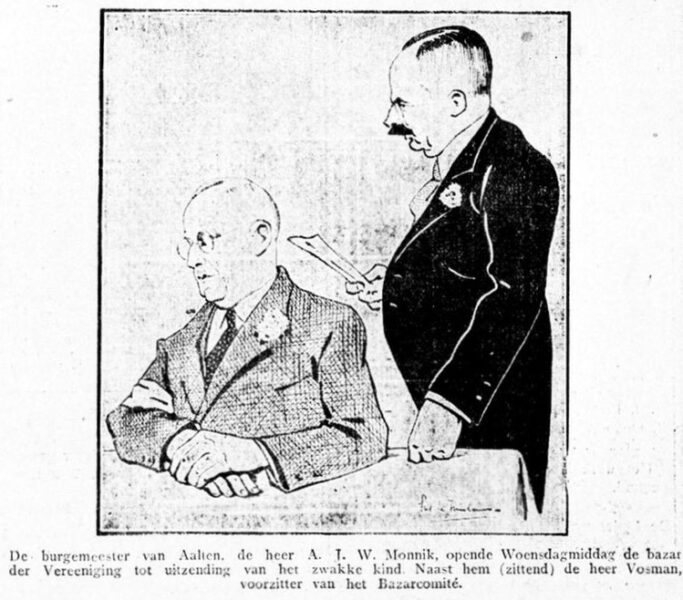
    Mayor Monnik opens Bazar – Graafschapbode, 13 April 1934
    Graafschapbode, 13 April 1934
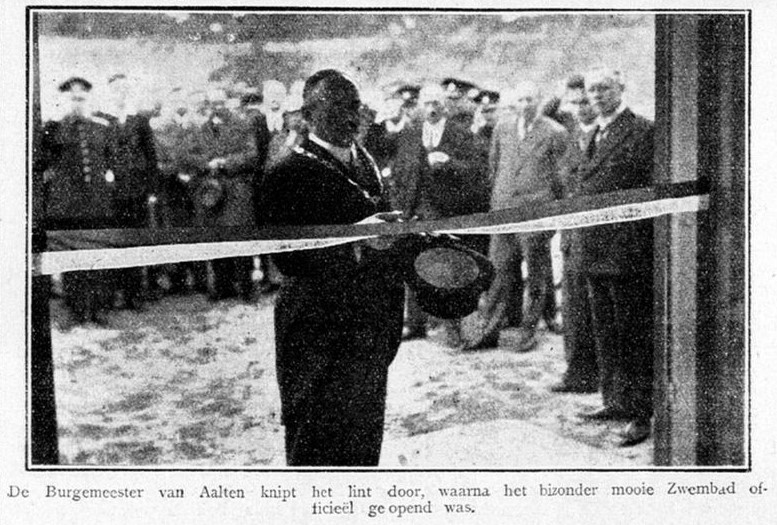
    Mayor Monnik opens 't Walfort swimming pool, 25 juni 1934
    Graafschapbode, 25 June 1934
    25th anniversary mayor Monnik – Sumatra Post, 8 June 1935
    Sumatra Post, 8 June 1935
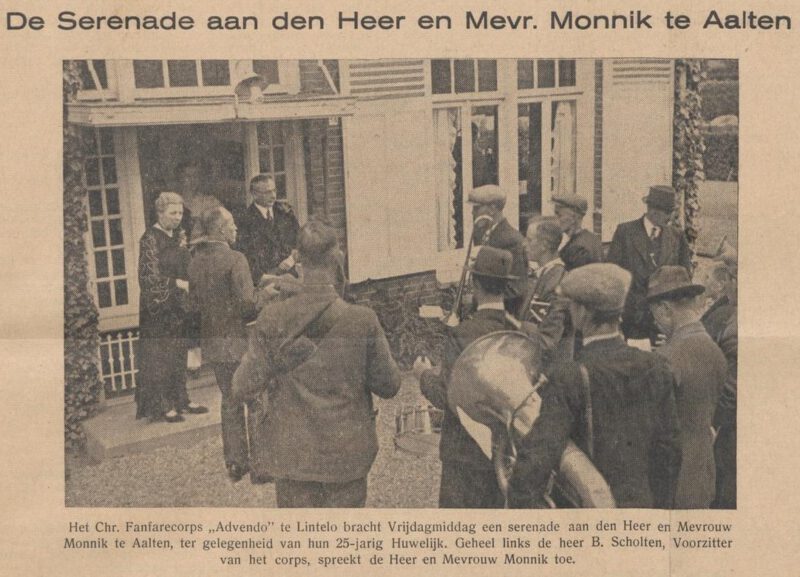
    Serenade mayor Monnik – De Graafschapper, 24 May 1938
    De Graafschapper, 24 May 1938
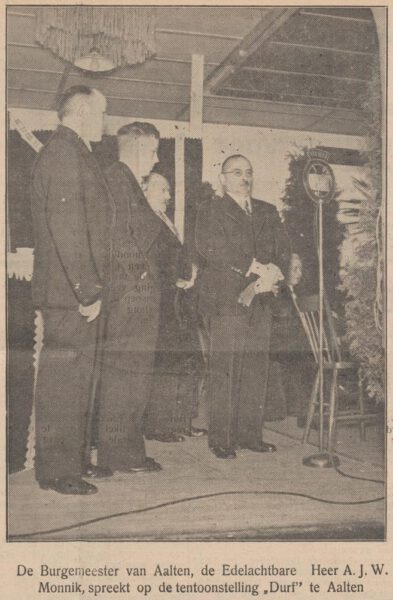
    Mayor Monnik – De Graafschapper, 7 November 1938
    De Graafschapper, 7 November 1938

    Recommended reading


    ‘Van Maire Stumph tot Burgemeester Stapelkamp’, by Leo van der Linde

    Sources


  • Johan Hora Adema

    Johan Hora Adema

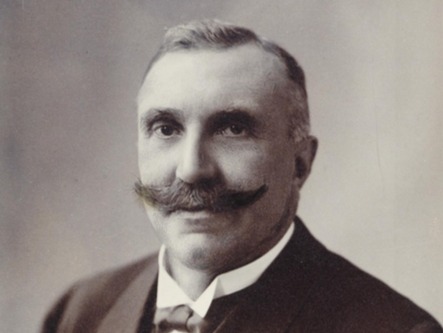
    Johan Hora Adema (Leeuwarden, 24 April 1843 – Velp, 15 March 1938) was a mayor in three different municipalities. In addition, he served as a captain in the Grenadiers and Rifles Regiment (Regiment Grenadiers en Jagers). In 1870, he married the Frisian Lucia Aurelia Bergsma Fruitier de Talma, with whom he had four children.

    Festive arrival in Aalten

    In 1886, Hora Adema was appointed town major of Aalten, succeeding Mayor L. Roelvink, LL.M. To mark his arrival, a festive welcome procession was organised. A competition was held for the most beautiful triumphal arch, and in many parts of the village, people worked hard to prepare a fitting welcome for the new mayor.

    The day of his arrival was exceptionally warm and celebratory; almost everyone was out on the streets. The new town father was driven through Aalten in a carriage. At each triumphal arch, the carriage halted so he could read the inscriptions displayed on them. The triumphal arch in Dijkstraat was particularly outstanding. It read:

    “Wees welkom J. Hora Adema,
    Voor U is deze boog geplant.
    Bestuur, beheer voor aller eer
    Dit dorp in ons vaderland.”

    (Welcome J. Hora Adema, / For you this arch is raised. / Govern, manage to everyone’s honour / This village in our fatherland.)

    The creators of this triumphal arch were awarded first prize. The new mayor took up residence in Landstraat.

    Mayor in three municipalities

    Hora Adema served successively as mayor of the municipalities of Aalten (1886–1888), Hengelo (1888–1891), and Harlingen (1896–1914).

    He was succeeded as mayor of Aalten by Squire Georg Ludwig Carl Heinrich Baud.

    Sources


  • Hendrik Hieltje Hans Haverkamp

    Hendrik Hieltje Hans Haverkamp

    Mayor (1968–1970)

    Hendrik Hieltje Hans Haverkamp (Doetinchem, 1927-04-28 – Arnhem, 2011-06-19) was a Dutch politician of the CHU.

    He was born the son of Johan Hendrik Wilhelm Haverkamp (1900-1953), an official at the municipality of Doetinchem and later mayor of Dinxperlo, and Louisa Petronella Ynzonides (Obergum, 1901-08-12), a minister’s daughter. He graduated in law and served as deputy chief of the cabinet of the Queen’s Commissioner in Overijssel before being appointed mayor of Staphorst in April 1963.

    In January 1968, he succeeded Evert Sickens van Veen as mayor of Aalten. Only two and a half years later, in August 1970, he resigned as mayor to become the second secretary of the Rijnmond Council. Haverkamp passed away in 2011 at the age of 84.

    Haverkamp was succeeded as mayor of Aalten by Ruurd Faber.

    Mayor Hendrik Hieltje Hans Haverkamp

    Leestip


    ‘Van Maire Stumph tot Burgemeester Stapelkamp’, door Leo van der Linde

  • Georg Ludwig Carl Heinrich Baud

    Georg Ludwig Carl Heinrich Baud

    Jonkheer Georg Ludwig Carl Heinrich Baud was born on March 28, 1858, in Amersfoort, son of Jean Chretien Baud and Eveline Alexandrine van Ranzow.

    By Royal Decree of February 2, 1888, Baud was appointed mayor of Aalten. He succeeded Johan Hora Adema. At his own request, no public tribute was paid during his installation as mayor, other than the flying of flags.

    In 1892, he stood as a candidate for the Provincial Council on behalf of the Liberal Electoral Association. He was elected. On December 1, 1895, he requested an honorable discharge as mayor. He was succeeded as mayor of Aalten by Mr. Willem Carel Tack.

    In 1898, he resigned as a member of the Provincial Council to prevent a split within his party.

    On March 31, 1908, at the age of 50, he married Elisabeth Lamberta van Riemsdijk (Batavia, 1871-10-10) in The Hague, who was 14 years his junior. Baud passed away on April 4, 1921, in The Hague.

    Leestip


    ‘Van Maire Stumph tot Burgemeester Stapelkamp’, door Leo van der Linde

  • Willem Carel Tack

    Willem Carel Tack

    Mayor (1895–1910)

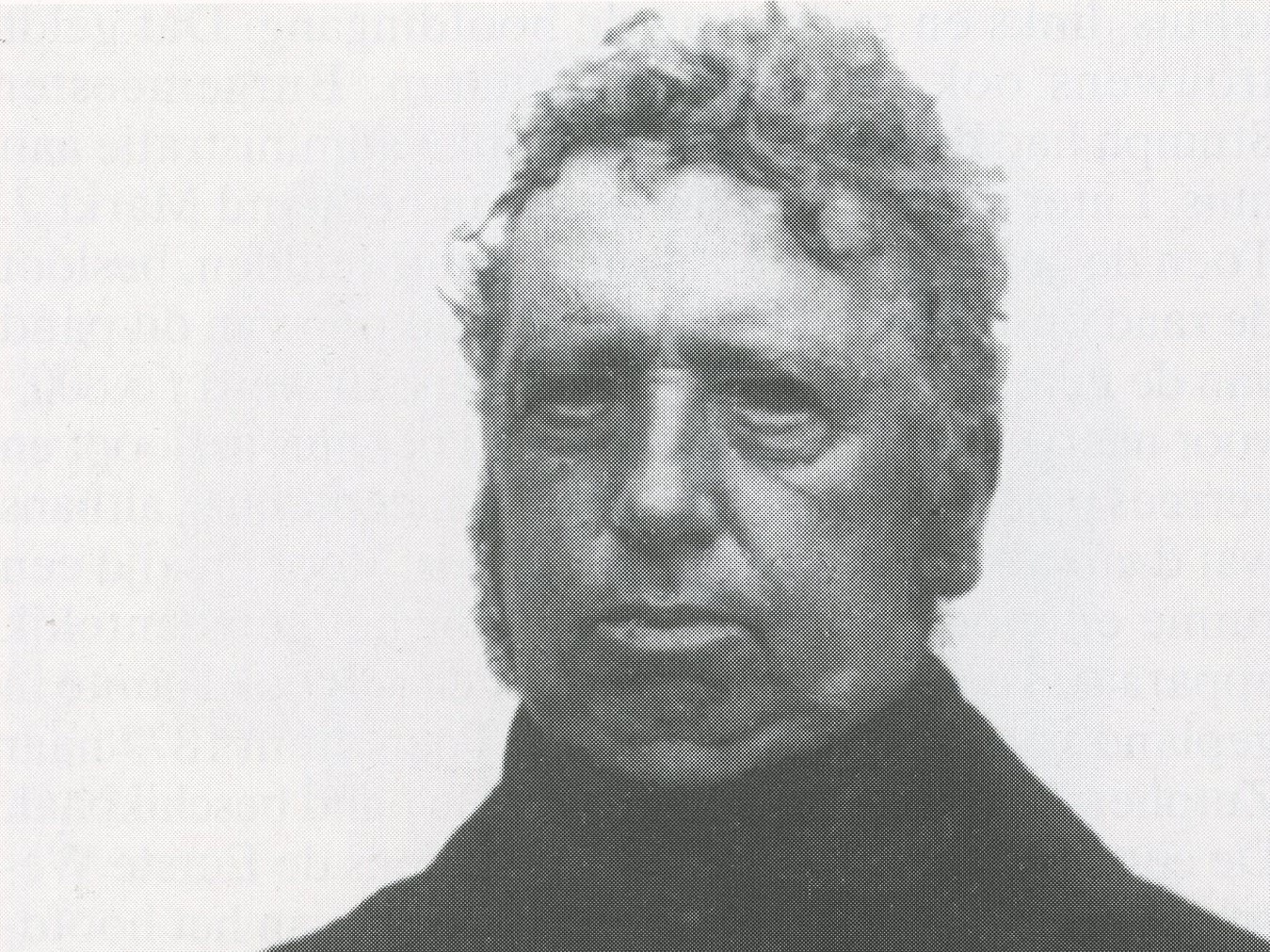
    Willem Carel Tack was born on September 26, 1838, in Doesburg as the son of Benjamin Tack, member of the city council, and Françoise Caroline Madelon Baroness Van Eck. On June 5, 1873, he married Cornelia Johanna Paré (Bredevoort, August 2, 1848), the daughter of a minister, in Aalten. Together they had five children.

    On March 4, 1880, Tack was appointed mayor of Kesteren by Royal Decree. Following an honorable discharge as mayor of that municipality, he assumed the mayoralty of Aalten effective December 15, 1895. He succeeded Jonkheer Georg Ludwig Carl Heinrich Baud.

    Festive Reception in Aalten

    On Monday afternoon, a large crowd awaited Tack and his family at Aalten station to welcome them. Carriages, riders, and a brass band then escorted the family to the official residence on Gasthuisstraat (currently Haartsestraat 10), which later earned the nickname ‘Tackshuis’. That evening, a torchlight procession passed through the village, which was decorated with flags and greenery, in honor of the new mayor. By Royal Decree of November 25, 1907, Tack was reappointed as mayor effective December 15, 1907.

    Tack passed away on May 4, 1915, in Aalten at the age of 76 and was laid to rest in Doesburg on May 8.

    Following his departure, Adriaan Johannes Willem Monnik succeeded him as mayor of Aalten.

    Leestip


    ‘Van Maire Stumph tot Burgemeester Stapelkamp’, door Leo van der Linde

  • Leonard Roelvink, LL.M.

    Leonard Roelvink, LL.M.

    Mayor (1861–1886)

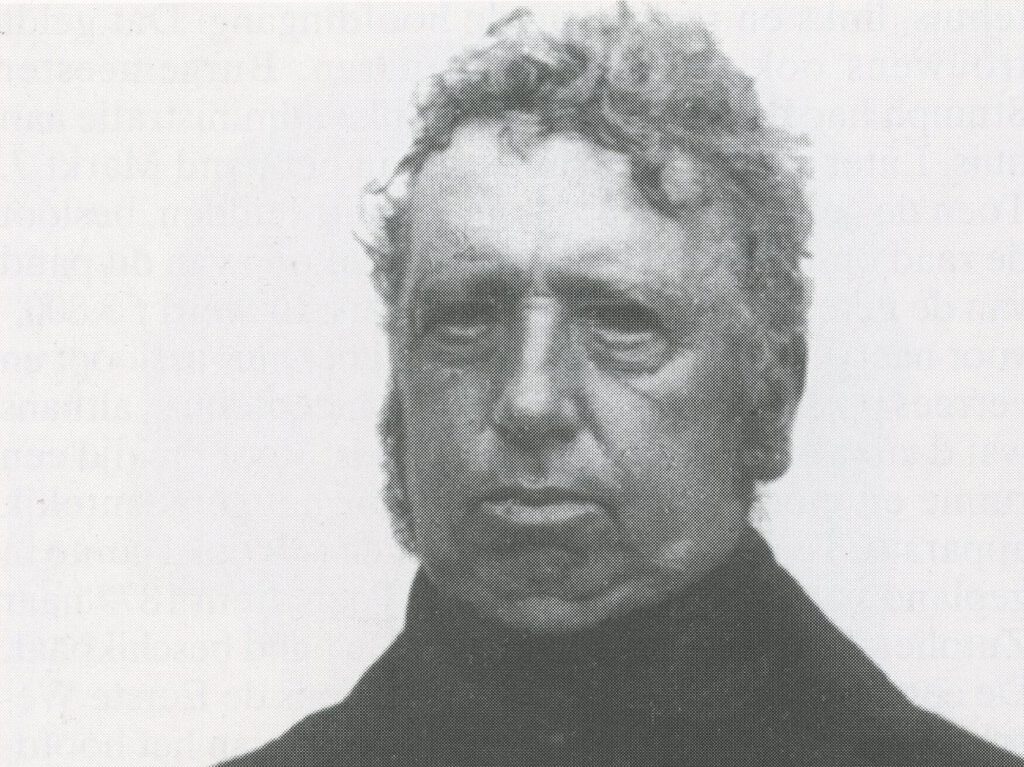
    Leonard Roelvink was born on 30 April 1833, the son of Arnoldus Florentinus Roelvink, Mayor of Aalten, and Elzabé Maria Theodora ten Cate. On 14 November 1870, he married Christina Paschen in Winterswijk, where she had been born on 27 March 1848.

    In 1857, Roelvink published his legal dissertation under the title Theses juridicae inaugurales with the publishing house Post Uiterweer in Utrecht. Four years later, in 1861, he succeeded his father as Mayor of the municipality of Aalten.

    Roelvink lived in the villa at ’t Zand in Bredevoort, which is known today as Sint Bernardus. Every day, he travelled to Aalten by carriage, just as his father had done before him. He was fiercely opposed to the arrival of the railway line to Aalten, fearing that his horses would be startled by the “steaming train monster”.

    Leonard Roelvink passed away from a stroke on 3 March 1886. The municipal council was just about to meet and was waiting for the arrival of its chairman when a doctor came to break the sad news of his passing. He was buried at the old cemetery on Prins Mauritsstraat in Bredevoort.

    Following his death, six prominent residents of Aalten addressed a letter to the Minister of the Interior. They took the opportunity to express their concerns regarding what they considered to be administrative malpractice within the municipality, which they attributed to the policies—or lack thereof—of the deceased mayor. In their letter, they explicitly stated that they did not wish to influence the appointment of a new mayor, but at the same time indicated that, in their view, “the dismal state of affairs” in Aalten was partly due to the fact that the office had passed from father to son. Among other things, they complained of deficient education, poor roads, excessive alcohol consumption, and unlawful child labour. The six men pleaded for the appointment of a strong successor who could restore order. Their grievances were taken seriously by both the Minister and the King’s Commissioner.

    Roelvink was succeeded as Mayor of Aalten by Johan Hora Adema.

  • Arnoldus Florentinus Roelvink, LL.M.

    Arnoldus Florentinus Roelvink, LL.M.

    Mayor (1818–1861) and Notary

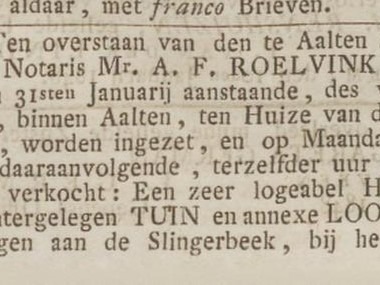
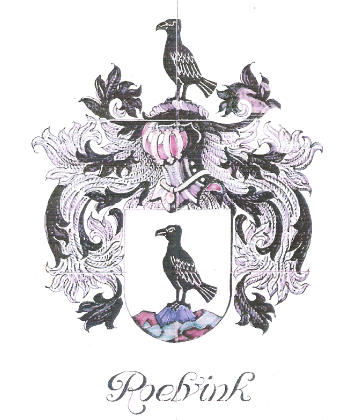
    Arnoldus Florentinus Roelvink was born on 23 December 1789 in Borculo, the son of Bernard Andreas Roelvink and Harmina Abbink. On 12 November 1817, he married Elzabé Maria Theodora ten Cate (Neede, 21 July 1798) in Bredevoort; she was the daughter of Tieleman ten Cate and Anna Jacoba Roelvink. The couple had seven children together.

    Roelvink was a notary, and following the French period, he was also appointed in 1813 as the first mayor of the municipality of Bredevoort. When this municipality was merged with Aalten in 1818, Roelvink became the mayor of the merged municipality of Aalten. He held this position until his death on 6 January 1861.

    Roelvink lived with his family in the villa at ‘t Zand in Bredevoort, which is known today as Sint Bernardus. Roelvinkstraat in Bredevoort is named after him.

    Roelvink was succeeded as mayor of Aalten by his son, Mr Leonard Roelvink.

  • Christiaan Casper Stumph

    Christiaan Casper Stumph

    Mayor (1811–1818)

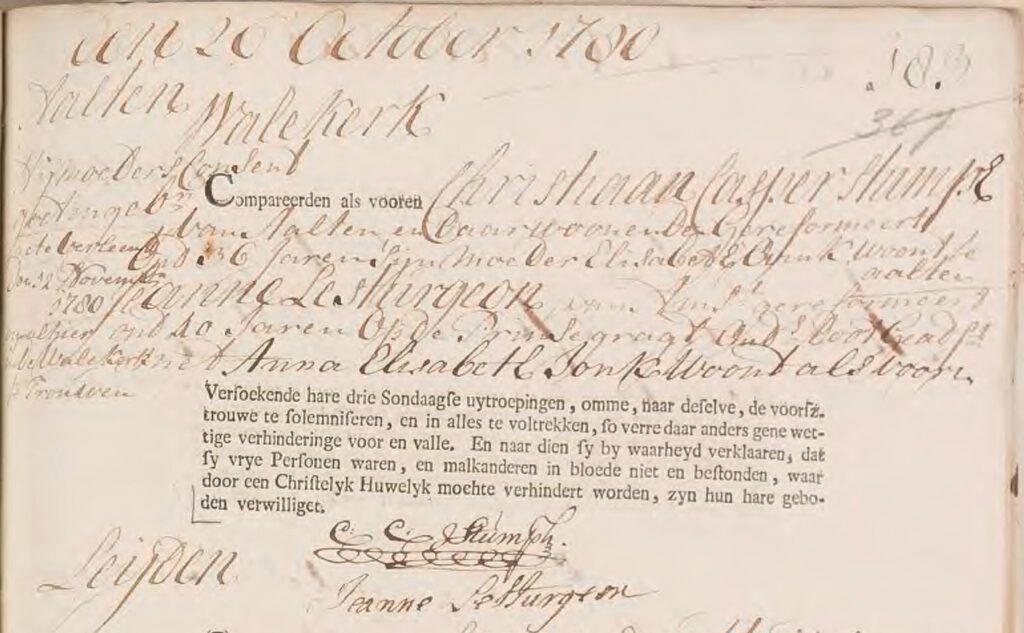
    Christiaan Caspar Stumph was baptized in Aalten on February 14, 1745, as the son of Abraham Stumph and Elisabeth Ovink. On November 12, 1780, he married Jeanne Lesturgeon. They had at least one child, Abraham Antoni. This son drowned in the Slingebeek at the age of 34. Popular belief held that his death was related to a broken heart.

    In 1795, Stumph was accused of the attack on Ten Holte and imprisoned. He was released a month later as his guilt could not be proven.

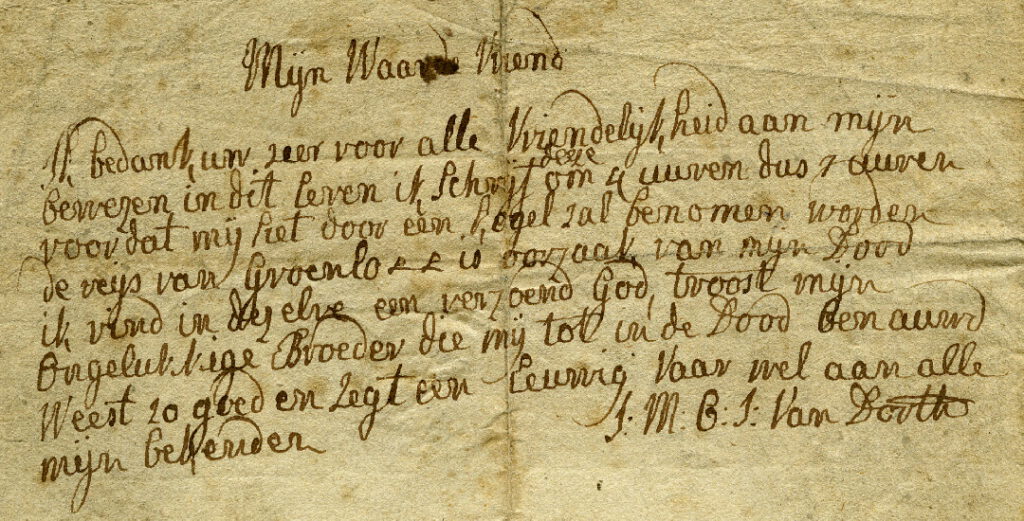
    Stumph was a close friend of the Freule van Dorth, who was executed in Winterswijk in 1799. Seven hours before her death, she wrote him a letter: “My Dear Friend, I thank you very much for all the kindness shown to me in this life. I write [this] at 4 o’clock, thus 7 hours before [life] shall be taken from me by a bullet. The journey from Groenlo etc. is the cause of my death. I find in the same a reconciled God; comfort my Unfortunate Brother who is distressed for me until Death. Be so kind as to say an Eternal Farewell to all my acquaintances. J.M.C.J. van Dorth.

    The first mayor of Aalten

    Following the annexation of our country by France on July 10, 1810, the entire administrative power was restructured and centralized according to the French model. A departmental organization was established, headed by a prefect for the departments, a sub-prefect for the districts, and a maire (mayor) for the municipalities.

    On March 12, 1811, Christiaan Caspar Stumph was appointed maire of the Canton of Aalten. He is therefore considered the first mayor of the municipality of Aalten. He held this position until January 1, 1818, when a new administrative regulation was established.

    Stumph lived at the Smees. He was a person of independent means and an organist in Aalten, a man of integrity with many noble objectives. On May 14, 1819, at the age of 74, he married 30-year-old Caatjen Weversborg in Aalten. As far as is known, their marriage remained childless.

    Christiaan Casper Stumph was a man who frequently endeavored to put an end to existing abuses. One of his greatest grievances was the practice of burial inside the church or in the churchyard within the village. Indeed, this often led to unimaginable situations. On several occasions, subsidences occurred in the church floor, and the owners of these graves failed to carry out the necessary repairs. For weeks, the pews near the hole in question would be uninhabitable. Consequently, a regulation was established stating that churchwardens, in cases of negligence, were permitted to contract out the necessary repairs, whereby the plot in question would revert to the church.

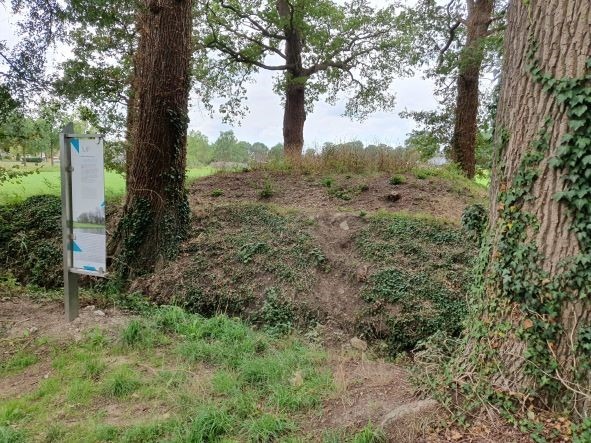
    Burial mound at ‘het Smees’

    The condition of the cemetery around the church was also frequently poor. Because burials had not been conducted at a “sufficient” depth for a long time, bones regularly came to the surface. A bone collector gathered these remains from time to time for two bushels of rye per year and threw them into the “Beenhalle,” a small building in the churchyard on the Market side. If the stock became too large, it was cleared out, and the walls were cleaned and repaired where necessary.

    With the improvement of social conditions and higher hygiene standards, changes slowly but surely occurred in this area, including the obligation to make graves sufficiently deep. A law to prohibit burial within towns and villages, following foreign examples, could not yet find favor in our country. People could not bring themselves to take the major step of breaking with all traditions and leaving the dead “just anywhere in the ground” far outside the village.

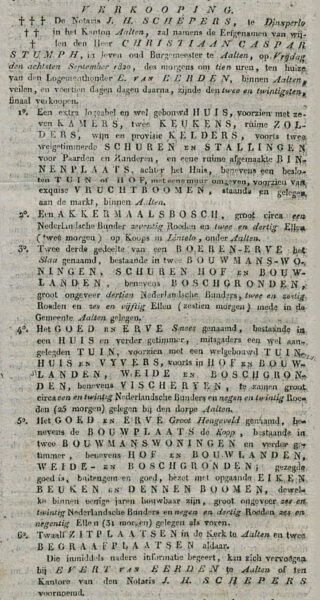
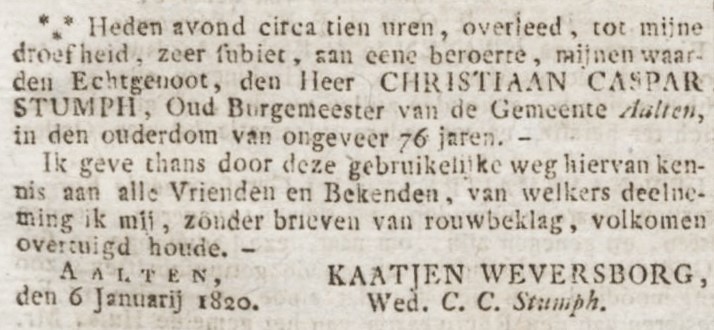
    Stumph was a proponent of burial outside the village; he decided to have an “Outer Cemetery” created in one of the Smees meadows. In 1818, the foundation deed and will were drawn up. Christiaan Casper Stumph passed away on January 6, 1820. According to his last wish, he was buried at the old Smees. This site is still recognizable today as a burial mound, located on Nannielaantje.

    Mayor Stumph was succeeded by Mr. Arnoldus Florentinus Roelvink.

    Leestip


    ‘Van Maire Stumph tot Burgemeester Stapelkamp’, door Leo van der Linde