


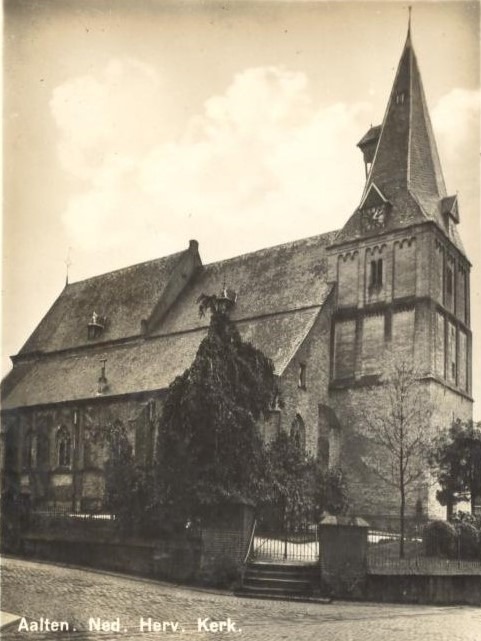
On 5 June 1861, lightning struck the tower of the Dutch Reformed Church in Aalten. The tower did not yet have a lightning conductor and the damage was extensive, estimated at 620 guilders — a considerable sum at the time. The tower was not the only thing damaged: the clock mechanism inside it also suffered badly. The minutes of the churchwardens and notables, from which this account is taken, do not reveal whether it was struck directly by lightning or damaged by falling masonry.
The clock had in any case long ceased to be fit for purpose and was badly outdated. The churchwardens felt they had little choice but to commission a new clock and to “meet part of the cost from voluntary contributions by the inhabitants”. Advertisements were to be placed in newspapers in Haarlem and Arnhem seeking a suitable clock for sale. A certain Grutterink of Varsseveld was also to inspect the existing mechanism and advise whether it could still be repaired or whether an entirely new one should be acquired.
Grutterink’s report was unfavourable: the clock was of such poor quality that it was no longer worth spending money on. The cheapest course would be to buy an entirely new mechanism. The cautious churchwardens and notables added: “provided, at least, that the voluntary contributions of the inhabitants make the purchase of such a clock possible”.
They set to work promptly: “Tomorrow a start will be made on going round the village of Aalten.” Seven years later, in 1868, the old clock was still in use. The organist was also serving as clock keeper, and the secretary of the churchwardens and notables was instructed to tell him by letter that the tower clock was “very often somewhat slow and runs and strikes very irregularly”. There was probably little the poor man could do about it.
A new clock
Winding and regulating the clock seems to have been a sought-after job. It paid twenty guilders a year. The clock keeper, as he was then called, had to go from time to time to the telegraph office to obtain the correct time and adjust the tower clock accordingly. New clock keepers occasionally offered themselves and were sometimes accepted. At times the appointment was made for only a year. The sexton then had to read the tower-clock regulations to the new clock keeper. It is therefore quite possible that the mechanism was not always handled as carefully as it should have been.
In September 1869, a special meeting was suddenly convened. Two matters were on the agenda; the second was “an offer by J.W. Heinen to make an entirely new clock for the tower”. Such clocks cost about 750 guilders and the church did not have that money readily available. The majority nevertheless felt that this was a matter of general public interest and that the municipal authorities should first be asked whether they would be willing to grant a subsidy.
Whether Heinen would receive the commission depended on that subsidy and on a public collection. Progress was slow, for half a year later, in May 1870, Heinen proposed going round the municipality himself with a subscription list “to see whether money can be raised”. A decision was not taken until the following month. Heinen was told to “go round with a list and see whether he can collect as much as is required for a new clock, in accordance with the existing specifications and plan”.
At about the same time, the churchwardens received a letter from a B.A. Nijenhuis of Winterswijk offering to supply a tower clock. The meeting nevertheless decided unanimously that the work should be entrusted to Heinen.
Heinen did indeed manufacture the tower clock. The commission itself is not recorded in the minutes, but on 23 November 1871 they state: “The chairman presents a request from clockmaker Heinen to the meeting. He asks to be allowed to have the old clock in compensation for his loss on the new one and other work carried out. It was unanimously decided to advertise it for sale in the Zutphensche Courant. Should there be any interest, the asking price is to be 200 guilders.” On 25 December the minutes continue: “It was jointly agreed to transfer the old clock to J.W. Heinen in settlement of the fifty guilders still owed to him for the shortfall on the new clock supplied and made by his own hand.”
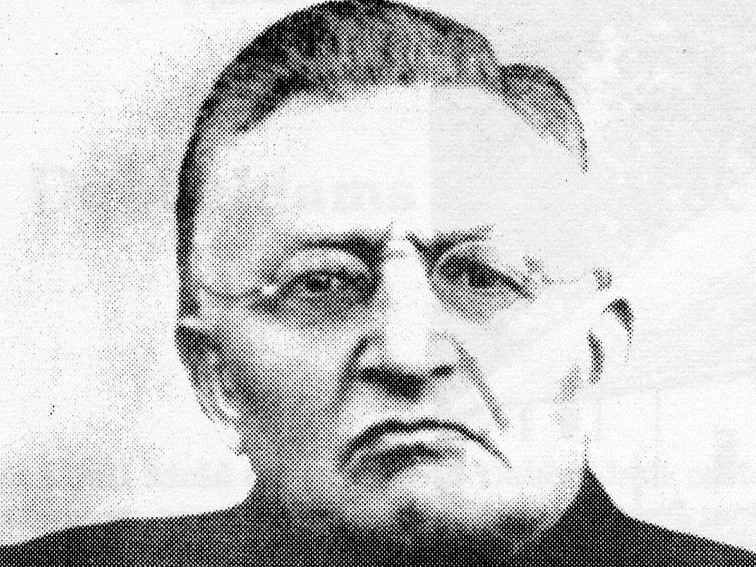
Jan Willem Heinen (1817–1882)
Who was this Heinen who dared to build a tower clock? By profession he was actually a farmer on the four-hectare smallholding ‘t Kampe in IJzerlo. In his spare time he cut turf. On the heathlands and in the marshes he cut heath and peat sods for local farmers. These were mixed with pig manure in the runs beside the pigsties and spread on the arable land in spring.
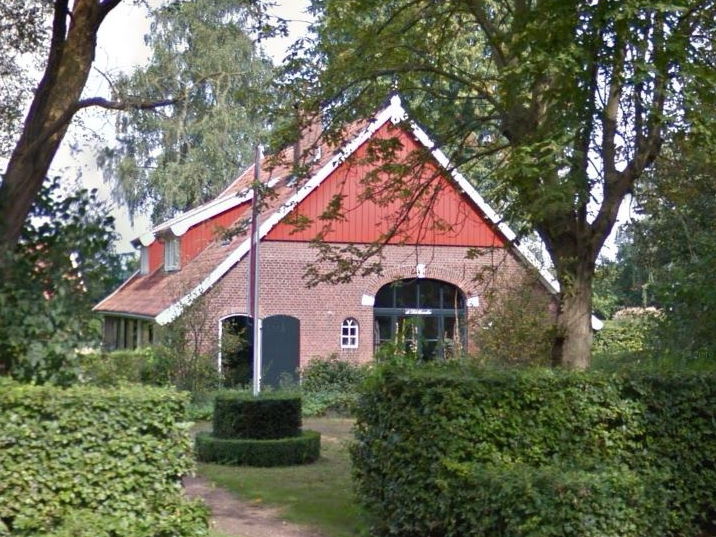
He repaired watches and alarm clocks and built tower clocks in the evenings, purely as a hobby. Jan Willem was born in 1817; his father was Gerrit Jan and his mother Aaltjen Westendorp. He married Elisabeth Winkelhorst of “Lievers”. The clock he made in 1871 displayed only the hours and had a single hand, so it was never possible to tell the exact time.
Building such a clock was a major undertaking. The gear wheels, in various sizes, were ordered from Asten in North Brabant, but arrived without teeth. Heinen had to cut the teeth himself, a very noisy process. Using a kind of milling cutter which he built from parts of a loom and operated by foot, he first cut the teeth roughly and then filed them precisely to size. It was lengthy and extremely accurate work.
Building a clock took about six months. Heinen cast the driving weights himself from lead, and one of the difficulties was determining exactly how heavy they needed to be.
The weights were extremely heavy and there was always a possibility that the cables supporting them might fail. A box filled with sawdust was therefore placed underneath to break their fall. Naturally, people from the surrounding area often stood admiring such a mysterious machine. The steady ticking of a clock like this must certainly have fired the imagination of visitors.
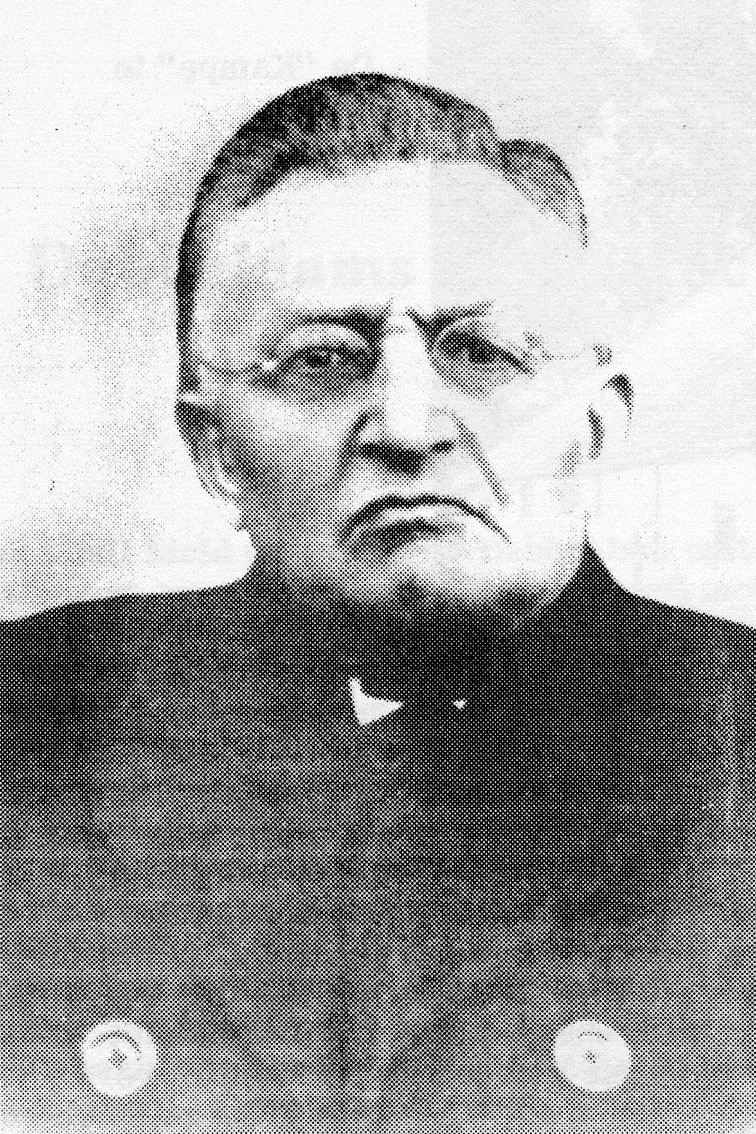
Gerrit Jan Heinen (1858–1929)
Jan Willem died in 1882. He was succeeded by his son Gerrit Jan, born in 1858. Gerrit Jan devoted his entire life to clockmaking and left the farm work to a hired labourer.
The right-hand half of the house was completely fitted out as a workshop. He made several tower clocks. He built a clock for the Roman Catholic church in Aalten which at that time stood in Dr De Bruijne’s garden, and later made a clock for the new Catholic church as well. His work evidently gave satisfaction, because orders came from places all around: Gendringen, Zelhem, Varsseveld, Bredevoort and even Werth in Germany.
The priest there was a cautious man. The money for the clock was deposited in a bank and was to be paid out in instalments after delivery, a trial period and approval. Heinen received the final payment shortly before the outbreak of the First World War. A sawdust box was of course placed beneath the weights there too, but the priest thought sand might be better and travelled from Werth to Aalten to ask Heinen about it.
Gerrit Jan’s clocks were minute clocks, meaning that the hand jumped forward a little at each minute. The dial and mechanism from the Roman Catholic church in Aalten that later burned down are still in the family’s possession. Gerrit Jan used them for the little clock he installed in the rear wall of his house. Above it he built a small turret containing three bells. These could be heard far across the surrounding countryside and farmers timed their work by them. Above the turret was a horizontal cross indicating the four points of the compass, bearing the letters N, O, Z and W. The weather vane and cockerel were covered in genuine gold leaf and shone brightly in the sun.
In 1889, difficulties arose with the sexton in Aalten, who was then responsible for the tower clock. He passed the work to Eppink, who was unable to set the clock forwards or backwards. A discussion with Heinen followed. Heinen offered to take responsibility for maintaining the clock for 19 guilders. Eppink could wind it daily, while Heinen would keep it to time and lubricate it. This arrangement was agreed, but at the next meeting of the churchwardens objections were raised to dismissing the sexton, and the dismissal appears to have been reversed. Heinen was repeatedly asked for advice or called in to remedy defects, for example in 1890 when the clock had shifted slightly so that the striking hammer no longer hit the bell.
By 1893 the clock was 22 years old and complaints were being made about its irregular running and striking. This presumably influenced the churchwardens’ decision to have Gerrit Jan rebuild the clock that year.
In the churchwardens’ minutes of 1892 we read: “Member Bulsink, like Freriks, would consider it desirable for minute hands to be fitted to the tower clock faces as well. In the opinion of both men this would remain a great convenience to the inhabitants. The matter will be discussed later.”
Once again, the minutes contain no formal commission to Heinen for the conversion. But a year later the secretary wrote: “Various invoices chargeable to the church are presented … G.J. Heinen, 98 guilders. Mr G.J. Heinen’s invoice will be paid as soon as the funds allow. This bill is for fitting minute hands. Some members considered this an expensive luxury, but others felt it appropriate for a tower clock.”
Customers from all around
Whenever Gerrit Jan had completed another clock, neighbour Korten of ‘t Lensink would polish his horse’s bridle until it shone and give the harness an extra clean. The clock, covered with a blanket against dust and rain, was loaded onto a wagon and driven almost festively to the tower for which it was intended. Gerrit Jan did not only make tower clocks; he also dealt in large Amsterdam longcase clocks, watches — then costing six guilders — and alarm clocks.
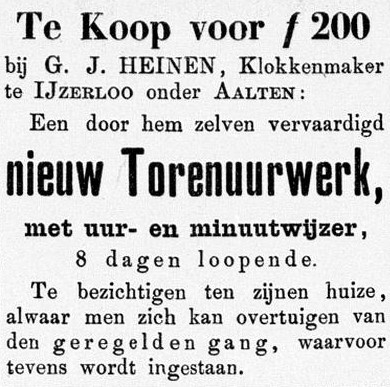
Customers came from throughout the surrounding area, especially from Dinxperlo, where there was no watchmaker. He had a busy business. Old alarm clocks could be traded in for thirty cents, the value of the glass. One of those Amsterdam longcase clocks still stands at ‘t Kampe, the smallholding whose front elevation has not changed since Jan Willem’s time. The clock bears the date 1916, but that is the year in which it was repaired. It entered the family then but was already second-hand. It is wound with a proper crank. Two little angels with outspread wings and a figure of Atlas stand on top, decorated by Gerrit Jan with gold leaf. The gold leaf came from Amsterdam and was supplied on sheets of paper.
On Saturdays, Heinen cycled from house to house in Aalten and Dinxperlo to wind clocks and set them to the correct time. If someone asked him to convert a gun from a muzzle-loader to a breech-loader, he was certainly not unwilling to do that either.
He married Aleida Johanna Lohuis of “Het Lohuis”. He died in 1929, but the remarkable craft did not end with him: several members of the family worked in the same trade. There is no longer a clockmaker living at ‘t Kampe, but the memory of Jan Willem and Gerrit Jan has been preserved for the future in the name given by the municipal council to the road on which ‘t Kampe stands: Klokkenmakersweg, or Clockmakers’ Road.