
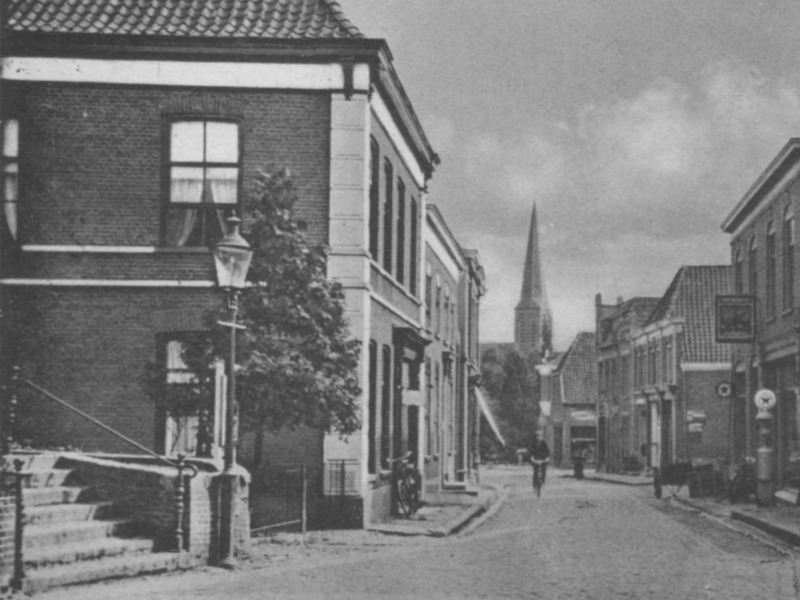
Aaltensche Courant, 12 July 1921
Now that the summer holidays have already begun for some and the first summer visitors have arrived in Aalten, with many more sure to follow once the holiday season is in full swing, those visitors will no doubt be surprised by the changes our village has undergone — changes that can rightly be called improvements.
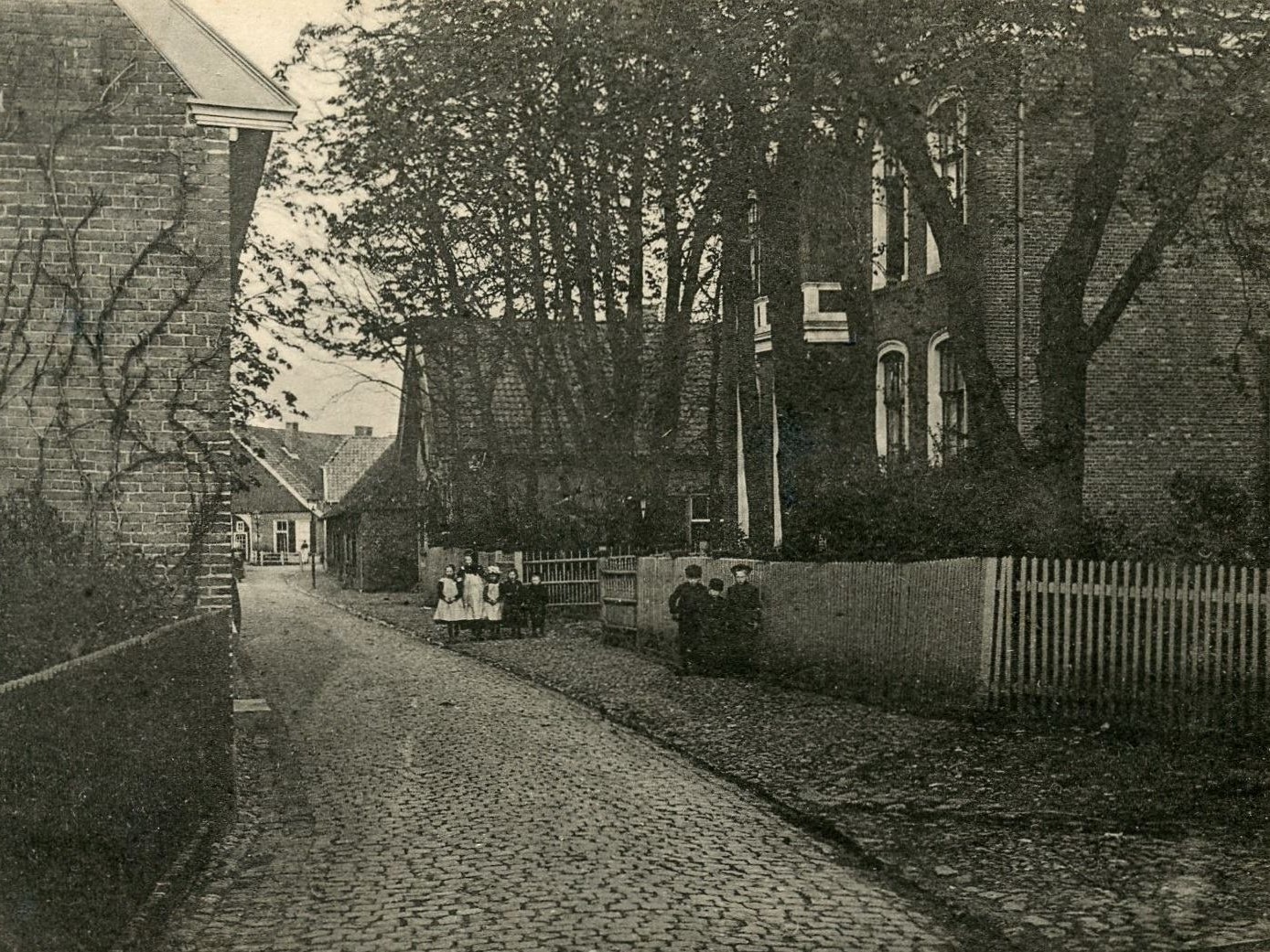
The most striking improvement has probably been made in the Gasthuisstraat, where a fine pavement has been laid from blacksmith Buesink’s premises to the Ormelstraat. An exchange of land with Mr Buesink made this attractive result possible. The narrow passage from the Gasthuisstraat to the Sociëteit has disappeared and re-emerged considerably wider, although it has not yet been brought to the full width it is intended to have in the not-too-distant future. A foretaste of that future width can already be seen from Mr Jos. Driessen’s villa to the school playground. At first it proved difficult to obtain the necessary land from the gardens of Messrs Manschot and Kalf for the wider road, but agreement was eventually reached with the owners. The required strip from Mrs Ed. Driessen’s large garden had already been donated free of charge much earlier.
A strip running diagonally towards the Gasthuisstraat was also obtained from the garden of ‘messenger Driessen’, improving the connection with the Kruisstraat, although not quite as much as had been hoped. Blacksmith Hoopman also proved willing to help improve matters there, and by giving up a strip along the Kruisstraat, with rounded corners at the Gasthuisstraat and Bredevoortsestraat, a much more attractive situation has been created — especially now that the old fieldstones have made way for small square paving stones. It is hardly surprising that people who do not often come this way now stop in amazement and say, ‘How smart it has become here.’
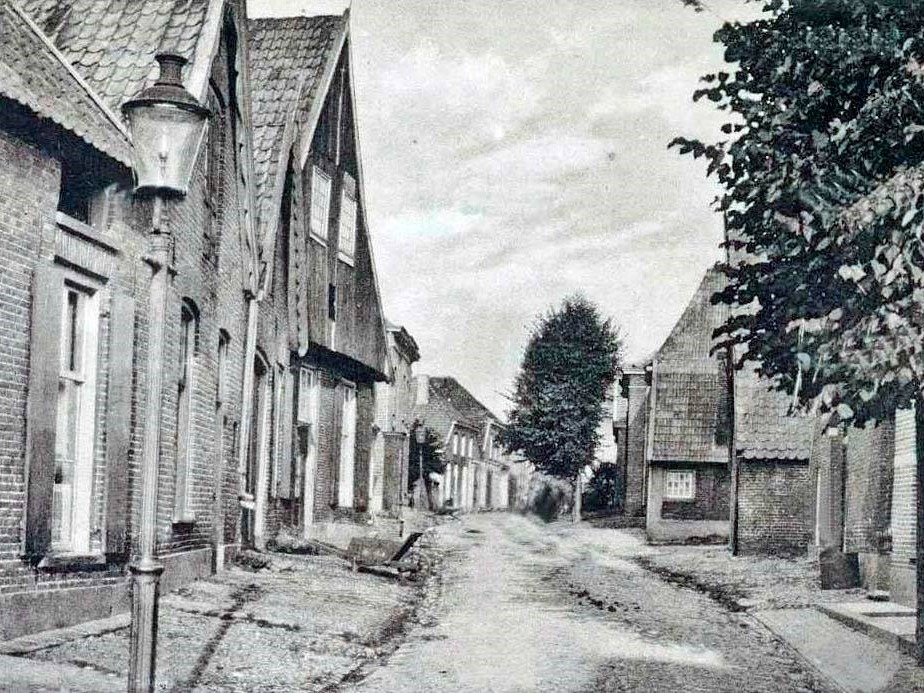
The summer visitors will probably make the same or a similar remark when they look around. We have just mentioned the disappearance of the fieldstones. Fortunately, that old-fashioned paving has also vanished from the road across the Blik from the Kerkstraat towards De Pol. Its first section was said to be paved, while the rest was a gravel road. The entire road is now in good condition. The same may be said of the Damstraat, where workers from the comb factory and the many Sunday churchgoers no longer need fear twisting an ankle on the uneven stones. That street was one of the worst, just like the Achterstraat, which has also been transformed into an excellent road for pedestrians, cyclists, motorcyclists and cars alike. As a result, considerably more traffic now passes along it than before.
The Veemarkt, which joins the Achterstraat, has likewise been greatly improved and widened thanks to the cooperation of neighbouring residents, who gave up ‘their land’ — land which was of little use to them anyway. Here too all the fieldstones have been replaced by small flat paving stones. This replacement of paving has been continued from the Veemarkt as far as the firm of Widow D.G.J. Lammers, making the road to the ‘burial ground’ considerably smoother as well.
Some of the removed fieldstones are lying along the road from the cemetery to the ‘Tol’ and on the Meiberg, awaiting a new use wherever or however they may still prove useful. The downhill road from the Westerkerk also used to be paved with fieldstones, but these too have been replaced by a better type of stone. The approach to our village from the Varsseveld side therefore makes a much better impression than it once did.
The approach from Winterswijk makes an equally favourable impression. The Bredevoort road now looks immaculate, and tourists are unlikely to have anything to complain about there, nor on the roads towards Lichtenvoorde, Dinxperlo and Bocholt.
Those who have not visited Aalten for a few years will also notice changes in the centre. The well-known hotel De Roskam, formerly run by the widow Voorderman, has changed hands and been converted into two smart shops belonging to Messrs Degenaar and Flint, a chemist’s and a drapery respectively. Meanwhile, on the corner of the Markt, beside the Dutch Reformed Church, the Gelderland–Overijssel Bank Association has erected a fine bank building.
One might suppose that the Markt itself would not have been left behind amid all these improvements, but that is indeed the case, for the paving there is still what one might call ‘medieval’. We do not doubt that this too will eventually be put right, but our municipal council will naturally have to take the costs into account and cannot tackle everything at once.
The Peperstraatje, immediately beside the Markt, has at least been improved — and not before time, for this very busy little street was generally in a miserable condition. When new stones were laid there, the residents quickly agreed among themselves to remove the stones along their houses as well and replace them with a pavement of attractive square grey slabs, extending as far as the house of blacksmith Buesink, which remains, as ever, the obstacle in the way.
It is also clear in many places that a great deal has been done to the roads outside the village. This is particularly true of the Bredevoort station road, which now looks excellent and, with its double row of tall trees, must surely rank among the most beautiful roads in the area. We hope our active municipal council will be given the means to continue these improvements, for much still remains to be done before our home can be brought somewhat into keeping with the beautiful countryside surrounding us.