John Bernard William Maitland was born on 7 May 1826 in Vorden, the son of retired captain John Maitland and Catharina Willemina Mellink. On 28 October 1862, he married Bernarda Aleida Schepers in Dinxperlo. This marriage produced three sons and a daughter, all born in Dinxperlo.
All three sons passed away at a young age, also in Dinxperlo; one died after just 15 days (Bernard), while the other two reached the ages of only 8 (John) and 17 (Dirk). Only their daughter, Catharina Antoinette Bernarda, reached adulthood, married and had children of her own.
Profession and residence
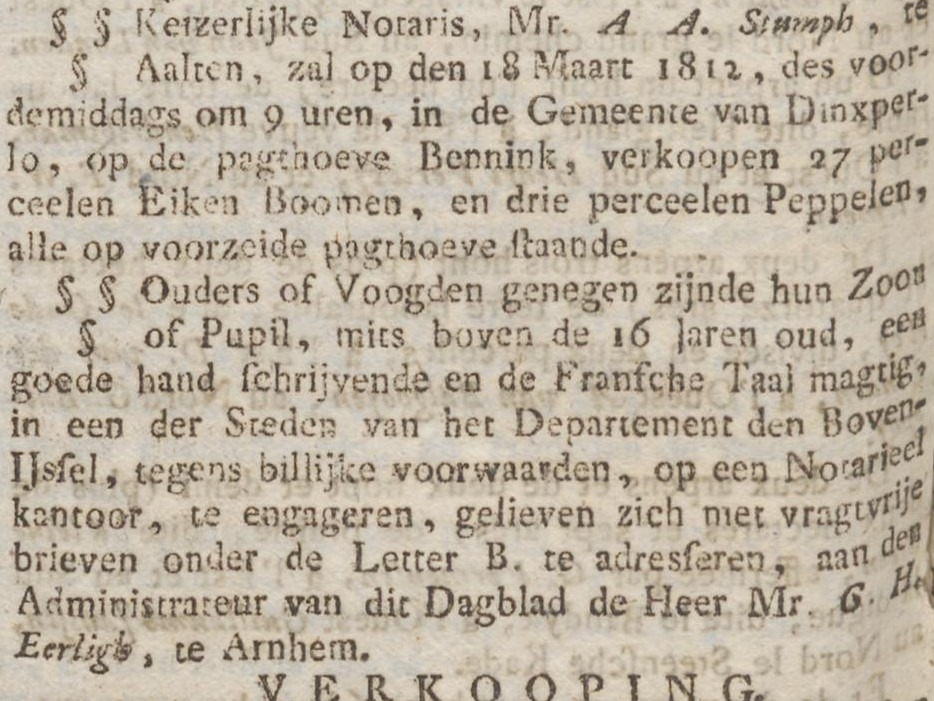
On 16 December 1859, Maitland was appointed notary in Dinxperlo by Royal Decree. Up to that point, he had been working as a candidate notary (kandidaat-notaris) in Vorden. Two months later, on 16 February 1860, he was additionally appointed deputy cantonal court judge in Aalten. He held this position until the Aalten cantonal court was abolished in 1877.
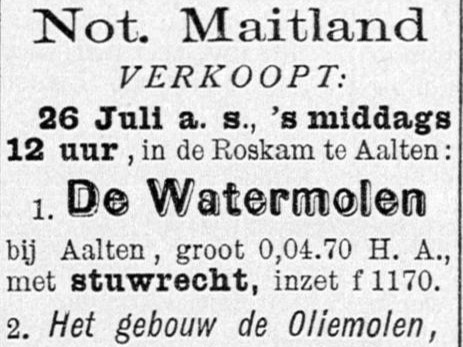
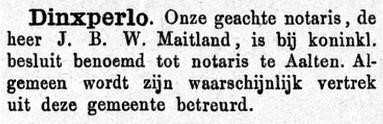
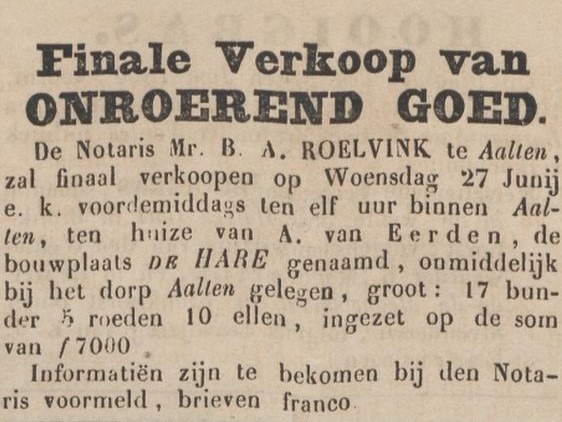
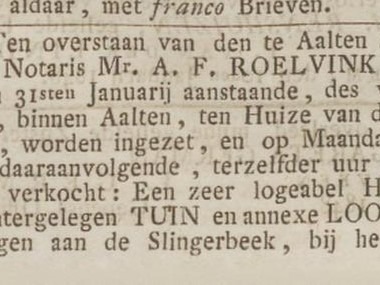
On 18 July 1882, Maitland was appointed notary in Aalten, succeeding notary B.A. Roelvink, who had passed away earlier that year. Together with his wife and daughter, he moved into the house of the late notary Roelvink on Gasthuisstraat (now Haartsestraat). Around 1886, they relocated to a stately house on Landstraat, which is today number 41.
Public and civic roles
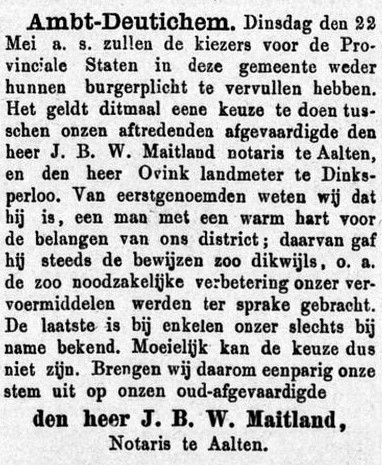
Alongside his profession, Maitland was also active in civic life. In Dinxperlo, for instance, he served as the director of the ‘Aurora’ choral society. From 1877 to 1885, Maitland was a member of the Provincial States of Gelderland, representing the electoral district of Aalten.
Furthermore, in 1892, Maitland invited ‘a number of residents’ of Aalten to the sociëteit club to exchange ideas about establishing a local tourist board (VVV). To achieve this goal, it was proposed that “photographs would be taken of the most beautiful spots and walking maps would be created”. However, we have been unable to find any evidence that this actually took place.
Passing
John Bernard William Maitland passed away on 11 October 1894 in Aalten. He was buried at the Old Cemetery on Varsseveldsestraatweg.
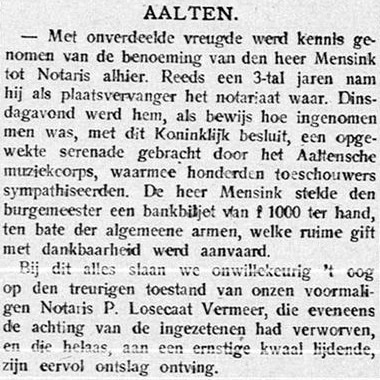
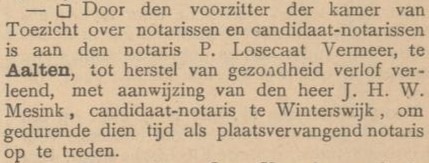
He was succeeded by P. Losecaat Vermeer, who until then had been a candidate notary in Nijmegen.