Nieuw Israëlitisch Weekblad, 26 March 1993
by Loeki Abram
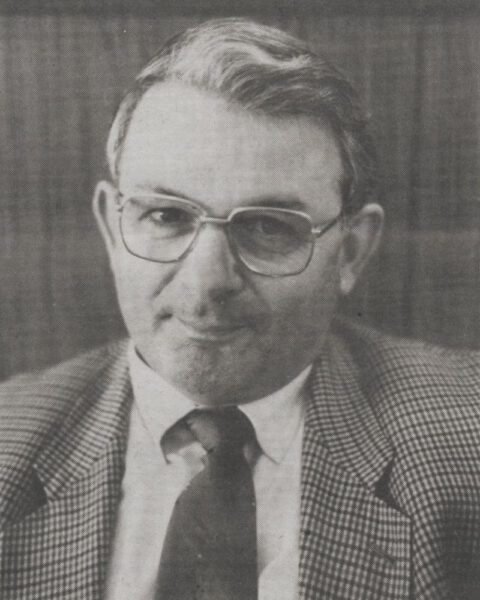
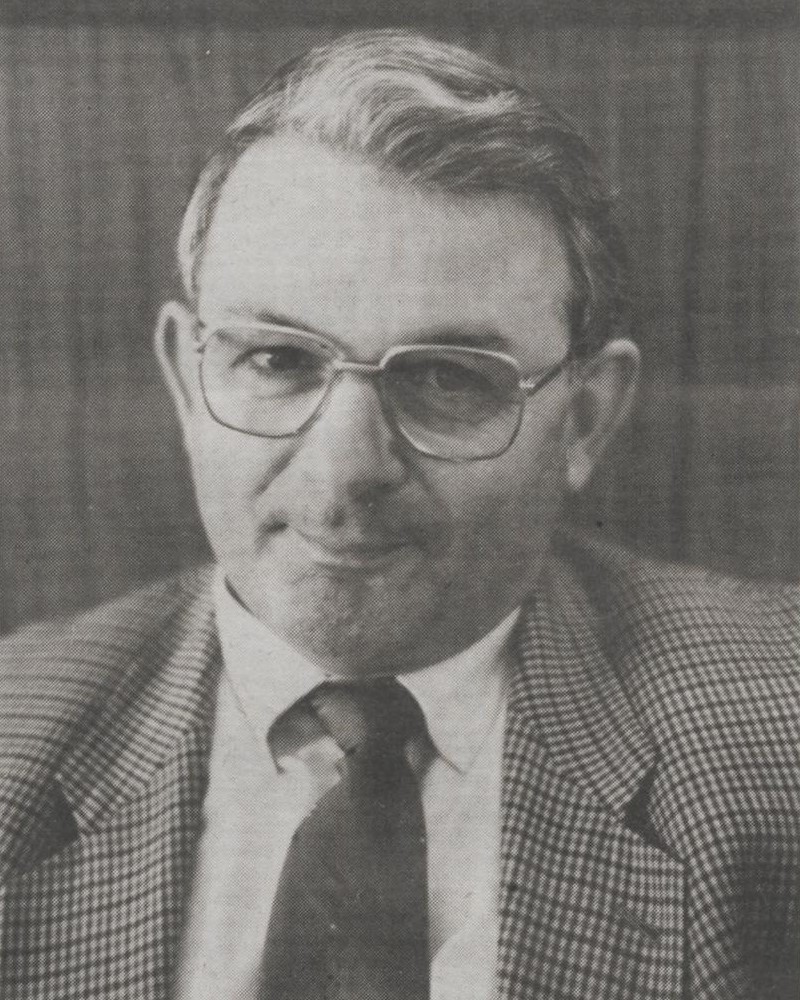
Bernard Leezer (57) lives in Aalten in the Achterhoek. Although he ran a butcher’s shop for twenty-six years, he does not really consider himself a butcher. He is a father of three sons and a daughter, and a grandfather of two. A conversation about meat, hiding from the Nazis, and football
“Both my parents have passed away. My father was a cattle dealer and my mother came from a well-to-do family in Wilhelmshaven in Northern Germany. She didn’t really suit my father at all. He was a stubborn man from Groningen who didn’t care much for etiquette. It caused friction. If my father came home and forgot to wash his hands before dinner, all hell would break loose. Of course, he wasn’t the type to just let himself be pushed around, so he’d fight back. And then my mother would say: ‘Na und wie bist du denn, wie bist du denn überhaupt?’ Mother spoke German at home. She spoke fluent Dutch too, but she hardly ever used it. I was raised bilingual.”
“My mother’s father was a horse dealer. She always used to go to the tennis court in a pony and trap. Anyone who did that back then belonged to the upper class. That’s why I always say my parents only met out of necessity. She fled to the Netherlands in 1932 with her two children—both my father and mother had been married before. My father had six children from his first marriage. Two of his children, one with a husband and child, were gassed. I am the only child from the second marriage.”
“My mother was a dominant woman. She always protected her own children, while my father’s children had to take a back seat. They had to fend for themselves from an early age. Of course, it wasn’t easy for them to accept a woman who wasn’t their mother either. Father was the kind of man who, for the sake of peace, would just think: Never mind. Let it be.”
“I was heavily influenced by my mother. If I wanted to go on holiday, she would say: ‘Du brauchst nicht so weit weg, wenn etwas passiert. When you are old enough, you will look for a wife and go to work.’ I became a butcher against my will. I actually wanted to be a pilot. Mother wouldn’t hear of it. So a butcher it was, but I’m not really a butcher at heart. I’m too emotional. I am against ritual slaughter because I believe an animal has the right to be stunned. God gave us the animals. Fair enough, but does a beast have to suffer that much pain before we scoff it down?”
“The first Jews to be rounded up were the Fuldauers. They lived right near us. They were taken away by PC Dijke from Aalten. He was a small, fanatical bloke. The Fuldauer family walked along packed to the rafters, and he walked in front, loosely wheeling his bicycle by his side, leading those people to the community hall. That’s where the Jews were gathered before being transported to Westerbork. People were standing outside the slaughterhouse, and they said: ‘Alright Dijke, you can keep that up all day, can’t you?’ Then my mother said: ‘It’s time. We have to leave.’ After the war, that Dijke fellow came into our shop once. I walked around the counter and said: ‘Get out, Dijke, and never come back, or we’ll cleave you in two.’ He was the man who took away the first Jidden from Aalten, and he just strolled in as if nothing had happened.”
“Kees Ruizendaal, nicknamed Zwarte Kees (Black) Kees)—also a policeman, but a good one—helped us find a hiding place. He was later executed by firing squad in Doesburg. First, I stayed with my half-sister Helga at the Klein-Entink farm, and later with my parents at Hendrik Groot-Nibbelink’s place on the Stroete in Lintelo. We were hidden with three orphans. They were practically children themselves. Drika, the oldest, was 26; Hendrik and Bernard were in their early twenties. To me, they are heroes. You know what would have happened to them if we’d been caught. They were Christian people. They did what they did out of love, not for the money. I think about that often. I find what they did incredible. Hendrik passed away last year. The vicar gave a beautiful sermon. I went and sat in the refreshment room. I felt that if I looked at the vicar, I’d get such a massive lump in my throat. I couldn’t well let myself go like that as a grown man, could I?”
“While we were in hiding, I used to go outside with Hendrik at night once it was dark. Next to the farmhouse stood an old apple tree. It leaned terribly and had to be propped up. Between the props was a tiny patch of land. If Hendrik had sown rye that day, for instance, I would go and sow rye on that little patch of land at night. He was my great role model; that’s why I was so heartbroken when the man died. He was like a father to me.”
“I spent a lot of time with the cows or with the horse. The Germans requisitioned Lies—that was her name—at one point. She was a right handful. She bit and kicked everyone except me. I could practically sleep right next to her. Hendrik managed to fetch Lies back because the Germans couldn’t control her. I was so happy she was back. At least I could cuddle her again. Drika used to play games with me. My father was too old to play with me. He was terrified that something would happen to me. I don’t know if he would have survived it. He was completely barmy about me. Later on, when I started going out and came home late, he could never go to sleep. He always stayed awake and would say: ‘Where on earth is that boy?’ My mother was more down-to-earth.”
“For a while—when it became too dangerous at Groot-Nibbelink’s—we also stayed with the Pennings family in Varsseveld. They were a very devout Christian family. During the war, he would go to Delft with a horse and cart to fetch glass. He sat on the box with the reins in one hand and a Bible in the other. Pennings had nine children. I often sit by the brook now, thinking: what must have gone through that man’s mind. He had to keep the peace in his family, keep us calm, and keep a cool head himself. The house was searched once at Pennings’ place. We were hidden under the straw along with sixteen other Jews and people from the underground resistance. One of those ‘blacks’ [NSB/collaborators] stood with his great boots right on my mother’s hand. He crushed her whole hand. Pennings was downstairs playing the organ: Abide with Me. Every time I hear that hymn, it takes me right back.”
“We hid with true Christians, and later I went to a Christian school. But I never felt the urge to become a Christian. My half-sister Helga joined the Reformed Church. Well, that took a few drops of water, but that was about the extent of it. Truly, you can have a stable full of Trakehner and Hanoverian horses, but if you put an Arabian among them, it stands out. You cannot deny who you are. The first thing people say is: ‘That’s a real Jewish trick.’ At home, my father and mother kept Jewish life alive for me. My mother wasn’t particularly pious. My father was orthodox. His whole life, even during the war, he never ate gasser (non-kosher meat). You are a Jid, and there’s no escaping it. I’ve always said: ‘I was born a Jid, and I’ll die a Jid.’”
“I couldn’t live in Israel because of the heat, but when I’m in Eretz, I love it. We go there regularly because our daughter lives there. When I go to shul here, I think pff, but there I think it’s wonderful. Afterwards, you stand around having a nice little schmooze with a group. You can’t do that here anymore. You could before the war. Before the war, about a hundred Jews lived in Aalten. After the war, we struggled to form a minyan. It’s just a completely different atmosphere. You can’t imagine walking down the street in Aalten wearing a kippah nowadays.”
“I can’t say I was frightened at the time. I can only remember that after the war, when I was at school, I was scared to death of the postman. I went to the Groen van Prinsterer school. It was an old-fashioned school with a very long corridor, with the toilets at the far end. If I came out of the toilet and Mr Terbrake was standing at the other end of the corridor in his postman’s uniform, I’d be rooted to the spot because I thought I’d seen a ‘black’. That’s what happens when you’ve spent years being told: ‘They’ll kill you.’ Terbrake would quickly go to Miss Jonker and say: ‘Bennie’s frozen at the end of the corridor.’ She would come and get me. She’d put an arm around me and take me back to class.”
“The Groen van Prinsterer was a fantastic school. It was a Christian school. I never once heard the word ‘Jew’ used as an insult there. It was quite a different story at the public school. I had to have remedial lessons because at eleven years old, I couldn’t even read or write. While in hiding, we did read little booklets, and when the war ended, my father said: ‘He reads like there’s no tomorrow.’ But you mustn’t forget that if you read me a booklet like that a thousand times, I’ll eventually know it by heart. At first, they fell for it, but the moment a different book was put in front of me, I couldn’t make head or tail of it.”
“During the war, I wasn’t aware that it was a matter of life or death. No one can tell me that an eight-year-old boy understands that. We were told: ‘You mustn’t go outside because people are walking around out there who will kill you.’ That doesn’t really sink in for a child. You can tell a dog a thousand times: ‘Leave that alone.’ And eventually, it won’t touch it anymore. But as for why it’s forbidden—it doesn’t understand that.”
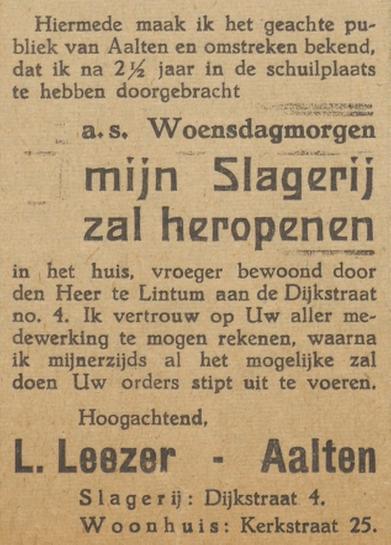
“During the final period of the war, we stayed with Hendrik on the Stroete again. We lived there for the first few months after the liberation too, because we no longer had a house. My mother went looking for her furniture. She managed to get a lot of it back. My father took out a loan from a Christian church. He was a bit casual about paying it back; years later, we still received a final notice. Right after the war, he put an advert in the newspaper: ‘After two and a half years in hiding, I am reopening my butcher’s shop’. My father wasn’t a good butcher. He was a cattle dealer. A proper trader. Very much a case of: one, two, up you get, just sign for that beast.”
“After primary school, I went to the technical secondary school. I didn’t want to go at all, but my mother said: ‘Du sollst ein Handwerk lernen.’ I ended up getting a whole load of diplomas. Alongside that, I always did a lot of sport: tennis, hockey, and football. My father wouldn’t give me money for football boots. ‘You’ll just have to earn it,’ he said. I always had to help my father, but I never got paid for it. My brother-in-law ran an emergency slaughterhouse. If there was an emergency slaughter in the middle of the night, he’d ring and wake me up, and I’d go and help him. I didn’t get any money for that either, but I did get the head, the tongue, the udder, and the liver, and I sold those. That’s how I bought my football boots.”
“I played as a semi-professional for De Graafschap. I moved from Aalten Football Club to Winterswijk Football Club. WVC was an elitist club. Because I went to school in Winterswijk and was in the school team, I caught people’s eyes. When I moved from Aalten to Winterswijk, I was called a ‘rotten Jew’. Why? I was turning my back on Aalten. WVC was an elite club, and they hated them. I was a really fast right winger. But I was very slightly built. They only had to tap my ankle and I’d go rolling over thirty-four times. Later on, I played centre-forward too. I was actually too small for it, but I’d always go tumbling to the ground, and that would get the referee on our side. I played two seasons for De Graafschap, until one day I was kicked out of the match by Dick Tol, nicknamed ‘the gnarled’.”
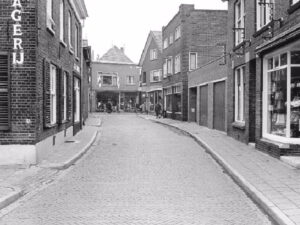
“In the end, I ran a butcher’s shop for 26 years. Looking back now, I say: ‘I’d never want to do it again.’ A hundred grams of this, a hundred grams of that. Never again, though I did have some fun. Especially in the early sixties, we got a lot of German customers. Meat was cheaper in the Netherlands than in Germany. You had to be careful not to give the Germans preferential treatment, otherwise you’d get earfuls from the Dutch. Dutch customers were always served immediately by my assistant or my wife. Even if there were three Germans ahead of them, a Dutch person was served first. I’d make a joke of it and say: ‘Kurt, ich hilf dir’.”
“In the evenings, the restaurant owners from Bocholt would come in and order ten or fifteen racks of pork chops. There were a few customs officers who always came to get meat. They never had to pay. When they came by, they’d say: ‘Blimey, I’m on duty again tonight.’ And then in the evening, I’d get in my little Opel, take out the spare wheel, put the racks of chops in, and pop right over the border. I could always drive straight through. My wife knew nothing about it, and I thought: what she doesn’t know won’t hurt her. It was a time of adventure and wheeling and dealing.”

Leave a Reply