A 19-kilometre journey past eleven historical locations
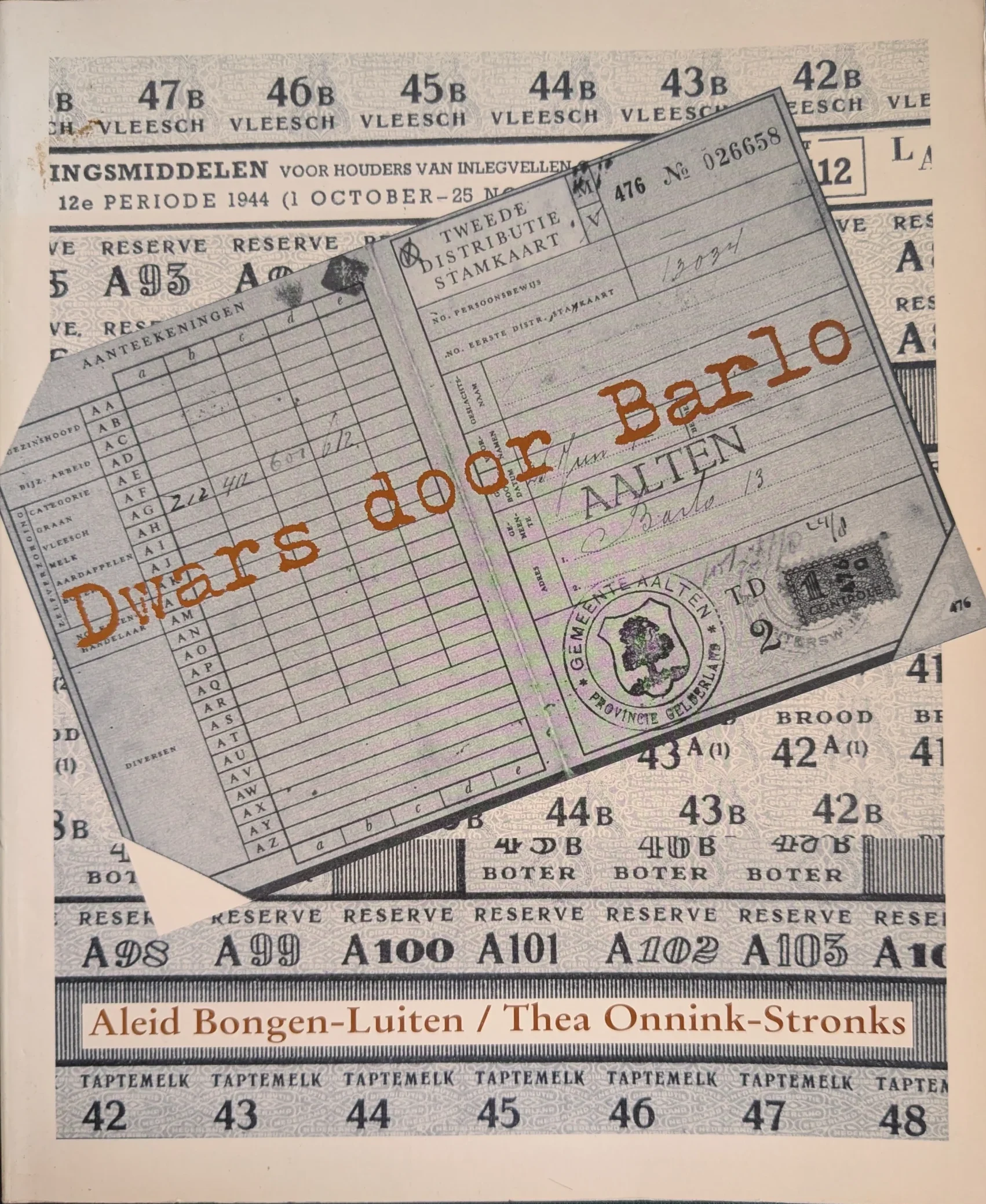
Book cover ‘Dwars door Barlo’, 1995
What was daily life like in Barlo during the war years? To keep the memories of this poignant time alive, the ‘Dwars door Barlo’ (National Museum of Hiding and Resistance) committee has launched a special interactive route. Using QR codes, walkers, cyclists, and motorists can listen to and watch stories from World War II at various locations via their smartphones.
The foundations of this project were laid back in 1994. To safeguard the memories of the war years in Barlo for the future, the former ‘Dwars Door Barlo’ (National Museum of Hiding and Resistance) foundation interviewed numerous local residents. These conversations, recorded on over seventy cassette tapes, provided the source material for the book ‘Dwars door Barlo’ (1995) at the time.
More than thirty years later, these stories have been brought to life once again. Not just on paper, but in the heart of the landscape where these events actually took place.
The route
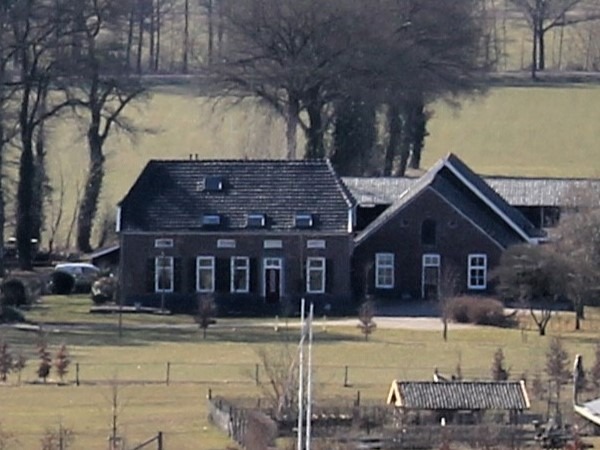
The foundation has compiled a unique route that leads past the locations described so extensively in the book. The route is 19 kilometres long in total and passes eleven historical sites in Barlo. The journey can be completed on foot, by bicycle, or by car. The start and end points are located at pancake restaurant De Neeth (Neethweg 6).
How does it work?
Green posts with a number and a name are situated along the route. Each post features a QR code. By scanning this code with a smartphone, the story of that specific location appears instantly on the screen. There is also an audio button to have the story read aloud, allowing everyone to listen to the events of the past on-site.
Navigation is straightforward: a link to Google Maps is provided below each story to guide the visitor to the next point.
View from home
Those who prefer to view the route at home first or wish to listen to the stories beforehand can visit the website:
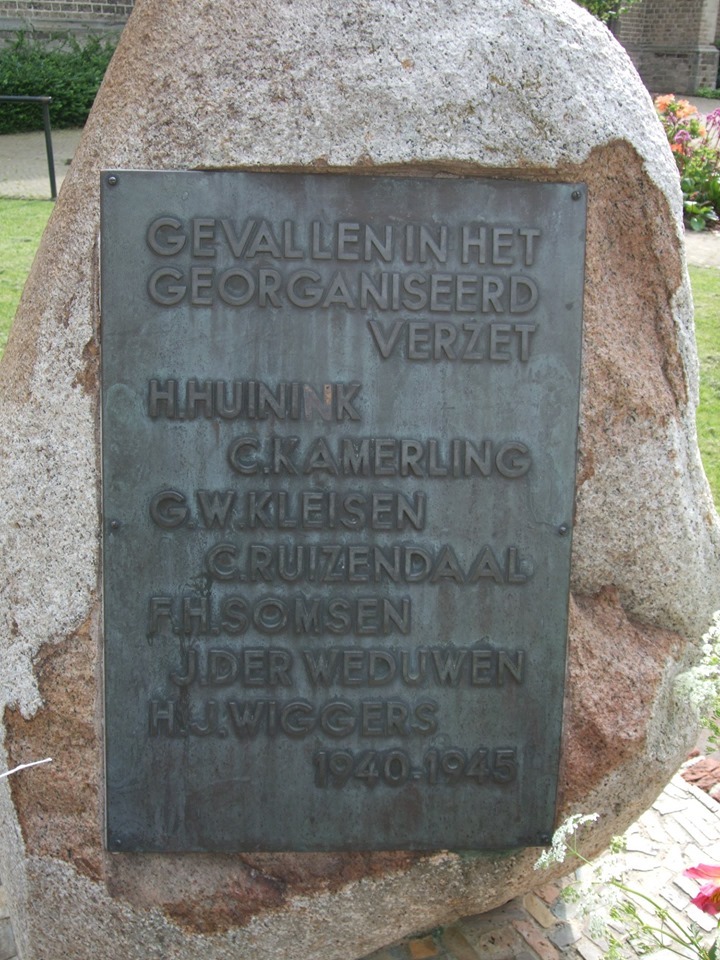
On the lawn of the Old St Helen’s Church on the Markt in Aalten stands a special memorial stone. The bronze plaque on the stone lists the names of seven resistance fighters within the organized resistance in Aalten.
Resistance during World War II (1940-1945) only developed over the course of the war. As the German occupiers’ measures became stricter, small groups emerged that resisted the occupation, initially with limited means. As the war progressed, more and more people faced difficulties. These small resistance groups grew in strength due to increasing membership and the networks that formed between various resistance cells.
Within the resistance, two main currents could be distinguished. The first group was the National Organization for Help to People in Hiding (LO). This group organized hiding places for Jews, for men who refused to work for the enemy in Germany, and for resistance fighters who had to go into hiding. The LO was dependent on sufficient ration coupons for the food supply to the people in hiding . The second group, the Knokploegen (KP), took care of that. This armed group carried out raids on distribution offices, tried to sabotage the enemy at vital points and in the last phase of the war prepared to assist the Allied troops in the liberation of the Netherlands.
In the Achterhoek, especially in the region of Aalten, Lichtenvoorde and Winterswijk, the resistance was particularly active. Some of the resistance fighters lost their lives during the war. Those who survived the harsh time did not feel like heroes. Many testified to the fear they would carry with them for the rest of their lives. The courageous acts of the resistance are recorded in several books.
The names of the fallen (click on the links for more information):
‘Hide the outcasts; Do not betray him who escapes’. This text (Isaiah 16:3) was used by several pastors at the beginning of World War II. With this, the congregation members were called upon to contribute to helping people fleeing the Nazi regime. And with success: at one point, one in five residents of Aalten was in hiding, relatively more than anywhere else in the Netherlands.
The inhabitants of Aalten played an important role in protecting people in hiding during the war. Their courage and determination have saved the lives of many. The church’s involvement, close family ties and rural location are seen as reasons for the great willingness to offer help. It is relatively easier to hide people in a remote farmyard than in a city. But despite that, helping people in hiding and other refugees took a lot of courage and sometimes cost lives.
Hiding and resistance
During the war years, there were several reasons why people chose to go into hiding. For example, Jews tried to escape deportation to concentration camps. In addition, there were people who wanted to avoid the Arbeitseinsatz or who wanted to resist the German occupier.
Heleen Kuipers-Rietberg uit Winterswijk, beter bekend als tante Riek, zorgde voor schuilplaatsen voor veel werkweigeraars en Joden. Samen met Ome Jan Wikkerink, een aannemer uit Aalten en leider van de plaatselijke verzetsorganisatie, en met dominee Slomp stond zij aan de wieg van de Landelijke Onderduikorganisatie (LO).
People in hiding were often hidden in attics, in barns, in secret rooms or in remote places in the landscape. Although there was always a risk of betrayal and arrest, relatively few people in hiding in Aalten were discovered by the German occupiers. The local population had a strong mutual solidarity and the resistance was well organized. Moreover, there was an active network that helped people in hiding to cross the border to safer areas abroad.
In 1947 schonken oud-onderduikers de Aaltense bevolking een monument als dankbetuiging voor hun gastvrijheid en aan de verzetsmensen die de stuwende kracht waren bij het onderbrengen van de onderduikers. Het monument bevindt zich in de Stationsstraat, tegenover het treinstation.
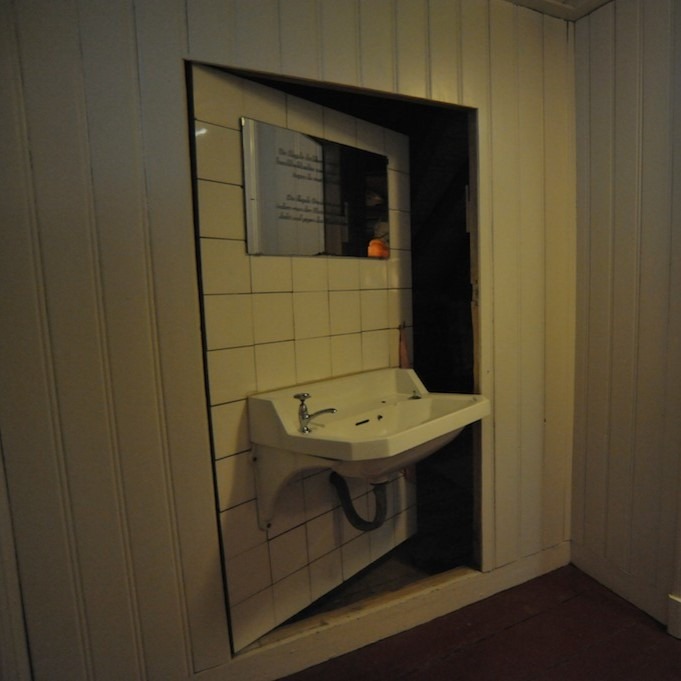
Secret door, Markt 12 in Aalten (Nationaal Onderduikmuseum)
Most probably the beautiful village in the Gelderschen Achterhoek Aalten was the place that housed proportionally the most people in hiding during the war. The village has only 11,000 inhabitants and no less than 2500 people were placed in hiding. For the time being, we will be able to assume that this is a record in the Netherlands.
Aalten’s taak is hiermede niet af geweest. Boven dit getal zijn er nog honderden kinderen, vooral uit Rotterdam en omgeving, geweest die daar hun zomervacantie hebben doorgebracht. We overdrijven verder niet dat duizenden in den lande in den voedselnood geprofiteerd hebben van de honderdduizenden roggebrooden, zakjes meel en havermout, spek en eieren, die vanuit dit dorp het land zijn ingezonden. De directeur van het Aaltensche postkantoor droeg den naam onder zijn collega’s van roggebrood-directeur.
We will remain grateful to Aalten for this war activity. The 2500 people in hiding are too. They sent a request to H.M. the Queen and asked her to visit Aalten during a trip through the liberated Netherlands. We sincerely hope that it will happen. Aalten deserves it.
Almost a quarter of a century after the liberation, on March 14, 1970, the newspaper Trouw wrote in an article about a planned reunion of former people in hiding and former combatants:
In the years that the Germans occupied the Netherlands, in the small, agricultural town of Aalten, there was hardly a house in which there were no people in hiding. The people who live there are closed by nature. The Hague resident and the Amsterdammer, who went under water, had to get used to it. The Germans too, by the way, and once an SD officer spoke in anger of ‘abscheuliche Leute’ and he added: ‘Wir sind Luft, Luft!’ However, the silence of the Aaltenaar has benefited many people in hiding.
During the war years, Rev. J. Klijn (of De Open Deur), Rev. P. Kuyper and Rev. J. van Dijken respectively as a reformed, reformed and christian-reformed minister. One evening, two farmers, who had made a long bike ride for it, arrived at one of the three rectories. It matters little which one. They told the preacher about a naober, who was unwilling to take in people in hiding. In some houses there are eight, why doesn’t he want to accommodate one? Can’t the pastor go and talk to that man and point out his responsibility? They get the promise from the pastor that he will exchange a hearty word with the brother in question. It turned out not to be necessary. On the day that the Allied tanks thunder into Aalten, the farmer, who has been complained about, stands in front of his stee, laughing and waving. He is there with his wife and his family, but also with a bunch of Jews. He accommodated them, without the nearest neighbors having any suspicion of it.
Not all Jews who were given shelter in Aalten survived the years of occupation. A number of them were discovered, sent to Poland and liquidated there.
Church services
Aalten would not be Aalten if it had only provided the people in hiding with equipment. The churches held special church services for people in hiding, usually on remote farms, where people met in smaller groups. The congregation of God started to function here as a hidden church, in the summer the services were held on the deel, in the winter in the large Achterhoek kitchen. People did not ‘go’ in large numbers, but came with two or three people at a time. Guard posts were often posted to be alert to danger. There were also special catechisms for people in hiding. Even separate Jewish catechisms. A number of Jews came to believe in the Messiah.
Begin ’44, tijdens een gewone dienst in de gereformeerde Westerkerk, omsingelden de Duitsers de kerk. Eén jongeman die in Scheveningse vrouwenkleren de kerk verliet, ontkwam. Hoe die knaap aan dat Scheveningse gewaad kwam? Tussen neus en lippen door had Aalten ook nog een flinke groep Scheveningers, die uit de kuststreek weg moesten, gastvrij opgenomen. 48 Onderduikers werden in een vrachtauto geladen en naar Amersfoort getransporteerd, en van daaruit voor een groot deel naar Duitsland. Ook werd de christelijke gereformeerde kerk op een zondag overvallen. Hierbij werd een dozijn onderduikers gepakt.
Some boys did not return. In an issue of De Open Deur, which appeared the following year, Rev. Klijn of a service that was held on Christmas Eve ’44 on a farm in Aalten. We quote a few passages: “The Christmas Gospel was read in many wonderful places last year, in that time of need and misery, of shelters and shelters. But it was robbery in order. Also here in this simple peasant kitchen with its international circle of resistance fighters, herded together from all over the world; Achterhoek farm boys, heavily wanted illegals, navy people in hiding and secretarial staff, and allied pilots from San Francisco and Florida. Brighton and Plato Sask, Canada. It was as quiet as in a church, when the familiar words of Luke 2 were read, first in Dutch and then from the Moffat translation in English. And there was a twilight of emotion over some of those tough faces, when the old Christmas message came to them in their own language, here, so far from home, Christmas after all, the Christmas message: Today you have a Saviour born in the town of David, the Lord Messiah. And in the silence of Christmas night, their hearts, filled with thoughts of war by day and by night, knocked on the door of a different peace from that for which they were fighting, the peace of which the English sang: Glory to God in high heaven, and peace on earth for men whom the favours! By a puzzling achievement, the underground from the Achterhoek had also collected a few English church books and so the Christmas carols were sung bilingually: Honor be to God, Now sijt wellecome and the Silent Night, Holy Night, known all over the world…”
Nationaal Onderduikmuseum
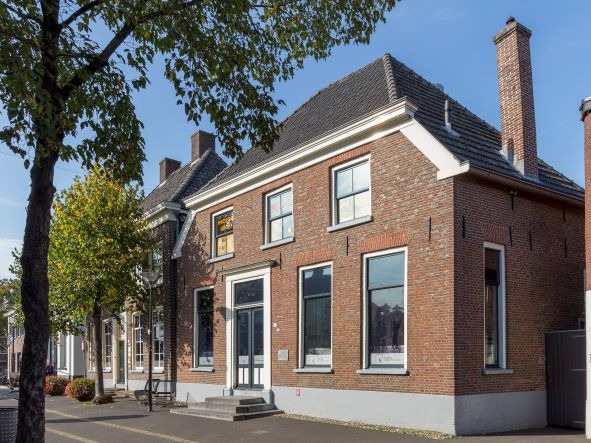
‘Hiding house’ Markt 12, Aalten
To record the memory of this part of history and to keep it alive, the National Hiding Museum was established in Aalten. The museum focuses on showing and documenting the stories of people in hiding and the people who helped them. It shows how ordinary people can show courage and humanity in extraordinary circumstances.
Het museum is deels gevestigd in een pand met een bijzondere onderduikgeschiedenis: Markt 12. Dit was indertijd het woonhuis van een gezin met kinderen, maar op zolder werden onderduikers (tijdelijk) verstopt en de kelder was de schuilplaats voor buurtbewoners tijdens bombardementen. Extra opmerkelijk: de grote woonkamer was door de bezetter gevorderd en in gebruik als ‘Ortskommandatur’.
The Nationaal Onderduikmuseum also has an escape room. Players are confronted with issues and dilemmas that everyone will encounter when they have to flee. If you choose to flee from your world, you have to renounce what you know and know. You will have to do everything in your power to keep yourself going in your new situation.
It is now important that you have insight into that new situation, have a sharp vision, so that you can recognize signs, dare to make decisions and distance yourself from what you have known until now. “Can you manage to dive under the radar, become invisible, become inaudible to the enemy?”
During the final years of the Second World War, many people in hiding (onderduikers) found refuge in the Achterhoek region. Aalten topped the list, with an estimated 2,400 people pursued by the Germans. “The inhabitants were not only devout, but also linked that faith to providing shelter to those who had been driven from their homes.”
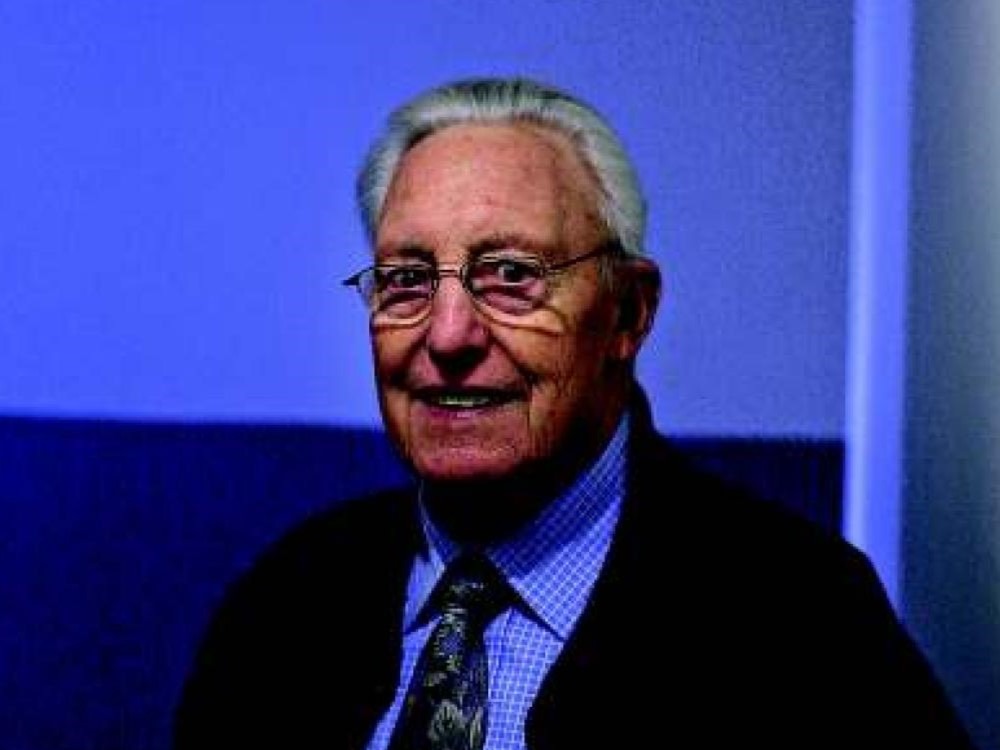
Pieter Schaap (84) now lives in a tidy apartment in the centre of Aalten, having purchased the property with his wife, who is nearly 80, several years ago. “We lived a little further away, but the house was too big, and we could no longer keep up with the garden.”
That is not to say that the Aalten resident and his wife are not spry. The couple regularly visits their children in the west of the Netherlands and travels by plane to visit a son in Norway. Pieter’s wife regrets that they can no longer make those trips by car and boat. “You see so much more that way.”
The Aalten resident, distinguished by a thick shock of grey hair, still drives in the Netherlands. Among other things, he delivers meals for Tafeltje Dekje (Meals on Wheels). “But the physical ailments are starting to show. I recently had cataract surgery on one eye, and my hands shake a little; I can no longer write properly. I am considering stopping with the meal deliveries this year.”
Spoiled butter
Sixty-five years ago, Pieter Schaap came to the Achterhoek for the first time. The native of The Hague was forced to report to Winterswijk in late 1942 following a summons from the Germans, who were coercing young men into forced labour. “I reported to Kamp Vosseveld as instructed. It was very German there, very strict. We were allowed to go to church on Sundays, at least.”
Schaap grew up in a Reformed family but later joined the Gereformeerde church. “After the service, the minister invited us for coffee. We were regularly allowed to stay for a meal. They thought we were starving in that camp. That wasn’t true, but as a young guy, you could always manage a bit extra.”
Photo: Jan Ruland van den Brink
He disliked the conditions. “We repaired backroads and replaced sections of railway track. Everything was done by hand. You only had a spade and a wheelbarrow. Meanwhile, you were being drilled. We had to sing all sorts of nasty songs. I didn’t like the regime. I spoke about it, and then the minister said: ‘Why don’t you go into hiding?’ He said he could arrange an address. However, we were being watched closely; there were constant roll calls, making it impossible to escape. Until the moment we were served spoiled butter. That was early 1943; I don’t remember the exact date. Almost everyone had diarrhoea, and there was no roll call. That was when I slipped away. Together with Henk Bossemeijer, a lad from the Alphen aan den Rijn area.”
Pieter and Henk exchanged their uniforms at a family’s home in Winterswijk, put on civilian clothes that had been laid out for them, and boarded the train to Aalten. “The minister had said we would be taken care of. And indeed, we were met by members of the resistance. Through Ome Jan, the leader in Aalten, we were given shelter for the night. The next day, we went to ‘t Paske farm in the rural district of Dale.”
Schaap immediately felt that the presence of him and Bossemeijer was too much of a burden on the farming family. “The responsibility for two people in hiding was too great. ‘Do you know of another place for one of us?’ I asked. After a few weeks, I was able to go to ‘t Heegt farm in Lintelo, another rural district. There, with the Rensink family, I stayed until the end of the war.”
A hollow above the horse stable
The young man from the west with a technical background was quickly retrained as a farmer. He ploughed and harrowed the land using horses, cleaned stables, and fed the cows. “I even learned to milk, thanks to the family’s eldest daughter, who had just taken a course in it.”
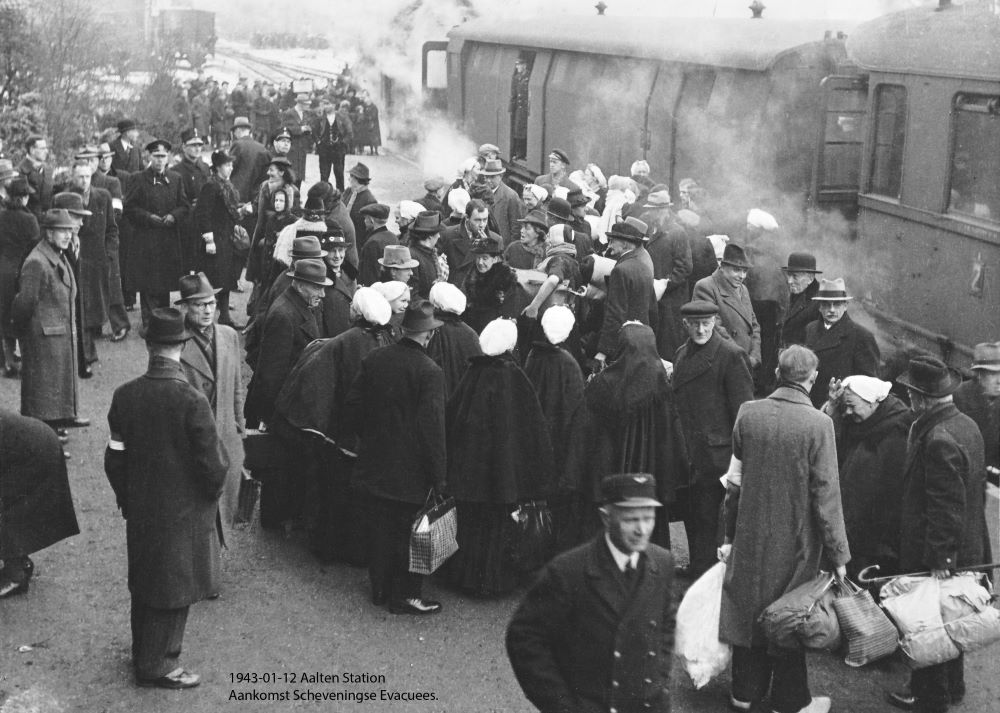
At first, Schaap slept in the opkamer (parlour) of the farmhouse. Later, a group of 500 people from Scheveningen arrived in Aalten, having been driven from their village by the Germans in connection with the construction of the Atlantikwall. Schaap remembers it well. “The Gereformeerde evacuees went to Aalten, while the Hervormde evacuees from Scheveningen went to Winterswijk. That had been agreed upon with the local churches. Some of the Scheveningen evacuees were also offered shelter at ‘t Heegt.”
For the rest of the war, he slept in a hollow above the horse stable. “Above the manger where the horses ate. If I stood on that, I could just reach a small hatch that couldn’t be seen from below. I had a bed there, and some light fell in through a glass roof tile.”
He was not there often. Pieter spent most of his time in the fields. The man in hiding did not find it truly dangerous. “We didn’t have much trouble from the Germans. We did have to watch out for landwachters (Dutch collaborators), but they were always spotted in this area long in advance. I would usually go to a piece of land further away, somewhat hidden behind the trees. Or I would crawl away. I never stayed on the farm if there was trouble.”
A wagon full of crispbread
He stayed at ‘t Heegt for two and a half years, amidst many other people in hiding. Aalten was teeming with them. “There were more and more of them. The Germans also began to notice, and on 30 January 1944, the Westerkerk was surrounded by SS soldiers during a service. A number of people in hiding tried in vain to escape past the organ. The churchgoers were checked and fined if they had left their identity cards at home.”
The story of Gerrit Hoopman (19), a person in hiding, is well-known; in the chaos, he was provided with an outer skirt, a shawl, and a traditional headpiece by a woman from Scheveningen, allowing him to escape the church. That did not apply to a large group of other people in hiding; more than forty men were arrested.
Schaap, a faithful visitor to the Westerkerk, was not there that day. “We felt it was becoming too dangerous, so that Sunday we organised a service in a secret location for one of the first times. We called that the ‘underground church’. We did that at farms, always at different addresses. Often one of the boys would lead the service; sometimes we had a minister.”
Later, German soldiers were billeted at the farm. “They were young boys, paratroopers who no longer had any planes and therefore had to serve in the infantry.” He had little trouble from them. “To them, I belonged to the family. When they requisitioned a horse and wagon from the farmer at one point and gave the command ‘Bauer mit!’ (Farmer, come with us!), I jumped onto the driver’s seat. We headed toward Bocholt, but during a bombing raid, my passengers quickly disappeared—they looked for cover elsewhere. I waited for a while until I saw farmers with horses and wagons driving back and forth from a large warehouse in the area. I went over and said I had been sent to pick something up. I was given a wagon full of knäckebröd (crispbread), ha ha! I drove back with that.”
He was also part of the farming family to others. “All those years, I was ‘Piet van ‘t Heegt’. Some people still know me by that name today. We were recently at a gathering where we met an acquaintance from that time. She lives in Zeeland now. ‘Hey, there’s Piet van ‘t Heegt,’ she said.”
He did not suffer from hunger in the Achterhoek. “Every two weeks, I even sent a large rye bread to my parents. The postman was called ‘the baker’ at their place; he helped distribute the bread.”
Until his retirement, Schaap worked as a technician for the Royal Netherlands Army. His pre-war ideal of becoming a marine engineer did not come to fruition due to the war. In the hamlet, Pieter met his future wife. “She lived a few farms away.” The courtship did not go smoothly, as her father thought she was too young, and after the liberation, Pieter signed up as a volunteer for the Dutch East Indies. Only years later did he return to Aalten, where the farmer’s daughter was still waiting for him. “We have now been married for 56 years. We were truly destined for one another.”
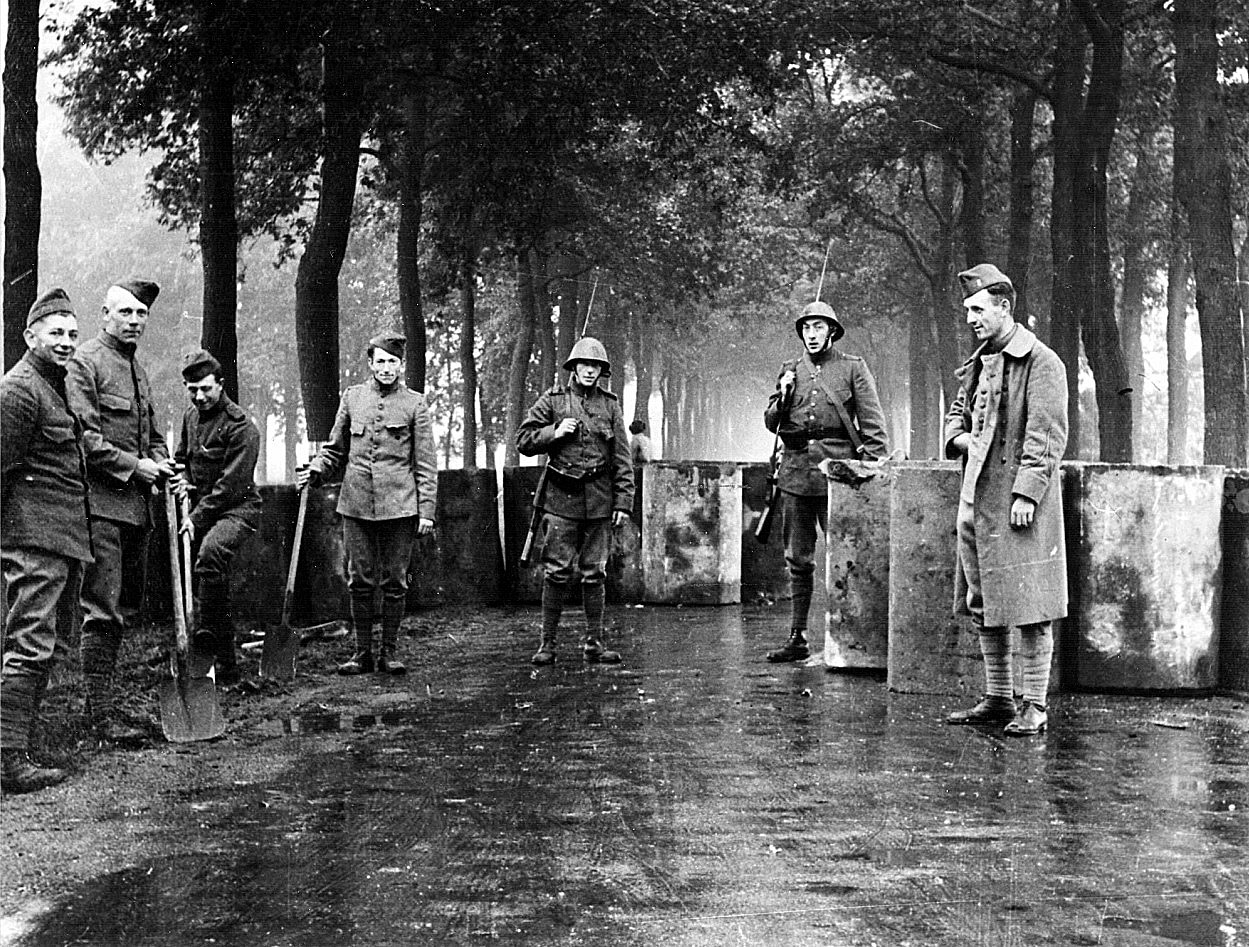
In April 1939, a border guard detachment of 36 men was stationed in Aalten, housed in farms. Sand filled tubes are placed here and there as obstacles. Around 1 September, at the beginning of the Second World War, several hundred residents of Aalten left by train for the various garrison places. On 9 May 1940, the municipal architect was instructed to install barricades on several roads.
On 10 May, German army units thundered into Aalten. The soldiers stationed around farms offer no resistance. A few days later, Dutch prisoners of war are seen being transported to Germany in open trucks. Four people from Aalten are killed at the Grebbeberg. A group of five hundred returned prisoners of war are enthusiastically welcomed in the party building and then travel on by train.
Two hundred and fifty Rotterdam children stayed here in the summer months. This was also the case in 1941. A lot of (young) people go to work in Germany because it earns well. There is already a lot on the coupon. Food production comes under control, for which Aalten is divided into three districts, each under a local office holder.
In the summer of 1942, the first people in hiding came to Aalten to evade the Arbeidseinsatz. Shortly before, the first group of employees of Dutch Button Works in Bredevoort had themselves photographed neatly in their suits with a view to employment in Germany. A group from the Driessen textile factory is also deployed.
About five hundred Scheveningen evacuees found shelter here in January 1943. Almost all of them belong to the Reformed Church. In Winterswijk there are eight hundred, all Reformed. Once every three weeks a Scheveningen pastor stays here who also leads a church service.
Hostages
The Germans increased the pressure to get men to dig. The most intimidating thing was the detention of 12 hostages on October 18. The next day, 550 men leave for Zevenaar. Ten days later, another seven men are taken hostage and 250 people report. The pastors and R.C. clergy had made an appeal to ‘show mercy and charity towards those who are in immediate danger of death’.
By circular, a representative group of municipal residents insists on a repayment scheme. It will come. A pastor in Zevenaar will be there at all times for support and spiritual care. But there is also a clandestine stencil circulating with the call to ask oneself ‘whether it is responsible to cooperate in the enemy’s defences, as a result of which many more than eleven human lives (…) will soon be lost.’
The last months
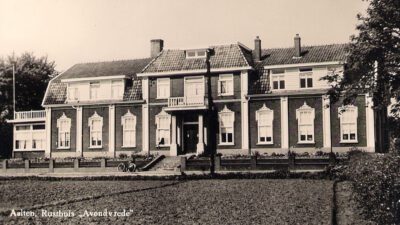
A few moments from the last three dark months: Individual food collectors keep coming, but a committee ‘Aid to the West’ also manages to collect a few cartloads of mainly grain. Doctor Der Weduwen succeeds in transferring sick people from camp Rees to the emergency hospital in Avondvrede on the Hogestraat. Serious cases go to the hospital set up in the boys’ boarding school in Harreveld. Der Weduwen is killed when his car is shot at from the air.
A drama is taking place around a resistance group that is hiding in the abandoned farm ‘De Bark‘. Close to the door, in ‘Somsenhuus‘, Germans were billeted while seven Allied pilots were in hiding there. The total number of soldiers in Aalten at this time is estimated at about four thousand.
Liberation
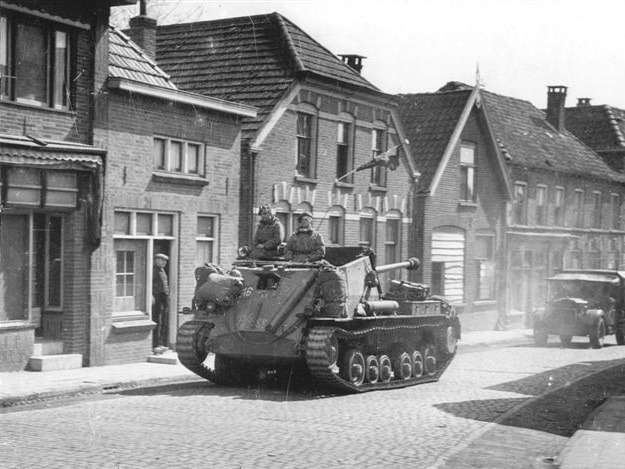
In the last days of March, it is clear that the denouement is near. How hard will there be fighting? Many leave the village, others seek protection in their shelter. There were still German soldiers roaming around. Then, on Good Friday, March 30, early in the morning, the English tanks rolled into Aalten from Germany. Here and there, Germans still put up fierce resistance. Ten British were killed on that day, in Barlo seven people were killed in a grenade hit in an air-raid shelter. Sadness and joy, Aalten has been liberated.
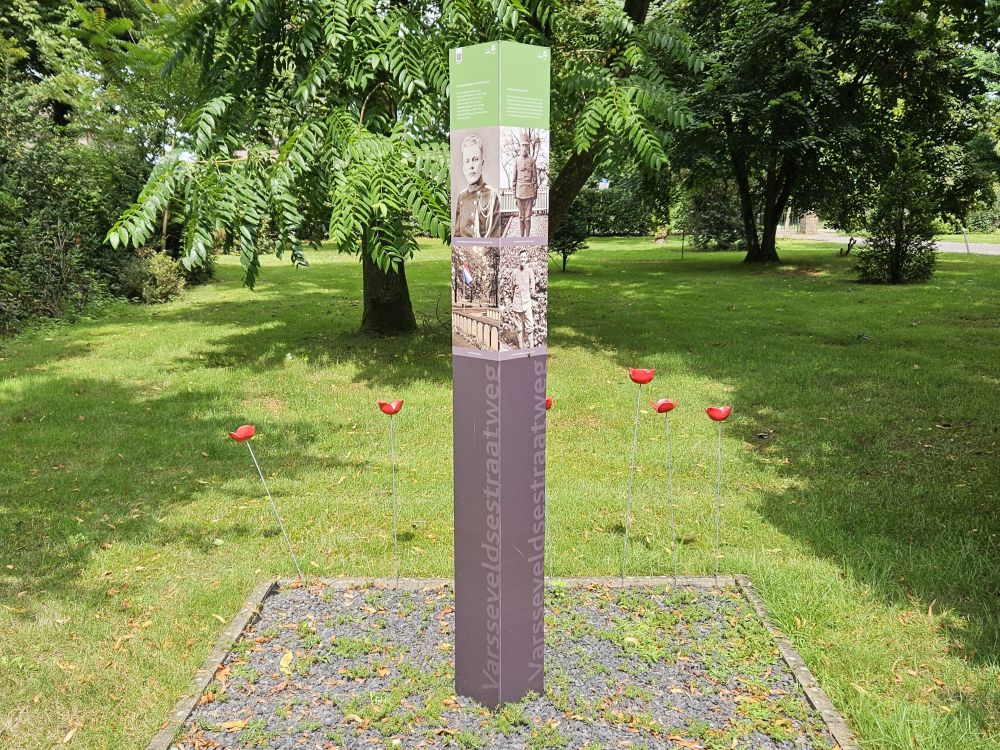
In 2015, as part of the commemorations for 70 years of liberation, a commemorative column was placed at the Old General Cemetery in Aalten to honour all local soldiers who fought on and around the Grebbeberg in May 1940. Seven servicemen from Aalten lost their lives during the conflict. Their names and photographs have been immortalised on the column.
The text on the column reads:
Soldiers from Aalten in May 1940
In the early morning of 10 May 1940, German troops invaded the neutral Netherlands. For our country, this marked the beginning of World War II. Mobilised Dutch soldiers took up positions in several lines of defence, including the Grebbe Line. Fierce fighting took place in the main resistance strip on and around the Grebbeberg near Rhenen.
Photo: R. Neerhof, 2025
Most soldiers survived the battle and were able to return to Aalten, often after a brief period as prisoners of war. Seven families remained in a state of uncertainty for some time. Eventually, they received the tragic news that their sons would not be returning; they had fallen in battle. Their lives were devastated by this great loss. At this site, all Aalten soldiers who fought in May 1940 are remembered.
Many residents of the Achterhoek, including a considerable number of young men from Aalten, were assigned to the 8th Infantry Regiment (8 R.I.). This unit played a vital role in the defence of the Grebbeberg. The poorly trained and equipped soldiers fought an unequal battle against an overwhelming enemy. Bravely, they attempted to hold their ground for as long as possible. The Germans, with awe, referred to the hill as ‘Der Teufelsberg’ (The Devil’s Mountain). Nevertheless, our country was forced to capitulate on 14 May 1940.
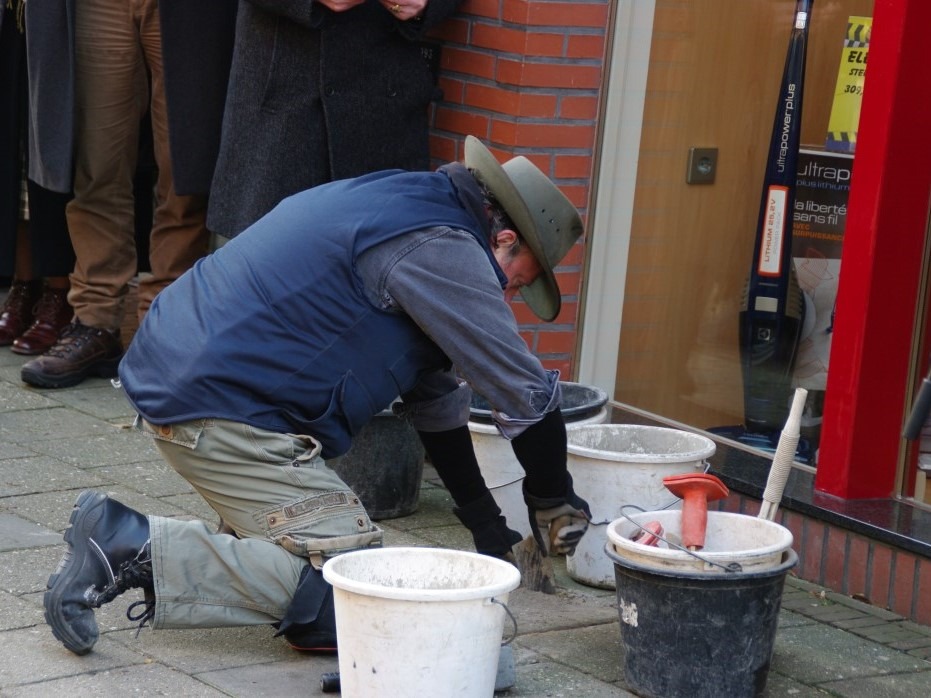
Gunter Demnig placing the first Stolpersteine in Aalten
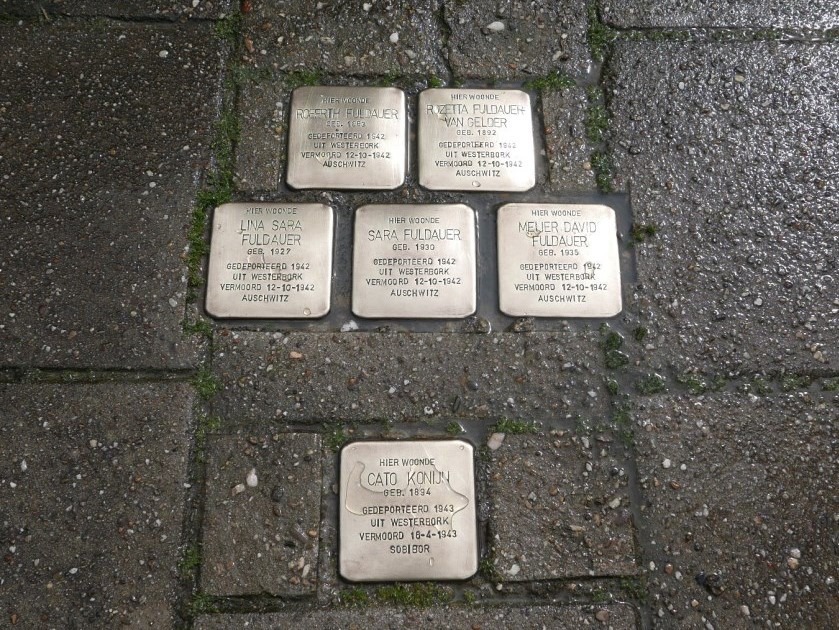
In Aalten, 34 Stolpersteine (stumbling stones) are laid across twelve addresses. A Stolperstein is a memorial stone placed in the pavement in front of the house from which people were deported by the Nazis to extermination camps during World War II. When you see such a stone—usually unexpectedly—with the name of a victim, you are momentarily reminded of how millions became victims of systematic murder during that war.
The stones have a surface area of 10 by 10 cm. A brass plate is affixed to the top, into which the name, year of birth, date of deportation, and the place and date of death are stamped. Each stone serves as a memorial to a single victim: a person who lived in that very spot and was deported from there, never to return.
Originator
The Stolpersteine project was conceived by the German artist Gunter Demnig. He deliberately kept the size of these ‘stones of offence’ small, requiring one to bow down to read the inscriptions.
Demnig began laying the first Stolperstein in 1997 in the Berlin district of Kreuzberg. Today, Stolpersteine can be found in many countries. Gunter Demnig thus gives every victim their own individual monument. His motto is: “A person is only forgotten when his or her name is forgotten.”
Initially, he made all the stones himself, as he felt mass production conflicted with the project’s ethos. However, forced by the project’s rapid growth, he is now assisted by an artist friend. He insists on personally laying the first stones in any given location. The remaining stones are now usually installed by municipal pavers.
Stolpersteine in Aalten
In Aalten, 34 Stolpersteine have been laid at the following addresses:
’t Dal 1: Levi Salomon Schaap, Ella Schaap-Philips, Eliazar Hars Schaap, Frits Landau, Amalia Landau-Lorch
Dijkstraat 10a: Levie van Gelder, Jula van Gelder-Landau, Arnold van Gelder
Eerste Broekdijk 51: Roberth Fuldauer, Rozetta Fuldauer-van Gelder, Lina Sara Fuldauer, Sara Fuldauer, Meijer David Fuldauer, Cato Konijn
Grevinkweg 5: Sally Fuldauer, Regina Fuldauer-de Jong
In one instance, the stone could not be placed in front of the victim’s residence because the building (Industriestraat 4) no longer exists, nor is there a pavement where it could be installed. Therefore, this stone was laid in front of the synagogue.
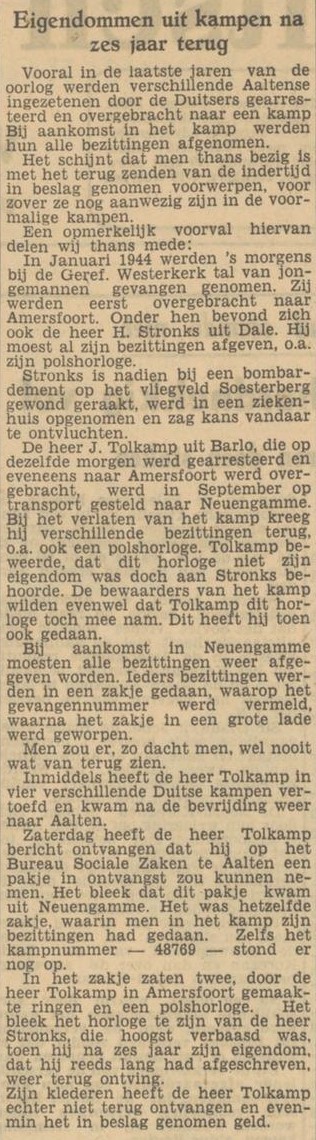
Especially in the final years of the war, several residents of Aalten were arrested by the Germans and transferred to a camp. Upon arrival at the camp, all their belongings were taken from them. It appears that efforts are currently being made to return the objects confiscated at the time, insofar as they are still present in the former camps. We now share a remarkable incident regarding this:
In January 1944, numerous young men were taken prisoner one morning at the Reformed Westerkerk. They were first transferred to Amersfoort. Among them was Mr. H. Stronks from Dale. He had to hand over all his belongings, including his wristwatch. Stronks was subsequently wounded during a bombardment of the Soesterberg airfield, was admitted to a hospital, and managed to escape from there.
Mr. J. Tolkamp from Barlo, who was arrested on the same morning and also transferred to Amersfoort, was put on transport to Neuengamme in September. Upon leaving the camp, he received several belongings back, including a wristwatch. Tolkamp claimed that this watch was not his property but belonged to Stronks. However, the camp guards insisted that Tolkamp take the watch anyway. He then did so.
Upon arrival in Neuengamme, all belongings had to be handed over again. Everyone’s belongings were placed in a small bag, on which the prisoner number was noted, after which the bag was thrown into a large drawer. It was thought that they would likely never see any of it again.
In the meantime, Mr. Tolkamp had stayed in four different German camps and returned to Aalten after the liberation. On Saturday, Mr. Tolkamp received word that he could collect a package at the Social Affairs Office in Aalten. It turned out that this package came from Neuengamme. It was the same bag in which his belongings had been placed at the camp. Even the camp number — 48769 — was still on it.
In the bag were two rings made by Mr. Tolkamp in Amersfoort and a wristwatch. It turned out to be the watch of Mr. Stronks, who was highly surprised when, after six years, he received back his property, which he had long since written off. However, Mr. Tolkamp did not receive his clothes back, nor the confiscated money.
Two cousins meet on the boat after not having seen each other for 13 years
Great joy prevailed on Wednesday in the Neerhof and Lievers families when their sons returned home safe and healthy after 13 and 2½ years of service in the Far East, respectively. Maypoles and greenery, waving flags—everything pointed to a joyful return. We had the pleasure of hearing some details from both young men.
Henk Neerhof
First, we hear from Private H. Neerhof, K.N.I.L. We found Henk surrounded by family members and friends, and upon our request to tell us something about his experiences, we were told the following:
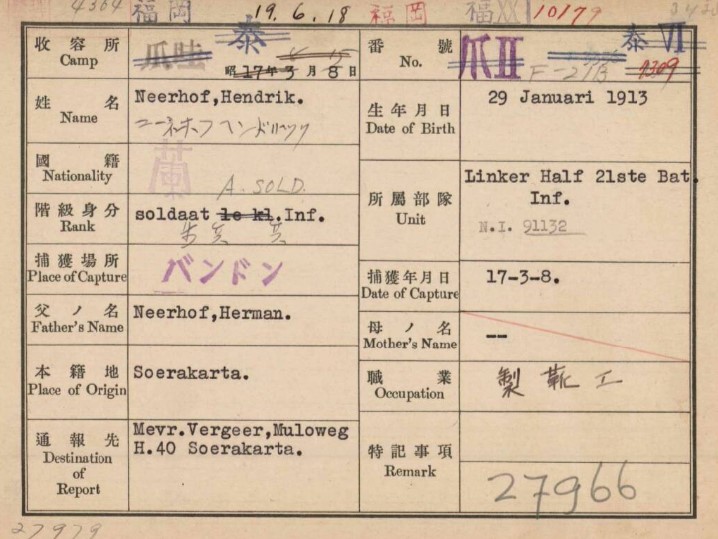
„After my training in Nijmegen, I left for the Indies in August 1935, destined for Bandoeng. Until the Japanese invasion, I was always stationed here in garrison. After a hard struggle, I was taken prisoner of war along with many others and transferred to the well-known penal camp at Tjilatjap. Here we got to know the Japanese as a cringing, submissive people, brutal and sadistic in their actions, but also deathly afraid of their superiors.
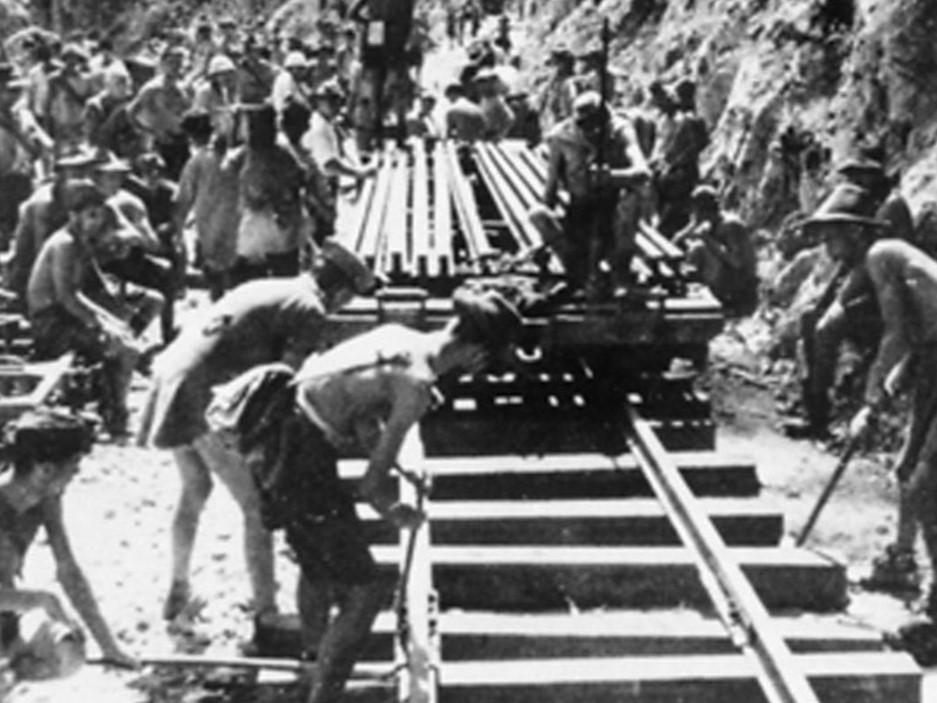
After this time in the camp, we were transferred to Thailand and here the path of suffering began: working on the ‘death line’, the Burma Railway, which lasted 1½ years. From here I was taken to Japan, where I spent two years as a miner in the coal mines on the island of Kyushu. It is easy to understand that this time was also far from rosy.
Japanese internment card Hendrik Neerhof, source: National Archive
There I finally experienced the liberation in 1945, a liberation I will never forget. It was the Americans who delivered us from all that misery. With our exhausted bodies, we jumped and danced. Americans, great guys! It was simply exhilarating.
KNIL soldiers working on the Burma Railway
Everyone was transferred to Nagasaki on an American aircraft carrier, the city that had been hit by the atomic bomb some time before. The effect of this was terrible; everything had virtually disappeared, it was a scorched remnant of a city, covered with a thick layer of ash. From here I was finally dispatched to Balikpapan, where I had a good time. Here I was incorporated into a normal company again.
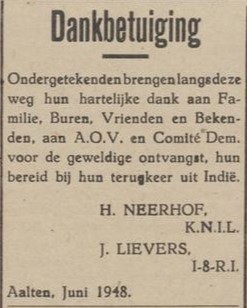
And now I am home again, with six months’ leave. I felt really strange towards everything here; it is so small and narrow-minded, you really have to get used to it again. I am happy to be home. The festive reception, everything decorated, and a serenade from the A.O.V.—it was wonderful.”
Finally, Henk mentioned that he will return to the Indies again. We wish him a very pleasant leave and, for later, a good voyage and a safe arrival in the Indies.
Jan Lievers
As the second returnee from the Indies, we were able to greet Private 1st Class Jan Lievers. Jan left for the Indies as a volunteer in October 1945 and was assigned to I-8-R.I. After training in Ermelo, Jan ended up in Malacca via England, as the first Dutch troops were not yet allowed to set foot on Indonesian soil. Stationed in an old rubber plantation at Lubok Kiab, he underwent heavy jungle training.
At the end of February 1946, they set foot ashore at Batavia, the first Dutch brigade to arrive in the Indies. After serving in and around Batavia, he participated in the police action from Padang.
Jan was able to tell us much about the beauty and splendor of our Indies; that alone would be enough to fill a book. He had a lot of contact with the native population, who were generally very well-disposed towards our boys. „I consider it a privilege that I was able to experience all this,” Jan said, „I will always have pleasant memories of my time in service.”
Aaltensche Courant, 11 June 1948
Besides the joyful entry into Aalten, Jan was especially struck by the extraordinary reception given to the returning soldiers in IJmuiden and Amsterdam. Thousands of people were out on the streets; it was grand. „I am, of course, very happy to be home again; it is now a matter of getting back to work as soon as possible.” We also wish Jan all the best and much happiness in the future.
Return from the East
De Graafschapper, 5 July 1948
On Saturday, our fellow townsmen, the volunteers Stronks (Haart 10) and Weevers (1st Broekdijk), returned from the Indies. Mr. Neerhof (Trompstraat) also returned. He stayed in the tropics for 13 years. Upon his return, the A.O.V. performed a serenade. We hope to return to this in more detail in tomorrow’s edition.
Home again after 13 years
De Graafschapper, 6 July 1948
In 1935, the brothers H. and J.H. Neerhof left for the Indies as members of the KNIL. Now, after 13 years, both have returned home safely. Because of this special event, we paid them a visit to congratulate them on their safe return. It appeared that both had led a quiet and good life until 1942.
When the war broke out, both were taken prisoner of war. Both ended up at the so-called Death Railway, the railway line from Thailand to Indo-China. One on one side and the other on the other side. However, they never had the opportunity to speak to each other there. J.H. Neerhof then went to Indo-China, where he remained until the end of the war. He was full of praise for the treatment he received from the French there.
H. Neerhof was transferred from Thailand to Japan, where he went to work in the coal mines of Kyushu. After the capitulation, he was transferred via Nagasaki—where he saw the destruction caused by the atomic bomb—to the Philippines. In Manila, he spent 2 months in quarantine with the Americans. After that, he returned to the Indies, where his brother had also returned in the meantime.
On April 23, they met again in Batavia for the first time in 13 years. About 6 weeks ago, H. Neerhof came home, and on Saturday, J.H. Neerhof arrived. Both stated they were very moved by the homecoming prepared for them here. A fantastic homecoming, as they stated several times.
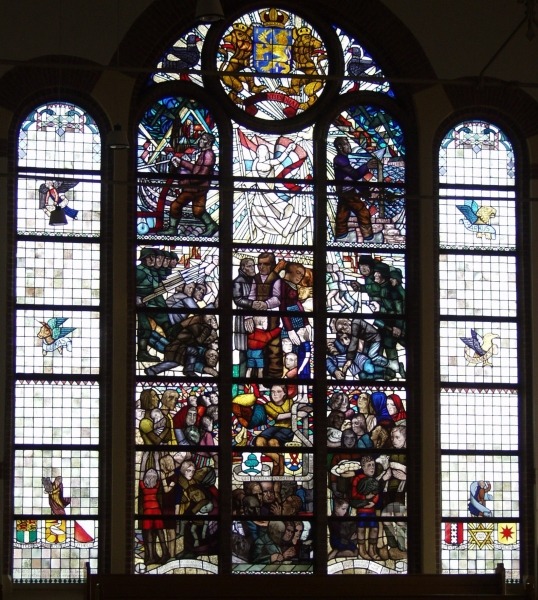
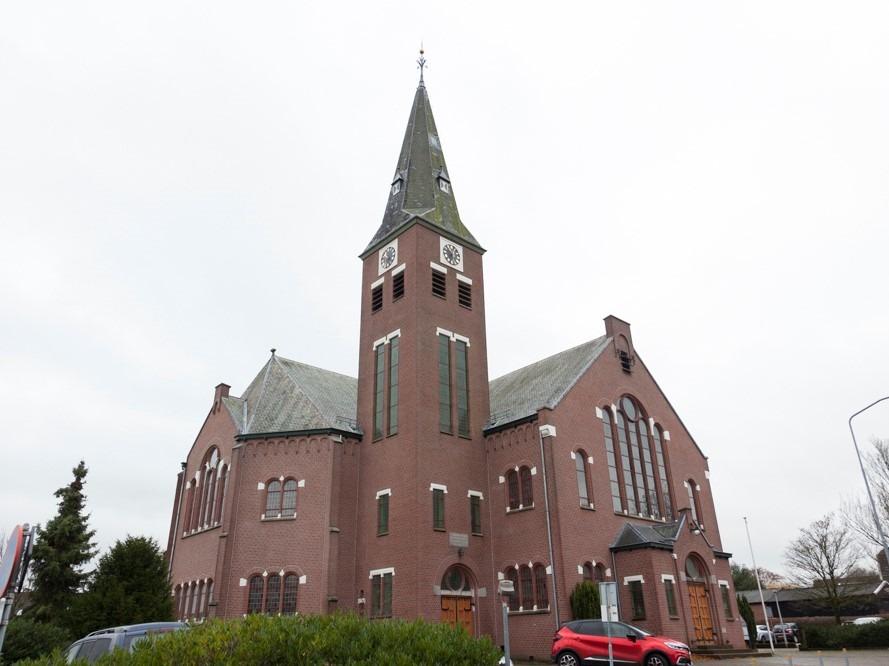
The Oosterkerk in Aalten houses a monumental stained-glass window dating from 1946. The window was gifted by a committee from the Reformed Church of Rotterdam-Kralingen, on behalf of the churches and the Jewish community, as a token of thanks for the assistance provided by the people of Aalten during World War II to those in hiding (onderduikers), Jewish fellow citizens, the starving, and hundreds of children from Rotterdam.
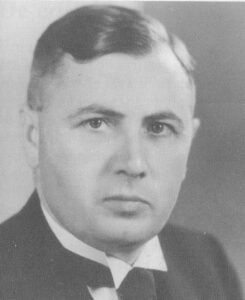
Rev. Thomas Delleman (1898–1977)
Thomas Delleman (1898–1977) served as a minister in Aalten from 1930 to 1938 before moving to Rotterdam-Kralingen. Following the Bombing of Rotterdam in May 1940, he took the initiative to arrange for children from his new parish to stay in Aalten for a holiday. During the war years, a total of approximately 800 children from Rotterdam were taken in by host families in Aalten.
Delleman contributed in other ways as well. He ensured that young men wishing to evade the Arbeitseinsatz (forced labour) could go into hiding in Aalten. Furthermore, in 1943, around 500 evacuees from Scheveningen were accommodated in Aalten. During the ‘Hunger Winter’, trains carrying food regularly departed from Aalten for the west of the country.
This dedication made a profound impression in Rotterdam and led to the formation of a committee after the liberation to thank the people of Aalten.
Origin of the Commemorative Window
Initially, the intention was to place the window in the Westerkerk, as more than forty young men had been arrested there during a roundup (razzia) in 1944. However, all the windows in the Oosterkerk had been shattered after a V1 rocket landed nearby in January 1945. Consequently, it was decided to install the window in the Oosterkerk instead.
The window was designed by the Rotterdam artist Marius Richters (1878–1955) and executed by glazier Henri van Lamoen (1900–1949). With a height of eight metres and a width of over three metres, it is one of the largest stained-glass windows in the Achterhoek. Richters utilised bold colours and clear, almost narrative scenes that express both the threat of war and the warmth of the relief efforts.
The window was installed in the front facade of the Oosterkerk and officially unveiled by Rev. Delleman on 13 July 1946. The ceremony was broadcast live on the radio by the NCRV.
Design
The window is over eight metres high and three metres wide, set within a trifora.
Commemorative Window in the Oosterkerk, Aalten
At the top: The coat of arms of the Netherlands with the motto “Je maintiendrai”. Below this is the Dutch Maiden, holding the flag in her right hand and a burning torch in her left. On either side stand a farmer and a bricklayer, referring to the post-war reconstruction.
Central: A farmer and his wife, symbolising the people of Aalten, surrounded by children and a person in hiding. From both sides, German soldiers with bayonets march into the scene.
Bottom left: Emaciated women and children pleading for help.
Bottom right: A group of people who have been helped, returning home supplied with foodstuffs.
Bottom centre: The coat of arms of Aalten featuring the linden tree and the coat of arms of the House of Orange, with a scroll reading: “Uit dankbaarheid voor hulp in oorlogstijd, soli Deo gloria” (In gratitude for help in wartime, to God alone the glory). Biblical texts are incorporated elsewhere in the window.
In 1947, two side windows were added to either side of the main window. These feature the symbols of the four Evangelists, images of Moses and Isaiah, and at the bottom, the coats of arms of Rotterdam, Scheveningen, Utrecht, Amsterdam, Kralingen, and a Star of David.
At the base of the side windows are lines of verse by Muus Jacobse (pseudonym of the poet Klaas Heeroma):
Maar als ik leven mag tot de bevrijding en juichen op het overwinningsfeest, God, doe mij dan dit weten, wat voorbijging aan nood en leed is niet vergeefs geweest.
(But if I may live until the liberation and rejoice at the victory feast, God, then let me know this: that the hardship and suffering which passed was not in vain.)
Current Status
The commemorative window can still be seen in the Oosterkerk. When the church was repurposed as a residential care location in 2021, it was formally agreed that the window would be preserved. This ensures the window remains not only an artwork of exceptional scale but also a lasting war monument and a tangible reminder of the aid and hospitality offered by Aalten during World War II.
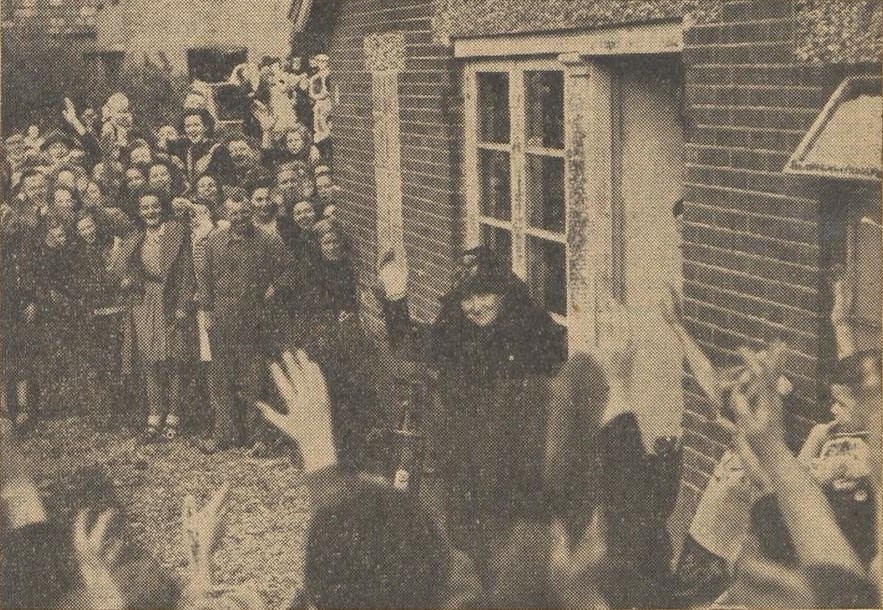
Quite unexpectedly, H.M. the Queen paid a visit to our municipality. On Wednesday afternoon, the cars carrying H.M. the Queen, her secretary, Miss Geldern, and her secretary, Mr. Kohnstam, arrived from the direction of Dinxperlo and stopped in front of the home of the alderman of Aalten, Mr. H. J. Wikkerink, better known in illegal circles by the name of “Oome Jan”.
“Oome Jan” has a respectable record of service in the underground movement during the years of occupation and currently resides in his workshop “Nooit Gedacht”, as the Germans, out of rage that they could not capture “Oome Jan”, set fire to his house next door. The Wikkerink family had been informed of the royal visit only moments before.
Her Majesty, who arrived around one o’clock, stayed for more than half an hour in the home of “Oome Jan” and enjoyed a cup of tea with relish. Meanwhile, several prominent workers from the illegal movement had gathered in the living room and were soon engaged in a busy conversation with Her Majesty.
H.M. leaves the emergency dwelling “Nooitgedacht” in Aalten
From the conversations, it appeared that She was already aware of the important work carried out here in the Achterhoek during the war years, and She inquired with interest about various details. Both “Oome Jan” and Messrs. Lichtenberg of the L.O. and Allersma of the K.P. spoke of the underground work and the dangerous tasks that had to be completed. They also recalled the spontaneous cooperation of the population and the aid to the West in the form of wagonloads of rye bread, which were sent at a very low price.
A charming detail was also the presence of Mrs. Jedwab with her young son, who at the time had been left as a foundling on the doorstep of “Oome Jan’s” home while the parents were in hiding. This Jewish boy was then lovingly taken in and given the name Willem Herfstink, as autumn had just made its entry that day. Rev. Kuijper also spoke of the razzia, which was held on January 29, 1944, in the Reformed Church, during which 42 people in hiding were arrested and only a few were able to escape. The mayor, who was also present at “Oome Jan’s”, also shared some information about the events of the past years.
Originally, it had been H.M.’s intention during her journey through these regions to visit the “Somsenhuus”, the farm of Mr. Prinsen in IJzerlo, where so much underground work was performed in recent years. Members of the K.P. found shelter here for a long time, as did a number of English pilots who awaited liberation here. This farm burned down after the liberation due to a lightning strike. This visit did not take place. Between Dinxperlo and Aalten, the cars turned into a side road near the Prinsenboschje, where the party had some refreshments in the car.
A massive crowd had gathered in front of “Oome Jan’s” home, where the monarch was heartily cheered. Upon her departure, the Wilhelmus was enthusiastically sung. This day will surely remain long in the memory of “Oome Jan” and his comrades, who so often risked their lives in the struggle against the oppressor and did so much for our people and fatherland.
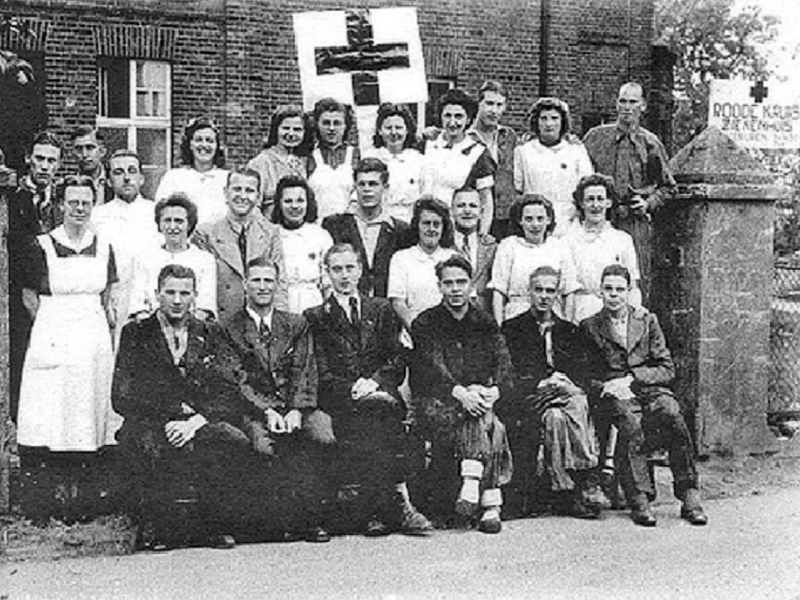
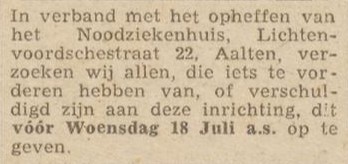
Now that the emergency hospital in Aalten is closing its doors, it is fitting for us to pause for a few moments to reflect on the origin and work of this institution, which served as a blessed outcome for countless Dutch forced labourers and prisoners from concentration camps. As is known, the initiative for its founding was taken under the auspices of the Red Cross, by Dr J. der Weduwen and Mr Cl. Driessen.
Staff of the Aalten Emergency Hospital
The necessity for its establishment became acutely apparent at the end of November, when some of the victims of the train bombardment near Bocholt had to be admitted in Aalten. When Dr J. der Weduwen arrived at the Avondvrede retirement home on 5 December 1944 with 22 liberated prisoners from Rees, the situation presented nearly insurmountable difficulties. Beds, food, and trained staff—everything was lacking.
The residents of the home, on that memorable St. Nicholas Eve for the ex-prisoners, brotherly shared their pancakes, oliebollen (doughnuts), and chocolate (!) with the newcomers. By exerting every effort, they succeeded in providing the battered patients with proper care. Mr and Mrs Ditmarsch, deeply moved by the fate of these people, did everything possible.
With emotion, many will remember Sister A. Bol, who died of diphtheria and performed true miracles for her patients during this time. After her death, it proved necessary, given the danger of contagion, to attach expert personnel to the emergency hospital. Sister Schaafsma and Sister Doesburg were entrusted with the management under the supervision of Dr P. Hogenkamp, who took over the medical work of Dr der Weduwen following the tragic passing of this beloved doctor.
Avondvrede Retirement Home, Hogestraat, Aalten
Although more space was made available at Avondvrede, the capacity of the hospital proved too small, as one also had to take into account war victims from the local area; therefore, the hospital was relocated to the Patrimonium building. In cooperation with the U.V.V., I.K.O., and the Red Cross, the material side of the work was taken care of. After the final bombardment, the Patrimonium building became unusable, and it was decided to liquidate the hospital, as the majority of the patients, under the leadership of Sister Schaafsma, preferred to leave for the North.
Sister Doesburg remained at her post with a few patients, and the hospital was moved back to Avondvrede. From there, they departed once more—joined by a number of victims from the bombardment in Bocholt—to the building on the Lichtenvoordsestraat, which still serves as an emergency hospital today. About twenty patients were housed in the cellars there. Enormous support was received from the surrounding hamlets.
De Graafschapper, 14 July 1945
In the beginning, the conditions were extremely primitive. Later, everything improved. Special praise is due to the girls of Aalten, who performed nursing work without any prior training. Just before the liberation, some victims of the liberation battles were admitted. An unforgettable moment was, of course, the arrival of the first ‘Tommy’ (British soldier) who was brought into the hospital.
And now the work has come to an end. The large stream of repatriates, for whom they had prepared as their final task, did not arrive, and the now well-equipped emergency hospital is disappearing in these coming days. (Why not make it a permanent hospital?) A piece of Aalten’s war history is hereby concluded, but many will continue to remember this work with gratitude.
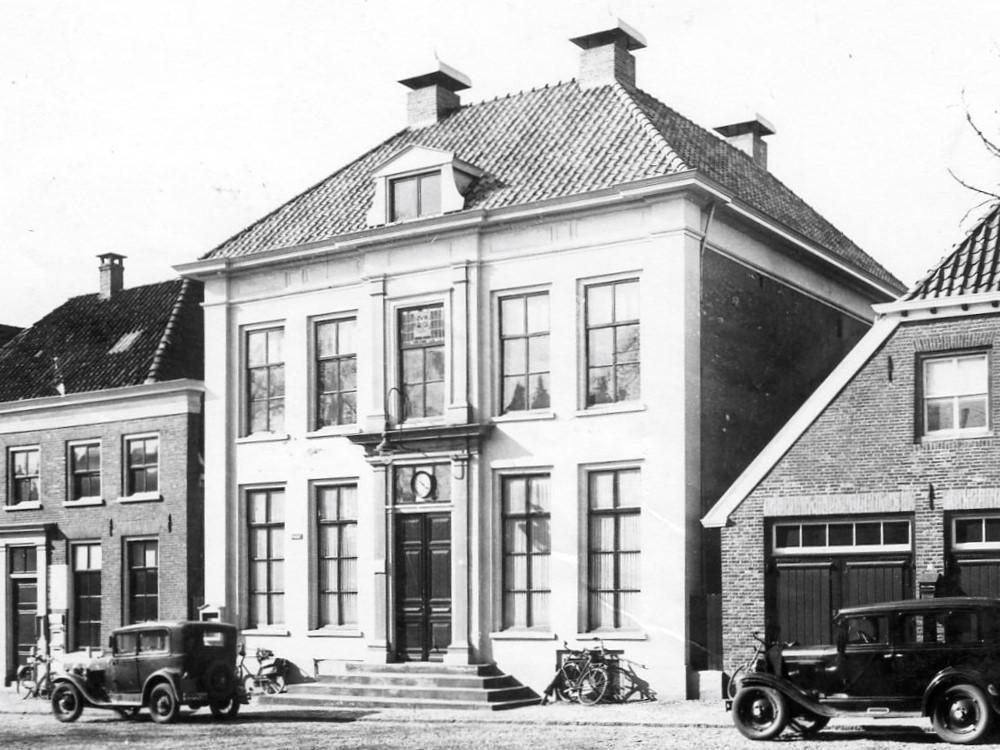
On Friday, another session of the Military Court was held in the council chamber of the town hall. Major Jhr. Mr. van Nispen tot Sevenaer served as president, while Mr. Arriëns acted as military prosecutor.
Behind closed doors, the case against H.A. v. T. was handled first; he was sentenced to 1 year in prison for a sex offense, of which 8 months were suspended with a probation period of 3 years.
Also behind closed doors, the case of F.K. Meijnen was heard, who was sentenced to 9 months in a reform school for looting. The defense counsel in this case was Mr. Voorink from Winterswijk. A. Meijnen, who had stolen cigars and tobacco while clearing rubble from a bombed house, was sentenced after a plea by Mr. Voorink to 3 months in prison with a probation period of 2 years.
The Town Hall on the Markt in Aalten
E.J. ter Heurne is accused of having taken a lady’s bicycle belonging to Miss J.W. Wesselink. The defendant denies taking the bicycle. According to him, he stored the vehicle after it had been abandoned by an SS man. In view of the bicycle requisitioning, he removed the tires and the saddle. This occurred in October 1944. Miss D. Kuijntjes is heard as a witness for the defense, confirming the defendant’s account. She had even ridden the bicycle.
A debate ensued between the defense counsel and the court regarding the circumstances of this case. No clarity could be reached, as the stolen bicycle was only taken months after October. The case is therefore adjourned to hear several more witnesses.
Meanwhile, M. Wensink appears before the court to answer for the fact that he gave 4 kg of bacon for a stolen bicycle. The defendant denied knowing that the bicycle was stolen property, which the military prosecutor did not find very credible, given the demand: 3 months suspended with a probation period of 2 years and a fine of ƒ 500. The court, however, judged otherwise and acquitted the defendant.
A certain Melitz, an SS man, appeared to have stored a nice amount of fertilizer. Now that he has disappeared, a number of farmers examined the matter and brought the fertilizer to their lands. This brought them before the court, which sentenced them to fines ranging from ƒ 25 or 25 days, while one was acquitted. After mutual consultation, they immediately “opened their purses.” At least it wasn’t a black market price.
H.J. te Grotenhuis needed several items, including a bread knife, a pair of bloomers, and a few cow halters, and stole these from various people. This is the same person who recently attacked an N.B.S. man with a knife during his arrest after escaping. Te Grotenhuis did not make a very reliable impression and is apparently not fully accountable for his actions. The court evidently took this into account and sentenced him to 6 months in prison.
After this, the case of E.J. ter Heurne was resumed. The bicycle was wheeled in and examined by the owner, Miss Wesselink. She declared that it was indeed her bicycle. A.J. Wentink, heard as a witness, stated that he had seized the bicycle in question from ter Heurne. He also recognized the bicycle. The defense witness Miss Kuijntjes also came to view the bicycle and could only partially recognize it. The bicycle she saw at ter Heurne’s in October was in better condition. After the municipal supervisor R. Hoogeveen was also heard as a witness in this case, the military prosecutor demanded a prison sentence of 2 years. The court reduced it by half, so ter Heurne will have to serve 1 year for this offense. Arnoldus Florentinus Voorink also pleaded in this case.
The following defendants have quite a lot on their conscience. A sheep was stolen and slaughtered; about 50 eggs were snatched, as well as a number of chickens and a quantity of tobacco leaves still in the field. Suspected of this are the brothers A.H. and H.J. Bettink in association with H. Dibbets, who in turn, together with T.W. Jansink, stole sheep’s wool and, with one of the Bettink brothers, approximately 500 kg of potatoes.
Messrs. Bettink and Dibbets also worked for their own account. For instance, H.J. Bettink pilfered two shirts, a pair of socks, and a quantity of tobacco while clearing rubble at the house of F.J. te Linde; H. Dibbets took a watch, a shirt, a pair of socks, spools of sewing thread, and a deck of playing cards. Finally, the father of the brothers, H.J. Bettink Sr., was the underlying cause of the thefts of the sheep and the potatoes and had to answer for intentional incitement.
The boys readily confessed to the charges, but Bettink Sr. declared that everything was a lie. The claim that he had encouraged the thefts was pure fabrication. On the contrary, he had always set a good example for the boys and forbidden them to steal. This statement caused quite some hilarity, given the man’s record. The sentences were far from lenient. A.H. Bettink received 3 years, with credit for time served in pre-trial detention.
T.W. Jansink was sentenced to 6 months, while a report will still be issued regarding H. Dibbets on the possibility of placing him in a youth prison. A psychiatric report will be issued for H.J. Bettink Jr., as he was considered to have significantly diminished responsibility. H.J. Bettink Sr. reaped the bitter fruits of his good intentions and will not be able to keep his sons on the right path for the next few years. He was sentenced to 4 years.
Next to stand trial as a victim of his own good intentions was E.J. van de Lende, who, while clearing rubble from the house of F.J. te Linde, had taken a pair of men’s trousers, a piece of lining fabric, and a remnant to keep them safe and out of the hands of the Germans. This happened on 24 March. In the meantime, however, a skirt had already been made from the fabric, which the court took very seriously. He had also forgotten to return the items. The goods were only returned once the case was in the hands of the police. This forgetfulness cost him 8 months in prison, and the goods must be returned.
At the conclusion of the session, the president, Major Jhr. Mr. van Nispen tot Sevenaer, paid tribute to Sergeant Bruggeman, whose excellent work and very good official reports greatly facilitated the work of the court.
I can imagine that as a former Achterhoeker, born and raised in our beautiful region, you are very curious about news from our region and how we are all doing here. It will be a pleasure for me to inform you from time to time of what has happened here and what is going to happen. Let me start by telling you that we have generally come off well here in our Achterhoek. The Tommies who came in here from the direction of Bocholt just before Easter were amazed by the friendly, apparently still prosperous country. into which, after the debris fields of Germany, they were suddenly transferred.
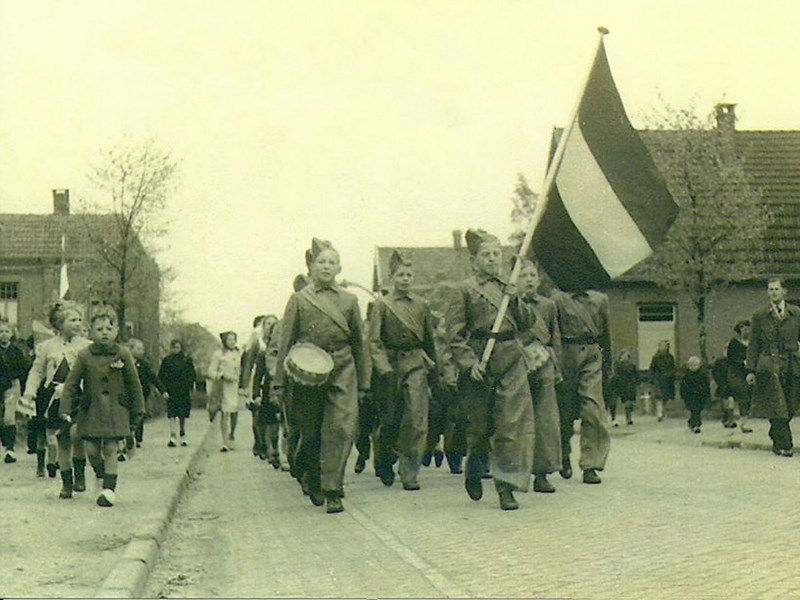
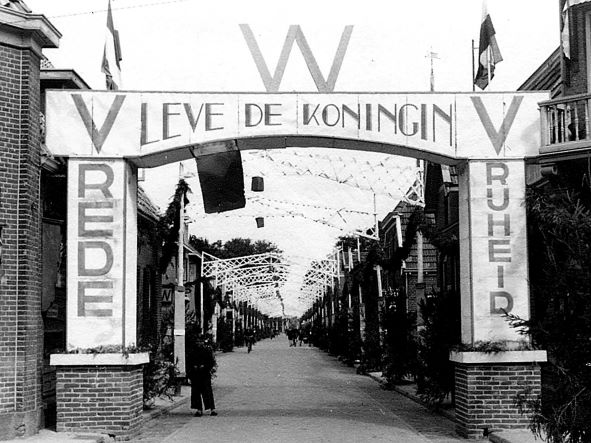
Liberation parade Stationsstraat, 1945
“You see here again an undamaged house,” said one to me, “and you see friendly people again, who laugh and wave at you! We have experienced that differently in recent months” Still, it was not given to us as a gift, don’t think so. The last six months in particular have been quite haunted here. Also in the political field. It was raid after raid. Greens, blacks, land guards, Gestapo, S.S., we have experienced all that beauty in its different variations here. Anyway, you have experienced that yourself in the city. so you know all about it. Let me rather tell you how we celebrated the liberation here, when it became known that our entire people was freed from slavery.
I can tell you best about Aalten, where I happened to experience it myself, but I am sure that the same enthusiasm prevailed throughout the Achterhoek. You should come to Winterwijk today, which was worn out for a hotbed of the party, right? It only now becomes clear what a “thin” layer of the population there actually kept the terror going, because there is no municipality in the Achterhoek, where you see flags as exuberantly as right there.
‘Uncle’ Jan Wikkerink
The music was immediately on his feet, you get that. In the afternoon a whole procession with children and the elderly followed through the decorated streets and it was a joy to hear a Dutch march again. The case stopped for a moment in front of Jan Wikkerink’s house. You may remember them from school in the past. And otherwise I just say “Uncle Jan”, then at least every person in hiding in the Achterhoek knows who it is. Well, that musical tribute at his doorstep was, in my opinion, exactly right. Because that’s just an ordinary contractor, isn’t it? but what a lot that man has achieved during the war years, so secretly gone.
He was quietly district head of the National Organization for People in Hiding and made sure that all those boys stayed alive and, if possible, out of the hands of the slave hunters. He and his men housed countless people there, (you know that there in Aalten they have the name hadden. dat there were as many people in hiding as inhabitants?) and where it was necessary to provide all those people with ration cards, not only city people, but also a lot of Jews and everything else, with the Gestapo on their heels, den Achterhoek came fleeing in. In cooperation with the Knock teams, many distribution offices in our area have been honored with a fruitful visit and Oome Jan always had the quiet, cautious leadership of them.
Dela Wikkerink-Eppink with Aron Jedwab alias Willem Herfstink
It was therefore no surprise when one night a child was abandoned on his doorstep. After all, he knew what to do with everything and everyone and he was simply the big placement agency, apparently also for babies. Anyway, the little one didn’t have to go far, he stayed at the same address, i.e. on the other side of the front door, where he was lovingly welcomed. It was exactly on the 21st of September and so the foundling was officially registered at the town hall the next morning with a straight face under the name Willem Herfstink . (After all, the suffix “ink” means “the son of” in Achterhoeksch). But on the first day of the liberation, the “Son of Autumn” returned to his own address, namely to the Jew master, who was very happy with his wife that they had kept their little one safe in such a dangerous time. You understand that that card was again pierced with real Achterhoek cleverness. The doctor had taken the child of the parents in hiding straight to Uncle Jan, who was already waiting for it behind the door.
It was a shock to the whole region when they finally got hold of Uncle Jan. If the whole region heard about it as soon as possible, because the captivity lasted only a few hours. The knock team could have put it right sooner, but they had to wait a while for the doctor for the chloroform and the sergeant on duty of the military police also had to rehearse how he should be intoxicated as really as possible. But then it was done, only the doctor was still busy for an hour and a half to call the good sergeant back to life, because the boys had worked him a bit too enthusiastically with the chloroform-dot.
Dr. der Weduwen
The quiet figure of Uncle Jan had since disappeared from sight, but he now had so much more time for his illegal work. The Germans were furious as usual and knew nothing better to do than to throw a few hand grenades into his house in impotent rage, which of course burned down in the end. But better the house than Uncle Jan, everyone said comforted, and so the music of the week was a spontaneous tribute from the whole population. And it was certainly also with the approval of the whole village, when later a few songs were played in front of the house of the late Dr. of the Widows, who gave so much clandestine help and in particular was a lifesaver for many boys in the camps of Bocholt and Rees. The Achterhoek knows how to celebrate, but also to sympathize with those for whom the party is impossible due to harrowing memories.
At the end of my letter, I will tell you one more example of this, which will do you good. It was in one of the rural districts that the music association went around the farms with blaring festivities. But there was a shadow over this rural district. On the last day before the liberation, a direct hit in an air-raid shelter had snatched five children from one family, with two older evacuees, from their lives. The site of that disaster was on the main road, where the procession passed. But a hundred yards from that place the music fell silent, and they went on in silence. And there at that burned-out shelter that chorale of the 103rd Psalm was played in the moving silence of all neighbors: Like the grass is our ephemeral life… Then they quietly moved on and only at a great distance from that place the festive music was resumed.
I am writing this to you because I know it will do you good. The war has not hardened us and made us numb. There is still room in the heart of the Achterhoek for compassion and quiet piety.
One of these days brought a peculiar surprise for the Houwers family at “Neerhof” in Dale. They received a letter from a Frenchman who sought and found refuge there for about three weeks, but was then unfortunately dragged away by cruel S.S. men, as was the person in hiding from Apeldoorn, Henk, who also became a victim. A third fugitive managed to escape.
Around mid-July of last year, our Remy arrived at the Houwers’. “Good people?” was his first question. One immediately noticed by the peculiar accent that he was a foreigner. There was not much time for talking, and therefore he was quickly transported to the attic, where he passed the time peeling potatoes and shelling beans. The greatest difficulty was the difference in language, so that he could only make himself understood to the daughter, a teacher. But then, sometimes, exciting stories would emerge.
‘t Neerhof, Elshoekweg 6 in Dale
He was, so he said, a French non-commissioned officer who had fought in Madagascar, Africa, and French Indo-China, among other places. In 1940, he was unfortunately one of the first prisoners of war to be taken. However, there was no soldier in the entire camp more industrious than Remy. He soon won the trust of his guards. Consequently, he was moved to a factory in Krefeld. By feigning illness, he had to go to the toilet abnormally often. This gave him the opportunity to make plans for his escape. He had already tried this three times before, but they had always caught him again before he reached France.
In his workshop, he made a compass from an old tin-opener. A razor blade, which had been magnetized with a knife, was attached to a bachelor button. He put a bit of radium on the North Pole of the magnet so he could orient himself, even at night. Cigarettes were saved and exchanged for a civilian suit. He made his final preparations, paid “honor” to his “illness” one last time, and then escaped through the toilet window. After a journey of 4 days, during which he took catnaps under the thorns by day and fled North by night, aided by his compass, he safely crossed the border. Towards morning he reached the Houwers’, where he was so well received that he decided to stay here.
He stayed at “’t Neerhof” for three weeks, and then he was caught for the fifth time and taken to Arnhem. After this, as he writes in his letter, he was imprisoned in a camp near Bocholt. In September, however, he was moved and ended up in Münster. But here it soon became too hot for the Germans, because “the bunch of idiots,” as Hitler once expressed in his speech, kept advancing in their direction. They were thus forced to move away, and now their goal was Bremen. But on the way, Remy writes, I had no desire to follow them any further; in other words: for the fifth time, our friend managed to escape. And this time he had more luck, for a week after his last flight, the Americans came to liberate him and brought him safely back to his birthplace; Palalda, in the Pyrenees.
The letter was written on April 18, 1945, and reached its destination on May 9. We sincerely congratulate the Houwers family, who did so much for this young man, on this letter, and we hope that the other person in hiding, Henk, who was first taken to Amersfoort and then ended up in Germany, may also soon return to native soil, along with all the others who are still there.
Nationaal Onderduikmuseum
During World War II, Aalten was a sanctuary for a large number of onderduikers (people in hiding). To record and keep the memory of this part of history alive, the National Hiding Museum was established in Aalten. The museum focuses on showing and documenting the stories of those in hiding and the people who helped them. It shows how ordinary people can demonstrate courage and humanity in extraordinary circumstances.
The museum is partly located in a building with a special history: Markt 12. At the time, this was the home of a family with children. People in hiding were concealed in the attic, and the cellar was a shelter for local residents, while the living room was requisitioned by the occupier as the ‘Ortskommandantur’.
List of war victims from the municipality of Aalten, according to official data from the Municipal Secretariat. (supplemented with full first names and explanation by the editors of Old Aalten)
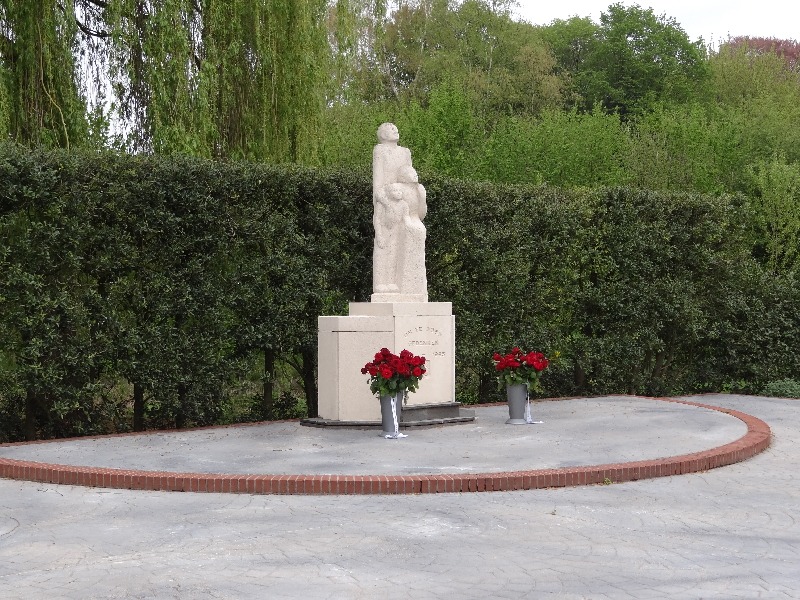
Immediately after the liberation, there was a need among the population of Aalten to honour the war victims with a monument. In 1956, the monument was unveiled on the Wheme, in memory of all Aalten civilians who died during the occupation years as a result of acts of war. The statue was made by artist Bé Thoden van Velzen.
The monument consists of a statue of a male figure with a woman and child. The sculpture of French limestone is placed on a terrace. The pedestal consists of masonry, concrete and natural stone. The memorial is 1 meter 31 high, 1 meter 43 wide and 90 centimeters deep.
During the liberation of the Achterhoek, the Dutch National Battalion was established in Aalten on 15 April 1945. A unit that consisted of members of former Achterhoek assault groups, at that time officially called Binnenlandse Strijdkrachten (Domestic Forces), and people in hiding who had found a safe haven in Aalten and the surrounding area. The men had volunteered after a call from the Canadians. In no time they had about 400 war volunteers at their disposal, good for three companies.
Everyone knows the Princess Irene Brigade. Founded in 1941 and consisting of Dutch soldiers who had escaped to England, Dutch volunteers who were already abroad and so-called Engelandvaarders; men who made the crossing to England on their own to fight against the Germans from there. The Irene Brigade moved north from the invasion beaches, fought in France, Belgium and Zeeland and fought its last battles in the Bommelerwaard near Hedel shortly before the liberation. Less well known is the ‘Achterhoek’ unit that fought with the Canadians during their advance to the north.
Photo: Foto Garretsen, J. Bloemendal
Photo: A.Ph. de Keijzer
Canadians ask for and get help
The Dutch National Battalion (DNB) had its home base in the Julianaschool in Aalten, renamed ‘Prins Bernhard Kazerne’ for the occasion. With their knowledge of the area, the members of the DNB provided valuable services to the Canadians. Equipped and armed by the Canadians, the soldiers of the DNB advanced up the IJssel, via Doesburg, Steenderen and Gorssel.
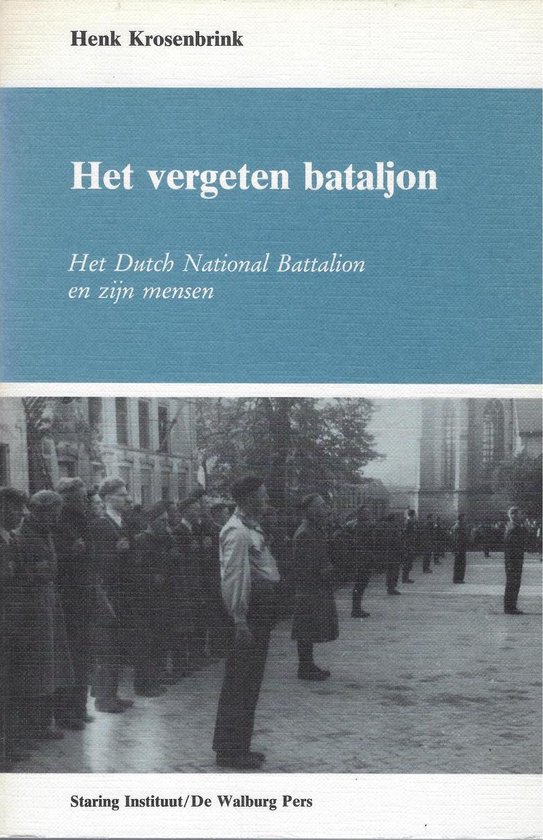
The men guarded the bridges over the IJssel and moved on to Apeldoorn. “Fierce fighting and fierce resistance,” says Arnold Somsen, member of the DNB, from Aalte in the book ‘The Forgotten Battalion’, published by the Staring Institute. “After that, it was now the end of April, the liberation army moved in the direction of Harderwijk, Bunschoten and Spakenburg. We were housed in a school. Standing guard in the evening. The Germans were still in Eemnes. So close by. Gunfights and hand grenades back and forth…”
After the liberation, the DNB was assigned to the Infantry Regiment of the Royal Netherlands Army. With that, the ‘Aalten’ battalion officially ceased to exist.
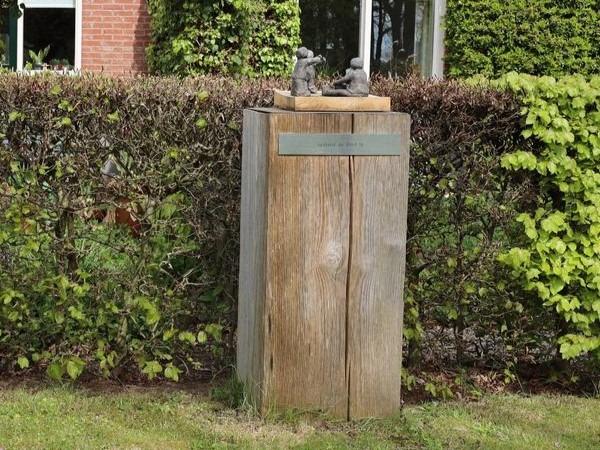
On the Piepersweg in the Aaltense Heurne there is a memorial in memory of a tragic accident that took place shortly after the liberation of Aalten. The monument was erected in memory of three young boys who died in the accident.
On the afternoon of 4 April 1945, just a few days after the liberation, the boys Wim Schenk (8 years old), his brother Henk Schenk (6 years old) and their friend Wim Wisselink (5 years old) were playing outside.
In a dry ditch along the Bocholtsestraatweg they found a projectile. Unaware of the danger, they threw it at each other. At one point, one of the boys threw the projectile against the wall of a nearby house, after which it exploded.
The consequences were horrible. Wim Schenk died on the spot. His brother Henk and Wim Wisselink were seriously injured and were taken to a military emergency hospital in Barlo, where they died shortly after each other.
Booklet and monument
In 2011 a booklet about this dramatic event was published entitled ‘Spelend de dood in’, written by Louis Veldhuis.
Seventy years after the accident, in 2015, relatives of the Schenk family unveiled a monument at the site of the tragedy. It consists of a pedestal with images of the three boys and was designed by artist Ans Braamskamp.
At the end of the Second World War, on Good Friday, March 30, 1945 , Aalten was liberated by British troops. This liberation was part of the large-scale Allied advance through the eastern Netherlands, immediately after crossing the Rhine during Operation Plunder. The liberators belonged to the 1st Battalion Grenadier Guards and the 3rd Battalion Irish Guards, both part of the 32nd Guards Brigade within the Guards Armoured Division of the British Army. 1
Advance to Aalten
At the end of March 1945, the Guards entered the Achterhoek from Germany. The Grenadier Guards formed the vanguard and advanced along the Bocholtsestraatweg towards Aalten and then on to Enschede, with the Irish Guards as mechanized infantry in their wake. 2 The advance was hampered by destroyed bridges, minefields and fierce resistance from retreating German units.
The King’s Company of the Grenadier Guards was ordered to advance towards the centre of Aalten via the so-called ‘centre line’. However, important bridges turned out to have been blown up by the Germans. The bridge on the Bodendijk was partly still intact and Major Baker, commander of the King’s Company, led his men over it. 3
When they arrived at the railway, the men encountered fierce resistance and were bombarded with mortar fire and grenades. The fight with the enemy had disastrous consequences for the liberators: several soldiers were killed, including platoon commander Andrew Duncan. 4
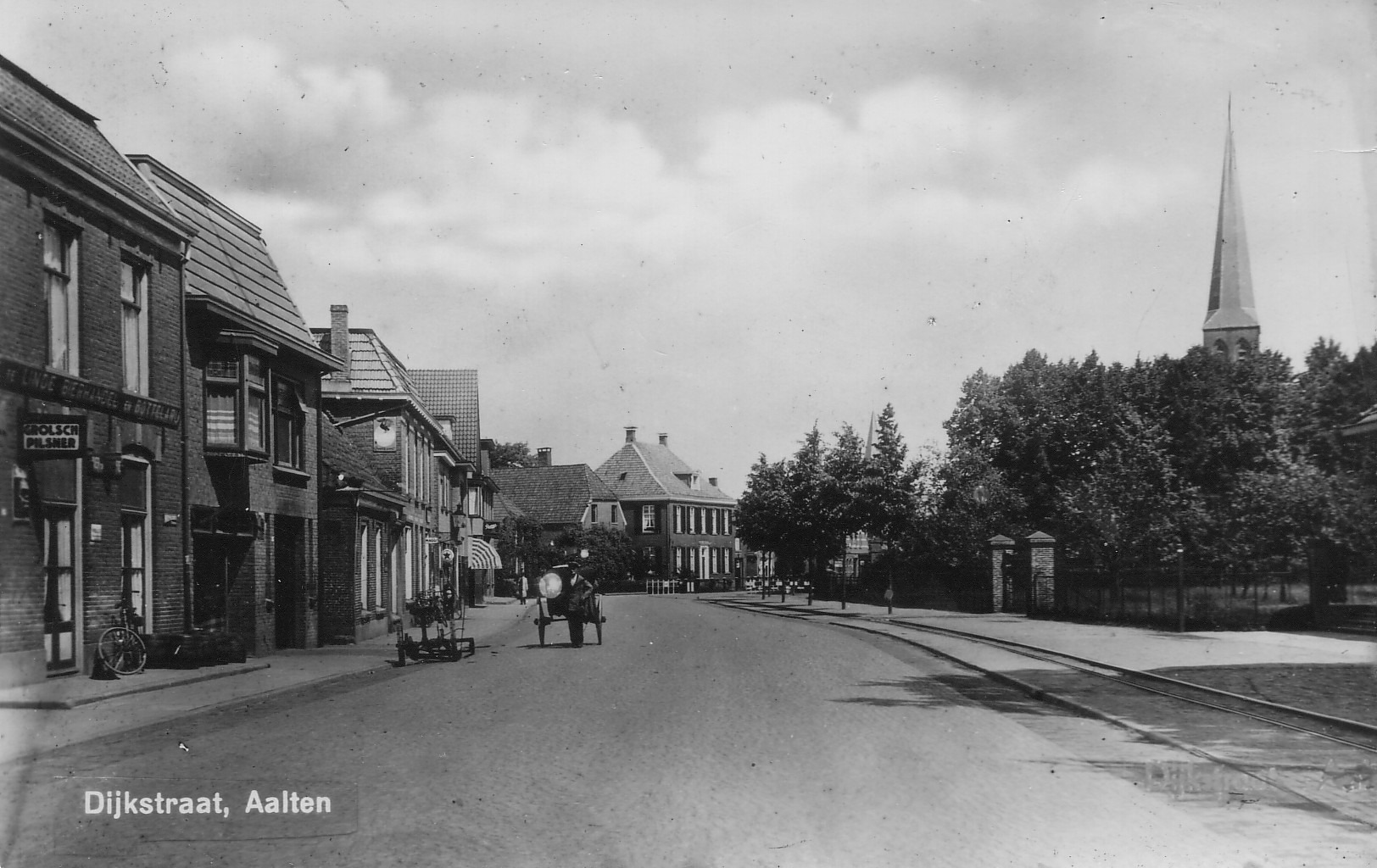
Around midnight, another two soldiers of the Irish Guards were killed because their vehicle hit a mine in the then Dijkstraat (now Plein Zuid). The explosion led to a fierce fire in which the old café Vultink burned down completely. The next day, March 31, 1945, two engineers of the Royal Engineers were killed while clearing mines. 5
Losses and cemetery
Of the total of 13 British soldiers who died, 12 are buried in the Berkenhove general cemetery in Aalten. Platoon commander Andrew Duncan is buried in the Reichswald Forest War Cemetery near Kleve. Thanks to historical research, photos of twelve of these soldiers have now also been found. This literally gave the liberators a face. 6
After the liberation
Immediately after the liberation, the Aaltensche Courant appeared again. Shortly after the liberation on April 4, three boys, eight-year-old Wim Schenk, his six-year-old brother Henk and five-year-old Wim Wisselink found a projectile in a dry ditch on the Bocholtsestraatweg. They decided to test the projectile and threw it against the wall of a house. The three children were killed. 7
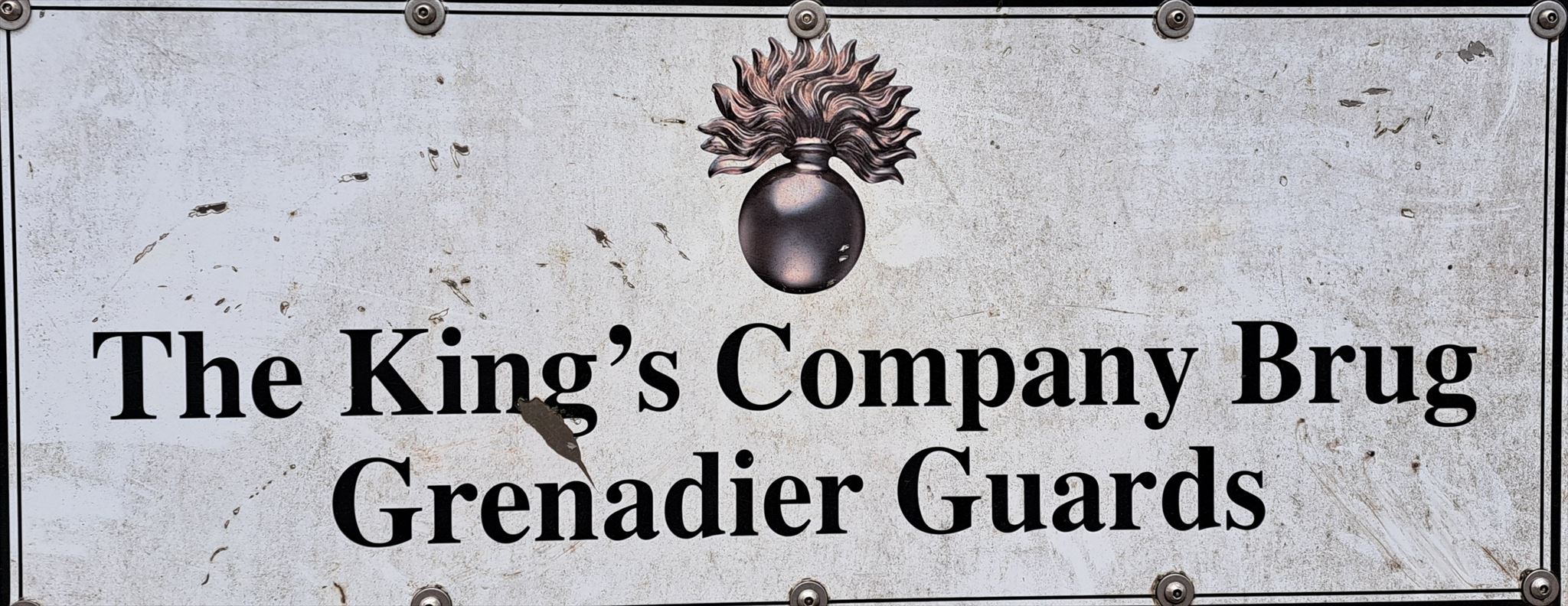
In honour of the efforts of the King’s Company, the bridge over the Keizersbeek was named the King’s Company Bridge. The ceremony took place on May 5, 2008 and was attended by, among others, veteran Walter Price, who actually served in this unit in 1945. 8
On 24 March 1945, a bombing raid took place in the Dijkstraat in Aalten. The factories on the Dijkstraat were the target. There were at least 18 to 19 fatalities. However, the exact number isnot known to date.
The Dijkstraat in Aalten, before the bombing of 24 March 1945
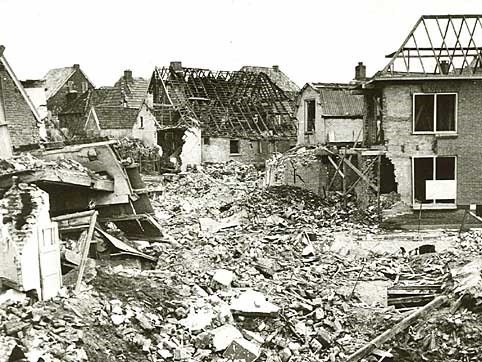
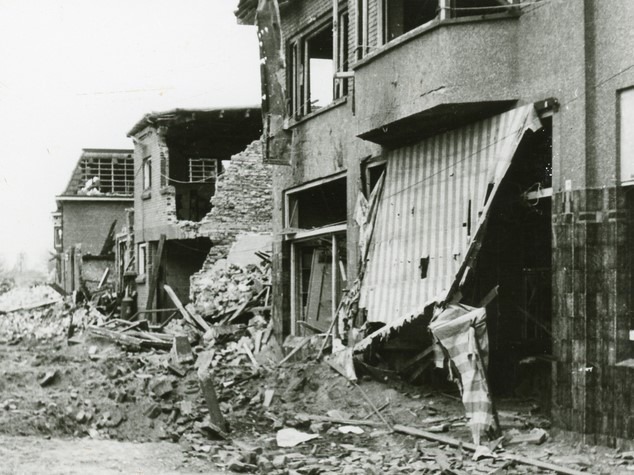
Shortly before the end of the Second World War, on Saturday 24 March 1945, planes suddenly screeched down over Aalten. Almost immediately the whistling sound of the falling bombs was heard. Part of the textile factory and Driessen’s office was bombed flat. The factory of the Aalten Tricotage Factory (ATF) also turned into a mess. From the bridge on the Dijkstraat to the railway, houses were completely destroyed, others had suffered very serious damage. The consequences were terrible.
Victims
At blacksmith Umbach’s, the cellar, where father Umbach (43 yrs.) and three of his children (13 yrs. 10 yrs and 5 yrs.) were hiding, was hit by a direct hit. All perished. The mother of the family and another son barely survived by crawling under a table in the kitchen. A little further on, the Te Linde-Wechelaar couple (both 68 years old) and their 40-year-old son were killed. At Koelman’s house, father Henricus Wilhelmus (55 yrs.) and daughter (20 yrs.) were killed. Johannes Henricus Antonius Tepe (50 yrs.), Maria Johanna Christina Leemhorst (34 yrs.), Anton Lamers (73 yrs.), Annie Kamphuis (15 yrs.), Henk van Mechelen (15 yrs.) are also among the victims. Furthermore, three evacuees, namely Catharina van Ingen (79 yrs.), Catharina Hendrika Stokking (25 yrs.) and an unknown 15-year-old girl from Haarlem.
In the Aaltensche Courant of May 4, 1945 and in the book “Er op of er onder” (by W.P. Nederkoorn and G.J.B. Stork) two more victims are mentioned: M.J. Praster-Polman (28 yrs.) and a certain G.A. van der Meulen (44 yrs.).