At the end of 1922, the residents of Aalten sent food aid to the destitute population of the neighboring German city of Bocholt.
Germany’s defeat in World War I had profound consequences. In 1919, the Allies forced Germany to accept full responsibility for the war, and enormous reparations were imposed on the country. The staggering debt burden to the Allies led to hyperinflation and a severe economic crisis. This resulted in extreme poverty and famine for the majority of the German population.
On September 28, 1922, the municipal council of Aalten decided to help the destitute population of the neighboring German city of Bocholt, “in recognition of the good that Aalten enjoyed from this industrial city before the war.” The aid consisted of sending foodstuffs that were available here in abundance.
On November 17, the Aaltensche Courant reported:
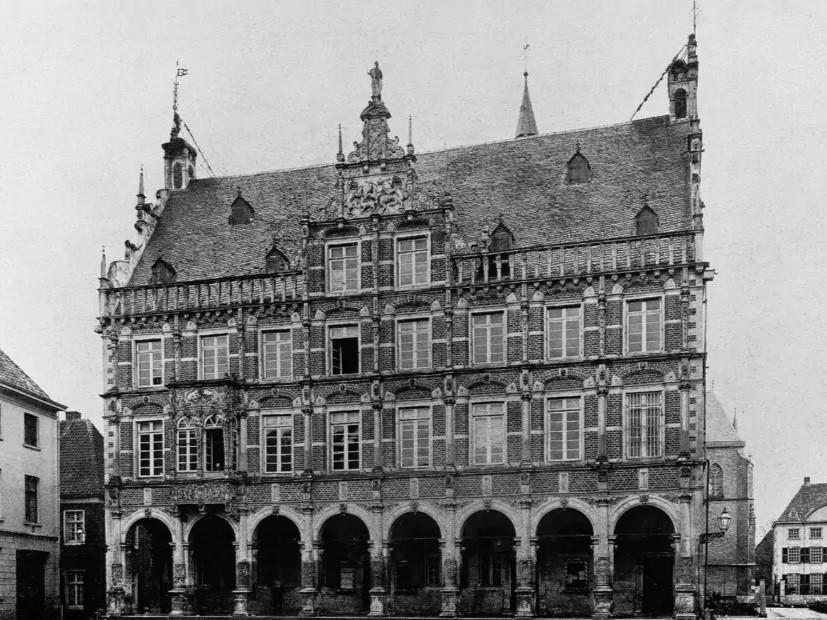
Old Town Hall of Bocholt, for illustration
“This morning, the second shipment of food, collected by the citizens of the municipality of Aalten, left for Bocholt. In the following weeks, the residents of the municipality of Aalten gathered several more shipments of food and sent them to Bocholt. On Tuesday, seven wagons carrying potatoes, cabbage, rye, etc., crossed the border, while two more transports are scheduled to depart next week. That these efforts are received with great joy requires no explanation, given the dire need, and this humane act will certainly contribute to the resumption of friendly relations (broken by the war) with our neighbors.”
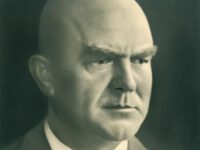
Dr. Schmitz, Mayor of Bocholt
Ten days later, the Zutphense Courant wrote:
“Nov 26 – During the council meeting of the border city of Bocholt, the mayor delivered a speech to express his gratitude for the great sacrifice made by the population of the municipality of Aalten to provide the poor of the city of Bocholt with all kinds of foodstuffs such as potatoes, flour, fat, vegetables, etc. Fourteen wagonloads had already been received, which the Aalten farmers brought to Bocholt themselves. The mayor regarded this assistance from the Dutch border residents as a sign of rapprochement toward their German neighbors.”
In Aalten, during the night from Tuesday to Wednesday, a certain H.J. Jansen had his skull crushed with an axe by his brother-in-law S. while he was already in bed. Although his condition was nearly hopeless, he was transported to Arnhem by train. On the same train, his brother-in-law, who had been arrested in Winterswijk, arrived in Aalten in handcuffs. He was taken to the town hall by constable Blom from Aalten and state constable Hendriks from Winterswijk to be interrogated.
The victim passed away in Arnhem the following night. He leaves behind a widow and six children. The brother-in-law S., the suspected perpetrator, was transferred to Zutphen on Wednesday. He is unmarried. The causes of this tragedy are family disputes.
On August 24, 1921, the District Court in Zutphen heard the case against H.H. S., a laborer from Aalten, suspected of murdering his brother-in-law H.J. Jansen with an axe in his home on or about July 25, following a party, while he was lying in bed, as a result of which his skull was split and he died a few days later.
The defendant claims to remember nothing and says he was drunk. However, on the night in question, he told one of the witnesses, a certain P.: “I did something to H. He might die.” J. was found in a small side room about 15 meters from his bedroom. In the bedroom, blood spatters were visible on the wall and the bed. The Public Prosecutor demanded a 4-year prison sentence. The defense counsel, Mr. Wildervank de Blécourt, pleaded for clemency.
The District Court in Zutphen sentenced the suspect S. to 4 years in prison, in accordance with the demand, with credit for time served in pre-trial detention.
Scheveningen
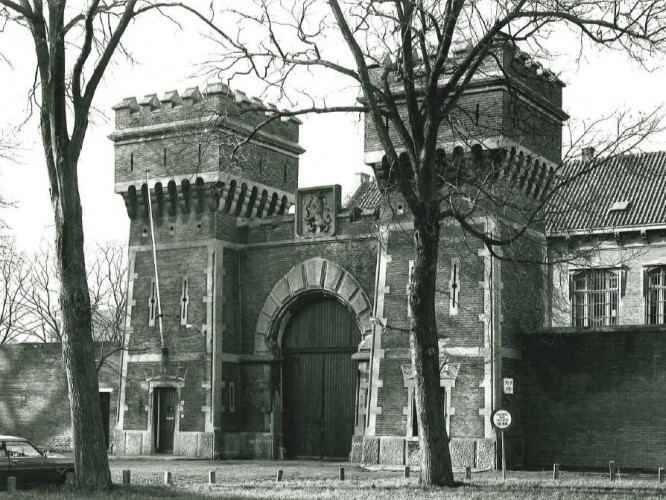
In 1922, we find H.H. S. in the penitentiary on Pompstationsweg in The Hague / Scheveningen, known for its striking gatehouse.
The striking gatehouse of the prison on Pompstationsweg in The Hague.
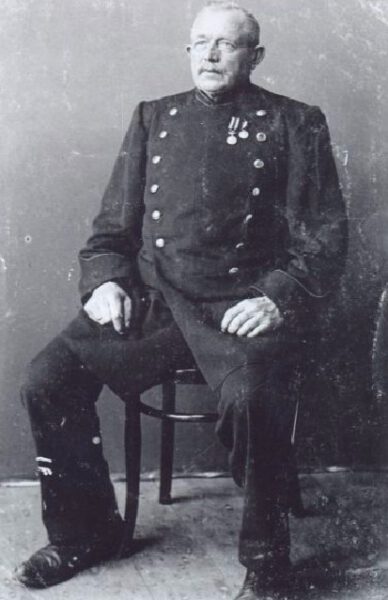
Gerrit Heersink was born on 13 May 1846 in Hummelo, the son of day labourer Jan Willem Heersink and Berendina Eenink. On 8 May 1873, he married Aleida Gesina Prinsen in Aalten. Nine children were born from this marriage.
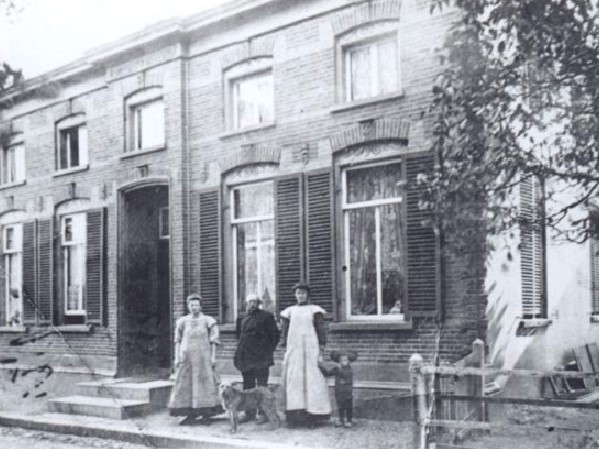
Heersink served as a ‘veldwachter’ (rural constable) in Aalten for nearly five decades. He lived with his family on the Kattenberg, on what is now Berkenhovestraat. His brother Lammert ran a bakery just a stone’s throw away.
In early 1920, Gerrit Heersink moved to Haaksbergen, where he passed away on 27 December 1920 at the age of 74.
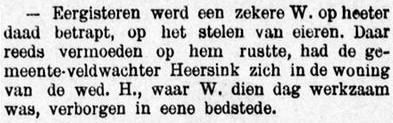
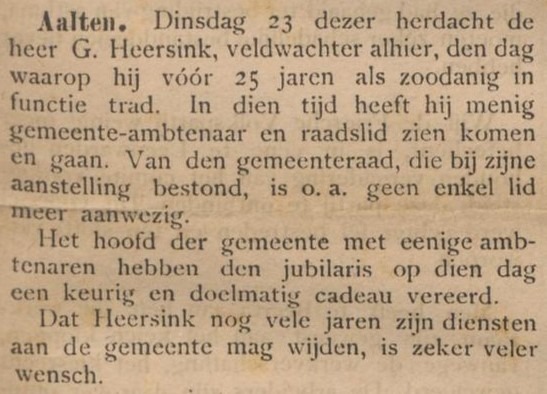
Constable Gerrit Heersink with his daughters, standing in front of his house (1917)Graafschapbode, 12 September 1891Weekblad voor Aalten, Breedevoort, enz., 27 February 1897
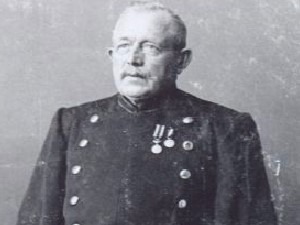
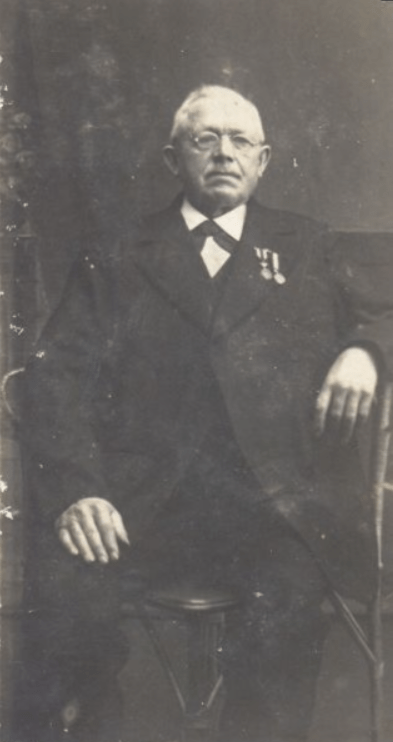
Gerrit Heersink (1846–1920), wearing the medal awarded to him in 1912 to mark his 40th anniversary of service as a constable.
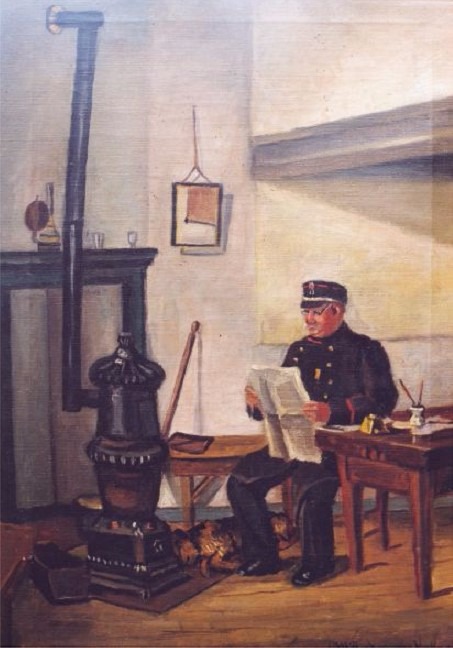
Gerrit Heersink in 1912, on the occasion of his 40th anniversary in office as a constable in Aalten.Gerrit Heersink reading a newspaper in the guardroom at Aalten town hall, with his dog Caesar at his feet – A gift from the municipal staff, 1912.
AALTEN, 6 May 1920 – It was a busy day for Mr G. de Vries, director of the local butter factory. Together with his assistant, Mr Kempink, he had counted out ƒ 14,094.40 into bags and stored them in the safe. The money was intended to pay the milk suppliers the following morning. At the end of the day, De Vries was the last to leave the office, locking the door behind him. However, the safe remained open, with the key still in the lock.
The next morning, the money had vanished. The only sign of a break-in was a curtain cord hanging outside the window. Although the director had locked the office door, the windows facing the street could easily be slid open from the outside.
On 7 May, the Nieuwe Aaltensche Courant reported on the theft: “Last night, a sum of ƒ 14,000 was stolen from the safe of the Aaltensche Coöp. Zuivelfabriek (Dairy Factory). At the request of the police, we are not sharing further details.”
Investigation
In the months that followed, the media remained silent. Behind the scenes, however, intense work was being carried out on this sensational case. The marechaussee in Winterswijk conducted an investigation and arrested several suspects, who later had to be released due to a lack of evidence. Subsequently, the case was reinvestigated by the national, municipal, and military police, without success. Even a national constable-detective (rijksveldwachter-rechercheur) returned home empty-handed.
Finally, the investigation was assigned to Sergeant of the Marechaussee Woerts from Zutphen. Woerts went undercover, wandering through Aalten for a time as a vagrant, staying in a lodging house, and working at a factory. After gathering a wealth of information, secret agent Woerts—Evert Jan Woerts—travelled to Germany and managed to arrange for himself to be locked in a prison alongside a person who knew more about the matter…
This also yielded valuable information, leading to the arrest of two suspects: Gerrit Jan W. (29, a bricklayer’s labourer) from Enschede, formerly a resident of Aalten, and Hendrikus P. (28, a clog maker) from Aalten.
Gerrit Jan W. from E.
Several newspapers reported on the trial, which took place in December 1920 at the court in Zutphen. Gerrit Jan W. was the first to stand trial. He testified that he and co-defendant P. had climbed in through a window and stolen the bags of money from the safe. Once outside, they placed the bags into a large jute sack and went to W.’s house to count the money. There, P. gave the defendant ƒ 110 and left with the rest of the loot, approximately ƒ 14,000. P. was supposedly going to hide the remainder in the “Schaapsche hei” (perhaps referring to the Schaarsheide?). W. had burnt the bags that previously held the money.
The defence counsel, Mr C.C. de Jonge, pointed out that the defendant was an epileptic—the defendant actually suffered a seizure during the defence—and requested an evaluation of his mental faculties. According to him, P. was the primary perpetrator and had likely enticed W. At any rate, he urged for a lighter sentence.
The Public Prosecutor praised Wachtmeester Woerts, whose investigations and tactical approach had brought this defendant to a confession. In his view, it had been shown that this accused was the least guilty. Therefore, his sentence could be lighter; the Prosecutor demanded 1½ years’ imprisonment, with time served in pre-trial detention deducted.
Hendrikus P. from A.
Next, Hendrikus P. stood trial for complicity in the same case. P., however, denied everything. He stated that he had not been at W.’s house that evening, though he had been there eight days prior. P. had an alibi for the night in question: he had been home between 10:00 and 11:00 and was asleep. The following morning, he had cycled to “Heersen” (?). P. maintained that he had nothing to do with the burglary and that W. had cast suspicion on many people in this case. He also claimed that W.’s wife was unreliable.
Witness Hendrika Geessink, W.’s wife, testified that on the evening of 6 May, co-defendant P. came to fetch her husband, saying: “Gerrit, come with me, there’s something to be had at the butter factory,” or words to that effect. Her husband had initially refused, but after P. persisted, W. eventually went along. Whether it was exactly a quarter past eleven when P. arrived and one o’clock when they returned, the witness could no longer say for certain. When they returned, the witness was in bed, but she did see money and paper bags. She did not know the exact amount.
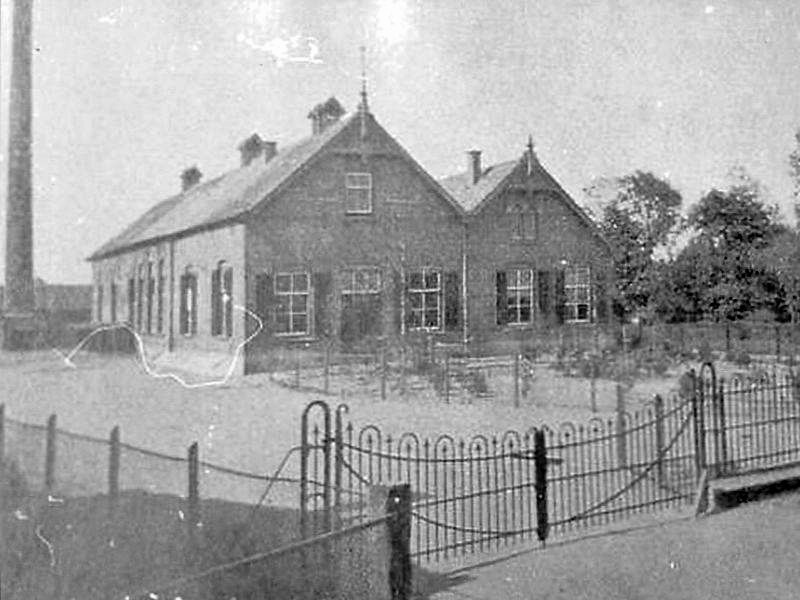
Butter factory Aalten, c. 1915
The witness confirmed that after 6 May, the whole family went to Enschede by car. German and Dutch currency was seized from her on 17 September. She denied that it amounted to 4,000 marks. It also appeared that she had purchased various items worth ƒ 800 after 1 May. Her husband had not told her everything, because: “no husband does that!” On 16 May, she had deposited 10,000 marks at a bank in Enschede. The witness claimed that this was money honestly earned by her husband.
Despite this, the Public Prosecution Service considered it proven that P. was the most guilty in this case and demanded three years’ imprisonment. The defence, however, contested the evidence; he deemed the testimony of W.’s wife unreliable. Furthermore, he pointed out the large expenditures made by the W. family after 6 May, arguing that nothing proved P.’s guilt. Since W. was constantly working on the factory grounds, it was more likely that W. would have gone to P. to fetch him. The defence therefore requested an acquittal for P.
Verdict
On 5 January 1921, the Court in Zutphen sentenced Hendrikus P. to 2 years and Gerrit Jan W. to 6 months’ imprisonment, with pre-trial detention deducted, for theft by climbing into the Aalten butter factory.
Notably, the defendants were not ordered to repay the stolen sum. Consequently, the butter factory had to bear the loss itself. Member of Parliament Weitkamp found this peculiar and asked the Minister of Justice if he was willing to “indemnify the owners of the butter factory on behalf of the State for the great financial disadvantage suffered due to the peculiar views of a judicial official?”
The Minister, however, was of the opinion that “it has not been shown that the owners of the stolen funds suffered financial loss due to any negligence by the judicial authorities” and therefore saw no reason to consider compensation.
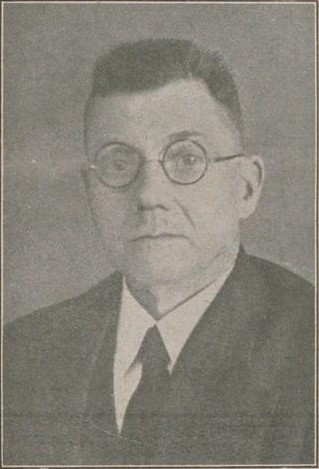
Gerrit de Vries, director of the butter factory in Aalten (1939)
Sources
De Nieuwe Aaltensche Courant, 7 May 1920 (Delpher)
At the end of May 1918, the first reports appeared in Dutch newspapers regarding a ‘mysterious illness’ in Spain. Although its origins likely lay elsewhere, it was soon referred to as the Spanish Flu. This pandemic held the country in its grip for nearly two years and claimed 38,000 lives. In 1920, the disease vanished as enigmatically as it had arrived.
The municipality of Aalten did not escape the Spanish Flu either. The number of fatalities here is estimated at approximately 60, out of a population of roughly 10,000 at the time.
Newspaper reports
Aalten, 16 October 1918 – “The Spanish sickness is increasing in scale in Aalten. In many households, one or more family members are confined to bed. It is also markedly noticeable in schools, where many children are absent. Consequently, the Christian school on Breedevoortsestraat has been closed. Fortunately, the illness has not yet taken a malignant course. Lung conditions have only occurred in a few individuals.” De Standaard
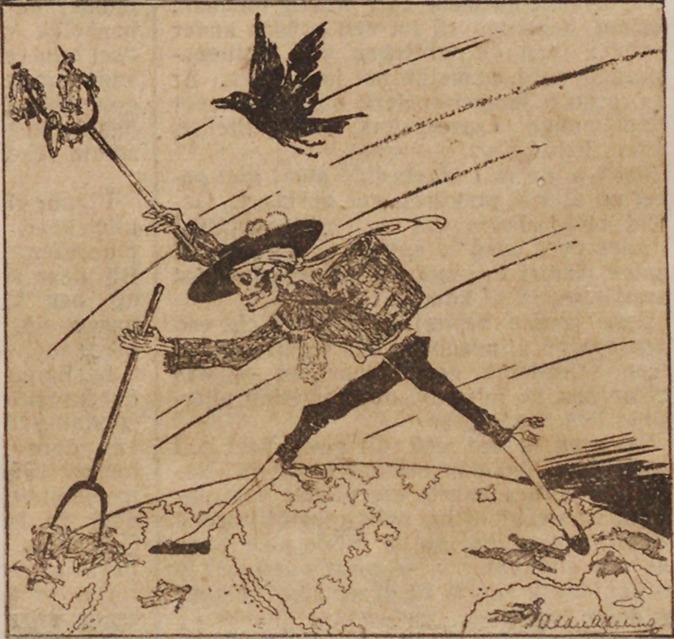
Cartoon from 1918–1919. Newspaper clipping, collection Scheltema
Aalten, 29 October 1918 – “The Spanish flu, which at first was sometimes spoken of jestingly, is now appearing alarmingly in places. So too here in our municipality. Among the very numerous cases, several have resulted in death, sometimes so suddenly that people pass away within a few days. Indeed, the number of reported deaths at the town hall here has never been as high in a single day as was the case yesterday, when no fewer than eleven death certificates were filed. There is general widespread sympathy for the households where death has made such an unexpected entrance.”
Bredevoort, 29 October 1918 – “Whereas until now the Spanish flu was actually only known by name here, as people were recovered within a couple of days, it has now become quite different and has taken on a more serious character. Already several victims have died of this illness, while many are seriously ill. The public school was closed yesterday (Monday morning).” Aaltensche Courant
Aalten, 5 November 1918 – “The flu continues to rage here with the same severity and claim its victims. Yesterday, four persons in this municipality died of the disease.” De Graafschapper
Aalten, 20 February 1919– “In the municipality of Aalten, the Spanish flu has now broken out for the third time. The illness has been confirmed in many families, with some cases already resulting in death.” Arnhemsche Courant
Aalten, 5 March 1919– “The Spanish flu continues to demand sacrifices in Aalten. The number of cases remains significantly high, while numerous deaths occur.” Arnhemsche Courant
Miracle Cures
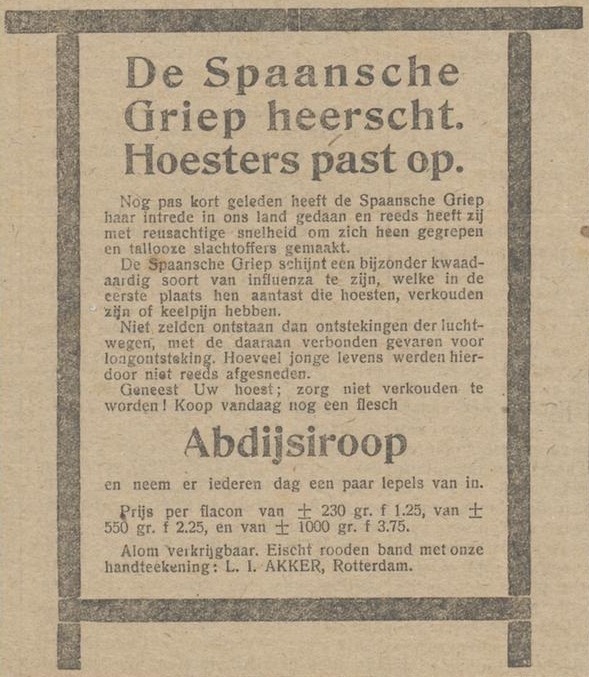
Entrepreneurs also saw commercial opportunities and sold all kinds of remedies for the flu, such as ‘Abbey Syrup’, which was essentially nothing more than sugar water with cinnamon. Other promoted treatments included “sublimate injections, fumigations with nitrous acid, eucalyptus oil, sugar beets…”
Advertisement in De Graafschapper, 27 December 1918
During the First World War, Aalten offered shelter to many foreign refugees.
It was 28 July 1914 when the First World War broke out. Two days later, the Netherlands declared its neutrality. As a result, we were spared the great horrors of this war. However, the Netherlands soon faced an entirely different problem: refugees. Many escaped prisoners of war, deserters, and civilians arrived from the surrounding countries to find a safe haven here. This was also the case in Aalten.
Newspaper reports
“Italian refugees. In Aalten, the Rectory and the minister’s residence of the Christian Reformed congregation have been made available for several Italian families who have fled from Germany.” Het Vaderland, May 22, 1915
“We are informed from the Eastern border: That it is not yet so very easy for escaped prisoners of war to cross the border may be evident from the fact that the Feldwebel, serving at the rural district of Kotten on the border of the municipality of Winterswijk, reported that in the last few weeks no fewer than 70 refugees were detained in the border strip located along the municipalities of Winterswijk and Aalten. Nevertheless, during that time, approximately 20 prisoners of war—French, Russians, Belgians, and also an Englishman—arrived on Dutch territory in that area.” Arnhemsche Courant, March 25, 1916
“Aalten, 29 Dec. The number of refugees, prisoners of war, deserters and civilians who have arrived here across the border in recent days is very large. No less than 25 Russians arrived here who had worked in the coal mines in Germany. All were transported to Rotterdam. In addition, 17 Poles, two of whom had their wives and children with them. They had come from Courland and had worked in the mines for a wage of 9 to 10 marks a day; The poor diet had forced them to move to our country. They had had a very difficult journey. Furthermore, 4 deserters and 1 escaped French prisoner of war arrived. On Wednesday another French prisoner of war arrived here, who had escaped with two others from a prison camp in Germany. One of them was shot before he reached the border, and the other wounded and taken prisoner. Yesterday afternoon two more Russians and a German deserter arrived and this morning another German deserter reported to the border guard.” Zutphensche Courant, 30 December 1916
“Saturday evening and Sunday morning, 9 Russian Poles, a Belgian, and a Russian cavalry non-commissioned officer crossed the border at Aalten.” Het Nieuws van den Dag, January 16, 1917
“In Aalten, a German deserter with his wife, two children, and a servant crossed the border and departed for Amsterdam on Monday. The wife was born in Argentina.” Het Nieuws van den Dag, January 23, 1917
“In Aalten, three German deserters and three French servicemen who had escaped from the camp at Muhlheim crossed the border on Sunday. Among this group of six was the guard of the aforementioned camp, who had acted as a guide for the refugees.” Het Nieuws van den Dag, November 20, 1917
“In Aalten, two French prisoners of war crossed the border on Saturday. They had escaped from a camp at Friedrichsfeld.” Het Nieuws van den Dag, June 10, 1918
“Today, Friday, the following were expected here from Winterswijk: 316 French, 22 Belgian, and 2 Italian prisoners of war.” Aaltensche Courant, November 29, 1918
French refugees in the Festival Hall
Towards the end of WW I, a second wave of refugees started from northern France, mainly of French, but also Belgian citizens.
Friday, September 27, 1918 – In northern France, the German occupying forces had called on the population of some 250 towns and villages, which were located between the Hindenburg Line established by the Germans and the border with Belgium, to leave their homes. Heavy fighting was expected now that the Allies pushed the Germans back towards Belgium, so it would be better to evacuate the region. Those who responded to the call often traveled on foot through occupied Belgium, taking their meager possessions with them. The Netherlands had promised to provide temporary shelter to a large group.
Saturday, October 26, 1918 – Arnhem was a place of passage for French refugees. At 18:00, 350 refugees arrived here. They would be transferred to Borculo, Groenlo and Aalten the next day. On Sunday evening, another 800 to 900 refugees arrived, who would go to various places in Gelderland on Monday. Members of a certain group wore bands of the same color around their arm as a distinguishing sign.
Sunday, October 27, 1918 – It was a turbulent Sunday for the normally quiet Aalten. On Saturday, the mayor had received word that a large number of refugees, both men and women, were to be accommodated in his municipality, as in other places in Gelderland. A meeting of the Committee for the Aid of Refugees, established in 1914, was hastily convened. It was decided that the men would be housed in the Elim building and the women and children in the Community Hall. Furthermore, the necessary measures were taken to provide the refugees with food and drink.
Sunday afternoon 13.00 hours a large crowd of people had gathered at the station . The members of the fire brigade were on the platform to provide the necessary assistance in transferring the guests. It was a long train that transported not only Aalten but also a hundred refugees for Winterswijk and Groenlo. The supervisor, a merchant from Antwerp, got out and invited the 108 men he accompanied to follow his example. Groups of four lined up, the luggage was loaded onto a truck, and so the procession, surrounded by a large crowd, made its way to the Festival Hall.
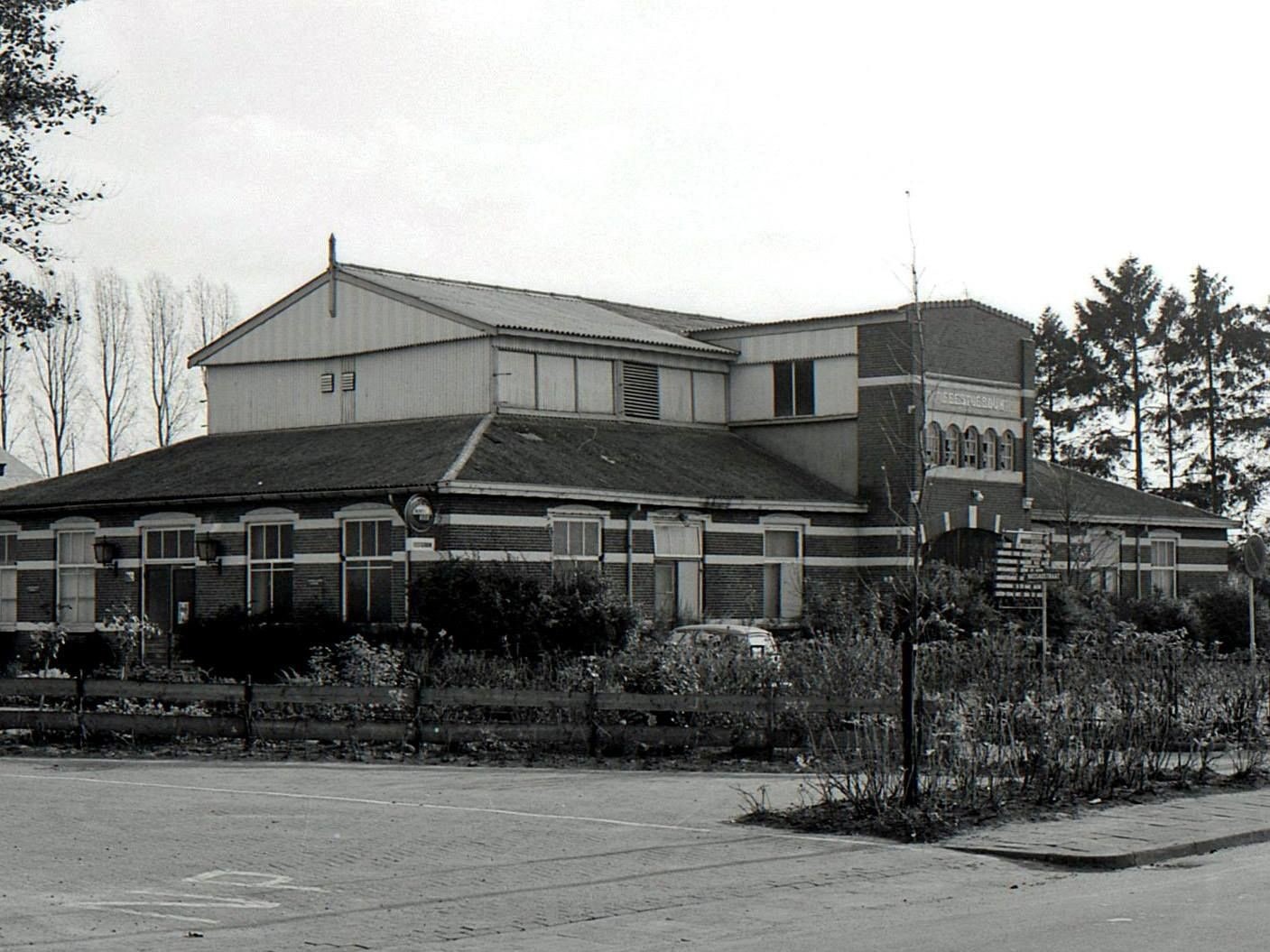
Feestgebouw, (Festival Hall), Aalten
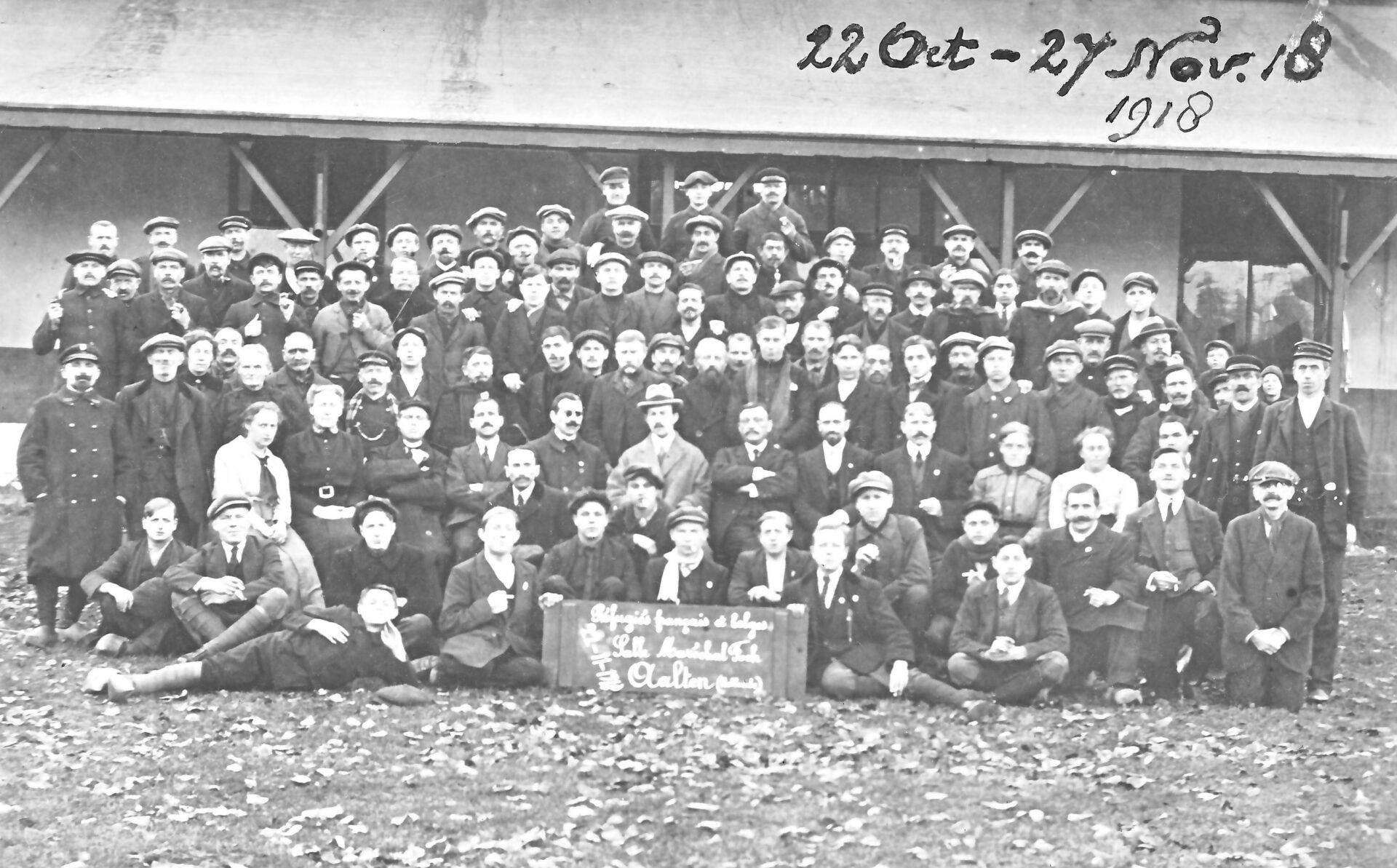
Salle Maréchal Foch
The Community Hall was renamed ‘Salle Maréchal Foch‘ for the occasion, after France’s renowned commander-in-chief.
Everything here was neatly arranged as a sleeping place for the strangers. Long tables were placed, where meals could take place. On a table were jugs of the fire brigade, which could serve as a washing set. Some refugees were so tired that they immediately lay down on their army bed of straw. No wonder, because they had all walked from Lille or Tourcoing to Brussels the week before. In the Belgian capital they were actually destined for German service, but through a ruse – most of them had a false pass – they, with thousands of others, managed to cross the Dutch border.
After the guests had refreshed themselves with coffee and bread, their names were recorded with place of residence and profession. There were: a stationmaster and two teachers, the three of whom were appointed as the regulation committee, to whom the refugees could turn with requests and complaints.
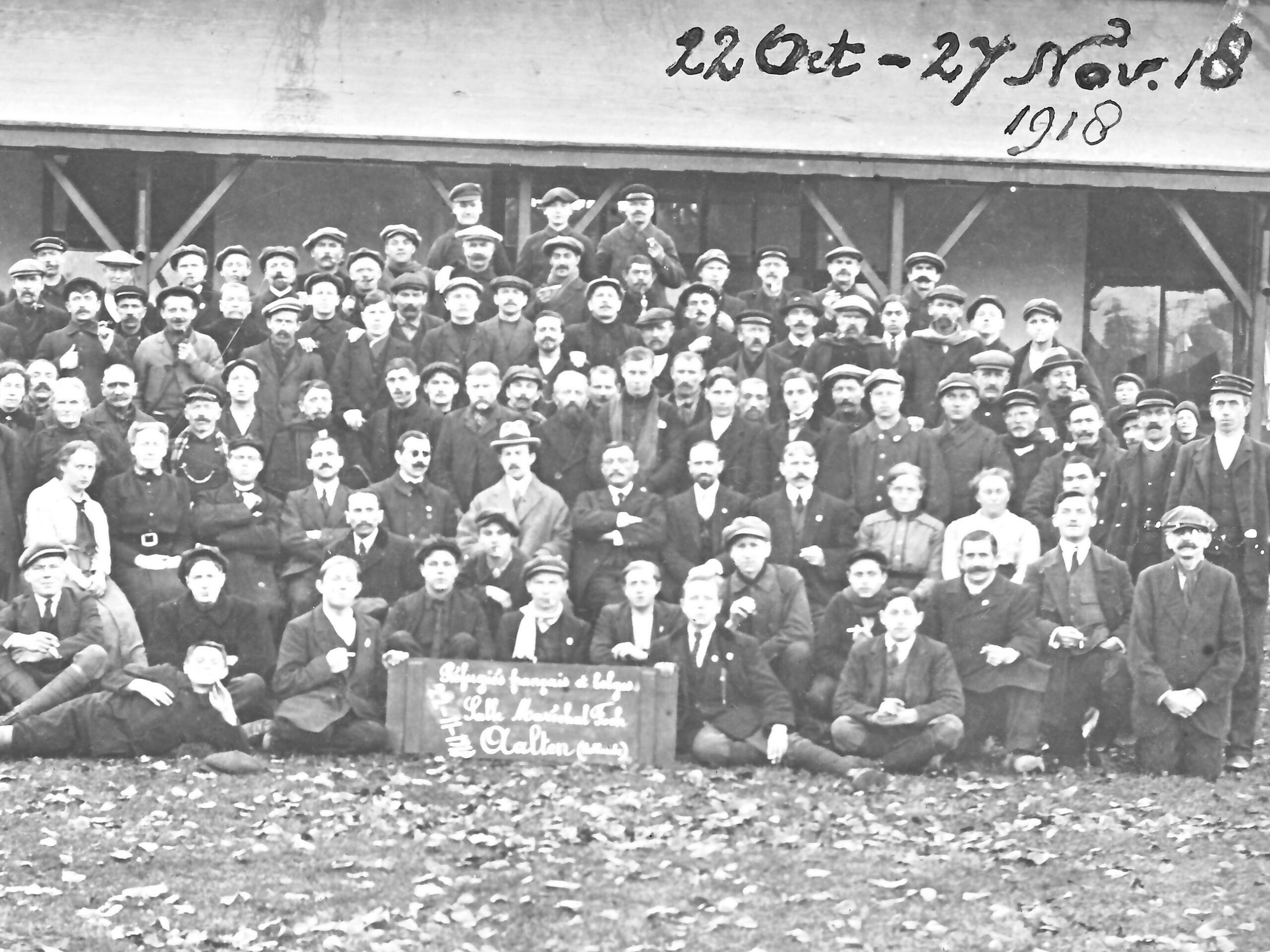
“Réfugiés Français et Belges, Salle Maréchal Foch, Aalten (Hollande), 22-11-1918”
Of course, many of them felt the need to let their relatives know that they were safe and sound in the hospitable Netherlands. That is why paper and ink were made available to them, while the gentlemen Johs. Driessen and Jongen made sure that they could exchange their foreign currency for Dutch money. Thanks to the action of the committee, under the excellent leadership of Ms. Hesselink could be served lunch at 18:00, which the French enjoyed.
Certain measures had been taken to maintain order. For example, everyone had to be inside at 21:00 in the evening and the cafes were not allowed to serve them liquor.
According to the supervisor, the refugees would not stay longer than 14 days under any circumstances. They would be brought back to their homeland as soon as possible via Zeeland through liberated Belgium. Negotiations about this were already underway. It would be four weeks.
Tuesday, October 29, 1918 – Two days after their arrival, three of the refugees housed in Aalten decided to flee. After breakfast, they had left the building with all their belongings, with directions from Aalten via Varsseveld and Terborg to Arnhem. However, they were caught by the police and brought back to the Community Hall.
Italians
In an interview with Mayor Monnik, he tells about Italian prisoners of war, who were killed in the factory of N.V. Textiel Mij. were accommodated: “We experienced something peculiar with those Italians. We had given them all some of our beautiful soap, of which we had a whole supply at the time, to be able to wash themselves fresh, but the next day all the soap was eaten by the Italians!”
End of the First World War
Monday, November 11, 1918 – In a forest near the French town of Compiègne, about eighty kilometers north of Paris, the armistice was concluded that ended the First World War. The more than 40,000 French refugees in the Netherlands were able to return home. This was quite a logistical organization, so it would take until January 1919 before the last French could leave. In addition, the Germans released their prisoners of war, and of course they also wanted to return to their homeland as soon as possible. A huge stream of refugees started, partly via the Netherlands.
Saturday, November 16, 1918 – In Aalten, everything was prepared to receive the stream of English refugees that was expected from Germany. In the schools and other buildings, everything was set up for this purpose so that 900 men could be housed. The rest would be forwarded to surrounding municipalities. To maintain order, a company of infantry of the 22nd regiment from Ede had arrived in Aalten. The soldiers were housed in the public school on the Herenstraat as well as in the Chr. School on the Bredevoortsestraatweg. The Nieuwe Aaltensche Courant added: “For our otherwise so quiet village a lot of hustle and bustle!“.
Tuesday, November 19, 1918 – Nieuwe Aaltensche Courant: “On the eastern border, the camp management, in anticipation of the throngs of prisoners of war, who are now being released in Germany and want to return to their homeland on their own, was no longer in control of the situation. To prevent fermentation, a deputation came to ‘s-Heerenberg to discuss transport. In order to guide the stream into a good bed, the Dutch army command has determined that Belgians and French may only pass through the narrowest strip of Limburg on our land, at the other points they will be irrevocably relegated. Only English people are admitted there. Concentration camps are being prepared in ‘s-Heerenberg, Aalten, Dinxperlo and Winterswijk.”
Refugees from German prison camps also crossed the border into Aalten. On Saturday, November 16, a group of 21 French refugees managed to reach Aalten. They had even already found their way to the Community Hall, where they joyfully greeted their compatriots. To their disappointment, however, they were informed that—due to the aforementioned decision—they would be sent back to Germany. Understandably, they were not keen on this, but it was mandatory. As a farewell, they asked to be allowed to sing the Marseillaise with their brothers from the Community Hall, which was granted by the commander.
In a supplement to the above-mentioned report, the same newspaper nevertheless reported that “The initially taken decision to send the French who arrived here back to Germany has been withdrawn, so that they can be forwarded from here to Rotterdam.”
Word of thanks on departure from Aalten
Friday, November 29, 1918 – Aaltensche Courant: “So we have lost our French guests once again! On Tuesday, the prisoners of war departed, and on Wednesday morning, the refugees left the Community Hall, where the following grateful speech was delivered by Mr. Lopes:
“Mr. Commander. We are about to leave our camp, which you yourself have baptized “Salle Maréchal Foch,” thus showing your sympathy for France and your admiration for him who led us to victory.
Before leaving, we will repeat to you that by your benevolence and by the devotion with which you have done your difficult work so well, you have won the esteem of all the refugees. And our stay here has not always been very pleasant, because it was not feasible for you to give us all the pleasures that we hope to find again in our family; but you have done the impossible to soften our fate.
We have come to Dutch soil, M. the Commander, especially to escape the forced labor against our fatherland, against our brothers, against our fathers, against our children. We have found a refuge in this quiet country, where we have been able to recover from the fatigues and inconveniences of our long journey. If the Netherlands had offered us nothing but this satisfaction, that we know we are safe from forced labour, we would already owe it a great debt of gratitude.
But we have other reasons to keep pleasant memories of the municipality of Aalten, because at first we could think of a fairly cool reception, in the sequel we saw that the great majority of the population was well-disposed towards us. Moreover, we have material proofs of this: corrections, successively made to our lodgings, blankets have been distributed, the hall has been heated, the evening meal has been improved, soap has been distributed, postcards have been provided free of charge, smoking in the dining room has been permitted, cigars have been distributed, everyone has received a guilder, books, illustrated sheets have been donated, various games, underwear and superwear and clogs have been given, repaired shoes, mended undergarments and outerwear, yes, you gave parties and lectures, offered little memories, etc.
Moreover, the members of the Bureau, during their visits to thank the generous donors and in their friendship with several respectable families, were very surprised to find, so close to the German border, many people who knew the French language, even subscribed to newspapers from our country.
So, M. the Commandant, we will keep our stay in Aalten in pleasant memories. We will never forget a benevolence and a devotion that nothing could slacken, whatever the objections that had to be overcome. This sincere and heartfelt gratitude, of which we assure you, is the expression of the feelings of all the réfugiés in the ‘Maréchal Foch’ hall; it is unanimously brought to you (you may be proud of it!). Although we would like to thank you personally, we must not forget Mr. Chief Deputy, the entire Fire Brigade and also the police. To us, they were more friends than guards.
And as for the kind ladies who have so often honored us with her presence, and even voluntarily made themselves our servant maids at all our meals, they have reminded us too much of our wives, our mothers, our sisters, our betrothed, for us to forget them. But it is impossible for us to mention the names of all those who have taken an interest in the improvement of our lot. We therefore ask you, M. de C., to be our interpreter for these people, to thank them on behalf of the Bureau, on behalf of all comrades, on behalf of our families, on behalf even of the three twin cities of Lille, Roubaix, Tourcoing, from which we almost all come and where French and Belgians have learned to live on good terms. working side by side, one of one’s minds, long before the common suffering.
And, now that we are going to leave for our hearths, allow us to cry out loudly: Long live M. the Commander! Long live Aalten! Long live the Netherlands! Long live Belgium! Long live France!”
It has become quite empty in our streets. We were already used to seeing groups of red-trousers, or yellow- and grey-trimmed warriors in front of the shop windows. To Rotterdam by rail, they go there today, Friday, on the boat that takes them to France. How happy they will be when they can see the coast of Picardy again! No doubt the ladies, who have helped all the time that the refugees stayed here, with the distribution and distribution of the food, will be remembered by them with gratitude for a long time to come, and our brave fire brigade no less.”
French frustrations
It will come as no surprise that the conditions in which the refugees were housed were not ideal. Nor that frustrations arose after a while among some of the refugees. What is remarkable is the following publication in the Nieuwe Aaltensche Courant of 3 January 1919, more than a month after the departure of the French refugees:
“Aalten enjoyed the honor, probably for the first time, to be mentioned in the French Chamber, in the discussion of the situation of the French refugees in the Netherlands. It was said by one of the deputies that forty thousand refugees in our country are literally starving. Isn’t it beautiful? See here a sketch of the situation:
“Our refugees are housed in stables and barns, without heating and without beds. They sleep on dirty straw. Under the arrangements made, the mayors must arrange for the supply at the expense of the Relief Commission. Unfortunately, the lack of organization is felt everywhere. Everywhere it is a “pan”! Items that are requested will not be delivered. For every step, for every complaint, six instances are needed, so that everything goes into disarray. Women and children are shivering from the cold here, without coal, without warm clothes. For days there is no meat, the weakest succumb to lack of care. The bread provided by the Dutch government is inedible.”
We do not know how care was arranged in other places. But we do know that this description does not fit the treatment as the refugees have received in Aalten. Now it is not impossible that here and there the organization was not immediately punctual – would the French, in the same circumstances, have fared better? – but ‘dying of hunger and cold’ will, we trust, turn out to be a horrible exaggeration.”
In addition, the French delegate reported:
“Several French refugees, who were housed in Aalten, have lost their patience and sent the following ultimatum to our representative by telegraph: “Two hundred refugees, powerful men from Lille, Roubaix and Tourcoing, demand immediate repatriation. They will leave on foot on Thursday, if no solution is found by then.”
To whom is the blame that the refugees lost their patience? In no case to the Dutch authorities. Those who had quietly left before their time have themselves stated in a letter to the chief of the fire brigade that their departure was not caused by undue treatment or care, but solely by the fact that they longed to return to their hometown.
We hope that our government will provide a resounding protest against the false rumors spread on this subject by enemies of our country. Let them inform the French authorities themselves, so that they are not exclusively dependent on the information of the French embassy in The Hague, which is so well informed of the actual situation, that the following message has been received here in the last few days: “The French refugees who are staying in Aalten may leave on January 15th.” While they have already arrived in their respective homes in northern France a few weeks ago!“
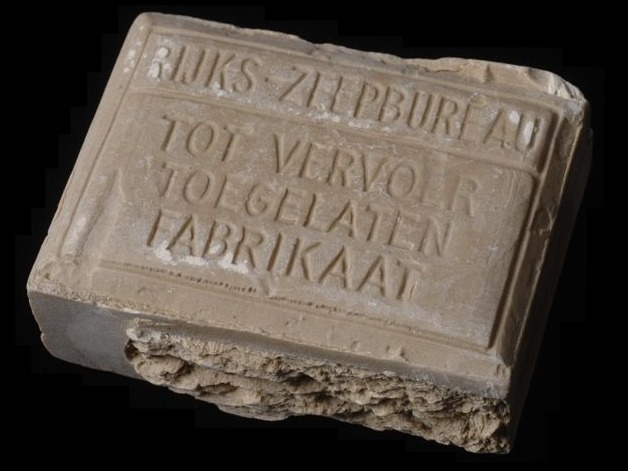
In 1918, the municipality of Aalten was defrauded of 60,000 guilders during the purchase of three wagons of hard soap that subsequently proved to be of worthless quality.
During World War I, the neutral Netherlands faced severe shortages of food, fuel, and numerous other goods. During the last two years of the war, a major shortage of soap also arose. Soap became scarce and expensive. The government intervened, partly because public health was threatened by the soap shortage. Soap factories were only permitted to produce so-called government soap. This could only be done sparingly, and therefore soap was rationed.
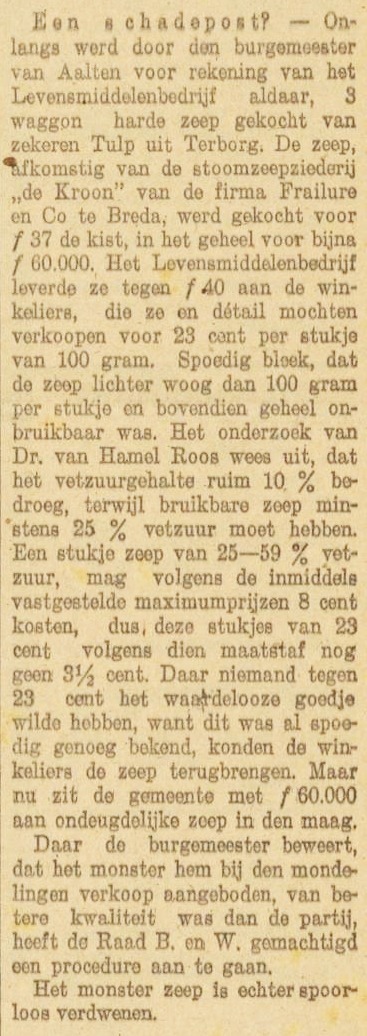
Sometimes fraudsters managed to pull off a major coup. The mayor of Aalten, A.J.W. Monnik, became a very naive victim of a well-known scam. On behalf of the municipal food company, he purchased three wagons of hard soap from a trader. The purchase price was ƒ 37 per crate. The local shopkeepers, who were to pay ƒ 40 per crate to the municipal food company, were then allowed to sell the soap for the retail price of 23 cents per 100-gram bar, which would have earned them a nice profit.
Worthless
But the plan fell through. It soon became apparent that the batch of soap had a very different composition than the sample the clever businessman had shown the mayor. The fatty acid content turned out to be only 10 percent, instead of the legally required minimum of 25 percent. According to the maximum prices established by the government in the meantime, such a bar of soap should only have cost 3½ cents.
It was no wonder that the housewives of Aalten left the shopkeepers stuck with their worthless goods en masse. The mayor had no choice but to take back the soap. The municipality bore the loss, which amounted to nearly ƒ 60,000.
Contradiction
Following this report, the firm De Fraiture & Co. in Breda, whose name was mentioned therein, declared that they knew neither the Mr. Tulp from Terborg mentioned as the seller nor the Food Company in Aalten. They also stated that they had never marketed bars of soap of approximately 100 grams and that, furthermore, they never manufactured soap with a fatty acid content lower than 20-25 percent. They were absolutely unaware of this matter. They suspected that a batch of their soap of the aforementioned quality or higher had been reprocessed into a poor quality by intermediaries.
Arnhemsche Courant, 6 July 1918
Sources
Soap scarcity in the Netherlands during World War I (1914–1918), by Rob Kammelar
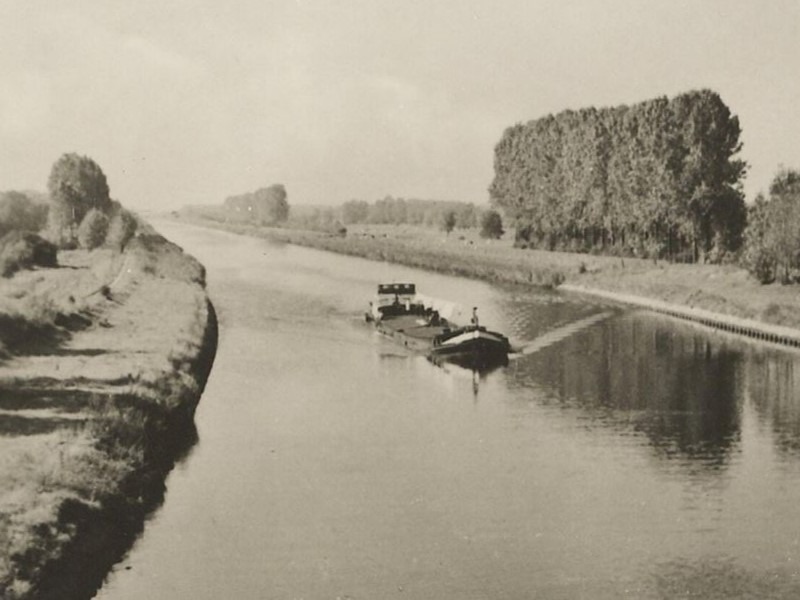
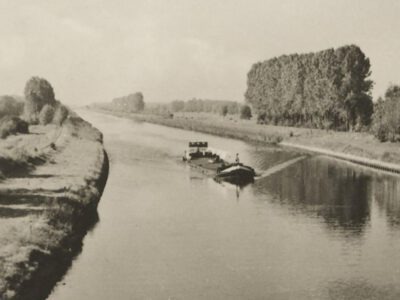
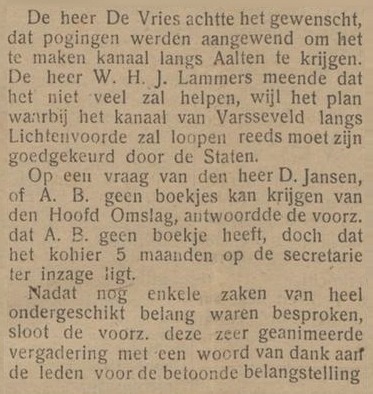
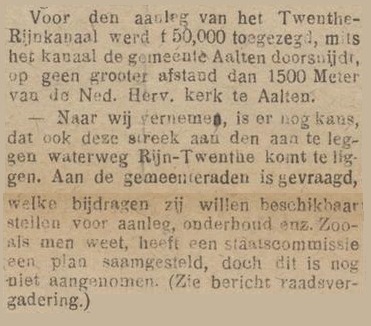
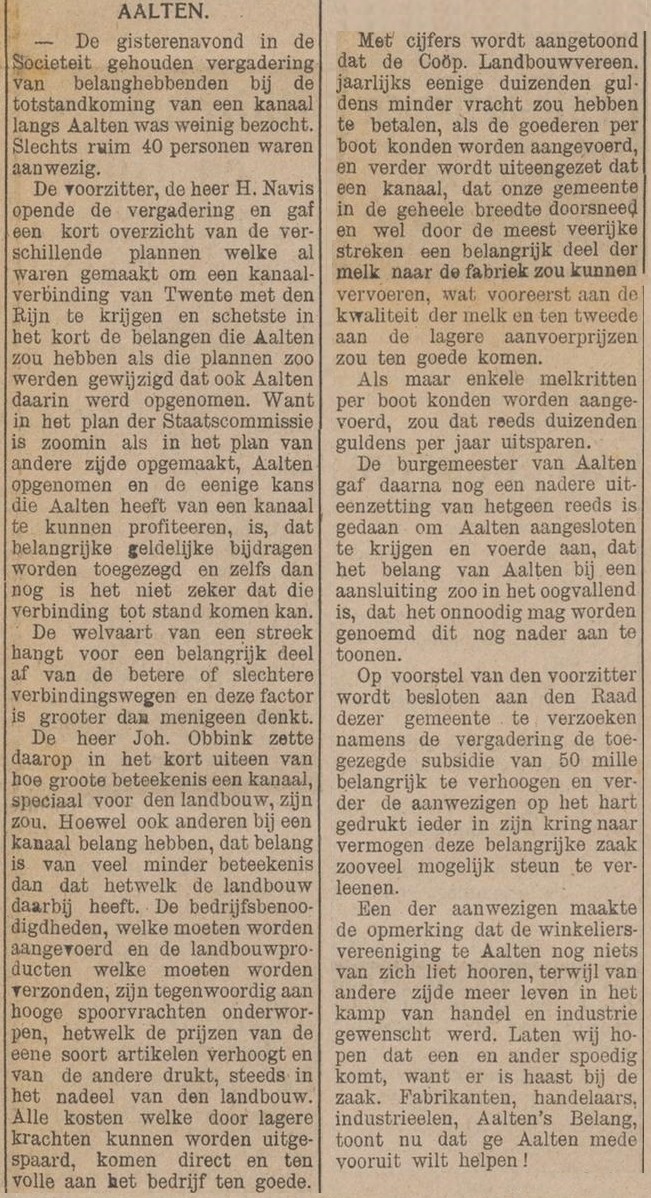
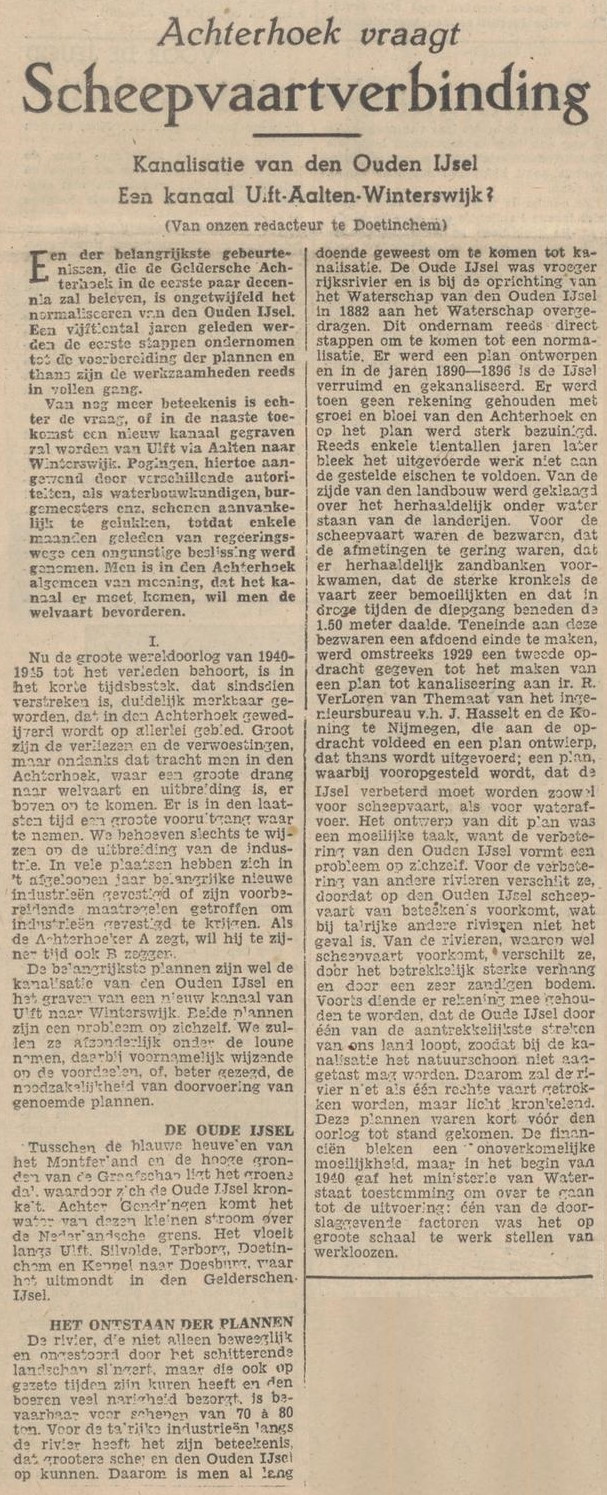
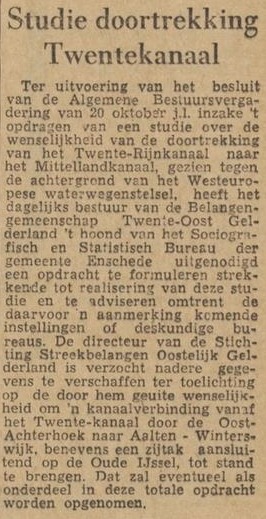
In the first decades of the twentieth century, numerous plans were drawn up in the Netherlands for the construction of canals to facilitate bulk transport. For instance, the initial plans for the Twente Canal (Twentekanaal) were presented in Twente in 1907.
In 1936, the 54-kilometre-long canal between Enschede and Zutphen was opened to shipping. Similar plans also emerged in the Achterhoek.
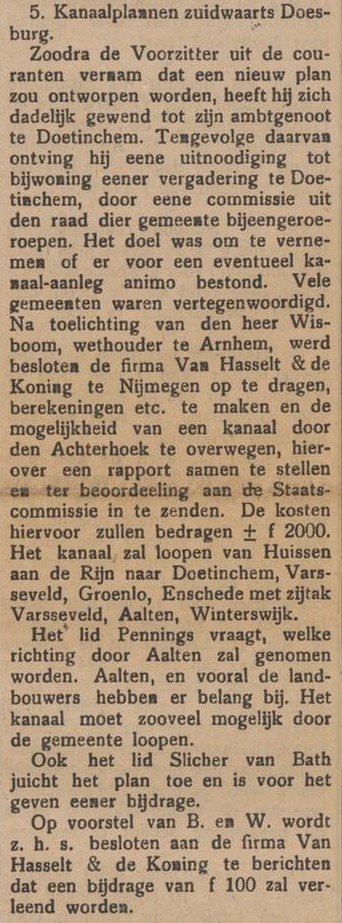
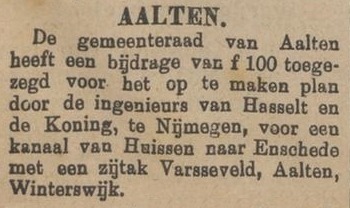
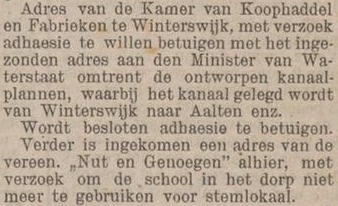
In 1914, Doetinchem municipal council decided to take action on this idea. In March 1915, a proposal was presented based on a Twente–Rhine Canal (Twente-Rijnkanaal). The planned canal was to begin six hundred metres north of the head of the IJssel and run via Duiven, Wehl, Doetinchem, and Varsseveld, passing Lichtenvoorde, Groenlo, Eibergen, and Haaksbergen on its way to Hengelo, including a branch canal via Aalten to Winterswijk.
Following decades of debate and planning, continuing at least into the 1960s, the projects ultimately foundered somewhere along the line.
Newspaper reports
Aaltensche Courant, 29 July 1914Nieuwe Winterswijksche Courant, 1 August 1914Aaltensche Courant, 3 August 1917
Nieuwe Aaltensche Courant, 15 January 1918Nieuwe Aaltensche Courant, 15 March 1918Aaltensche Courant, 30 April 1918
Nijmeegsch Dagblad, 4 February 1947Twentsch Dagblad Tubantia, 15 December 1961
For more than a century, members of the Monasso family have been crafting terrazzo floors in the Achterhoek. The family ended up in Aalten in 1915, after fleeing from Bocholt, Germany, during World War I. Their origins lie in the Northern Italian region of Friuli.
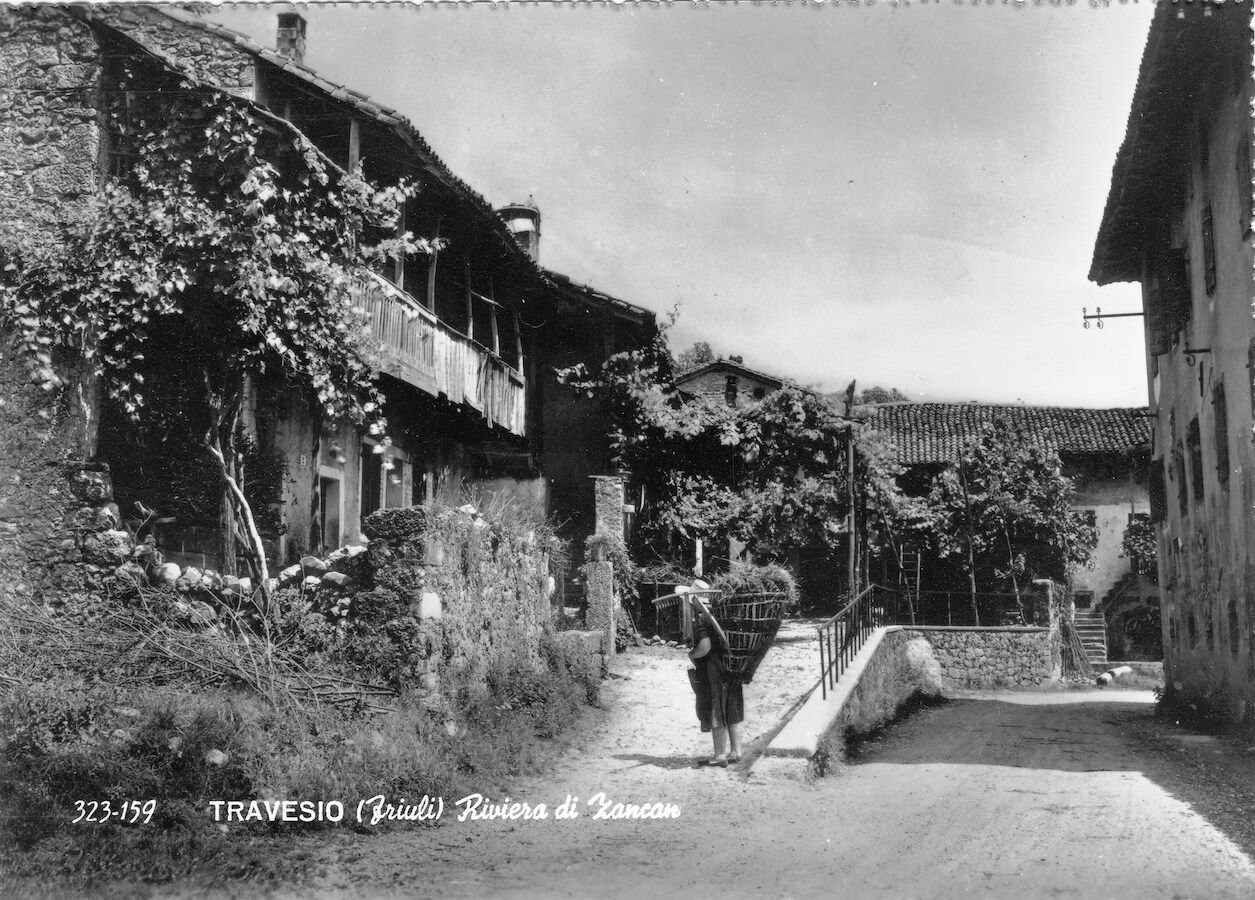
The family hails from the mountain village of Travesio, in the Friuli region. It was an impoverished area plagued by poor soil, earthquakes, floods, and high taxes. Many inhabitants left to find work elsewhere. Friulians were known as skilled craftsmen—foresters, carpenters, stonemasons, and terrazzo workers.
The First Generation
In 1868, Pietro Monasso married Maria Bortolucci in Travesio. They had three sons and four daughters. All three sons learned the terrazzo craft in Italian cities. One of them, Felice Monasso, was once repairing stairs at St Mark’s in Venice as a boy. He received a banknote worth about twenty guilders—a staggering amount for the time—from the newly arriving Pope Leo XIII. He did not spend it, but kept it as a relic.
The three brothers were Giovanni (1869–1939), Felice (1871–1962), and Antonio (1876–1967). They left Friuli at a young age: Giovanni and Antonio at age eleven, and Felice at fourteen.
The village of Travesio in Friuli, Northern Italy, ca. 1900
Work in Germany
Giovanni travelled with fellow villagers to the Balkans to learn the carpentry trade. Felice worked first in Frankfurt, including at the large Odorico terrazzo company, which employed hundreds of Friulian workers. Giovanni and Antonio later joined him in Germany.
From Frankfurt, the brothers went to Münster, where their cousin Bortolucci ran a terrazzo business. They worked there as master journeymen, and there was plenty of work in Westphalia and the Netherlands. On the advice of their boss, they established themselves in 1896 in Bocholt, just across the border from Aalten. There, they started a terrazzo firm together.
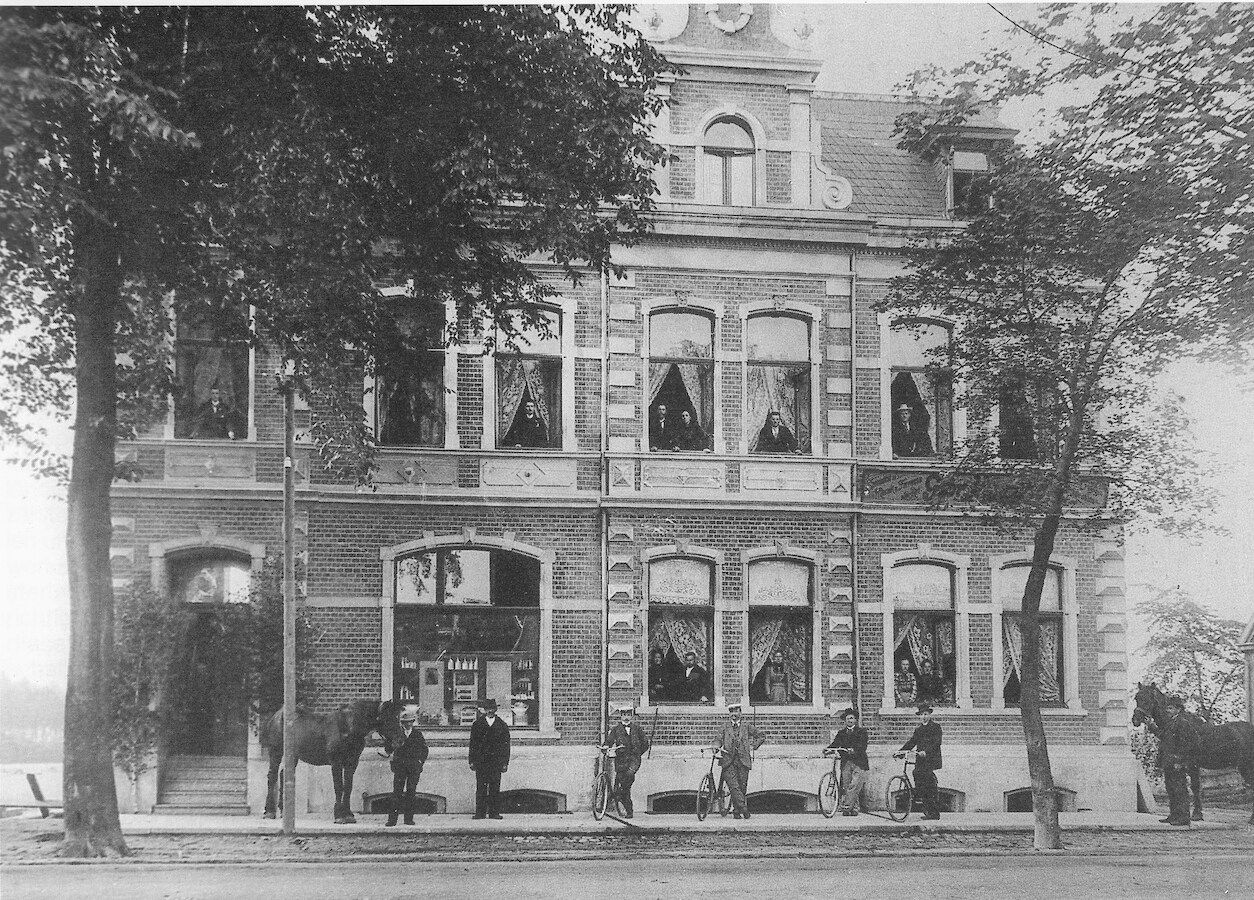
The enterprise flourished. This was the era when wealthy textile barons in Bocholt were building grand houses. With their terrazzo work, the Monassos embellished many a villa on the prestigious Bahnhofstraße. The three families lived together with their staff in a large building on Münsterstraße in Bocholt.
Members of the three Monasso families, the landlord, and journeymen in front of and inside their home on Münsterstraße in Bocholt
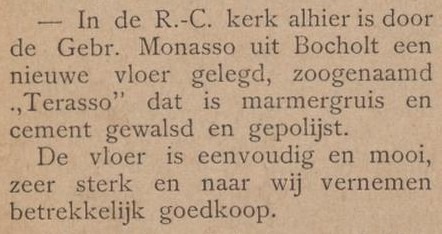
The firm ‘Gebrüder Monasso’ had plenty of work, including in the Achterhoek. As early as 1897, they laid a terrazzo floor in the Catholic St George’s Church in Bredevoort.
Aaltensche Courant, 29 October 1898
On 22 November 1899, Giovanni Monasso married Angela Chivilò (1879–1951) in Italy. Together they had four sons and two daughters.
Flight to Aalten (1915)
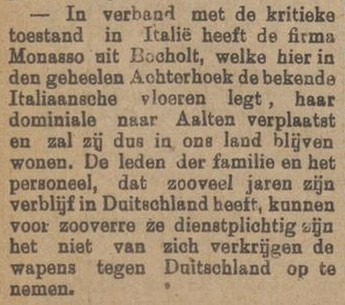
World War I began on July 28, 1914. Italy sided with the Allies, and the Germans saw this as a betrayal. An anti-Italian atmosphere emerged in Germany. Italian workers were insulted and sometimes even mistreated on construction sites. The three Monasso families decided to flee to Aalten, just across the border in the neutral Netherlands. In effect, they were asylum seekers.
Nieuwe Winterswijksche Courant, 22 May 1915
It was a somber procession that departed Bocholt for Aalten before dawn on 19 May 1915. A horse and cart full of household goods was followed by twenty Italians. Three children remained behind in Bocholt: two because they were too ill to travel and one because he wanted to finish his year at the gymnasium.
In Aalten, they spent the first night at Vultink’s lodging house on Dijkstraat. The following day, Giovanni and Antonio moved into a house on Landstraat, and Felice into Bredevoortsestraatweg. Antonio and his wife found a home on Haartsestraat shortly thereafter. The then Mayor Monnik arranged for residency permits. The children who had stayed behind joined their families later.
A New Life in Aalten
Giovanni demonstrated his entrepreneurial spirit by registering within a few days at Sociëteit Schiller, where local businessmen met. His brothers followed a week later. Within a short time, the Monassos were working again. They laid floors in homes, shops, schools, and churches in Aalten and the surrounding area, bringing in skilled terrazzo workers from Italy as staff.
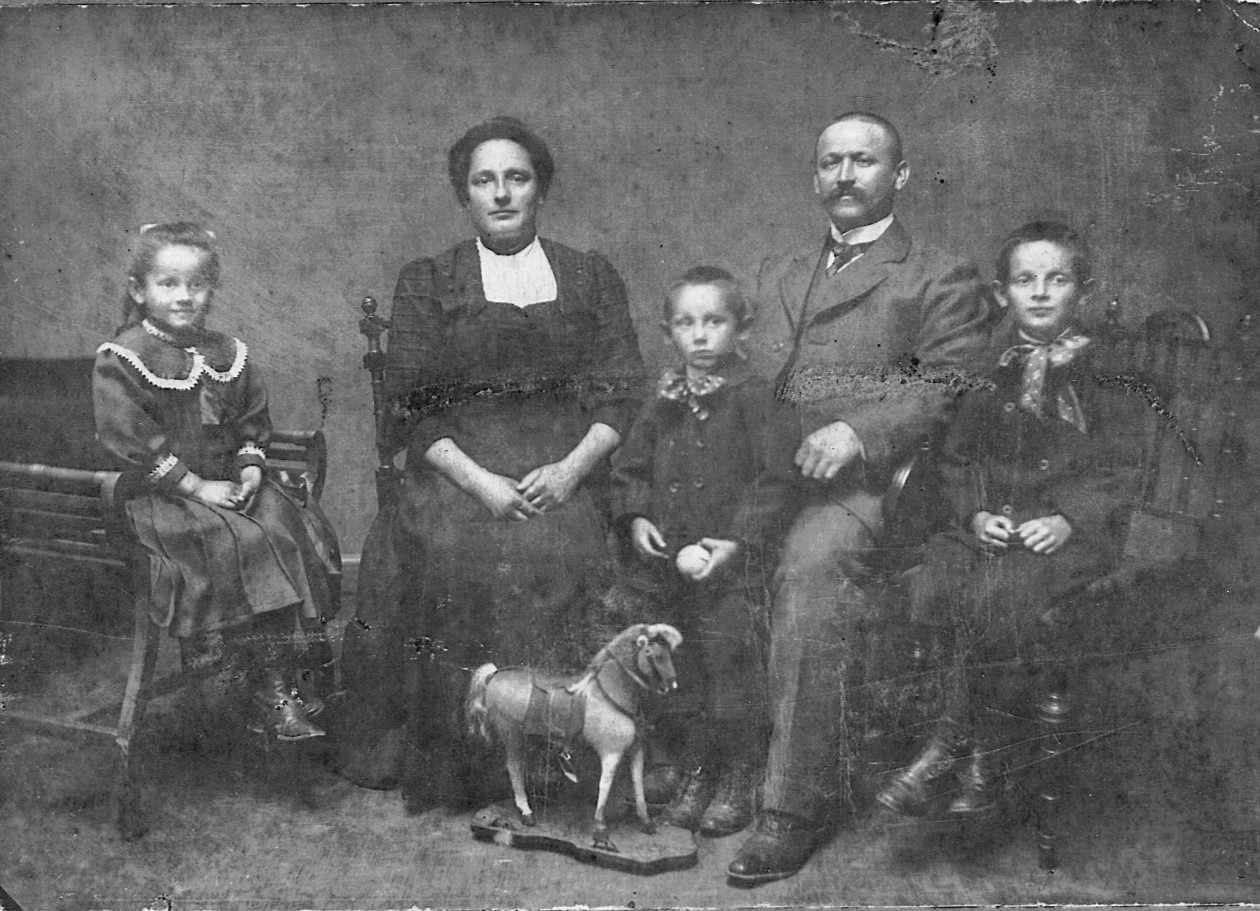
Giovanni Monasso (1869–1939) and his family
They did not yet use machines or electric tools; everything was made by hand. Terrazzo floors were laid on-site, which was arduous work. Stairs, countertops, and other components were made in the workshop using moulds and were subsequently installed in kitchens or halls.
Around 1920, Giovanni established his business on Parallelweg in Aalten. In the mid-1950s, they moved to the adjacent Staringstraat, where a new showroom was opened in 1969.
Felice established a terrazzo business in Winterswijk in 1922; Antonio followed in 1932 with a branch in Doetinchem.
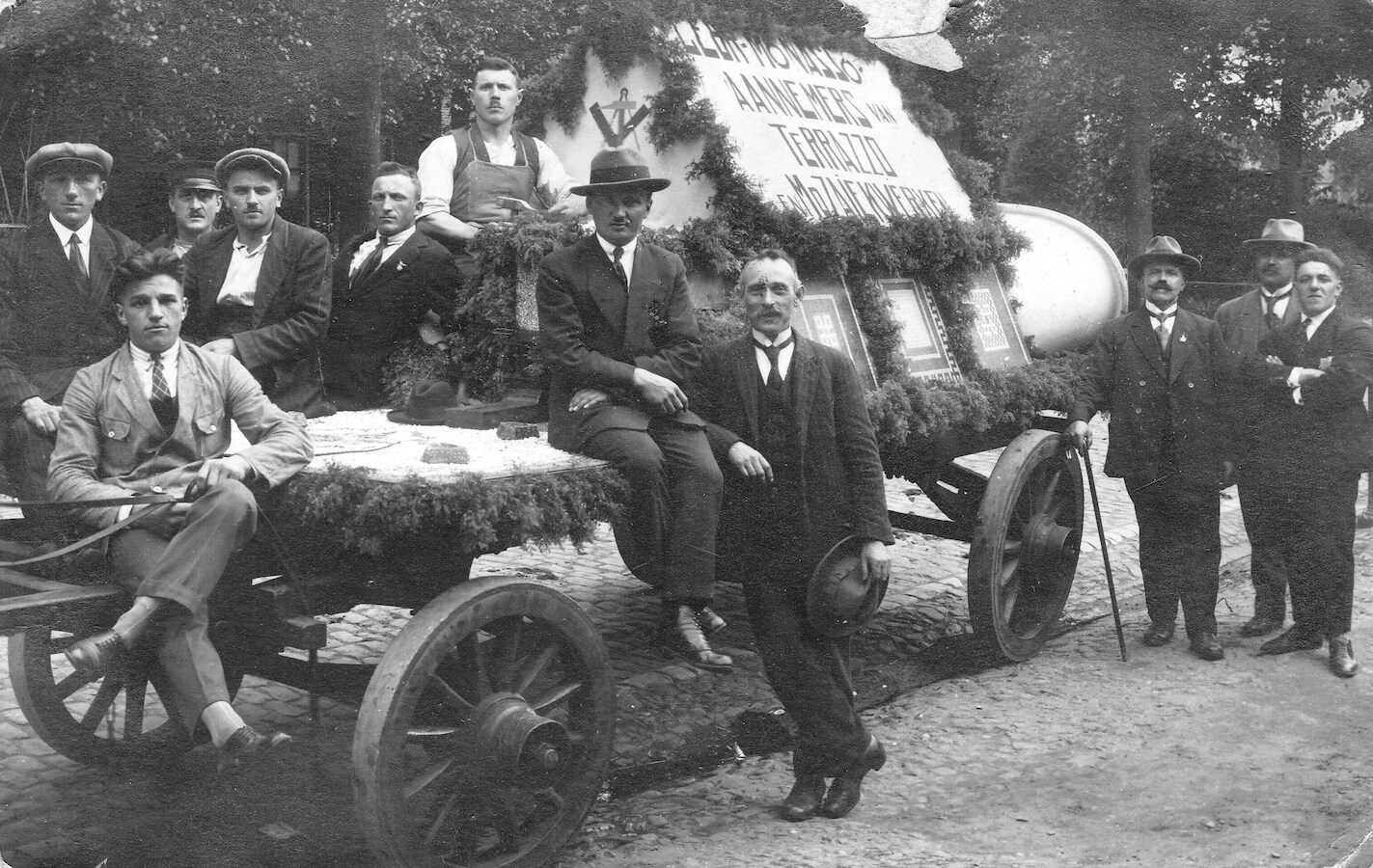
Aalten, 1924 – Members of the Monasso family with a float used in a parade where craftsmen presented themselves
Later Generations
The second and third generations also remained active in the craft. In the decades following World War II, sons and grandsons took over the work. All four of Giovanni’s sons became terrazzo workers and married Dutch women.
Business thrived for decades. In the 1960s and 1970s, demand decreased due to the rise of synthetic floors and steel countertops. Nevertheless, the family business endured. The Monassos combined traditional techniques with modern methods, specialising not only in floors but also in worktops, thresholds, window sills, and restorations.
Current Company in Aalten
In 1982, Richard Monasso, Giovanni’s grandson, took over the company in Aalten. The business moved to Industriestraat. In the 21st century, terrazzo became popular once again. Richard Monasso now works on exclusive projects at home and abroad; his work can be found in a department store in London, a restaurant in Paris, and a villa in Greece.
Willem Monasso
In 1996, Willem Monasso, son of Giovanni Monasso and Angela Chivilò, spoke about his youth:
Wilhelm Franz Joseph (Willem) Monasso (1916–2001) was born in Aalten but returned to Italy with his mother as a child. They lived with an uncle who owned grape plantations. He attended primary school there. He did not learn Italian there, but so-called Furlan, a regional language that differs as much from Italian as Frisian does from Dutch.
At the age of ten, they returned to the Netherlands. Back in Aalten, Willem had to start again in the first grade. He left school after the fourth grade to enter the terrazzo trade.
On his mother’s side, the Monasso family owned a wine bottling plant and a silk plantation. They regularly had barrels of white wine from their region of origin in Italy shipped over. The first barrel always went to the parish priest of Aalten.
During World War II, Willem was the only Aalten resident allowed to have a radio because he held Italian nationality. Naturally, the occupiers did not allow him to listen to the English ‘Oranje’ station, but he did so in secret anyway, along with half the neighborhood.
Willem Monasso could tell captivating stories about his former work in the perfect Aalten dialect. Initially, countertops were made on-site in a formwork built by a carpenter. Later, this was done in the workshop, and they were transported to their destination by a small truck. The terrazzo technique requires great craftsmanship and is incredibly labour-intensive. Throughout the region, many beautiful Monasso floors can still be found in churches, hospitals, monasteries, schools, and scholten farms.
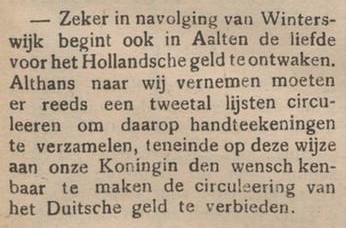
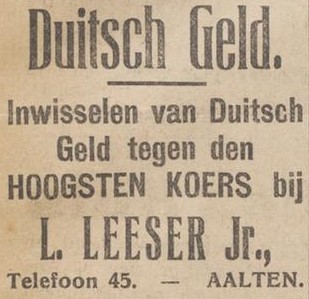
Until the beginning of the 20th century, German money was the daily means of payment in Aalten. This was due on the one hand to the lively trade with Germany and on the other because many residents of Aalten worked in the textile factories in Bocholt. They were paid in German money and put this into circulation in Aalten.
In 1937, G.H. Rots described in a series of articles how things were done in Aalten in former times. For instance, he wrote about the local payment transactions:
“…Speaking of agio, that was caused by the German money that was in circulation here and was the daily means of payment. It was such that Dutch currency was rarely seen. If one needed ‘Dutch money’, for example for taxes, one had to go to a few individuals who ran large businesses to exchange German money. Until the beginning of this century, the circulation of German money in our municipality was still common.
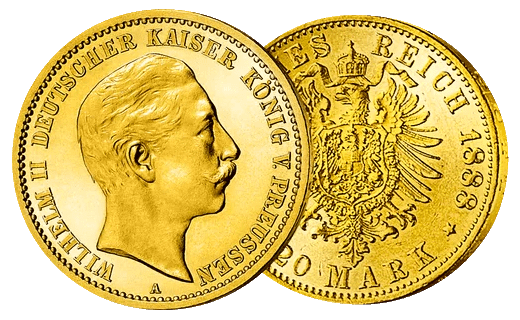
A very rare 20-mark gold coin from 1888, shown here for illustrative purposes.
When the government wanted to take measures to prohibit that circulation, many people resisted. The association ‘Aalten’s Belang’ became involved, and within that association, a fierce struggle arose over the abolition or retention of German money. In Hotel De Roskam, owned by Mr. Voorderman, well-attended meetings were held. Those who conducted a lot of trade with Germany or had German customers in their shops saw a significant disadvantage in the abolition of German money.
That trade with Germany was quite busy. There were almost no border restrictions, and on the Bocholt market days, numerous merchants went there to sell their wares. And those who worked in Germany also naturally received their wages in German money and put this back into circulation in our municipality. One should therefore not think too lightly of it. And at one of the meetings of Aalten’s Belang, it came to heated debates, and even the continued existence of the association was jeopardized as a result of this issue. Finally, the abolition was introduced in July 1914, and the population adapted to it.”
Aaltensche Courant, 29 October 1904Aaltensche Courant, 26 November 1910Aaltensche Courant, 2 May 1919
Source
‘From Aalten’s Past’, by G.H. Rots, Aaltensche Courant, 31 December 1937 (via Delpher)
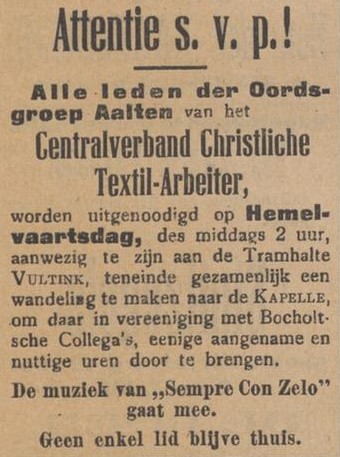
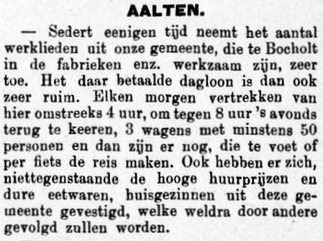
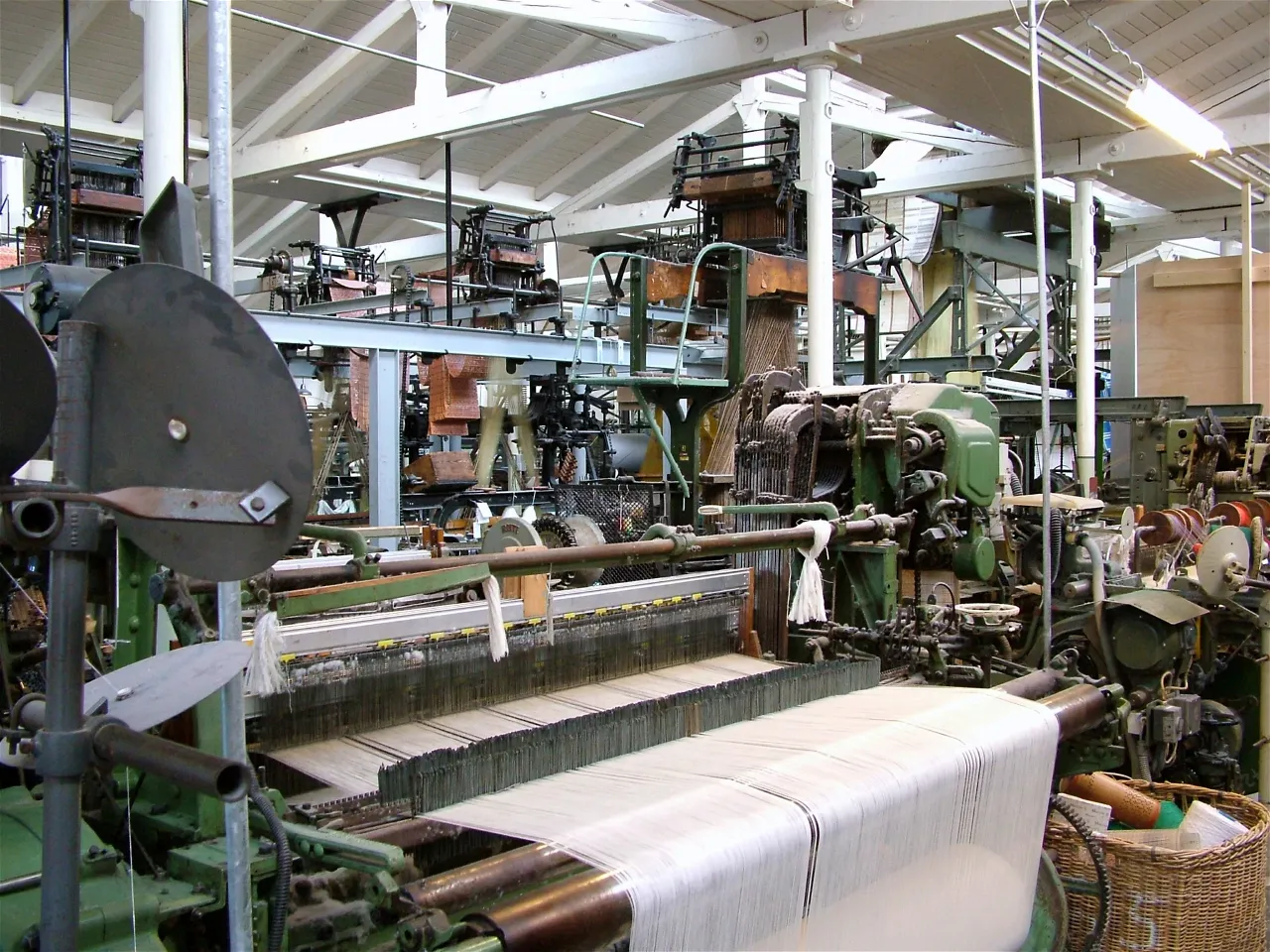
At the beginning of the 20th century, hundreds of Aalten residents crossed the border to Bocholt daily to work in the textile factories there. In all weathers, they went on foot, by bicycle, or by horse and carriage. Some took as long as three hours to cover the (roughly) ten kilometers between home and work, both morning and evening! In 1910, a tram line to Bocholt was opened, allowing them to commute much faster and more comfortably from then on.
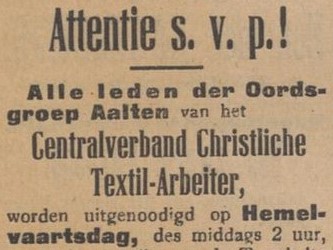
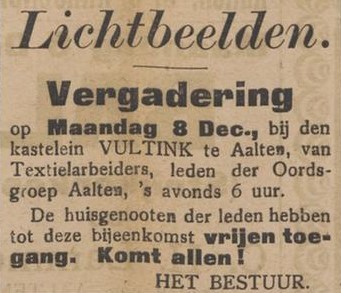
Aalten even had its own branch of a German textile union, the Zentralverband Christliche Textilarbeiter, Aalten Local (Ortsgruppe). They met regularly in various cafés in Aalten. We found a number of reports on this subject on Delpher:
Aaltensche Courant, 10 December 1913:
On Monday evening, the Aalten Local of the Zentral-Verband Christl. Textilarbeiter Deutschland held a members’ meeting, to which family members of the organized workers were also admitted. Our friends from Bocholt had brought a magic lantern for this occasion, with which various scenes from the cottage industry, which was still very prevalent in Germany, were shown.
Seeing these things, one can understand that a cry of horror arose, especially in Germany, when these most deplorable conditions came to light a few years ago through that large exhibition of cottage industry held in Berlin.
From all this, it became clear that there is still a great deal of good work for legislators to do to improve the deeply sad lives of thousands who are forced by low wages to lead such a miserable existence.
Mr. Mensink, from Enschede, then spoke pithily to those present, emphasizing that only a firm and solid organizational life can ultimately put an end to these abuses. One of the board members present expressed a heartfelt word of thanks to the propagandists, with which the meeting concurred.
Aaltensche Courant, 6 December 1913Aaltensche Courant, 20 May 1914
Aaltensche Courant, 12 September 1914:
On Thursday morning, a well-attended meeting of the Aalten Local of the Zentralverband Christl. Textilarbeiter Deutschland was held in the café of the license holder te Linde. In his opening remarks, Mr. Ommering announced that, after much effort, the board had succeeded in establishing contact with their German colleagues and that the discussions held had led to the members of the Aalten Local also being able to count on support. This support will be paid out next Monday morning from 9:00 to 9:30 AM to members whose names begin with the letters A through M, and from 9:30 to 10:00 AM for the others; and that the support would certainly have been paid out earlier if the measures taken at the border by Dutch and German authorities had not intervened so disruptively.
Subsequently, Mr. Mensink from Enschede explained the great benefit of being organized, which is brilliantly highlighted in these particularly difficult days for workers. The speaker explained in a very accessible discourse the difficulties workers face in these sad times, as well as those that the leaders of organizations have to struggle through, and concluded by urging that the members of the organization, also in their own interest, have a duty to support the organizational boards by remaining unconditionally loyal to the organization.
Aaltensche Courant, 16 September 1914:
On Monday morning, the war and emergency support was paid out to the members of the Aalten Local of the Zentralverband Christl. Textilarbeiter Deutschland. Although it had taken some time due to the closing of the borders, for many, under these circumstances, it was a significant amount that was paid out to them.
If we are well-informed, the total payout that morning amounted to about 500 marks. We may safely assume that this payout brought a joyful mood to many a household.
Let us hope, then, that the benefit of being organized is thoroughly recognized, that many who are still distant will join the organization later when the war has spent its fury, and that those few who had to be disappointed due to very poor contribution payments will mend their ways.
We frequently read or hear about “Plan 1913”. What is meant by that? It is the plan or intention to festively commemorate the joyous event of 100 years ago. Is there reason for this? Those who still ask this provide proof that they have forgotten what they learned at school regarding the history of our fatherland. The only thing that can be offered as an excuse is that for many, their school years lie far behind them and oral tradition is no longer heard.
It was in 1863, when the fiftieth anniversary of the Netherlands’ Independence was celebrated in Aalten, that things were quite different. Back then, there was hardly a family where one did not hear from the lips of grandparents about the sad times our ancestors lived through as long as the French were in charge here. Incidents that had personally affected a family were recounted, but now, 50 years later, much of that is covered by the veil of oblivion.
Aalten decorated on the occasion of 100 years of independence, 1913
In general, therefore, we wish to recall a few facts that history has recorded. The 17th century (1600–1700) is called the “Golden Age” of our history; the 18th century (1700–1800), the “century of decay”.
What was the cause of that decay? People began to rest on the laurels achieved by their ancestors. A spirit of enterprise was no longer to be found. In idleness, people began to enjoy the accumulated wealth and were afraid to give up anything that might contribute to the promotion of the country’s prosperity. No funds were made available for the army and navy, and the prestige of the once-mighty Republic of the United Netherlands dwindled from year to year.
In the eyes of other European states, we no longer counted. Furthermore, dissatisfaction with the administration arose, fuelled by the revolutionary spirit that manifested itself in France—so much so that the revolutionaries, called Patriots, acted hostily towards Stadtholder William V and his supporters, called Orangists.
The French Period
When the great Revolution had taken place in France, and the revolutionaries had put the King and Queen to death, the Patriots called in the help of the French to drive out the Stadtholder here as well. In 1795, they marched into our country with a large army and were received with cheers by the revolutionaries.
The government was unable to stop them because the army was not properly equipped and the fortifications were dilapidated. The money needed for their maintenance had been cut, but now they could give the French 100 million guilders, which they demanded for the help and assistance they had provided. William V fled to England, and his opponents took the place of the former government officials.
Now, the French could have left again, but they did not think of it. Time and again, when the French soldiers here were well-fed and clothed, they were exchanged for a ragged, starving bunch, to recover their strength here at the expense of the citizenry. Their influence on the course of affairs in this country meanwhile increased more and more, until they took the entire administration into their own hands.
In France, there was great confusion until it finally succeeded for a lawyer’s son from Corsica, named Napoleon Bonaparte, to create some order. He was a brave general and a capable warrior, who defeated the armies of the states that had declared war on France and prescribed humiliating peace terms to his enemies. In 1804, he had himself proclaimed Emperor, and two years later he sent his brother, Louis Napoleon, here to rule over our country as King.
Heavy Sacrifices
The alliance with France cost us heavy sacrifices. The English, who were at war with the French, now became our enemies as well and took possession of almost all our colonies and robbed our merchant ships, which meant our trade was as good as gone. One already had to pay a quarter of one’s income in taxes, and yet Napoleon demanded more.
Napoleon had had his brother Louis proclaimed king here in the expectation that he would submit entirely to his will. However, he was disappointed in this. Louis came here with the intention of promoting the prosperity of his kingdom as much as possible and protecting the people from further oppression. He showed this, among other things, by refusing to introduce conscription and by tacitly allowing smuggling with England.
To hit England, Napoleon had strictly forbidden all trade with that country. Now that Louis did not support him enough in this, he forced him to abdicate (1810), and Holland was annexed by France. Our country now became a French province and thus ceased to be an independent kingdom. The government was now organised on a French footing. The Dutch language had to gradually disappear. French had to be learned in schools, and newspapers also had to appear in French.
An army of customs officers occupied the coast and ensured that when a ship with English goods arrived, the cargo was burned. Indische goods, such as coffee, tea, tobacco, and rice, rose astonishingly in price as a result. The impoverished citizenry managed with a decoction of toasted rye bread instead of using coffee, and instead of tobacco, people smoked walnut leaves. To replace sugar, people set themselves to making sugar from the sweet sap of beets.
Many wealthy citizens became poor, and those who had to live off their interest, as well as numerous orphanages and charitable institutions, suffered want when Napoleon had the interest on the national debt “tiered”—that is, he only acknowledged one-third of it. Those who, for example, were entitled to 300 guilders in interest only received 100 guilders. No more was earned, but more had to be paid, causing poverty to pinch; hundreds of houses were sold for demolition, magnificent country estates were disposed of for a trifle, horses and carriages were abolished, and servants dismissed. In Amsterdam, grass grew on the streets.
Fighting for Napoleon
But the Frenchman did not just take goods; he also demanded blood. Napoleon needed soldiers to fight for him in all corners of Europe and now forced our boys to serve in his armies. He introduced conscription, which for us was something unheard of. In our previous wars, there were always enough volunteers to defend the fatherland, but now it was determined by lot who had to take up arms. Thus, numerous families saw their beloved relatives head off to foreign lands, never to see them again.
Yet no one dared to complain, or they would make the acquaintance of prison. Secret spies crept around everywhere to pick up every suspicious word, and the police often forced their way into homes and opened letters to hear someone’s opinion of the Emperor. Books and newspapers were not allowed to appear before they had been approved.
Yet this oppression also had its good side. The people now forgot their old party squabbles and felt united again and yearned for salvation. Napoleon’s power had reached its peak. Only England and Russia still defied him; otherwise, he ruled over all of Europe. Russia, too, would now feel his blows. With an army of more than half a million, he marched thither, but for every twenty soldiers, nineteen died miserably in Russia’s snowfields. The approximately fifteen thousand Dutchmen also never returned to their fatherland.
“Oranje boven” (Orange up/Long live Orange)
After this outcome, the Counts of Hogendorp, Van Limburg Styrum, and Van der Duijn van Maasdam secretly hatched plans to shake off the French yoke. After the Battle of Leipzig, in which Napoleon was defeated, the signal for the uprising was given by adorning oneself with the orange colour, which was previously punishable by death. The French soldiers watched, bewildered, and did not have the courage to resist.
Prussia and the Cossacks offered help, and on 15 November 1813, the cry “Oranje boven” already rang through Amsterdam’s streets, and two days later in The Hague. On 21 November, Van Hogendorp and Van der Duijn van Maasdam accepted the provisional government, and on 30 November, the Prince of Orange, son of the expelled Stadtholder William V, set foot on land at Scheveningen, where he was cheered by the crowd with unprecedented enthusiasm. Two days later, he was proclaimed Sovereign Prince in Amsterdam.
The French slunk away, and the Netherlands was free. That is one hundred years ago now, and all that time we have been spared from enemies crossing our borders. There is, therefore, reason to festively commemorate the Netherlands’ deliverance with thanks to God. Let us value our freedom, for no greater disaster can befall a people than when they are dominated by strangers. At the centenary of our independence to be celebrated within the municipality of Aalten on 28 August next, let our age-old motto therefore ring out loudly: “Oranje boven”.
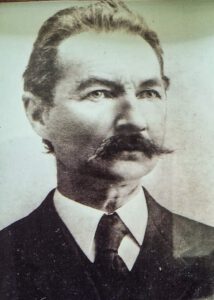
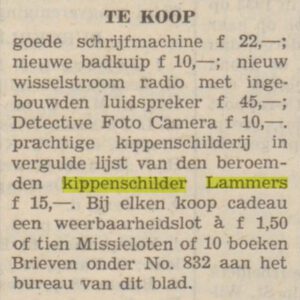
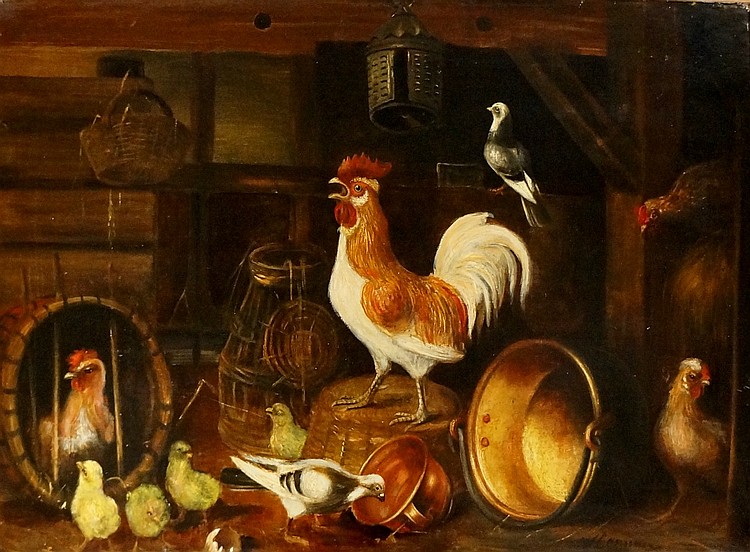
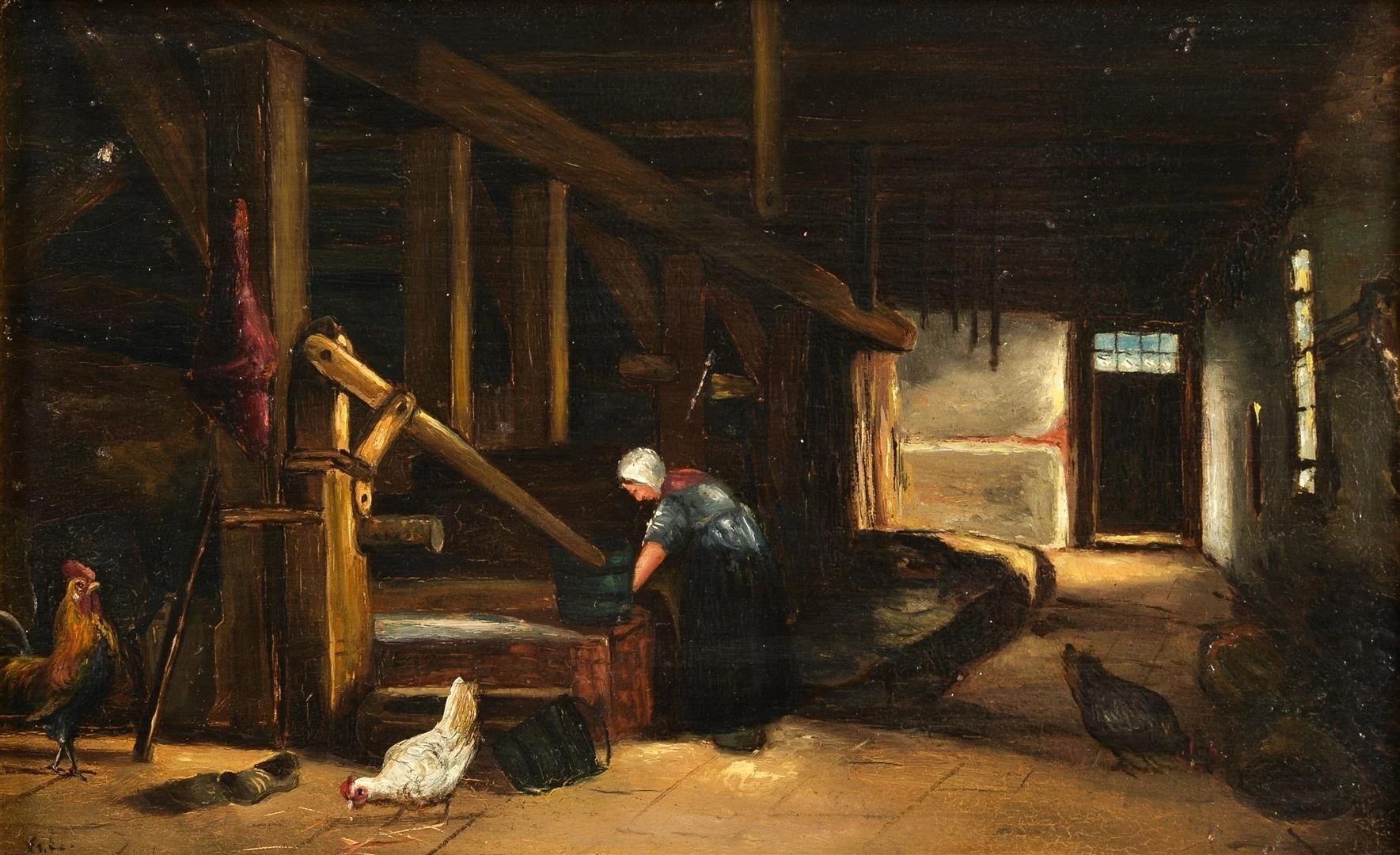
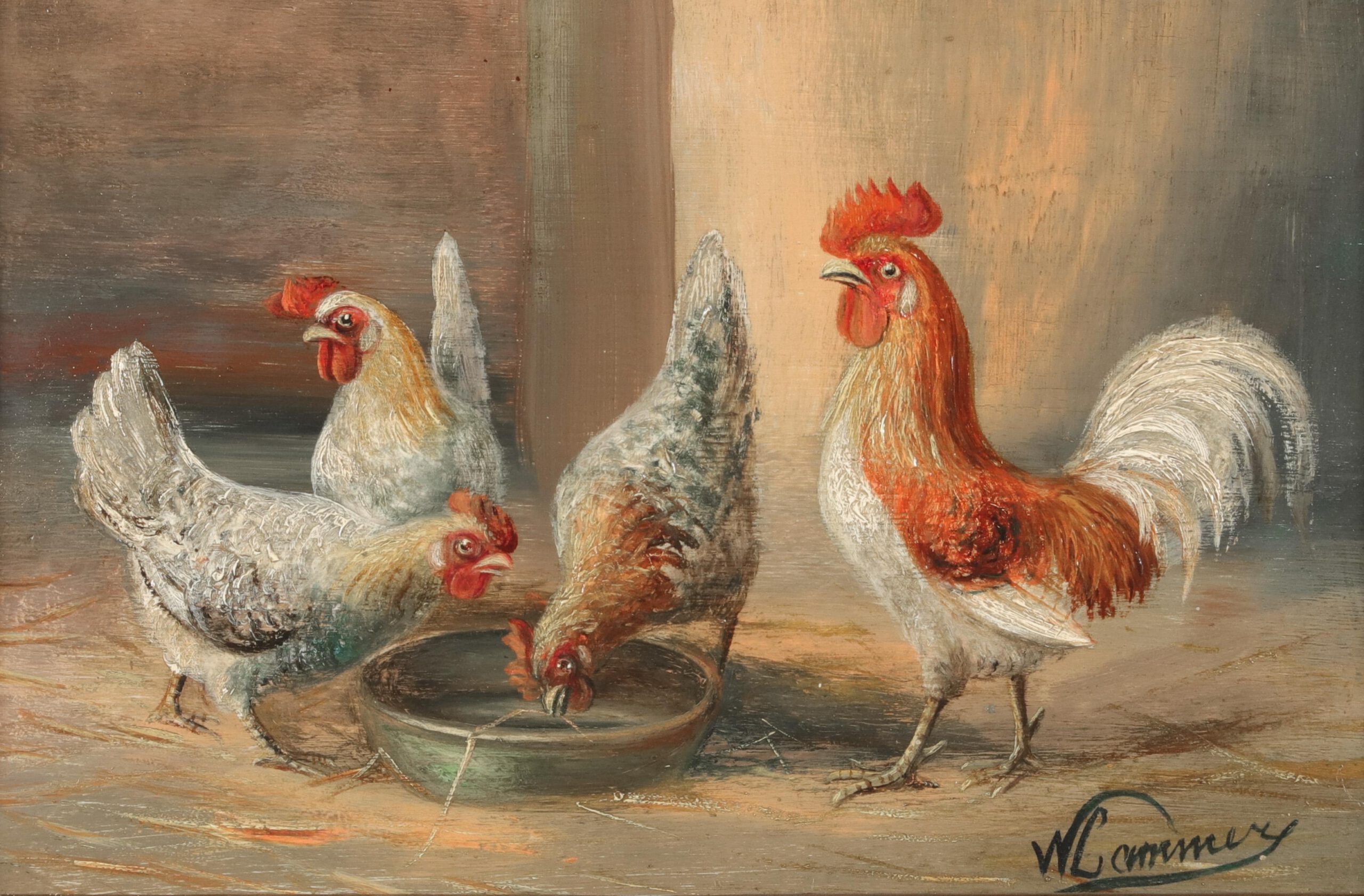
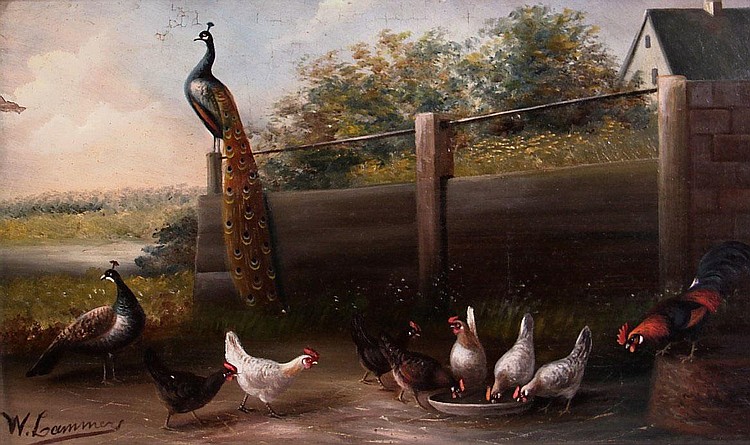
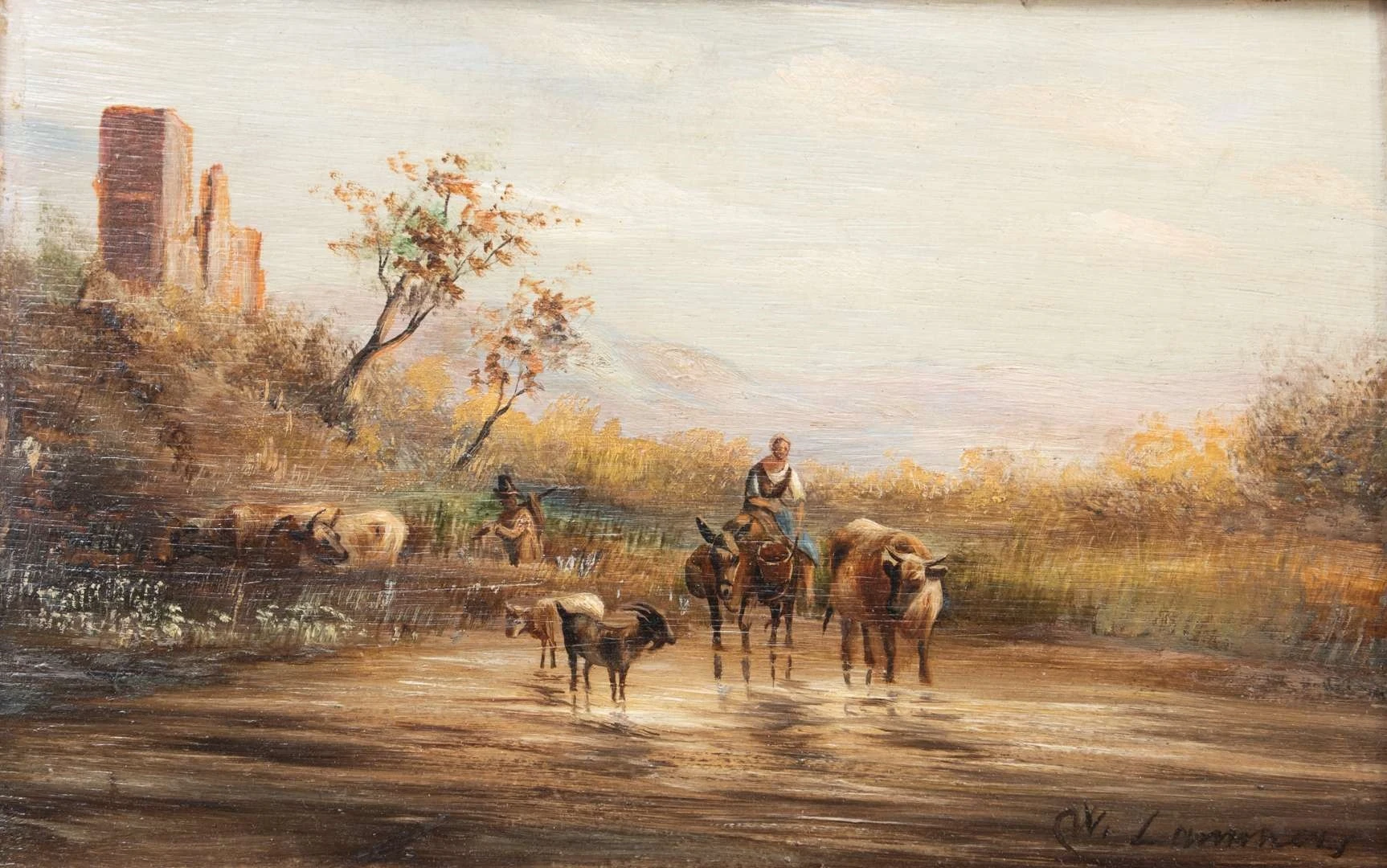
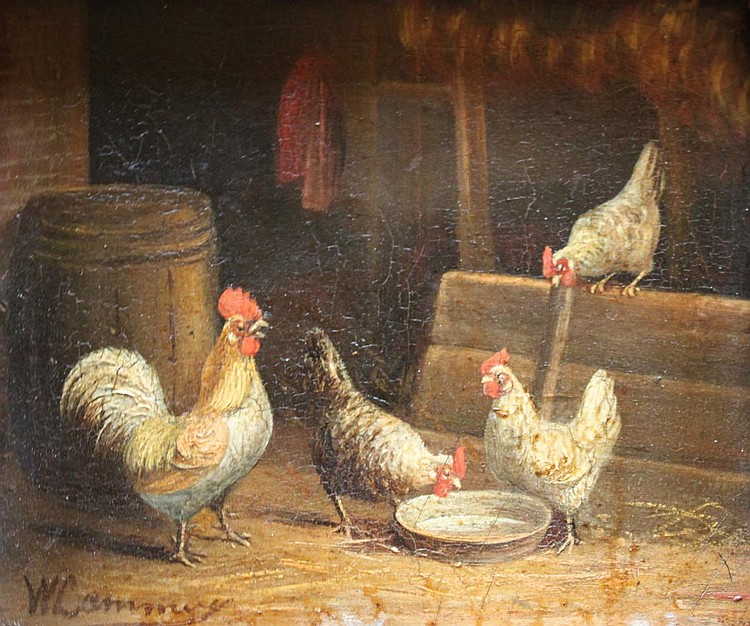
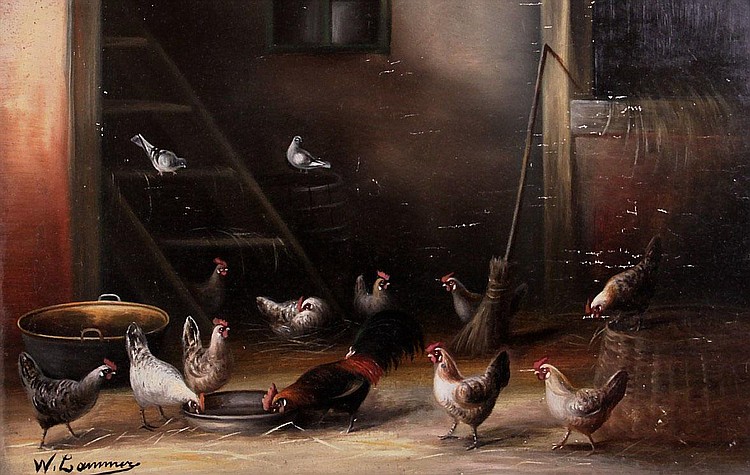
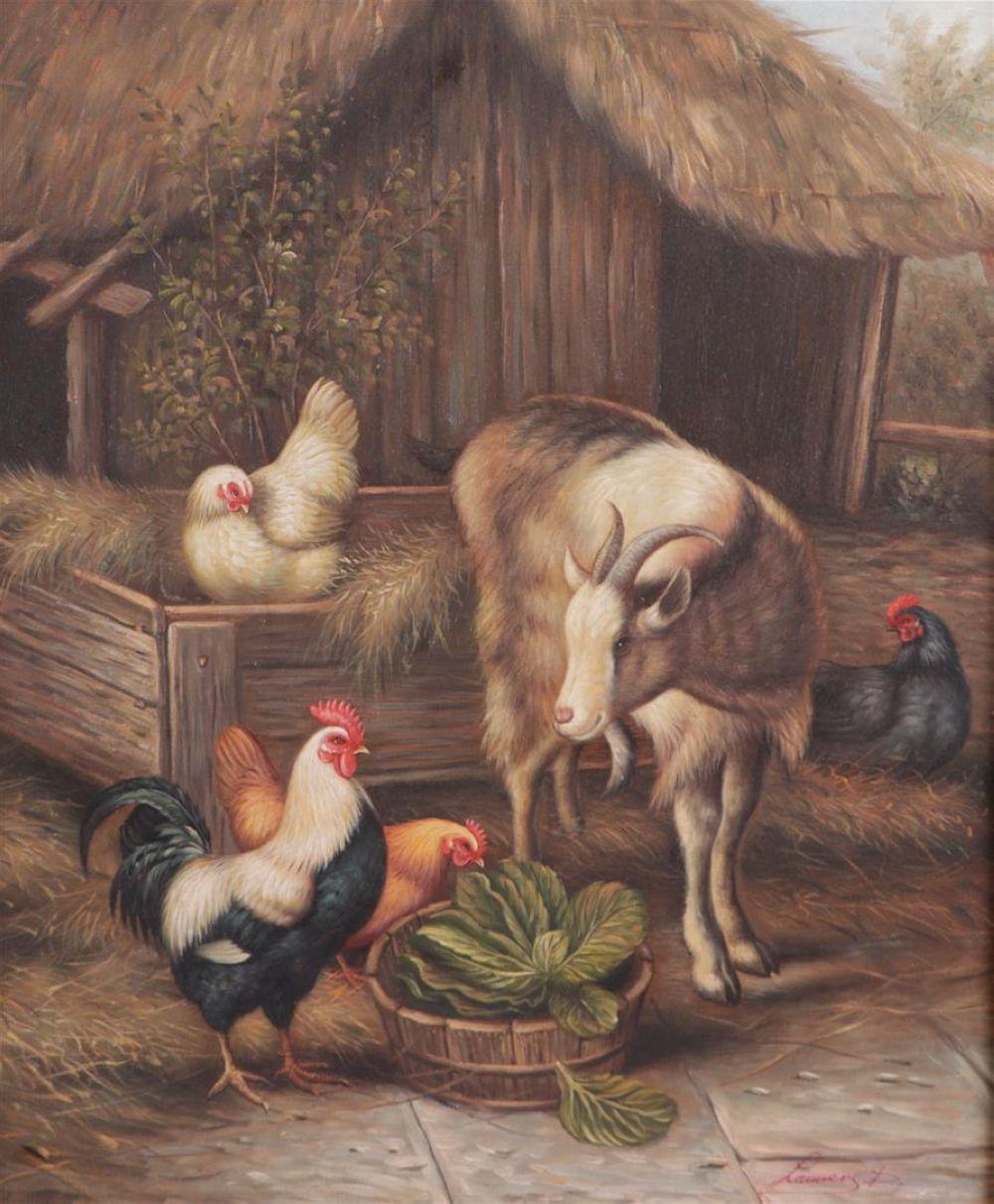
Wilhelm Albertus (Willem) Lammers (Aalten, 1857 – Ginneken, 1913) was a Dutch painter with a remarkable specialisation: poultry scenes. Until the end of the 19th century, hardly any attention was paid to the living conditions of poultry. Chickens typically slept in a farm barn or in trees. The painter managed to capture this vividly on canvas.
Lammers was born on 3 April 1857 at the Schulenkamp farm in the Dale hamlet near Aalten, as the son of Albertus Lammers and Theodora Huls. The family moved several times within Aalten – first to Kerkstraat, then to Dijkstraat and Hoekstraat. Willem Lammers was initially a shoemaker by trade. In 1880, he left for Gaanderen, and a few years later, he lived in Amsterdam.
In 1887, the Court-Martial in ‘s-Hertogenbosch sentenced him to four months of military detention for desertion. Upon his registration, his occupation was recorded as painter, his religion as Roman Catholic, his height as 1.66 m, with blonde hair, blue eyes, and a curly beard.
On 24 July 1890, Lammers married Wilhelmina van den Akker in Breda. The couple lived briefly in Aalten (Dijkstraat) and moved to Breda in April 1891. Eight children were born there: seven daughters—one of whom was stillborn—and one son. Lammers passed away on 4 February 1913 in Ginneken (municipality of Breda).
Arts
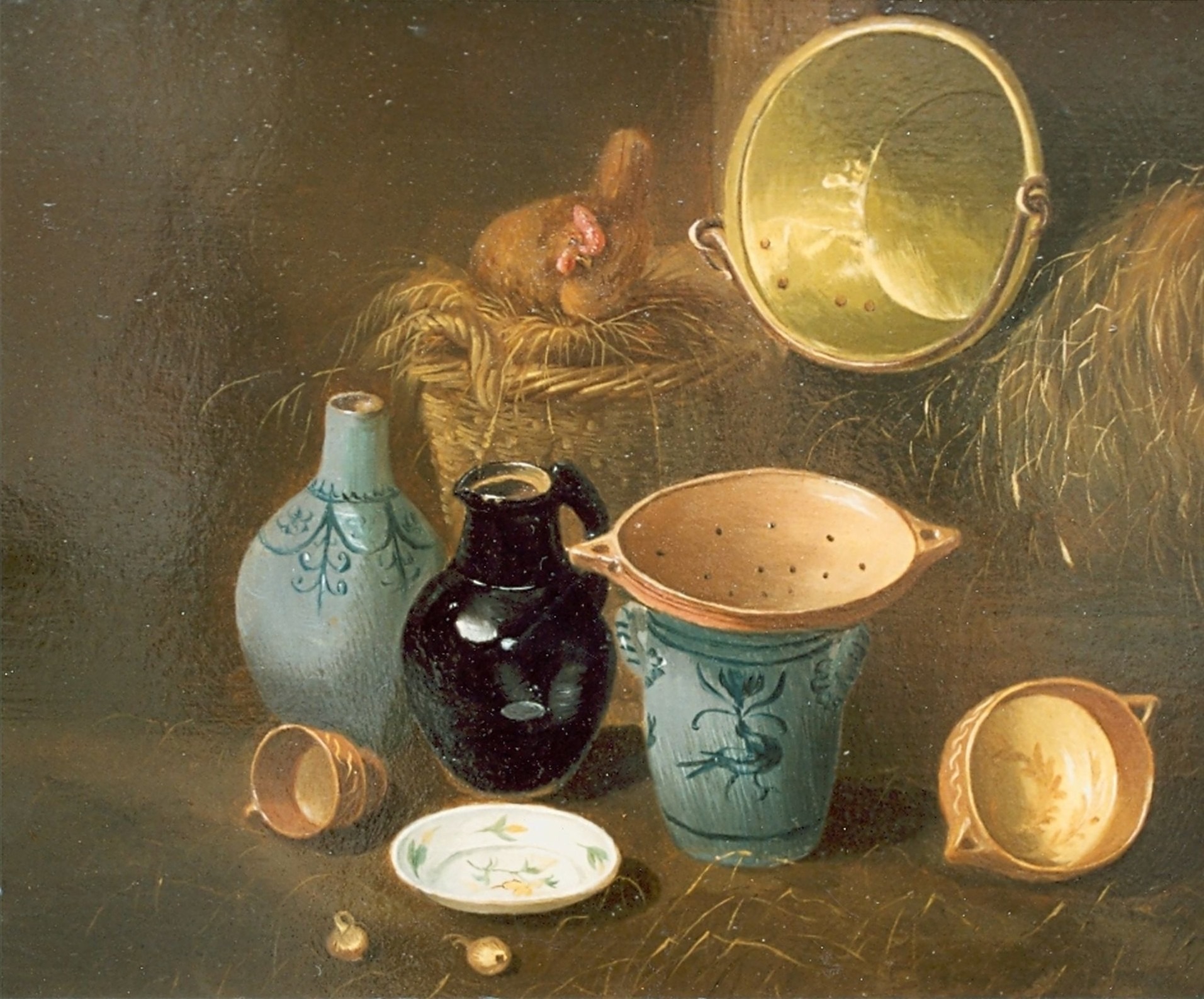
As an artist, Lammers was self-taught. He worked mainly in oil on canvas or panel, mostly in small to medium formats. His scenes depict chickens, chicks, and cockerels in their daily environment: around the feeding area, by the haystack, or inside a barn. He signed his work as “W.A. Lammers”, “W. Lammers”, or with the monogram “W.L.”.
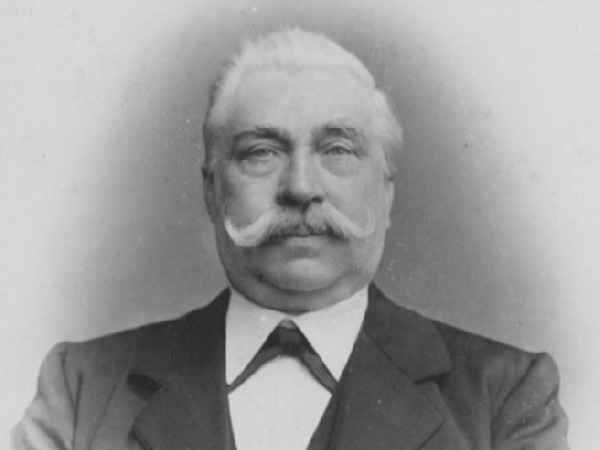
Wilhelm Albertus Lammers (1857–1913)De Volkskrant, 4 April 1939
Gallery
A selection of the work of Wilhelm Albertus Lammers:
Chicks, chickens, and a cockerelStable interior with a farmer’s wife and poultryA cockerel and three hensChickens, a cockerel, and peacocks in the farmyardHerders with cattleCockerelsPoultry in the stableSmall livestock on a farmStill life of kitchen utensils
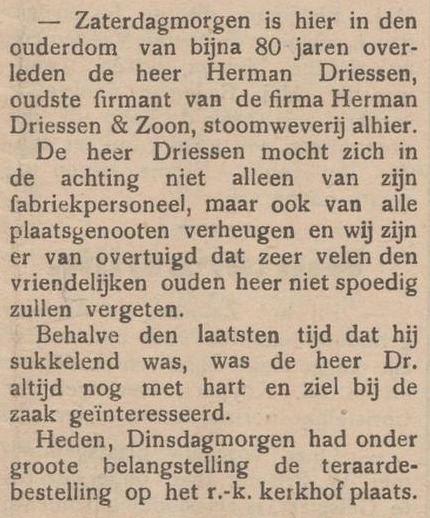
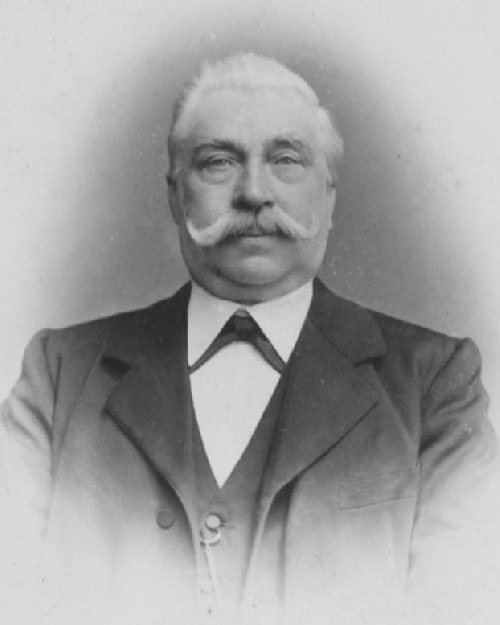
Herman Anton Frans Carl Maria Driessen (Aalten, 1831-09-22 – Aalten, 1911-05-20) was a textile manufacturer of great significance to Aalten’s textile history. He was the son of textile manufacturer Anton Driessen and Isabella Dees. In 1862, he married Anna Maria Theodora Mühren, a merchant’s daughter, in Neuenkirchen near Rheine (Germany).
Around 1863, he and his wife moved into a newly built house on the corner of Landstraat and Hoekstraat, at the location where his father had operated a cotton mill from 1827 to 1862.
In 1893, Herman Driessen retired from the management of Gebroeders Driessen. Together with his son Joseph, he founded a modern steam weaving mill with 34 looms at ‘het Blik’ on Hofstraat: the NV Stoomweverij Herman Driessen & Zoon, often abbreviated as HDZ. Alongside the factory, Herman’s new home was also built: the stately Villa Beukenhof.
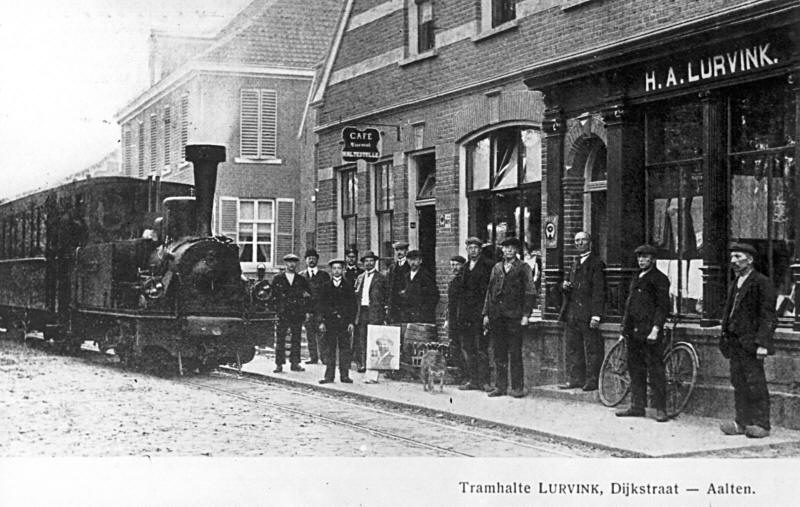
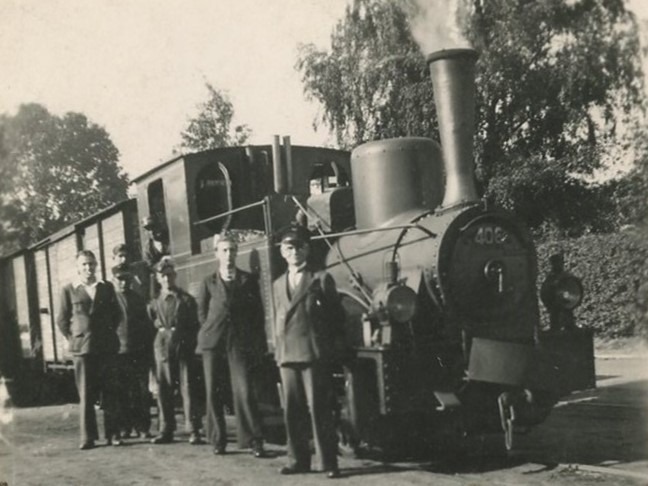
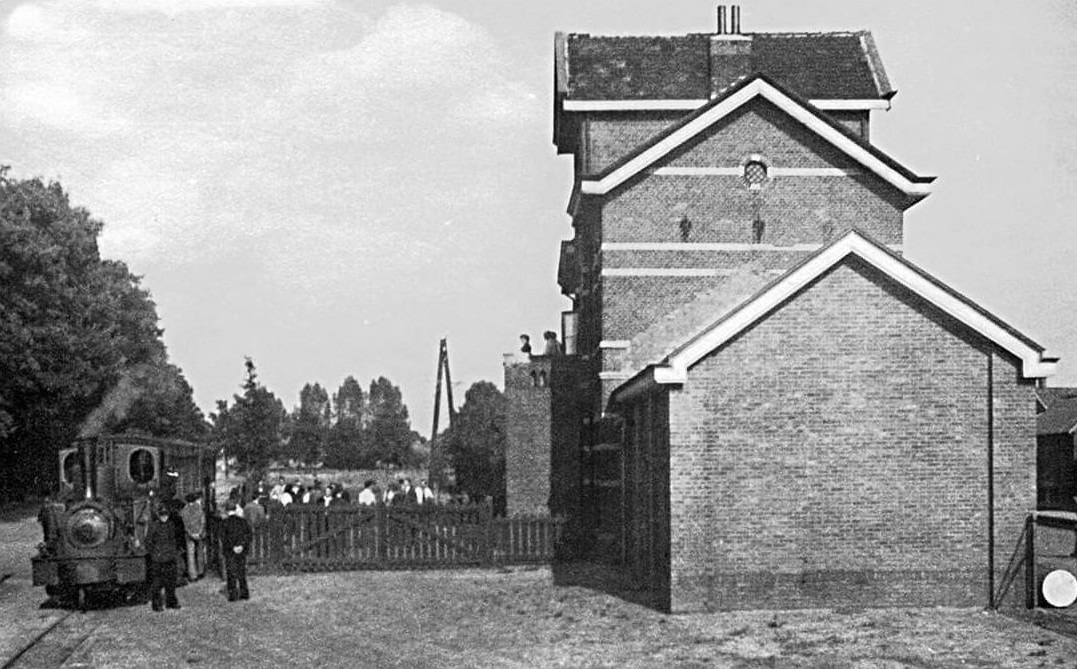
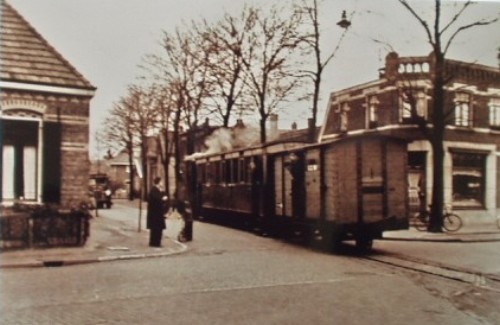
In 1910, a tram line was opened from Lichtenvoorde to Bocholt, via Bredevoort and Aalten. In 1953, the tram line was discontinued and the tracks were broken up.
Around the turn of the 20th century, hundreds of Aalten residents crossed the border every day to work in one of the textile factories in the neighbouring German city of Bocholt. In all weathers, they travelled on foot, by bicycle, or by horse and carriage. Some took up to three hours to cover the (roughly) ten kilometres between home and work, both in the morning and in the evening!
Plans
As early as 1880, there were plans to extend the Lichtenvoorde–Groenlo tram line to Aalten, Varsseveld, and Terborg. By 1893, there were plans for a horse-drawn tram line from Groenlo to Lichtenvoorde, Bredevoort, Aalten, and Dinxperlo/Bocholt. In 1899, the final plan was eventually drawn up for two steam tram lines: from the Lichtenvoorde-Groenlo station to Zeddam and to Bocholt. To this end, the Geldersch-Westfaalsche Stoomtram-Maatschappij (GWSM) was established in 1905, with its head office in Lichtenvoorde.
The Bocholter Volksblatt wrote on 1 October 1907:
Holländische Arbeiter in Bocholt
“Yesterday evening, a local citizen on his way back from Aalten to Bocholt, as he informs us as a loyal subscriber, took the pleasure of counting the workers returning by bicycle from Bocholt to the border. On his way from the Kreuzkapelle to the Holtwicker Bach, he counted no fewer than 276 cyclists; he also encountered a large wagon which was also transporting workers, estimated at perhaps 40–50. In this respect, therefore, the Bocholt–Aalten light railway certainly does not have such bad prospects for ridership, especially since there will undoubtedly be many more workers who wish to come here for work.”
A year later, on 4 November 1908, the same newspaper wrote:
Dampfeisenbahn Bocholt–Aalten
“After long negotiations, the Bocholt manufacturers and other interested parties have finally succeeded, through the subscription of large sums of money, in ensuring that the Bocholt–Aalten light railway is now being built. It has now been entered into the commercial register of the local district court under Geldersch-Westfälische Dampfeisenbahn-Gesellschaft AG in Lichtenvoorde in the Kingdom of the Netherlands, with a branch office in Bocholt. Hundreds of Dutch workers are employed in the local factories, who have had to cover the approximately 3-hour journey to Holland on foot or by bicycle, every morning and evening, in wind and weather. Construction of the railway will be commenced immediately.”
Festive Opening
In 1909, construction of the tram line began. However, the work suffered significant delays as a result of a major flood near Bredevoort that year. Finally, the tram line was festively opened on 29 April 1910.
It soon became apparent that only the Aalten–Bocholt section was a successful part of the GWSM. However, due to the outbreak of World War I, the border crossing was closed, making it impossible for transport to continue from Aalten to Bocholt. When this route was resumed in 1915, there were far fewer passengers than before, and it was therefore shut down completely in 1916.
From the 1920s onwards, passenger services between Aalten and Lichtenvoorde were largely operated by motor trams. This continued until 1933, when buses from the Veldhuis company began operating. After the 1930s, only freight transport proved successful (with the exception of the Aalten–Bocholt section).
In 1953, the tram line came to an end and the rails were broken up.
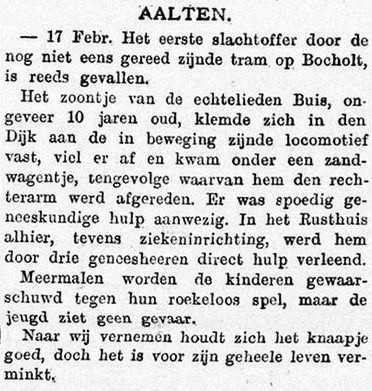
Steam tram Gelderland No. 406 in AaltenSteam tram at Aalten train station (photo courtesy of Hans Schutte)Patrimoniumstraat, AaltenGraafschapbode, 19 February 1910
Stops
Below is a list of stops between Lichtenvoorde and Bocholt that were located within the municipality of Aalten (click here for a list of all stops):
Would you be so kind as to publish the following? Thank you very much in advance.
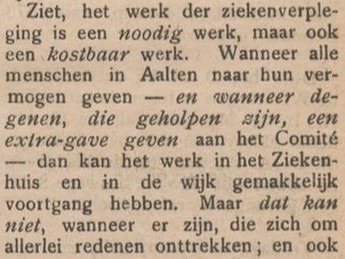
There are many people in the municipality – fortunately – who support the cause of Nursing through an annual contribution. Through all these annual contributions, the cause can be maintained. But among those many people, there are also many who regard their annual contribution as a subscription, through which they have secured the right to the help of the Sister in case of illness or accident. And that view is definitely wrong.
And do you know what the consequence of that view is? This: that when such people have enjoyed the help of the Sister for a short or long period, they never think of gladdening the Committee for Nursing with an extra gift as an offering of gratitude. Why should we do that? such people then say; after all, we pay every year when the lists are presented to us!
If only those who cannot afford to pay did so, there would be nothing to say against it. But even those who are more amply, and even very amply, endowed with earthly goods, do the same. Do such people not understand that in this way the Committee for Nursing must always struggle with a deficit? And if this deficit is then supplemented by the diaconate of the Reformed Church, is the calculation so difficult to make that those people more amply endowed with earthly goods, who sometimes enjoy the help of the Sisters for weeks, even months, ultimately receive a handout from the funds of the diaconate? And is that what they want?
See, the work of nursing is a necessary work, but also a costly work. When all people in Aalten give according to their means – and when those who have been helped give an extra gift to the Committee – then the work in the Hospital and in the district can easily proceed. But that is not possible when there are those who withdraw for all sorts of reasons; nor as long as there are those who believe that for a single mark as an annual contribution, they can be helped daily at home by the Sisters for 3 months or more.
The Sisters do not mind going to the furthest borders of the municipality, but the distances are great; the Sisters have only one body each; and so everyone can understand that it is impossible to reduce the workforce, but also, that it is definitely necessary when giving not to ask if there are even smaller coins than half-cents, but rather, whether it is not possible to give a bit more than usual for this good cause, especially when the Sisters have provided much help to us or our home.
And if I do not ask for too much space, this as well: When the roads are bad, and when the weather is bad, and if the arrival of the Sisters in the hamlets is desired during bad roads and bad weather, would it then not be possible to have them collected by carriage or to give her permission to come by carriage? For Sisters too, weather and road can be too bad for cycling. A sister recently said: “I soon noticed that the people here in Aalten are friendly and helpful.” Would the people in Aalten not want to show that too, by sending or providing a carriage in bad weather and on bad roads?
And then finally. Is there no more old linen in Aalten for the Sisters? To date, nothing has been received at the Hospital. Come, housewives, check your cupboards once more and gladden the Sisters in the Rest Home with old linen.
And as a very last point. There is also no more money for the linen cupboard. And the linen cupboard must be replenished.
I hope that many will quietly read what is written in this piece. May the Lord grant all who read this a blessed Easter.
On behalf of the Committee for Nursing: BARNEVELD, Secretary. Aalten, March 1910.
P.S. With joy I can report the receipt of: 2 packages of old linen, f 6.– for use of the operating room and f 18.– from a patient who has been under the care of the Sisters for some time. Would a change for the better be coming?
Submitted, outside the responsibility of the editorial board.
M. de R.
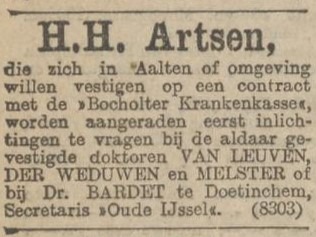
The “doctors’ issue”, which has already set so many pens in motion at home and abroad and caused such turmoil in so many minds and hearts, originally belonging to Bocholt, has been transferred from there primarily to Aalten, and has genuinely taken on a fiercer character than the generality of mankind could have imagined.
On the 13th of this month, we were made aware of a letter of the following content:
Wir erklären dasz wir van 15 März 1910 an, die Nothfalle der mitglieder und derer angehörige Ihrer kasse nur gegen fünffacher Kampfestaxe, behandlen wollen.
Aalten, 10 März 1910. (w. g.) WEDUWEN, E.J.A. MELSTER, VAN LEUVEN.
Following this, we requested and obtained an interview with our aforementioned doctors on Monday the 14th of this month. We requested the gentlemen to specify to us what did and what did not constitute an “emergency” (Nothfall). Dr der Weduwen declared that this could only be decided by experts; Dr Melster intimated that a proper answer could not easily be given, as a whole book could be written on the subject. Furthermore, it appeared that there was no complete agreement on the matter between the three aforementioned gentlemen, since Dr van Leuven accepted more cases as an “emergency” than his colleagues here.
We urged that a list of “emergencies” be provided to us, so that we might say to our fellow members: “In the stated cases you may turn to the local physicians, and you will, albeit at an insanely high price, receive treatment.” This request was not complied with; Dr der Weduwen even declared that they were not even authorised to do so, and that the Medical Association (Maatschappij van Geneeskunde) and the Leipziger Verband had to pass judgment on the matter.
One of our number posed the question of whether the workers concerned could then not be treated at their own expense, whereupon Dr der Weduwen again intimated that this was also impossible, for, so this gentleman declared, we are waging a struggle against the health insurance funds (krankenkassen) and cannot do so otherwise than by fighting against the members of those funds.
Nieuws van den Dag, 3 February 1910
This prompted one of our number to observe that we, members of the health insurance funds, were in an even worse condition than a farmer’s dog or pig. After all, if one of these animals falls ill, the owner goes to the vet and… treatment takes place. For us honest, industrious workers, treatment was out of the question.
To the question of one of our number, whether the health insurance funds or we had placed a single straw in the doctors’ path whereby they were justified in refusing us their aid, an answer in the negative was given, with the addition: “We cannot do otherwise,” to which we replied: “You can, but you will not.” We finally brought the conference to a close because we had formed the conviction that no result could be achieved with these unwilling doctors.
On Saturday 19 March, we were made aware of an official copy of the following letter:
Abschrift
Die unterzeichneten erklären, dasz sie seitens der in den Bocholter Fabriken beschäftigten, Holländischen arbeiter, besonders in den letzten woche auszerordentlich viele klagen vernomen haben, über die art der ärztlichen behandlung und versorgung der Holländischen fabrikarbeiter seit anfang dieses jahres. Die leute beklagen sich darüber, dasz die qualität der neuen ärzte eine mangelhafte sei, und das sie aus diesem grunde kein vertrauen mehr zu diesen haben könnten. Sie bedauern weiterhin lebhaft, dasz es ihnen unmöglich geworden ist, sich von ihnen alten vertrauten ärzten behandeln zu lassen.
Die leute erklären fast ausnahmslos, dasz sie es nicht wagen dürften, sich über die bestehende zustände zu beschweren, weil sie der sicheren Uberzeugung sind dann gekündigt zu werden, oder sonst auf irgend welche weise schweren miszhelligkeiten ausgesetzt zu werden. Weiterhin beklagen sich die arbeiter darüber, dasz sie in fallen von vorhandener Unarbeitsfähigkeit, oder Wiedererlangung der arbeitsfähigkeit von die neuen ärzten in Bocholt keine bescheinigung hierüber erlangen könnte.
In einer gestern stattgefundenen conferenz zwischen die Aaltener ärzten und einer deputation Holländischer, in Bocholt beschäftigter fabrikarbeiter, erklärten die letzteren, dasz zur zeit in den Holländischen grensbezirken Katzen und Hunden und Schweine besser ärztlich versorgt wurden als die menschen.
Die unterzeichneten sind jederzeit bereit vorstehende angaben, eidlich zu erhärten und auf wunsch weitere einzelheiten mundlich zu protokoll zu geben.
Aalten, den 15 März 1910.
(gez.) WEDUWEN, Arzt „ MELSTER, „ „ VAN LEUVEN, „ Der Burgemeister J. No. 712 C. Bocholt, den 18 März 1910.
The content of the above copy is unacceptable to us. We shall shortly hold a general meeting, at which all interested parties over the age of 18 may be present. We specially invite our local doctors to attend this meeting.
We hope that these men of such high scientific standing will not be conspicuous by their absence. From the hearing of both sides, it will then be possible to make clear whether there is any truth in the above letter, and if so, what. We declare even now that the final assertion in that letter is one of the most gross lies spoken within our memory.
Grateful for the space granted, we have the honour to remain,
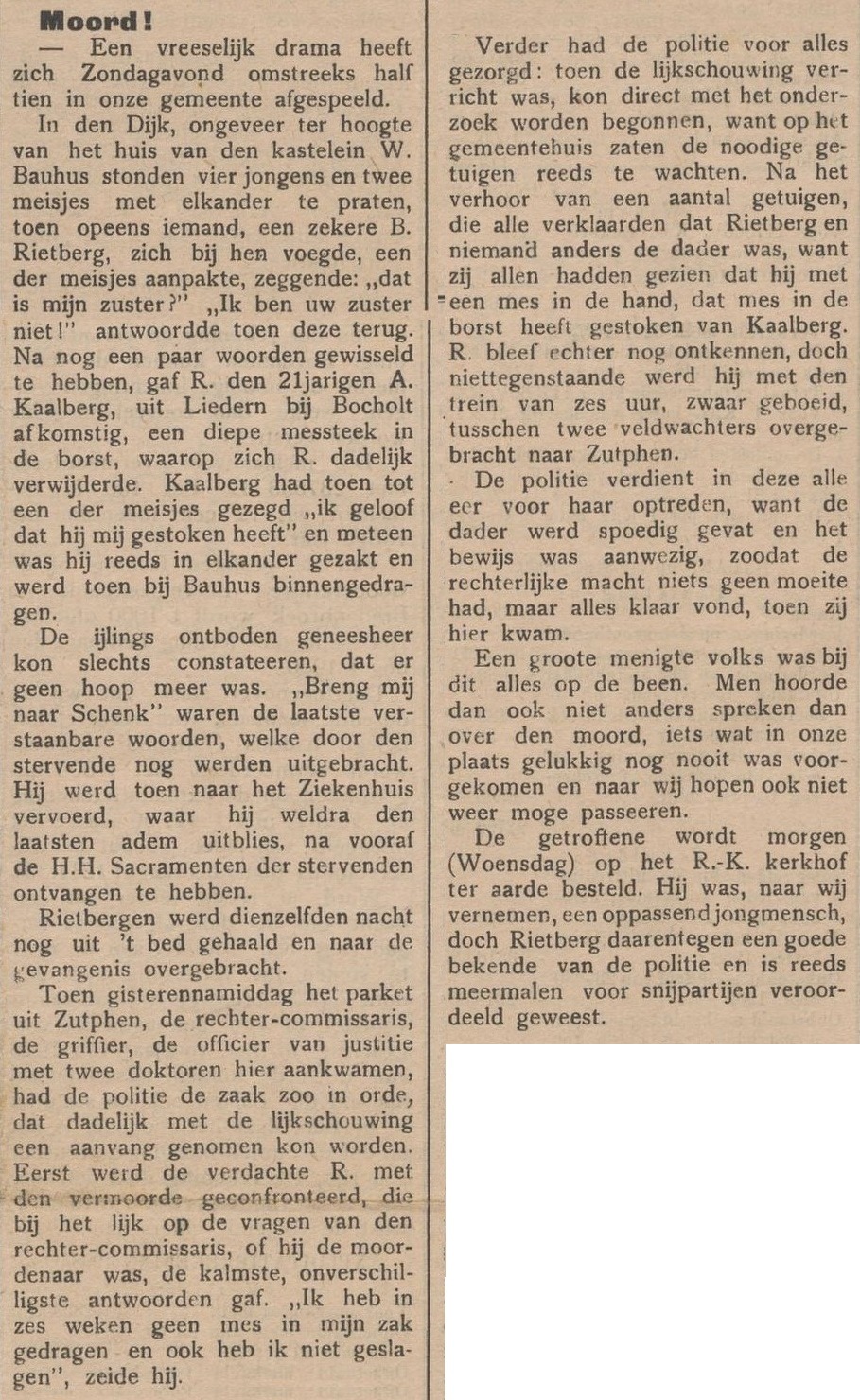
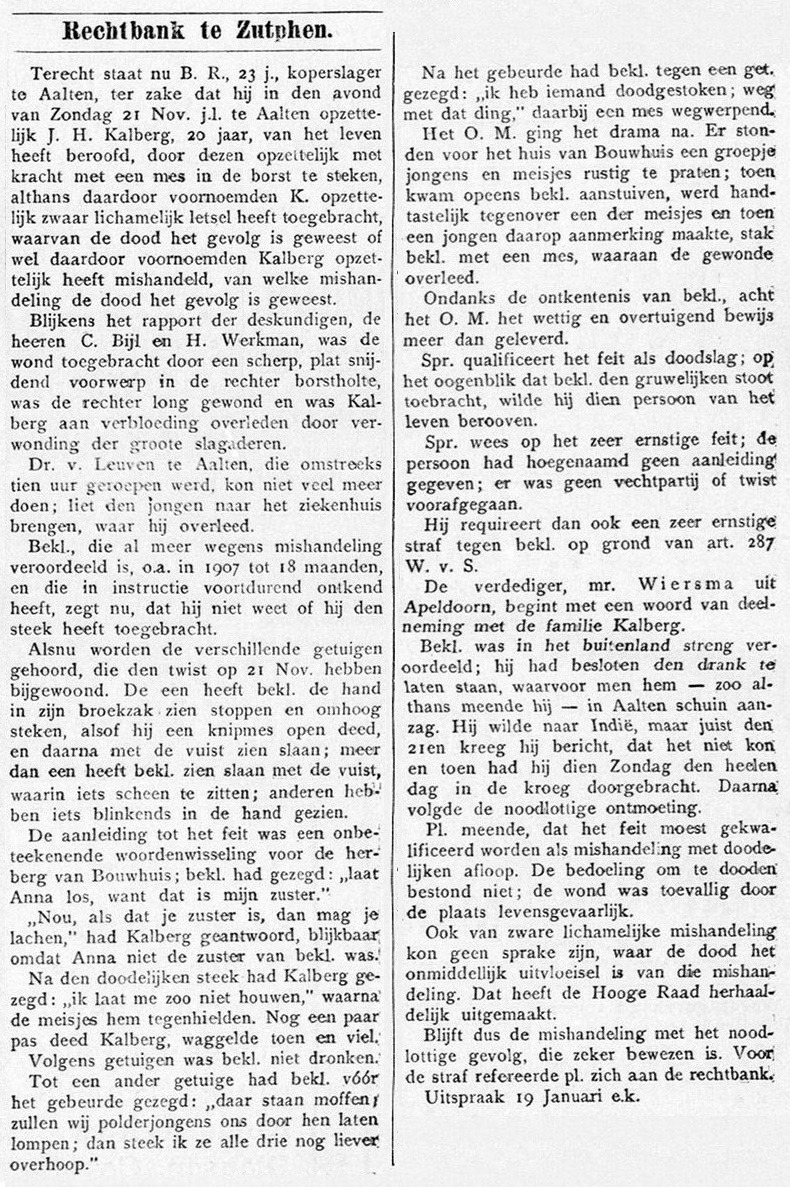
On Sunday evening, 21 November 1909, at around half past nine, a young man was killed at the beginning of Dijkstraat. Four boys and two girls were standing there talking to one another when 23-year-old coppersmith Bernardus Rietberg from Dale joined the group. He began harassing one of the girls, and an altercation ensued. Rietberg then stabbed one of the boys, 20-year-old factory worker Johann Heinrich Kalberg from Liedern (near Bocholt), in the chest with a knife.
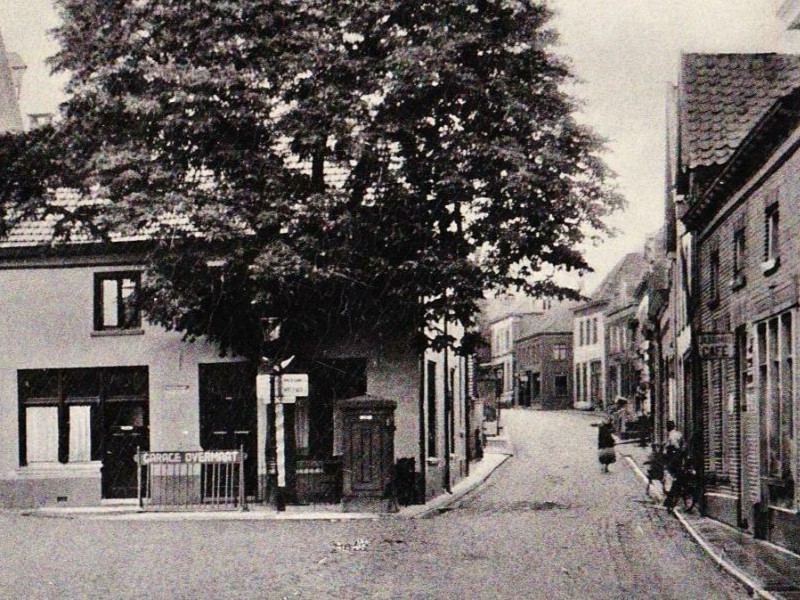
While the perpetrator walked home in cold blood, according to newspaper reports, the victim managed to stagger a short distance into Kerkstraat before collapsing. His companions, including his younger brother, carried him inside Bauhuis’s café (Dijkstraat 1). Doctor Van Leuven was summoned in great haste to assist him. However, Kahlberg had been struck in his right lung so severely that nothing more could be done. The badly wounded youth was transported to the hospital on a cart. There, half an hour later and after receiving the Holy Sacraments, he drew his last breath. He had bled to death.
Café Bauhuis, Dijkstraat 5 (right)
Court case
Rietberg was roused from his bed by the police that very same night and taken to prison. The following day, judicial officials from Zutphen arrived in Aalten to investigate. At the end of the afternoon, they returned on the six o’clock train, this time accompanied by the handcuffed suspect. As the train departed, the assembled crowd voiced its fury with loud shouting.
The suspect initially denied that he was the perpetrator and also stated that he did not know the victim. The latter claim was highly doubted. A few days later, De Twentsche Courant reported that Rietberg allegedly had his eye on a sister of Kalberg, but that the latter had opposed it. This was considered a potential motive. However, whether this was a fact or merely a rumour remains unclear. The report of the trial in De Graafschapbode of 15 January 1910 makes no mention of it whatsoever.
Newspapers at the time were able to report that Rietberg had already run afoul of the law in Germany. He had also been previously convicted of assault. It is therefore hardly surprising that he was known in Aalten as an ‘extremely unfavourable’ character. He had reportedly been thrown out of Bauhuis’s café at nine o’clock on the evening of the crime. According to witnesses, however, he did not appear to be under the influence of alcohol.
On 19 January 1910, Rietberg was sentenced to six years’ imprisonment for taking the life of Johann Heinrich Kalberg.
National news
The murder in Aalten was national news at the time. The snippets below provide a fairly comprehensive picture of what was published.
Mr P., in Aalten, possessed a magnificent specimen of a parrot that had mastered the art of speech. A few days ago, the animal flew away and kept itself near a farmhouse. The bird’s talking led the farmer to believe that a “miracle bird” was threatening his farm, and so, by means of his rifle, he put an end to the bird’s “tasty, eh?” once and for all!
De Graafschapbode, 31 August 1907
A few weeks ago, we also reported on a parrot that had escaped from Mr P. in Aalten and was later shot dead by a farmer who mistook it for a miracle bird. The news made the rounds in several newspapers, and as a result, Mr P. received a letter this week from a lady in The Hague who possessed a “lorry” (parrot) that she was eager to part with. She addressed the letter as follows: — “To Mr P….. in Aalten, where 3 weeks ago the parrot was shot dead.” — The post office, clever as it is, delivered the letter to the correct address, and the lady in question was informed of its safe arrival.
The German city of Bocholt lies approximately twelve kilometers south of Aalten. At the end of the 19th and the beginning of the 20th century, Bocholt grew into an important center of the textile industry. This flourishing industrial city attracted many workers from the border region. Hundreds of border workers from Aalten, Bredevoort, and surrounding rural districts found employment there, especially in the numerous textile factories and in construction.
In 1904, Prof. Dr. H. Blink wrote: “Every day, as many as 150 workers go from Aalten to Bocholt; rough, large wagons, covered with white hoods in the rain and drawn by two horses, bring the workers to Bocholt every morning and carry them back in the evening.”
Thanks to the Aalten population register, in which the employer was also regularly recorded around 1900, we know of many workers that they worked in Bocholt and for which company.1
De Graafschapbode, 4 December 1897
Who were the people working in Bocholt?
In the overview below, you will find the names of many border workers from the municipality of Aalten who were employed in Bocholt around 1900, including their profession and employer. Perhaps some of your ancestors are among them? Please note: this overview is not exhaustive.
Below is an overview of companies in Bocholt where workers from Aalten were employed around 1900. This list is also incomplete:
Franz Beckmann & Cie.
Cotton mill
Founded in 1895, this firm grew into one of the city’s largest spinning mills. The company was acquired by the firm Flender in 1967. The original factory building has been renovated and restored to its former glory.
Founded in 1873 on Kaiser-Wilhelm-Straße. In 1897, a dye works and a fabric finishing department were added on Frankenstraße. In 1921, the firm was removed from the commercial register.
The first large industrial enterprise in Bocholt, founded in 1857. After a fire in 1888, the factory was replaced by a larger new building. The company ceased operations in 1978. The 34-meter-high chimney was preserved and now stands in the middle of the Arkaden shopping center.
Around 1900, the firm Wwe. B. Messing was active in Bocholt as a producer of cotton waste. The factory was located in the current Weber Quartier, behind the Kinodrom on the river Aa.
Founded in 1864. No further information available.
Brauerei Tangerding
Steam beer brewery
The Hirsch-Brauerei of Franz Tangerding in Bocholt-Stenern produced various types of beer, soft drinks, and fruit lemonades. The ruins of the original brewhouse from 1896 are still present on the former brewery site.
“At the entrance of the current Karolingerstraße stood the factory of Cosman Cohen, and further south were the factories of Gebr. Weyl and Braunschweig.”
In 1859, Josef Philipp Beckmann started a steam weaving mill on Kreuzstraße with his sons. In 1891, the company split into J. Beckmann Nachfolger and Heinrich Beckmann Söhne. Both companies later merged again into IBENA.
Founded in 1862 on Kaiser-Wilhelm-Straße. In 1897, the factory burned down. A new factory was built at Industriestraße 7. In 1929, the weaving mill was sold to the neighboring company H. Beckmann Söhne and is now owned by IBENA.
In 1898, the Aktiengesellschaft Baumwollspinnerei Rothe Erde had a factory built between Werther Straße and the Aa. The spinning mill with the adjacent weaving mill was one of the largest companies in the city.
From 1857, Ludwig Schwartz had several steam weaving and spinning mills built on his estate Haus Woord. After his death, the company was continued by his widow Theodora Schwartz and later by their sons. The firm ended its activities in 1971. The current Schwartzstraße in Bocholt serves as a reminder of this textile enterprise.
The firm Vagedes was located in the Biemenhorst district. In 1990, the company was on the verge of liquidation. Two former employees then founded Setex-Textil and continued Vagedes’ activities.
In 1889, Max Hugo von Velsen, former director of Ludwig Schwartz’s spinning mill, founded his own cotton spinning mill. The factory, located between the Westend and the river Aa, included a spinning mill, twisting mill, and finishing department. The company closed in 1934.
Below you will find a map showing the (presumed) locations of the aforementioned factories in Bocholt.
Interesting facts
Commuters from Aalten crossed the border six days a week, mostly on foot, by bicycle, or by horse and carriage. In 1910, relief came with the construction of a tram line between Aalten and Bocholt, which significantly shortened travel time. Working days were long: 12 to 14 hours was no exception.
Border workers from Aalten received their wages in German Marks. This money was circulated in the local Aalten economy. Around 1900, German money was therefore the daily currency in Aalten. However, this was formally prohibited in 1914.
Those who wish to learn more about the history of the textile industry in Bocholt can visit the LWL-Museum Textilwerk. Here, the city’s rich textile past is brought to life with original machinery and various exhibitions.
Deze website gebruikt cookies voor een optimale ervaring en analyse van bezoekgegevens. Ga je hiermee akkoord? Zonder toestemming werken sommige onderdelen van de site mogelijk minder goed.
Functioneel
Always active
De technische opslag of toegang is strikt noodzakelijk voor het legitieme doel het gebruik mogelijk te maken van een specifieke dienst waarom de abonnee of gebruiker uitdrukkelijk heeft gevraagd, of met als enig doel de uitvoering van de transmissie van een communicatie over een elektronisch communicatienetwerk.
Voorkeuren
De technische opslag of toegang is noodzakelijk voor het legitieme doel voorkeuren op te slaan die niet door de abonnee of gebruiker zijn aangevraagd.
Statistieken
De technische opslag of toegang die uitsluitend voor statistische doeleinden wordt gebruikt.De technische opslag of toegang die uitsluitend wordt gebruikt voor anonieme statistische doeleinden. Zonder dagvaarding, vrijwillige naleving door je Internet Service Provider, of aanvullende gegevens van een derde partij, kan informatie die alleen voor dit doel wordt opgeslagen of opgehaald gewoonlijk niet worden gebruikt om je te identificeren.
Marketing
De technische opslag of toegang is nodig om gebruikersprofielen op te stellen voor het verzenden van reclame, of om de gebruiker op een site of over verschillende sites te volgen voor soortgelijke marketingdoeleinden.