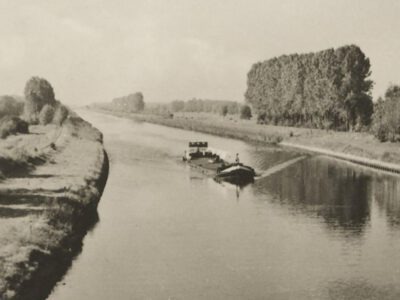
In the first decades of the twentieth century, numerous plans were drawn up in the Netherlands for the construction of canals to facilitate bulk transport. For instance, the initial plans for the Twente Canal (Twentekanaal) were presented in Twente in 1907.
In 1936, the 54-kilometre-long canal between Enschede and Zutphen was opened to shipping. Similar plans also emerged in the Achterhoek.
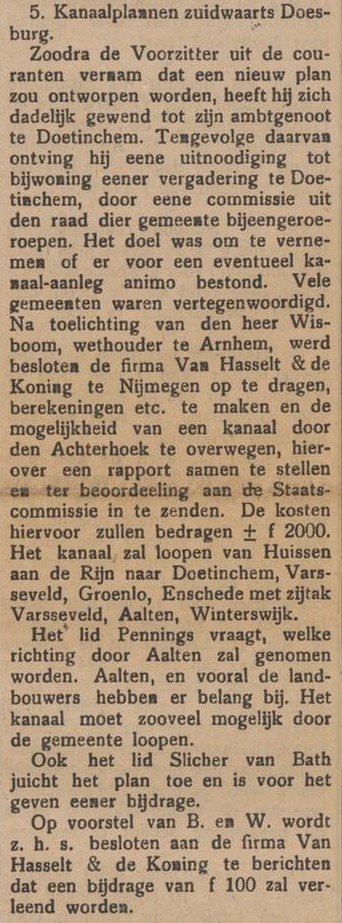
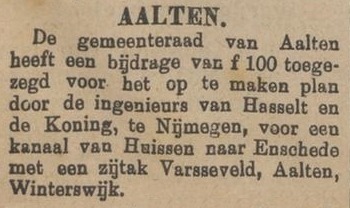
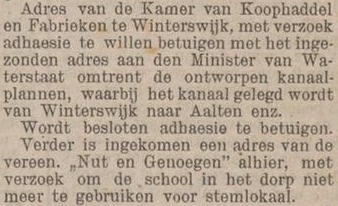
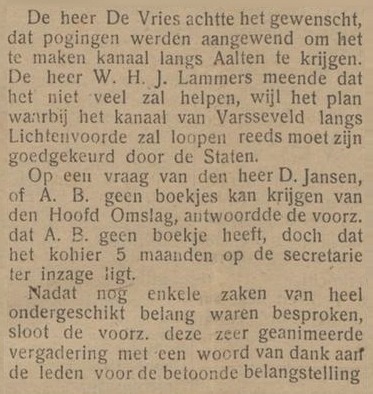
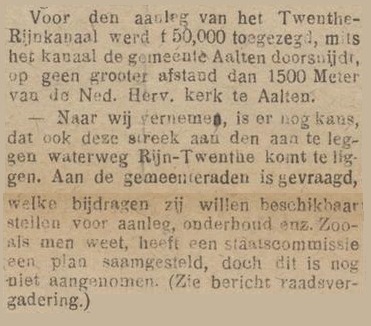
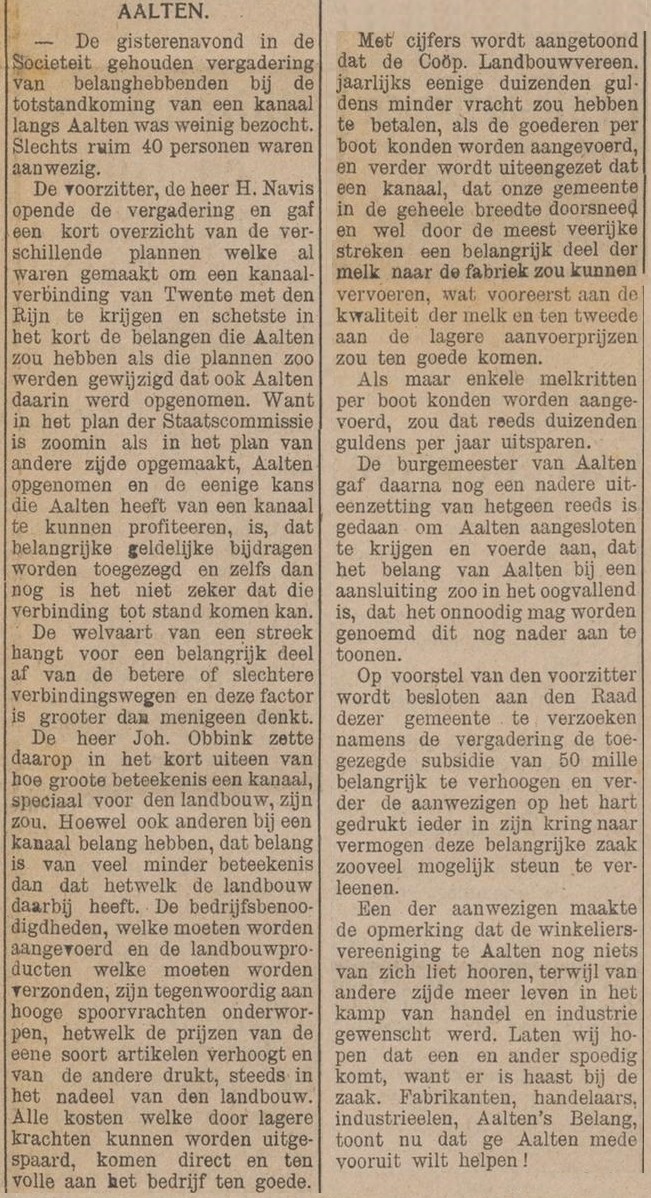
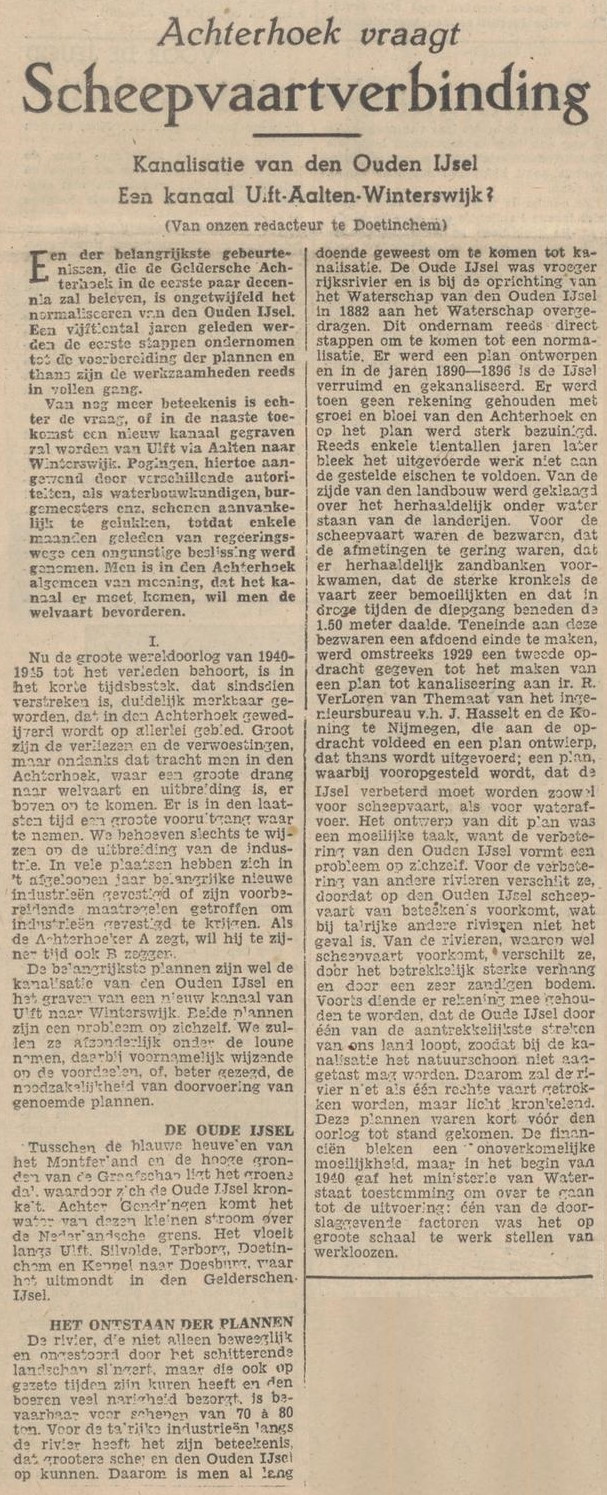
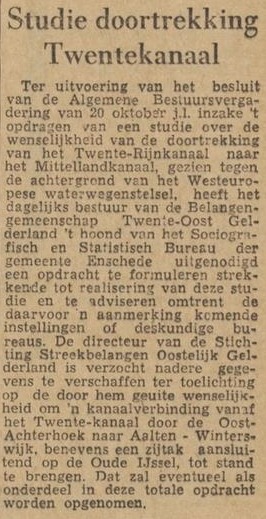
In 1914, Doetinchem municipal council decided to take action on this idea. In March 1915, a proposal was presented based on a Twente–Rhine Canal (Twente-Rijnkanaal). The planned canal was to begin six hundred metres north of the head of the IJssel and run via Duiven, Wehl, Doetinchem, and Varsseveld, passing Lichtenvoorde, Groenlo, Eibergen, and Haaksbergen on its way to Hengelo, including a branch canal via Aalten to Winterswijk.
Following decades of debate and planning, continuing at least into the 1960s, the projects ultimately foundered somewhere along the line.
Newspaper reports