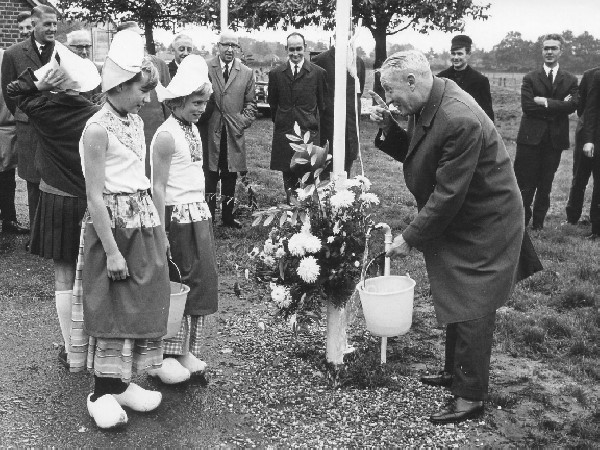
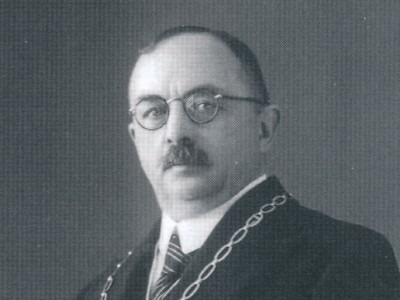
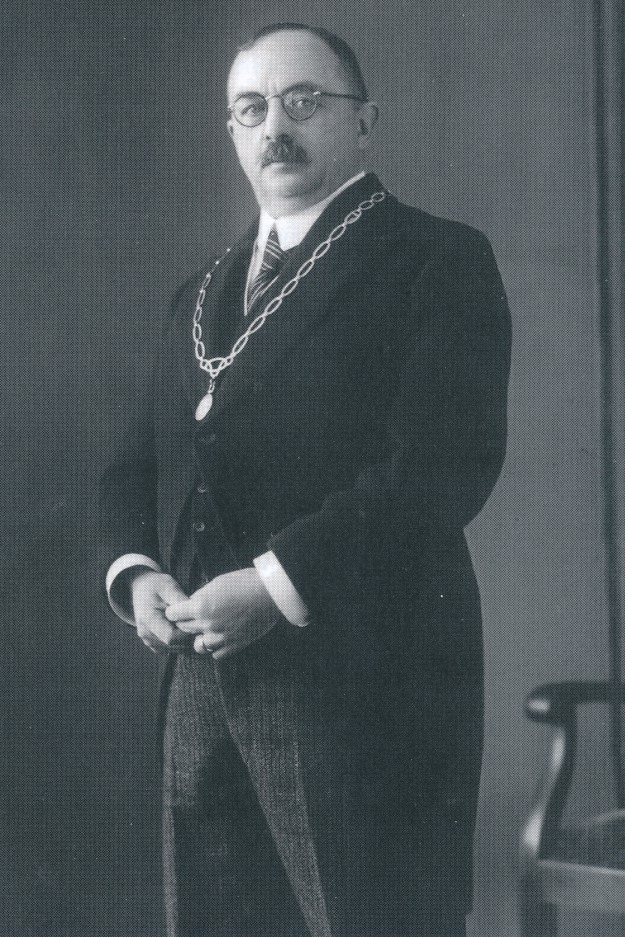
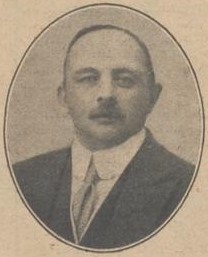
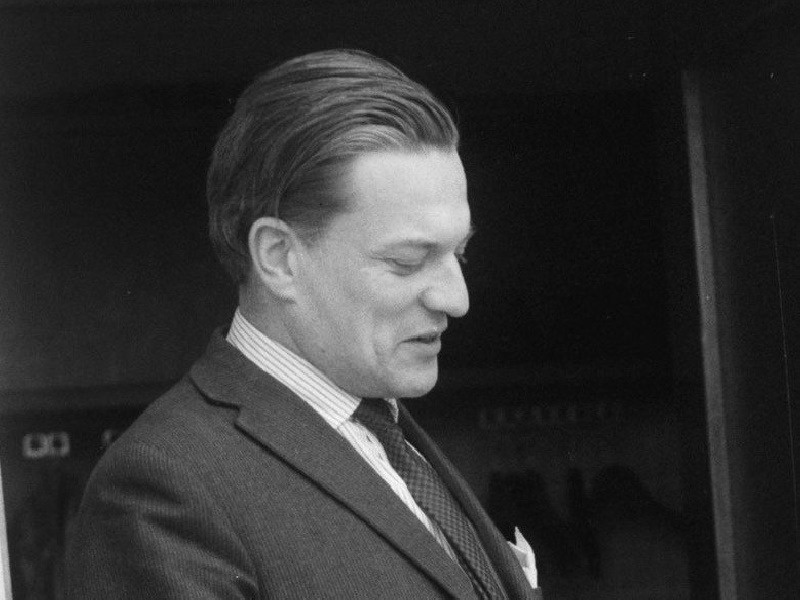
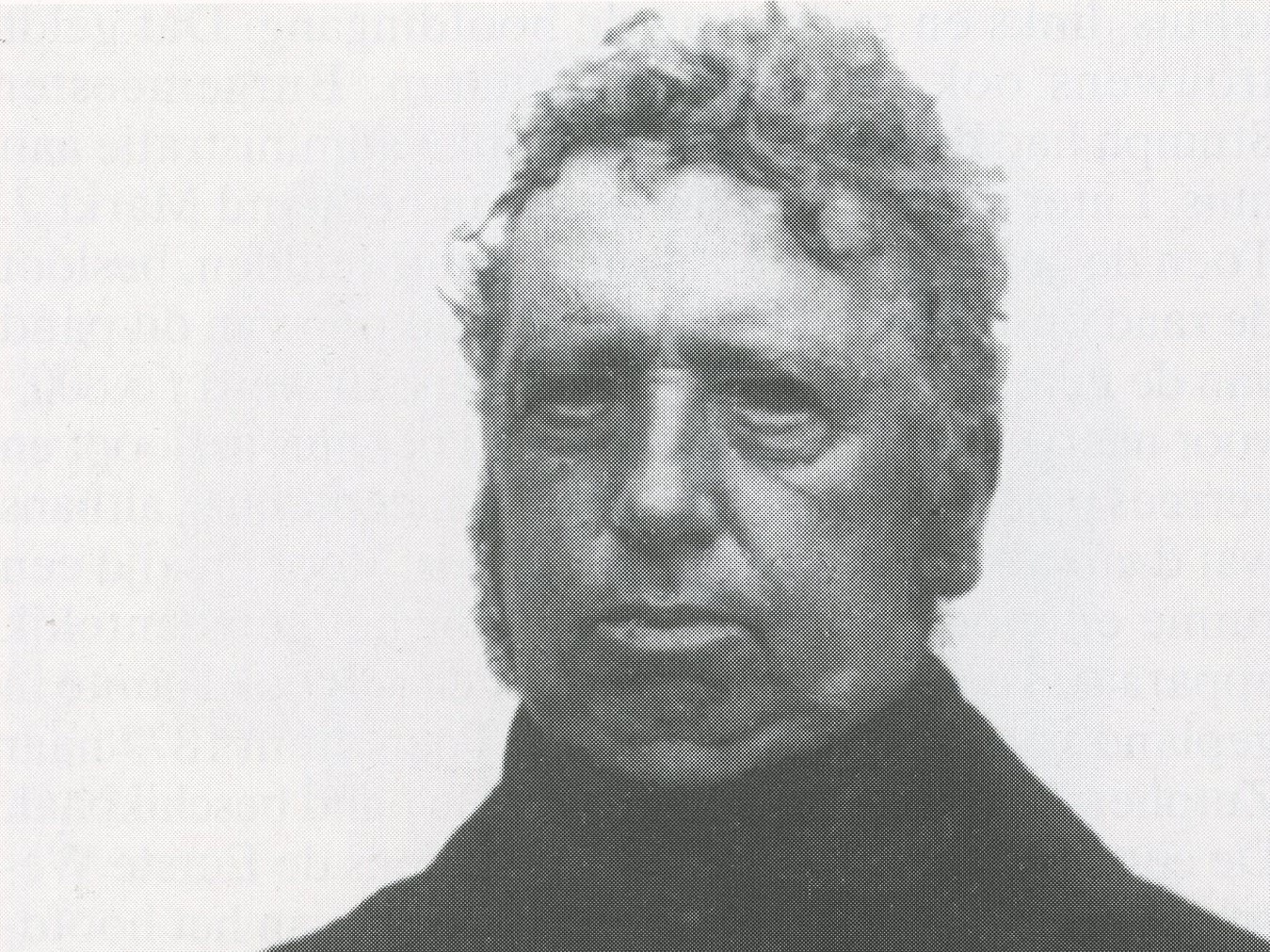
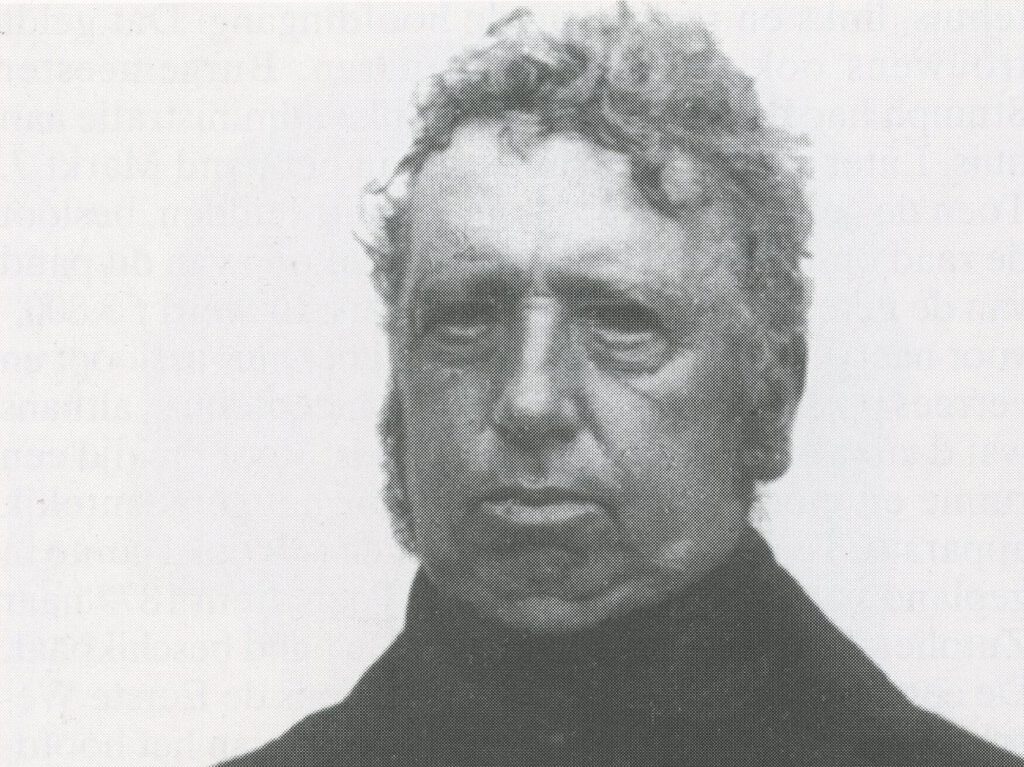
Evert Sickens van Veen (Hijkersmilde, 04-10-1902 – Winterswijk, 03-05-1976) was a Dutch politician representing the CHU (Christian Historical Union).
He was born the son of Jan van Veen (1855–1917; a farmer) and Matje Prins (1867–1943). He attended the gymnasium but suffered from health problems and left the school prematurely to undergo a health cure in Switzerland. After subsequently working in the agricultural sector in France for a period, he returned to the Netherlands in 1926. He became an unpaid apprentice (volontair) at the municipality of Schoonebeek, and in mid-1930 he was appointed as an administrative officer at the town clerk’s office of the municipality of Stad Hardenberg. Two years later, he transferred to the municipality of Gramsbergen, where he rose to the position of chief administrative officer.
On 25 March 1931, Evert Sickens van Veen married Johanna Jacoba Strating in Oosterhout (North Brabant).
In late 1937, Van Veen was appointed Mayor of Nijeveen. In September 1943, he went on sick leave, at which point the Mayor of Meppel, Geert Wisman, also became acting Mayor of Nijeveen. Early in 1944, Van Veen was dismissed, but he later returned to his post as Mayor of Nijeveen. Furthermore, in late 1945, he served as acting Mayor of Ruinerwold for several months.
In 1946, Van Veen was appointed Mayor of Aalten, succeeding Mayor Monnik. Van Veen retired from his post there in November 1967 and passed away in 1976 at the age of 73. He is buried at Berkenhove Cemetery.
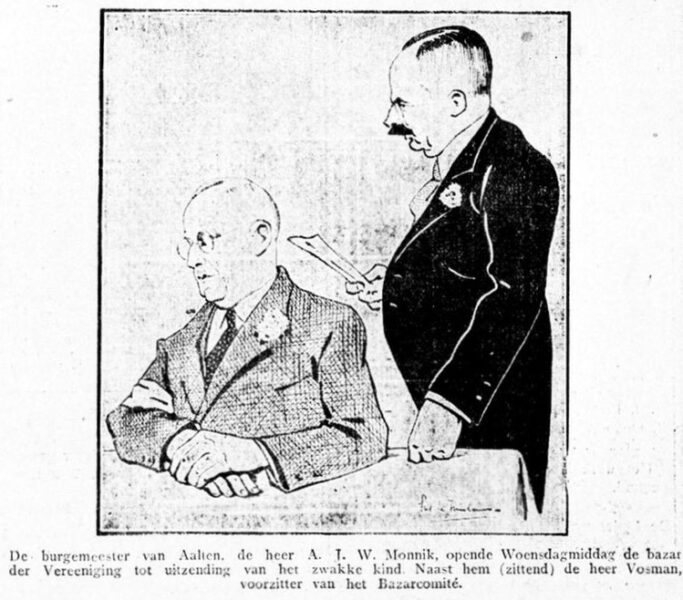
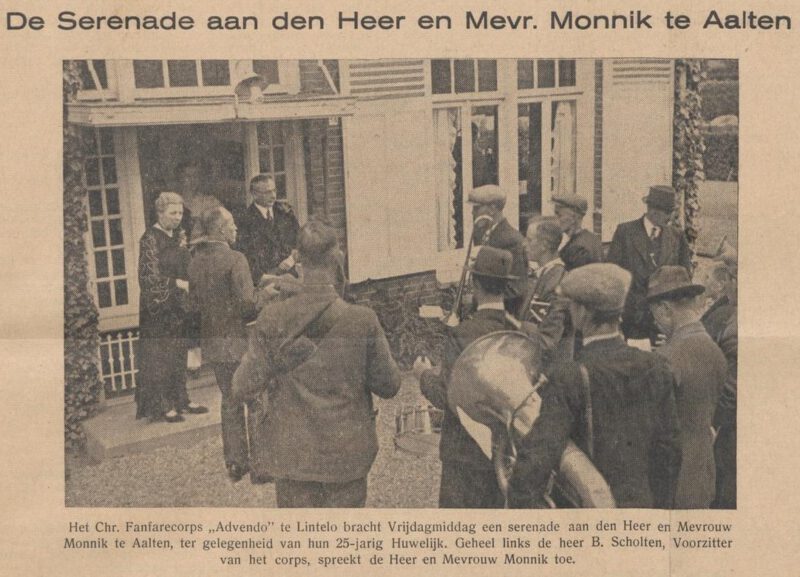
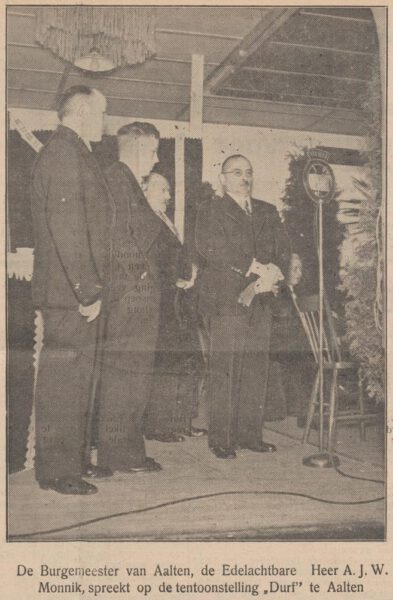
Adriaan Johannes Willem Monnik was born on 19 November 1879 in Vorden, the son of Adriaan Johannes Wilhelmus Monnik, a medical doctor, and Anna Hendrika Blotkamp. On 22 May 1913, he married Louise Wilhelmina de Waal Malefijt (born in Zeist, 17 August 1881) in The Hague. She was the daughter of Jan Hendrik de Waal Malefijt, Minister of the Colonies, and Frederica Sophia Wilhelmina Couvée.
Monnik was appointed Mayor of Aalten in 1910, succeeding Willem Carel Tack.
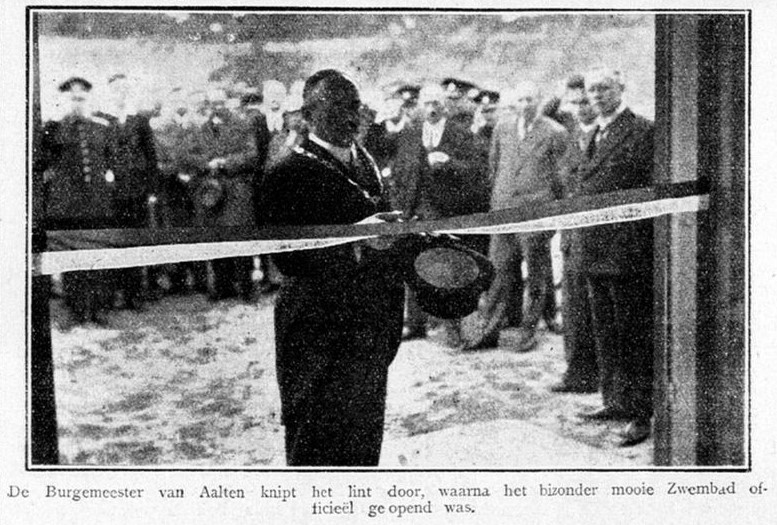
He served as Mayor of Aalten for no less than 35 years. The Monnik family lived in villa Zonneheuvel on Bredevoortsestraatweg in Aalten, on the site where the indoor swimming pool would later be built.
In 1944, Mayor Monnik received orders to ensure that 500 men from Aalten report to Zevenaar to be deployed in digging military defences. He and his municipal officials took the collective decision to refuse and go into hiding together. The civil register (bevolkingsregister) was moved to safety.
During his period in hiding, Monnik was replaced by I.A. de Moor, the former Mayor of Breskens who had fled from there along with many other NSB (Dutch Nazi Party) members. Following the liberation, Monnik returned to his post as mayor and retired on 1 November 1945.
In 1946, Monnik was appointed a Knight in the Order of Orange-Nassau.
On 2 August 1951, he passed away at the Bronovo Hospital in The Hague following an operation. He was buried at Berkenhove Cemetery.
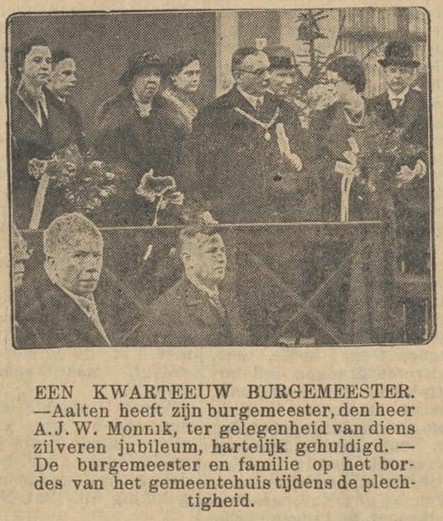
On the occasion of Mayor Monnik’s 25th anniversary in office, De Graafschapbode published an interview with the jubilarian on 8 March 1935, reproduced below in a slightly abridged form:
When we are seated in the spacious mayoral office, our first question is naturally: “Could you tell us something about your very earliest years, school education, and so forth?” We learn that Adriaan Johannes Willem Monnik was born on 19 November 1879 in Vorden. His first two school years were spent at the Christian school in his birthplace. Then, a governess came to the house. One room was fitted out as a schoolroom, and here the young pupil, alongside just one fellow classmate, was prepared for the gymnasium.
Following this primary education, he attended the Christian gymnasium of the Reverend Van Lingen in Zetten for three years. His studies had to be interrupted at that point for health reasons and were later resumed at the H.B.S. (modern secondary school) in Zutphen. He then attended the lectures of Professor Hugo de Vries at the Municipal University of Amsterdam for a year.
Appointed Mayor of Aalten
“It was always my ambition,” Mr Monnik tells us, “to become a mayor one day, and when the vacancy in Aalten arose, I was appointed Mayor of Aalten on 23 February 1910.” Following his swearing-in on 2 March, Mr Monnik was installed as mayor here on 15 March 1910. The senior alderman (wethouder), Z.G. van Eerden, delivered the installation address. The mayor concluded his reply by stating, among other things: “I shall do what is a mayor’s duty.”
At that time, Mr B.H. Vaags was the town clerk (gemeente-secretaris), and the aldermen were Messrs Z.G. van Eerden and W. te Gussinklo. The council was composed as follows: F.H. Somsen, Th.A.M. Driessen, Sal. Gussinklo, L. Heusinkveld, H.A.J. Luiten (Sondern), J.P. Obbink, H.J. Veldhuis (Vels), Wander Nijhof, J.H. Veldkamp (Bredevoort), and A.P. Slicher van Bath.
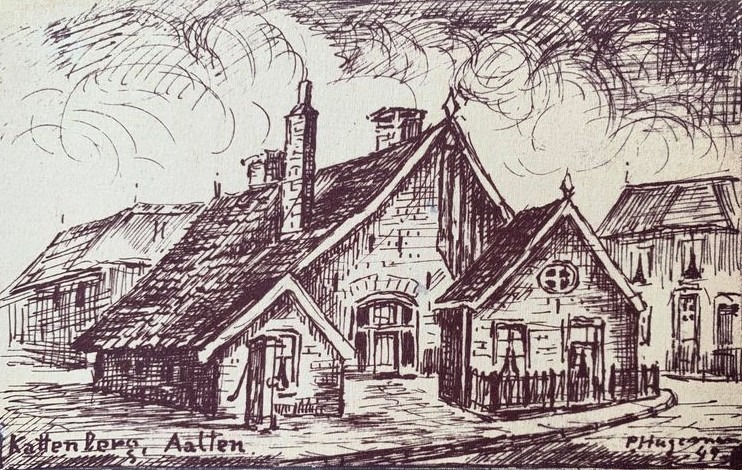
Until his marriage, Mr Monnik lodged with the Misses Vaags on the Kattenberg.
Key decisions and events
The mayor believes he recalls that his first decision was the purchase of the old Heijmans house on the corner of Koelmansteeg, to widen the entrance to Koelmansteeg (now Stationsstraat). The old minutes books are fetched, and indeed, it is correct (our mayor’s memory is, in passing, exceptionally good): this corner house was purchased for 3,500 guilders, allowing for a proper entrance to Stationsstraat.
Then, on 27 April 1910, followed the opening of the tramway, the G.W.S.M. line B (Lichtenvoorde, Bredevoort, Aalten, Bocholt).
Right from the start in 1910, his passion for public health became apparent when several dwellings were declared unfit for human habitation. “I have never involved myself much in politics; I feel much more drawn to public health, housing, and the like,” the town’s father figure remarks in passing.
Later in 1910, we saw the construction of the Koembrug, the first concrete bridge in Aalten, as well as the public school renovation and the reorganisation of the police force (Mr Blom became chief rural constable at the time). The appointment of a foreman for the municipal labourers also dates from this period.
In 1911, the abolition of German currency was brought up, though it was not until July 1914 that this was implemented. Due to the large number of labourers who went to work in the factories in Bocholt at the time, all of whom were registered with a German health insurance fund (Krankenkasse), a complex insurance issue had arisen, which was also resolved now.
In March 1911, a weekly market for vegetables, chickens, eggs, and fish was introduced. The improvement of the drainage of De Goor also took a major step forward with the establishment of the Baaksche Beek Water Board. An old covenant had stipulated that the Veengoot ditch could not be deepened, making drainage of De Goor impossible. The creation of the Water Board allowed for a change. In 1911, Lankhofstraat and Ormelstraat were also laid out.
It would take us too far to deal with every year in such detail. We shall walk through the subsequent years at a slightly accelerated pace and mention them more as chronological milestones. In 1912, we find the retirement of rural constable Heersink.
On 22 May 1913, Mr Monnik married L.W. de Waal-Malefijt. His lodgings with the Misses Vaags were exchanged for villa Zonneheuvel.
On 21 February 1914, the council decided to build new schools in IJzerlo and on De Haart. On 13 March of the same year, the schoolmaster’s house in Aalten followed. In February, house construction on Haartseweg was also commenced.
On 1 August, we see the beginning of the Great War, which brought numerous hardships. Gradually, all foodstuffs and provisions became scarcer, leading us into the era of rationing. What an immense amount of work and trouble that entailed! During that period, we supplied 1,000,000 kilograms of rye, making us one of the largest rye-supplying municipalities in the country.
In September 1914, the ordinance on pub closing hours came into force, and the “blacklist” was introduced. On 31 October, the budget post for night watchmen was scrapped, and by 1 January 1915, the night watchman in Aalten belonged to the past.
In late 1917, the council expressed its approval in principle for taking over the gasworks. The decision to acquire it was taken on 19 December 1918. 1918. The council took over the gasworks for 115,000 guilders, plus 29,602.87 guilders for the pipes, gas meters, etc. The date of transfer was 2 May 1919.
Following the armistice, when the prisoners of war arrived at the border, it was rumoured that 30,000 of them would be coming here. Fortunately, they took another direction in Bocholt. Nevertheless, we received our share in November 1918, namely Frenchmen and Italians, who were housed in the Community Hall and in the factory of the N.V. Textiel Mij. textile company. The people were starved. “We experienced something rather peculiar with those Italians,” the mayor tells us. “We had given them all some of our excellent soap, of which we had a large stock at the time, so they could wash themselves properly, but by the following day, all the soap had been eaten by the Italians!”
On 26 February 1920, the Oosterman plot was purchased with the intention of creating the new cemetery there. This plan did not go ahead. Later, in 1922, another site was designated for this purpose: the present-day Berkenhove Cemetery.
In August 1920, a start was made on the official naming of streets. The first was Oranjestraat in Bredevoort. August also saw the tendering for Gendringseweg.
On 19 May 1922, the cattle market was moved to the inner market square. In recent years, however, the cattle market has been restored to its former glory. This year also saw the introduction of the meat inspection service, with Dr Rexwinkel appointed as inspecting veterinary surgeon. On 11 April, the slaughterhouse was taken over by the municipality.
Then we come to the most recent years, which are still fresh in all our memories. Various roads were paved during these years: Sondernweg and Haartseweg in 1929. A ring road was constructed on 24 August 1928, and now the Walfort open-air lido, a project of the very last few years.
The Aldermen over these 25 years
It is quite interesting to look back at which aldermen we have had during these 25 years. In 1910, as previously mentioned, they were Z.G. van Eerden and W. te Gussinklo. Following the death of Van Eerden, Mr Theod. Driessen became alderman in May 1916, stepping down again in 1918. We then had Mr F.H. Somsen for a brief spell. From 2 September 1919 to 4 September 1923, the aldermen were Messrs H.J.J.G. ten Dam and Joh. Obbink. Mr F.H. Somsen then took the place of Mr ten Dam (4 September 1923), and on 8 March 1926, Mr A. Brethouwer succeeded Mr Obbink. Messrs Somsen and Brethouwer remain in office as aldermen to this day.
As town clerk, Mr S. Bijlsma succeeded his predecessor, Mr B.H. Vaags, on 1 February 1930. On 29 January 1924, the municipal treasurer, Mr F.H. Freriks, retired. Mr F. Heisterman was then appointed as treasurer. At the Municipal Works department, following the passing of Mr J. Brill, Mr Tilbusscher became the municipal architect, assisted by Mr H. Rollman.
Other roles of the jubilarian
Alongside his own busy professional sphere, the mayor takes a particular interest in education. Mr Monnik serves as treasurer of the Union of School Boards, Teachers, and Supporters of Christian Education in the Gelderland Achterhoek and surrounding areas.
He is also a board member of the Groen van Prinsterer Teacher Training College in Doetinchem. Furthermore, he is a director of the N.V. Waterleiding Oostel. Gelderland water company and a member of the Supervisory Board of De Graafschap printing and publishing company.
Finally, we are curious to know the mayor’s view on the prospects of our municipality in the near future.
“These past 25 years,” Mr Monnik says, “have certainly not been easy. First the war years, and now the perhaps even more difficult post-war period with its severe decline in every field, its massive unemployment, with the unemployment relief schemes (werkverschaffing) and everything that entails. My wife has always been an immense support to me through all these difficulties.”
Regarding the relief schemes, we can add that on 24 November 1916, the Patrimonium association requested employment relief. The first project was gravel digging in 1918. On 30 May 1917, Aalten became one of the first municipalities to adopt unemployment insurance.
The mayor concludes: “We as a municipality are not in too bad a position. This is a very heavy year, certainly, but I foresee that things will gradually improve. We shall move forward with confidence, one eye looking upward, one eye looking inward. Hand to the plough, and the end will be good. We must seek not what divides us, but what binds us together!”
Aaltensche Courant, 27 May 1927Graafschapbode, 13 April 1934Graafschapbode, 25 June 1934Sumatra Post, 8 June 1935De Graafschapper, 24 May 1938De Graafschapper, 7 November 1938
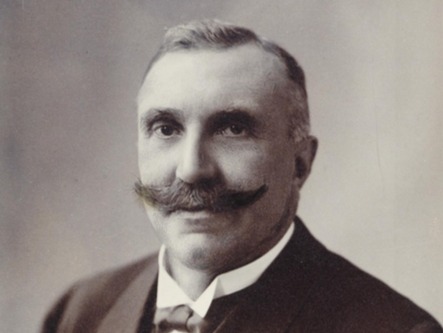
Johan Hora Adema (Leeuwarden, 24 April 1843 – Velp, 15 March 1938) was a mayor in three different municipalities. In addition, he served as a captain in the Grenadiers and Rifles Regiment (Regiment Grenadiers en Jagers). In 1870, he married the Frisian Lucia Aurelia Bergsma Fruitier de Talma, with whom he had four children.
Festive arrival in Aalten
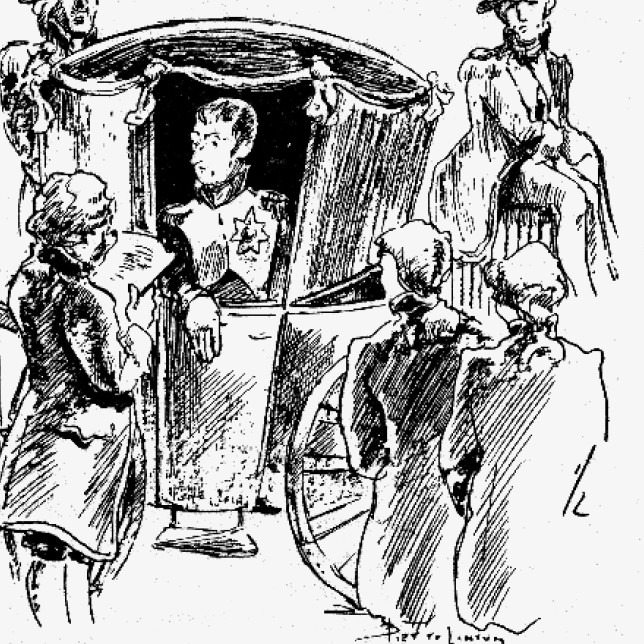
In 1886, Hora Adema was appointed town major of Aalten, succeeding Mayor L. Roelvink, LL.M. To mark his arrival, a festive welcome procession was organised. A competition was held for the most beautiful triumphal arch, and in many parts of the village, people worked hard to prepare a fitting welcome for the new mayor.
The day of his arrival was exceptionally warm and celebratory; almost everyone was out on the streets. The new town father was driven through Aalten in a carriage. At each triumphal arch, the carriage halted so he could read the inscriptions displayed on them. The triumphal arch in Dijkstraat was particularly outstanding. It read:
“Wees welkom J. Hora Adema, Voor U is deze boog geplant. Bestuur, beheer voor aller eer Dit dorp in ons vaderland.”
(Welcome J. Hora Adema, / For you this arch is raised. / Govern, manage to everyone’s honour / This village in our fatherland.)
The creators of this triumphal arch were awarded first prize. The new mayor took up residence in Landstraat.
Mayor in three municipalities
Hora Adema served successively as mayor of the municipalities of Aalten (1886–1888), Hengelo (1888–1891), and Harlingen (1896–1914).
Hendrik Hieltje Hans Haverkamp (Doetinchem, 1927-04-28 – Arnhem, 2011-06-19) was a Dutch politician of the CHU.
He was born the son of Johan Hendrik Wilhelm Haverkamp (1900-1953), an official at the municipality of Doetinchem and later mayor of Dinxperlo, and Louisa Petronella Ynzonides (Obergum, 1901-08-12), a minister’s daughter. He graduated in law and served as deputy chief of the cabinet of the Queen’s Commissioner in Overijssel before being appointed mayor of Staphorst in April 1963.
In January 1968, he succeeded Evert Sickens van Veen as mayor of Aalten. Only two and a half years later, in August 1970, he resigned as mayor to become the second secretary of the Rijnmond Council. Haverkamp passed away in 2011 at the age of 84.
Haverkamp was succeeded as mayor of Aalten by Ruurd Faber.
Jonkheer Georg Ludwig Carl Heinrich Baud was born on March 28, 1858, in Amersfoort, son of Jean Chretien Baud and Eveline Alexandrine van Ranzow.
By Royal Decree of February 2, 1888, Baud was appointed mayor of Aalten. He succeeded Johan Hora Adema. At his own request, no public tribute was paid during his installation as mayor, other than the flying of flags.
In 1892, he stood as a candidate for the Provincial Council on behalf of the Liberal Electoral Association. He was elected. On December 1, 1895, he requested an honorable discharge as mayor. He was succeeded as mayor of Aalten by Mr. Willem Carel Tack.
In 1898, he resigned as a member of the Provincial Council to prevent a split within his party.
On March 31, 1908, at the age of 50, he married Elisabeth Lamberta van Riemsdijk (Batavia, 1871-10-10) in The Hague, who was 14 years his junior. Baud passed away on April 4, 1921, in The Hague.
Willem Carel Tack was born on September 26, 1838, in Doesburg as the son of Benjamin Tack, member of the city council, and Françoise Caroline Madelon Baroness Van Eck. On June 5, 1873, he married Cornelia Johanna Paré (Bredevoort, August 2, 1848), the daughter of a minister, in Aalten. Together they had five children.
On March 4, 1880, Tack was appointed mayor of Kesteren by Royal Decree. Following an honorable discharge as mayor of that municipality, he assumed the mayoralty of Aalten effective December 15, 1895. He succeeded Jonkheer Georg Ludwig Carl Heinrich Baud.
Festive Reception in Aalten
On Monday afternoon, a large crowd awaited Tack and his family at Aalten station to welcome them. Carriages, riders, and a brass band then escorted the family to the official residence on Gasthuisstraat (currently Haartsestraat 10), which later earned the nickname ‘Tackshuis’. That evening, a torchlight procession passed through the village, which was decorated with flags and greenery, in honor of the new mayor. By Royal Decree of November 25, 1907, Tack was reappointed as mayor effective December 15, 1907.
Tack passed away on May 4, 1915, in Aalten at the age of 76 and was laid to rest in Doesburg on May 8.
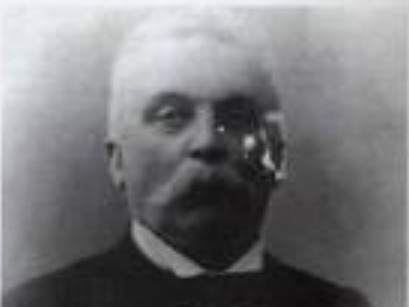
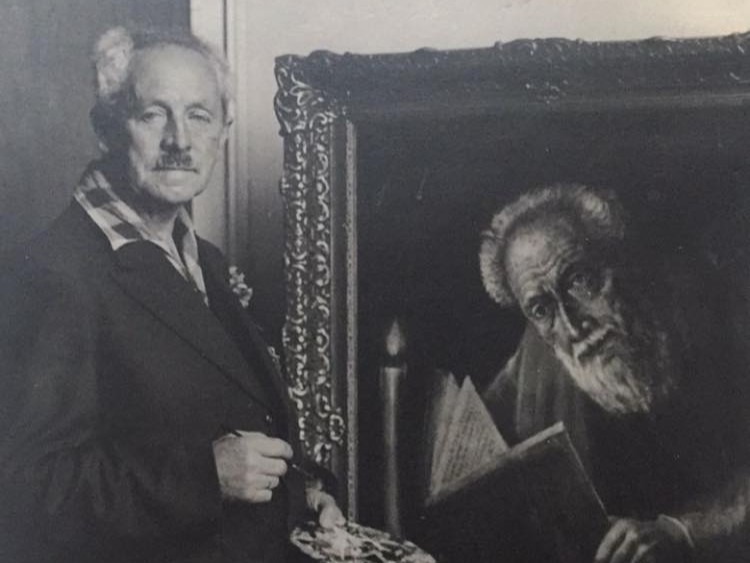
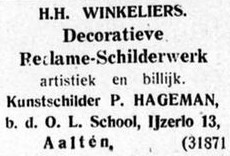
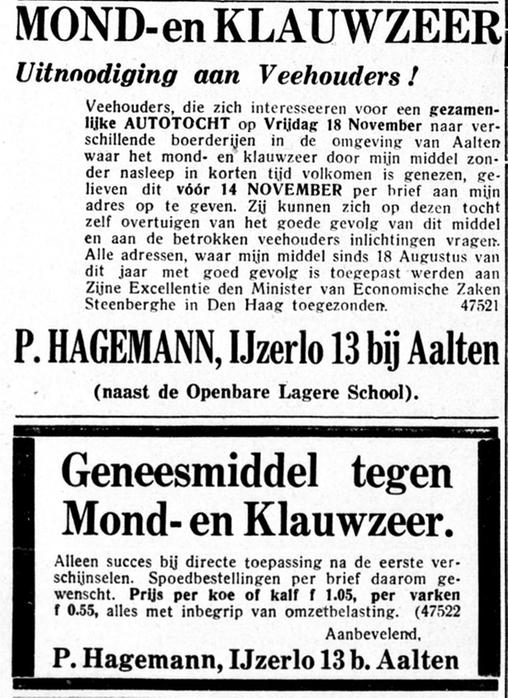
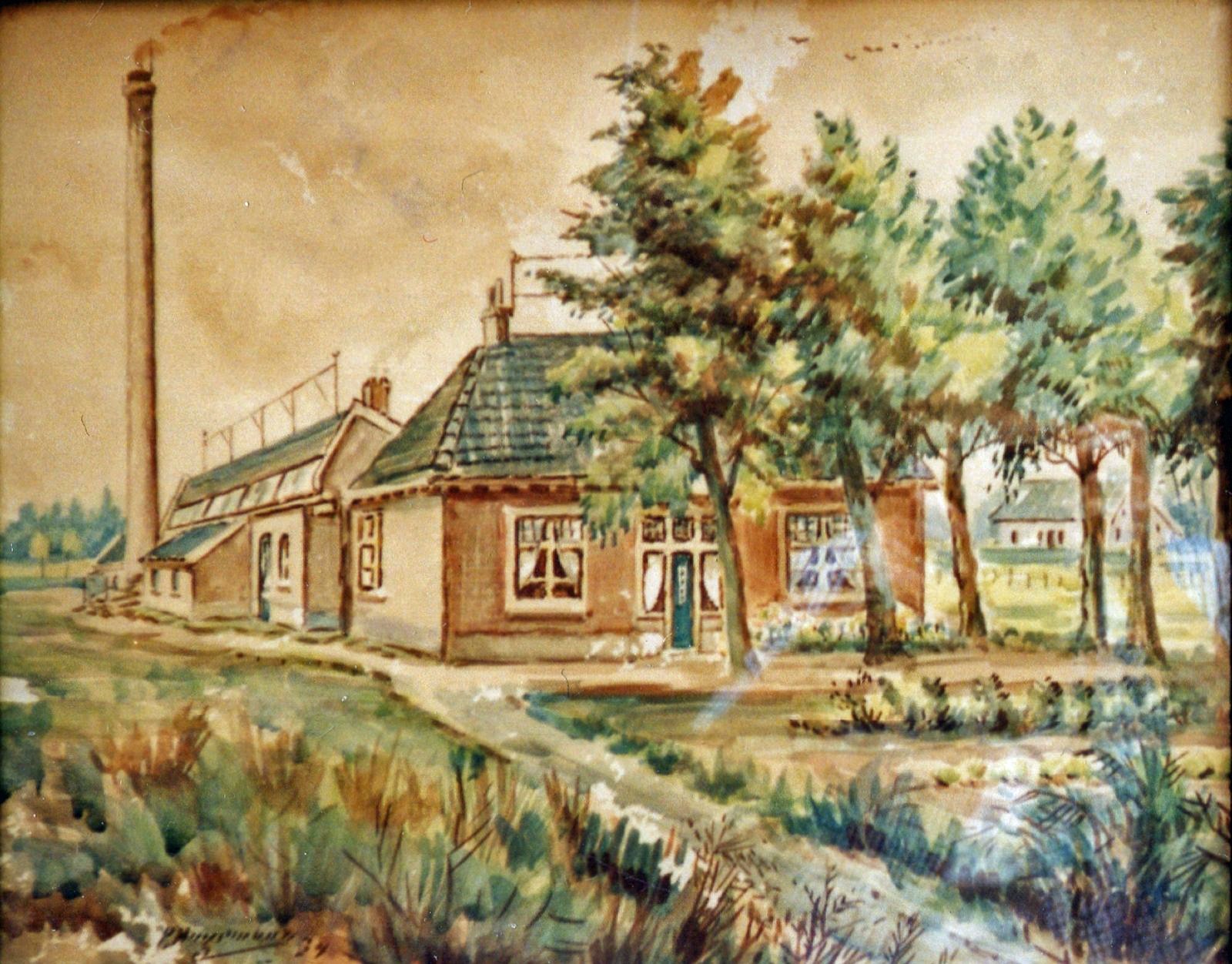
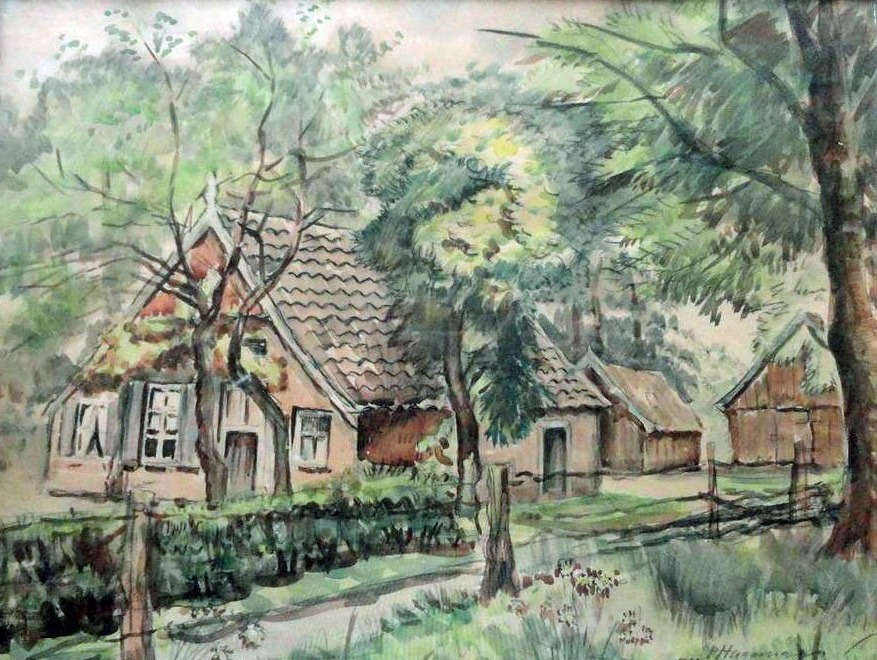
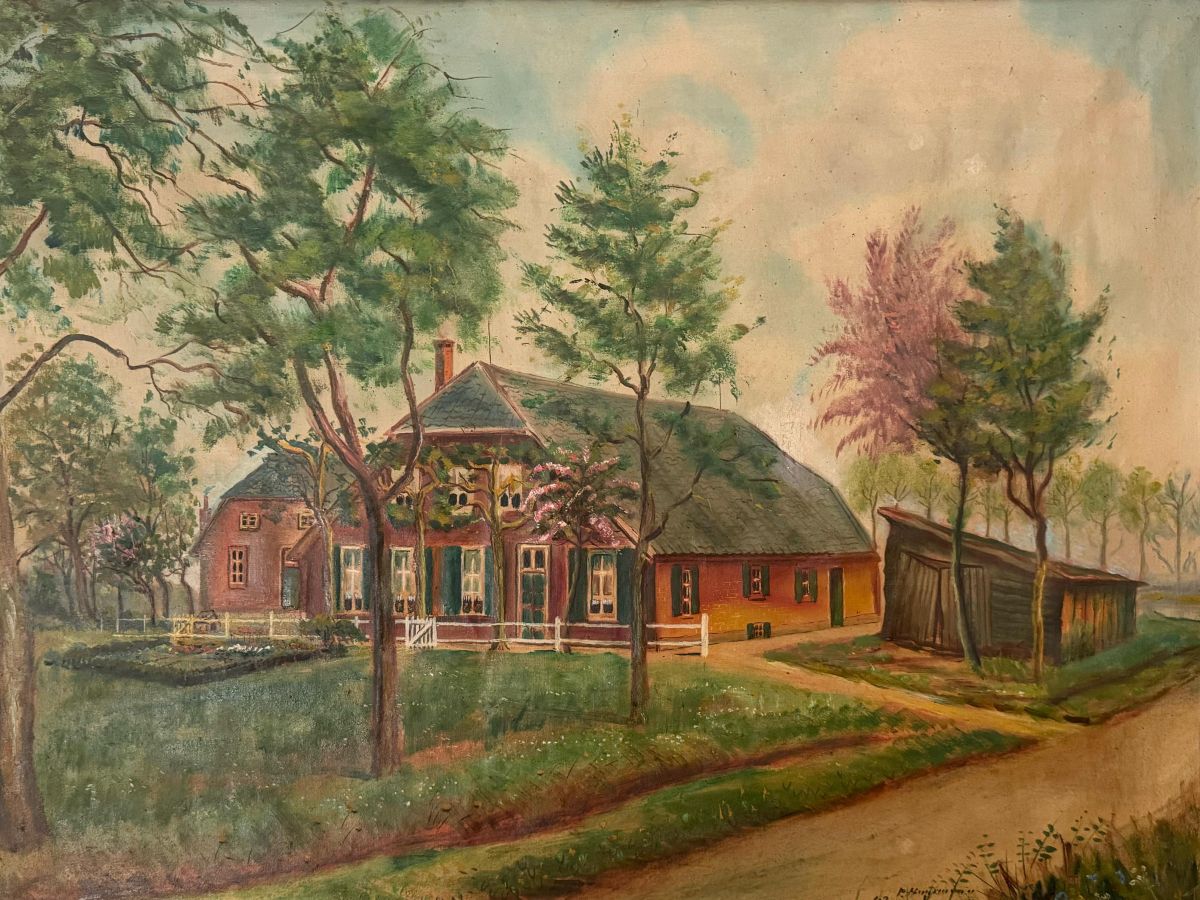
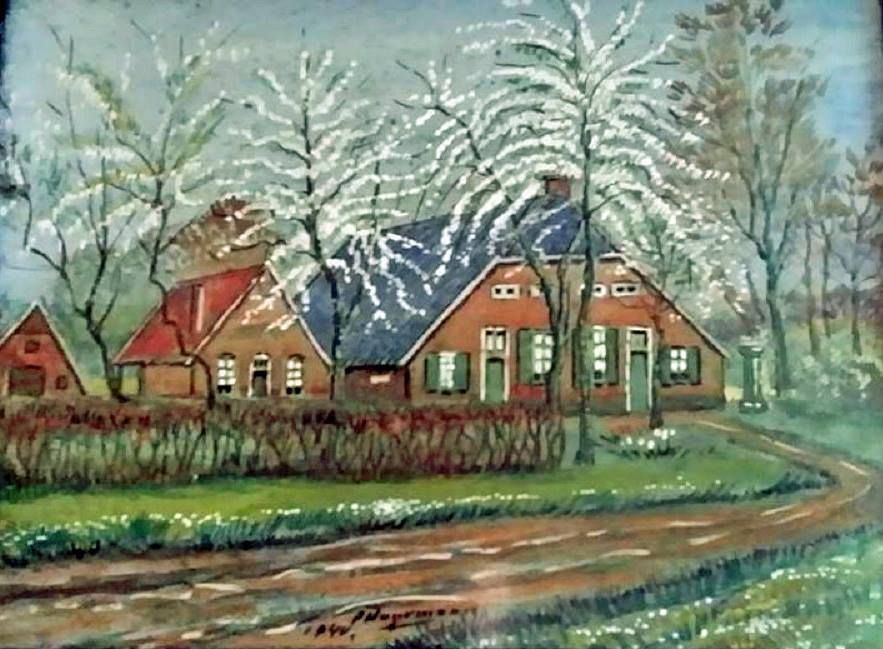
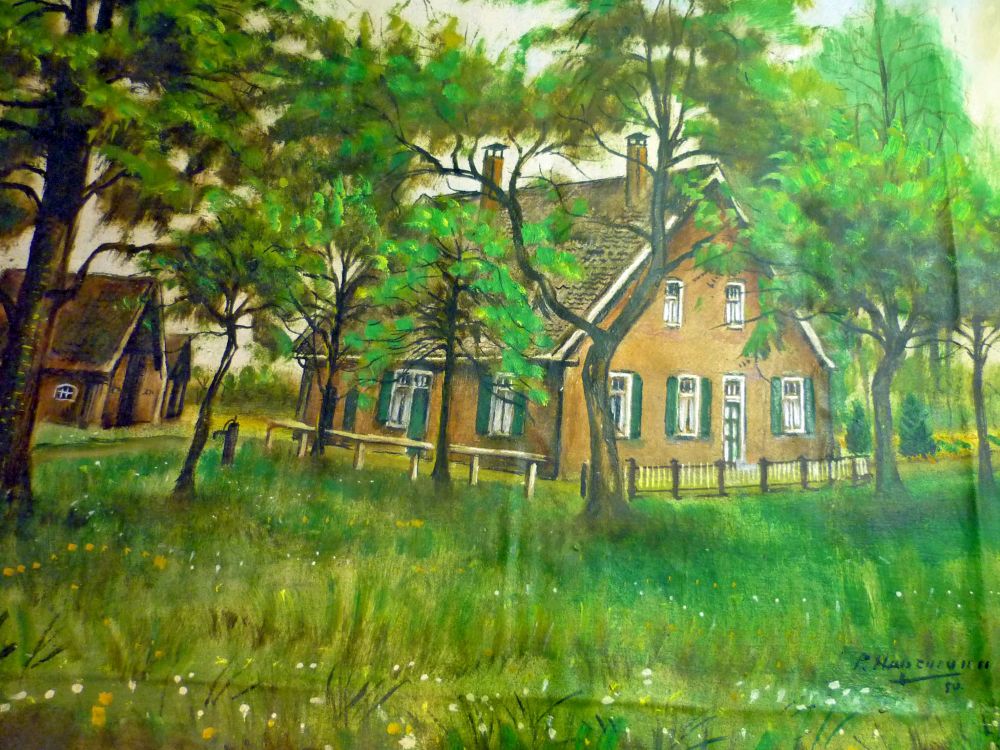
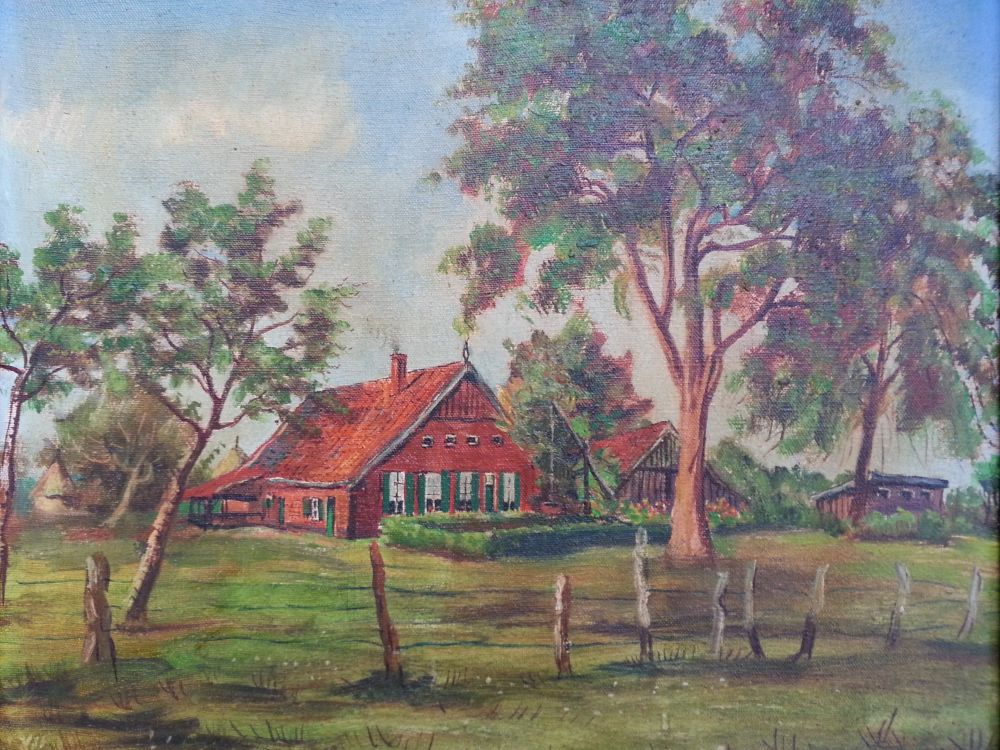
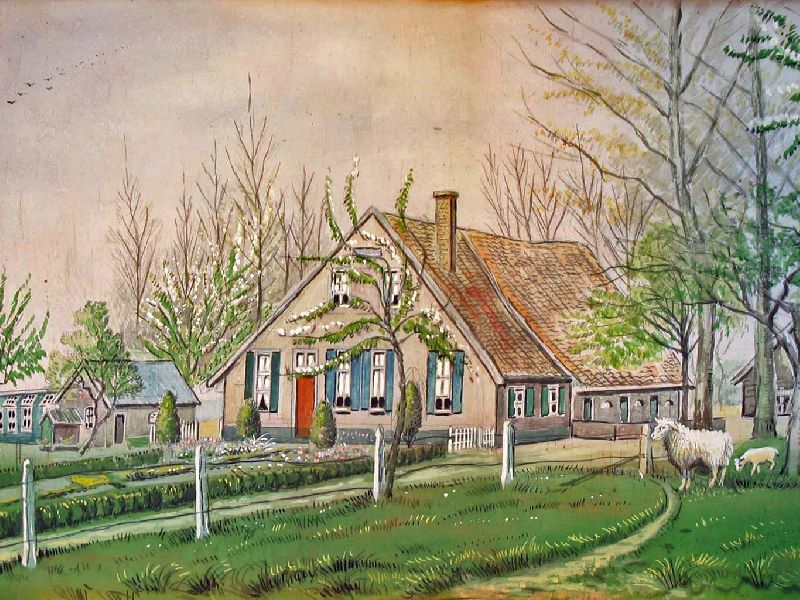
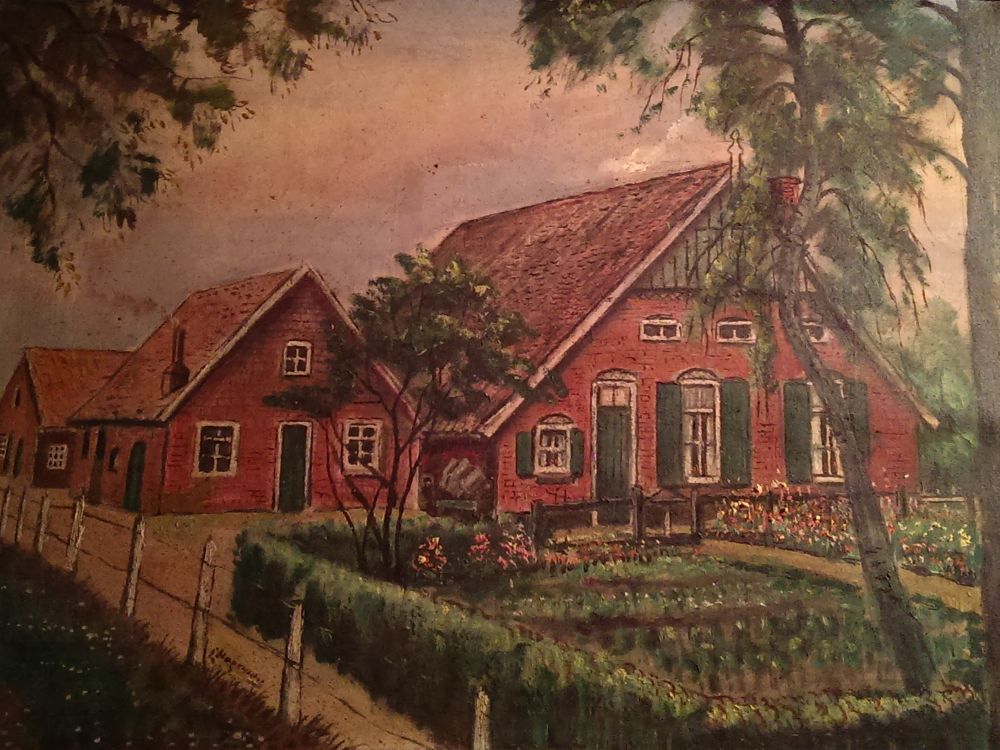
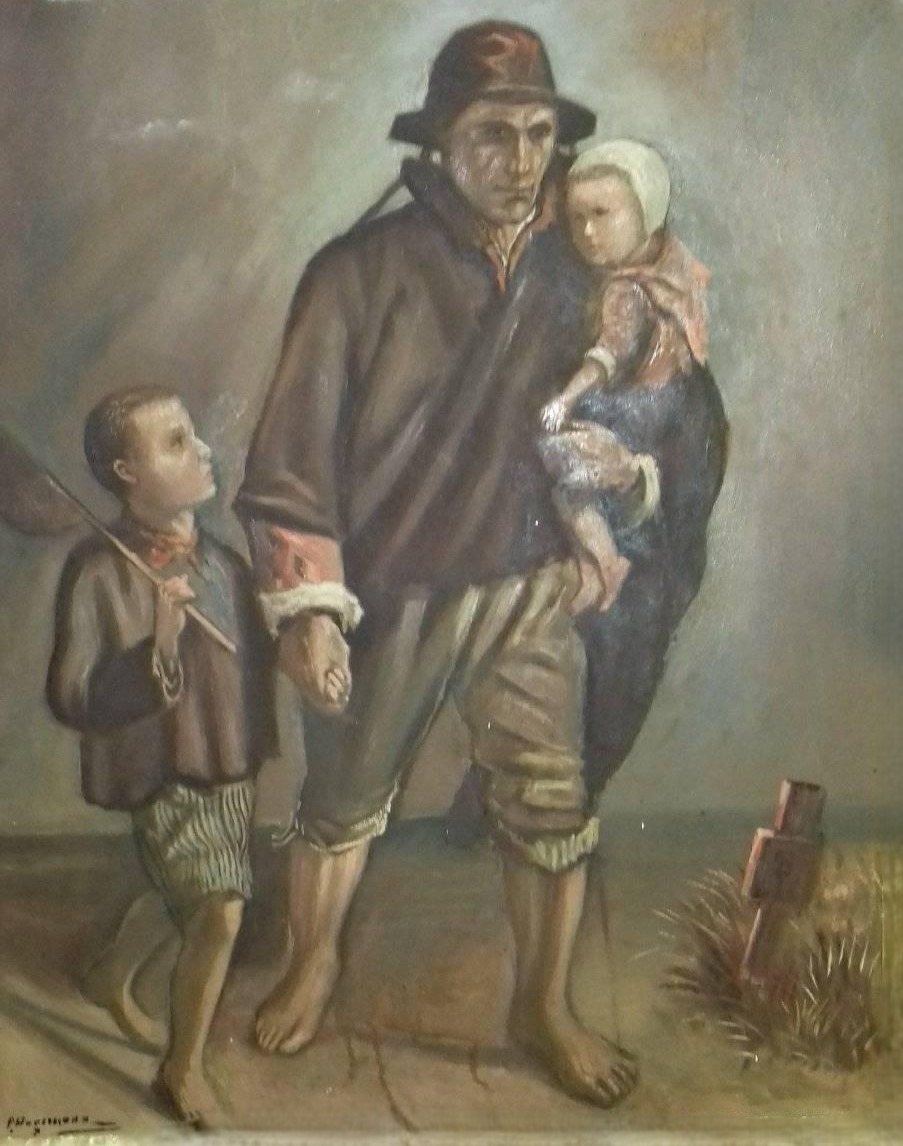
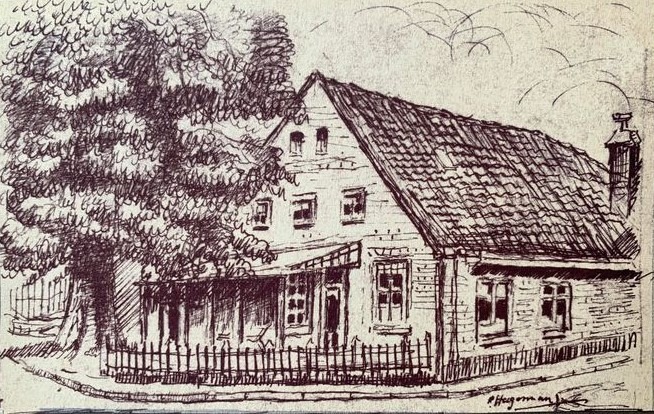
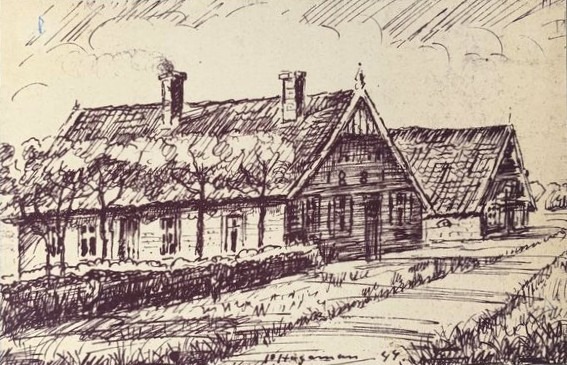
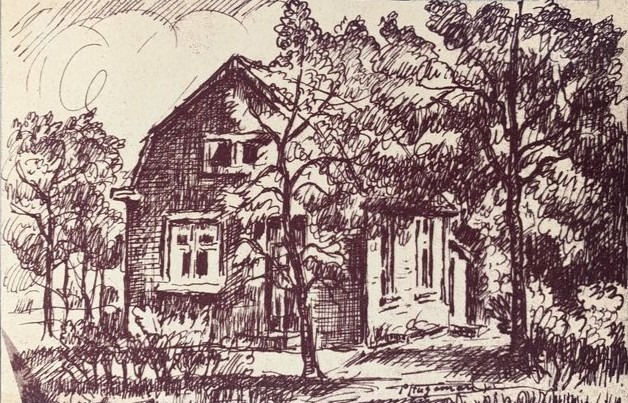
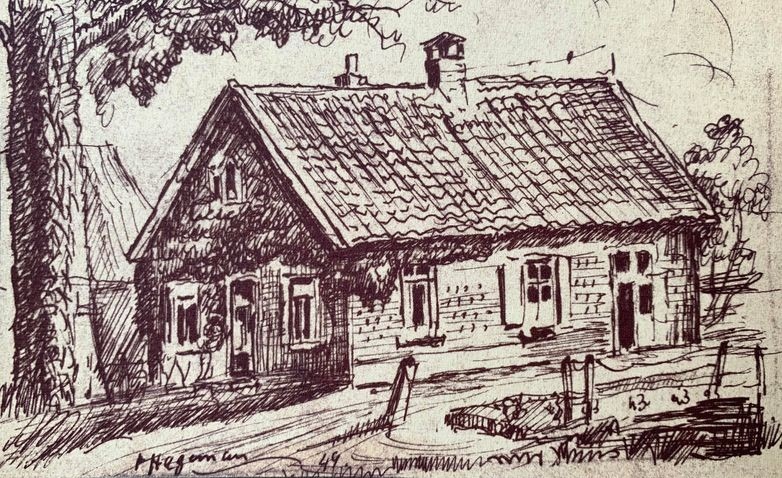
Paul Hagemann (1882–1960) was a German-born artist and naturopath who settled in Aalten around 1926. He worked as a photographer, painter and sketch artist, documenting many of the farms around Aalten. In addition, he practiced amateur naturopathy.
Johannes Paul Hagemann, known as Paul, was born on 3 March 1882 in Münster (Germany). On 15 November 1923, he married Francina Gijsberta (Bep) van Arkel in Amsterdam.
The couple presumably settled in Aalten around 1926. In 1934, they were registered as residents of Bodendijk 19a in Aalten; in 1938, they lived at the address IJzerlo 13b, and by 1945, they were back in the village, at Dijkstraat 5.
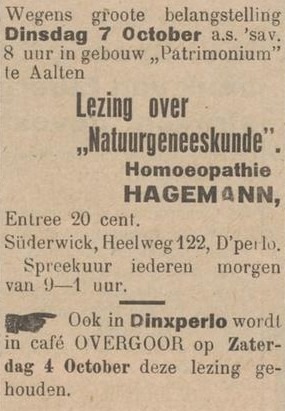
Among other subjects, Hagemann captured many farms and houses in and around Aalten on canvas. Alongside his artistic pursuits, he was also involved in naturopathy. One of his health products consisted of a small box containing metal and some form of electricity.
Paul Hagemann passed away on 8 August 1960. He was buried at the Roman Catholic cemetery on Piet Heinstraat in Aalten.
Johannes Paul HagemannDe Graafschapper, 3 October 1930De Graafschapbode, 9 September 1938De Graafschapbode, 9 November 1938Aaltensche Courant, 23 October 1945
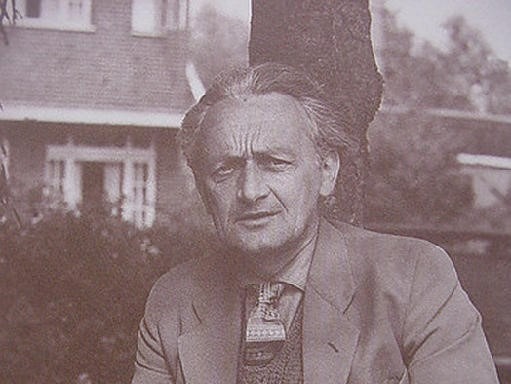
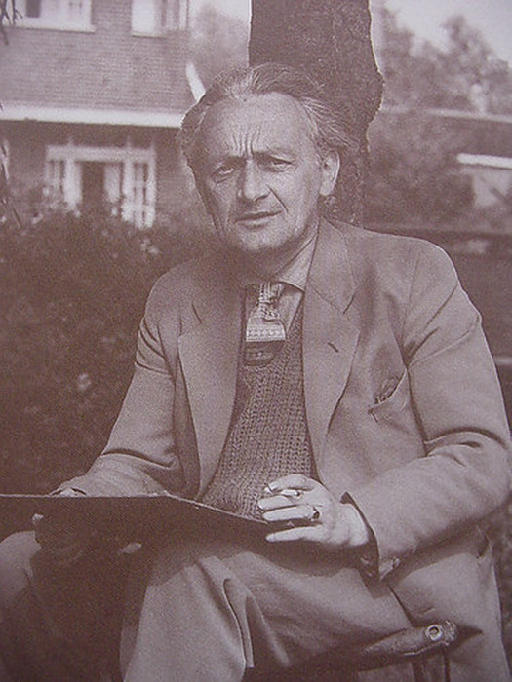
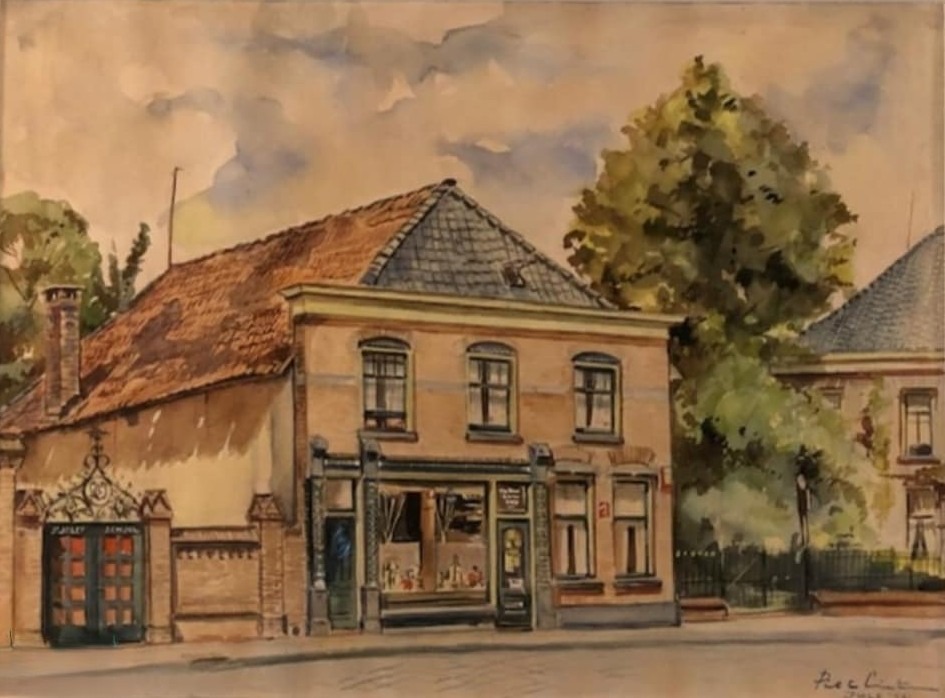
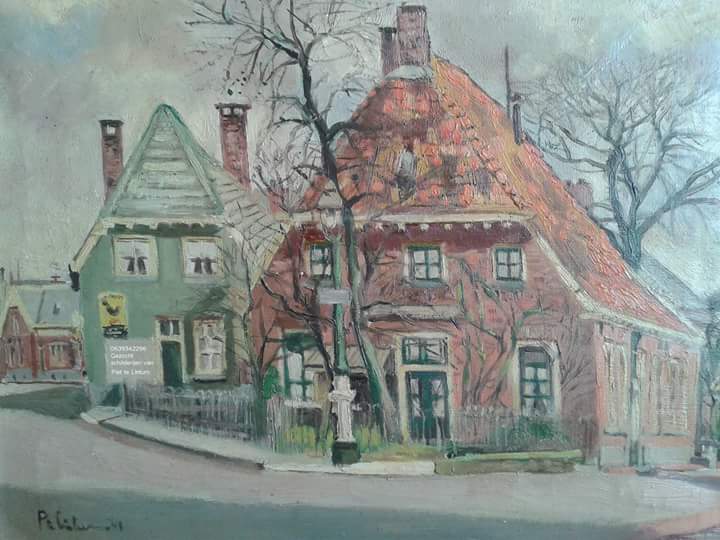
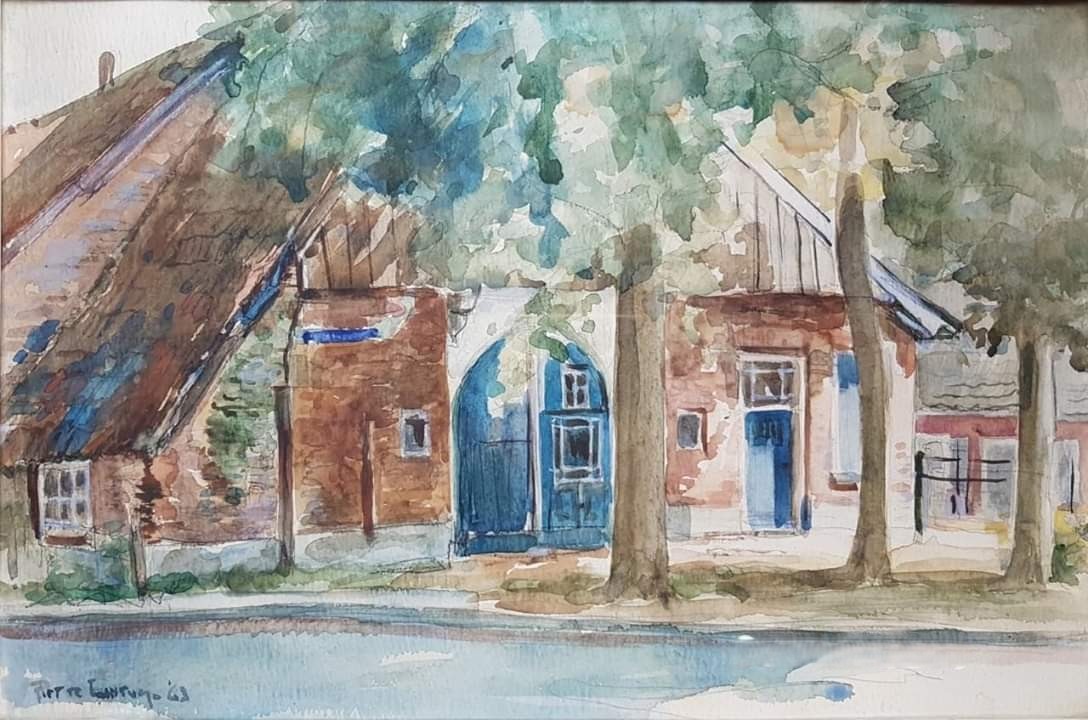
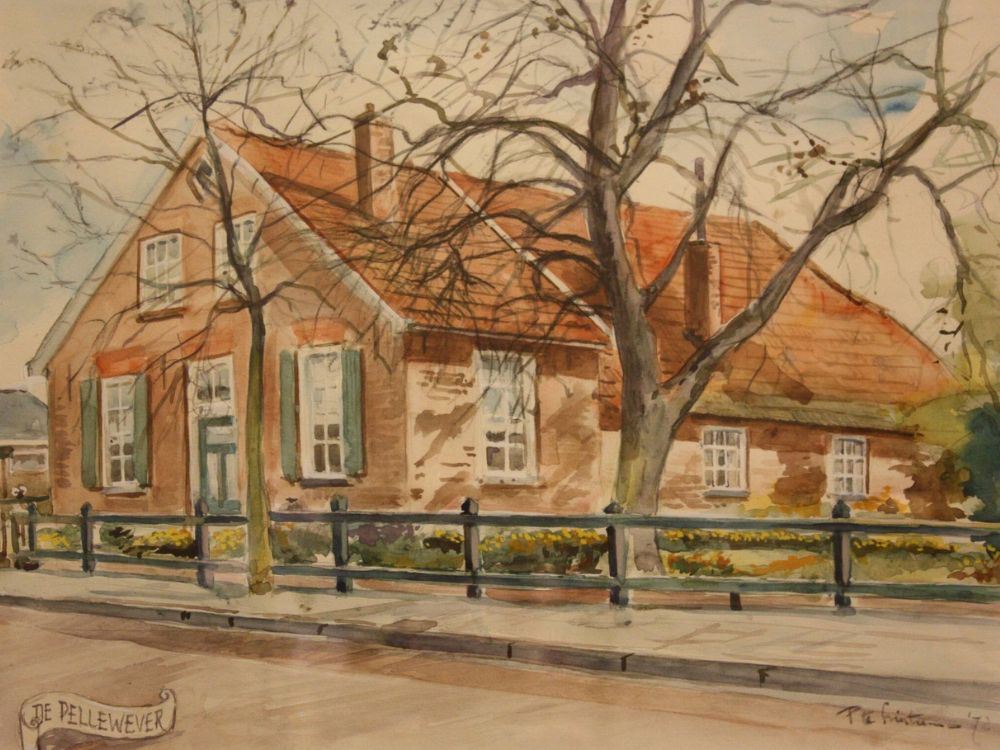
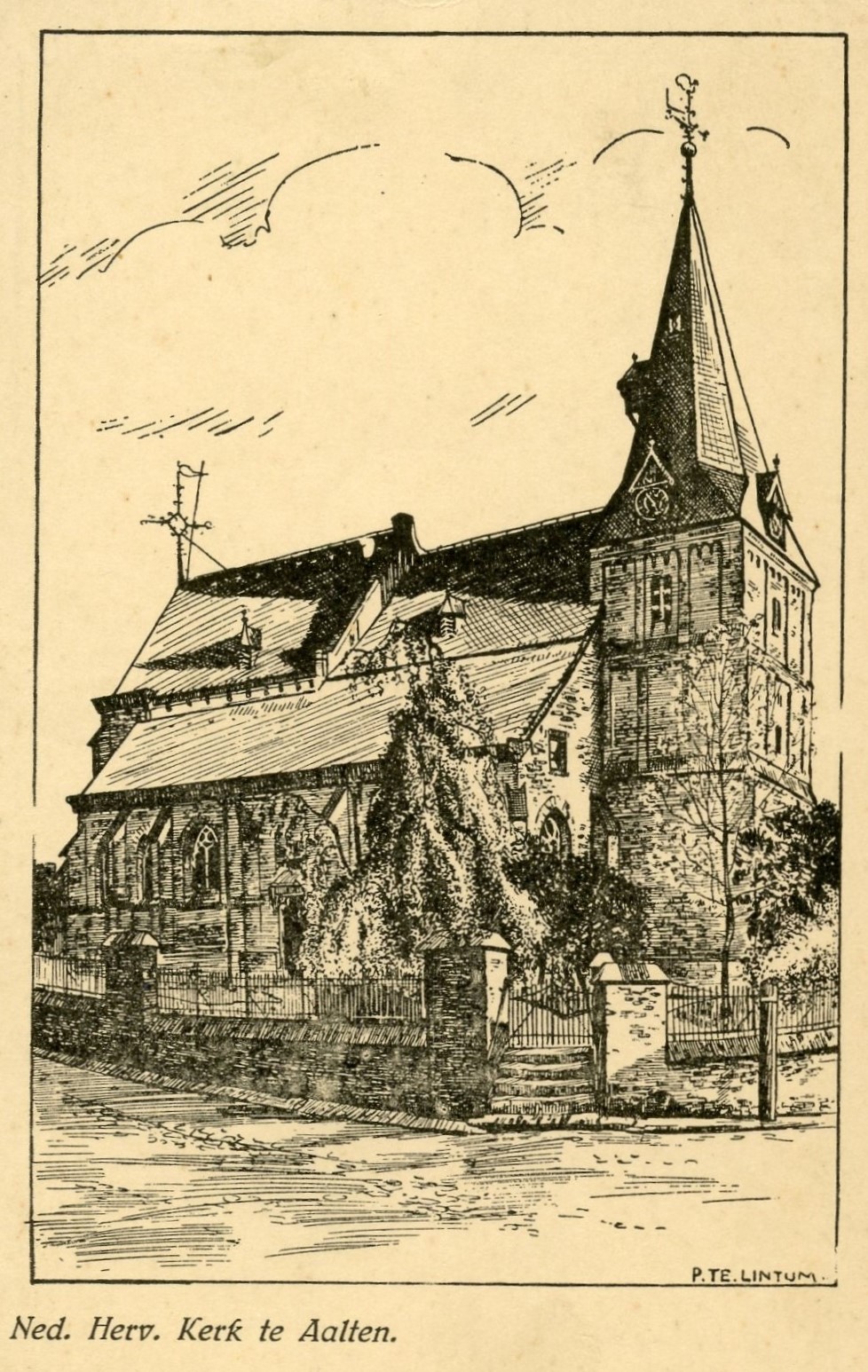
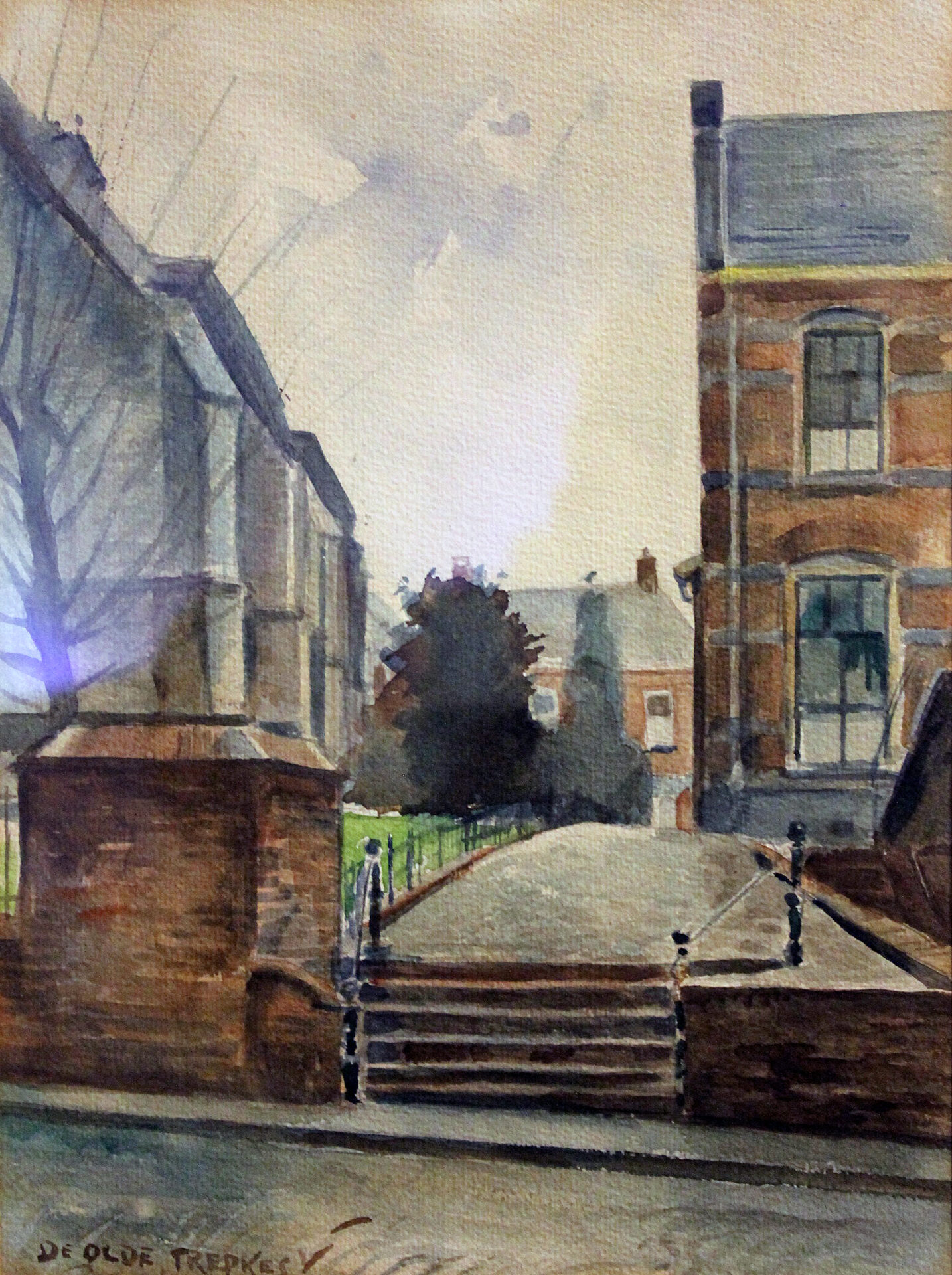
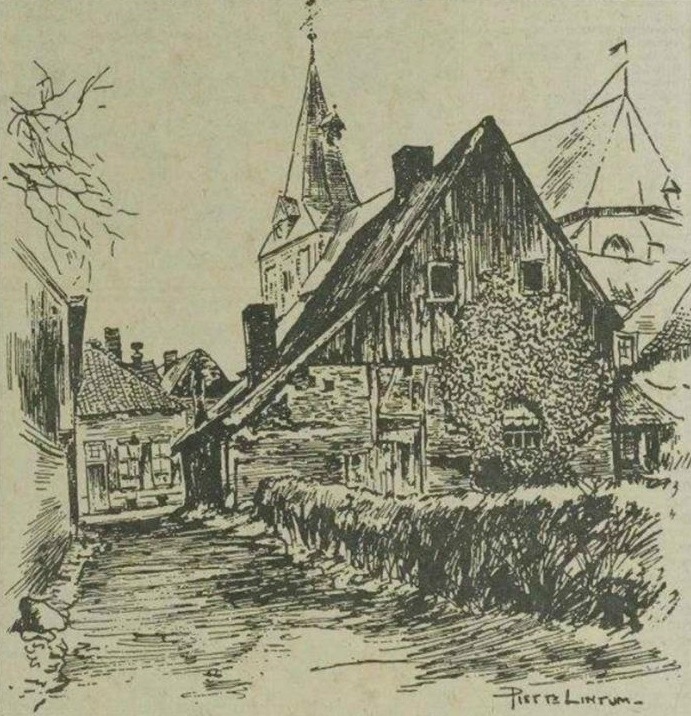
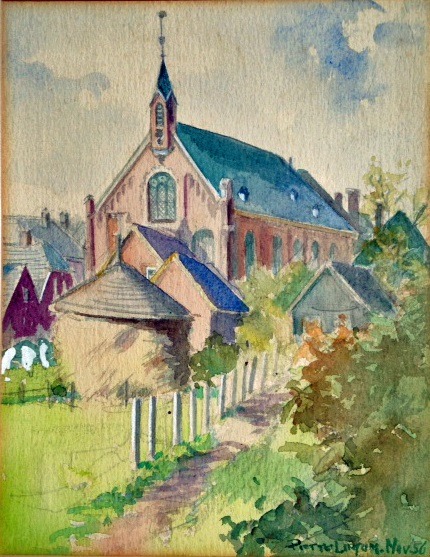
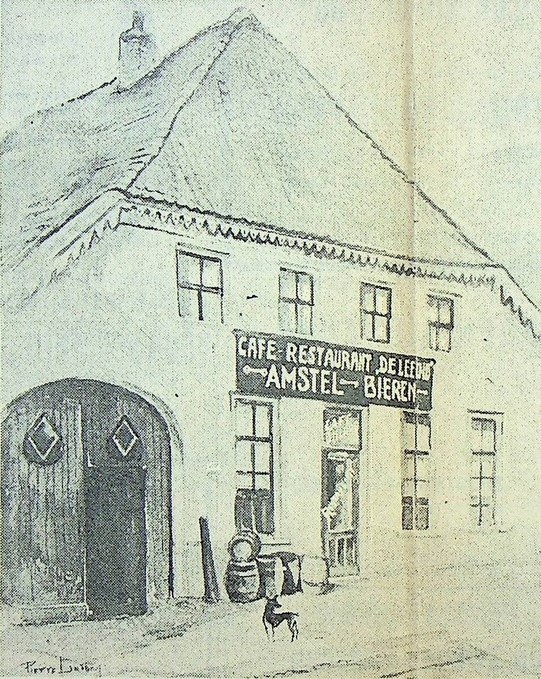
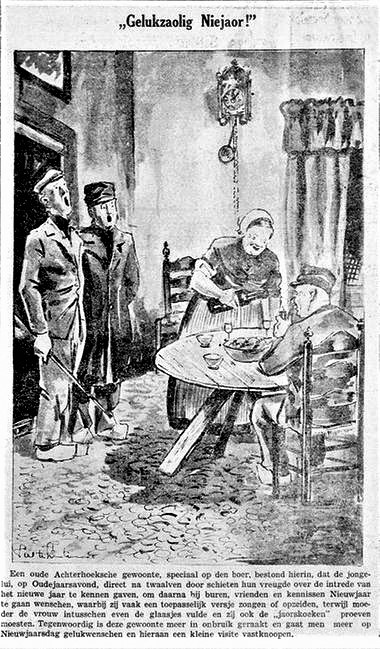
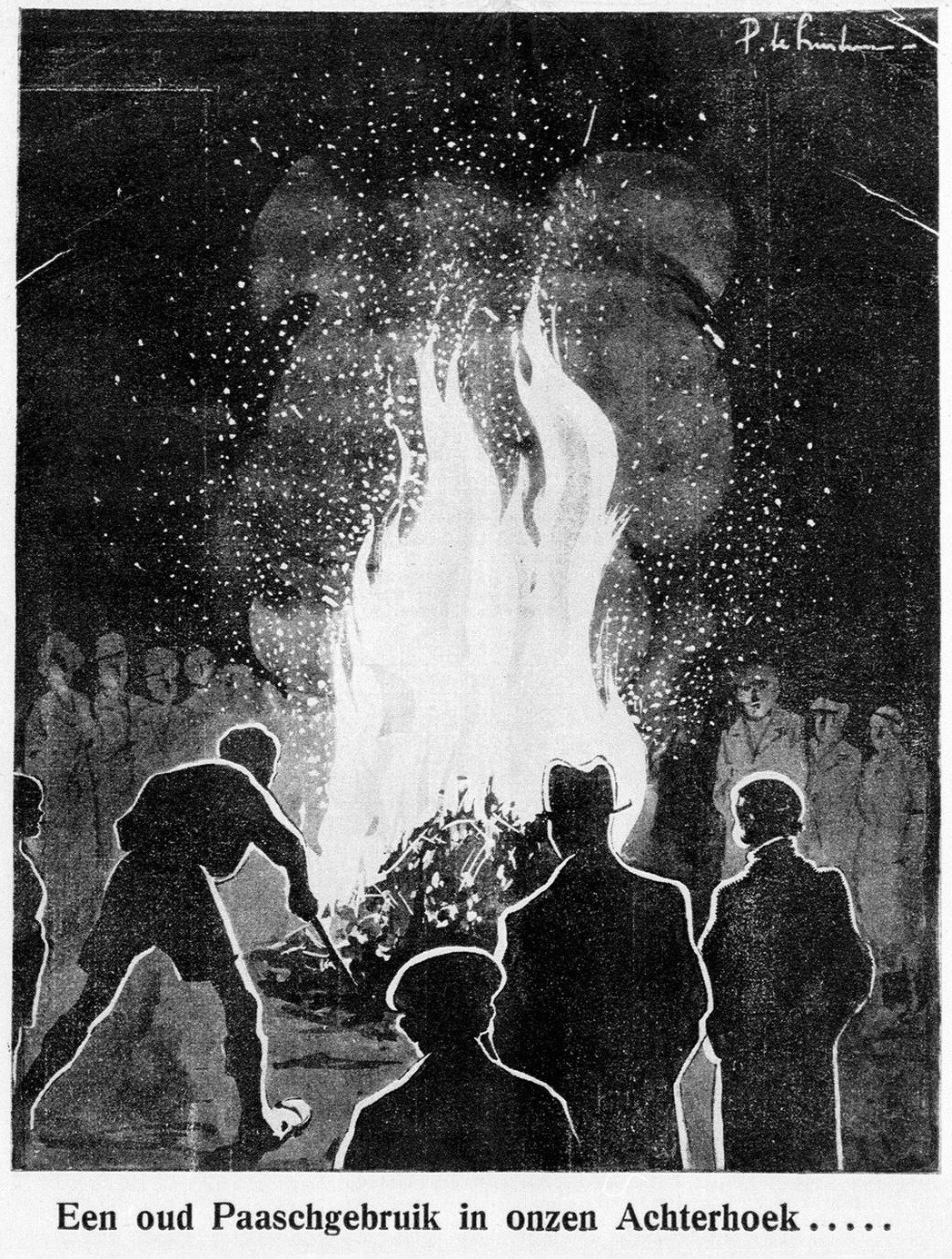
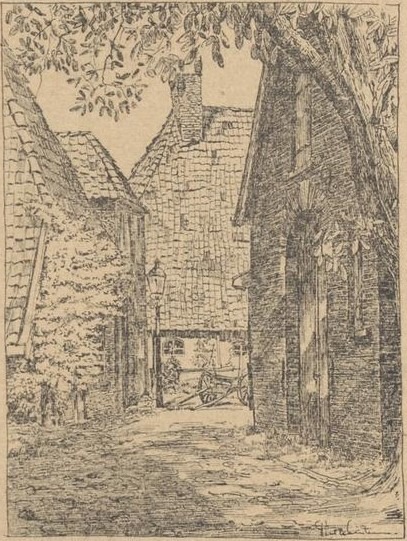
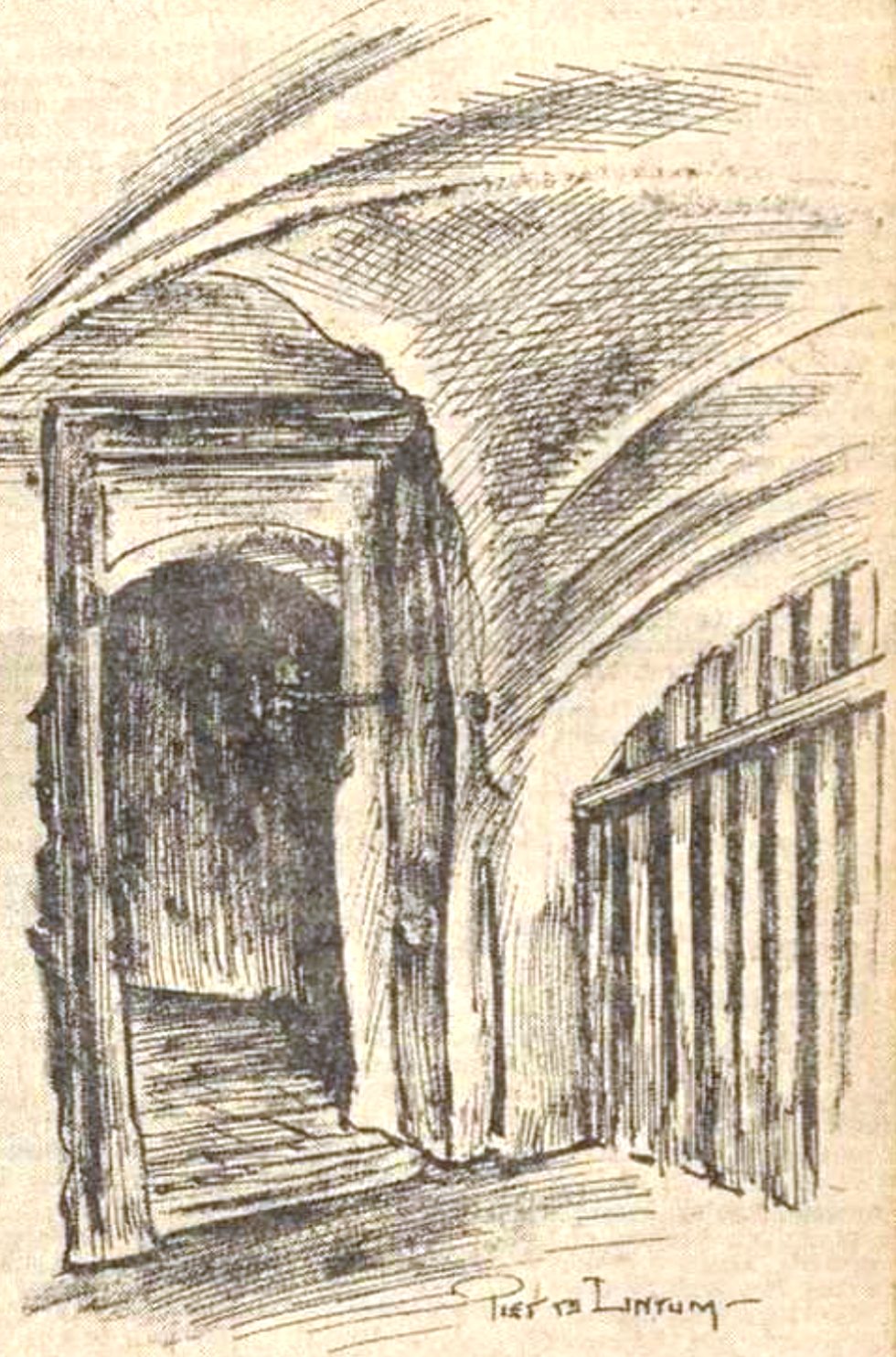
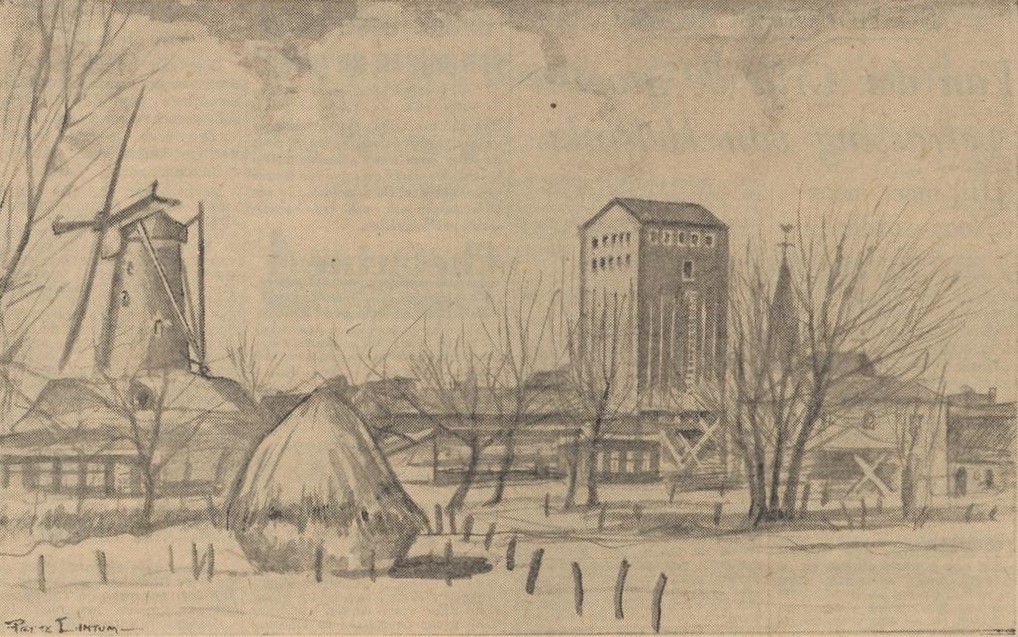
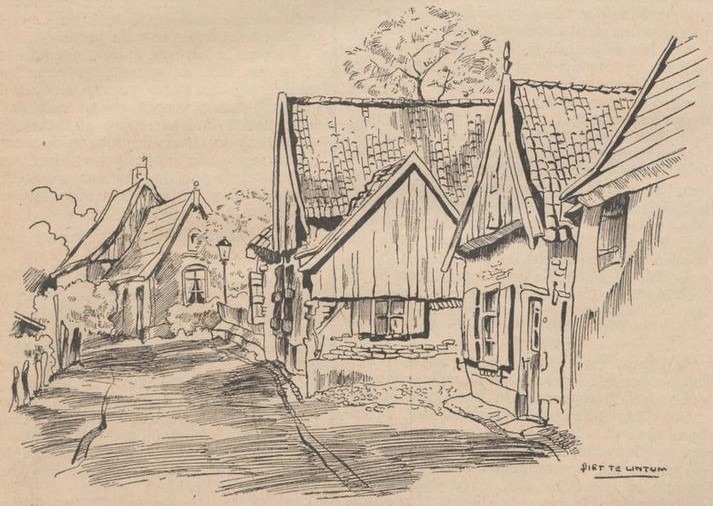
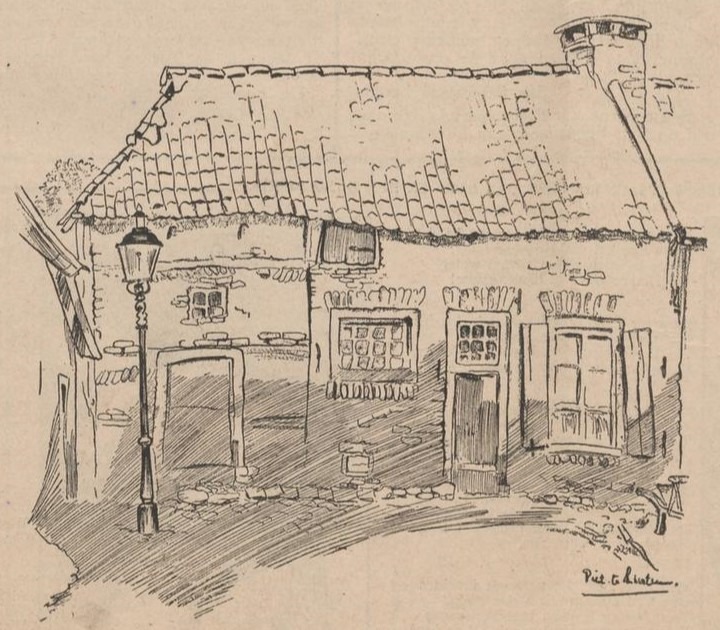
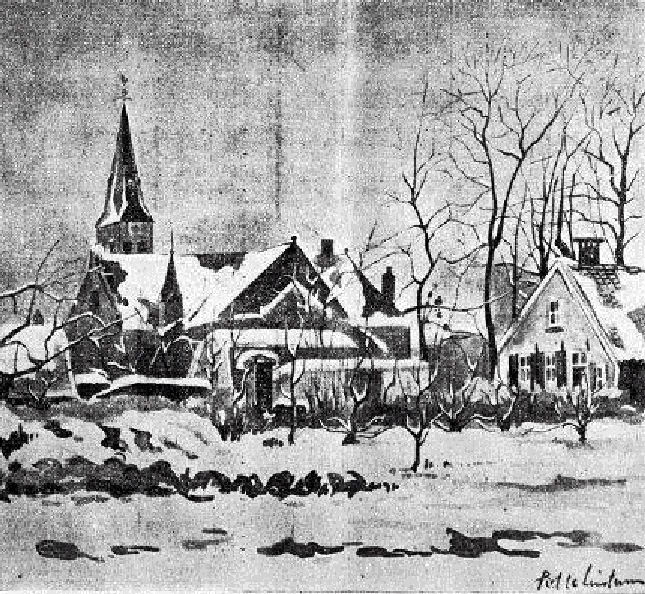
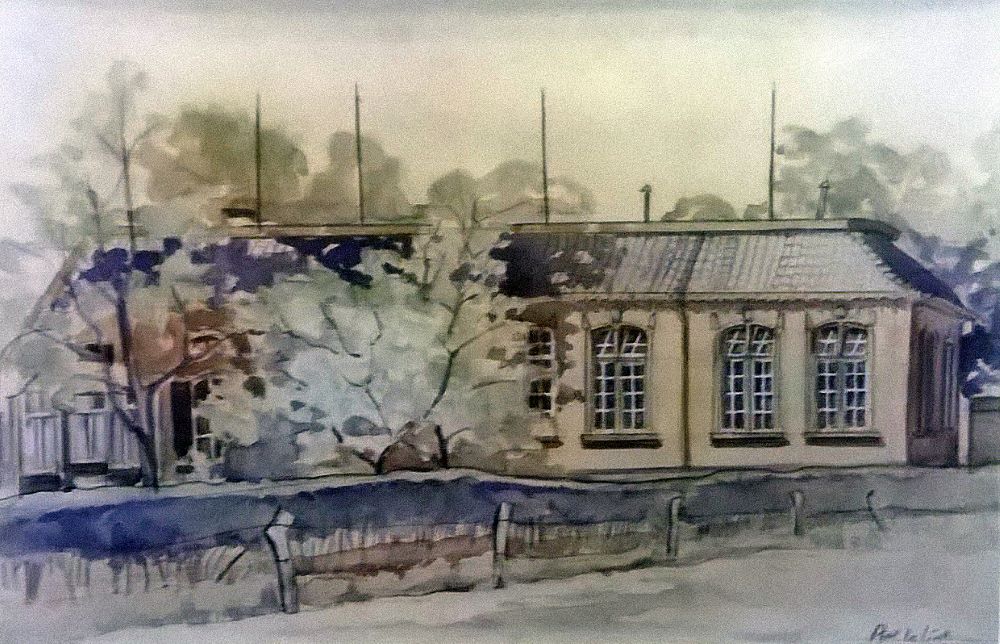
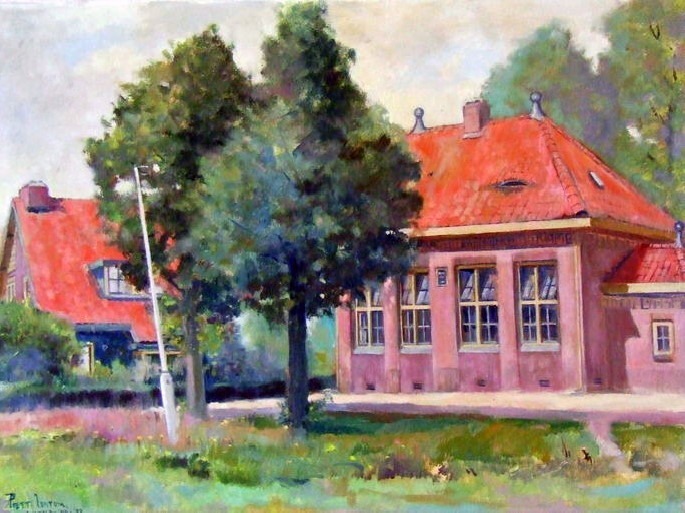
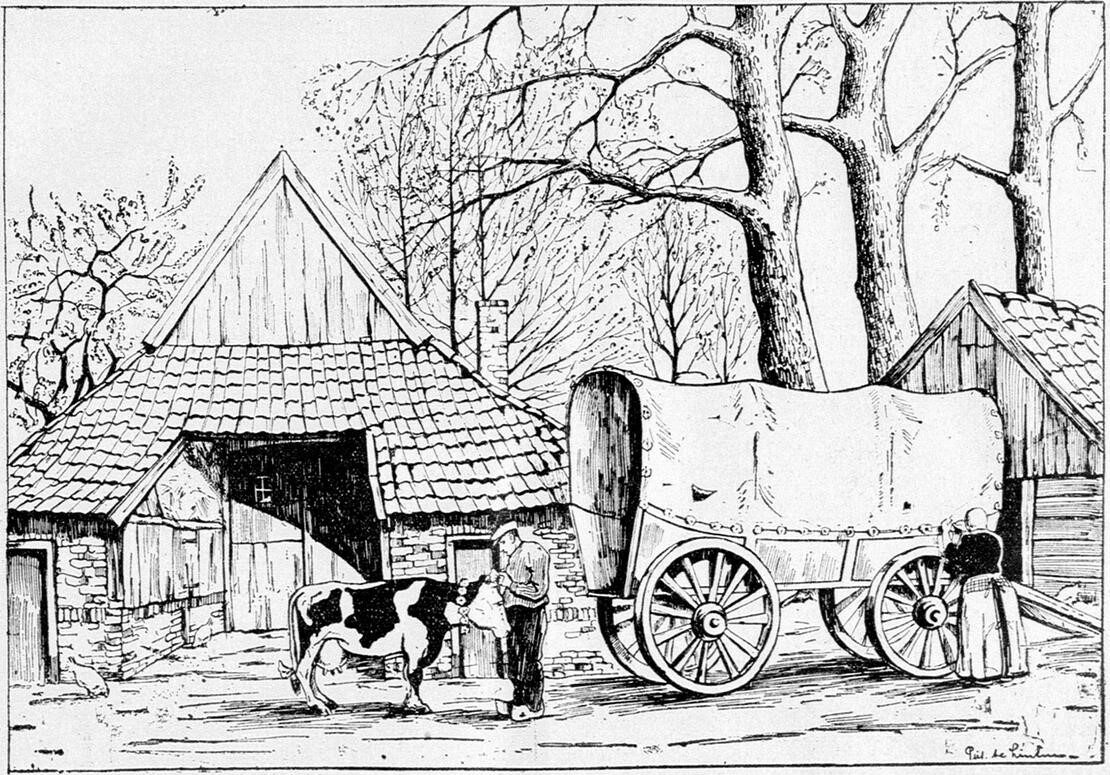
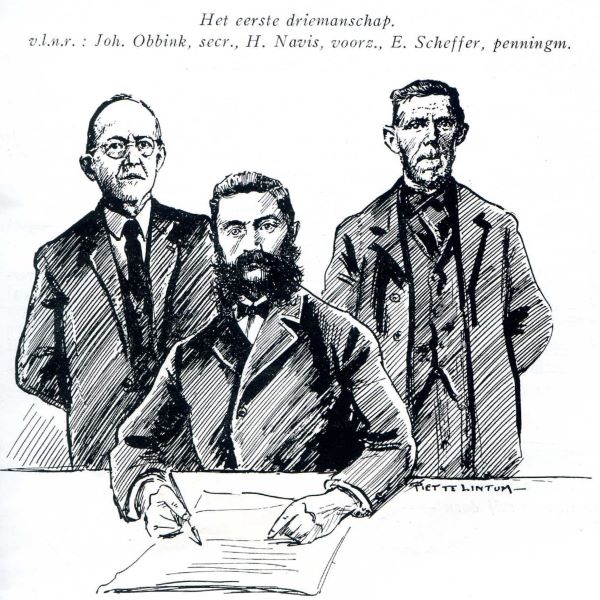
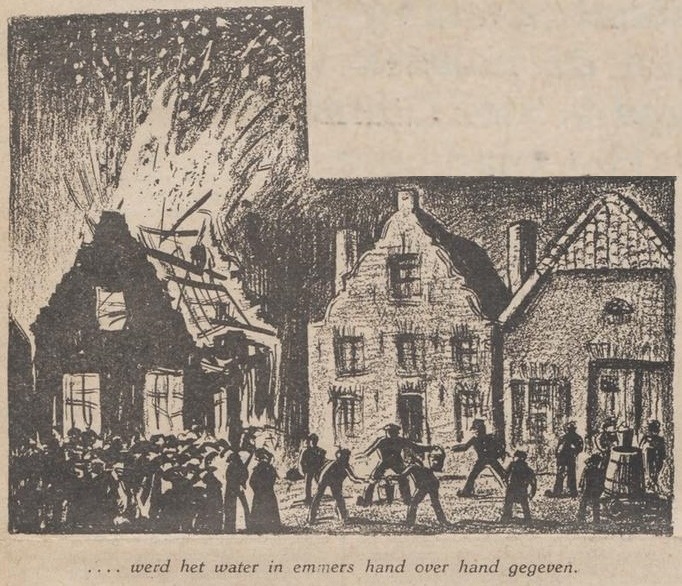
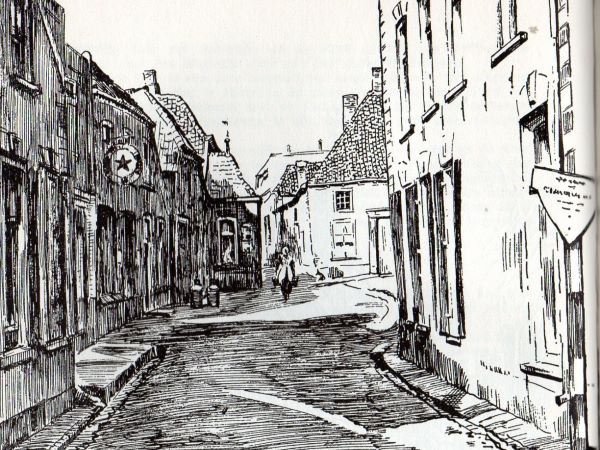
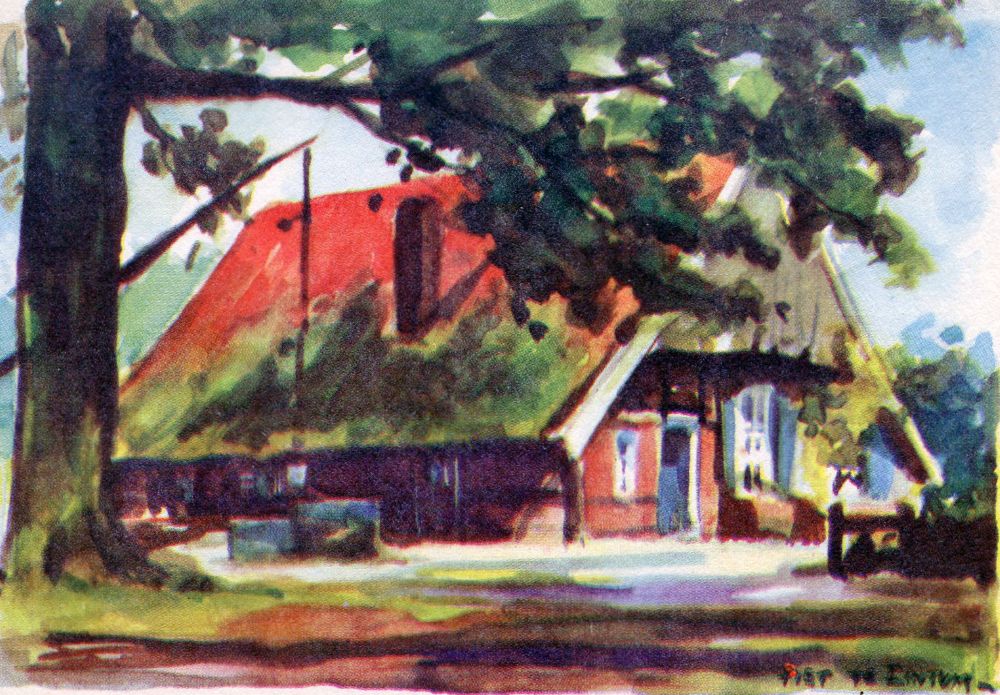
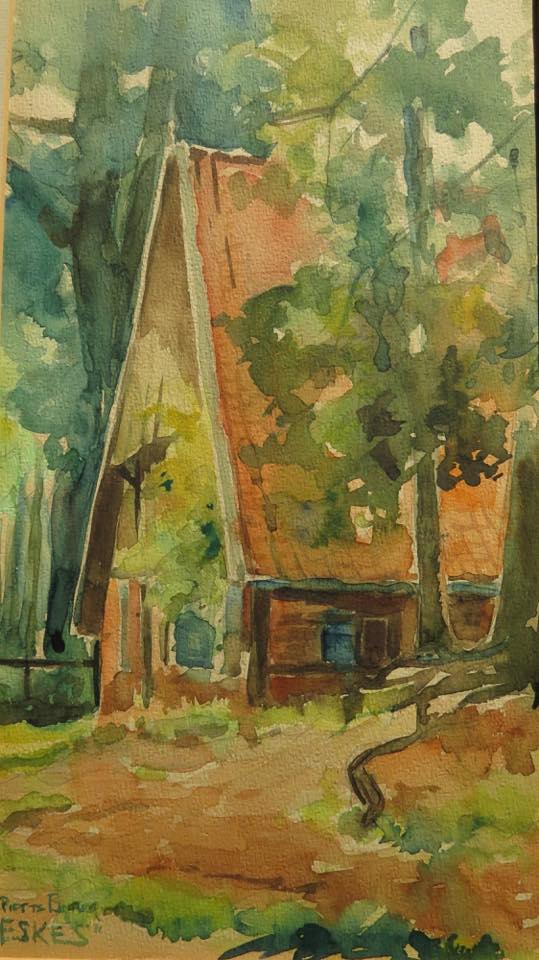
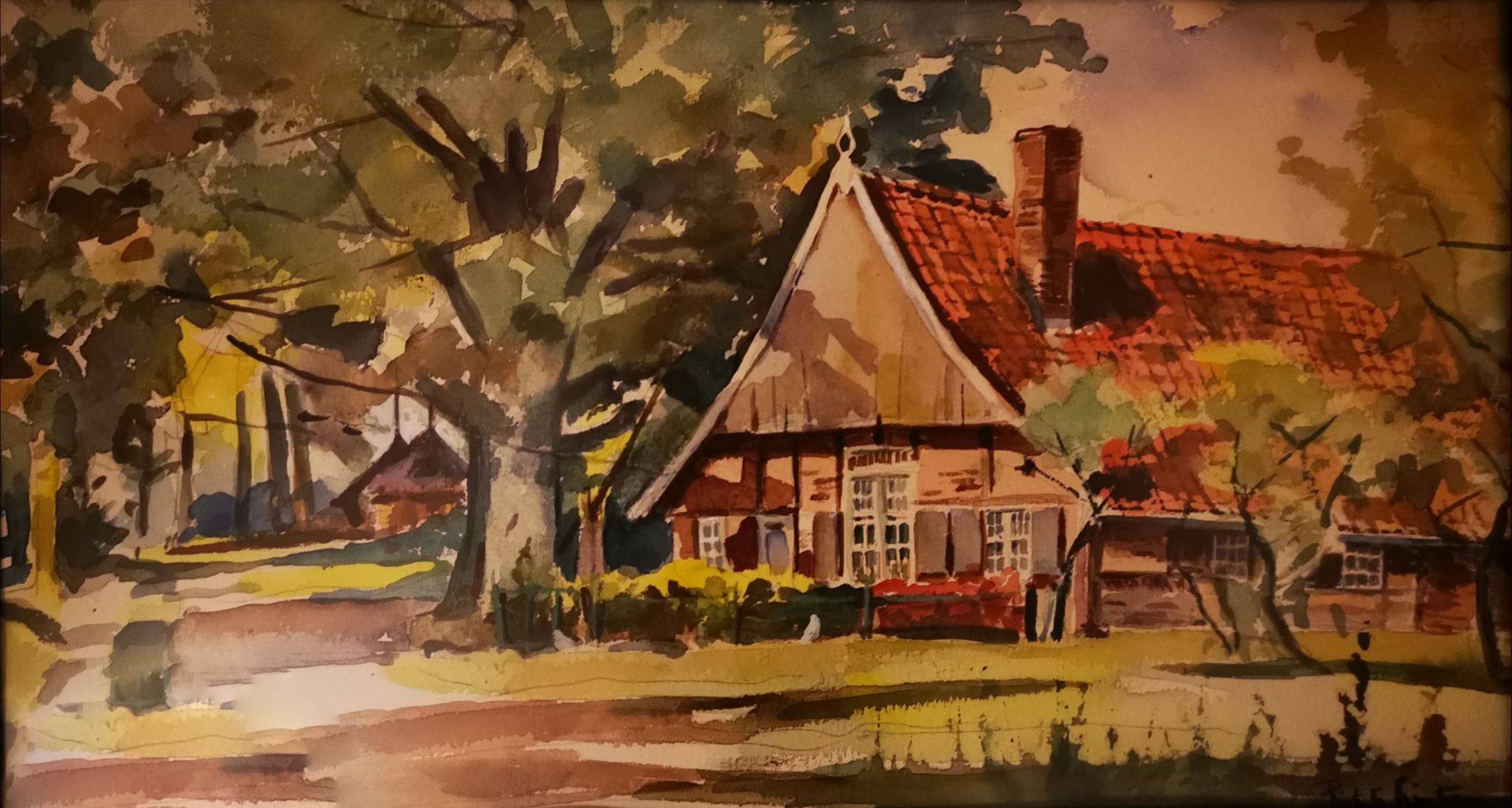
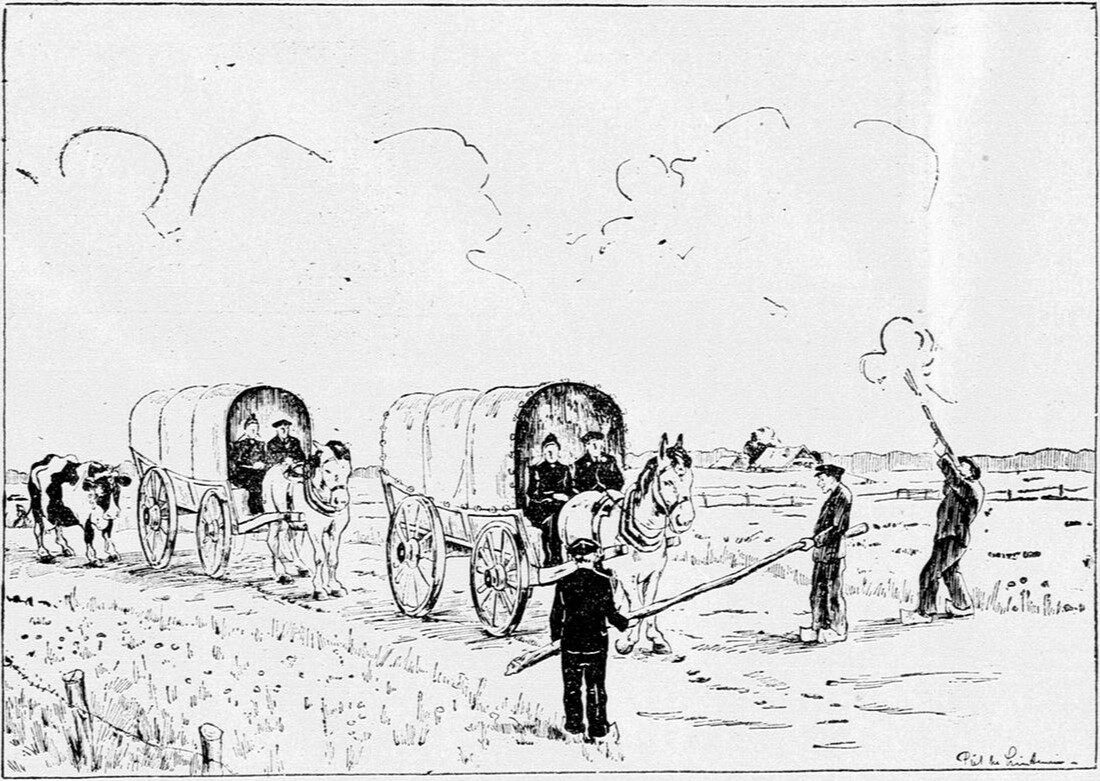
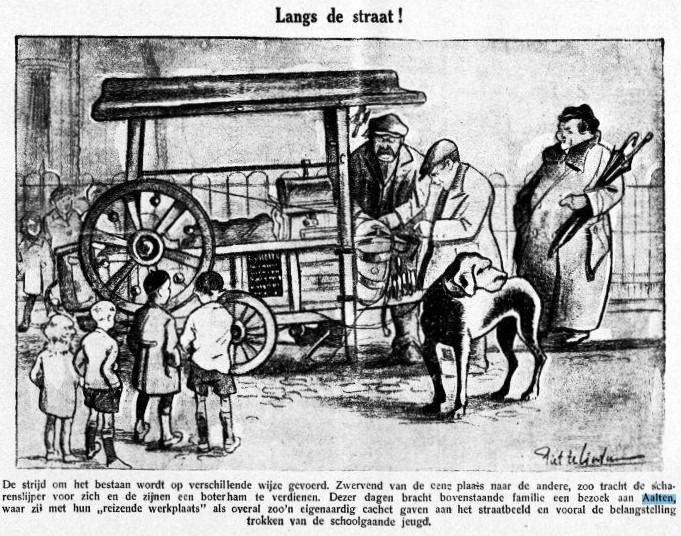
Piet te Lintum (1909–1985) was a versatile artist from the Achterhoek. He worked as a columnist, illustrator, sketch artist and painter, capturing a vast number of landscapes and village scenes of his native region. For this reason, he is often referred to as the “painting ambassador of the Achterhoek”.
Pieter (Piet) te Lintum was born on 13 January 1909 in Aalten, the son of Jan te Lintum, a grocer, and Johanna Christina Adolphina te Giffel. The family lived at Dijkstraat 4, the premises occupied by the Van den Dobbelsteen bakery until 2022. On 15 August 1942, he married Elisabeth Maria Schenk, with whom he had two children.
Talent
From an early age, Te Lintum demonstrated an exceptional talent for drawing. By the age of eleven, he was already producing accurate, lifelike portraits. He received his first lessons from an artist who had just graduated from art academy. He also spent a year taking correspondence courses from an institute in Paris.
At eighteen, he attended classes at the Kunstnijverheidsschool (School of Arts and Crafts) in Arnhem, where he was taught by Hendrik Valk and Gerard van Lerven. Following this, he studied for three years at the Rotterdam Art Academy under David Bautz and Herman Mees. His most influential master, however, was Professor Johannes Hendricus Jurres at the Rijksschool voor Kunstnijverheid (State School of Arts and Crafts) in Amsterdam.
Career
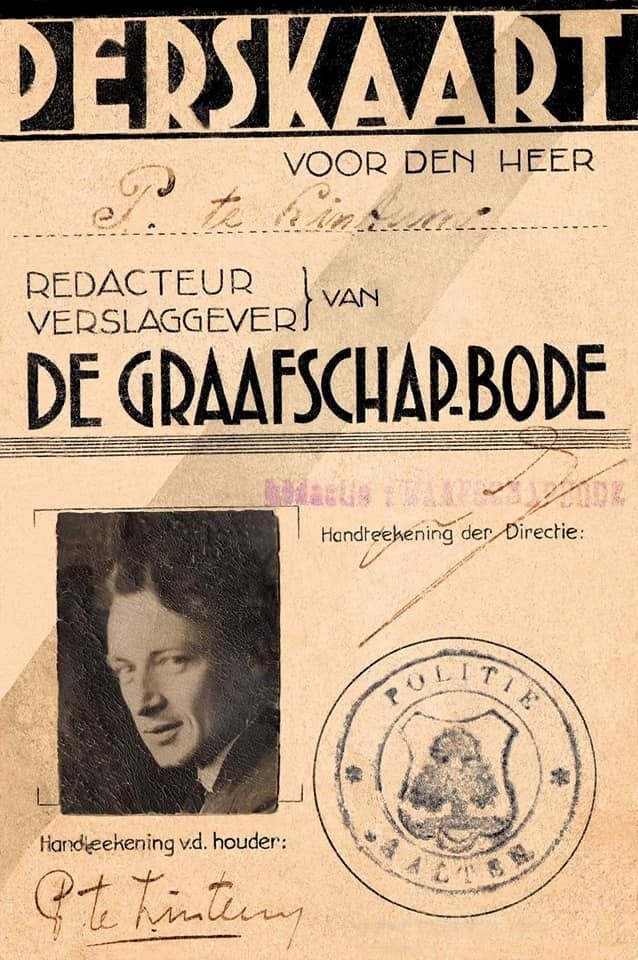
After finishing his education, Piet te Lintum built a multifaceted career as an illustrator for various publishing houses. Among other projects, he drew the illustrations for the adventures of Aornt Peppelenkamp, written by Frans Roes under the pseudonym Herman van Velzen. He also worked for the Misset publishing house in Doetinchem (including for the newspaper De Graafschapbode) and created comic-strip-style columns for the Tubantia daily newspaper. In addition, he designed commercial advertising work, postcards and painted murals.
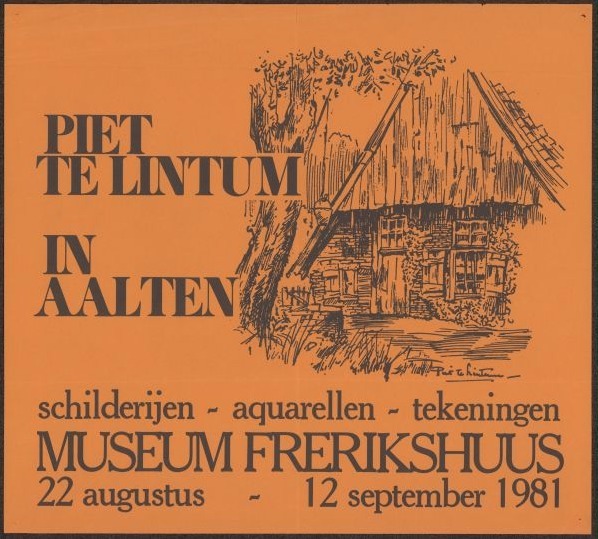
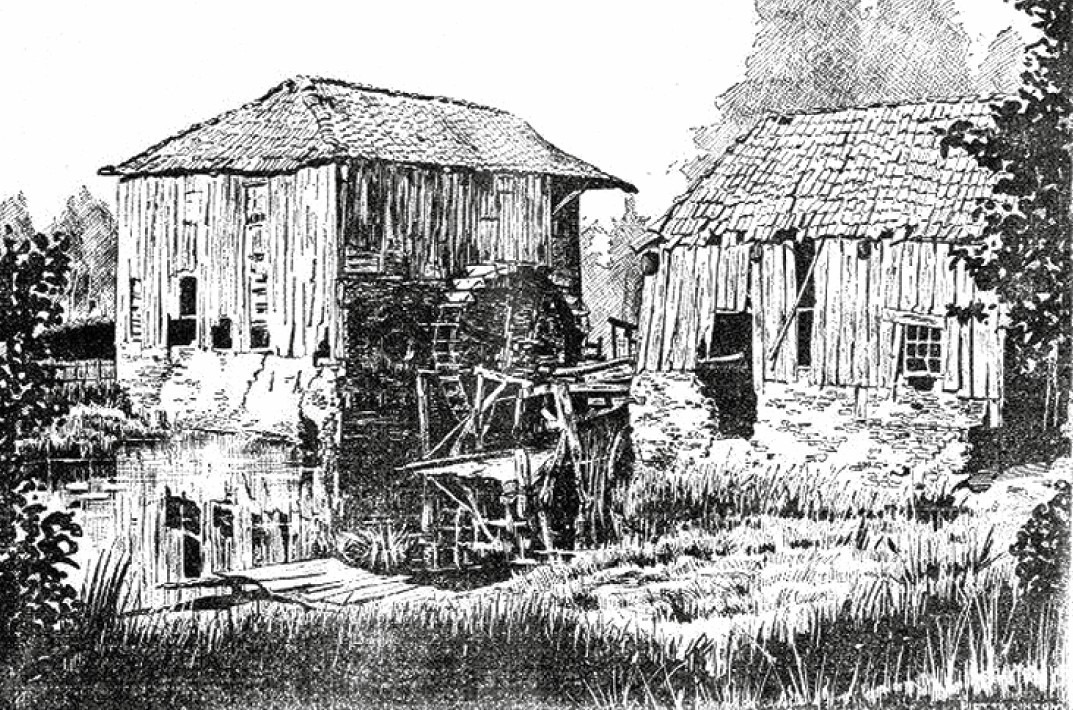
Piet te Lintum is particularly renowned for his paintings of dilapidated buildings. He shunned the modern and rectilinear. For him, the rule was: the older and more decayed the building, the more beautiful the picture as a whole. In doing so, he was not merely interested in the romantic imagery of neglected houses and farms; through his works, he also sought to draw attention to local history.
Even back then, Te Lintum watched with sorrow as an increasing number of old, historic buildings were demolished to make way for the redevelopment of the Achterhoek landscape. It is for this very reason that Bernard Schlüter’s small cottage in Südlohn, Germany, and the Kuupershuusken in Bredevoort were rebuilt brick by brick—all for the sake of preserving the rich local history.
Legacy
On 1 May 1985, Piet te Lintum passed away in Winterswijk. His work lives on in the memory of many, not least thanks to the book Wat ik te zeggen heb… (What I have to say…) by Hans de Beukelaer, which pays tribute to his life and work. More than 500 of his pieces were tracked down for the publication. Although a large portion of his murals have not withstood the test of time, his paintings of farms, buildings and regional views remain lasting testaments to his love for the Achterhoek.
An article about Piet te Lintum was published in the March 2021 issue (Oer/39) of the cultural-historical magazine for the Achterhoek and Liemers. This magazine is still available from the ECAL (Heritage Centre Achterhoek and Liemers) in Doetinchem.
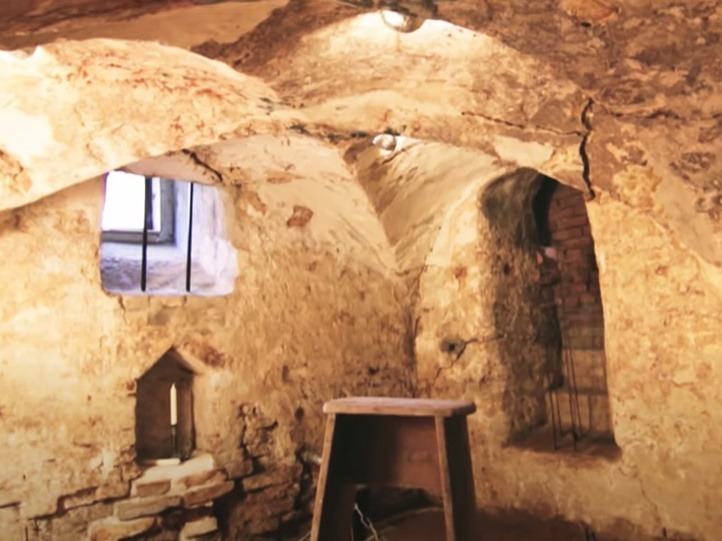
The late-medieval Merfelt Cellar belonged to a borgmanhuis (townhouse of a knight) where Adolf van Merfelt, a borgman of Bredevoort, resided in former times. The cellar of this townhouse is both rare and ancient. The method by which it was vaulted is highly unusual for a private dwelling: it features four cross vaults with a central supporting pillar.
In 2014, the Merfelt Cellar was nominated for the Aalten Municipality Heritage Prize. The reason for the nomination was the meticulous care and respect for historical character and the use of authentic materials during its restoration.
The restoration work on the cellar took place over several years. The highlight of the project was the repair of the vaulting, which ensured the long-term stability of the cross vaults.
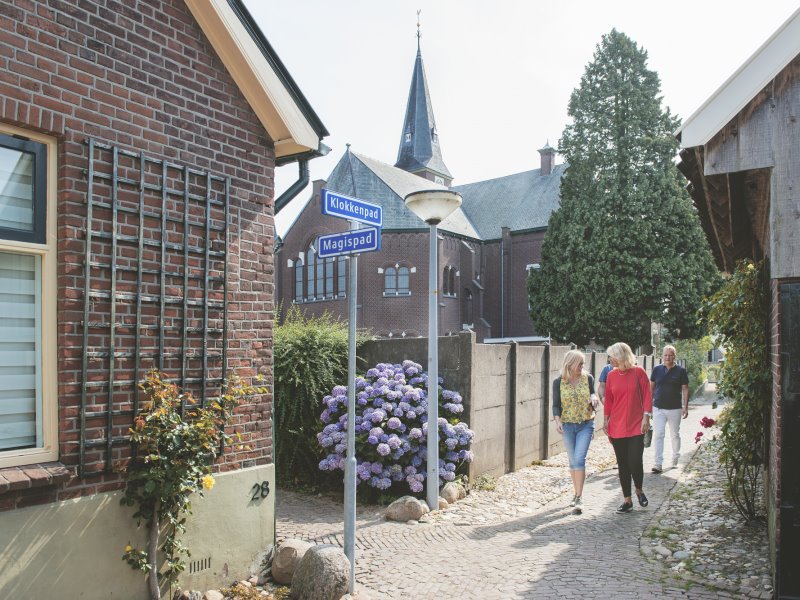
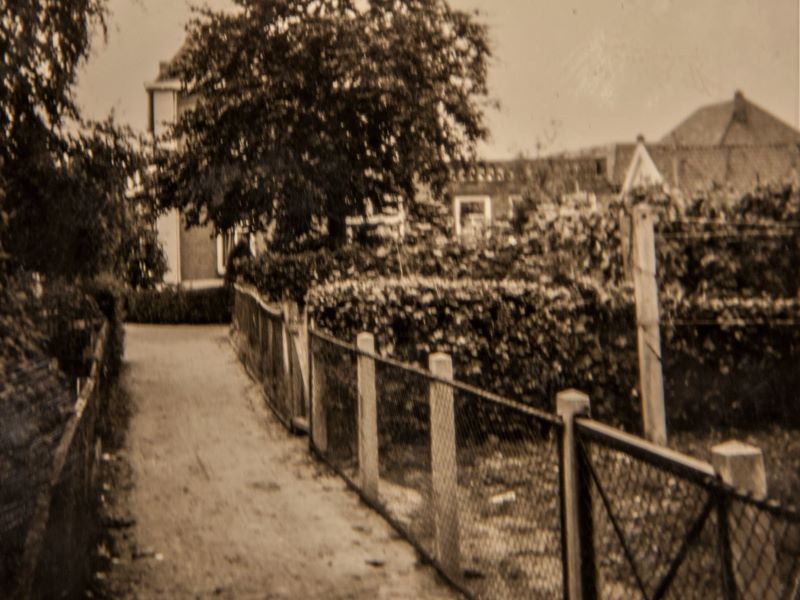
Since the Late Middle Ages, the village of Aalten has possessed a remarkable network of narrow pathways known as ‘gängeskes’. In this agricultural esdorp (a type of village centered around communal open fields), houses and farmsteads stood scattered along a few main roads. In between lay the ‘gaorden’ – the vegetable gardens of the inhabitants.
The gängeskes originated as connecting paths between the village streets and these gardens. They are generally just wide enough for two people with wheelbarrows to pass each other.
These paths were used to supply houses with fresh produce. The winding pathways also allowed for quick visits from one neighbour to another, and children used them to walk to school. Similar gängeskes could be found in many villages throughout the Achterhoek. In the twentieth century, many gängeskes unfortunately disappeared, often being incorporated into the adjoining gardens. In Aalten, however, a large part of this unique network was preserved as important heritage.
In 2011, the paths were given official names. Some routes within the total 2.5-kilometre-long system retained their original names, while others were given a name that recalls the activities of yesteryear.
Intersection of Klokkenpad and Magispad, AaltenKlokkengat, Aalten
Walking Route
At the Aalten Tourist Information Office (VVV), you can book a walking route through the gängeskes, either with or without a guide. The Armenpad, Frerikspad, Klokkenpad, Kloosterpad, Langs de Gevangenis, Magispad, and other paths lead visitors past the most picturesque spots in Aalten and offer a glimpse into the village’s history. For children, there is the ‘Gängeskes Junior’ route.
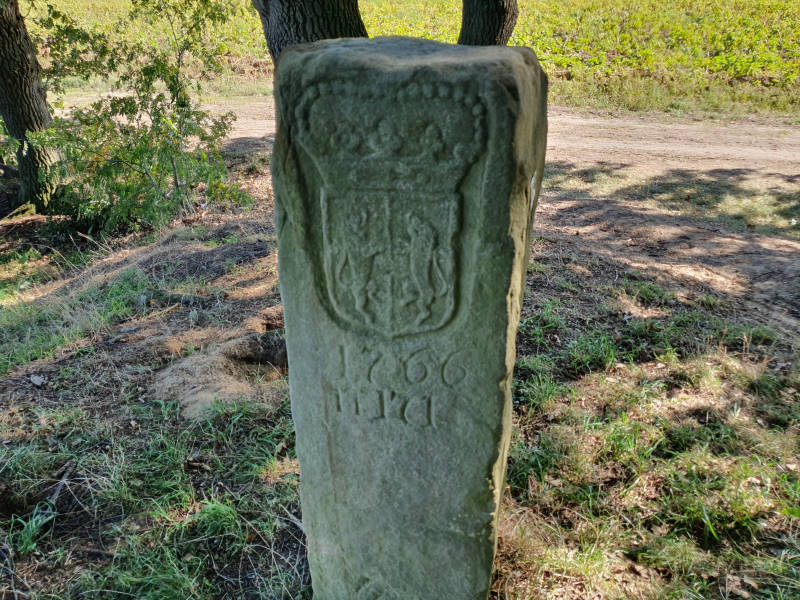
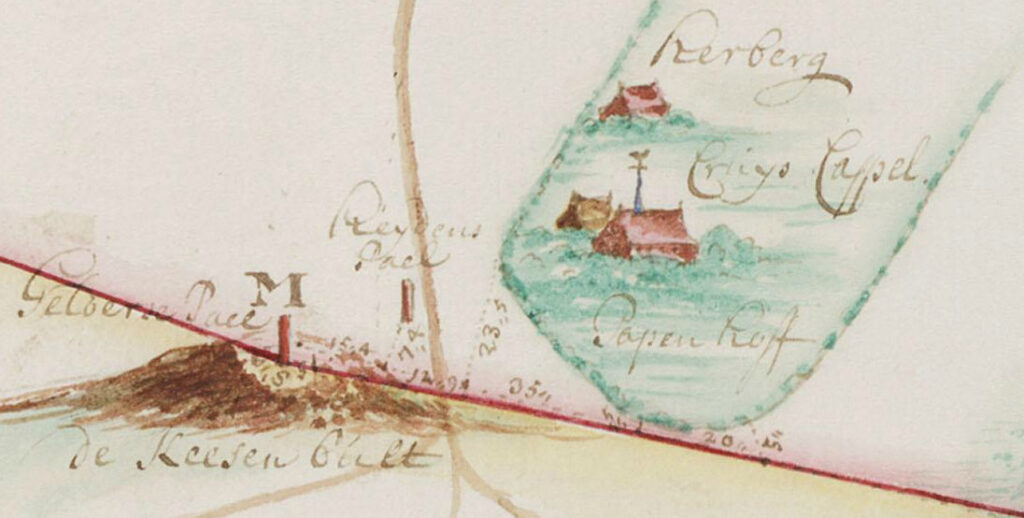
The Kesenbult is a small hill at the end of the Kiefteweg, near the green border crossing between the Netherlands and Germany. Atop the hill stands a centuries-old boundary stone, crafted from Bentheim sandstone. The stone bears the coats of arms of Guelders and Münster, the year 1766, and the number 171. It has thus marked a formerly important border crossing for more than 250 years.
Trade route and border crossing
In the 18th century, the Kiefteweg – which used to be called Bodendijk – formed part of the trade route between the Duchy of Guelders and the Bishopric of Münster. Not only commercial travellers passed through here, but also royal couriers, or messengers (boden). The name Bodendijk refers to these couriers.
Cross Chapel
In addition to trade and transit, the Kesenbult also played a role in religious life. During the period of Calvinism (1675–1799), when Catholic worship was banned in the Dutch Republic, Catholics from Aalten and Bredevoort crossed the border here.
Some two hundred metres across the border stood the Cross Chapel (Kruiskapel), built in 1675 on the Reyerding estate by order of the Bishop of Münster, Bernhard van Galen (popularly known as Bommen Berend). The timber, octagonal chapel became the religious focal point for exiled Catholics.
According to tradition, worshippers travelled to the chapel in workwear and carrying their tools, so as not to be recognised as churchgoers.
Present-day significance
The Cross Chapel has since vanished, but the boundary stone on the Kesenbult remains. It serves as a reminder of centuries of trade, religion, and border traffic between Aalten and the Münsterland. As such, the Kesenbult still forms a tangible symbol of the shared history on both sides of the border.
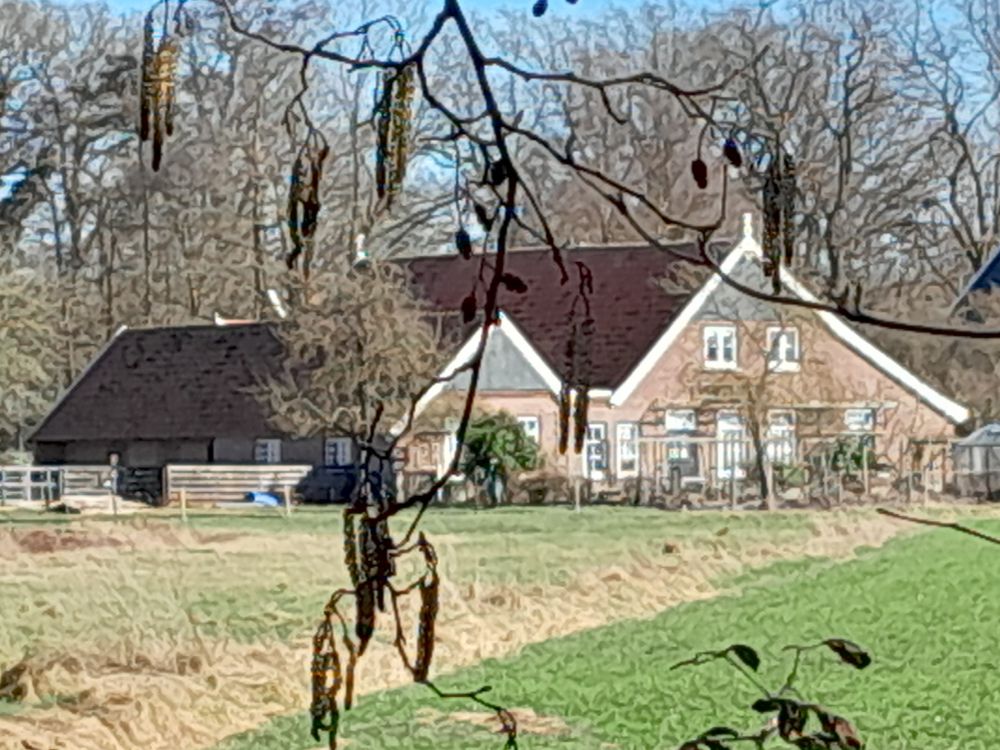
In the early 20th century, the residents of the Tuunte farm in IJzerlo moved to Oud Rensink. The local neighbourhood then replaced the name Oud Rensink with Tuunterboer. During the most recent land consolidation, the residents of Tuunterboer moved to a new farm in Haart, and the name Tuunterboer moved with them to this new property.
Archives
Voluntary Protocols, 13 April 1635
Johan Rensinck and Mechteldt Mächtens, Willem Schuerinck named Rensinck and his wife, and Thonis Rensinck named Luiten and his wife (= Lutte Doorninck), brothers and sisters, settle a dispute regarding the Rensinck fief (leengoed). Johan Rensinck is the ‘feudal holder’ (Besitter nae Leenrecht) of the fief, which consists of two properties; he inherited one property from his deceased daughter Geesken (died < 1625, married to Henrick ten Borninckhave named Kolwagen) from his first marriage to Henrica Rensinck, daughter of the late Lubbert Rensinck. He, his wife, and their heirs shall retain this property. He will transfer the feudal rights of the other property to his brother-in-law and brother Willem Schuerinck named Rensinck and Thonis Rensinck named Luiten, and their wives and heirs.
Johan Rensinck’s property was later called Groot Rensink and, more recently, Scholte Rensink. The ‘other’ property was later called Klein Rensink and, more recently, Oud Rensink or Tuunterboer.
Noch Rensinck, Jan en Willem Rensinck, en Tonnis Luijten. Huis, hof 6 sp. lijn gesaeis, Boulant 13 mdr., 3de gerve 108 – 6 -. Hoeij gront 3 dagh maeijens. 1 Vercken of 1 Rijxdlr. 2 – 10 -. Eijcken holt.
Land Tax Register, 1650 (original register)
Tobe Rensinck was a farmer on ‘the Rensinck estate‘ and Jan Rensinck was ‘authorised‘.
Voluntary Protocols 11 July 1654
The couple Steffen Adolphsen and Hendersken Brethouwers sell a ¼ share of the Rensinck estate, which they inherited from their mother and stepfather Mechteldt Mächtens (1st marriage to Wessel Brethouwer) and Jan Rensinck, to the couple Jan Locken and Hendersken Nachtegallen.
1735-1745
Aernoudt van Onna, son of Dirck van Onna and Annetie Luijten: 06/04/1735: Testator [Aernoudt van Onna] declares to possess a fourth part of the Rensink estate located in the parish of Aalten, hamlet of Lintelo 15/10/1740: The testator [Aernoudt van Onna] declared to have and possess in ownership a fourth part of the Rensink estate, located in the parish of Aalten, hamlet of Lintelo
In 1745, the Rensink estate is no longer in the will of Aernoudt van Onna (he has apparently sold it).
The aforementioned Aernoudt was a great-grandson of Thonis Rensinck alias Luijten, who is mentioned on 13/04/1635 in the Voluntary Protocols and in 1647 in the Land Tax Register (both mentioned above).
Tobe and Jenneken were members of the church in Aalten < 1645 and lived in Lintelo (Member Register).
Next residents, son and daughter-in-law:
Jan Rensinck (Lintelo – Lintelo < 1702) married 01-01-1677 in Aalten Lijsbeth Doorninck (Lintelo)
Next occupants, brother/brother-in-law and sister-in-law:
Ton(n)is / Teunis Doorninck alias Rensin(c)k (Lintelo) married 20-08-1693 in Aalten Berentjen / Beerndeken ten Heecke (Doetinchem)
Next occupants, daughter and son-in-law:
Hen(d)ri(c/k) ter Werenbeck alias Rensink alias W(u/i)bbels alias Villekes (Bocholt, 08/03/1682), marries (1) on 24/09/1712 in Aalten to Aeltje(n) Doorninck alias Rensink (Aalten, 24/06/1694 – Dale < 1729)
Hen(d)ri(c/k) and Aeltje(n) left for Wubbels in Dale.
Next occupants, brother-in-law and (sister-in-law) sister:
Reijn(d)er Ve(e)nderbos(ch) alias Rensink (Varsseveld – Varsseveld < 1744) married 31-01-1723 in Aalten Beerndeken / B(e/a)rentje Doornink alias Rensink (Aalten, 17-09-1699)
Reijn(d)er en Beerndeken / Barentje left around 1727/1728 for Varsseveld.
Next occupants, brother-in-law and (sister-in-law) sister:
Ton(n)is / Teunis (Kleijn) Tam(b/m)el alias aan den Gesengaarden alias Klein Rensink alias Beuenck (Aalten, 17/12/1710 – Lintelo, 17/05/1769) marries on 19/11/1735 in Aalten to Jenneke(n) Rensink (Aalten, 23/09/1703 – Lintelo, 21/01/1786)
Next residents:
Geert Loman alias Rensink (19-11-1724 – Lintelo, 20-01-1785) married 09-07-1743 in Aalten Hendersken Kleuvers (Aalten, 07-08-1823 – Lintelo, 12-05-1810)
Next residents, son and daughter-in-law:
Berend Rensink (Aalten, 16-04-1770 – Lintelo, 03-06-1850) married 24-05-1801 in Aalten Cornelia Vervelde (Aalten, 30-05-1767 – Lintelo, 05-02-1850)
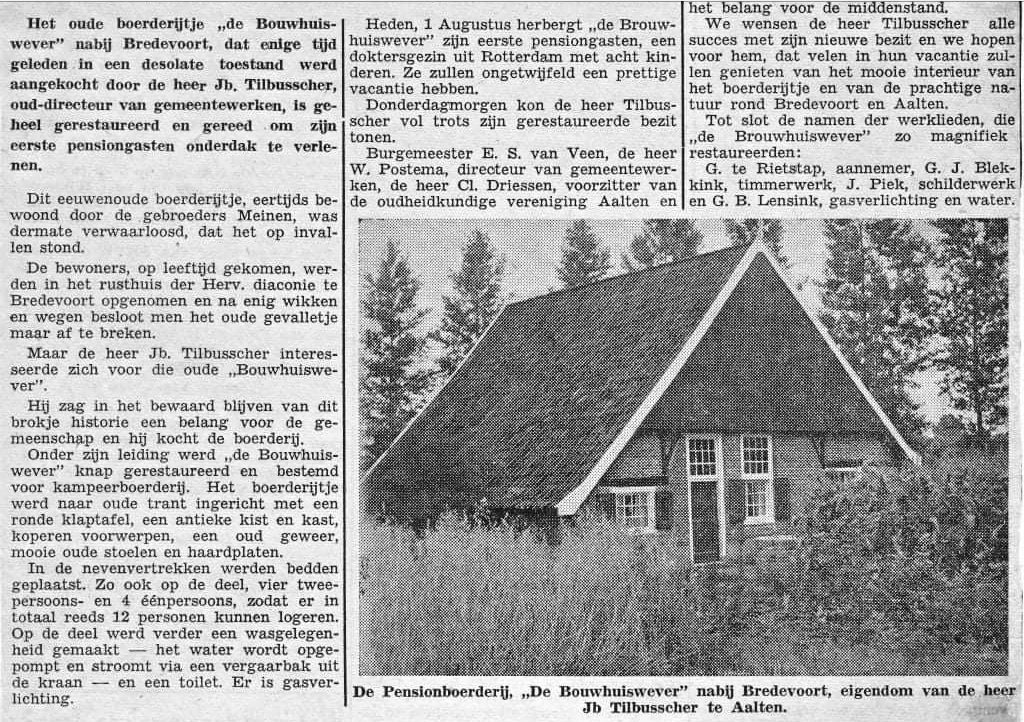
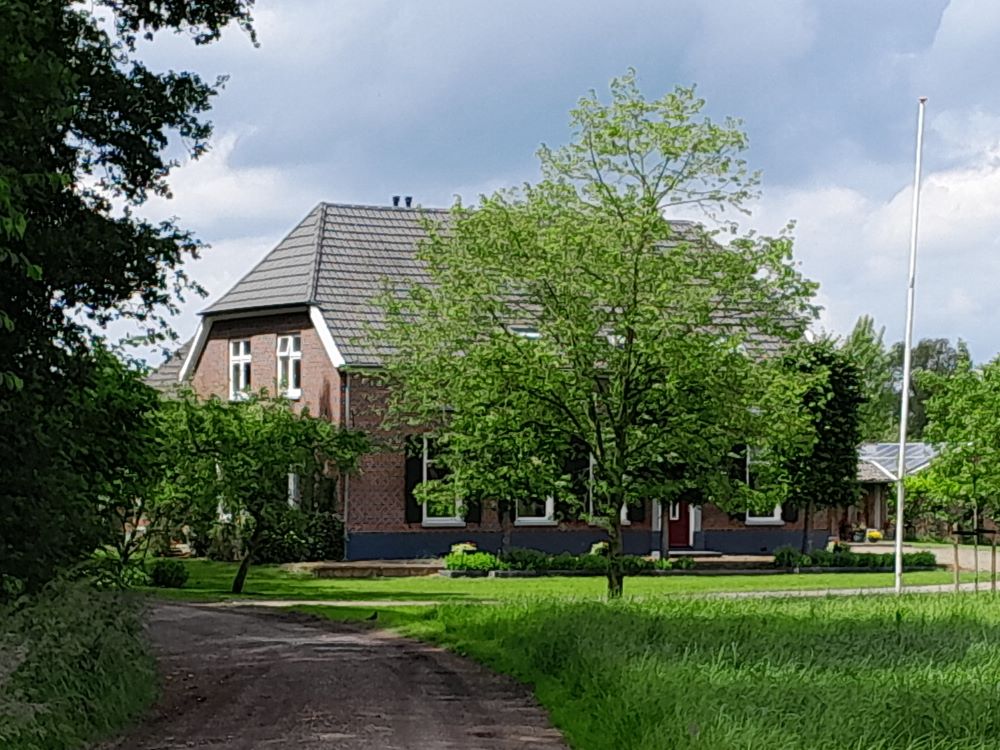
Bouwhuis Wever was formerly also known as Klein Bouwhuis.
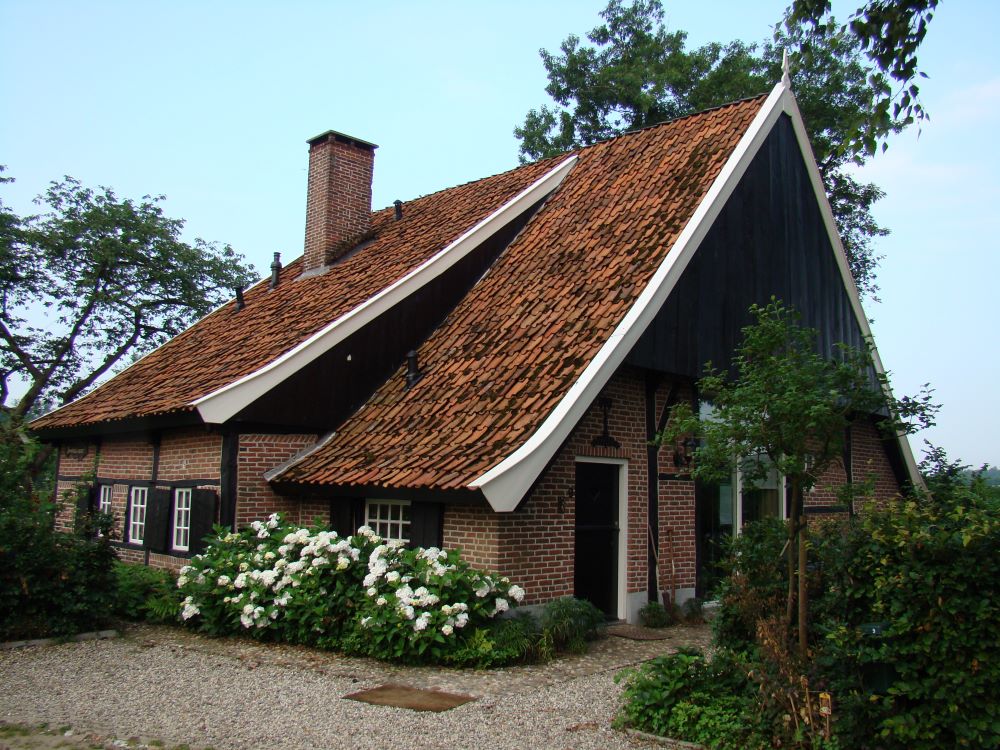
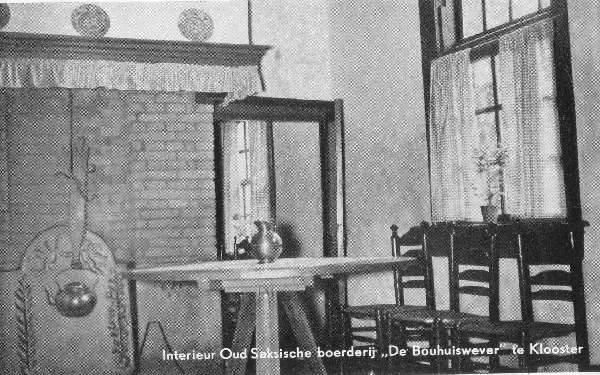
It is a well-preserved and restored 18th-century Saxon timber-framed farmhouse with a high roof covered in roof tiles, a wooden front gable, and windows with small panes and shutters. A section of the roof has been ‘lifted’ to create an additional room: the weaving workshop. It is situated on a side path (which has been named Heericks-es since 2012) off the Kloosterdijk, traditionally the route from Bredevoort to ’t Klooster. The house has been registered as a national monument (rijksmonument) since 1967.
Archives
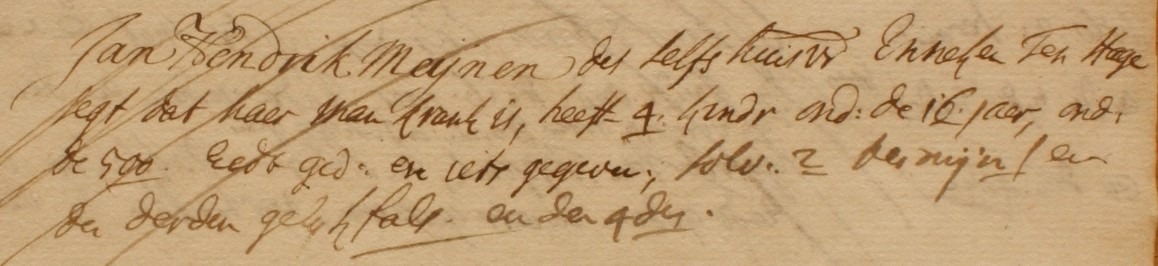
Liberal Gift 1748
Owners
Overview is incomplete.
Year
Plot
Owner
Description
1832
B-268
Evert Meijnen, farmer in Borculo
450 m² house & yard
Residents
First known residents:
Jan Hend(e)rik Meijnen alias (Klein) Bouhuis (Aalten, 20-04-1704 – Barlo, 18-04-1785) married 23-03-1737 in Winterswijk Enneken / Anneke ten Hagen (Winterswijk, 30-08-1711 – Barlo, 01-02-1784)
Next residents, son and daughter in law:
Jan Bouhuis alias Meijnen (Aalten, 15-09-1748 – Barlo, 07-06-1827) married (1) 20-11-1785 in Aalten Hendrina van Eerden (Aalten, 15-09-1765 – Barlo, 15-08-1794)
Next residents, widower and 2nd wife:
Jan Bouhuis alias Meijnen (Aalten, ged. 15-09-1748 – Barlo, 07-06-1827) married (2) 28-02-1795 in Aalten Willemke Oonk (Aalten, ged. 03-12-1758 – Barlo, 04-04-1830)
Period 1823-1850
“Wever”
Barlo 69
Jan Bouhuis alias Meijnen (Aalten, bap. 15-09-1748 – Barlo, 07-06-1827), s/o Hendrik and Anneke Bouhuis, married 28-02-1795 in Aalten Willemke Oonk (Aalten, bap. 03-12-1758– Barlo, 04-04-1830)
Next residents, son and daughter in law:
Evert Meijnen (Aalten, 20-08-1801 – Barlo, 27-08-1855), married 06-05-1828 in Aalten Janna Geertruid Boddewijs (Winterswijk, 03-04-1808 – Barlo, 05-04-1886)
Jan Hendrik Meijnen (Barlo, 11-09-1836 – Aalten, 29-07-1901), married 26-06-1868 in Aalten Grada Theodora Oonk (Miste, 31-08-1844 – Aalten, 03-02-1922)
Children:
Evert Jan Meijnen (Barlo, 15-02-1869 – Winterswijk, 02-06-1941)
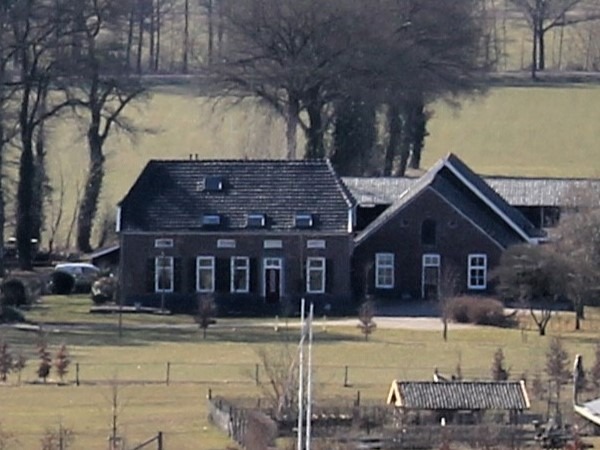
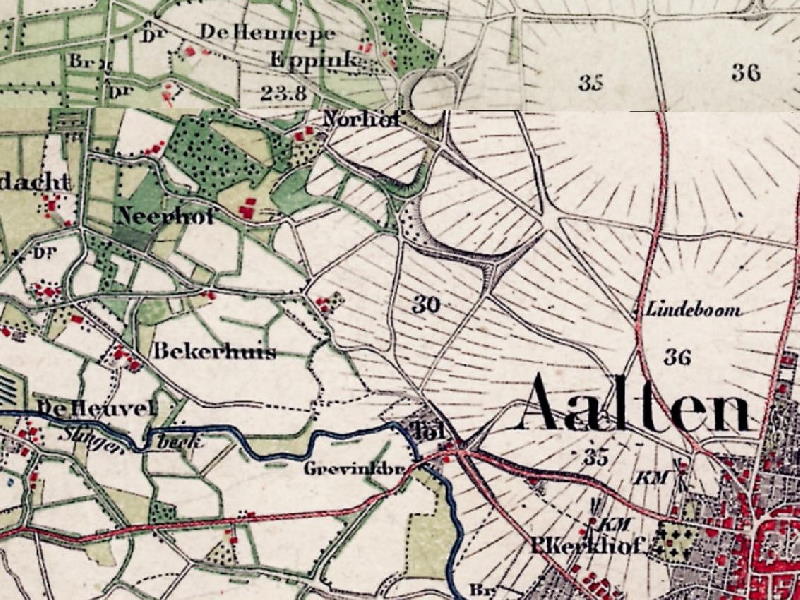
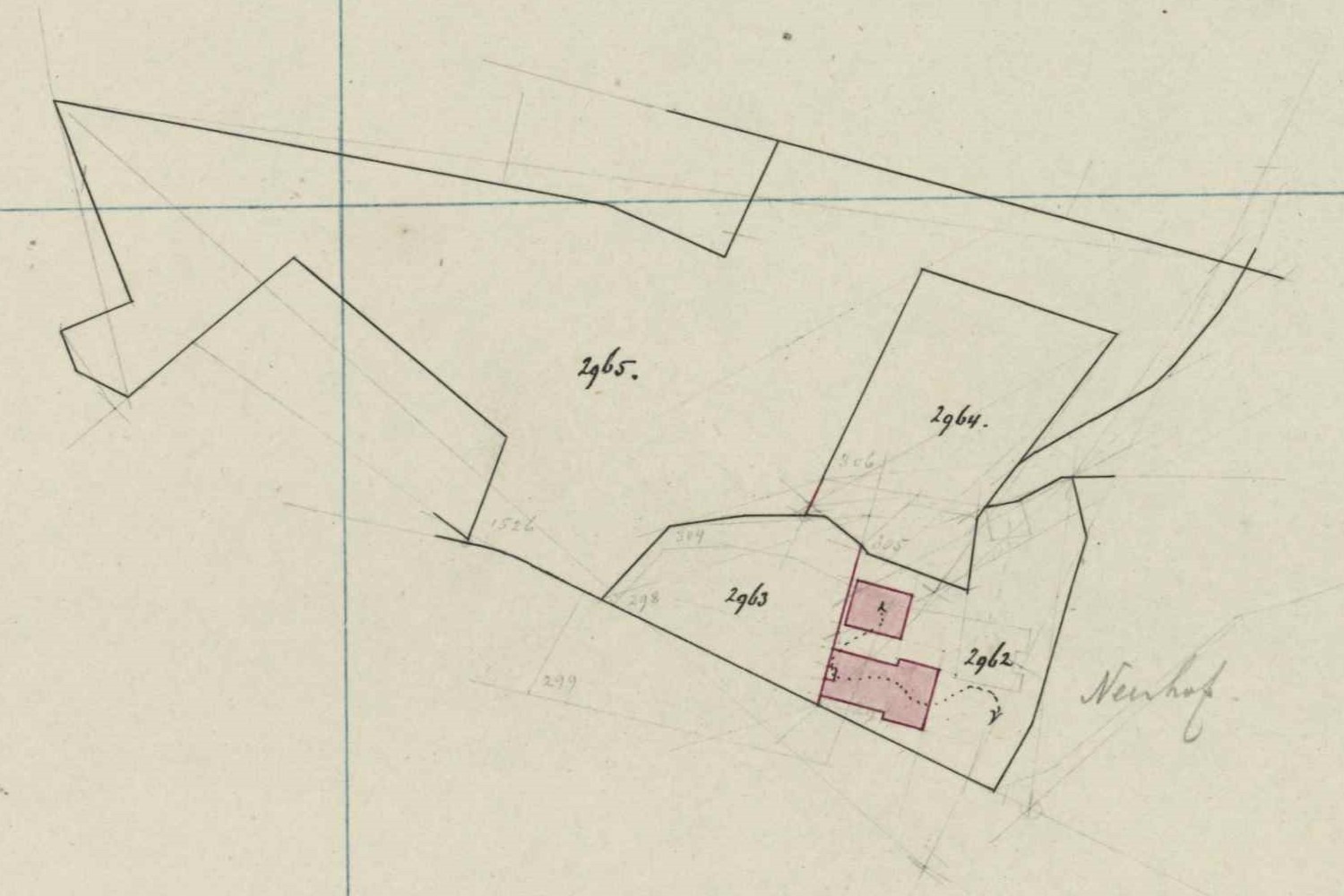
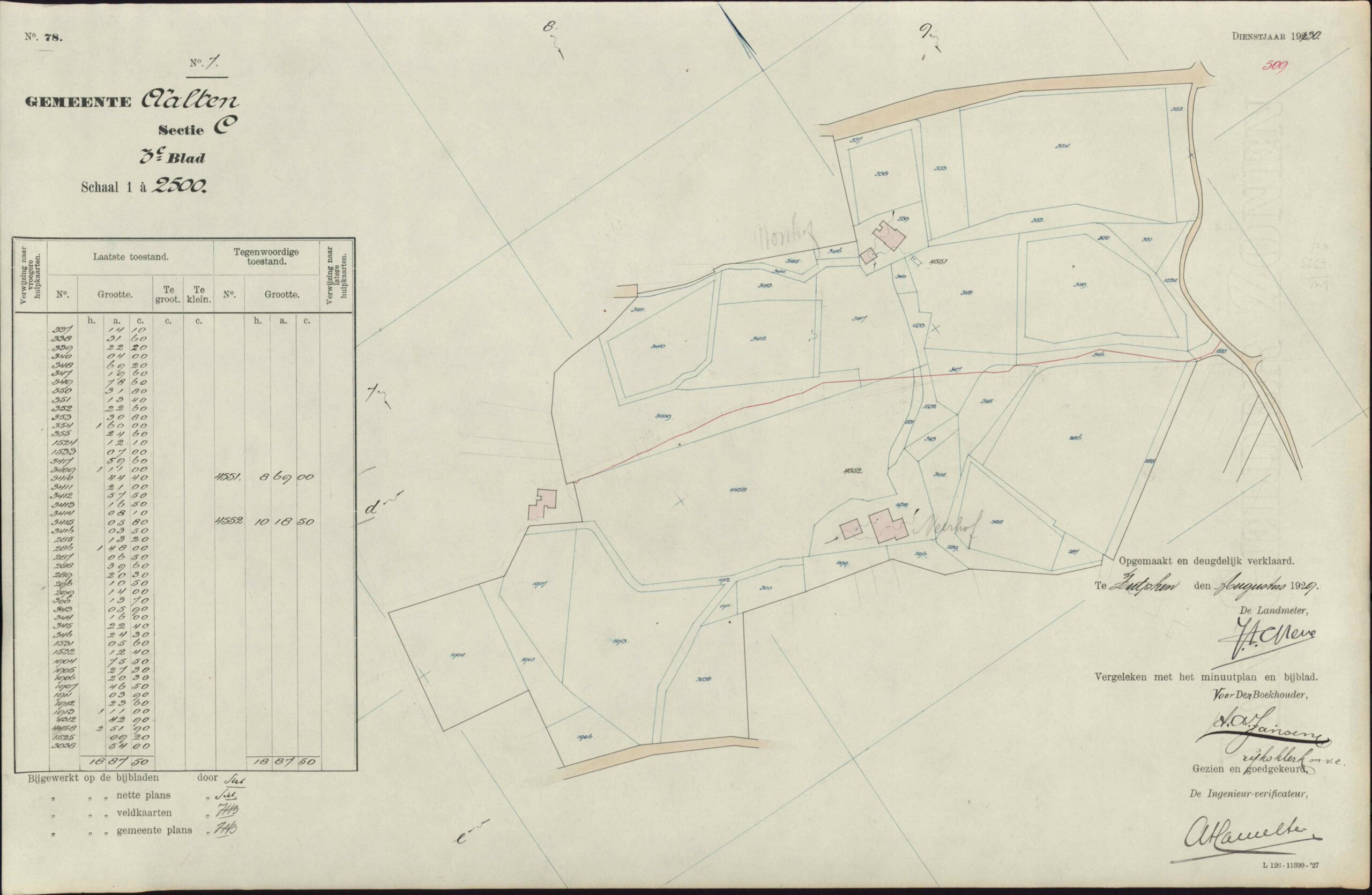
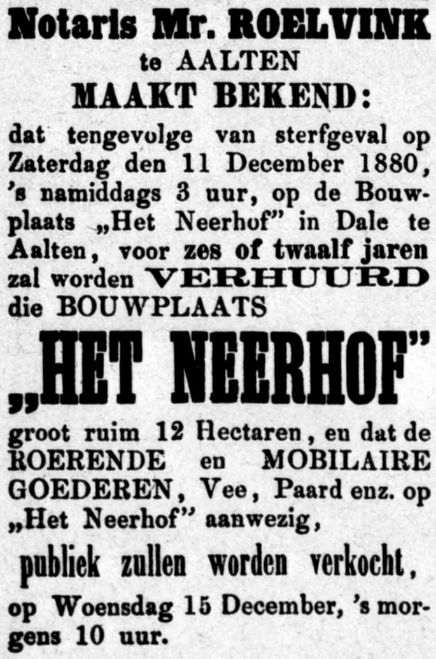
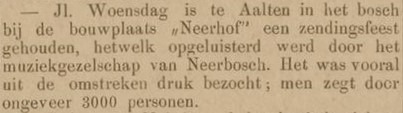
‘Neerhof’ is an ancient farmstead located in the rural district of Dale in Aalten. Many people who carry the surname Neerhof today—including descendants of emigrants in the US and Canada—can trace their roots back to this place. There is even a Facebook group they can join: I’m a Neerhof.
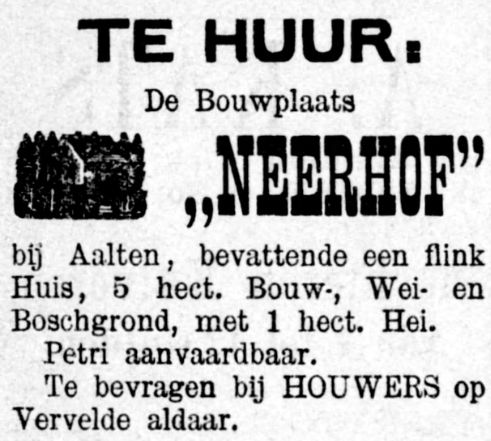
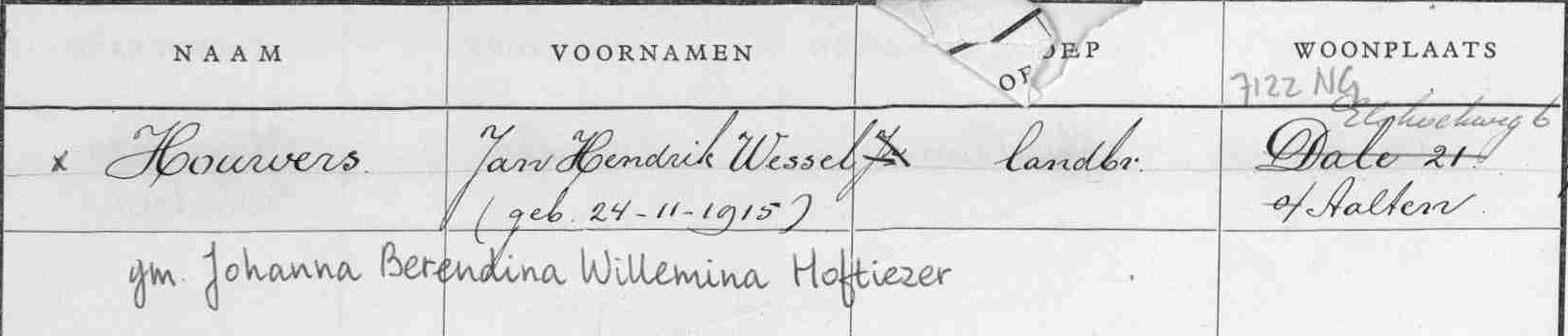
The last Neerhofs to live there left the farm in the second half of the 19th century. Since then, the farm has been occupied (primarily) by the Houwers family. The original farmhouse is gone; the current house was built in 1893.
Tijdens de Tweede Wereldoorlog herbergde de familie Houwers onderduikers. Eén van deze onderduikers, een Franse onderofficier uit de Pyreneeën, stuurde hen na de oorlog nog een brief.
Fun fact: There is a street in Canada named ‘Neerhof Lane’.
Archives
Judicial Archive of Bredevoort
Tuesday, 6 February 1616: Statholder Joannes ter Woert, assessors Jan ten Berge, Henrick Menekinck, Peter Cloeck.
Margin note: Anno 1629, 19 January, Jenneken Neerhave declared this to be redeemed. Therefore, void.
Appeared Jan Filette and Enneken Huijsinck, spouses, who declared for themselves and their heirs that for a received and well-paid sum of money, they sold a yearly pension to Juerden ten Neerhave and Jenneken, spouses, and their heirs: three dalers (per daler calculated at thirty stuivers, per stuiver at fifteen placken). Payable annually on Candlemas, first due on Candlemas 1617. Pledging as security their estate Hoff ant Benninck Vehne, along with house and yard within Bredevoort, and all their movable and immovable goods, to recover the aforementioned yearly pension along with costs and damages by distraint according to land law. With the right reserved to redeem the pension annually by giving one quarter’s notice, and then on Candlemas (Purification of Mary), fourteen days before or after without delay, by paying the sum of fifty dalers of the aforementioned currency. This ceded and issued, and renounced by hand and word; guarantee, better written deed, and confirmation promised. All under penalty of distraint as prescribed, without exception or deceit.
Wednesday, 19 February 1617: Statholder Herman van Munster, assessors Johan Nachtegaell, Herman Steinrot, Peter Evertz.
Appeared Bernt Huijninck and Enneken Snijders, spouses, who declared for themselves and their heirs that for a well-paid sum of money, by right of perpetual and irrevocable inheritance, they have transferred and sold to Joerden ten Neerhave and Jenneken, spouses, and their heirs, a piece of land, of approximately three schepelsaet, on the Aelter Ess, situated with one side bordering land now belonging to the purchaser, Mechtelt Snijders, and with the other side bordering the common road, with one end bordering Peter Martens’ land, and the other end stretching to the Barlschen Heelwech, with its appurtenances and rights, free of all encumbrances. This inherited, ceded and issued, and renounced by hand, straw, and word; guarantee, better written deed, and hereditary confirmation promised according to land law, by hypothecation of their goods. Without exception or deceit.
Saturday, 10 January 1618: Drost and Judge Gosswin van Lawick, assessors Henrick Menekinck, Jan ten Berge.
Appeared Gerrit Gijsberts, gatekeeper in Bredevoort and Mechtelt Snijders, spouses, who declared for themselves and their heirs that for a well-paid sum of money, they transferred and sold by right of perpetual and irrevocable inheritance to Joerden ten Neerhave and Jenneken, spouses, and their heirs, a piece of arable land of approximately two moldersaet, called Snijders Stucke, on the Aelter Ess, bounded on one side by the Nonhaver Cruijss plot and on the other side by land belonging to the purchaser, with one end bordering Peter Marten’s land and the other end stretching to the Barlschen wech, with its appurtenances and rights, free of all encumbrances, reserving to the Hoff ten Ahave the tenth sheaf. This inherited, ceded and issued, and renounced by hand, straw, and word; guarantee, better written deed, and hereditary confirmation promised according to land law. Without exception or deceit.
Wednesday, 29 March 1620: Statholder Herman van Munster, assessors Herman Steinrotz, Lenardt van Elverfelt, Peter Evertss.
Appeared Peter Evertz and Margareta Mächtes, spouses, who declared for themselves and their heirs that for a well-paid sum of money, they transferred and sold by right of perpetual and irrevocable inheritance to Joerden ten Neerhave and Henricke ten Ruell Geesken, spouses, and their heirs, a piece of land previously purchased from the Marcke, with its ditches, embankments, and boundaries, situated in the parish of Aalten, district of Lintell, in the Aelter Hemell, with one end stretching to the Kortbeker Maet, with its appurtenances and rights, free of all encumbrances, reserving the lord’s taxes as may be assessed upon it. This inherited, ceded and issued, and renounced by hand, straw, and word; guarantee, better written deed, and hereditary confirmation promised according to land law, by pledging the sellers’ goods. Without exception or deceit.
Appeared Willem ten Brincke and Marrie, spouses, who declared for themselves and their heirs that for a well-paid sum of money, they transferred and sold by right of perpetual and irrevocable inheritance to Joerden ten Neerhave and Jenneken, spouses, and their heirs, a piece of land of approximately one Moldergeseijs on the Aelter Esch, bounded on one side by Ebbert Wever’s land and on the other side by Geerdte Lock’s land, in its borders and boundaries, with one end stretching to the Heelwech and the other end to Hoeneper Landt, with all its old and new appurtenances and rights, free of all encumbrances. This ceded and issued, and renounced by hand, straw, and word; guarantee, better written deed, and hereditary confirmation promised according to land law, under hypothecation of the sellers’ goods. Without objection or deceit.
5 Mtr. gesaeis, Jorden Neerhof, hier gaet af 1½ sch. an Kerck, blijft 4 mdr. 2½ sch. 38 – 10 – 8. An de Kerck te Aelten 2 dlr. 3 – 0 -. Een stuck groen lants in Lintel gelegen van 3 voeder hoij gewass of 2 koeweidens 9 – 0 -.
Liberal Gift 1748
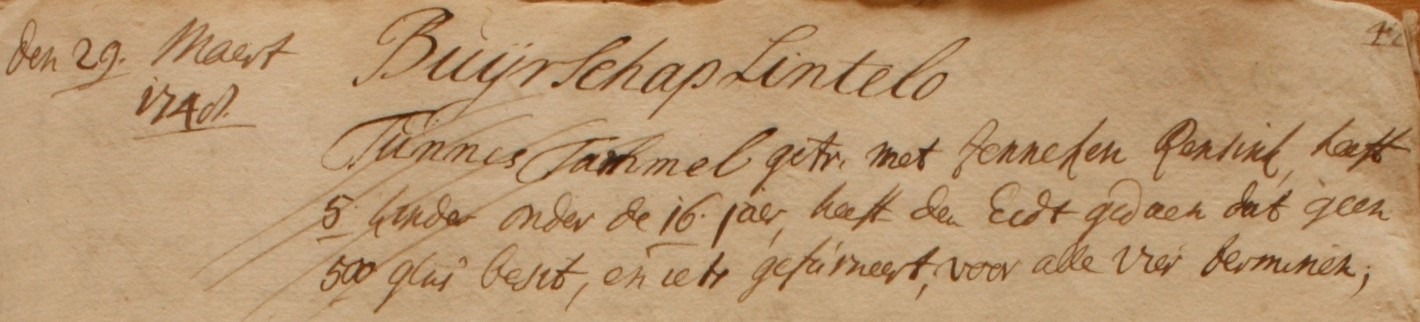
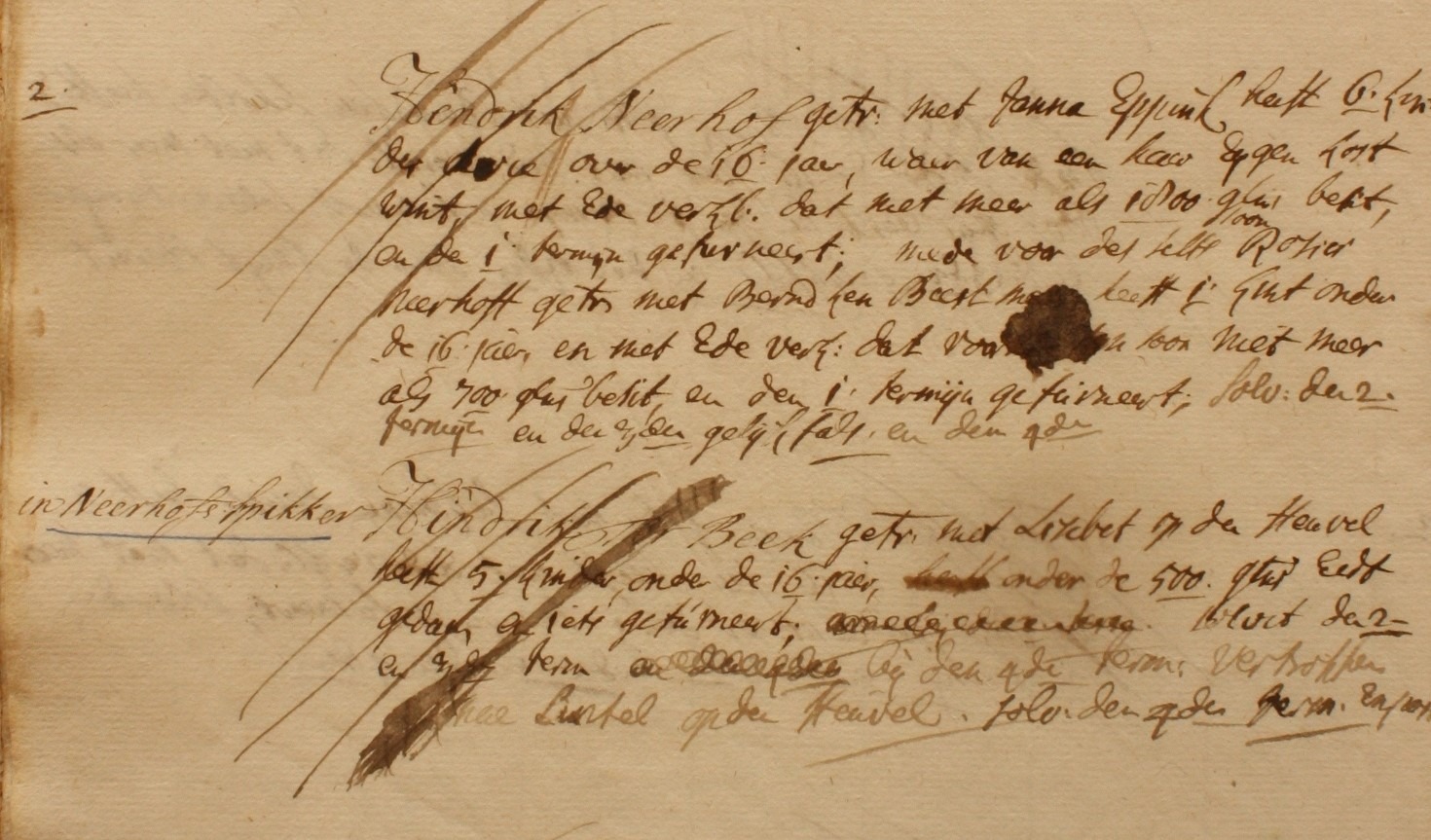
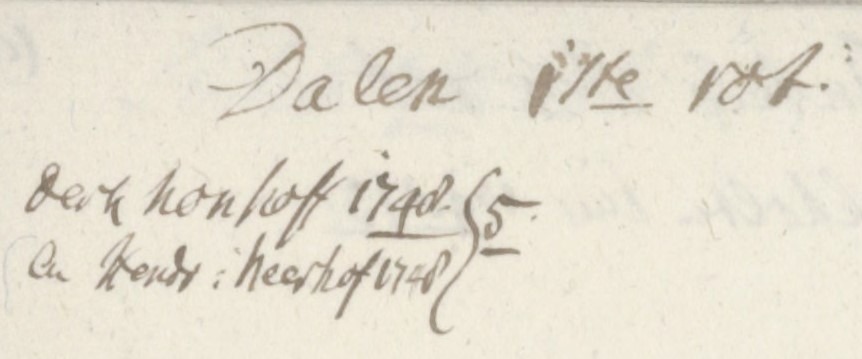
Below is a fragment from this tax register mentioning Hendrik Neerhof and Janna Eppink, as well as their son Rosier Neerhof and his wife Beerndeken Beestman. They declared under oath that their assets amounted to 1800 and 700 guilders respectively and paid their taxes duly.
Immediately below it is noted that the couple Hindrik ter Beek and Lisebeth op den Heuvel lived ‘in Neerhofs Spikker’ (or ‘Spieker’). They possessed less than 500 guilders but evidently paid a voluntary contribution.
J(oe/o/ue)rden was a farmer at Neerhof in 1650 (Land Tax Register, original register).
Child:
Salike Nerhofs (Dale), married Wendel Brunsinck in Dinxperlo in 1664
Next residents:
Hendrik Neerhof (? – < 04-1697) ⚭ ca. 1654 Deve (Eva) te Gantvoort (? – > 03-1697), this was her second marriage
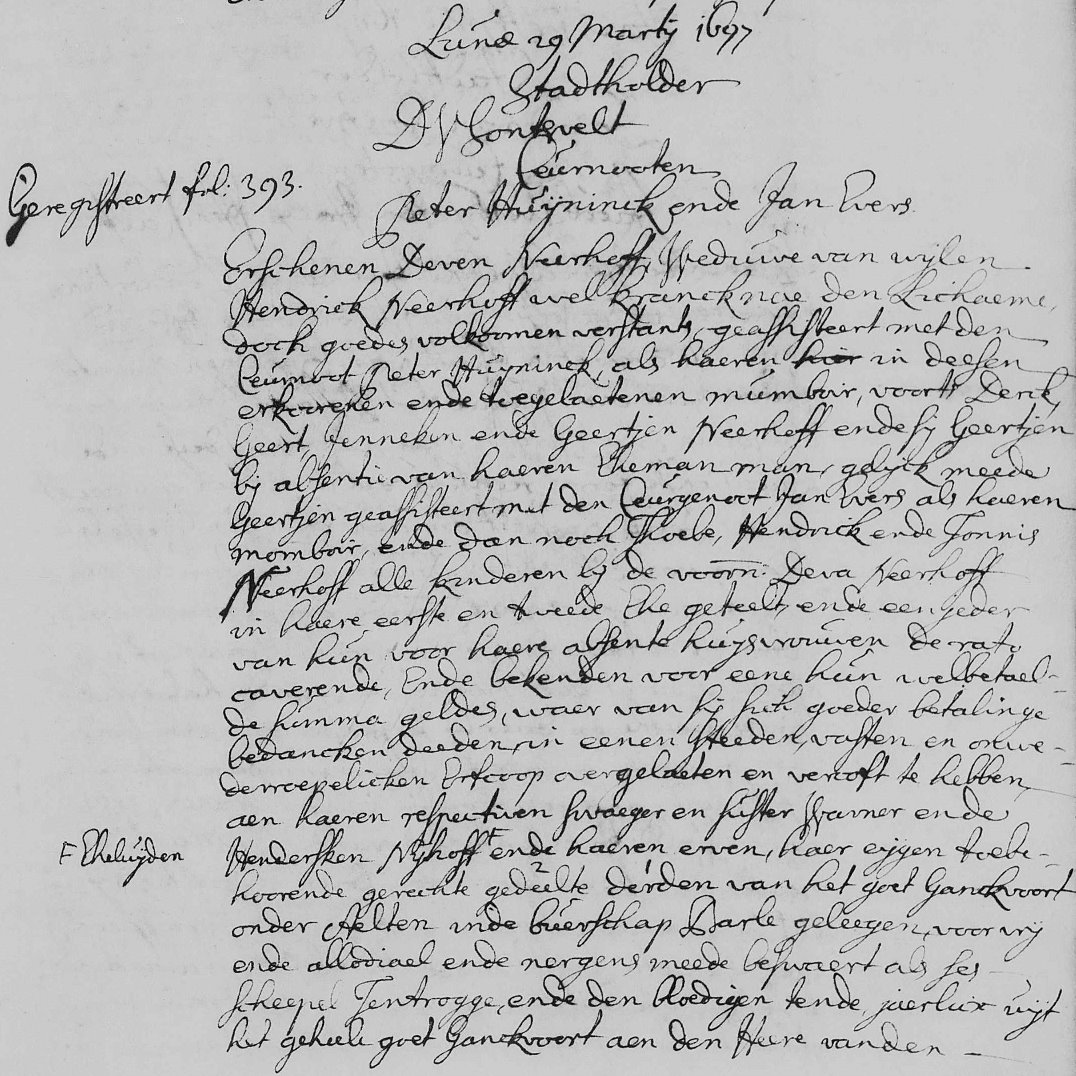
On 29 March 1697, Deven Neerhoff, widow of Hendrick Neerhoff, appeared before the statholder in Bredevoort with all her children “born of her first and second marriage”. The children, therefore, evidently came from two of the mother’s marriages. Who the first husband was, we do not know.
Voor zover bekend was Deve het enige kind van Thoebe te Hondorp genannt Gantvoort en Lotte te Welpshof. Deve was erfgenaam van het goed Gantvoort en haar kinderen dus ook. Het document beschrijft hoe Deve en zeven kinderen hun erfdeel in het goed Gantvoort verkopen aan het achtste kind en (half-)zuster Hendersken en haar man Wander Nijhof.
(Step)children:
Hendersken Neerhof (ca. 1655), ⚭ (1) 1679 Aalten Lubbert Luiten, (2) 1682 Warner Nijhof op Nijhof in Barlo
Jenneken / Jannetie Neerhof (Bredevoort, bap. Jan. 1658 – < 1700), ⚭ 1693 Aalten Antonij ten Hietbrink, they left for Amsterdam
Geertjen Neerhof (ca. 1662), ⚭ 1684 Aalten Hendrik ter Sligt op Gantvoort in Barlo
Derck Neerhof (Bredevoort, bap. May 1665), ⚭ 1694 Aalten Wendele in ’t Heegt
Geert Neerhof (Aalten, bap. 04-10-1668), ⚭ 1702 Aalten Geesken Hoopmans, they left for Varsseveld
Thobe Neerhof alias Tolkamp (Dale – Barlo, 1720/1721), ⚭ 1694 Aalten Geesken Nieuwhof op Tolkamp in Barlo
Hendrik Neerhof alias Hondorp alias Lijsen, ⚭ 1690 Aalten Grietjen Lijsen op Liezen in Dale
Antonij / Tonis Neerhof alias Vrieseler (Aalten, bap. 02-04-1671 – < 1760), ⚭ 1705 Bocholt Schwantgen Frieselaer (Swenneken Vrieseler), they lived at the Haesencamp in Silvolde from 1707 onwards (source)
Next residents, son and daughter-in-law:
Derck Neerhof (Bredevoort, bap. mei 1665) ⚭ 18-11-1694 Aalten Wendele aan ’t Heeght (Aalten, bap. 02-12-1666)
Children:
Hendrik Neerhof (1695 – 1763), ⚭ 1717 Janna Eppink
Dersken Neerhof (1697 – 1719)
Janna Neerhof (1700 – ?)
Eva Neerhof (1697 – 1719)
Jan Neerhof (Buunk) (1700 – 1787), ⚭ 1724 Berentje Buunk op Beunk in Lintelo
Dela Johanna Neerhofin dienst (Dale, 06-02-1843), dochter van Willem Neerhof en Engelina Heusinkveld op Krieger. Zij is dus een nicht van de vier eerstgenoemde broers *
* Zij vertrekken (vermoedelijk in het voorjaar van 1868) naar Haart 19 (Lievers) en in 1869 naar Amerika. Tegelijkertijd verhuist het pasgetrouwde echtpaar Houwers van Lievers naar Neerhof.
Next residents:
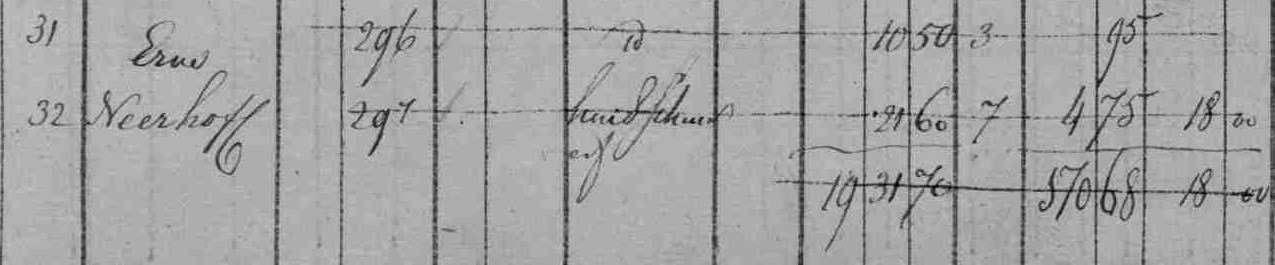
Arent Jan Houwers (Dale, 28-04-1824 – Dale, 28-10-1880), farmer ⚭ 02-04-1868, Aalten Grada Aleida Ormel (De Heurne, 13-10-1843 – Dale, 12-04-1875)
Following their father’s death, the three orphans were taken in by relatives on other farms (as noted below). ‘Bouwplaats Het Neerhof’ was to be let out for the time being:
The following residents came from Wisch in early 1881:
In the rural district of Dale, there was once the manorial estate known as Neerhof. Here is a piece of history about ‘t Neerhof that we found in a booklet:
“When the Saxons were subjugated by the Franks and Charlemagne became the landowner, he established Frankish landholdings where the ‘schout’ or ‘scholte’—the lord’s representative—would reside. They were responsible for collecting taxes, and the Saxon farmers became subservient to the lord’s ‘hof’ (court/estate).
In every district of Aalten, we find an old, distinguished estate, all of which strongly suggest that they share the aforementioned origin. In the past, all these farmsteads were surrounded by a moat. Each farmstead is situated on the edge of an ‘es’ (es-land) in such a way that the latter extends around it, virtually in the shape of a half-moon, so that the ‘Hof’ forms the centre. This indicates that the large-scale cultivation of the essen must have originated from the ‘Hof’ and was continued progressively further outwards.
De Aaltense Es is eigenlijk de es van de boerschap Dale (= laagte). Hij ligt binnen een halve cirkel met een straal van ongeveer twee kilometer om Havezathe de Pol, met deze als middelpunt.
Nu doet zich nog de merkwaardige omstandigheid voor, dat wij in Dale nog twee aan elkaar grenzende goederen vinden, ‘Nonhof’ en ‘Neerhof’ geheten. Beide hoeven liggen vrij ver van de Ahof ‘de Pol’ verwijderd, maar dit is duidelijk als we de ligging en uitgestrektheid van Dale in aanmerking nemen; deze hoeven konden rustig in het lager gelegen westen van Dale hun plaatsen innemen. Hier zouden ook ordebroeders en ordezusters hebben gewoond.
In the past, the Neerhof and Nonhof estates belonged to the St. Antonie vicarage, which was established in the Aalten Church. Later, they became domains of the sovereign.
According to some, the name is derived from ‘d’n Heerhof’, which merged into ‘de Neerhof’.
At the beginning of the 17th century, we also encounter the spelling ‘Neerhave’.
Bredevoort Judicial Archives, voluntary deeds, 29 March 1697In 1748, five soldiers were billeted at Neerhof.Excerpt from the land registry entry, 1876Graafschapbode, 4 December 1880Nieuwe Vlaardingsche Courant, 25 August 1888Graafschapbode, 31 August 1889Excerpt from the land registry entry, 1960
Leonard Roelvink was born on 30 April 1833, the son of Arnoldus Florentinus Roelvink, Mayor of Aalten, and Elzabé Maria Theodora ten Cate. On 14 November 1870, he married Christina Paschen in Winterswijk, where she had been born on 27 March 1848.
In 1857, Roelvink published his legal dissertation under the title Theses juridicae inaugurales with the publishing house Post Uiterweer in Utrecht. Four years later, in 1861, he succeeded his father as Mayor of the municipality of Aalten.
Roelvink lived in the villa at ’t Zand in Bredevoort, which is known today as Sint Bernardus. Every day, he travelled to Aalten by carriage, just as his father had done before him. He was fiercely opposed to the arrival of the railway line to Aalten, fearing that his horses would be startled by the “steaming train monster”.
Leonard Roelvink passed away from a stroke on 3 March 1886. The municipal council was just about to meet and was waiting for the arrival of its chairman when a doctor came to break the sad news of his passing. He was buried at the old cemetery on Prins Mauritsstraat in Bredevoort.
Following his death, six prominent residents of Aalten addressed a letter to the Minister of the Interior. They took the opportunity to express their concerns regarding what they considered to be administrative malpractice within the municipality, which they attributed to the policies—or lack thereof—of the deceased mayor. In their letter, they explicitly stated that they did not wish to influence the appointment of a new mayor, but at the same time indicated that, in their view, “the dismal state of affairs” in Aalten was partly due to the fact that the office had passed from father to son. Among other things, they complained of deficient education, poor roads, excessive alcohol consumption, and unlawful child labour. The six men pleaded for the appointment of a strong successor who could restore order. Their grievances were taken seriously by both the Minister and the King’s Commissioner.
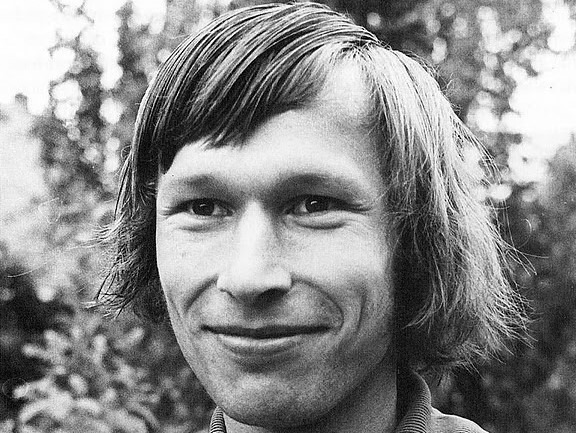
Gerhardus Franciscus (Gerard) Tebroke was born on 9 November 1949 in Aalten, the second child in a family of four sons and one daughter. His parents, Hendrik Bernard Tebroke (1912–1987) and Grada Johanna Bijvank (born 1916), both came from Eibergen, where they had married in 1944. Gerard passed away unmarried on 19 March 1995.
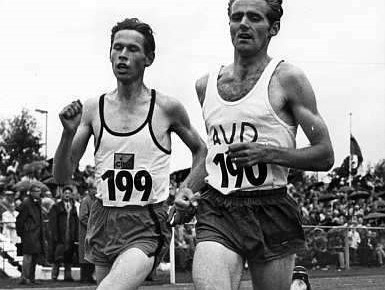
As a child, Gerard Tebroke from Aalten was so stiff that he was exempted from gymnastics classes in primary school. Nevertheless, he became one of the best Dutch athletes ever in the 5,000-metre and 10,000-metre events.
Tebroke achieved many successes, but because he often pushed his body too hard during training, he was frequently injured and missed important sporting events, such as the Olympic Games in 1972 and 1976. However, his speed for that era was unprecedented. He held the Dutch record in the 10,000 metres for over 18 years and in the 5,000 metres for more than 22 years.
In 1982, he decided to bid farewell to the sport. He retreated to a small farm in Silvolde with his dog and sheep, leading a reclusive life. Gerard Tebroke passed away in 1995 at the age of 45. Since then, the biennial Gerard Tebroke Memorialloop (a memorial run) has been held in Aalten as a tribute to him.
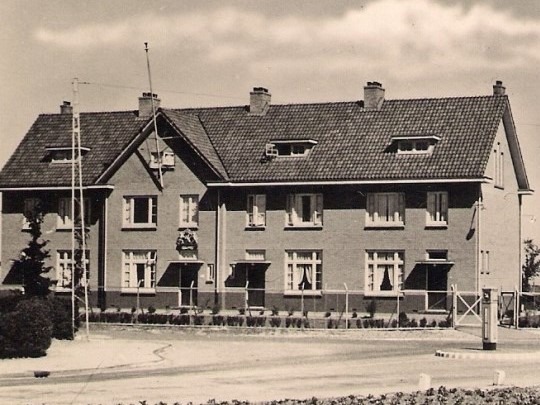
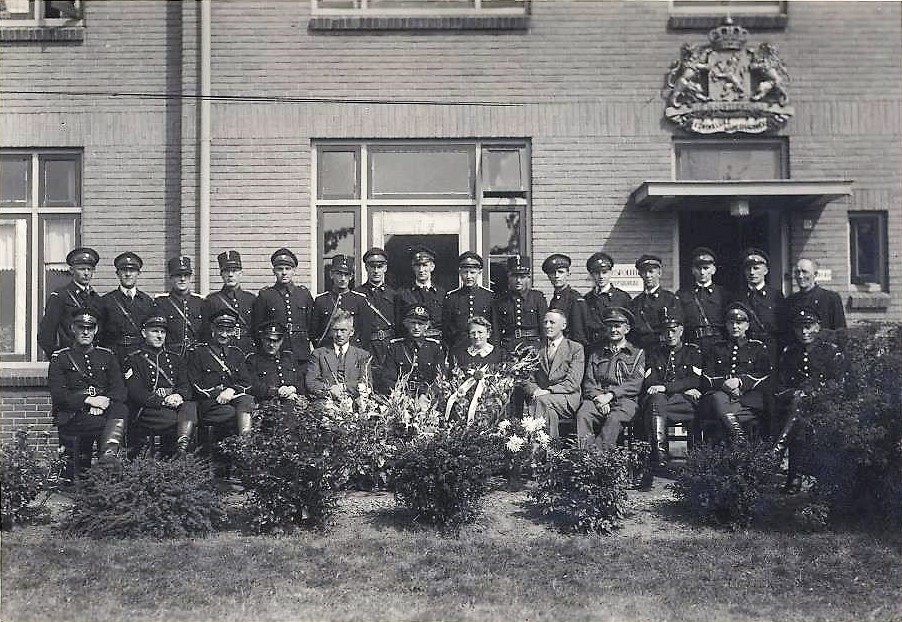
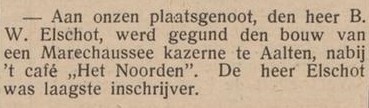
The Aalten Marechausseekazerne (Royal Military Constabulary barracks) was built around 1937. Previously, the constabulary had been stationed at the Heurne-Hemden border crossing. The premises contained three houses intended for the families of the constabulary and a service section, which was larger than the residential parts. There were also additional rooms for unmarried officers. These men were required to serve a certain number of years with the Marechaussee before they were permitted to marry, and therefore lived on-site.
The service section contained two holding cells, and all three houses were equipped with a ‘gas cellar’ to provide shelter in the event of a war involving gas attacks. During World War II, a V-1 flying bomb landed next to the barracks; however, given the sturdy construction typical of military objects, the building suffered virtually no damage.
World War II
When war broke out on 10 May 1940, Sergeant (wachtmeester) Sijbring—who was on night duty—warned the officers of the German advance. A number of them fled by bicycle via the Wolboom towards Bronkhorst, where they crossed the IJssel. From there, they could be deployed in the defence of the Netherlands.
If people were arrested during the war, they were taken either to the Town Hall, where the NSB (Dutch Nazi Party) was based, or to the Marechaussee barracks. A number of constabulary officers were still stationed there. On one occasion, the resistance leader ‘Ome Jan’ Wikkerink was arrested and brought to the barracks. The resistance quickly devised a plan to liberate him. They made an arrangement with the guard, the younger Officer Bruggeman, that they would give him a black eye and stun him with chloroform. In this manner, Ome Jan was freed. When the SD (German security service) arrived shortly after and found the guard with a black eye and barely conscious, they believed his story, and he avoided any repercussions.
Residences
The barracks were closed on 1 March 1968. Subsequently, the building was transferred to the Government Buildings Agency. In 1989, the houses were sold to the tenants and passed into private ownership.
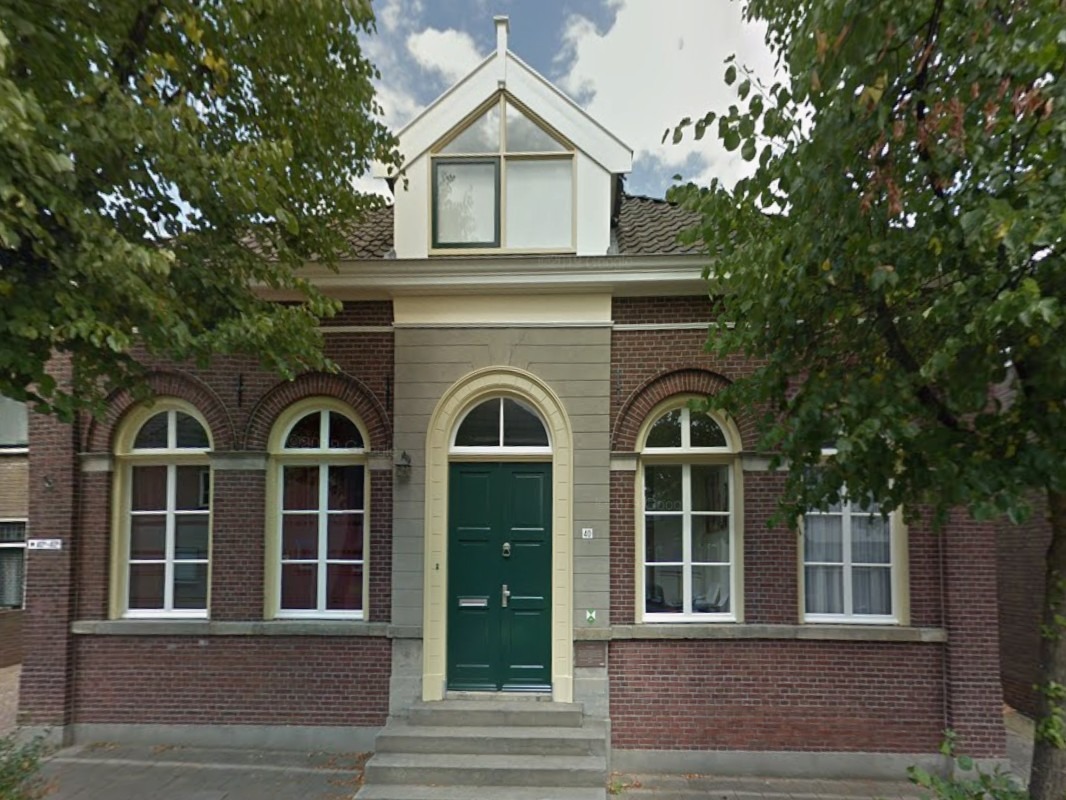
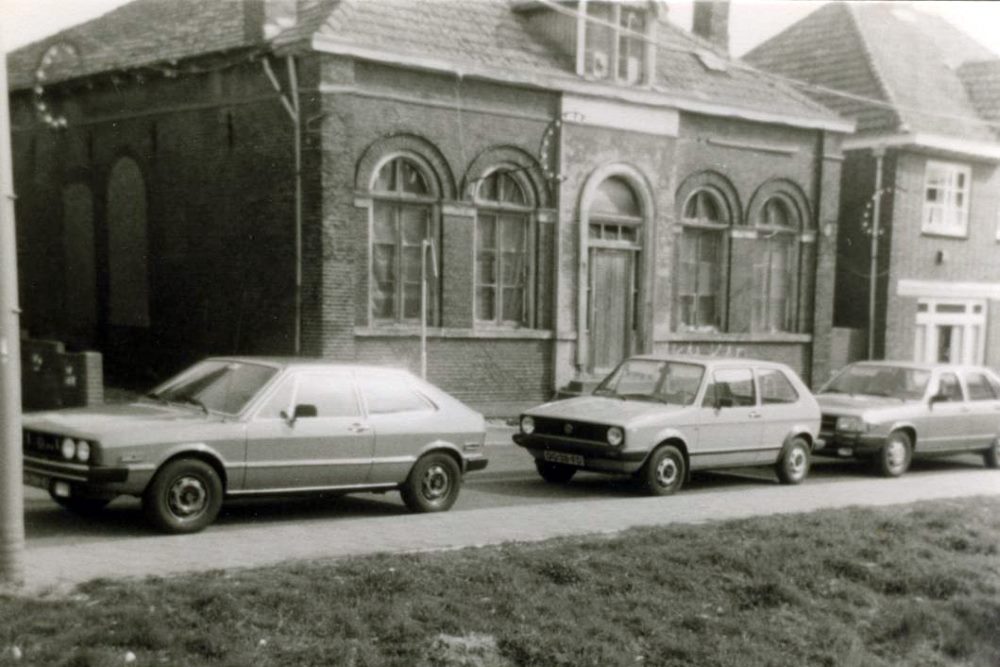
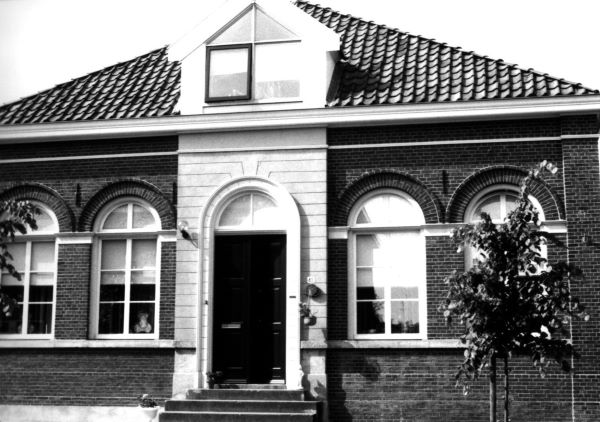
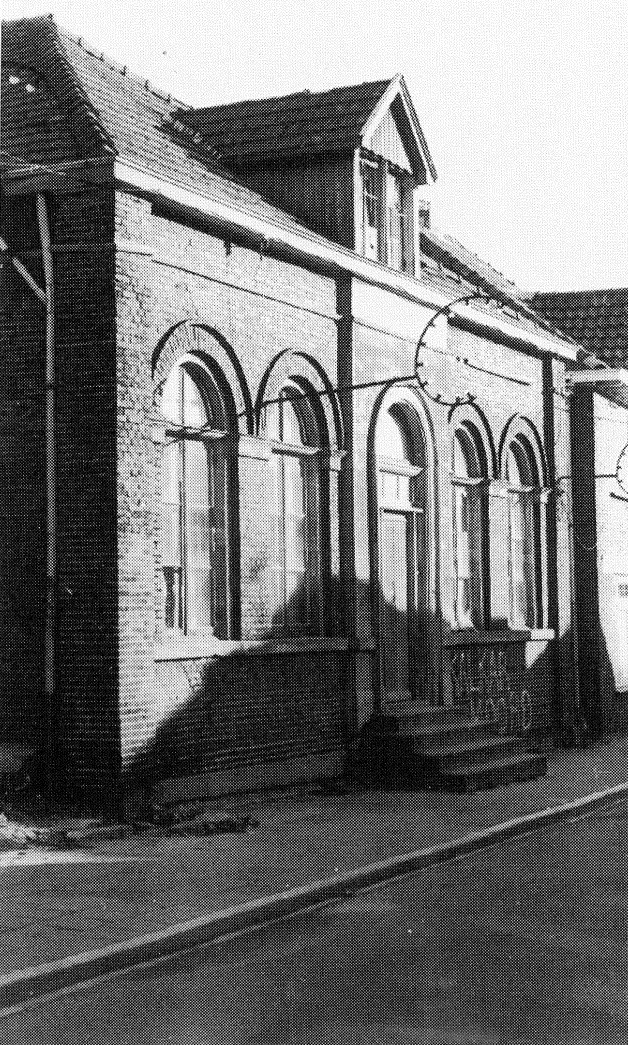
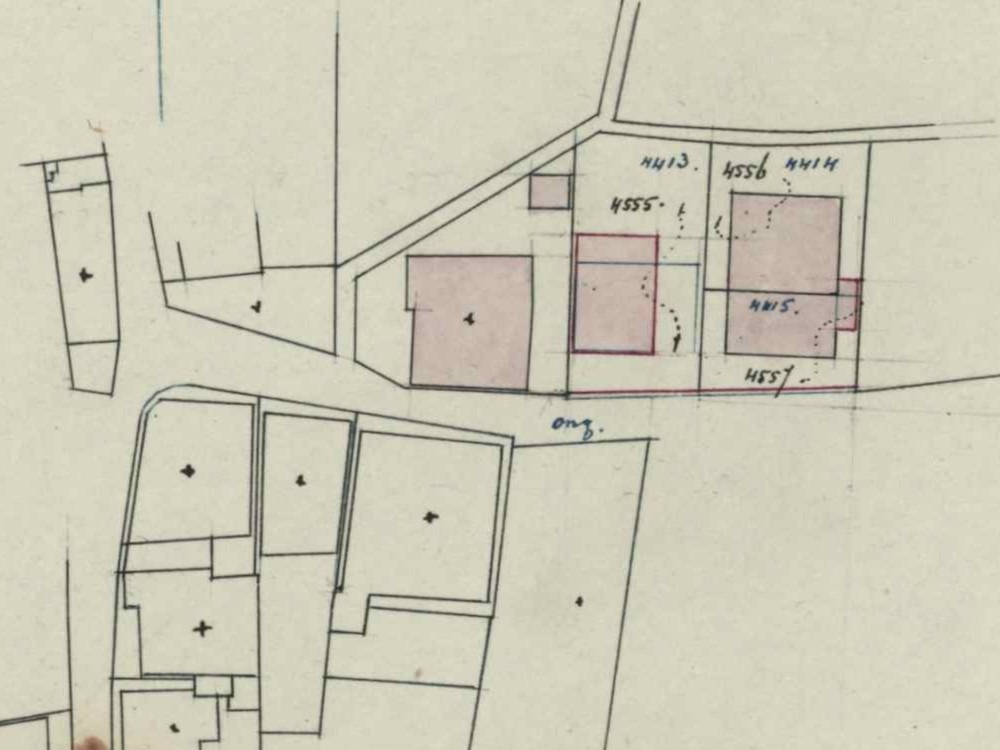
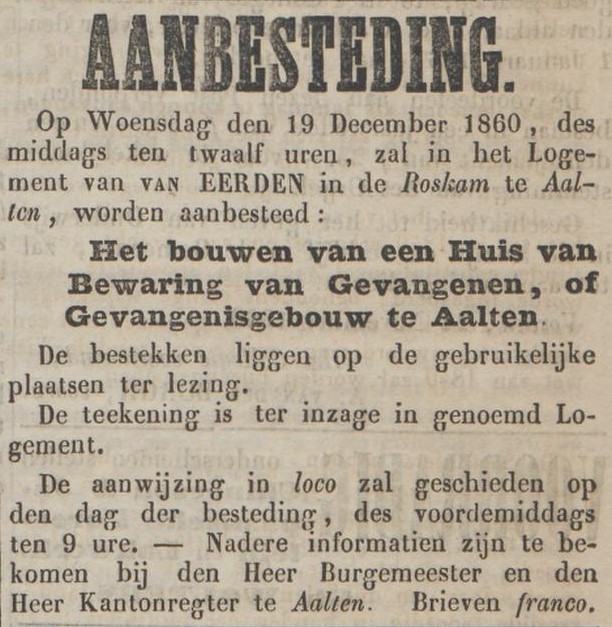
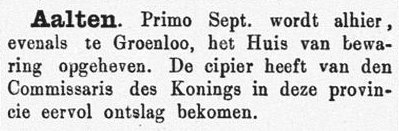
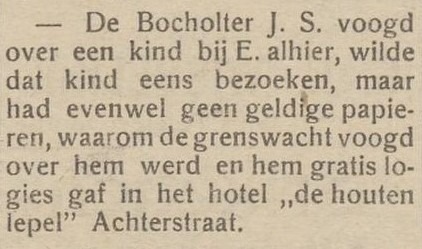
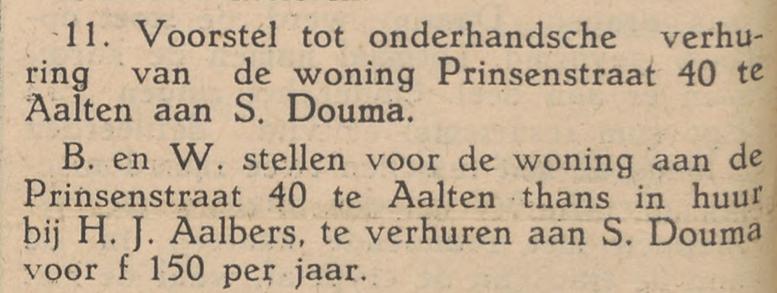
The former prison on Prinsenstraat in Aalten was built in 1861 in Neoclassical style as a cantonal house of detention, featuring six cells and a gaoler’s residence. In 1886, its cantonal status was revoked, but the building remained in use as a municipal prison until the Second World War. Today, the property is a private residence.
Een inventarislijst uit 1933 noemt nog ‘meubilair en overige goederen behorend tot de gevangenis in de Achterstraat’ (de oude naam van de Prinsenstraat). Vóór 1861 bevond het plaatselijke cachot zich aan de Landstraat.
In 1937, G.H. Rots described in a series of articles how things were handled in Aalten in earlier times. Regarding the old prison, he wrote:
“For cantonal court matters, one did not have to walk far. After all, the cantonal judge sat in our good village, and the cantonal court was held in the town hall. The prison in Aalten was also equipped for the detention of prisoners for longer than twenty-four hours. A gaoler was appointed for this purpose, and for many years Wessel te Brake held this post. To ensure the proper fulfillment of the feeding and care of the prisoners, he had to sign a contract and provide several sureties. As a matter of interest, we publish the transcript of this contract here:
Between the Board of Supervision of the house of detention in Aalten on the one hand, and Wessel te Brake, gaoler of the prisoners residing in Aalten, on the other, the following contract has been entered into today regarding the maintenance of the prisoners during the year 1862, at the price of fifty cents per prisoner per day.
Article One.
The Contractor undertakes to provide feeding and nursing for the prisoners in the aforementioned house, providing each of them daily with:
A. Four ounces of rye bread made of pure baked flour.
B. Three measures of warm drink consisting of one part fresh milk and four parts boiled water.
C. At midday, a nutritious midday meal at least in accordance with the dietary standards established for prisoners in general.
D. In the evening, two and a half ounces of well-baked rye bread as above and two and a half measures of warm drink, consisting of four parts boiled water and one part fresh milk with five wigtjes [units of weight] of coffee and the necessary chicory.
E. Further necessary drinking water.
Article Two.
The various food items must be of good quality and prepared as required, and shall always be subject to the approval of the Board of Supervision, by whose judgment the Contractor shall abide.
Article Three.
The Contractor shall also be required, in occurring cases, to provide sick prisoners with such food and drink as the medical practitioner shall prescribe, with the exception of medicines.
Article Four.
The Contractor shall be paid within two months after the submission of his three-monthly or annual declaration.
Article Five.
In the prescribed declaration and statements, he may charge for the day of arrival of the prisoners, but not for the day of departure. However, if the prisoners have already enjoyed the midday meal upon their arrival and stay only until the following day, so that only supper and breakfast are provided, or if they should depart again on the day of their arrival, so that only the midday meal is provided, only half a nursing day may be declared in such cases. For the maintenance of children temporarily confined with their parents, half the contract price may be charged for each full nursing day. Mention of this must be made in the Remarks column and the nominative statement.
Article Six.
The Contractor must always submit separate declarations and nominative statements for the maintenance costs of police prisoners, which are borne by the municipalities to which they belong. Should it be necessary in special cases to light or heat the prison, the Contractor must provide for this in such a manner as the Board of Supervision shall prescribe.
Article Seven.
The costs of stamps and registration of the contract, as well as the stamp duties of the mandates when these exceed ten guilders, shall be borne by the Contractor.
Article Eight.
Should any dispute arise concerning the correct understanding and execution of the foregoing provision, the same shall be judged and decided by the King’s Commissioner in the province, without appeal to any other authority.
After reading the above terms, the Contractor, Wessel te Brake, declares to have understood them all well, to follow them, and for the proper fulfillment of his commitment to provide as sureties Jan Wegchelaar, messenger, and Jan te Hoonte, constable, both residing in Aalten, who are also present here and declare that they are well aware of the obligations to be fulfilled by the Contractor, hold themselves jointly and severally liable with him for the execution thereof, and renounce all exceptions that might be raised by them as sureties. And the Contractor and his sureties have also signed this.
Done at Aalten, 10th Dec. 1861. 1861. The Board of Supervision of the house of detention in Aalten, (signed) F.W.J. IMMINK (President) (signed) L. ROELVINK, Secretary.
The Contractor and the sureties: (signed) W. TE BRAKE (signed) J. WEGCHELAAR (signed) J. TE HOONTE.
The document was registered in Groenlo. The costs for this were 20 cents plus 38 surtax, making 28 cents in total.”
Owners
Overview is incomplete.
Year
Plot
Owner
Description
1862
I-2633 I-2634
The Board of Supervision of the cantonal prison of Aalten
280 m² prison, yard 205 m² house, yard
1891
I-4414 I-4415
The Municipality of Aalten
269 m² house of detention & yard 185 m² house & yard
1893
I-4556 I-4557
The Municipality of Aalten
265 m² house of detention & yard 179 m² house & yard
1941
I-5611 I-4557
The Municipality of Aalten Antonius Johannes Veldhuis, merchant
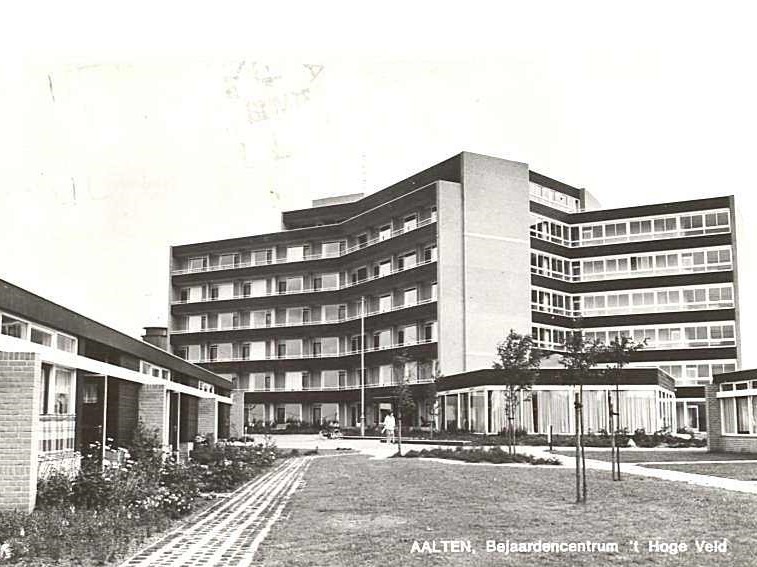
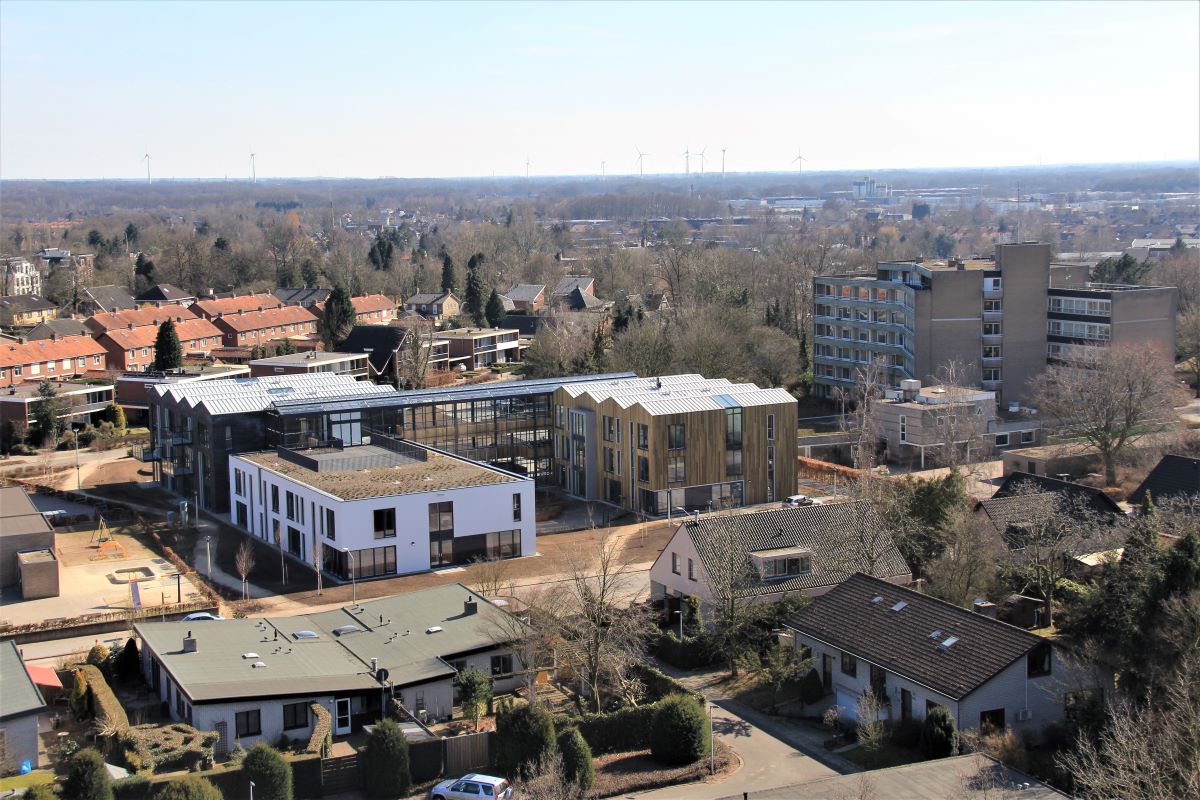
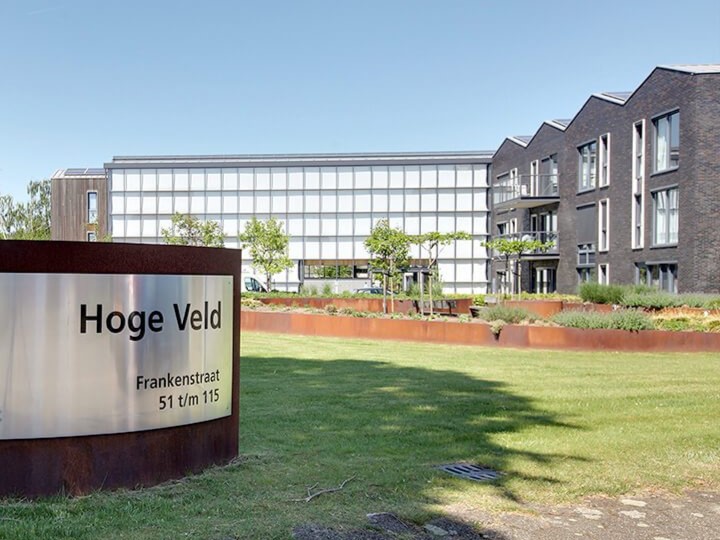
The ‘t Hoge Veld residential care center in Aalten opened in 1970 as the successor to the Avondvrede rest home on Hogestraat. The building accommodated dozens of elderly residents and was a recognizable nursing home in Aalten for decades. In 2018, the complex was demolished and replaced by new construction.
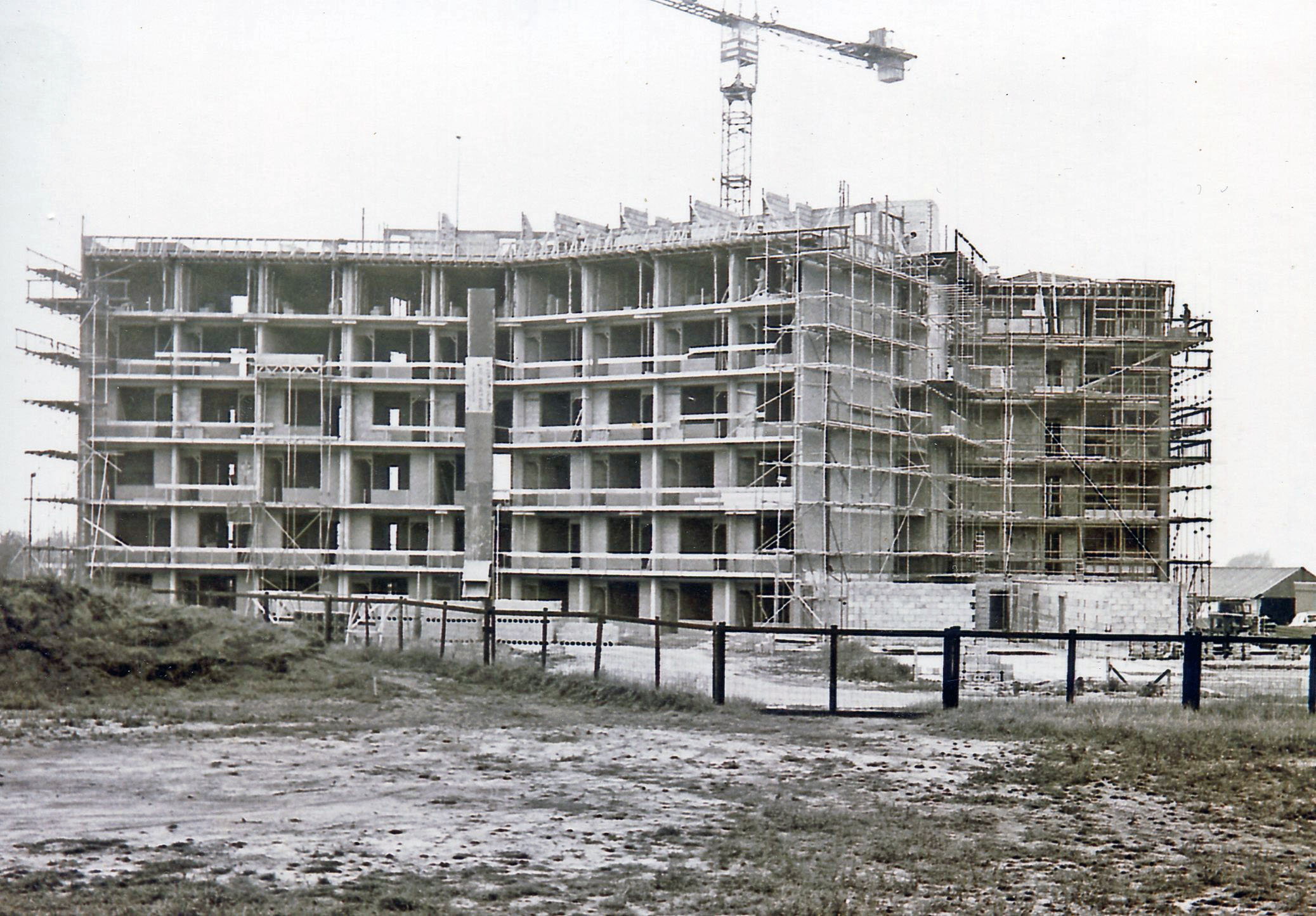
In 1967, the Reformed congregations of Aalten, Bredevoort, and Lichtenvoorde jointly established the Reformed Foundation for the Aalten Senior Center. This foundation was later renamed the ‘t Hoge Veld Senior Center Foundation. In 1970, the residents of the Avondvrede rest home on Hogestraat moved to the newly built ‘t Hoge Veld senior center in Aalten.
High-rise construction
The new building was a six-story structure. At the time, this was considered quite spectacular in Aalten, as there was hardly any high-rise construction in the village. The only tall buildings were the Landbouw silo and the water tower. From the top floor of ‘t Hoge Veld, one had a beautiful view over Aalten and the surrounding area.
During construction, some elderly residents remarked: “If they add a slide, we can go straight to the cemetery across the street after we die.” Later, the residents felt very positive about it. They enjoyed the view and the excellent care provided in this nursing home.
The main building contained 78 single rooms and 11 double rooms. Additionally, there were 12 sheltered housing units.
Demolition and new construction
In 2018, the apartment block and the sheltered housing units were demolished to make way for new (lower) residential care center buildings and luxury homes in a park-like setting.
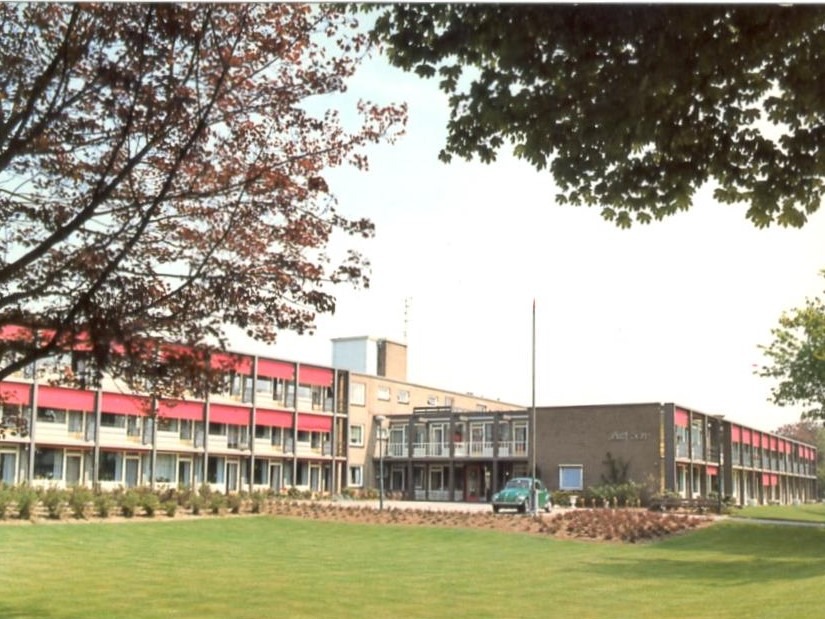
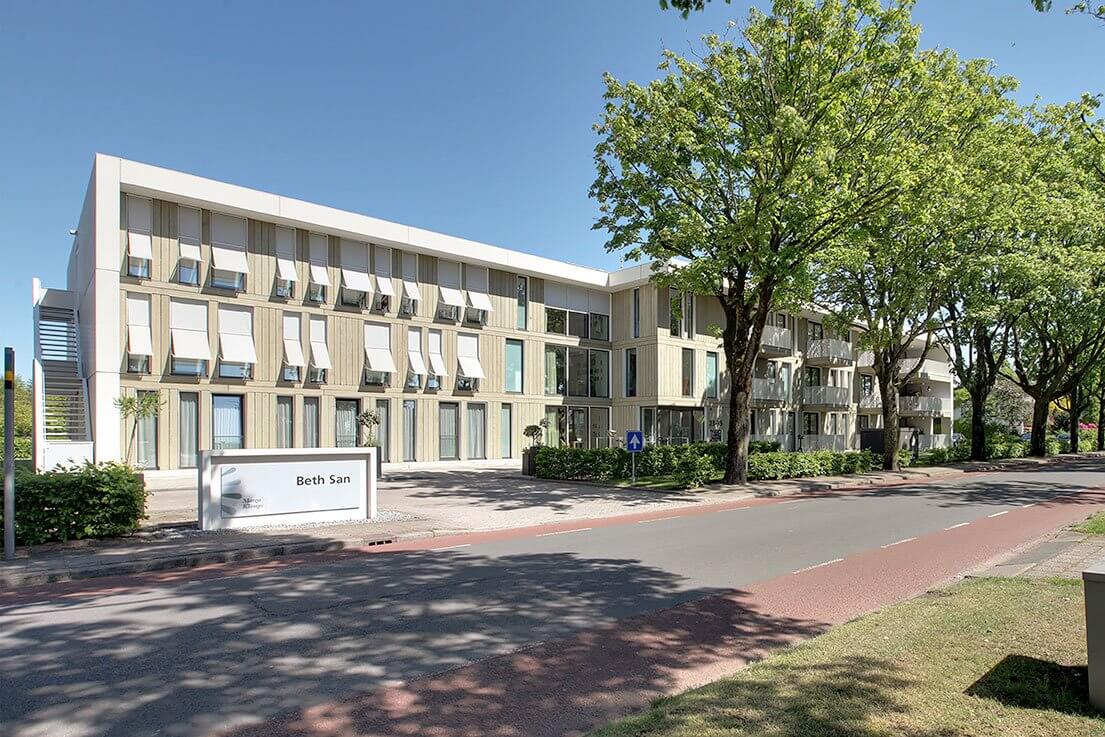
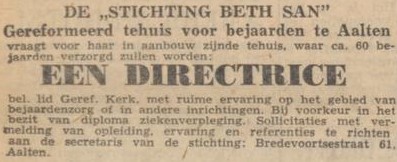
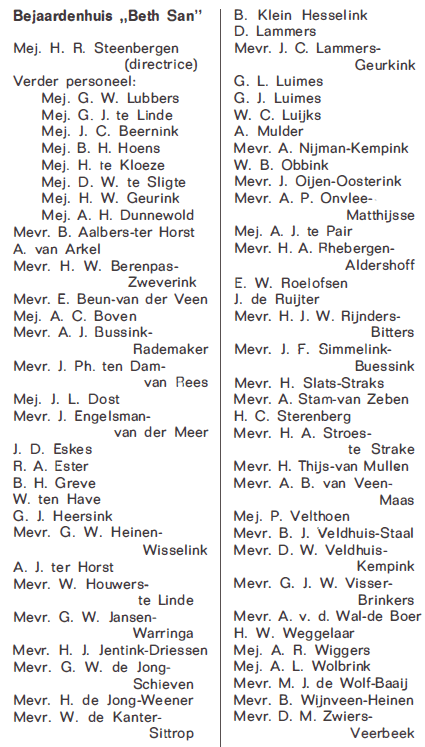
Beth San Residential Care Center on Ludgerstraat in Aalten was opened in 1960 as a ‘Reformed home for the elderly’. After fifty years, the complex no longer met the requirements of the time and the care center, along with the associated sheltered housing, was replaced by a new building. The opening of the new Beth San took place in 2013.
The initiative for Beth San came from the diaconate of the Reformed Church in Aalten. The name means ‘House of Rest’. In 1957, over 12,000 m² of land was purchased between Ludgerstraat and the section of Eligiusstraat that was yet to be constructed. The buildings were designed by architects Gjalt van der Zee (1901-1994) and Ir. Cornelis Veerling (1912-1997) from Bolsward.
The main building consisted of 63 single rooms, 4 double rooms, and 8 rooms for live-in staff. In addition, 12 sheltered housing units were built. The total investment amounted to over 1 million guilders.
At its opening in 1960, Beth San provided accommodation for more than seventy residents. The home was considered a modern facility for its time, featuring central heating and provisions for independent seniors in the sheltered housing units.
Renovation and New Construction
Five decades after its opening, the complex no longer met current standards. The complex was demolished and replaced by a new residential care center, which opened in 2013.
The new Beth San consists of two buildings with thirty apartments and five group homes for people with dementia. The group homes are small-scale in design and offer 24-hour care and support. Additionally, the center features a restaurant, an exercise garden, and spaces for activities and social gatherings, such as exercise classes for seniors (MBVO) and an internet café.
Next to Beth San, a residential building for independent seniors was erected, featuring thirteen apartments and an underground parking garage. This complex replaced the sheltered housing units that previously stood there.
The new Beth San in Aalten (2013)Trouw, April 8, 1960Residents of ‘Beth San’, 1967 Directory
Beheer toestemming
Deze website gebruikt cookies voor een optimale ervaring en analyse van bezoekgegevens. Ga je hiermee akkoord? Zonder toestemming werken sommige onderdelen van de site mogelijk minder goed.
Functioneel
Always active
De technische opslag of toegang is strikt noodzakelijk voor het legitieme doel het gebruik mogelijk te maken van een specifieke dienst waarom de abonnee of gebruiker uitdrukkelijk heeft gevraagd, of met als enig doel de uitvoering van de transmissie van een communicatie over een elektronisch communicatienetwerk.
Voorkeuren
De technische opslag of toegang is noodzakelijk voor het legitieme doel voorkeuren op te slaan die niet door de abonnee of gebruiker zijn aangevraagd.
Statistieken
De technische opslag of toegang die uitsluitend voor statistische doeleinden wordt gebruikt.De technische opslag of toegang die uitsluitend wordt gebruikt voor anonieme statistische doeleinden. Zonder dagvaarding, vrijwillige naleving door je Internet Service Provider, of aanvullende gegevens van een derde partij, kan informatie die alleen voor dit doel wordt opgeslagen of opgehaald gewoonlijk niet worden gebruikt om je te identificeren.
Marketing
De technische opslag of toegang is nodig om gebruikersprofielen op te stellen voor het verzenden van reclame, of om de gebruiker op een site of over verschillende sites te volgen voor soortgelijke marketingdoeleinden.