
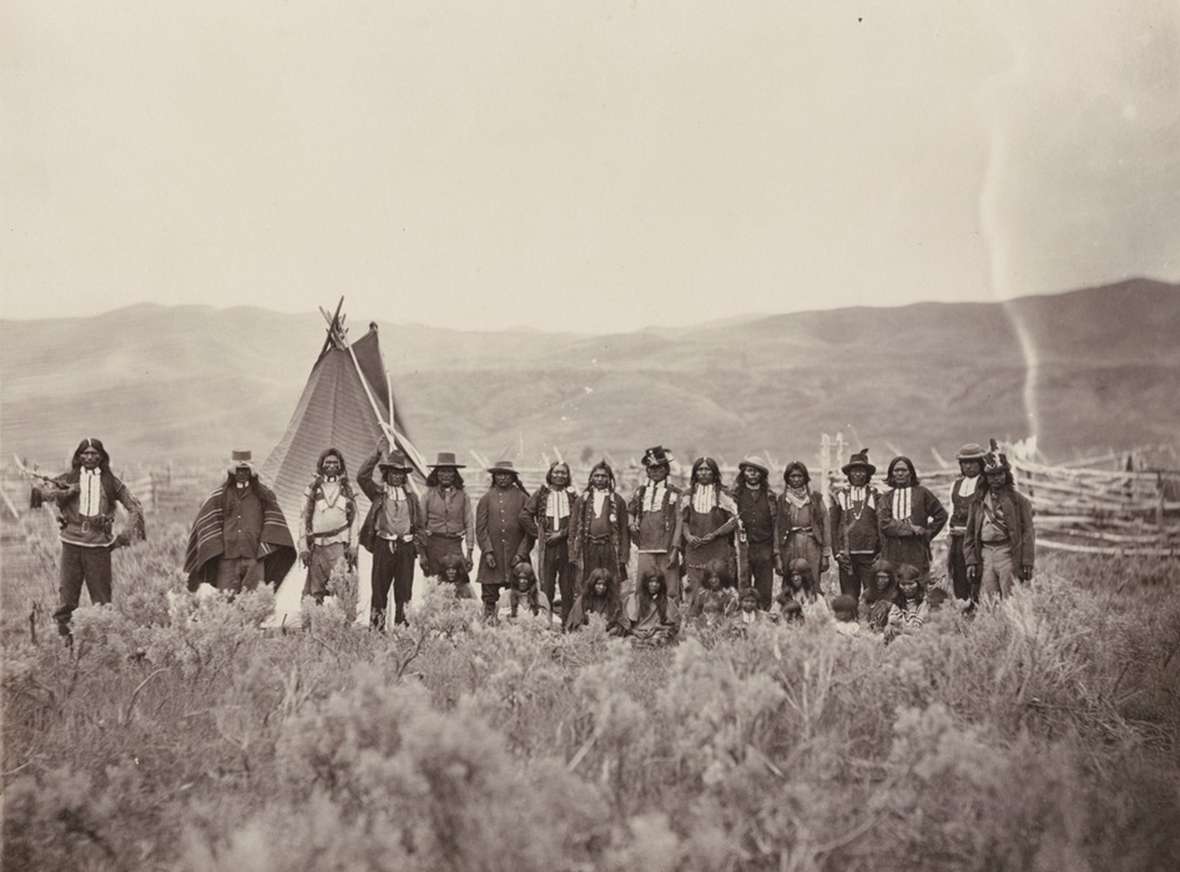
In the course of the 19th century , more than 1500 people from Aalten emigrated to the United States. Many of them settled in Sheboygan County in the state of Wisconsin. Some later moved further west, to states such as Iowa, Minnesota, Nebraska and Wyoming. These areas had been inhabited for centuries by indigenous peoples, then called “Indians”. This sometimes led to tensions, as is evident from a story of the Somsen family, whose ancestors came from Aalten.
Immigrants and indigenous inhabitants regularly lived close to each other and also traded. Indigenous inhabitants exchanged fur for blankets, tobacco or other goods. Sometimes there were also conflicts between the original and the new inhabitants, especially over land, cattle or other possessions. In that context, the following family story from the descendants of an emigrant family in Aalten takes place.
The disputed horse of Henry Somsen
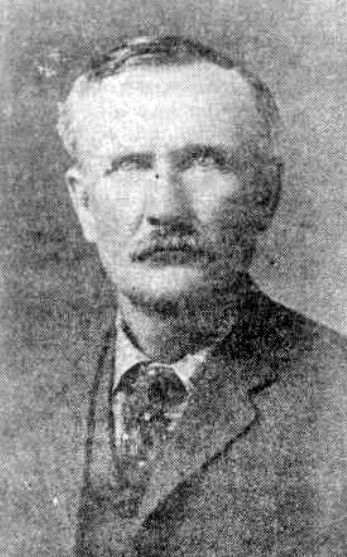
Hendrik Jan Somsen and Johanna Berendina Rensink, from the Japikshuis in IJzerlo, emigrated to America in 1851 with their four children and settled in Sheboygan. Their fifth child was born there in 1852: Henry John.
Around 1890, Henry lived with his family on a farm about ten miles north of Cokeville in the state of Wyoming. During that period, an incident took place with a group of indigenous inhabitants. His daughter Olive Somsen later described this in a biography of her father:
One day, Henry and his wife were away from home, while their three eldest children – Henry of twelve, Olive of ten and Frank of eight – had to look after the house.
A group of Indians stopped near the house. One of them came to the house and declared that a certain horse in the meadow belonged to him, and when they left he wanted to take the horse with him. The children knew that their father had bought the animal from a Native American trader a few days earlier, and they were determined not to let the horse be taken.
Frank, the youngest, climbed on the horse and rode it to the river, where he hid among the willow bushes. His little sister Olive hid in the cellar, while the eldest son, Henry, mounted another horse and rushed to Cokeville, where his parents were; about ten miles south.
The main group of Indians took the road to Cokeville, while two went along the river in search of Frank with the horse. They found him and, while holding bows and arrows at the ready, forced him to ride in front of them.
Eldest son Henry arrived in Cokeville after a quick drive and warned his father. Shortly afterwards they drove back to the farm with a number of armed men. On the way they met the group of Indians, with Frank on the horse in front.
They urged the Indians to stop and listened to their story. It is possible that the Indian, who had sold the horse to Somsen, had stolen it from the Indian who now claimed it. Anyway, they arrested the entire group and took them to Cokeville. The next day, their case went to court. He decided that Somsen would keep his horse and the Indian was assigned another horse.
Do you also know a story of an emigrant family from Aalten? Let us know!