In 1937, G.H. Rots described how life used to be in Aalten in a series of articles in the Aaltensche Courant. Regarding wolf hunting, he wrote:
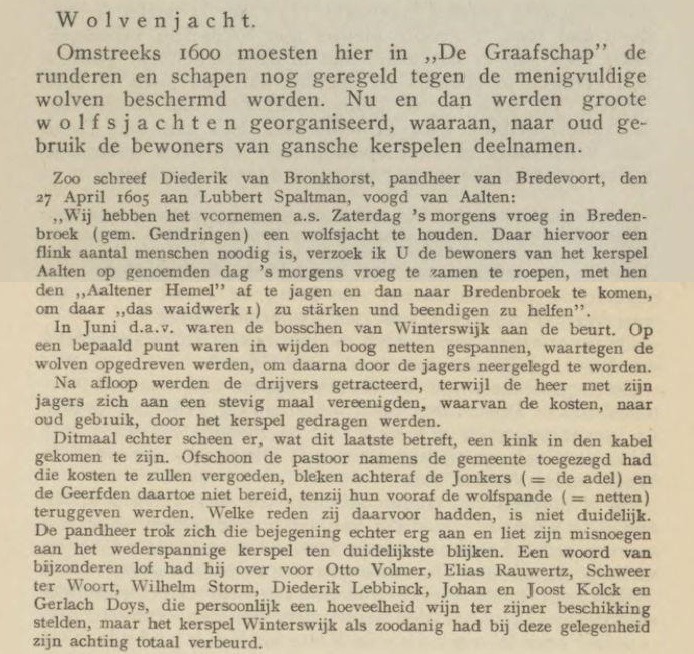
“Just as fox hunts are organised nowadays to exterminate the few long-tailed foxes that remain, this was once done to eradicate a larger and more harmful predator. In the years when the population suffered greatly at the hands of marauding soldiers, the wolf was still a feared predator in these parts.
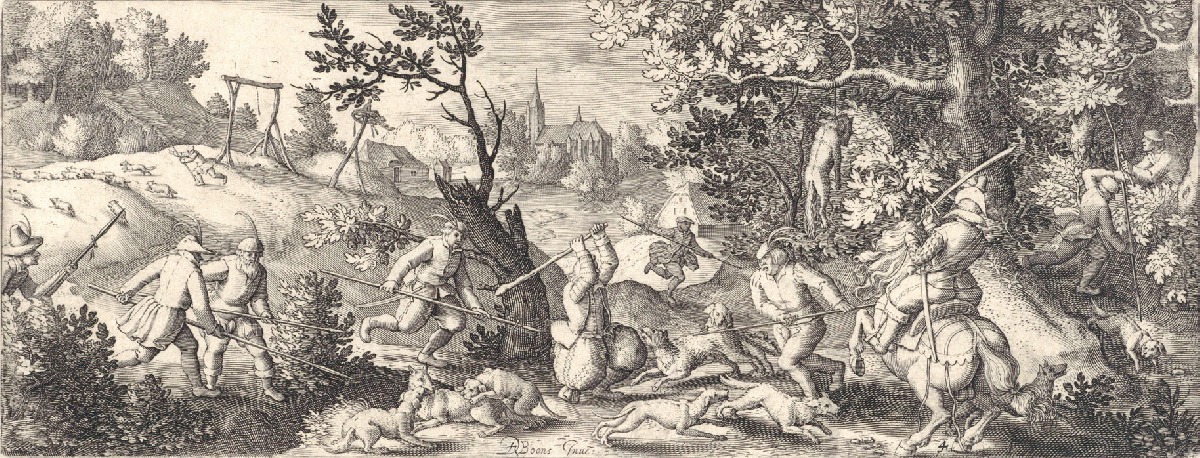
Imagine the situation in those days. Extensive forests, and in the lowlands, the farmsteads. Livestock grazed in the meadows, surrounded by woodland. The coppice also grew luxuriantly around the essen (es-lands). An eldorado for wildlife, therefore. The wolf went hunting, and the farmers’ dwindling livestock was also plagued by its natural enemy. Large drives were then organised.
Large nets were stretched out somewhere, and the game was driven into them, while the hunters lay in wait to bring down the prey with their guns, equipped with ‘pan and stone’ (flintlock mechanism). However, the wolves likely disappeared more due to advancing deforestation than through the hunts. Especially when the torch of war ceased to burn and the farming population settled everywhere, the wolves’ reign came to an end.”
June 1923
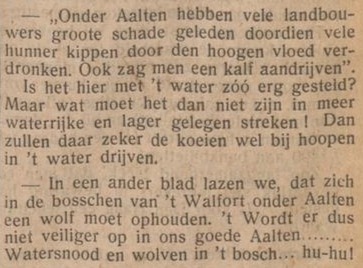
About a century ago, there were reports of a wolf present in the woods of ’t Walfort.
December 1847
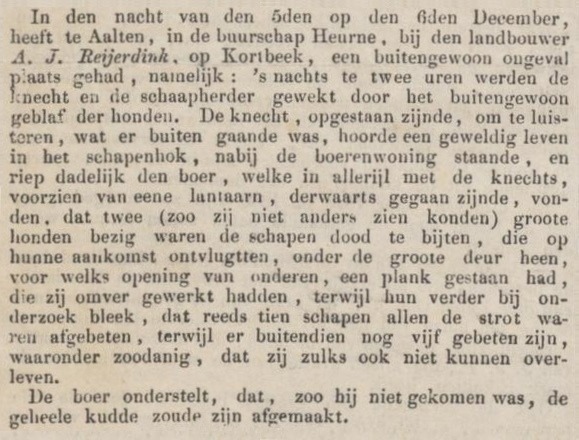
During the night of 5 to 6 December, two ‘large dogs’ wreaked havoc in the sheep pen at Kortbeek farm in Heurne, Aalten.