
Aalten is de enige plaats in Nederland waar een hoornindustrie was gevestigd. Men maakte hier producten van buffelhoorn, zoals pijpen, kammen, knopen, seinfluitjes, naaldenkokers en messenheften. Buffels werden niet gedood of speciaal gefokt voor het hoorn.Vrijwel al het materiaal werd gebruikt en wat overbleef ging over de akkers. Met de intrede van kunststof en massaproductie na de Tweede Wereldoorlog verdween deze industrie.
Horn turners
Family ties had a strong influence on the emergence of the horn industry. From 1855, five horn turners began in Aalten: Bernard Vaags, Gerrit Peters, Abraham ten Dam, Willem te Gussinklo, and Wessel Becking.
Bernard Vaags ging op Wanderschaft naar Duitsland en kwam in Ruhla (Thüringen) in de leer bij een hoorndraaier. Toen hij in Aalten was teruggekeerd kocht hij een eenvoudige voetdraaibank en begon de allereerste hoorndraaierij. In een opkamertje in de schoenmakerij van zijn ouders ‘in den Dijk aan de beek te Aalten’ (Dijkstraat 9) maakte hij onderdelen voor Duitse pijpen van buffelhoorn. In 1860 trouwde Vaags met Dora Willemina Prins. Zij werd ook hoorndraaier en werd Piepen Deurken genoemd. Zij gingen wonen naast Bernards oudershuis (Dijkstraat 7).
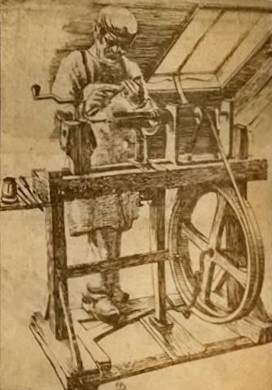
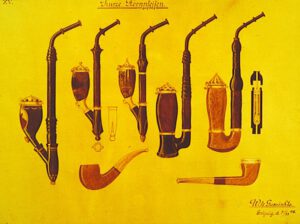
German pipes
Gerrit Peters, zoon van een leerlooier, ging na Bernard Vaags ook in de leer in Thüringen. Hij werkte vanaf 1863 aan de Hogestraat. In 1866 trouwde Gerrit met de welgestelde Josina Aleida te Gussinklo en trok bij haar in. Het pand besloeg de hele lengte van de Köstersbulte, van het woongedeelte aan de Markt tot aan de Landstraat, waar hij zijn hoornwerkplaats vestigde. Hij maakte lange pijpenstelen en onderdelen voor de Duitse pijp. In Duitsland werden porseleinen pijpenkoppen aan de stelen bevestigd en de pijpen verhandeld.
Combs
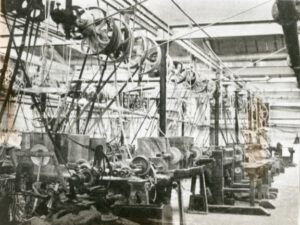
Na het overlijden van Vaags in 1868, pakte zijn opvolger Abraham ten Dam de zaken grondig aan. Het huisindustrietje werd een echte fabriek, aan de Stegge. In 1871 stichtte hij samen met zijn zwager Bernard Manschot kammenfabriek Ten Dam & Manschot aan de Damstraat.
It was the first and only factory in the Netherlands to make combs: white, black, and naturally coloured decorative combs, Mexican combs, nit combs, and moustache combs. These were made from buffalo horn, imported from countries including Brazil, India, and Thailand (then known as Siam). The manufacturing process generated even more dust and stench than pipe making.
A revolutionary development in the production process was the switch to steam power, replacing traditional hand and foot power. In local parlance, it became known as ‘d’n Kamstoom’ (the Comb Steam). By 1920, the comb factory employed about 200 people, including women and children.
Handles and knife hilts
Willem te Gussinklo en Wessel Becking leerden de kneepjes van het vak bij Gerrit Peters. Zij werkten korte tijd samen, maar gingen in 1884 apart verder. Na de mislukte samenwerking ging Wessel Becking in 1880 verder met Bernardus Gerhardus Vaags, neef en naamgenoot van Bernard Vaags. Becking & Vaags maakte pijpenstelen en later ook messenheften. Toen de verkoop van de Duitse pijpen terugliep, produceerde de fabriek korte bruyèrepijpen. De pijpenfabriek in de Hoekstraat staat er nog steeds!
Johannes Peters verliet de werkplaats van zijn vader aan de Köstersbult en sloot in 1896 een vennootschap met Marcus Gans, een Joodse koopman. Gans financierde de firma genaamd PEGA (Peters & Gans). De pijpenfabriek stond naast Peters’ woning aan de toenmalige Gasthuisstraat (nu Haartsestraat). Naast Duitse pijpen voor Duitse reservisten werden wandelstokken met hoornen handvaten vervaardigd. Nadat de fabriek in 1917 totaal uitbrandde, vestigde Johannes Peters zijn pijpenfabriek aan de Admiraal de Ruyterstraat. In plaats van Duitse pijpen werden er vooral bruyèrepijpen gemaakt.
Buttons
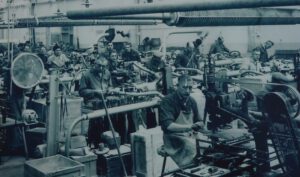
Na de mislukte samenwerking met Wessel Becking maakte Willem te Gussinklo Duitse pijpen en handvatten voor wandelstokken en paraplu’s. In Duitsland en Engeland waren rond 1900 bedrijven ontstaan die uit hoorn knopen produceerden. Met dat voorbeeld voor ogen begon Willem in het jaar 1905 met het maken van hoornen knopen, een primeur voor Nederland. Al snel kwam zoon Willem te Gussinklo jr. (Piepkes Willem) in de firma, die zich ontwikkelde als innovatief ondernemer.
De eerste fabriek van Te Gussinklo stond aan ‘t Dal in Aalten, de tegenwoordige Willemstraat. Vanwege de toenemende vraag naar knopen verhuisde het bedrijf in 1924 naar de oude weverij van Van Eijck in Bredevoort. Daar ging de productie van knopen van start. Het internationale bedrijf N.V. Dutch Button Works (DBW) exporteerde naar Engeland, Ierland en Amerika en was ook de grootste (hoorn)onderneming in Aalten.
After World War II, the production of horn buttons declined. In 1976, this last branch of horn processing was forced to close down. This marked the definitive end of 120 years of the horn industry in Aalten.
Video
It rained pipe stems
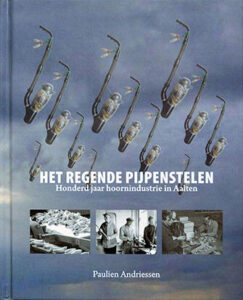
Paulien Andriessen, a great-granddaughter of Gerrit Peters, became curious about her great-grandfather’s craft. He was the second horn turner in Aalten. Where had he learned the trade, and to whom did he sell those pipe stems? How did the Aalten horn turners and their successors fare?
“When I passed my final exams, my uncle gave me a pipe as a gift. My mother and my sisters smoked pipes, so I didn’t find it strange at all. It was a ladies’ pipe with a slender stem, a small white porcelain bowl, and a horn mouthpiece. I had to smoke it a few times, my uncle explained, and then a beautiful picture would appear on the pipe bowl. So, I started smoking quite heavily, as I was curious about that picture. It took a few pipes, but to my delight, my smoking habit was rewarded. A picture appeared. It was a little bird, a dove.”
In 2011, a book she authored was published by Fagus Publishers, titled ‘Het regende pijpenstelen, Honderd jaar hoornindustrie in Aalten’ (It Rained Pipe Stems: One Hundred Years of the Horn Industry in Aalten) (ISBN: 9789078202806)
Sources
- Aaltense Musea
- Aaltensche Courant, 24 December 1937 (Delpher)
- Graafschapbode, 29 May 1931 (Delpher)
- Euregionetwerk Industriecultuur