
Dagblad Tubantia, 18 January 1966
It is truly no wonder that the explanatory memorandum accompanying the 1966 budget for the municipality of Aalten begins with the words: We are pleased to inform you… For not only is the budget for ordinary services balanced at an amount of nearly nine million guilders (including f 26,600 for unforeseen expenditures), there is also limited room for the execution of capital works. And that is a sound that not all municipalities can produce.
Voor die kapitaalswerken denkt men er, afgezien van zuiveringsinstallatie en riolering, in de eerste plaats aan de restauratie van de straten in de oude kern opnieuw ter hand te nemen, waarbij met name aan de Prinsenstraat voorrang zal worden verleend.
That is not to say that everything is coming up roses. Due to a shortage of land ready for construction, there is a threat of stagnation in housing development, while it is expected that the upcoming expansion of the treatment plant will place a heavy burden on the population, who will then likely see the sewage charges to be paid approximately doubled.
Expansive and Pluriform
The fact that the budget is balanced is partly due to a more adjusted allowance from the municipal fund regarding the social care component starting in 1966, as a result of which the general allowance from this fund, in addition to the general increase by raising the allowance percentage, could be estimated at around f 160,000 higher.
An amount of f 60,000 is available for interest and depreciation on new capital expenditures for 1966. This amount is too small to enable a smooth completion of many necessary works, while furthermore the “lending ceiling” established by the government acts as a hindrance. To this end, a multi-year plan was drawn up, in which the streets and roads requiring improvement in the coming years were included.
Regarding the acute shortage of building land, the Mayor and Aldermen state that preparations for making land ready for construction have already been made in various places, but that execution must still wait because agreement had not yet been reached with the owners regarding several plots. The acquisition of land through amicable means, according to the memorandum, is clearly becoming a problem in more and more municipalities, forming a serious stumbling block in the attempt to fully realize an “expansive and pluriform construction policy.”
One Each Year
De nota spreekt verder van de sporadische afgifte van urgentieverklaringen voor de bouw van nieuwe scholen. B. en w. zouden zich al gelukkig prijzen als in een reeks van jaren elk jaar één nieuwe school gebouwd zou kunnen worden. Wel spreken zij hun voldoening er over uit, dat door het gereedkomen van de gymnastiekzaal bij de ulo-school en door de reeds intensief benutte zaal van de lagere landbouwschool binnenkort, wanneer ook de gemeentelijke gymnastiekzaal aan de Dalweg voltooid zal zijn, geen gebruik meer behoeft te worden gemaakt van andere voor dit doel niet geschikte lokaliteiten.
Satisfaction is further expressed regarding the administrative contact established between Winterswijk, Lichtenvoorde, Groenlo, Eibergen, Neede, and Aalten. Although there is only mention of contact and no formal body was created, this cooperation is also of value within the framework of broader regional bodies.
In Detail
To remain in style, after these more “general considerations” regarding the budget, we would like to proceed to the discussion of specific parts, without, as they say, being exhaustive.
Slachthuis: Verwacht wordt, dat dit na de ingrijpende verbouwing door het intensieve gebruik voor exportslachtingen zichzelf zal kunnen bedruipen.
Drinking Water Supply: Around April 1966, approximately 125 properties of the Heurne-IJzerlo plan will be connected to the water supply network. On the work program of the water company, 150 properties are estimated for Aalten in 1966.
Public Housing: Despite the fact that an average of 100 homes per year have been completed in recent years, the housing shortage is not being reduced. The construction of so-called Bogaers houses outside the quota is also hindered by the shortage of land ready for construction.
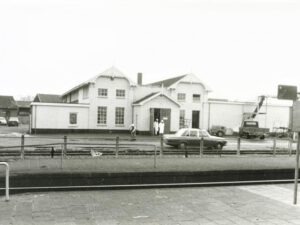
Ringweg: Bestek voor de verbetering is gereed. Mogelijk kunnen de voorbereidende werkzaamheden, zoals het rooien van de bomen nog dit jaar plaats vinden. De weg zal over de volle breedte met inbegrip van het bestaande rijwielpad worden voorzien van een laag asfalt.
Kemena Expansion Plan: Waiting for necessary land purchases. For this, however, the approval of the partial expansion plan must first be awaited.
Paving of Dirt Roads: In 1935, 68.90 kilometers were paved, bringing the total of paved dirt roads from 49.430 km to 56.32 km. The paving of the Boshoeveweg and parts of the Kriegerdijk and Bodendijk is in preparation.
Education
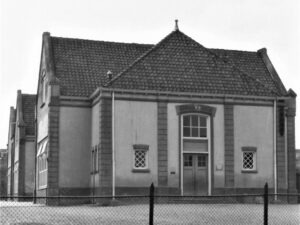
O.L. school Aalten: Mogelijkheden om bestaande oude scholen te vervangen door nieuwe zijn zo gering, dat van vervanging van de school voorlopig geen sprake kan zijn.
R.K. school Aalten: Het oorspronkelijke plan tot de bouw van een 8-klassige school is gewijzigd in de bouw van twee 6-klassige scholen. Definitieve aanvragen werden nog niet ingezonden.
Groen van Prinsterschool: Urgentieverklaring. voor bouw van drie lokalen is verkregen. Mogelijkheid om door industriële bouwmethodes te komen tot een zesklassige school wordt onderzocht.
Allowance per Pupil: This will be significantly increased for 1966, namely for the private G.L.O. f 70.- (f 64) per pupil, for the private ULO f 125.- (f 102), and for the private special L.O. f 135 (f 125) per pupil. The amounts stated in parentheses are those for 1965.
Recreation VVV
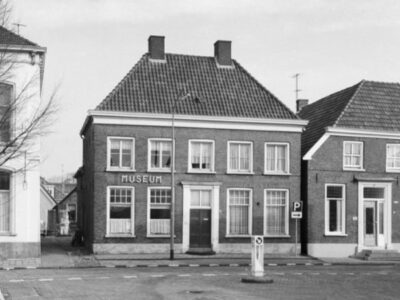
Ideaal is een nieuw kantoor VVV in oude pand aan de Markt, waar nu reeds de Oudheidkamer gevestigd is. De verzameling zou dan nog beter tot zijn recht komen; misschien binnen afzienbare tijd te verwezenlijken door vertrek huidige bewoner.
De stichting van een motel bij het kruispunt van de Bredevoortseweg met de nieuwe Hamalandroute zou op prijs worden gesteld. Hierdoor zou tussen Aalten en Bredevoort een aantrekkelijk recreatiecentrum ontstaan met in de onmiddellijke nabijheid het zwembad, het gemeentelijk landgoed „‘t Walfort”, het zomerhuisjesgebied en de gemeentelijke camping.
Industry: Did not develop to the same extent in 1965 as in previous years. The number of male employees has hardly increased, which may partly be a result of the commute to Germany, which currently amounts to 70 men and 40 women from the municipality.