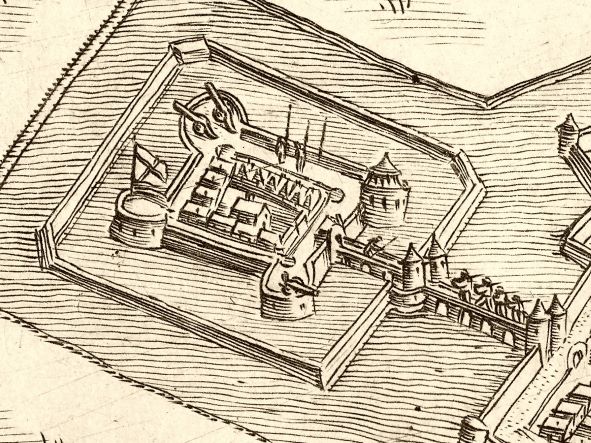
The Old Judicial Archive (ORA) of the Manor of Bredevoort comprises the archives of local law and administration, roughly covering the 16th to the early 19th century (until the introduction of the French administrative system around 1811). It serves as the primary source of information regarding legal acts, property matters, and local jurisdiction in this region.
The Manor of Bredevoort included the town of Bredevoort and the villages of Aalten, Dinxperlo, and Winterswijk. The bailiff or judge held court alternately in Bredevoort, Aalten, and Winterswijk, assisted by local assessors (jurymen). Legal matters concerning Dinxperlo were handled in Aalten.
The ORA contains the registers of the judicial archive of the Manor, including:
Voluntary protocols (voluntary jurisdiction) Deeds that citizens had registered voluntarily: transfers of real estate, mortgages/bonds, estate inventories and divisions, prenuptial agreements, wills, powers of attorney, and guardianship/curatorship records.
Civil litigation files Contentious (civil) cases between parties, including summonses, statements, evidence, and judgments.
Fiscal litigation files Cases concerning excise duties/imposts and enforcement (including smuggling and collection), containing documents from the fiscal prosecutor and related interrogations and decisions.
Trial and criminal files Other contentious and criminal cases; these provide insight into the functioning and practice of the court.
Repertories (reference registers) Contemporary indexes of names and subjects with references to folios and deeds in the main series (including Winterswijk on the reverse side in one volume).
Guardianship & Curatorship Registrations of guardianship and curatorship (appointments, authorizations, accounts, and receipts).
Breukenprotocol (fines register) Violations of local ordinances and rules with the imposed fines (“breuken”).
On the night of October 28, 1799, the lifeless body of 47-year-old Gesina te Winkel was found on the heath, near the border between the Aalten rural district of Haart and the German town of Barlo. She lay only a few minutes from her home and had multiple stab wounds. What had happened to her?
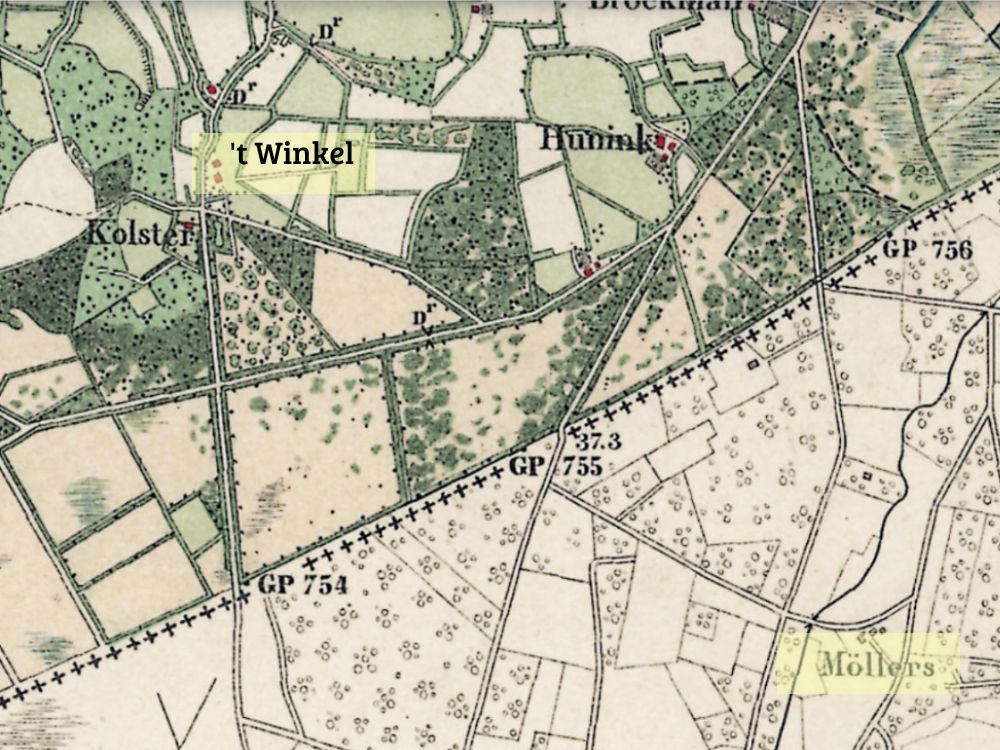
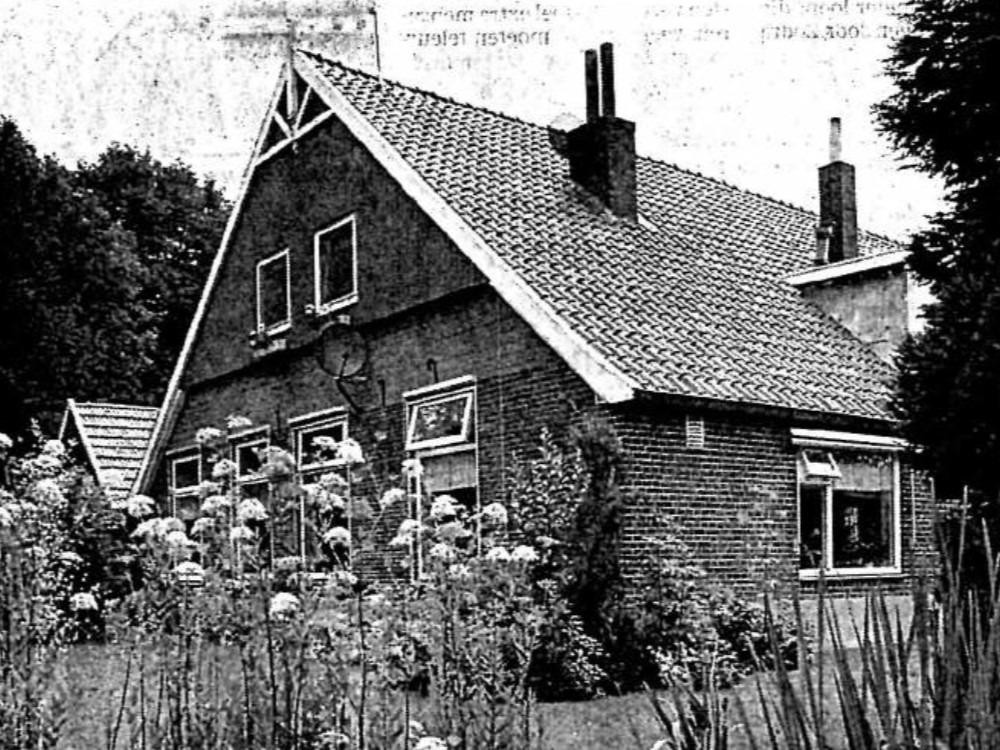
Gesina te Winkel was baptized in Aalten on April 30, 1752, as the daughter of Barent te Winkel and Enneken Dierkink.1 On April 20, 1777, she married Adolphus (Alof) Lensing2, who was later also called te Winkel. The couple lived at Gesina’s parental home, the ‘t Winkel farm in the Haart, only 800 meters away from the border with the then Bishopric of Münster, which is now part of the German state of North Rhine-Westphalia.
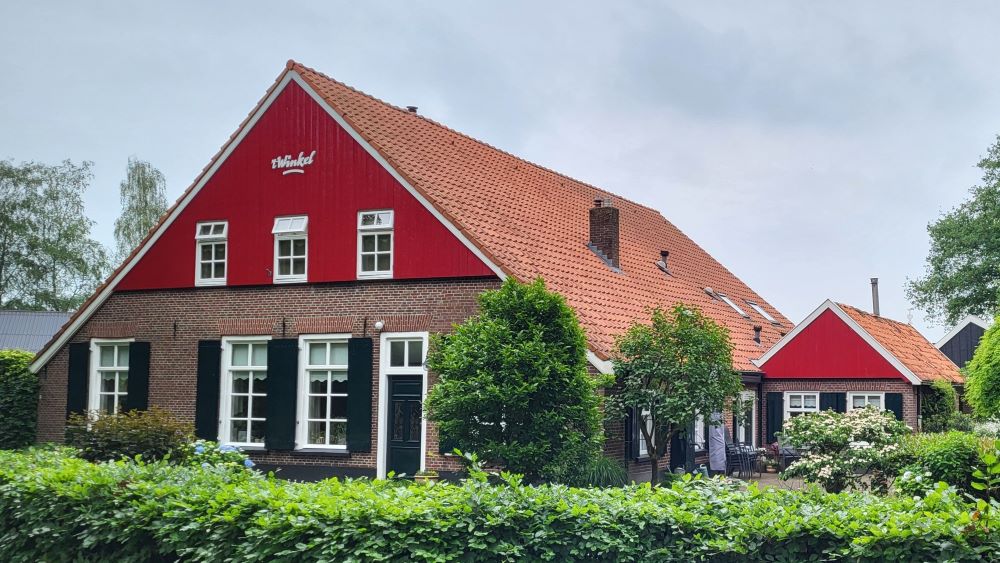
‘t Winkel farm in the Haart, photo: H. Schutte, 2024
The disappearance
On Sunday, October 27, 1799, around four o’clock in the afternoon, Gesina left home alone with a sandwich in her hand. She was on her way to the Möllers family to pick up some items of clothing. The Möllers lived just across the border in the Münsterland, about a fifteen-minute walk from ‘t Winkel.
When it began to get dark and Gesina had not yet returned, her husband Alof and their children began to worry. Where was she? Alof decided to go to the Möllers family’s house. He found three women there by the fire, who told him they had not seen Gesina that day.
Returning home, Alof wondered if his wife had encountered someone on the way or perhaps visited a neighbor. Upon arriving home, it turned out she was still not back. He then went out to search again, this time on the heath. When he could not find her there, he went to the Möllers’ house once more. The residents were already in bed, and when Alof knocked and asked about his wife again, the man and woman called out to him from bed that they had heard nothing of Gesina and that she had not been there that day.
Alof involved his nearest neighbor Hendrik te Kolste and the servant of his brother at Drenthel Schoppe, Harmen Swietink, in the search. Together they went out onto the heath once more to look for Gesina.
The discovery
By then it was pitch dark on the heath and they could see very little. Around midnight, one of them suddenly discovered something white. It turned out to be Gesina’s cap, with her lifeless body beside it. She was lying on her side; her feet were still warm, but the rest of her body was cold. She was found only five to ten minutes from her home. Alof had a cart brought and took her body home on it. He thought she had probably become unwell on the way and died as a result.
The judicial investigation
The following morning, Monday, October 28, Garrit Rensink, residing at the Beestmans Huisje farm in the Haart, reported to the court of the Seigniory of Bredevoort that the wife of his neighbor Alof te Winkel had been found dead on the heath the previous night.
Thereupon the court, accompanied by surgeon Steven Schaars, proceeded to ‘t Winkel. Upon examination of the body, it was determined that the woman had multiple stab wounds – three on her left side and two on her right side, presumably inflicted with a bayonet or a triangular object.
Apparently, they were not yet entirely convinced of the cause of death, because two days later the court went to ‘t Winkel again with Schaars for further investigation. During this, the deceased, who had already been placed in a coffin, was removed from the coffin and examined, whereby Schaars determined that the lower ribs on the right side were broken and that the wounds inflicted upon her had caused her death.
During interrogation, Alof, Hendrik, and Harmen stated that they initially thought they had found Gesina’s body on Dutch territory, but also that they had not been able to determine this properly due to the darkness. Upon further recollection, however, they were almost certain it must have been on Münster territory.
Hendrik and Harmen further stated that, as far as they knew, Alof te Winkel and his wife had a good relationship and that there was no question of disagreement or quarreling. They also stated that Gesina never quarreled with anyone, and that she “despite her years, looked very well.”
Arnoldus Obrink, a cooper in the Hoekstraat in Aalten, stated that he had seen Gesina around four o’clock that Sunday afternoon. He was walking on the road from Hunink to Aalten and Gesina was taking the road to the Münsterland, about 300 paces from her house. He had even spoken briefly with her while she was eating a sandwich. Furthermore, he had seen no one else in the vicinity.
An unconfirmed rumor
A rumor soon spread that Gesina had indeed been at the Möllers’ house that Sunday. According to the stories, a 13-year-old son of the family had been playing carelessly with a loaded gun, after which it accidentally went off and hit Gesina. It was even claimed that traces of the shot could still be seen in the chimney or near the hearth. However, there was no evidence for this rumor.
File to Bocholt
Because there was a strong suspicion that Gesina’s violent death had occurred on Münster territory, the drost of Bredevoort, Willem Paschen, sent a copy of the file to the court of Bocholt so that they could investigate this case further.4 Unfortunately, it is not known to us how this case ended. The tragic murder of Gesina te Winkel remains a mystery.
Funeral
In the Burial Register of the Dutch Reformed Congregation in Aalten, it is noted under October 1799: “deceased the 28th – Alof te Winkel his wife – buried the 31st”5
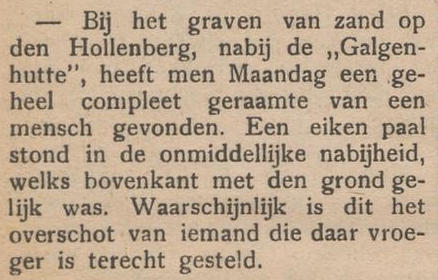
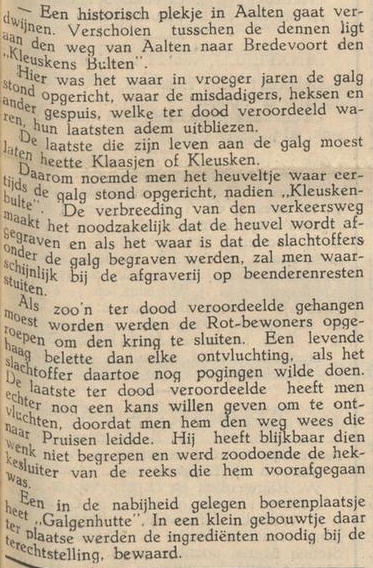
The Galgenbulte (Gallows Hill) on the Hollenberg, also known as Klaeskesbulte, was formerly the site where the gallows were erected. This was where condemned criminals, witches, and other scum drew their final breath.
The execution site was strategically located along the road from Aalten to Bredevoort. The hill was excavated in 1939 to widen the main road.
Approximate location
Vehmic Court
During the medieval period, a veemgericht (Vehmic court) was established on the Hollenberg, near the ’t Walfort manor. This was a special court whose sessions were held in the open air near a thicket known as ‘Sleehegge’. Four times a year, justice was administered here at sunrise. A nearby small farmstead is called Galgenhutte. It is said that the equipment for the executions was stored there in a small building. According to local lore, those sentenced to death were permitted to eat their final meal there.
In 1430, Free Count Berend de Dücker, then the mayor of Bocholt, presided over the court here. He led the Vehmic court for 60 years. This Berend was notorious for his severe sentencing, frequently condemning individuals to hanging. The condemned person was hanged with a noose made of willow withes by three anonymous veemschepenen (Vehmic jurors).
A well-known threat used by parents for disobedient children, which persisted until the 20th century, was: ‘De Düker zal ow halen‘ (The Dücker will get you).
Records from the ‘Administrative Organisation of the Lordship of Bredevoort’ indicate that the residents of Kempink and Goorhuis in Heurne were responsible for transporting the convicted criminal to the Hollenberg after the sentence had been read at ’t Zand in Bredevoort. By order of the officer, they were also required, without exception, to transport the gallows, wheel, cross, and other instruments of execution to the site.
By the end of the sixteenth century, the Vehmic court at ’t Walfort had disappeared. It is the only location in the Netherlands where the existence of a Vehmic court has been proven.
Klaas Nijman
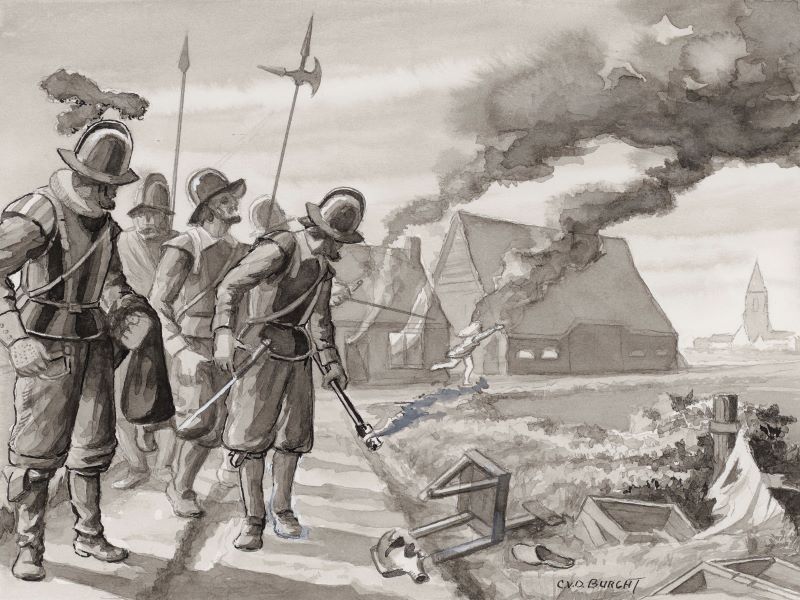
On 3 October 1729, following a trial in Bredevoort and sentencing at ’t Zand, Klaas Nijman—32 years old and born in the district of Bocholt—was executed on the Hollenberg. He was a ‘beggar and vagabond’ accused of violent theft, arson, and other offences. Although he had been banished from various places, he continually returned. As a deterrent to others, he was strangled on the Hollenberg and subsequently set on fire.
On 12 February 1770, Harmen Brunsink was executed on the Hollenberg. He lived at the Vosheurne farm in Lintelo and had murdered ‘Aunt’ Hendersken Tannemaat. Harmen did not get along with this live-in aunt of his wife. He claimed to alerted neighbours that she had fallen, but the number and nature of the injuries made his story unbelievable.
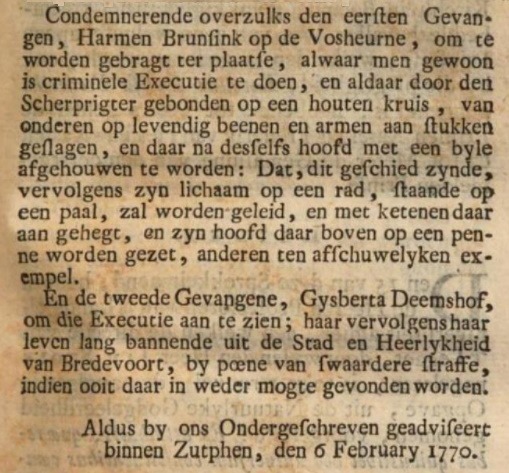
Harmen was sentenced to death. The executioner bound him to a wooden cross; first his legs and then his arms were broken. He was subsequently beheaded with an axe. His body was placed on a wheel atop a pole and secured with chains. His head was placed on a stake above it to deter others.
“The fact that death sentences were carried out even after the time of the Vehmic court proves that the end came for many a condemned soul in the vicinity of ’t Walfort. To the right of the road to Bredevoort, hidden under brushwood and trees, is a small mound. That is where the gallows were erected. When someone was to be executed, a number of men were officially summoned to form a circle around the place of execution. This was in case the noose should break or the condemned should break free; the circle of men stood hand-in-hand to prevent escape.
After a long period in which no more death sentences were passed, the last gallows is said to have been erected at the beginning of the last [19th] century. The condemned man was named Klaësken, and surrounded by the circle-closers, he went in procession to the gallows. It seems, however, that they wanted to give the man a chance to flee, for when they reached the Walfortallee, they said to him: ‘That is the road to Prussia.’ The man did not take the hint, and on the hill, as the last in a line of condemned men, he met his end on the gallows. That is why that small mound is still called the Klaëskesbulte.”
On the early morning of January 12, 1770, the neighbors of the Vosheurne farm in Lintelo were startled by a disturbing report. “The aunt is dead, she is very bloody, she may well have smashed her head,” resident Harmen Brunsink shouted. Extensive forensic investigation by the Court of Bredevoort revealed a story of a family conflict that degenerated into murder and would end with a gruesome execution.
Tensions in the House
Hendersken Tannemaat, born in 1705, had lived on the Vosheurne her entire life. Her niece, Gijsberta Deemshof, born in 1739 in Doesburg as the daughter of Hendersken’s sister Johanna, was raised by her ‘moeje’ (aunt) Hendersken from the age of three. In 1761, Gijsberta married Harmen Brunsink, born in 1729 at the Bekink farm in IJzerlo. After their marriage, Harmen moved in with Gijsberta and her unmarried aunt at the Vosheurne.
Initially, Hendersken lived with the young couple in exchange for board. In June 1768, however, she transferred all her possessions to Harmen and Gijsberta in exchange for room and board and all necessary care for the rest of her life. This was a common arrangement at the time between elderly people and their children—in this case, her niece and husband. Harmen and Gijsberta solemnly promised to fulfill this obligation.
However, the relationship between Harmen and the aunt deteriorated over the years, and tensions arose in the house. The aunt reportedly told Harmen several times that she wanted to undo the agreement “because you treat me so poorly!”
A Mysterious Death
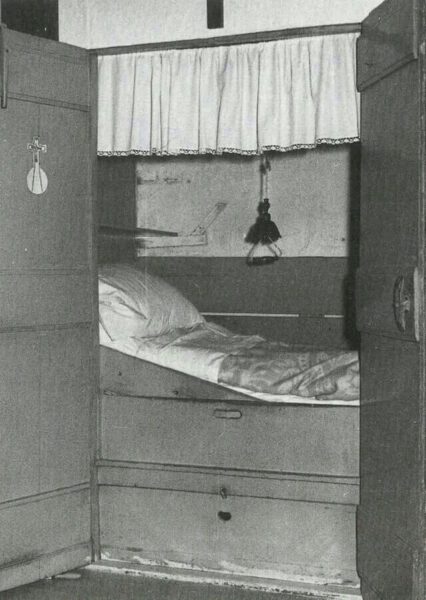
A box bed (photo for illustration)
On that fateful morning of January 12, 1770, Harmen frantically gathered the neighbors because the aunt was dead. It was customary in this region for neighbors to be called upon in the event of a death to arrange practical matters, such as the funeral and the ‘verhennekleden’—undressing the deceased and shrouding them in grave clothes. When the neighbor women entered the bedroom, they found Hendersken dead in her box bed, her hands folded over her chest. Her nose and arms were blue, and when her cap fell off, they discovered flour in her hair and blood seeping down her neck.
Gijsberta stated that she had used the flour to staunch the bleeding. Harmen added that the bruises were likely because the aunt suffered from scurvy, and that Hendersken had probably hit her head on the sharp edges of the bed plank. But the story did not add up. The neighbors did not trust it and brought the matter to the attention of the Court of Bredevoort.
The Investigation
Two days after Hendersken’s death, court officials arrived at the Vosheurne with two surgeons. Upon arrival, it appeared the body had already been coffined. In the presence of Harmen and Gijsberta, the surgeons examined the body. They discovered several severe injuries and bruises to the head. The injuries made it clear that an accident was out of the question. Suspicion immediately fell on Harmen and Gijsberta, who lived with Hendersken at the Vosheurne and could not provide a convincing account of what had happened.
Both suspects denied any involvement and claimed they had found Hendersken dead on the floor in front of her box bed that morning. They claimed to have placed her on the bed, sprinkled flour on her head to stop the bleeding, and put on her cap. However, their statements contradicted each other. Harmen had told the neighbors that he had found Hendersken dead in bed, not on the floor.
Voluntarily and without resistance, they went to Aalten, where they were taken into custody for further questioning. When the numerous head wounds were discussed, Harmen stated that these might have been the result of an epileptic seizure. Hendersken supposedly hit her head against the bed plank, the flax comb chair, the small chests, a trunk, or the beer stand. He also suggested that someone from outside the house could have broken in, as the house was in poor condition.
Further Investigation
On January 16, the Court, assisted by a doctor, a surgeon, and a prosecutor, returned to the Vosheurne with the suspects. Hendersken’s bedroom was meticulously examined.
The box bed showed a large bloodstain on the bed plank at the head end, as if the blood had splashed against the plank. But it had no sharp edges, as Harmen had claimed. Due to long-term use, the plank was actually rounded, and no sharp edges were found inside the box bed either. Other furniture in the room—small chests, a trunk, and a flax comb chair—showed no traces of blood. Nothing was found under the box bed either.
The doctor and the surgeon then examined the body even more closely. They stated primarily that there was a slight bruise on the nose, as well as severe bruising on both elbows, arms, and hands, beneath which coagulated, extravasated blood was found. These bruises could only have been caused by an external factor.
Not only on the right side of the head, at the level of the temple, were the external coverings and fleshy parts bruised, wounded, and destroyed down to the bone, but similar bruises and wounds were visible on the left side, albeit to a lesser extent. Two openings or wounds were discovered on the left side of the skull and one on the right, each about the size of a shilling. Upon loosening the external parts, it appeared that the skull had a fracture on the right side and that on the left side, the end of the skull bone was severely bent downwards and partially broken.
After sawing through and removing the skullcap, several ruptures were found. Due to these fractures and bone pressed outwards, the brain, particularly on the left side, was severely damaged. On both sides of the head, especially the left, extravasated blood was present on and under the dura mater and also within the brain itself. Furthermore, all blood vessels were completely filled with blood. This combination of injuries had inevitably caused her death.
Although the suspects continued to maintain their innocence, the suspicions raised against them were only strengthened by these findings. From the situation on-site and the condition of the corpse, there was no longer any doubt that a murder had been committed. Such a thing could not happen unnoticed in a small cottage like that of the suspects, while they claimed to know nothing. The suspects were then transferred to the prison in the Ambtshuis in Bredevoort.
During the subsequent interrogations, Harmen and Gijsberta initially stuck to their story: Hendersken had died in an accident. But the evidence against them mounted. On January 19, a week after the murder, Harmen broke under the pressure and confessed what had really happened: He stated that he acted alone, without the help of his wife. He had previously said to his wife in bed: “There lies such a small pebble, I shall strike her five or six times on the head with it, then she will be gone, then the quarreling will be out of the house, then we can live in peace and unity.”
Around four hours before sunrise, he had risen, lit the lamp, went to Hendersken’s room, and hung the lamp on a nail above the box bed. Upon entering the room, the aunt woke up from the light. Thereupon, Harmen jumped into bed with her, sat astride her, held her head with his left hand, and struck her five or six times on the head with the pebble with his right hand, until she lay dead under his hands.
Gijsberta reportedly tried to stop him, but without success. When the aunt was dead and bleeding heavily, he ordered his wife to sprinkle flour on her head and wash off the blood. Afterwards, he called the neighbors. The stone with which he had struck her, he threw into the ditch behind the oven, near the spot where they fetched water.
Statement of Gijsberta
Gijsberta made her confession on January 20 and 22. She stated regarding her unhappy marriage: “Oh, how unfortunate I am! I married my husband against the wishes of my entire family, and from the beginning of our marriage, he has lived poorly with me.”
In the early morning of January 12, her husband, before he even rose, had said to her: “I will no longer have the quarreling in the house, I want to take decisive action, I shall get a pebble, and give the Aunt but one blow to the head with it, then she will be gone, and then the quarreling will be out of the house.” She was very upset by this, but he tried to reassure her, kissed her, and said: “Do not be dismayed, let me take decisive action, she is an old person, then we can have a peaceful life.”
He even came to her bed with gin and said: “You must drink plenty of gin, and you must be half-drunk, otherwise you would be too dismayed; we must now bite through a sour apple; but you must never betray me, even if I should happen to die, and you get another husband, then you must never say to him that I murdered your own blood.”
She then said to him: “Could you bring yourself to kill my own flesh and blood; if it comes down to it, then I must say it,” to which he had replied: “I will nevertheless take decisive action, I want the quarreling out of the house.”
When her husband was already in the aunt’s room and began striking her, he called Gijsberta to come there. She then went to the room, grabbed his linen smock to pull him away from the aunt, and said: “Fie, fie, what are you doing!” She added that her husband had forced her to be present, saying: “otherwise you might go and report me later.”
Gijsberta also stated that she had long been afraid to lie in bed with him, fearing he would attack her with a knife. That night, too, a knife lay in his trousers in front of the bed. She therefore also said to him: ”I am afraid that you will do me harm.” To which he assured her: “Oh no, I will never do you harm.”
She also confessed that her husband could not bear it if she was kind to the aunt, and that she had had constant sorrow with her husband since the aunt lived with them.
Gijsberta stated from the outset that she did not help carry out this gruesome deed. She also did not know what her husband used to beat the aunt to death, only that in the morning, while fetching water in the ditch in front of the house by the willows, she saw a gray pebble lying in the water that had not been there before.
Both suspects finally confessed that the aunt had never suffered from epilepsy. The neighbors and friends had also never heard of it, except only after her death.
The Verdict
The Court of the Lordship of Bredevoort ruled that everything indicated that Harmen Brunsink, on the night of January 11 to 12, 1770, had murdered Hendersken Tannemaat, a defenseless person estimated to be nearly seventy years old, lying on her bed in his house, in a gruesome manner, deliberately and with premeditation. Gijsberta was charged with failing to dissuade her husband, where possible, from this abhorrent intention.
Harmen was sentenced to death: “to be brought to the place where criminal executions are customarily performed, and there to be bound by the executioner on a wooden cross, to have his legs and arms broken to pieces from the bottom up while alive, and thereafter to have his head severed with an axe. That, this having been done, his body shall subsequently be laid upon a wheel, standing on a post, and fastened thereto with chains, and his head set upon a spike above it, as a hideous example to others.” This punishment is called breaking on the wheel.
On February 10, the residents of Dinxperlo were summoned to the Hollenberg to erect the post and the wheel for the execution and to make the noose. Most refused or did not show up and were fined 30 thalers per person. 18 persons consented and erected the post and the wheel.
The sentence was carried out on the Hollenberg on February 12, 1770.
Gijsberta escaped the death penalty but was required to witness her husband’s execution. Subsequently, she was banished for life from the city and Lordship of Bredevoort. She remarried in 1776 in Silvolde to Jacob Kok and reportedly died in 1813.
Sources
Nieuwe Nederlandsche jaerboeken, of Vervolg der merkwaerdigste geschiedenissen, die voorgevallen zyn in de Vereenigde Provincien […]. Fifth volume. MDCCLXX, published by the heirs of F. Houttuyn in Amsterdam, P. van der Eyk and D. Vygh in Leiden, 1770 (link)
In an era when the government provided little to no poor relief, many people were left at the mercy of begging. They roamed from place to place, struggling to make ends meet. During the eighteenth century, the number of vagrants increased significantly. Because these individuals were often regarded as a nuisance by the authorities, and churches lacked the resources to offer them a chance at a better life, the office of the ‘armenjager’ (‘vagrant hunter’ or ‘parish beadle’) was established. This ‘official’ was employed by the local government but often led an impoverished existence himself.
Appointment of Vagrant Hunter Willem Hondarp in 1768
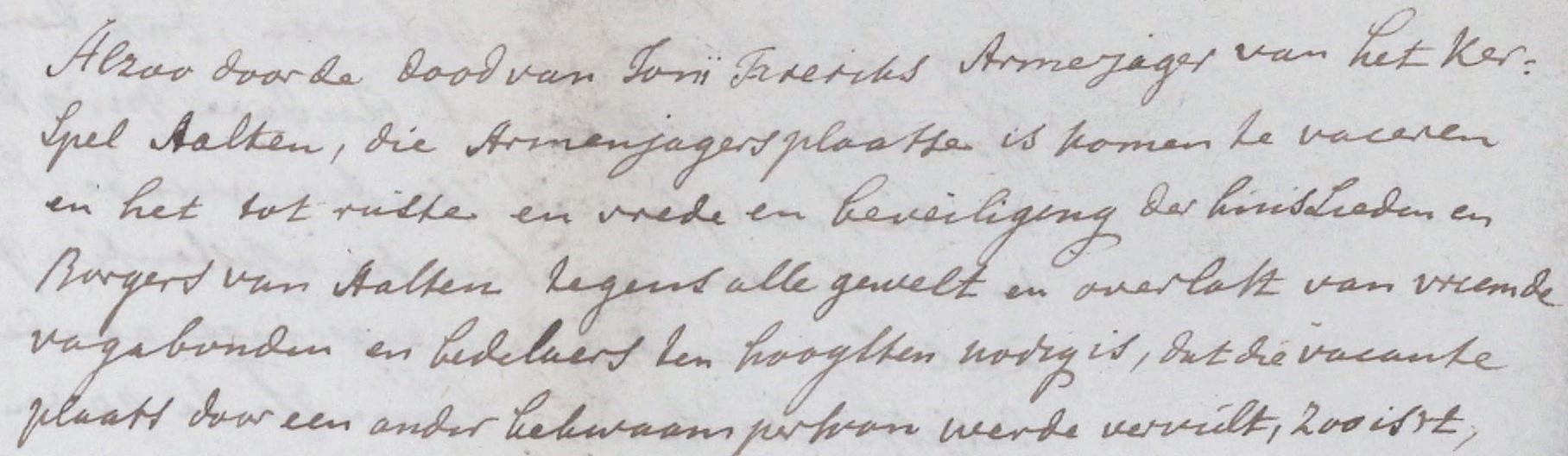
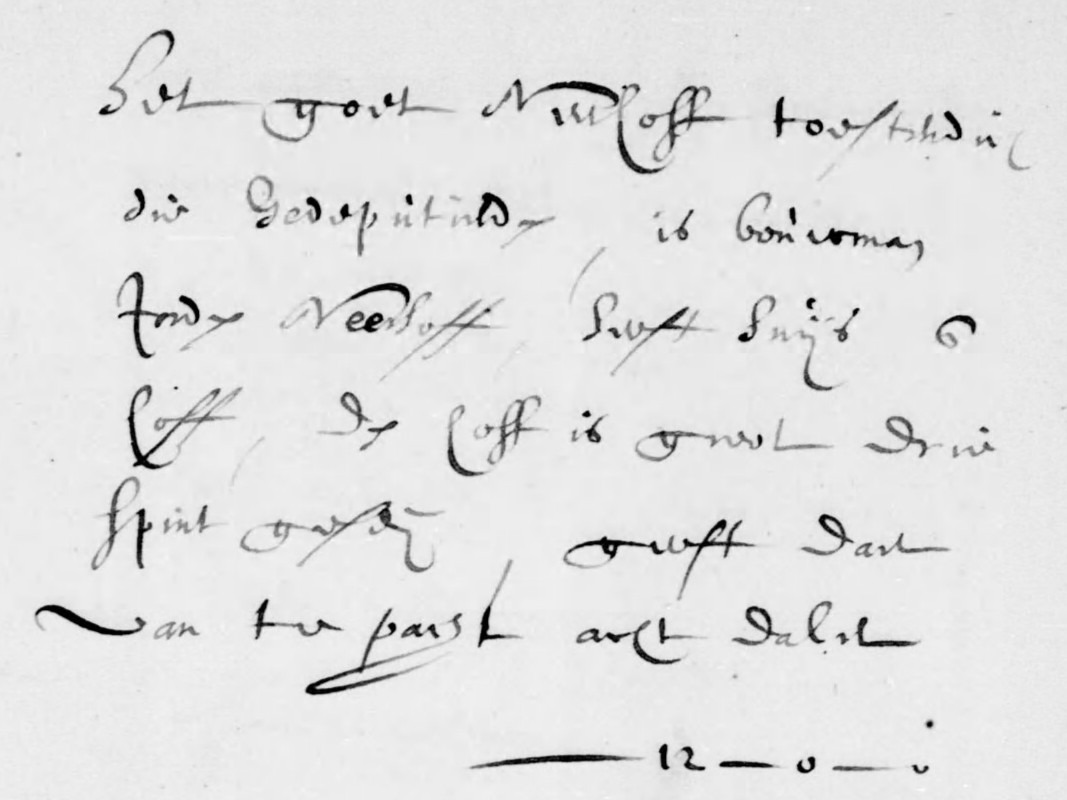
The image below is a fragment from the deed in which, following the death of Antoni Freriks on 5 January 1768, the appointment of Willem Hondarp as vagrant hunter was recorded. The deed also outlines the duties of the office. A complete translation of the transcription follows:
“Whereas, due to the death of Toni Frederiks, Vagrant Hunter of the parish of Aalten, said position has become vacant; and whereas it is of the highest necessity for the peace, quiet, and security of the husbandmen and citizens of Aalten against all violence and nuisance from foreign vagabonds and beggars that this vacant position be filled by another capable person: I have, upon the good testimony given to me of the fearlessness of the person of Willem Hondarp, appointed the same Will. Hondarp, as I hereby appoint him by virtue of these presents, as Vagrant Hunter of the parish of Aalten, upon such emoluments as have been given from of old and are still given. Commanding the aforementioned Willem Hondarp to cause all foreign beggars, vagabonds, and tramps to depart forthwith from the parish of Aalten and indeed from this Lordship; and should any be found who commit any violence or protest, to resist them with force and, if possible, to bring them to the Lord’s prison within Bredevoort.
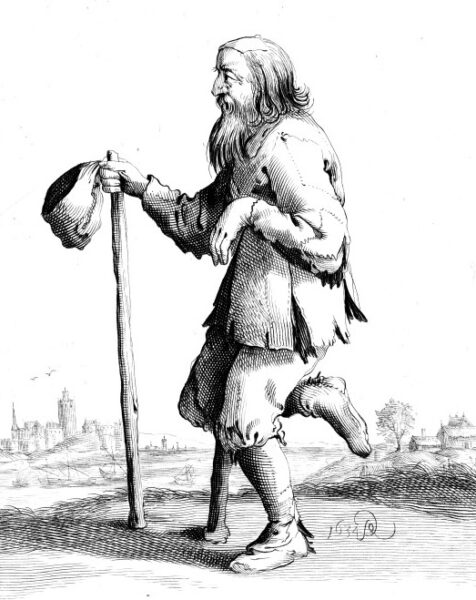
Vagrant, by Pieter Quast, 1634. Etching: Rijksmuseum Amsterdam.
Further commanding him that he shall tolerate no collections, whether by strangers or residents, unless they be provided with a proper note or attestation from the officer or, in the absence of the stadtholder of this Lordship; and to allow those so provided to pass and repass freely and unhindered. Furthermore, in the event that the voogd [warden] or deputy warden should require him, Willem Hondarp, in any exploit and should call or have him called for that purpose, he shall immediately go with said warden or deputy warden and obey and assist him to the best of his ability. Furthermore, to pass through the neighbourhoods from time to time and take care that no nuisance is caused to the husbandmen by any person; further to apprehend and bring in, if possible, all foreign and unauthorised hunters hunting in this Lordship, and should he know any whom he could not bring in, to report them to the officer or his stadtholder, and further to do all that a faithful and orderly Vagrant Hunter is obliged to do, and to take care as much as possible that no complaints arise from the husbandmen.
However, should it happen that the same Willem Hondarp should fall short in any matter and should request proper assistance from the husbandmen, and such assistance be refused him, he shall give notice of that refusal to the officer or to his stadtholder.
All this until our revocation. Given at Walfort House, the 10th of March 1768, and signed by my own hand as Drossard of this Lordship and confirmed with my customary seal.
Signed: Ad. de Pallandt”
Legal Proceedings
On 20 February 1804, a court case was held in Bredevoort against Jan Willem Brusse(n), vagrant hunter. On 23 December, at the house of Goormans in Barlo, he had ‘murderously assaulted’ Willem Beskers. Brusse had struck him on the elbow with a sabre, wounding him so severely that he could no longer use that arm. Brusse confessed but claimed that when he asked Willem Beskers for proof that he was permitted to collect alms, Beskers attacked him. Brusse maintained he had acted only in self-defence. Fine: 25 guilders.
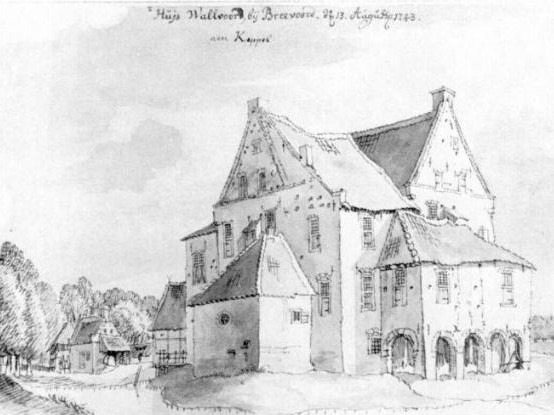
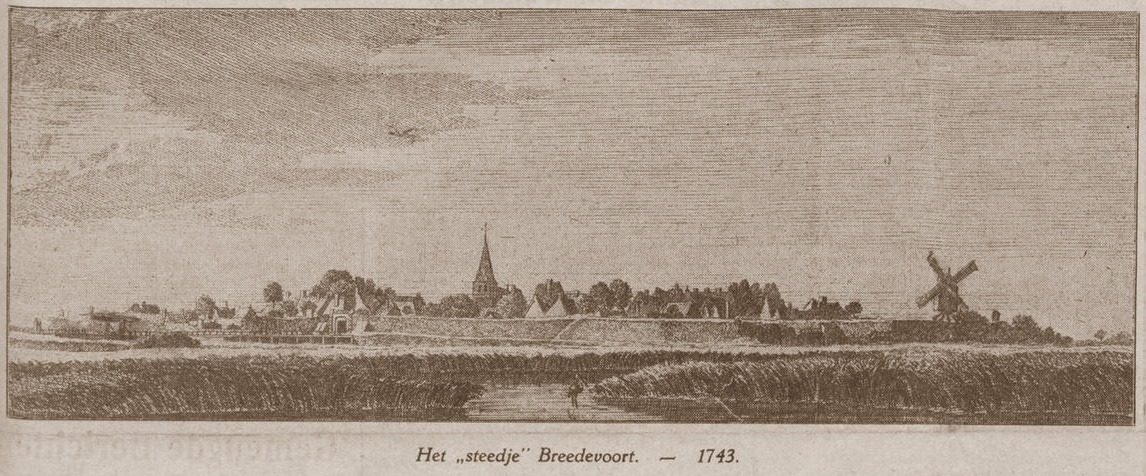
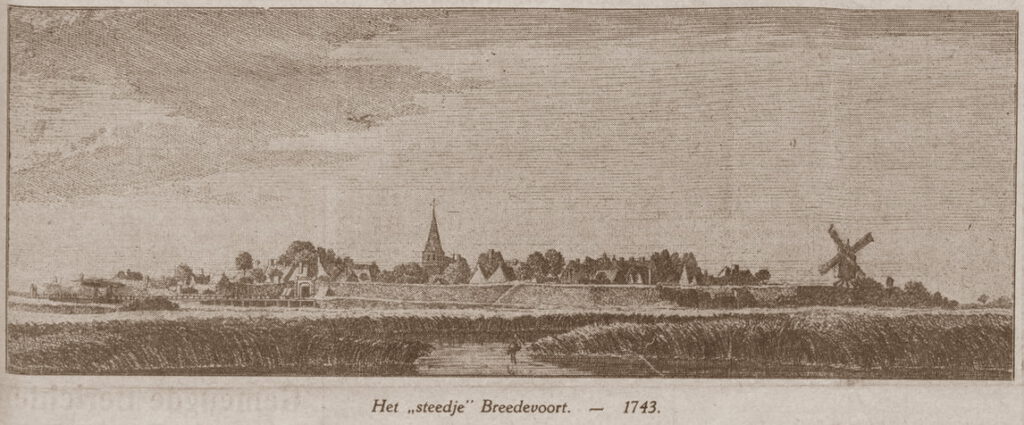
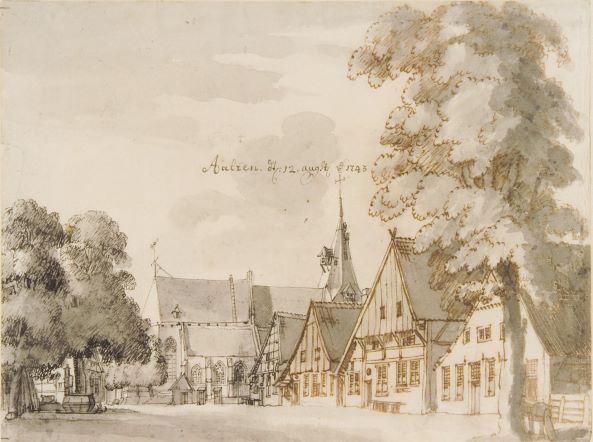
Bredevoort in 1743 by Jan de Beijer, for illustration purposes
In the eighteenth century, the fortified town of Bredevoort was home to a Latin School — an educational institution where boys were prepared for a university or ecclesiastical career.1 Although no physical remains exist, several archival records offer a glimpse into the existence of this school.
A teacher from Molsberg
The first indication comes from the Oprechte Haerlemsche Courant of 1 November 1763, in which Lotharius Frederik Wurm advertises that he has been working as a praeceptor (teacher) in Bredevoort for two years. His appointment therefore dates from approximately 1761. He announces his intention to start a boarding school and offers lessons in Latin, High German, French, history, rhetoric, poetry, and psalm singing.2
Less than a month later, on 26 November 1763, an almost identical advertisement appears in the Amsterdamsche Courant.3 A year after that, on 13 September 1764, another similar advertisement follows in the Oprechte Haerlemsche Courant.4 This shows that Wurm actively and repeatedly presented himself to recruit pupils.
On 29 October 1765, he appears in the newspaper again, this time as rector of the Latin School in Bredevoort, appointed by “His Serene Highness the Hereditary Stadtholder.” In this capacity, he offered tuition in Latin, Greek, history, rhetoric, and poetry, alongside private lessons in French and High German.5
Oprechte Haerlemsche Courant, 29 October 1765
Wurm originated from Molsberg, in the Electorate of Trier (now Germany). He married Elisabet Eliveret in Bredevoort on 9 August 1764.6 He passed away before September 1774, as Elisabet remarried at that time as the “widow of the late Lotharius Fredericus Wurm.”7
A schoolmaster with ecclesiastical duties
On 26 March 1773, it is noted in the Marriage Register of the Dutch Reformed Congregation of Bredevoort that Alette Diemont, widow of schoolmaster Jan Hendrik Prevenier, is handing over the marriage register. The entry reads:
“Anno 26 March 1773, received this booklet from Juffr. Alette Diemont, widow of the Schoolmaster of this city, Jan Hendrik Prevenier.” — signed: H. Conradi, senior sijn8
This note confirms that Prevenier was a schoolmaster. The fact that he was in charge of the marriage register indicates that he was also responsible for maintaining church records — a task often performed in small towns by the schoolmaster or precentor.9
Additionally, Prevenier is mentioned in other sources as the city steward (stadsrentmeester), responsible for the financial administration of Bredevoort.10 This makes it clear that he fulfilled a central role not only in education and the church, but also in the municipal administration. It is plausible that he was associated with the Latin School, as in small towns the roles of schoolmaster and teacher at the Latin School were often combined.11 While this is not explicitly recorded for Bredevoort, given the context, a combination of functions is highly likely.
Location unknown
The exact location of the Latin School in Bredevoort is unknown. It may have been no more than a room in or near the church, or the teacher’s residence — as was common elsewhere in small towns in Gelderland.12 The presence of such a facility in a small town like Bredevoort nonetheless indicates a relatively high level of education and culture in the 18th century.13
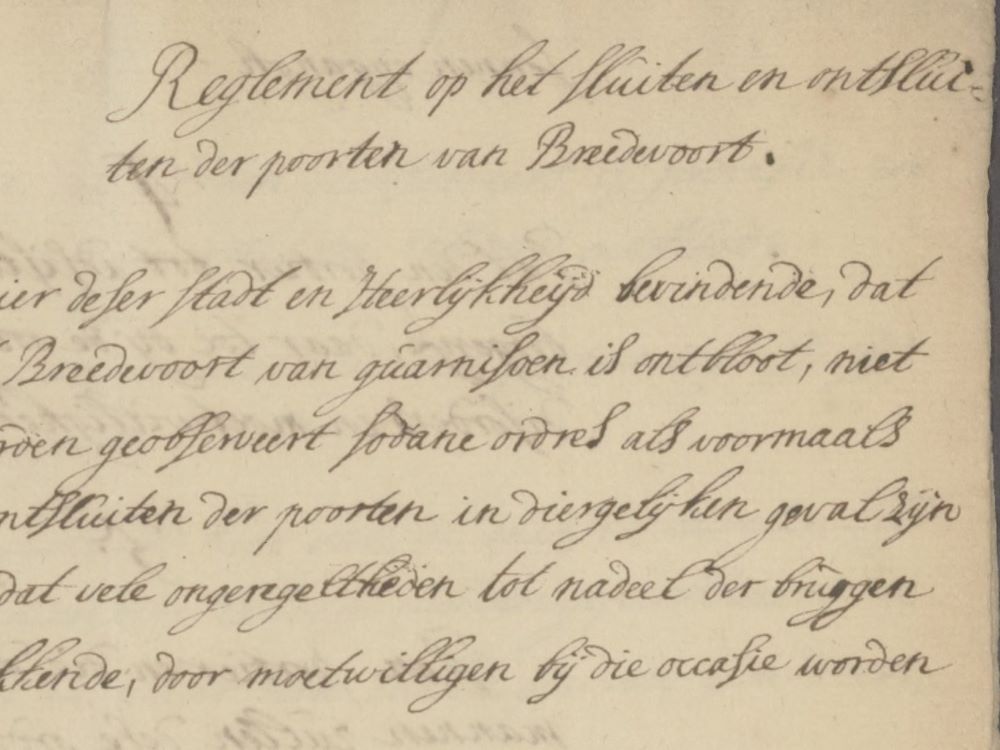
The text below is a transcription of the “Regulations on the closing and opening of the gates of Bredevoort” from 1759.
Fragment of the scanned document
The Officer of this town and Lordship, finding that since this town of Bredevoort has been devoid of a garrison, such orders as were previously given for the closing and opening of the gates in similar cases are not being properly observed, and even that many irregularities detrimental to the bridges and gates are being committed by malicious persons on those occasions1.
Therefore, in order to provide for this as much as possible, the following regulations on the closing and opening of the gates are hereby decreed and established, as is done by these presents in the following manner:
That in the evening at nine o’clock, after the ringing of the gate bell, the gatekeeper at the outermost bridge shall be required to call out three times whether anyone is still outside, and wait until those who have answered his call have been able to enter properly, and not close the gates before then; without anyone being admitted after that time, except for significant2 reasons. And after the closing has been completed, the keys shall immediately be brought by the gatekeeper to the house of the Mr. Land Writer pro tempore steward3.
The gatekeeper shall put the gates on the bolt or latch one hour after sunset and, before opening, may and shall be entitled to demand half a stiver from every passenger, one stiver from a cart and horse, and two stivers from a wagon, including the driver. And at nine o’clock, after the ringing of the bell, they must be closed entirely, as mentioned in the previous article.
That also in the morning the gates shall be opened half an hour before sunrise.
That the gatekeeper shall have four men from the citizenry for assistance, to be summoned for that purpose by the rotmeesters (squad leaders) each time, to prevent all disorders and acts of malice.
The gatekeeper and the men summoned for that purpose by the Rotmeesters shall strictly follow this order in the closing and opening of the gates and the raising of the bridges at the precise time in the morning and evening, on penalty4 of 6 stivers to be forfeited by each person who is absent and not present at the appointed hours, each time for the benefit of those present.
That besides the gatekeeper and assistants, no one, whoever they may be, shall dare5 to interfere with the closing and opening of the gates or the raising and lowering of the bridges, to lay hands upon them, or to commit even the slightest act of malice, on a fine of two gold guilders to be forfeited by each and every one of the offenders6, with parents being responsible for and paying the fines for their children.
And so that all the aforementioned shall be observed all the more exactly, the gatekeeper and assistants are recommended and at the same time ordered to pay close attention to all the aforementioned, and to report those offenders immediately, for which they shall benefit from one-third of the fine mentioned in the previous article.
That this order shall be observed provisionally for as long as this town shall be devoid of a garrison.
And an extract of this shall be given to the gatekeeper for his information7.
And so that no one may plead the slightest ignorance of this, it shall be published and posted where it is customary to do so.
Thus provisionally decreed within Bredevoort on June 11, 1759.
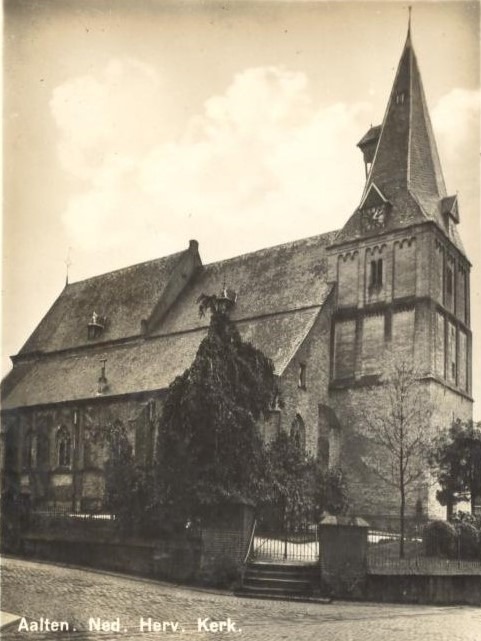
At the beginning of 1750, the quiet village of Aalten was shaken by a series of remarkable religious phenomena. During church services, people burst into tears, sighed loudly, or collapsed as if they had lost consciousness. Some even spoke of encounters with angels or attacks by the devil. These events garnered national attention and would go down in history as the Aalten Commotions.
What happened in Aalten was not an isolated incident. A year earlier, a religious revival had begun in Nijkerk, which quickly gained national fame. The stories of these Nijkerk Commotions spread rapidly and also provided the breeding ground for a separate, intense movement in Aalten.
Impression of the Nijkerk Commotions by Reinier Vinkeles (1788, Atlas Van Stolk)
According to Reverend Philippus de Roy, who served the Reformed Congregation of Aalten at the time, there was a reluctance to repent and a ‘civil religion’ prior to these events, where people faithfully fulfilled their ecclesiastical duties, but faith was not “a matter of the heart.”
At the beginning of 1750, this suddenly changed. In a short period, hundreds of people in the congregation were deeply moved by a realization of their sins. This occurred in such an impressive manner that it spread “from house to house.” De Roy wrote about this:
“Now since the beginning of this year, God has revealed Himself in an outstanding (…) manner through His Spirit in our midst: and discovered hundreds of souls to themselves, by granting them a vivid understanding of the state of misery by nature.”
Intense emotions and physical phenomena
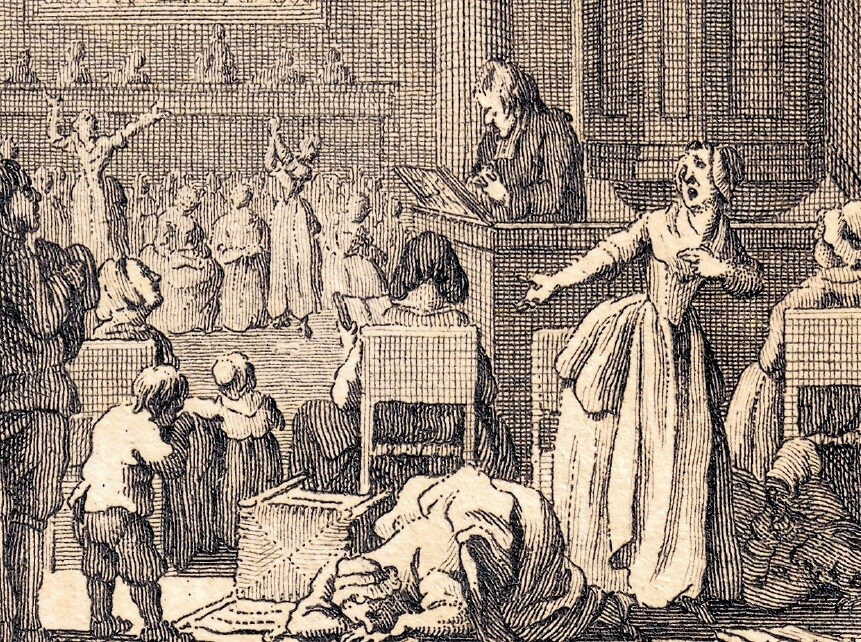
The revival was accompanied by extreme emotions and physical reactions. People became so fearful of God’s punishment that they felt they would “burst from anxiety” or as if their throats were being constricted. Sometimes they tore open their clothes to get air, but this did not help. Reports were made of “indescribable” sighing and groaning, and people trembled and shook throughout their entire bodies.
Some people were so overwhelmed that they fell to the ground and prayed loudly for forgiveness. A woman who fell to her knees during a meeting confessed her sins and pleaded on God’s promises. Later she explained that it was “impossible to restrain oneself because of the heavy burden of sin. Even if the whole world had been there, I would not have been able to keep quiet.” It was not uncommon for people to have to be transported home on carts after a meeting, as if they were wounded.
A village in turmoil
The influx of people was enormous. Church services and catechism classes, which were often held in homes, attracted so many people that the church was too small to accommodate all the visitors. The catechism classes, where the Sunday sermon was discussed, were the places where the commotion was most intense. During an outdoor gathering in May 1750, an “enormous emotion arose simply from the singing of a psalm”.
According to some reports, the number of those “moved” in Aalten was 1,700, even larger than in the more famous Nijkerk, where there were said to be 1,000. Such figures are difficult to verify, but they indicate the perceived scale of the movement.
Responses and the pamphlet war
The remarkable phenomena did not go undiscussed. A lively debate emerged in pamphlets and writings. Critics pointed to possible exaggeration and disorder in the worship services. De Roy responded to this criticism with a letter, addressed to an unknown lady, which was published in print. This booklet, Brief geschreven aan de WelEdele Juffer N.N. (Zutphen 1750), became a sensation: 5,000 copies were sold in three weeks, and a second edition followed as early as July 1750.
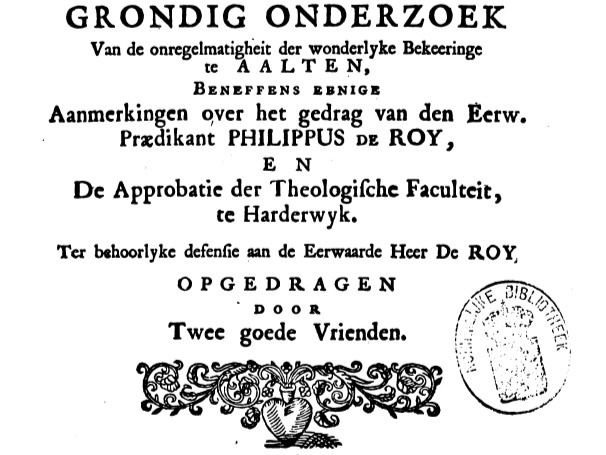
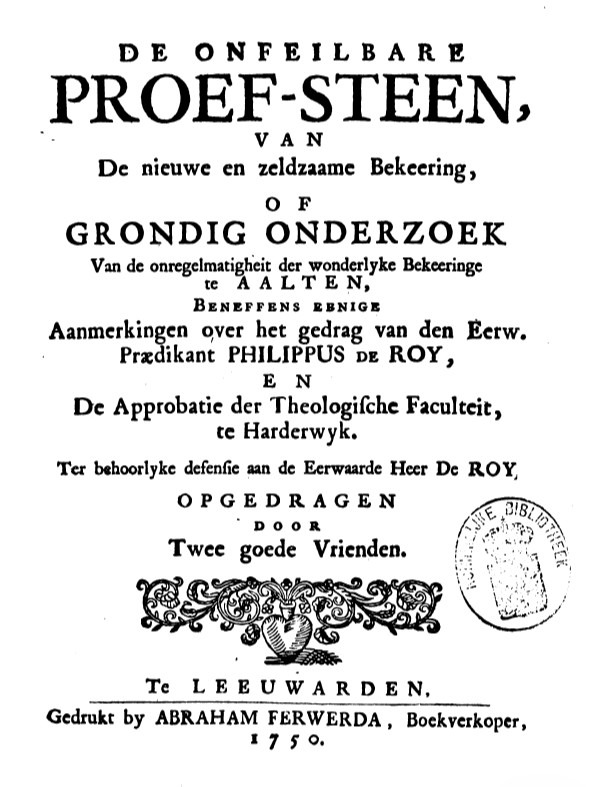
The success of this booklet provoked a critical response. In an anonymous pamphlet, De onfeilbare Proef-steen van De nieuwe en zeldzaame Bekeering (Leeuwarden 1750), the movement was fiercely attacked. Opponents accused the commotions of “fanaticism” and “religious enthusiasm.” De Roy did not leave this unanswered and wrote his own defense: De Feilbaarheid van den zo genaamde ONFEILBAREN PROEFSTEEN aangewezen (Zutphen 1750).
End of the commotions
The most intense phenomena in Aalten lasted only a few months. By around the summer of 1750, the intensity decreased. The meetings continued, but the massive emotional outbursts and dramatic scenes became increasingly rare. This pattern was similar to the commotions elsewhere in the Netherlands, such as in Nijkerk. Criticism from ministers, ecclesiastical boards, and anonymous pamphlets played a role in this and contributed to the movement slowly fading out.
Sources
M.J. Oosting, De Aaltense beroeringen in 1750, Aalten 1987
Philippus de Roy, Brief geschreven aan de WelEdele Juffer N.N., Zutphen 1750
De onfeilbare Proef-steen van De nieuwe en zeldzaame Bekeering, Leeuwarden 1750
Philippus de Roy, De Feilbaarheid van den zo genaamde ONFEILBAREN PROEFSTEEN aangewezen, Zutphen 1750
Traveling—whether through one’s own country or abroad—is a pastime of all ages and all peoples. Traveling and the writing of travelogues also took place in Overijssel. The Deventer scholar Mr. G. Dumbar wrote extensively about our country in the 18th century, including Gelderland. In the ‘Tegenwoordige Staat van alle Volkeren’ (Gelderland section), he describes towns and villages in the Achterhoek, from which we derive several insights. Starting at Borculo and moving toward Lichtenvoorde, we shall recount how Dumbar viewed the old lands of the County.
Much has changed; the heathlands and peat bogs have largely disappeared. The treacherous sandy tracks have been replaced by excellent paved roads. The impoverished, hut-like farmhouses have been transformed into proper dwellings for both man and livestock. Many forests have likewise vanished, and along with this progression over the last two centuries, numerous noble houses have gone as well. Towns and villages have changed, yet not so much that they have lost the prominence they already held to this day.
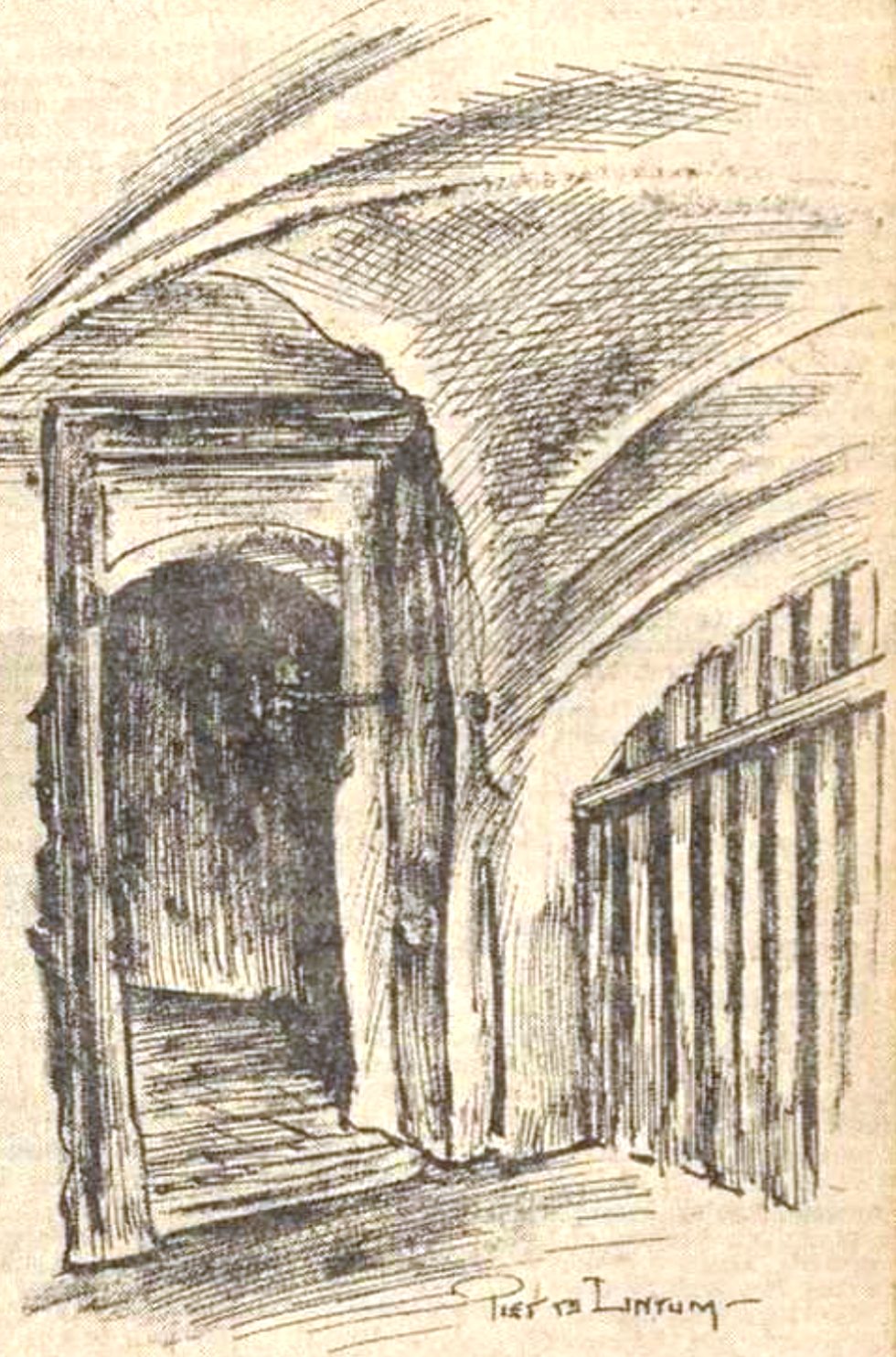
Illustration by Piet te Lintum from the article ‘Boerenleven‘
The Lordship of Bredevoort
From Neede, he moves on to the Lordship of Bredevoort, of which we read that it is of great antiquity. In 1245, the Castle of Bredevoort was granted as a fief by Herman, Count of Loon, to Otto of Nassau, Count of Gelre and Zutphen. William, Duke of Jülich and Gelre, pledged the fief in 1388 to Hendrik van Gemen for three thousand French Shields. Jacob van Bronckhorst later held the same right of pledge with the consent of the States of Gelderland. However, having chosen the side of the enemy in 1580, the town, along with the castle and the Lordship of Bredevoort, was given to Prince William I. His descendants still held the Lordship in 1741.
The Town of Bredevoort
As for the town of Bredevoort, conditions in 1741 were better than they are today. At that time, it was home to the bailiff and the Richter, as well as two deputies, a Stadtholder, an Advocate-Fiscal, a Landscribe, and a Commander. Furthermore, several officers resided there. All these high-ranking gentlemen spent a great deal of money in the small town, which must have appeared very distinguished at the time. The common man living in the villages of Winterswijk—notably the largest village in all of Gelderland at the time!—Aalten, and Dinxperlo, had to dance to the tune of the bailiff of Bredevoort and his clique.
Bredevoort itself was said to be very strong in 1741. The surrounding lands consisted entirely of marshland, where no one dared to venture. Moreover, three companies of infantry were stationed there; where all these people were sheltered remains a mystery to me.
The citizens of Bredevoort made the outsiders from Winterswijk and Aalten feel that they were of a superior class. When it was bitterly cold in winter and the frost was hard, the people of Aalten and Winterswijk were required to come and chop ice for the ice cellars. The mail had to be delivered by the men of Winterswijk and Aalten for nothing. Additionally, a wagonload of twig brooms had to be delivered to Bredevoort every year. If a hunt for thieves, robbers, vagabonds, or wolves was to be held, the people of Aalten and Winterswijk were allowed to beat the bushes and carry the rifles, while enduring the insults of the gentlemen. How the people of Winterswijk and Aalten must have rejoiced when the French in 1795 put an end to this state of affairs.
Meanwhile, we now write 1951, and it must be said: the two Cinderellas, Winterswijk and Aalten, have become fine maidens since 1741 and are in a state of glowing prosperity. It is, however, the irony of history that the stepmother, Bredevoort, is now sometimes treated somewhat stepmotherly herself. When one walks across her uneven cobblestone streets, one cannot help but feel pity for the outgrown lady of two centuries ago.
Aalten Surpassed Bredevoort
Markt Square, Aalten by Jan de Beijer, 1743
When the modern textile industry emerged, Aalten was the favorite. The Driessen family from Bocholt were the founders of Aalten’s rise, establishing themselves here as early as 1826. They attracted other industries. Although there were some dark pages in the previous century, Aalten turned the tables and is now the leader in the former Lordship of Bredevoort. Naturally, the municipality currently faces concerns as great as those of its sister municipalities, but that does not change the fact that Aalten has truly come into its own.
It is, meanwhile, astonishing how much marshland, how many vast heaths, and how many wild forests existed in 1741. If history had not been faithfully recorded and if we did not have more sources at our disposal, one could hardly believe that such conditions existed. Today, one sees prosperous lands and lush pastures that are a delight to the eye.
What we have described here is approximately all that is told of the Achterhoek. It is little. However, one must not forget that in 1741, someone from Amsterdam regarded the region we have described as a kind of jungle, which he preferred to stay as far away from as possible. It is therefore quite understandable that in earlier centuries, the population of East Gelre was much more closely related to Germany in economic and geographical terms than to the Dutch West. The attitude of the Germans has brought about a great change in this regard in recent years.
Klaas Nijman was baptized on January 16, 1698, in Dinxperlo as the son of Fredrik Nijman and Berentjen Eppink. At the age of fifteen, he left his parental home and began a wandering existence as a ‘beggar and vagabond’. In 1722, he was sentenced in Rhenen to a stay in a house of correction for violence and theft. His release was followed by banishment from the province of Utrecht.
Nijman then returned to the Achterhoek, where he sowed fear among the population, particularly in the vicinity of Dinxperlo and Aalten. He begged and stole, threatened people, and did not hesitate to use brute force. In 1729, he set fire to several houses and was arrested.
On October 3, 1729, following a trial in Bredevoort at ‘t Zand, Klaas Nijman was sentenced to death. He was taken to the Hollenberg, where he was strangled and subsequently set on fire. This gruesome punishment served as a deterrent to others. Nijman was 32 years old at the time.
Sentence
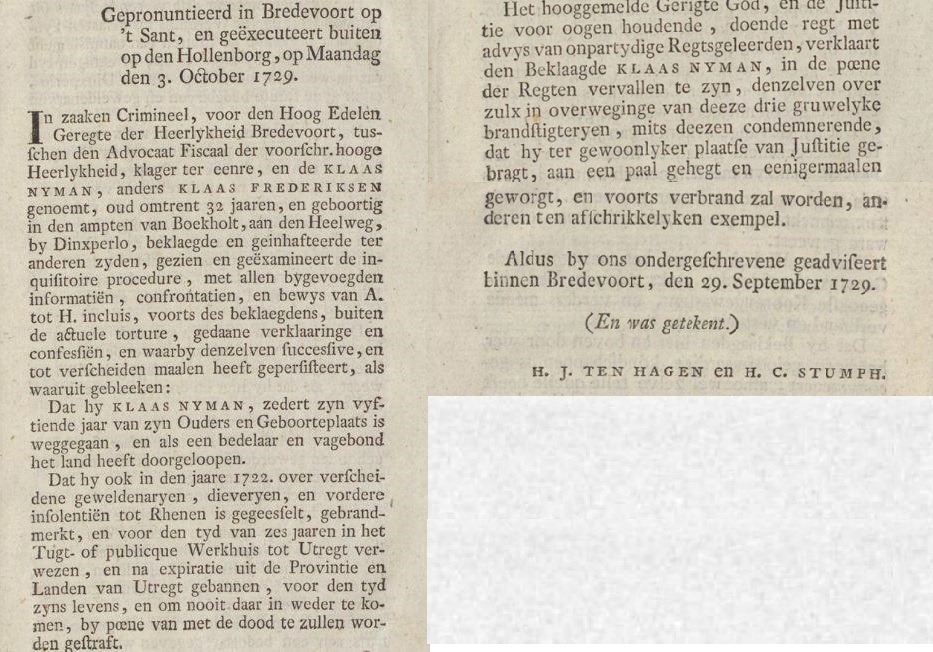
The following 18th-century text describes his crimes and sentence:
Pronounced in Bredevoort at ’t Sant, and executed outside on the Hollenberg, on Monday, October 3, 1729.
Verdict Klaas Nijman
In Criminal cases, before the Most Noble Court of the Lordship of Bredevoort, between the Advocate Fiscal of the aforementioned High Lordship, complainant of the one part, and KLAAS NYMAN, otherwise called KLAAS FREDERIKSEN, aged about 32 years, and born in the district of Bocholt, at the Heelweg, near Dinxperlo, defendant and prisoner of the other part, having seen and examined the inquisitorial procedure, with all attached information, confrontations, and evidence from A. to H. inclusive, furthermore the defendant’s declarations and confessions made outside of actual torture, and in which he has successively and at various times persisted, from which it has appeared:
That he, KLAAS NYMAN, since his fifteenth year has left his Parents and Birthplace, and has wandered the land as a beggar and vagabond. That he was also in the year 1722, for various acts of violence, thefts, and further insolences at Rhenen, flogged, branded, and committed for the term of six years to the House of Correction or public Workhouse at Utrecht, and after expiration banished from the Province and Lands of Utrecht for the term of his life, and never to return therein, upon pain of being punished with death.
That having been released from the aforementioned House of Correction or Workhouse about three-quarters of a year ago, yet the penalties of banishment remaining in force, he thereupon, or some time thereafter, returned to Dinxperlo, and continued in his bold beggaries and acts of violence. That he there, for a trifle on the public road near Dinxperlo, cut open the mouth of one DIRK WENSINK with a knife.
That he likewise, after his aforementioned release, again committed various thefts, such as of ironwork and an axe, and of linen, such as a pillowcase or sheet on the other side of Doesburg at the Steege; and also a shirt from the garden at HENDRIK te Loo or Kistershuis, between Dinxper and the Bredenbroek, and further as by the Reformations. That he, KLAAS NYMAN, has also for years past been notorious and held in suspicion by many inhabitants under Dinxperlo and Aalten, as being of no good and committing much evil.
That he also, following the . . . . of the sentence at Rhenen, was held suspect there of having committed very grave offenses. That the defendant, through his . . . . and malicious conduct and questionable language which he used here and there, has kept the good husbandman and the inhabitants in the countryside, and especially around Dinxperlo and Aalten and the surrounding area, in a state of constant anxiety and fear. That when he came to beg, he was not satisfied with what is ordinarily given to a beggar, although he was often given even more, and went away from the houses muttering to himself.
That this anxiety and fear among the inhabitants has doubled and reached its peak since fire broke out in the Parish of Aalten in this year 1729, and that further and even more burnings of houses close by followed. Such that several inhabitants ordered their people that, if KLAAS NYMAN came to their houses, they should just give him whatever he wanted, to gain his friendship and not to anger him, and that several people, out of fear of arsons, had to keep night watches at their houses during the night, whereby even some hamlets were placed in a state of near alarm.
That he, the defendant KLAAS NYMAN, is also the one who has come to such exceedingly wicked crimes that in the past Summer in the Parishes of Aalten and Dinxperlo, of this same year 1729, from June 13 to August 29, and thus within the span of a quarter-year, he has set fire to three houses, one after the other, and by no means the smallest, which houses were also totally burned down, and of which the corpora delictorum are known.
Namely, on June 13, the house at Lensink, under Aalten on the Esch at Yserlo, where he set a piece of white or spongy peat on fire by means of a tinderbox, flint, and tobacco pipe, and with that burning peat at the back on that side of the house where the wind was blowing against the house at the time, caused the fire. That eight days prior he had also set the same house Lensink on fire, and that it had already been burning, but that it was then still extinguished by the occupants.
Secondly, the house at Welink, also under Aalten on the Esch at Yserlo, on June 20, where he carried out the fire in the same manner as at Lensink with a piece of ignited spongy peat, and therewith set the house on fire from behind. That for both his arsons, at Lensink and Welink, he gives as his reason that he had done so to create anxiety and terror in the neighborhood, or among the people.
Thirdly, the house at Grevink, at ‘t Rexwinkel in the hamlet of Heurne, under Dinxperlo, on August 29, in the evening around 10 o’clock, when he caused the fire there with an ignited fuse made of linen rags, in the straw that lay at the back on the corner partition of the house. That in this aforementioned house Grevink, when it caught fire, a young woman in childbed, who had not yet been in childbed for two days, lay on the bed, and who by great fortune still having the strength to get off the bed, still escaped the fire. That he, KLAAS, gives as his reason for this arson at Grevink that he had done so because the same aforementioned woman in childbed, a long time ago when she was still unmarried, had given him a piece of pancake that had been too small for him.
That at Welink and at the last-mentioned Grevink, several pieces of live Cattle, harvested Grain crops, and further items were also burned and consumed. That he, the Defendant, is furthermore convicted by four sworn credible witnesses, although he himself has tried to deny it telle quelle, that on August 31 last he spoke those grim words at the house of ARENT OOSTENDORP, in the hamlet of Heurne, under Dinxperlo, that this or that corner would shortly be a poor corner.
That he furthermore has threatened to set fire to the house of the drummer boy within Dinxperlo, and has stood by and persisted in this, that if he had not been captured, he would indeed have done it, and similar terrible threats and dangerous utterances of the Defendant, as the information and confessions herein further set forth.
The highly-mentioned Court, keeping God and Justice before its eyes, doing right with the advice of impartial Legal Experts, declares the Defendant KLAAS NYMAN to have incurred the penalty of the Law, condemning him for the same in consideration of these three gruesome arsons, that he be brought to the usual place of Justice, fastened to a stake and somewhat strangled, and furthermore shall be burned, as a terrifying example to others.
Thus advised by us undersigned within Bredevoort, September 29, 1729.
(And was signed.)
H.J. TEN HAGEN and H.C. STUMPH
Source
Legal Treatises on Corporal Crimes by a prominent Legal Expert (Jan Jacob van Hasselt), published in Amsterdam by Hendrik Gartman, 1781 (link)
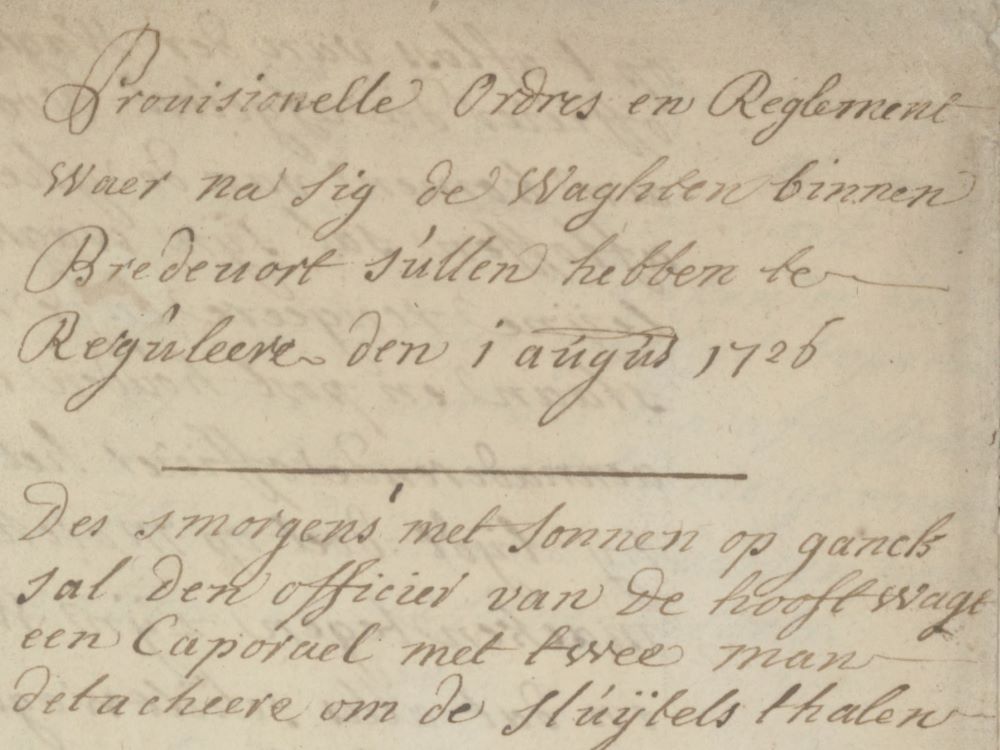
The text below is a transcription of the original handwritten regulations, as literal as possible, including variations in spelling, but with added punctuation to improve readability. The text contains a number of words or concepts that we did not recognize (highlighted in yellow) and may have been misinterpreted. Therefore: errors excepted and corrections are welcome.
Fragment of the scanned document
Provisional Orders and Regulations according to which the guards within Bredevoort shall regulate themselves, August 1, 1726.
In the morning at sunrise, the officer of the main guard shall detach a corporal with two men to fetch the keys.
When the keys arrive, the officer shall arrange the guard under arms, have the march beaten, and detach the sergeant and as many men as shall be necessary. And at the Munsterspoort, the sergeant shall detach the corporal so that every time a drawbridge is lowered and the keys have passed, it is raised again until the field is scouted and the posts are set out.
The gates being opened, the keys shall be returned in the same manner as they were fetched.
Upon the changing of the guard, the officer being relieved shall, upon the arrival of the one who is to relieve him, arrange his guard in a line and have the march beaten and hold post until the approaching officer has the body of men he leads1 march up and form a front opposite his guard, and ensures all sentries are relieved and inspects whether anything is missing from the cannons and batteries2 and whether the guardhouses, sentry boxes, and the rampart are cleared of all filth and found in a state fit for duty, and whether the patrol sticks and whatever else is required for the guardhouses are present with the guard, and that the officer being relieved has handed over the orders observed at his post to the relieving officer. When all this is done and the sentries are relieved and have joined the guard, the relieved officer shall march off to the market and there thank the men; at the same time that the relieved troop marches off, the relieving officer, having arranged his men in a line, shall beat the march and take up post in the same place.
The sergeants of the guard shall remain at their posts for 24 hours. From the main guard only two men, and from the Munster Gate only one, may be given leave to fetch food, but from the opening of the gates in the morning until eight o’clock, as well as during the time when the sentries are relieved, none.
No soldiers are to be allowed outside the gates without a gate pass, written or signed by the Commander; the gate passes shall be held by the officer and, when the soldier returns, given back; if they do not return and the passes are collected, they shall be brought to the Commander with the evening report. The sergeant of the Munster Gate shall send the collected passes to the main guard.
The guards and sentries shall take good care that no damage is done to the timber or palisades on the national fortifications, nor any fishing done in the moats around, or grass mown on the ramparts or counterscarps, without a note or order from the Commander. Also, the sentries and patrols shall ensure that no elevation occurs on the excavated grounds around the fortifications, nor any trenches shifted, and that no filth is made on the ramparts.
The commanding officer of the main guard shall have all foreign passengers brought to the commander. The sergeant of the Munster Gate shall have the same brought to the main guard, but for persons of quality, he shall ask the servants for their names and status and where they are staying, and if they have no servant with them, he shall ask them directly and immediately inform the Commander.
In the afternoon from twelve to one o’clock and on Sundays during the sermon, the outermost drawbridges at the gates shall be raised.
The officer shall provide a written report to the Commander at twelve o’clock in the afternoon and in the evening after the closing of the gate. The parole and orders that may have been given to the guards that day residing there in the morning when relieved shall be reported verbally. The sergeant of the Munster Gate shall have a report made to the officer of the main guard at half past eleven in the morning, in the evening before the gate closes, and in the morning after the opening of the gate.
The sentries both at the barriers and on the ramparts shall call out to and warn one another when they see more than two or three men with arms, or more people than usual, approaching from outside. The sentries at the barrier shall immediately close it and raise the bridge, calling to the nearest sentry to have the guard come to examine the situation and report to the Commander as found. The guard shall ensure that a capable man is always stationed at the barriers.
No foreign passengers shall be allowed on the ramparts or works without special order from the Commander. The sentries shall also take heed that no one enters the faussebraye, and also that no disorder occurs outside or near their posts, such as the breaking of lines placed in the gardens, and they shall always carry their arms while walking and not smoke tobacco.
No foreign beggars shall be allowed into the city, and if any deserters should arrive very early in the morning, they shall remain in the main guard until they have been examined by the Commander.
The sentries shall not allow more than one at a time of the carts or wagons coming from outside to pass over the bridge. Also, no carts or wagons may be left standing before the guard or inside the gate, but a clear space must always be kept, both before the guard and the gates; care must also be taken that the national boat lies locked, inspecting it before the closing of the gates.
No beasts or horses are to be allowed on the fortifications; if any are found on the national works, they shall be brought to the guard and the release fee paid, according to the order of their Noble Mightinesses.
The Ceremonial is to be observed according to the Regulations.
In the evening at sunset, the officer, as a warning to the people who still wish to go out or in, shall have the roll-call beaten and detach a corporal with two men to fetch the keys. And when they arrive, the officer shall arrange the guard under arms, have the march beaten, and continue this until the gates are closed, and then set out the night posts and send the keys back to the Commander. Just as they were fetched when the gates were opened and closed, the officer himself shall be present to ensure that the gates are properly closed.
If a gate is opened at night, the officer shall take care that nothing other than the wicket of the barrier is opened and that once the keys have passed, it is closed again, just as as soon as the keys are over the drawbridge, it is immediately raised again, detaching the necessary men for that purpose. The wicket of the outermost barrier being opened, he shall have it inspected who is outside the gate and, if found to be in order, shall allow those for whom the gates were opened to enter, but taking care that no barrier is opened nor drawbridge lowered before the outermost is well closed and the officer is informed of what has occurred. For the Munster Gate, a corporal with four men from the main guard shall come.
The tattoo shall be beaten at half past nine in the summer and at nine o’clock in the winter.
In the evening, the officer shall have a corporal and two men inspect the inns and have the soldiers of the garrison go to their quarters; half an hour later, he shall inspect them again to see if any had dared to come there, and if so found, they shall be brought to the guard under arrest.
The corporals shall bring their sentries to their posts themselves by day and by night and ensure that the orders given are properly handed over at their posts; to that end, the corporals of the main guard shall inspect the sentry at the bastion, marching up as the sentries of his guard are relieved around the rampart, ensuring that everything is in good order and that no damage is done to the national works. The corporal at the Munster Gate shall march up with the sentry at the Mill Bastion and so forth, observing the rampart all around. What is mentioned in this article, and especially that the sentries of the Munster Gate are relieved at the stroke of eleven, they shall for that purpose stand the first posts from nine to ten o’clock in the morning and then relieve every two hours, namely from ten to twelve and so on.
The officer of the main guard shall send a man around the rampart every two hours, namely at half past ten, half past twelve, half past two in the morning and subsequently every two hours by day and by night, to ensure that no damage is done to the national works, whether by children whom he shall order off the rampart, or dogs or chickens or other harmful creatures which he shall shoot dead. This article shall also be observed by all corporals and sentries performing relief. The sergeant of the Munster Gate shall send a man around the rampart every two hours by day and by night, namely at half past eleven, half past one, half past three in the afternoon and subsequently every two hours.
The officer of the guard shall be responsible for ensuring that every sentry at his post knows all the orders that have been given so that they are properly executed3. To this end, the officers of the main guard shall inspect the posts of both the main guard and the Munster Gate and instruct them on all orders, just as the sergeant of the Munster Gate shall instruct his sentries and visit their posts, for which he shall be held accountable.
The officer on guard shall perform the grand round before twelve o’clock at night. The sergeant of the Munster Gate shall perform the visiting round between twelve and three, and the sergeant of the main guard shall perform the day round before the reveille.
The Commander or major, wishing to inspect the posts by day or by night, shall not need to go to the guard first but shall take with them the sentry for the Commander, who may be relieved for that time.
In case of alarm or fire, the Commander is to be informed immediately, and in the meantime, the officer of the guard shall detach the sergeant with six men there. The guard that is to mount shall first report to the main guard and the Company at the parade ground on the Sand.
All further orders not specified herein shall be regulated according to the ordinances and regulations established of old.
Article 21 of the guard is to be changed in so far that the sentries shall be relieved every hour at night and this shall continue until the guards are relieved in the morning; at the Aelterpoort to begin at eleven o’clock in the evening, until 12, until 1, until 2 and so on from hour to hour; at the Munster Gate to begin at half past ten in the evening, half past eleven, half past twelve and so on from hour to hour.
The officer of the guard shall ensure that the corporals themselves bring the sentries to their posts. And the corporals of the guards shall keep their route around the rampart from each gate, as ordered in Article 21, taking care that if a sentry is not found alert at their post, they shall be relieved and placed under arrest.
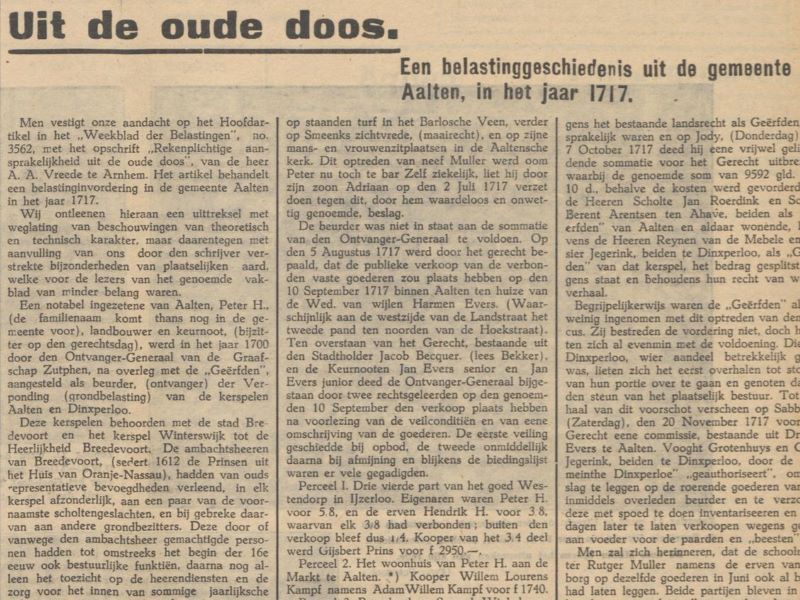
Our attention has been drawn to the lead article in the “Weekblad der Belastingen,” no. 3562, titled “Accountable liability from the old days,” by Mr. A. A. Vreede of Arnhem. The article discusses a tax collection in the municipality of Aalten in the year 1717. We have derived an excerpt from this, omitting considerations of a theoretical and technical nature, but conversely supplementing it with details of a local nature provided to us by the author, which were of less interest to the readers of the aforementioned trade journal.
A notable resident of Aalten, Peter Huijninck, farmer and lay judge (assessor on the court day), was appointed in the year 1700 by the Receiver-General of the County of Zutphen, after consultation with the “Heirs,” as collector (receiver) of the Verponding (land tax) for the parishes of Aalten and Dinxperloo.
These parishes, along with the town of Bredevoort and the parish of Winterswijk, belonged to the Lordship of Bredevoort. The lords of the manor of Bredevoort (since 1612 the Princes of the House of Orange-Nassau) had traditionally granted representative powers, in each parish separately, to a few of the most prominent bailiff families, and failing that, to other landowners. These persons authorized by or on behalf of the lord of the manor also held administrative functions until approximately the beginning of the 16th century; thereafter, they only oversaw the corvée labor and the collection of certain annual revenues, which later included some liability for the receipt of the land tax. Related to this was the fact that the appointment of a receiver took place in consultation with these authorized persons, referred to above as “Heirs,” and that the provision of security by an appointee was required in the deeds of guarantee of that time for the benefit of the Receiver-General and for the service of the Heirs.
These documents, like all other voluntary deeds as well as judicial deeds, were established by a declaration in a court session. The court, consisting of the bailiff (judge) or the Stadtholder (deputy judge), two lay judges (assessors), and a Landsschrijver (clerk), was seated in Bredevoort, but held sessions alternately in each parish where necessary. Upon the appointment of Peter Huijninck as collector, his brother Hendrik Huijninck acted as guarantor, and in the deed of guarantee, various fixed assets of both were pledged as security for the administration.
For several years things went well, but gradually the collector became negligent with the collection, and an increasing backlog arose in the remittance of funds to the office of the County in Zutphen. At the repeated insistence of the Receiver-General, temporary improvements occurred occasionally; for instance, the lay judge Peter Huijninck, in his capacity as collector, requested on Mercury (Wednesday) April 21, 1717, at the Court Day in Aalten, to seize the real estate of Jan ten Heetbrink the Younger and of Mechtelt Brethouwer, widow of Derk Nachtegaal, due to overdue land tax, but no lasting improvement followed.
It was common knowledge in Aalten that this situation could not continue and that legal action against the negligent collector was inevitable. It is therefore understandable that the heirs of the since-deceased guarantor Hendrik Huijninck feared that the real estate pledged by him would also be targeted. As a result, on Venery (Friday), June 18, 1717, the collector Peter Huijninck and his spouse Geesken Locken appeared before the court, stating that the aforementioned heirs were bothering them daily by insisting on measures to keep them indemnified, and hereby pledged a one-fourth share in the estate and property Westendorp in IJzerlo and two-thirds in the Snoejenbos, located on the Haart, as far as Arent Snoejenbos has it under lease, so that the heirs could recover any damages from it.
This happened just in time, for only ten days later on Luno (Monday), June 28, 1717, a representative of the Receiver-General Hendrik van Essen appeared before the court to issue an executory summons against the collector Peter Huijninck, inviting him to settle a sum of 17,134 guilders, 1 stiver, and 10 deniers at the office of the County within ten days, as arrears for the years 1713–1716, and threatening a judicial sale of the fixed assets pledged in the guarantee deed. A copy of the summons was served the following day by the bailiff (court officer or bailiff), Jan Keunen, to the collector, speaking with his wife Geesken Locken.
Now the heirs of the guarantor, who did not yet feel safe despite the deed of June 17, were truly struck with fear, for that very same day, schoolmaster Rutger Muller of Aalten, son-in-law of the deceased Hendrik Huijninck, appeared before the court on their behalf to seize the movable property of Peter Huijninck, as well as the crops and the manure rights of lands leased by him, also his peat pond and the peat standing on it in the Barlosche Veen, furthermore on Smeenk’s mowing rights, and on his men’s and women’s seats in the Aalten church. This action by nephew Muller was finally too much for uncle Peter. Being ill himself, he had his son Adriaan file an objection on July 2, 1717, against this seizure, which he called worthless and illegal.
The collector was unable to comply with the summons of the Receiver-General. On August 5, 1717, the court determined that the public sale of the pledged fixed assets would take place on September 10, 1717, in Aalten at the house of the widow of the late Harmen Evers. (Probably on the west side of the Landstraat, the second building north of the Hoekstraat). In the presence of the Court, consisting of the Stadtholder Jacob Becquer (Becker, ed.) and the lay judges Jan Evers senior and Jan Evers junior, the Receiver-General, assisted by two legal experts, conducted the sale on the aforementioned September 10 after reading the conditions of sale and a description of the properties. The first auction was by bidding, the second immediately thereafter by Dutch auction, and according to the bidding list, there were many interested parties.
Lot 1. Three-fourths part of the Westendorp estate in IJzerloo. The owners were Peter Huijninck for 5/8, and the heirs of Hendrik Huijninck for 3/8, of which each had pledged 3/8; thus 1/4 remained outside the sale. The buyer of the 3/4 share was Gijsbert Prins for 2,950 guilders.
Lot 2. The home of Peter Huijninck at the Market in Aalten 1. Buyer Willem Lourens Kampf on behalf of Adam Willem Kampf for 1,740 guilders.
Lot 3. Farmland at Smeenk-Winkel, one and a half schepel. Buyer Derk Neerhof for 505 guilders.
Lot 4. A piece of farmland at Smeenk-Winkel, size not mentioned, buyer Willem Eppink for 480 guilders.
Lot 5. Six schepel of land, called the Wijntjesstuk, buyer Adam Willem Kampf for 465 guilders.
Lot 6. Four pieces of garden land in Smeenkgoorden, size not mentioned, buyer as before for 205 guilders.
Lot 7. The Dalshof, size not mentioned, buyer as before for 230 guilders.
Lot 8. The Horsterkamp in Linteloo, size not mentioned, buyer Jan Evers for 600 guilders.
Lot 9. The Grevincksweide near Aalten, size not mentioned, buyer Jan te Bokkel for 470 guilders.
Lot 10. The lease corn of the pledged separate lots, as well as the annual fee, the services, and the small leases owed by the farmer of Westendorp, all for the current year; buyer Jan Arentsen for 95 guilders.
Lot 11. The lease corn in sheaves of three-fourths of Westendorp stored in the farmer’s dwelling; buyers Wessel Broekhuys for 55 guilders and Jan Arentsen for 25 guilders. The owner of lots 2–7 was the collector Peter Huijninck, and of lots 8–9, the heirs of the guarantor Hendrik Huijninck.
Immediately after the second auction, the final award followed, at least in name, for nearly five weeks later on October 14, the Receiver-General had it declared before the Court that a higher bid had been made for lots 3 and 4 at Smeenkwinkel by the Dowager van Nagell tot Ampsen, née Baroness van Coeverden, and that the first buyers could be dismissed. These men, the farmers Neerhof and Eppink, did not remain silent and filed a protest with the Court on October 18, along with the declaration that they faithfully followed the conditions of sale and would quietly continue to cultivate and sow the purchased land. It is to be hoped for them that they were not disappointed.
The total proceeds amounted to 7,542 guilders, so that the initial backlog of over 17,134 guilders was reduced to over 9,592 guilders. It would be logical for the Receiver-General to attempt to recover this remainder from the collector’s other assets as much as possible and, if necessary, have it collected from the negligent taxpayers by means of a new collector. However, he followed another very unusual path. Since the so-called Heirs were also liable according to the manorial law of Bredevoort, he issued a summons to the Heirs of Aalten and Dinxperloo immediately after the auction, without specifying certain individuals, which summons was served to the bailiff as the judge of the common lands.
Reinier Jurrien Baron van Coeverden and Walfaerdt 2 was at that time the representative of the Lord of the Manor with the titles of Hofrigter, Verwalter, Bailiff, and Judge. The Receiver-General then had it investigated which persons were liable as Heirs according to the existing national law, and on Jody (Thursday), October 7, 1717, he had a virtually identical summons issued before the Court, whereby the aforementioned sum of 9,592 gld. 1 st. 10 d., plus costs, was claimed from the Gentlemen Bailiff Jan Roerdink and Bailiff Berent Arentsen at Ahave, both as “Heirs” of Aalten and residing there, as well as the Gentlemen Reynen van de Mebele and Rosier Jegerink, both in Dinxperloo, as “Heirs” of that parish, the amount split according to the statement and subject to their right of recourse.
Understandably, the “Heirs” were very little pleased with this action by the Treasury. They did not contest the claim, but they were in no hurry to pay either. Those from Dinxperloo, whose share was relatively small, were the first to be persuaded to pay their portion and enjoyed the support of the local administration. To recover this advance, a commission appeared before the Court on Sabbathy (Saturday), November 20, 1717, consisting of Dr. Jur. Evers of Aalten, Vooght Grotenhuys, and Garrit Jegerink, both of Dinxperloo, “authorized” by the “Gemeinthe Dinxperloe,” to seize the movable property of the meanwhile deceased collector and to request that it be inventoried urgently and sold two days later due to a lack of fodder for the horses and “beasts.”
It will be remembered that schoolmaster Rutger Muller, on behalf of the heirs of the guarantor, had also had the same goods seized in June. Both parties continued to dispute each other’s rights in a lengthy procedure. The Court did go to the house of the Widow Peter Huijninck on Monday, Nov. 22, for the inventory, but the sale did not take place for the time being, although provision will have been made for the livestock. More than half a year later, on June 24, 1718, at the insistence of the aforementioned Muller, the Court ordered the Bailiff and the Under-Bailiff in Aalten to store the seized goods in a neutral place after inventory at the house of Jan Janknegt, one of the court officers. Furthermore, the Protocol contains no more details about this case.
The Heirs of Aalten remained passive for the time being, so the Receiver-General deemed it advisable to put more pressure on them. After three months, on Jovis (Thursday), January 6, 1718, Hendrik Casper Stumph, “Doctor of Laws” in Aalten, appeared before the Court as the serving advocate for the Receiver-General and requested the setting of a “clear fixed day” for the judicial sale of their fixed assets.
a part of Bennink; two parts of Het Slaa in Haart-Heurne.
The auction was set for March 8, 1718, again at the house of the Widow Evers, at two o’clock in the afternoon.
Both Heirs now saw that the matter was becoming serious and that they would have to pay up. In the meantime, order had also been established from the official side. The old collector Peter Huijninck had died at the end of October, and another Aalten resident, Adam Willem Kampf (also written Campf and Cempf), was temporarily charged with the observation of the collector’s office. He moved into the house at the Market of his predecessor, which he might have already bought in advance at the judicial auction, and on March 12, 1718, he and his spouse Gesina Smits passed a deed of guarantee, in which the estate Bulsink in Linteloo and the lots purchased at the judicial sale of the late Peter Huijninck were also pledged, while Dr. Jan Casper Evers acted as guarantor, pledging the Busscher Kamp, located between Aalten and Bredevoort, for Kampf’s administration.
The overdue tax was now collected with due speed as much as possible, and finally, Bailiff Roerdink and Bailiff Arentsen seem to have emerged without too much damage.
After a few months, the temporary collector received a permanent appointment with the official title of “Receiver.” Beforehand, however, conditions had been set on both sides. The appointee had to take over the administration of his predecessor as it stood and pledge his guarantee to an amount of 1,000 guilders for the indemnification of the Heirs, should they so desire; on November 30, 1718, his guarantee deed was supplemented to that effect. In return, his minor son Seger Adolph became an assistant to his father with the prospect of later becoming his successor, so that on the same November 30, the receiver Kampf took an oath of office for himself and also for his aforementioned son. The young Kampf, however, later became a mayor elsewhere.
Footnotes
The property on the east side of the market square with an exit in the Peperstraat, bordering to the north on the plot where the café Keizer is currently located, and to the south adjacent to the house of Gijsbert Grevinck, which on the other side bordered the brewery with front garden of Lemmert Te Kavestede. According to an inscription on a gable stone, this last plot was renovated in 1799 by Lourens Becking and Willemina Geertruid Schaars into a home, distillery, and agricultural barn. ↩︎
“Walfaerdt” is likely a variation of “Walvoort,” the name of the well-known manor house located between Aalten and Bredevoort. The spelling “Walfort,” which was later used officially and in surnames, is said to be incorrect, while the pronunciation “Walvoort” is correct. ↩︎
One of the last known witch trials in Bredevoort, and perhaps even in the Netherlands, was the trial of Marry Hoernemans in 1675. She successfully passed the water ordeal, after which she walked home with her head held high, her innocence proven once and for all.
In the seventeenth century, it was believed that witches were women who had made a pact with the devil. They were said to have received supernatural powers in exchange for renouncing God and His saints. It was believed that witches could, for example, churn butter from a ditch, make people infertile, or cause crops to fail.
Women who fell outside social norms – for instance, unmarried women without children – ran an increased risk of being accused of witchcraft. In the event of unexplained occurrences, such as illness or fire, they were often singled out as the culprits. It was then up to the accused to prove her innocence, often through a witch trial.
A certain Marry, the second wife of Hendrik Hoernemans, lived in Bredevoort in 1675. From his first marriage, Hendrik had a son named Jan. As often happens, the stepson did not get along well with his stepmother, and they frequently quarrelled. Jan repeatedly told others that his stepmother was a witch.
Marry was furious about this accusation and went to court. She presented the problem but added that she did not want the judge to punish her stepson. However, she requested to undergo a so-called water ordeal to prove she was not a witch. The judge deemed it unnecessary: “Surely everyone knows you are not a witch,” he said. “Your son surely didn’t mean it that way and made those remarks in his anger.” Marry, however, was not to be swayed. She was determined to pass the test.
At her insistence, the judge agreed, and on 26 July 1675, the water ordeal was carried out. As was customary in witch trials, Marry was completely stripped. Her hands and feet were bound together, and the executioner, along with his assistant, threw her into the water three times.
Marry sank like a stone every time, and if she hadn’t been pulled up repeatedly, she would certainly have drowned. According to folk belief, a real witch would float because she was supported by the devil. Marry sank – and was therefore not a witch. Afterwards, Marry dressed and went home satisfied without saying another word. It was now proven that she was not a witch and that her stepson was a liar.
Late in 1664, the Bredevoort church council commissioned Joannes Holthus to construct a new clockwork mechanism for the church tower, as the old one was worn out. It was installed in 1666, marking the beginning of an eventful history that ultimately concluded right where it once began: the Sint Joriskerk (St George’s Church) in Bredevoort.
In the year 1664, the Netherlands was still the Republic of the Seven United Provinces. Johan de Witt governed the country and Michiel de Ruyter ruled the high seas. In the eastern corner of Guelders lay the small town of Bredevoort. Joannes Verschage was the minister here, and Gerhard van Hengel and Bernard Ecckervelt served as the churchwardens.
If you wanted to know roughly what time it was back then, you looked at the sundial which is still present on the exterior wall of the church. But if the sun was not shining, you depended on the clockwork in the church tower. However, that was not working well; it was dilapidated and out of order, according to the church management. A new clock was required.
Joannes Holthus
The church management entered into negotiations with clockmaker Joannes Holthus from Arnhem. In December 1664, they signed a contract stipulating that Holthus would deliver a clock within eighteen months that would strike the hours and half-hours. The agreed price was 300 Carolus guilders, of which 50 guilders was paid as an advance. The clock was delivered neatly on time; by the summer of 1666, it stood in the tower. Afterwards, however, it emerged that the agreed sum was insufficient.
In 1667, all parties signed for an additional sum of 228 guilders. Yet problems must have arisen regarding the payment. Holthus was forced to litigate in court. He fell into poverty, had to enter service somewhere, and had to leave or give up his children, ultimately dying in penury. Following his death, his daughter Jasperina continued the lawsuit until at least 1692. We do not know the outcome.
Through the centuries
After some time, a striking train was added to the turret clock, which also struck the quarters before and after the hour. A chime (voorspel) that announced the strikes was also introduced. This possibly occurred in 1680, a year that is engraved into the ironwork. In 1886, the clock was restored by Gerrit Jan Heinen from IJzerlo, who lived at the ‘Klokkemaker‘ farmstead.
Following nearly three centuries of faithful service, the clock was replaced in 1942 by a new mechanical turret clock. The old clock went to Aalten, where it spent a period gathering dust in the fire station. Afterwards, it ended up in the Aalten Oudheidkamer (historical museum), which was later incorporated into the Frerikshuus Museum and ultimately the Nationaal Onderduikmuseum. In 2017, the clock became a municipal monument.
Back to Bredevoort
However, the Bredevoort clock no longer fitted the museum’s concept, and an alternative location had to be found for it — preferably a place where the public could admire it. At the beginning of 2025, local interest group Bredevoorts Belang took over the turret clock. Reinstalling it in the tower of the Sint Joriskerk was no longer possible. The church’s interior committee proposed placing the clock in the church loft (boerenzolder), and the church council agreed.
The 1666 clock by Joannes Holthus now takes pride of place in the church loft, and everything is still in working order!
The 1666 Bredevoort turret clock (photo: Ap te Winkel)The sundial on the Sint Joriskerk (photo: Jos Wessels)A forged strip with inscription (photo: Ap te Winkel)
Technical Description
The turret clock consists of two interconnected segments. The segment containing the striking trains is 120 cm long, 65 cm wide, and 104 cm high. The section with the time train (gaande werk) and the chime mechanism (speelwerk) is 81 cm long, 58 cm wide, and 104 cm high. The following texts have been applied to forged strips:
“JOANNES HOLTHUS ME FECIT (made me) 1666. JOANNES VERSCHAGÆ PASTOR HUIUS ECCLESIÆ (shepherd of this church) GERHARD VAN HENGEL DR. BERNARD ECCKERVELT KERKMEISTEREN IN BREDEVORT“.
The clock is equipped with a double striking train, which kept Bredevoort on time by striking on both the hours and the half-hours. Furthermore, fifteen minutes before and after the hours, four tones resonated from three bells.
The corner posts are decorated with a beautifully forged scroll. The connections consist primarily of cotter pins. The entire mechanism stands on a wooden platform (beun). A large block of sandstone functions as the driving weight; this stone is almost certainly original. The stone hangs from a rope of braided hemp, as does all the other ropework. The entire mechanism works perfectly.
The clock is described in the book: Achterhoekse klokken en uurwerkmakers, by J.L. Sellink, A.F. Abbink, and R.E. Wiggers, (ISBN 90-9003816-7). On page 8, Mr Wiggers writes about the clock, stating among other things: “The escapement consists of a Graham escapement with a tooth shape according to Schwilgué; this must have been built in after 1715. The chime, however, appears to be original and constructed directly in 1666. The current position for the time train is also authentic, and its winding arbor is likewise identical to the other three arbors.”
In the year 1660, a certain Hendrick Janszen ‘van Brevoort’ came with his wife and four children (3, 12, 16 and 17 years old) to New Amsterdam, now New York. At that time there was no official surname, and in archives someone was mentioned with first name, patronymic (Janszen, or ‘son of Jan’) and the place where they came from (in this case ‘Brevoort’). They had left Amsterdam on 8/9 March 1660 with the ship De Moesman and arrived before 30 May.
We do not yet have more information about the Bredevoort origin of this Hendrick Janszen. Do you? Then we would like to hear from you !
Brevoort Estate, between 54th and 55th Street, near 1st Avenue, 1866. Photo: The Museum of the City of New York
Hendrick’s son Jan Hendrick (1644-1714) used the surname Brevoort from 1696 onwards. In the centuries that followed, the Brevoort family in New York would grow into a well-known family with prestige and wealth.
Jan Hendrick Brevoort bought land in Harlem, where he held the position of overseer in 1678 and 1679. In the early 18th century, he exchanged Harlem for the south of Manhattan. At his death, he left his farm in the ‘Bowery‘ to his children. His son Hendrick (1670-1718) eventually owned most of the land, which then belonged to his son, also named Hendrick (1711-1771). He further expanded the property to 30 hectares. When the Brevoort family split up their possessions and sold most of them, this gave them a fortune. The head of the family was Henry Brevoort (1747-1841).
Henry Brevoort Jr.
Henry Brevoort Jr. (1782-1848) and his wife Laura Brevoort-Carson had a mansion built on the remainder of their land, at 5th Avenue and 9th Street. This area was on the rise and the Brevoorts took a prominent position in it. Henry Jr. was known as a literary spirit and he was friends and corresponded with the writer Washington Irving (1783-1859). In addition, he was a municipal councillor for many years.
Henry Jr. was adventurous and traveled a lot. For example, he accompanied Lewis and Clark on their expedition to the Pacific Northwest from 1803 to 1806 and spent much time in the North American wilderness, working for John Jacob Astor’s American Fur Company. In the north of the state of Michigan, in Mackinac County, there is a hamlet called Brevort (pictured left), named after Henry, who explored the area in 1845, along with his friend Washington Irving.
In the city of New York in particular, various places, streets and buildings still refer to the Brevoort family. Here are a few examples.
The bend in Broadway
Characteristic of American cities is the rectangular street pattern. However, deviations from this pattern also occur. If you study the street pattern of New York, you will see, for example, that Broadway, one of the most famous streets in the world, also makes a bend. According to tradition, this would be due to one man, who was determined to defend his country.
The 35-hectare farm of Henry Brevoort Sr. was located on the outskirts of the city in the early 19th century. As the population of New York increased, the city government announced plans in 1815 to extend Broadway in a straight line to 23rd Street. However, this would cut through Brevoort’s land. He protested and the city council gave in: Broadway was diverted, so that the orchards of Brevoort’s farm, where 10th Street is today, were spared.
The Brevoort apartment complex, Manhattan
In the Greenwich Willage neighborhood, in the heart of Manhattan, there is an apartment complex called ‘The Brevoort’ at the beginning of 5th Avenue. The complex was built in 1955 and has 20 floors and 277 apartments. The building replaced the famous ‘Hotel Brevoort‘, once one of the leading hotels in New York. This is where the rich and famous and sometimes even royal guests stayed. The hotel was also known for the legendary parties that took place there. Aviation pioneer Charles Lindbergh received the Orteig prize of 25,000 dollars in this hotel for his solo flight over the Atlantic Ocean.
One of the most famous residents of the current apartment complex ‘The Brevoort’ was Buddy Holly. He lived there in 1958-1959, from his marriage until his fatal end. He recorded the so-called Apartment Tapes here.
Traces of Brevoort in Brooklyn
There are also several places in the borough of Brooklyn where family members of the Brevoorts once owned land. This includes a street (Brevoort Place), an apartment complex (the Brevoort Houses – 13 seven-storey buildings with a total of 896 apartments), a Brevoort Playground and a Brevoort Post Office.
Brevoort Place, Brooklyn
Brevoort Houses, Brooklyn
U.S. Post Office Brevoort Station, Brooklyn
Brevoort Theatre, Brooklyn
Although this theater has long since disappeared, it is still worth a mention. The Brevoort Theater once stood on the corner of Bedford Avenue and Brevoort Place. When it opened in 1918, it was Brooklyn’s largest movie theater, with 1,800 seats and another 700 on the balcony. The theater also had a stage and an orchestra pit.
Although it was mainly shown in films in the first decades, the Brevoort Theatre became famous around 1960 because many well-known artists performed there, including James Brown, Jackie Wilson, Otis Redding, Smokey Robinson & The Miracles, The Four Tops, The Temptations, Marvin Gaye, Stevie Wonder, The Supremes, Sam & Dave, Dionne Warwick, Gladys Knight & the Pips and Pattie LaBelle & the Bluebells. However, this period did not last long. The theater closed its doors for good in the 60s of the last century and was demolished in 1968.
The verponding was a tax on real estate introduced in Gelderland in 1651 to replace the older schildschatting. This tax was levied on lands, farms, houses, and mills that generated income, with the aim of strengthening provincial finances. Wastelands, such as uncultivated common lands (markegronden), were exempt from this levy. The verponding remained in effect as a tax system in Gelderland until 1805.
Administration and Registration
Fragment from the verponding register for the buurtschap Dale near Aalten, ca. 1650
The term ‘verponding’ or ‘pondschatting’ likely refers to a tax assessment originally expressed in the unit of account ‘pond’ (pound). Data regarding the verponding was recorded in so-called verpondingskohieren (tax registers). These registers were compiled by local officials, such as bailiffs, sub-bailiffs, and rotmeesters, who were responsible for recording all real estate and its estimated value. The registers provide valuable historical information regarding the number of houses per location and their owners: nobility, church, or citizens. Additionally, they contain data on the size of holdings, lease structures, and ownership relationships.
Calculation
In the Quarter of Zutphen, to which Aalten and Bredevoort belonged, the amount of the verponding was determined based on the lease or rental value and the burdens resting on a property. For lands and farmsteads, the tax amounted to a sixth penny (or 1/6) of the taxable lease value; for houses and mills, this was a ninth penny (1/9) of the taxable rental value. If a property was not leased or rented but used by the owner themselves, the value was determined based on comparable properties that were leased or rented. Everyone was obliged to provide correct information and to show any lease contracts; negligence could result in a fine.
Collection and Payment
The collection of the verponding followed a strict timetable: the assessment, also known as a ‘maning’ (reminder), took place in November, and payment had to be made before the end of February. The tax could be calculated in various ways, and several deductions were possible, for example, for maintenance. Taxpayers received ‘maancedulen’ (assessment notices), which stated the amount due. The collected monies were handed over by the collectors to the receiver of the Quarter. In addition, both the ‘ambt’ (district) and the city and the Quarter could levy extra surcharges on top of the basic amount.
Verponding Register of 1647
The Verpondingskohier of 1647 is a frequently used source for historical research. At the time the verpondingskohieren were compiled, Gerhard Kreynck (1612-1692) was mayor of Zutphen. Kreynck had a great interest in historical documentation and made copies of important archives, including the verpondingskohier, city accounts, and feudal registers.
The Verpondingskohier of 1647 was transcribed by Kreynck in an abbreviated form around 1650, which later became known as Kreynck’s Transcript. The historical significance of the register lies in the fact that it is one of the first systematically compiled tax registers of Gelderland. The register provides insight into the economic situation of the region in the mid-17th century. The original register has been preserved and can be found in the National Archives in Arnhem.
Genealogiedomein: afbeeldingen en transcripties van de verpondingskohiers voor Aalten en Bredevoort.
R. Wartena e.a., Boerderijnamen in de Achterhoek. Uit het verpondingskohier van ca. 1650, afschrift Kreynck, publicatie Oost Gelders Tijdschrift voor Boerderijonderzoek (link).
H.K. Roessingh, Hoe zijn de Gelderse verpondingskohieren uit het midden van de 17de eeuw ingericht? Bronnen voor het lokaal-historisch onderzoek, Bijdragen en Mededelingen van Gelre LXIII (Arnhem 1968/1969), pag. 61-71.
H.K. Roessingh, Garfpacht, zaadpacht en geldpacht in Gelderland in de 17e en 18e eeuw, Bijdragen en Mededelingen van Gelre LXIII (Arnhem 1968/1969), pag. 72-98.
Anyone delving into the history of the Lordship of Bredevoort will inevitably come across the name Wilhelm van Haersolte tot Elsen. His name is forever linked to one of the most devastating disasters to strike the Achterhoek in the seventeenth century. As an administrator and military officer, he was at the helm of the region during a time of political tension, but it was a natural phenomenon that abruptly ended his life and that of his family.
Coat of arms of the Van Haersolte family
Wilhelm van Haersolte was born in Zwolle around the year 1596, the son of Harmen van Haersolte and Anna van Hoeclum. He descended from a prominent noble family from Overijssel and, as was customary in those circles, chose a military career. As an infantry captain, he served in the States Army, the armed forces of the young Republic of the Seven United Provinces.
On 2 February 1630, he married Catharina van Brakel, with whom he would raise a large family. Eight children were born from their marriage, including Anthony (1637), Gerrit (1641), Assuerus (1643), Arent (1644) and Lodwich (1645). Furthermore, in 1638, a year after his appointment, Wilhelm and Catharina purchased the Elsen manor (havezate), which explained the addition of ‘tot Elsen’ to his name.
His bond with the Achterhoek was sealed in 1637. Following the death of his older brother, Arent van Haersolte, Wilhelm was granted the honourable and responsible position of drost and richter (drossard and magistrate) of the Lordship of Bredevoort. This meant that he held both the military command over the fortified town and the civil and judicial administration over the surrounding area, which at the time also included Aalten, Winterswijk and Dinxperlo. For his new role, Van Haersolte and his family moved into the imposing castle of Bredevoort.
Fate on a summer’s day
For nine years, Van Haersolte governed the region with a firm hand. The end of his term of office — and his life — came entirely unexpectedly, however, on 12 July 1646. That day, a severe thunderstorm swept across the Achterhoek. A fierce lightning strike hit the castle’s gunpowder tower, where vast quantities of gunpowder were stored at the time for the defence of the border region.
The ensuing explosion was catastrophic. The castle was virtually wiped off the map in a single blow, and the surrounding town sustained monumental damage. In total, 49 people lost their lives in this Gunpowder Tower Disaster (Kruittorenramp). Among the victims were Wilhelm van Haersolte himself, his wife Catharina and almost all of their children who were present in the castle at that moment.
Following this tragic death, Wilhelm was succeeded as drossard of the Lordship of Bredevoort by Georg Nicolaas van der Lawick.
The family’s legacy
The disaster almost brought an end to this branch of the Van Haersolte family. Only one son, the then six-year-old Anthonie, survived the drama because he happened to be staying elsewhere that day. Thanks to him, the family line did not die out; all modern-day noble descendants bearing the name Van Haersolte are directly descended from this young survivor.
Although the castle was never rebuilt to its former glory, the traces of Wilhelm van Haersolte are still tangible in the region. In the Sint-Joriskerk (St George’s Church) in Bredevoort is a fire bell that he donated to the community in 1644. In addition, during restoration work in the church, the historical tombstones of the drossard and his family members were rediscovered and restored to a place of honour, keeping the memory of this fatal history alive for the residents of the former Lordship of Bredevoort.
Sources
Gelders Archief (Arnhem): Archive of the Nassau Domain Council, inv. no. 685 (Ambtboek), containing the official registrations of the drossards and their appointments in the Lordship of Bredevoort.
Collectie Overijssel (Zwolle): Van Haersolte family archive (Haerst, den Doorn and Zuthem branch), inventory number 0237.1, inv. no. 335. This archive contains the personal and business documents of the noble family.
Staring Instituut:Bredevoort een Heerlijkheid (ISBN 90-9002135-3), an important standard work on the history of the fortified town, the castle and the region.
Transcription of Baptismal and Burial Registers of Bredevoort: Historical church registers containing details regarding the interment of Wilhelm van Haersolte, his wife Catharina van Brakel and their children in the choir of the Sint-Joriskerk following the disaster on 16 July 1646.
Kastelen in Overijssel: Documentation and historical background regarding the Elsen manor, the ancestral estate purchased by the couple in 1638.
Gunpowder Tower Disaster Bredevoort 1646, 3D impression by Paul van Druten
On Sunday, July 12, 1646, around four o’clock in the afternoon, the gunpowder tower of Bredevoort Castle, containing 320 barrels of gunpowder, was struck by lightning. Forty people were killed and an unknown number were injured in the ensuing explosion.
The tower caught fire upon impact. The explosion was so violent that the Ambthuis (administrative house) also collapsed. The town suffered extensive damage from the explosion, and almost all houses lost their roof tiles and windows. The houses surrounding the castle had collapsed. For three days, survivors were sought beneath the rubble using shovels and pickaxes.
In 1938, G.H. Rots wrote a series of articles in the Aaltensche Courant about the history of the municipality of Aalten. Regarding the gunpowder tower disaster in Bredevoort, he wrote:
“The year 1646 was once again a disastrous year for Bredevoort. It was the 12th of July, and an oppressive heat hung over the town. Dark clouds gathered, and everything indicated that a severe thunderstorm was imminent. And indeed, lightning soon cleaved the sky, followed by heavy claps of thunder. And suddenly, a terrible blow, followed by a dreadful sound.
Lightning had struck the gunpowder tower, causing the gunpowder present (320 tons) to explode. The entire tower was blown apart, as was the nearby Ambthuis; tiles were torn from almost all houses, and windows were blown in by the air pressure. The number of deaths in that disaster amounted to 19 at the castle and the Ambthuis alone. There were also numerous deaths in other houses in the town.”
Bredevoort Castle in 1597
Victims
“The deceased included, among others, the Governor of the city Willem van Haersolte and his spouse, the Drostinne Cathrijne van Brakel and her eight children, and her niece Berentjen van Brakel. Furthermore, Joh. van Langen, lieutenant to Georg Ernst Count of Bronkhorst, and also his French mistress (sic) Jeanne van Sédan. An elderly woman present there, Maria Glazen, along with the manservant and the maid, were also among the victims.
The sentry on duty, named Hendrik Otterpoëll, was buried under the ruins. In other parts of the town, the house of Jan Stenneken was destroyed. He and his wife Marycken van der Halle were killed. The names of the dead in other parts of the town were Derk Trix, ensign, Harmen ter Male, F. zum Moorelagen, Bailiff of Winterswijk, and his wife Janne Beerninck, with her sister Christine Beerninck, widow of the late N. Brinkhorst, judge of Haaksbergen.
The house of Berent Grimme was destroyed; his wife and four children lost their lives. The house of Casper Evers was hit, under which three people were killed, named Arent Hamaeker, a child of Berent Maes, and a child of Herman Broekman. Under the house of Derrick ter Woerle Wiltschut, three of his children were killed, as well as the soldier Gerrit Jansen and Jan Schulten.
We have specifically mentioned these names because one might perhaps derive names of those living today from them.”
The deceased who lay under the rubble of the Ambthuis were laid out on July 15 at the home of the widow of the late minister D.J. Verhagen. The bailiff with his wife and eight children were buried on the morning of Thursday, July 16, in the choir of the St. George’s Church. It is not clear how many people remained under the rubble. In total, forty people died that day. The sources make no mention of the number of victims who were injured.
One son of Drost Wilhelm van Haersolte survived the disaster. Anthony, as he was named, happened not to be home that day: he was staying in Zwolle. He continued the family line in Zwolle and founded the Haersolte Almshouse there, which is assumed to be connected to the disaster in Bredevoort.
Sources
‘From Aalten’s past’, by G.H. Rots, Aaltensche Courant, 18 February 1938 (Delpher)
In earlier centuries, the population of Aalten regularly suffered from forced contributions. A forced contribution (brandschatting) is a (usually high) sum of money that a village or region had to pay to passing troops to prevent them from looting and burning the village or region.
The soldiers in question usually received irregular pay and were primarily paid from these forced contributions. If the amounts could not be raised, the troops felt entitled to looting and other misconduct. Since multiple armies often passed through a region during wartime, the imposition of this ‘war tax’ usually led to bitter poverty. Additionally, the population often suffered from roaming, dismissed mercenaries.
This practice plagued many areas not only in the Middle Ages, but also during various wars in the 16th, 17th, and 18th centuries. In the peripheral areas of the Republic of the Seven United Netherlands, for example, such as North Brabant, Limburg, and the eastern border regions, it led to a major economic and demographic decline during these centuries.
Looting, forced contributions, and rape by Spanish soldiers, by C. van der Burght (Source: Zeeland Archives)
Historical Description
In 1938, G.H. Rots wrote a series of articles in the Aaltensche Courant about the history of the municipality of Aalten. He wrote the following about forced contributions in Aalten:
“In the years before 1597, the year of the conquest of Bredevoort by Prince Maurice, Bredevoort had regularly been in the possession of the Spaniards. However, one should not think that there was peace and quiet in the Ambt of Bredevoort at that time. Troops regularly passed through and stayed in Bredevoort and the associated districts. The village of Aalten suffered particularly from these passing troops. There was little dispute over property rights. The soldiers simply took whatever they liked, and the Ambt of Aalten was repeatedly levied for forced contributions, i.e., ordered to hand over a number of horses, cows, or money to the passing troops.
One could also strike a deal with the marauding bands and prevent the seizure of livestock and horses by paying a sum of money. As evidence of how Aalten suffered under these repeated raids and robberies, the following is mentioned in that regard.
On March 2, 1582, English horsemen arrived in Aalten and took 16 people prisoner. These prisoners were released after paying a ransom of 2,000 guilders.
An honorable citizen named Hondarp, however, was transported to Zutphen but was later released for a ransom of 200 dalers. The son of the aforementioned Hondarp was taken prisoner on October 17 while he was in Doetinchem. He had ridden to Doetinchem on horseback, and it seems his appearance suggested he did not lack means, as he was able to regain his freedom upon payment of 100 dalers and the surrender of his horse.
On December 1 of that year, soldiers from Lochem arrived and demanded 100 dalers to prevent looting. Things did not go well for Hondarp, as on January 15, 1583, he was taken prisoner along with his wife and son. They could only extract 60 dalers from him, for which they finally regained their freedom. In March of that year, another group of soldiers from Doetinchem arrived and stole a number of horses ‘at the Pas’. The owners were able to buy them back for 51 dalers, except for the best horse, which the soldiers took with them.
On May 29, the people from Doetinchem returned and stole a horse and a cow, but this time no ransom was paid, probably with the thought: if they get no money, they won’t return so quickly. But the next day it was the same story again; 3 horses were stolen. The ransom decreased, as they only had to pay 9 dalers, with which the soldiers were satisfied.
However, looting was in the blood of the garrison at Doetinchem, as they repeatedly came to Aalten. On June 18, they stole three horses; the ransom was 13½ dalers.
On the 10th, they were back again, and now they demanded 3 horses, 2 cows, 2 heifers, and 3 bulls. The heifers were slaughtered and valued at 10 dalers. The rest were bought back for 10 imperial guilders and the bulls for 10 dalers.
On June 14, one horse was stolen, which was bought back for 3 dalers and 18 stuivers. It would get even worse, for only two days later, soldiers from Bergh, Doetinchem, and Nijmegen arrived and stole 41 horses, 4 oxen, 33 cows, and 37 head of barren cattle. Only a portion of these could be bought back for 674 dalers.
And now more robberies followed. On July 19, 20 horses were taken by soldiers from Bronckhorst. On August 11, another 6 horses. On September 14, soldiers from Ulft stole 3 cows, for which a ransom of 15 dalers was paid by the owner.
On September 17, a company of soldiers led by a certain Stael arrived and seized 11 cows, 40 horses, 40 head of large cattle, and 12 oxen. They took the best livestock with them, and the rest was bought back for 419 dalers. Until now, it had always been livestock, but on December 15, soldiers from Lochem arrived and demanded 8 horses and 2 carts of buckwheat. On March 15 of the following year, a carter with a wagon of rye, drawn by 2 horses, drove through the IJzerlo field. Some horsemen from Bergh and Doetinchem seized everything, and the carter saw his property taken away.
Now they began taking heads of households prisoner again. They were released for a ransom or in exchange for other prisoners languishing in the dungeon at Bredevoort. Immediately after Whitsun, a large raid was undertaken, and many horses and cows were seized and partially bought back. Subsequently, on June 9, June 20, and June 24, there were repeated raids and thefts of horses and livestock.
And the measure was not yet full. The population of Aalten had a hard time, for on July 13 and 14, 1584, 15 people were taken prisoner in the municipality of Aalten and 600 head of cattle and horses were stolen. The prisoners were released for a ransom of 1,100 guilders. Who can fathom the sorrow of the population in those days?
Because of all these mentioned raids, people became fearful. They hardly dared to go outside with a horse, ox, or other animal; danger lurked from all sides. Soldiers were stationed in all the surrounding fortresses, and whenever they needed something, they went out looting. It was in the middle of harvest time, but the farmers left the grain in the fields; why should they harvest? Soon the enemy and also the State soldiers would come—for in this regard it was ‘six of one and half a dozen of the other’—and steal their possessions.
There were also farmers who fled and tried to find a living in regions further to the east. Those who remained here complained to the village authorities, but what could they do! In those years, a certain Jan Holstein was the advocate (voogd) of Aalten. He addressed petitions to the Lady of Anholt. It seems, however, that she was also powerless to end the situation. It was wartime, and the soldiers, mostly mercenaries and volunteers, demanded money, food, and drink on time. And when the army leadership could not provide that on time, the soldiers tried to obtain it themselves through looting and robbery. The population became the victim.”
Billeting
“Added to all that misery was the fact that garrisons were relieved of soldiers by billeting them with farmers and village residents. The people themselves had almost nothing to eat, and when soldiers were billeted, they would act out if they did not receive enough food. If people had provisions, they were largely hidden, otherwise everything would be seized. To make matters worse, an extra tax was imposed on the population. The Lady of Anholt needed money, and the Stewards traveled around to collect the funds; but everywhere there was poverty and want.
Then it would seem as if peace would return, and nothing would be heard for a year. But suddenly it would flare up again. As in the summer of 1586, the looting began once more. The Aalten farmers then pursued the looters as far as Enschede and Oldenzaal. They wanted their stolen cattle back. They had to return empty-handed, and the suffering was almost unbearable.
One of the worst afflictions was when the soldiers brought their wives and children with them. Then they also had to be given something to eat. In January 1587, such a troop was to be partially billeted in Aalten. Fear struck the hearts of the population. It was heard that they were mercenaries from Wallonia in Belgium, who were notorious for their ferocity and cruelty. Outposts had already been sent out because it was suspected that Geuzen soldiers were in the vicinity. On a Sunday morning, such an outpost troop of 20 men arrived in Aalten, led by the landdrost Thieseling. They moved on to Bocholt, where a Spanish cavalry unit had arrived under the command of Colonel Taxis.
Reconnaissance had determined that no State or Geuzen soldiers were to be seen, and so it was agreed to ride back to Groenlo and then carry out the billeting. But between Aalten and Bocholt, they were suddenly ambushed by the Geuzen soldiers, and a fierce battle broke out. The Geuzen were victorious, and the fear remained. The dreaded billeting did not happen.
Near Bredevoort, there seem to have been fertile meadows in addition to marshes. Specifically, there was a town meadow at the Swanebroek and several private grazing lands. But in 1587, everything had been grazed bare by the enemies’ horses, the meadows were completely ruined by riding, and afterwards a period of rain came and everything was flooded, so that no hay could be harvested that year. While they had been spared billeting in the spring, in December of that year a large number of horsemen suddenly arrived from Groenlo and stole horses, cows, and pigs. Sixty molders of rye and buckwheat were also to their liking, along with 43 wagonloads of unthreshed grain.
On March 26, 1588, it was a number of State soldiers who looted in Aalten. Thus, the population was bitten first by the cat and then by the tomcat. The advocate of Aalten, Jan Holstein, wrote a letter on June 9, 1588, to Godfried Gerardi, advisor to the Lady of Anholt, in which he recalls the situation in Aalten. The harvest cannot be safely brought in. Citizens of Aalten have been taken prisoner and are being held hostage elsewhere. There is no money to ransom these people.
On July 4, 1588, an army of 2,000 infantrymen (foot soldiers) and 300 horsemen approached Aalten. They entered the village, and the residents fled fearfully into their houses. What would happen to them now? The command was held by the Spanish governor and field commander Verdugo and Count Herman van den Berg. It appeared, however, that they were just passing through towards Bocholt-Recklinghausen, so Aalten was spared billeting or robberies this time.
The Lady of Anholt considered ways to end the robberies. She needed money to pay the soldiers’ wages and therefore decided to introduce an extra levy (extra tax). But of course, you can’t pluck feathers from a frog. Aalten had to provide an extra 70 dalers, and the advocate of Aalten wrote to the Lady that he did not know how he would collect this sum, which had been easy to pay in the past, at this time. The population is starving, horses and cows are almost non-existent, and what remains is being stolen.
Yes, my readers, who can fathom the depth of misery of the unfortunate population, for not only the mentioned afflictions hit the people. It is as if everything conspired to complete the system of destruction, for while the crops promised somewhat of a good harvest, a violent storm arose accompanied by heavy hail and destroyed all the crops standing in the fields. How deeply our ancestors had to drain the cup of misery is indescribable and cannot be understood by us, who do complain about bad times.
For even more atrocities were to occur. The hordes of soldiers who roamed about and often indulged in strong drink threatened women and daughters with dishonor if they were not given what they demanded. In 1597, Bredevoort was taken by Prince Maurice. The change in government had come, but it did not bring the protection of home and property. It remained restless in the Ambt of Bredevoort. The fortunes of war fluctuated, but soldiers were soldiers; one group might be slightly better than the other, but on average they could all be painted with the same brush.”
Twelve Years’ Truce
“Only in 1609, when the Twelve Years’ Truce was made, could the population catch its breath again. With the changing fortunes of war, religious disputes had also flared up. As long as the Spanish domination existed, the Reformers could not show themselves openly. No sooner had the tide of war turned than the change in the churches also took place. The victors took measures against the vanquished that, in hindsight, are indefensible.
After the Twelve Years’ Truce, the conflict began to flare up again. In Groenlo, there was still a garrison of Spanish soldiers. That was a breeding ground for bad elements. They roamed the rural districts and again stole everything they could. The new Lord of this municipality, Prince Maurice and later Frederick Henry, was constantly petitioned for protection. Finally, on July 17, 1627, Frederick Henry decided to rush to the aid of his subjects in the County. A significant military force of 55 squadrons of cavalry, 168 companies of foot soldiers, and 75 cannons entered the County, coming from the direction of Emmerich. The siege of Groenlo was laid, and a fierce battle erupted there between besiegers and besieged.
After the siege had lasted a month, Frederick Henry took the city and thereby established the rule in the County. For thirty days, Frederick Henry stayed in Groenlo and visited the surrounding places. Aalten also received an official visit from Frederick Henry. He encouraged the population. Since then, a member of the House of Orange has never made an official visit to Aalten. If a street or square in Aalten ever needs to be named again, it might well be named after this liberator of Aalten territory. For afterwards, peace returned, except for small robberies compared to the past, until the peace was signed in 1648, ending the Eighty Years’ War.”
In the southeast of England, at the mouth of the Thames, lies the town of Canvey Island. Four centuries ago, it was in danger of disappearing into the sea, until in 1622 the Dutch came to the rescue with their ‘water management skills’. After a successful reclamation, many Dutch workers continued to live there, perhaps including one or more Oud-Aalten residents.
In the early 17th century, Sir Henry Appleton, the most important landowner on Canvey Island at the time, met the Dutchman Joas Croppenburg. He proposed to drain Canvey Island in the same way as had been done in Amsterdam. In 1622, several landowners of Canvey Island signed an agreement and Croppenburg hired another Dutchman, Cornelius Vermuyden, to reclaim the island.
Vermuyden recruited between two and three hundred compatriots to get the job done. They built a series of seawalls and successfully made Canvey Island habitable by reclaiming 15 kilometres of land by embanking the island with locally mined chalk, limestone and heavy swamp clay.
Dutch colony
After Canvey Island was drained and available for both agriculture and living, many of the Dutch workers who had helped reclaim the land decided to settle there permanently. A Dutch colony developed on Canvey Island within a few years. Dutch even remained the official language in Canvey until about 1700.
The Dutch settlers named all kinds of roads in their settlement after places in their homeland. There is an Aalten Avenue, Zelham Drive, Goirle Avenue, Haarlem Road, Urmond Road and Waalwyk Drive, among others.
Photo: Google Streetview, 2024
As yet, no tangible connection has been found between this history and specific Oud-Aalten residents who would have been involved. Hopefully, relevant information about this will one day ‘surface’!
Deze website gebruikt cookies voor een optimale ervaring en analyse van bezoekgegevens. Ga je hiermee akkoord? Zonder toestemming werken sommige onderdelen van de site mogelijk minder goed.
Functioneel
Always active
De technische opslag of toegang is strikt noodzakelijk voor het legitieme doel het gebruik mogelijk te maken van een specifieke dienst waarom de abonnee of gebruiker uitdrukkelijk heeft gevraagd, of met als enig doel de uitvoering van de transmissie van een communicatie over een elektronisch communicatienetwerk.
Voorkeuren
De technische opslag of toegang is noodzakelijk voor het legitieme doel voorkeuren op te slaan die niet door de abonnee of gebruiker zijn aangevraagd.
Statistieken
De technische opslag of toegang die uitsluitend voor statistische doeleinden wordt gebruikt.De technische opslag of toegang die uitsluitend wordt gebruikt voor anonieme statistische doeleinden. Zonder dagvaarding, vrijwillige naleving door je Internet Service Provider, of aanvullende gegevens van een derde partij, kan informatie die alleen voor dit doel wordt opgeslagen of opgehaald gewoonlijk niet worden gebruikt om je te identificeren.
Marketing
De technische opslag of toegang is nodig om gebruikersprofielen op te stellen voor het verzenden van reclame, of om de gebruiker op een site of over verschillende sites te volgen voor soortgelijke marketingdoeleinden.