In August 2024, archaeological research was carried out on a site at De Hoven in Aalten, shortly before apartments are built. This research, carried out by members of the antiquities association ADW led by archaeologist Willem Doodeheefver, provided valuable insights into the early medieval history of Aalten.
The finds, which include remains of hut bowls, waste pits and metal objects, offer a unique insight into life around the year 900 AD. Previous excavations in this area, in 1982 and 1892, had already found traces of a so-called Frankish-Merovingian settlement.
Hut bowls
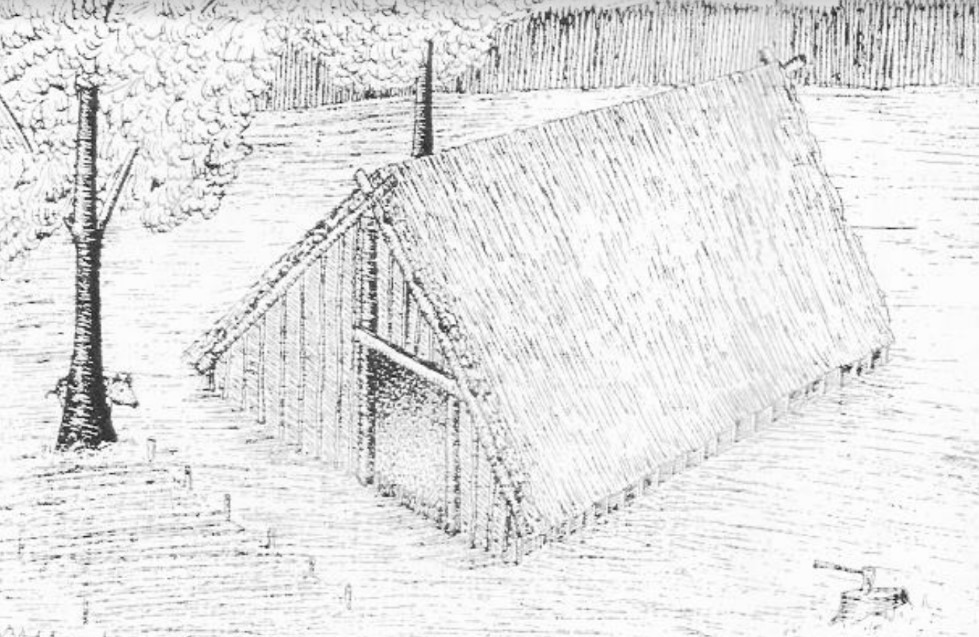
This is what the Aalten hut bowl could have looked like (sketch made by Willem Doodeheefver)
The most striking finds during the excavations in 2024 are the remains of some hut bowls, which became visible due to dark discolorations in the soil. A hut bowl was a half-buried, rectangular building, about three meters wide and four meters long. The pit was 0.5 to 1 meter deep and had no above-ground walls; The roof construction rested partly on ground level. This construction method provided shelter from the summer heat and provided relative warmth in winter.
Hut bowls served as craft rooms, usually on a farmyard. They were used for activities such as weaving, woodworking, metalworking or working bone. Slag was found at one of the hut bowls found at De Hoven, remnants of molten rock. This may indicate that the hut may have served as a blacksmith’s shop.
Waste pits
Several waste pits have been found scattered around the site. The waste left behind by the residents at the time provides valuable information about their daily lives, utensils and the dating of the hut bowls. Among other things, shards of pottery were found in the waste pits, dated around the year 900 AD.
1100 years of habitation
The finds give a picture of the landscape as it looked more than 1100 years ago. A favorable circumstance is that the soil of De Hoven has remained largely untouched during the past thousand years. The name ‘De Hoven’ refers to the gardens that were here for centuries, and the area has remained largely undeveloped to this day.
This and earlier archaeological finds on De Hoven, but also on the Damstraat, confirm that people were already living in Aalten 1100 years ago. This period coincides with a mention of a place that was mentioned in a document from 828 Aladna .
Why this place?
The choice of this place of residence in the early Middle Ages is easy to explain. Aalten is located on seven slopes that were formed in the ice age. De Hoven is located on one of the higher, dry and safe parts. For the residents, it was only a short walk to the Slingebeek, where they could get water and fish. De Hoven is also a stone’s throw from the Landstraat. It is possible that this was already an important traffic route in the Achterhoek at that time, an area that was still quite empty and largely unexplored at the time.
The group keenly inspected the remains of the brick kiln.
Mr H. Hofs from Varsseveld described the uncovering of the remains of an old ticheloven (brick kiln) in the hamlet of ’t Klooster near Bredevoort as a unique find. The kiln dates from 1708. The archaeological fieldwork group of the Antiquarian Working Community of Aalten, Dinxperlo, and Wisch (ADW) has been working for quite some time to carefully uncover the remains of the brick kiln.
The site of the old brick kiln was found partly thanks to Mr W. Lobeek, who used to live on the Götter farmstead. It was this former resident of ’t Klooster who was able to welcome at least eighty interested visitors to the excavation site on Saturday morning. The level of interest was so high that another excursion to ’t Klooster will be organised this coming Saturday. Mr R. Wartena, the regional archivist and an ADW board member, gave an introductory talk on what is known about the brick kiln.
It is virtually certain that this concerns the kiln of Matthijs van ’t Waliën. In return for his services – the planting of a large forest – he received, among other things, approval to build and operate a brick kiln here. The clay was allowed to be dug on the grounds of the monastery. Matthijs, however, was unable to meet his obligations. Many trees died immediately, and the severe winter of 1709 ensured that a third of the trees bit the dust.
Without ceremony
He saw no way to replant the trees, and in those days, protecting employment was not a priority. In 1719, Matthijs was forced to demolish the brick kiln within six months and to remove the bricks within a year. According to the agreement, the waarmanshuis (a worker’s or overseer’s cottage) had to remain standing. No trace of this cottage has been found so far. It is possible, however, that the Götter farmstead is the former waarmanshuis.
The kiln was indeed demolished, but apparently no further than ground level. The floor, with a surface area of 9 by 11 metres, and some small walls have remained, and the clay pits are also still clearly recognisable. Mr Hofs shared some details about the excavations, which the working group has been engaged in since July 1979. The investigations have yielded good results so far, even though they had hoped to find a few more traces in the immediate vicinity of the kiln.
The working group has mapped the remains and will cover them up again shortly. If they were to remain exposed to the open air, not much of them would be left.
In the course of the last century, excavation work repeatedly led to the discovery of the mortal remains of old-time residents of Aalten.
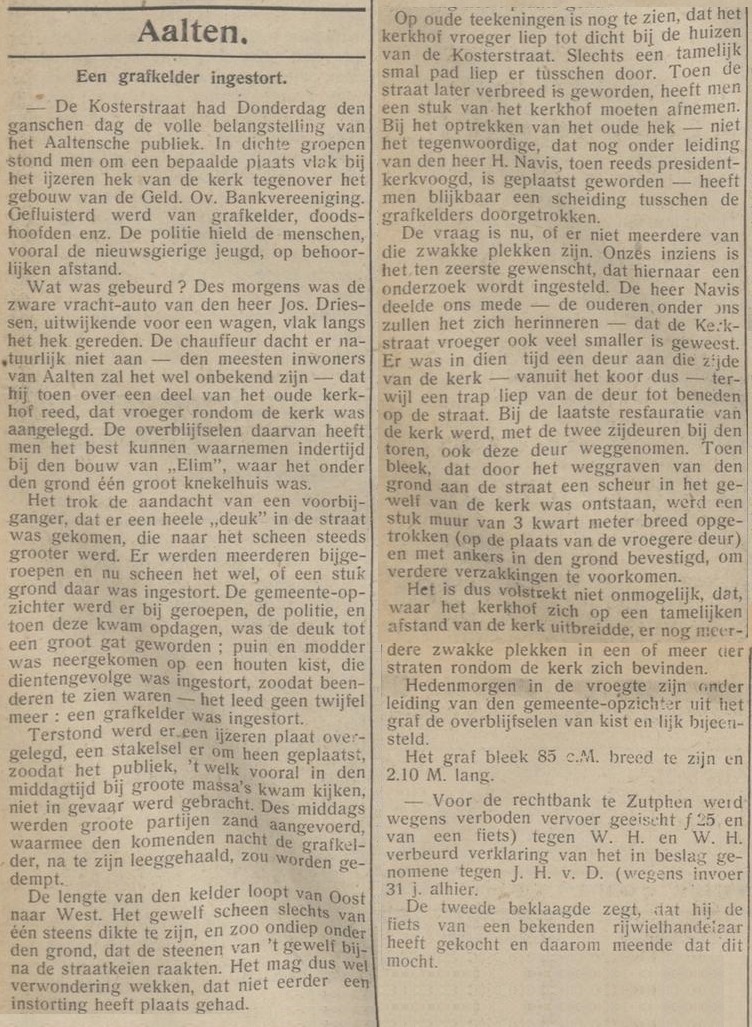
A burial vault collapsed
Nieuwe Aaltensche Courant, 9 July 1920
AALTEN – Throughout the whole of Thursday, Kosterstraat (= Köstersbulte, OA) held the full attention of the Aalten public. People stood in dense crowds around a particular spot close to the iron church gates, opposite the building of the Geld. Ov. Bankvereeniging. There were whispers of a burial vault, skulls, and so forth. The police kept the public, especially inquisitive youngsters, at a proper distance.
What had happened? In the morning, a heavy lorry belonging to Mr Jos. Driessen had driven right alongside the gates whilst swerving to avoid another cart. The driver naturally had no idea – as will indeed be the case for most inhabitants of Aalten – that he was driving over a section of the old churchyard that had formerly been laid out around the church. The remains of this churchyard were most clearly observable at the time “Elim” was built, where it was one vast charnel house beneath the ground.
It caught the attention of a passer-by that a sizeable “dent” had appeared in the street, which seemed to be growing steadily larger. Others were called over, and it now appeared as though a section of the ground had caved in. The municipal surveyor was summoned, as was the police, and by the time they turned up, the dent had become a large hole; rubble and mud had fallen onto a wooden coffin, which had collapsed as a result, revealing bones – there was no longer any room for doubt: a burial vault had collapsed.
Nieuwe Aaltensche Courant, 9 July 1920
An iron plate was immediately placed over it, and a hoarding erected around it, so that the public, who came to look in great numbers particularly during the afternoon, were not put in danger. During the afternoon, large quantities of sand were brought in, with which the burial vault was to be filled in during the coming night, after having been emptied.
The length of the vault runs from east to west. The brick arch appeared to be only a single brick thick, and so shallowly subterranean that the bricks of the arch almost touched the cobblestones of the street. It may therefore give cause for wonder that a collapse had not occurred sooner.
Old drawings still show that the churchyard used to extend close to the houses on Kosterstraat. Only a fairly narrow path ran between them. When the street was widened later on, a piece of the churchyard had to be taken away. When the old gates were erected – not the current ones, which were installed under the supervision of Mr H. Navis, who was already president-churchwarden at the time – a division was apparently driven straight through the burial vaults.
The question now is whether there might be more of these weak spots. In our view, it is highly desirable that an investigation be launched into this. Mr Navis informed us – as the older ones among us will remember – that Kerkstraat also used to be much narrower.
In those days, there was a door on that side of the church – that is to say, leading from the chancel – while a flight of steps ran from the door down to the street. During the last restoration of the church, this door was removed along with the two side doors near the tower. When it became apparent that digging away the ground by the street had caused a crack to form in the vaulting of the church, a section of wall three quarters of a metre wide was erected (on the site of the former door) and secured into the ground with anchors to prevent further subsidence.
It is therefore by no means impossible that, given the churchyard extended a considerable distance from the church, further weak spots exist in one or more of the streets surrounding the church.
Early this morning, under the direction of the municipal surveyor, the remains of the coffin and the corpse were gathered from the grave. The grave proved to be 85 cm wide and 2.10 m long.
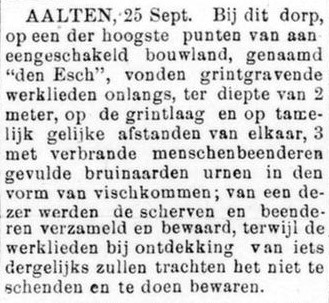
Urns containing cremated human bones
De Grondwet, 21 October 1884
AALTEN, 25 Sept. Near this village, on one of the highest points of a continuous stretch of arable land known as “den Esch”, workmen digging for gravel recently found, at a depth of 2 metres upon the gravel bed and at fairly equal distances from one another, 3 brown earthenware urns in the shape of fishbowls, filled with cremated human bones; the shards and bones of one of these were collected and preserved, whilst the workmen, upon discovering anything similar, will endeavour to leave it undamaged and have it preserved.
Skeletons found at ’t Blik
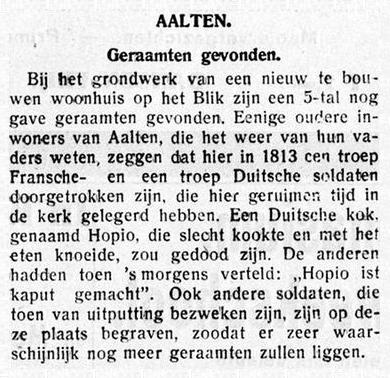
Graafschapbode, 14 July 1925
AALTEN – During the groundwork for a newly to be constructed dwelling at ’t Blik, some 5 fully intact skeletons have been found. Some older inhabitants of Aalten, who know of it from their fathers, say that a troop of French and a troop of German soldiers passed through here in 1813, having been quartered in the church here for a considerable time.
A German cook named Hopio, who cooked poorly and meddled with the food, is said to have been killed. The others had then recounted the next morning: “Hopio ist kaput gemacht” (Hopio has been done for). Other soldiers who succumbed to exhaustion at the time were also buried at this spot, so it is highly probable that further skeletons lie there.
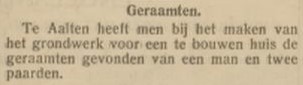
In Aalten, whilst laying the foundations for a house to be built, the skeletons of a man and two horses have been found.
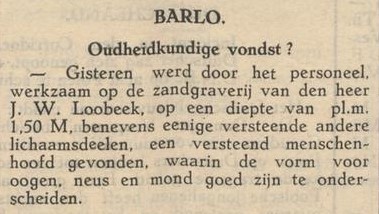
Petrified human head in Barlo
Aaltensche Courant, 21 April 1939
Yesterday, the personnel working at the sand quarry of Mr J.W. Loobeek found, at a depth of approx. 1.50 m, a petrified human head along with several other petrified body parts, in which the shapes for the eyes, nose, and mouth can be clearly distinguished.
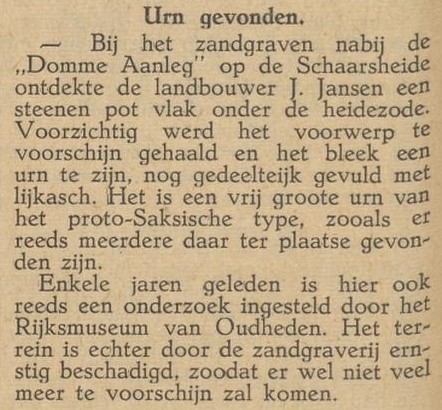
Urn found
Aaltensche Courant, 16 October 1945
Whilst digging for sand near the „Domme Aanleg” on the Schaarsheide, the farmer J. Jansen discovered a stone pot just beneath the heather turf. The object was carefully extracted and proved to be an urn, still partially filled with funeral ashes. It is a fairly large urn of the Proto-Saxon type, several of which have already been found at that location.
A few years ago, an excavation was also carried out here by the National Museum of Antiquities (Rijksmuseum van Oudheden). However, the site has been severely damaged by the sand quarrying, meaning that not much more is likely to come to light.
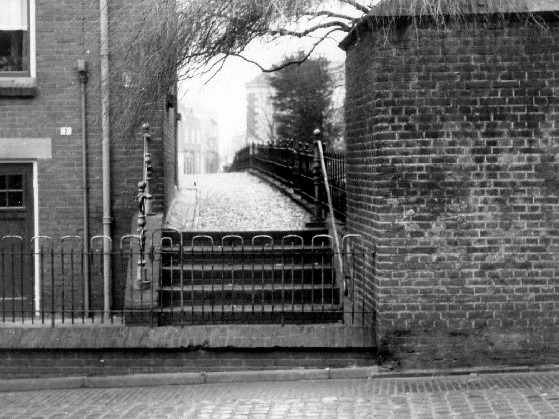
Path between the old Helenakerk and Elim House
Circa 1955
Adjacent we see the ‘trepkes’ (steps) between the old Helenakerk and Elim House. This path was excavated and widened around 1955. During the excavation of the steps, numerous bone fragments came to light from old-time residents of Aalten who had been buried there in the old churchyard.
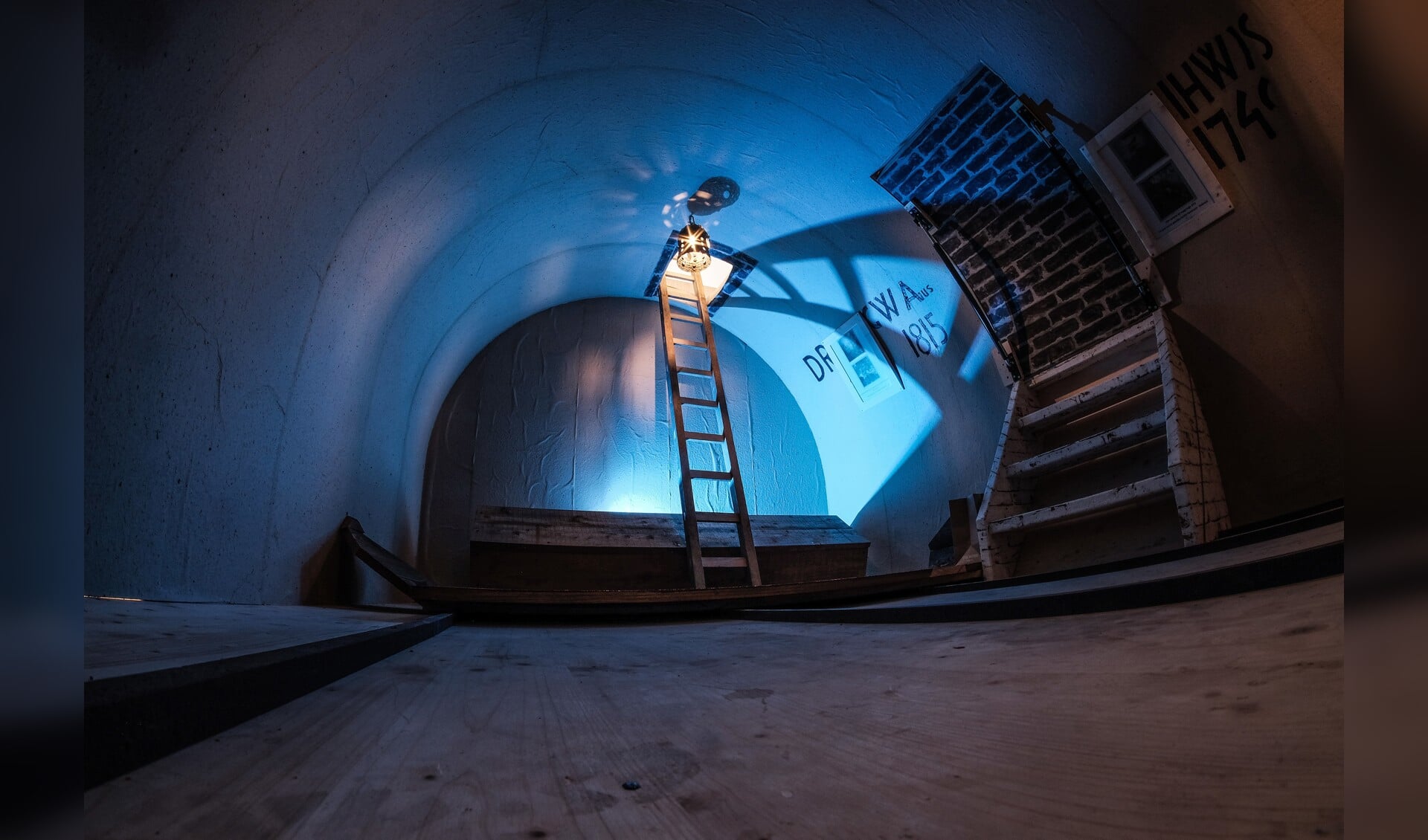
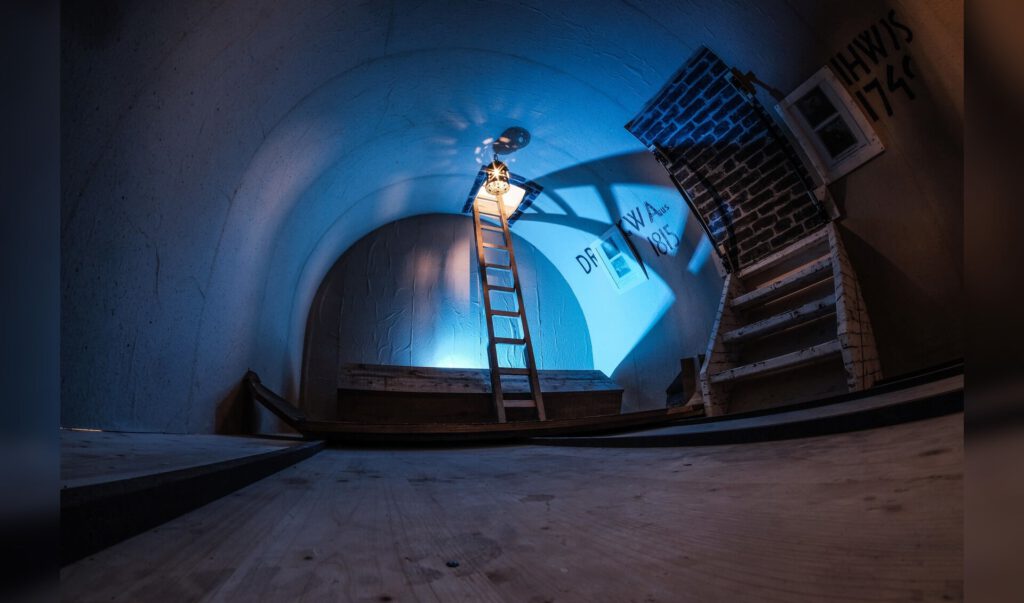
Replica of the burial vault in the old Helenakerk in Aalten, photo: Aalten Vooruit, 4 October 2024
Burial vault in the old Helenakerk
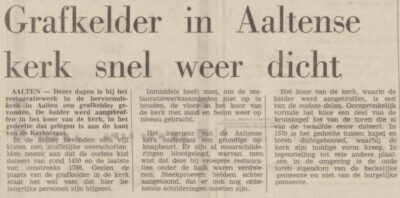
16 October 1973
In 1973, whilst carrying out work in the Oude Helenakerk, carpenter Henk Heijnen discovered a burial vault beneath the floor of the chancel. An outsider had claimed that the ‘last priest’ had been buried where Heijnen was working, together with his golden chalice. Heijnen wanted to know more about this and did indeed discover a burial vault at that spot. The vault did not contain a golden chalice, however, but the coffins and remnants of three sets of mortal remains, with initials and dates on the wall. Decades later, Heijnen made a replica of the burial vault.
In 1973, during restoration work at the Old St Helen’s Church in Aalten, carpenter Henk Heijnen stumbled upon a burial vault beneath the choir containing three coffins with human remains. At the order of the church board, the vault was swiftly resealed. However, before this happened, Heijnen had already climbed inside to meticulously measure and photograph everything. In 2019, Heijnen completed a wooden replica of the burial vault.
The Discovery in 1973
On October 16, 1973, the then 23-year-old carpenter Henk Heijnen was involved in restoration and maintenance work at the Old St Helen’s Church. The floor of the choir had been removed, leaving only sand. During the work, he was visited by Jan Tinnevelt from the Kattenberg, who asked if they were searching for the golden chalice. According to legend, this chalice was buried alongside the last priest of the Old St Helen’s Church. Heijnen’s boss at the time ushered Tinnevelt out.
However, Tinnevelt was persistent, returning at least three more times to ask if anything had been found. This prompted Heijnen to start digging at the spot under the choir that Tinnevelt had pointed out. He soon struck a brick vault. Together with his boss, he used a sledgehammer to create a hole in the structure. Heijnen enlarged the opening until he could descend into the space using a ladder. Below, he found a burial vault containing three partially decayed coffins. Of the deceased, only dust and hair remained. He did not find a golden chalice…
Measured and Resealed
As always, Heijnen had a folding rule, a carpenter’s pencil, and paper with him. Before the vault was closed again, he measured the space precisely, noted the dimensions and initials, and made sketches and photographs of the vault, the inscriptions, and the dates. On the wall of the vault were the initials IHW with the year 1746, GWA with the year 1815, and DR, without a date. He preserved all these notes and images.
Meanwhile, his employer had informed the church council. Around ten o’clock that evening, the members of the church board arrived at the church, accompanied by the Reverend Van der Heiden. The minister pointed out that no one should descend into the vault as it would constitute grave robbery. Because the restoration was being carried out without the involvement of the National Heritage Agency (Monumentenzorg) and there were fears that the work would be halted, Heijnen was sworn to strict secrecy. At the request of the church board, he had to seal the manhole with concrete as soon as possible.
While he was closing the opening, Jan Tinnevelt entered the church once more. Upon realising what had been found, he was again politely requested to leave.
Dagblad Tubantia, 2 March 1974
In the week following the discovery, work began on laying the new natural stone floor in the choir, permanently sealing the access to the burial vault. Only Heijnen’s notes and his employer’s photographs remained as a source. Shortly after the completion of the choir, national news channels reported the discovery of a burial vault in the Old St Helen’s Church; it is not known who leaked this information.
Research and Replica
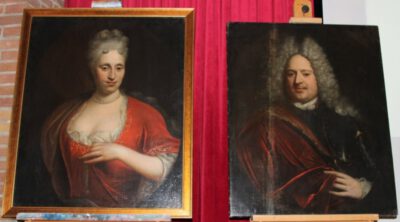
The portraits of Lambert Joost van Hambroick and his wife Mechteld Anna Bentinck-Van Diepenheim, photo: Lydia ter Welle
It was only years later, during a trip to Israel with his wife, that Henk Heijnen visited a burial vault in Jerusalem. This gave him the idea to build a replica of the burial vault in the Old St Helen’s Church.
He produced new construction drawings and came into contact with Herbert Welling from Bocholt and Thaddeus van Eijck from Bredevoort, both of whom were interested in cultural heritage. The trio hit it off, and their combined research led them to the historian J. Grooteboer from Borne.
They discovered that Lambert Joost von Hambroick and his wife Mechteld Anna Bentinck van Diepenheim were closely connected to St Helen’s Church. In 1706, they donated two silver communion cups to the Aalten church, which were later found in a safe within the church.
Replica of the burial vault in St Helen’s Church in Aalten, photo: Aalten Vooruit, 4 October 2024
Who Was Buried in the Vault?
Based on the research, it was determined that the following individuals were buried in the vault:
Judith Hambroick Welvelde († 1746) The connection to the Welvelde and Hambroick families is still visible in the church via the Welvelde coat of arms, which features a wolf’s head.
Gerharda Wilhelmina Arentsen (1777–1815) She had purchased the burial vault at a later date. She was the daughter of the sister of Mayor Christiaan Caspar Stumph and the granddaughter of Roelof Arentsen, the scholte (local official) of De Ahof.
Rev. De Roy († 1762/1785) Uncertainty remains regarding the initials DR. They were linked to a Reverend De Roy. However, in the second half of the 18th century, there were two ministers of that name: Philippus de Roy (1733–1762) and his son Adrianus Rudolphus de Roy (1762–1785). Which of the two might be buried in the vault remains unknown for now.
Completion of the Replica
In 2019, Heijnen completed a wooden replica of the burial vault. Two employees from Broekhout used his drawings to recreate the frame exactly. Heijnen personally handled the painting, including the initials and other details. The replica was later put on public display in the Helenahuis, opposite the church on Landstraat.
Thaddeus van Eijck produced a film titled “Verscholen erfgoed in beeld” (Hidden Heritage Portrayed), which documents the entire process surrounding the replica: from the initial notes and research to the craftsmanship with which the burial vault was reconstructed.
At the presentation of the replica in 2019, Heijnen mentioned that he still always carried his folding rule, even when sitting in church on Sundays, and that he felt nervous if he did not have it on him. That habit led to an extraordinary result: a booklet, a film, the recovery of two silver communion cups, and a skilfully and accurately crafted replica of the burial vault in the Old St Helen’s Church. Hidden heritage, beautifully brought to light.
A report on the presentation of the replica of the Old St Helen’s Church burial vault on the Market Square in Aalten. Video: RTV Slingeland / Henk Nijenhuis
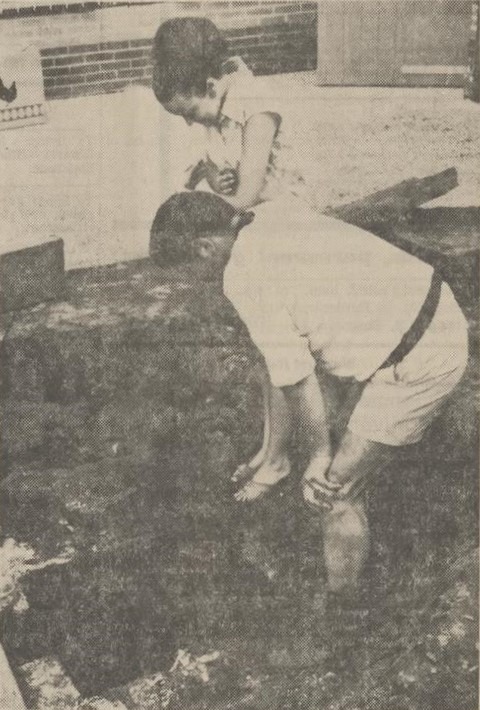
The engaged couple Ossendorf-Hubers in Aalten has no reason to feel down. On the contrary! Their engagement will soon be followed by marriage, and they are already busy furnishing a brand-new home on Molenstraat. And yet, this very house gives Mr. Ossendorf and his future wife reason to be careful not to literally end up in the well—the well found in the garden just behind the house, which is nearly fourteen meters deep.
At this location—as the name Molenstraat suggests—the Aalten mill once stood, the last remains of which were removed last year in the spring. Now, four beautiful homes stand there. The well is over a hundred years old and is constructed of heavy masonry. It belonged to the mill, and the former miller, Mr. Klomps, recalled that the well was to be found somewhere in this vicinity. The future residents of the houses were also informed. All four houses are currently still vacant, but work is already well underway in the gardens. In these gardens, four heavy millstones have since been found.
Mr. Ossendorf also went in search of such objects and the well. After a few “test drillings,” it did not take long before both the millstone and the well were located. That is to say: the well was covered with a millstone. With great effort, the stone—which was no longer in very good condition—was removed in pieces, and the couple then gazed into the depths. According to local residents, the well must have supplied the entire neighborhood with water in the latter part of the previous century. The water is currently at a depth of about thirteen meters. Consequently, the houses will not be much troubled by groundwater. Following tradition, this mill was also built on the highest part of the village.
The well has a diameter of one meter, and climbing bolts have been bricked into the wall, allowing one to descend. Since its rediscovery, no one has yet ventured this experiment. It is unknown what will happen to the deep well. Filling it in or developing it into a beautiful antique well with a lever, for example. That is still a matter of consideration. The latter seems appealing, but in the back of one’s mind, there is also the thought of filling it in before any accidents occur.
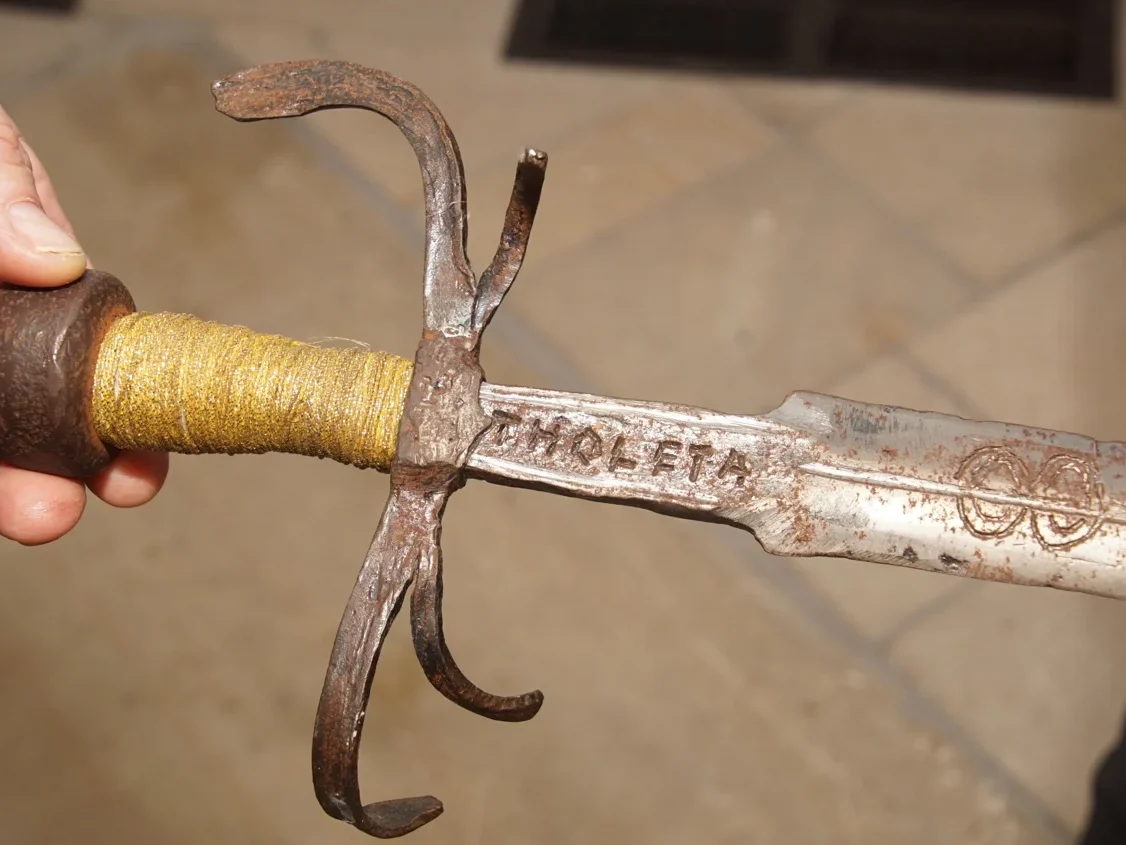
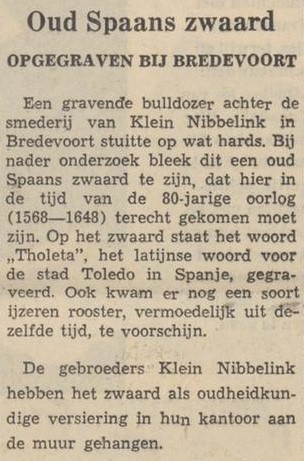
In 1964, during excavation work for the construction of a new workshop on the premises of the Klein Nibbelink smithy, various items were discovered, including remnants of walls, moat fill, wooden posts, and an iron fire grate. However, the most impressive find was a Spanish sword from the Eighty Years’ War, bearing the inscription ‘Tholeta’, the Latin name for the city of Toledo in Spain.
Johan Klein Nibbelink currently has the sword in his possession and tells about it in the video below.
Nieuwe Winterswijksche Courant, 12 October 1964
Sources
Nieuwe Winterswijksche Courant, 12 October 1964 (Delpher)
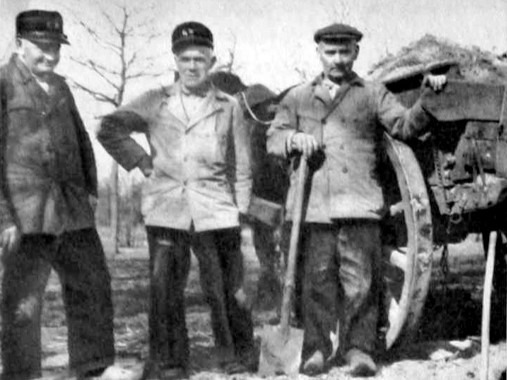
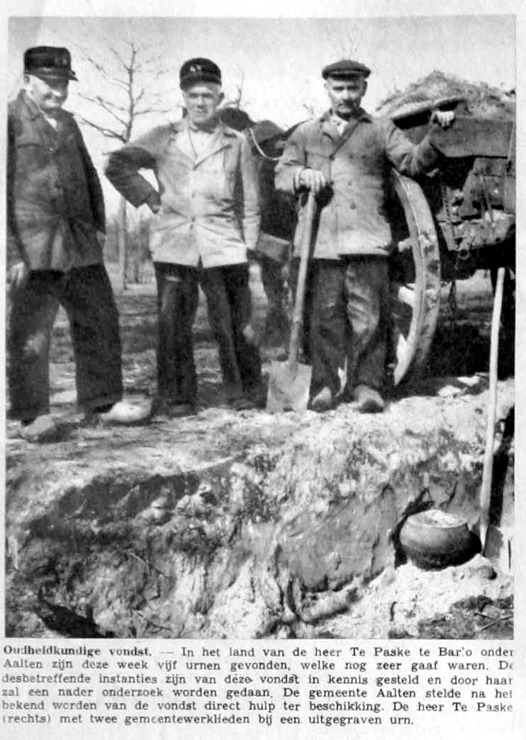
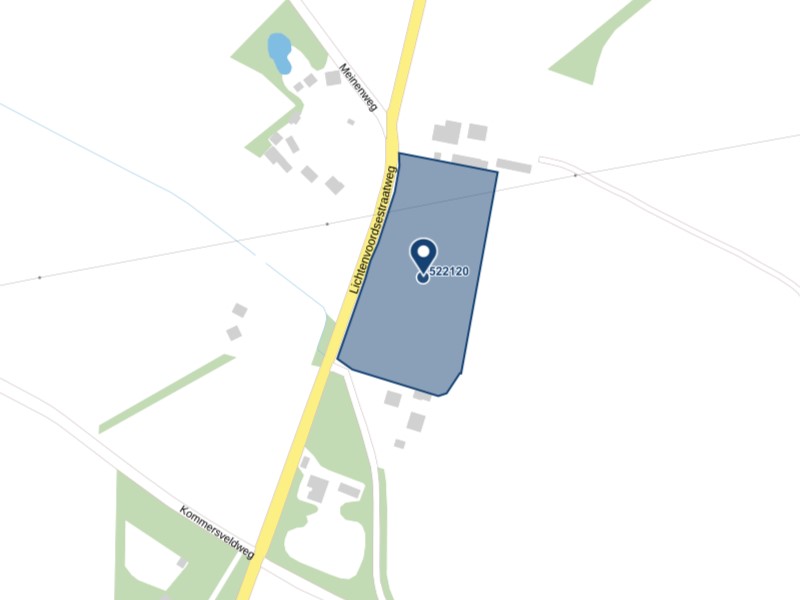
In 1959, remains of an urnfield from the Late Bronze Age and Early Iron Age were discovered on a site near the De Kamp farm on the Lichtenvoordsestraatweg in Barlo. The urnfield was designated a national monument in 2003.
The Arnhemsche Courant reported on 11 March 1959:
“Yesterday, during excavation work at the farm of farmer A.J. te Paske, De Kamp in Barloo, municipality of Aalten, a number of urns were found. During the morning hours, the first urn was discovered at a depth of approximately 40 to 50 centimetres; it was still virtually undamaged and contained skeletal remains.
Mayor E.S. van Veen was immediately informed of this find, after which municipal workers continued with the excavation. Over the course of the day, four more urns were uncovered in an area of a few square metres. A few years ago, urns had already been found about a hundred metres from this site.”
Urns at De Kamp, Barlo (1959)
Zutphens Dagblad, 11 February 1953Zutphens Dagblad, 22 October 1957Arnhemsche Courant, 11 March 1959
In 1932, there was excitement among historians regarding a potential “find of prehistoric value” in the Ringkampsbulten near Aalten. The presence of 2,000-year-old vaulted dome-shaped graves was suspected within an artificial mound there. Excavations were to provide clarity, with unexpected results.
Mysteries
On 9 March 1932, the Graafschapbode reported:
Mr Beernink from Aalten, a member of “de Graafschap”, approached the secretary, Dr Westerbeek van Eerten from Hummelo, with the request to come and conduct an investigation in a heathland area on the German border to the south-east of Aalten. Situated there was a small artificial mound with ramparts where, according to the local residents, things were not quite right. They spoke of pixies, ghosts, ulkenpötte (hobgoblins), and further mysteries.
The Aaltensche Courant wrote on 11 March 1932:
Along the historical road leading from neighbouring Barlo in Germany to the old fortress town of Bredevoort lies, on the right-hand side as one travels in the direction of Germany, a small pine wood, ostensibly identical to several of these woodland plots still to be found on the Haart.
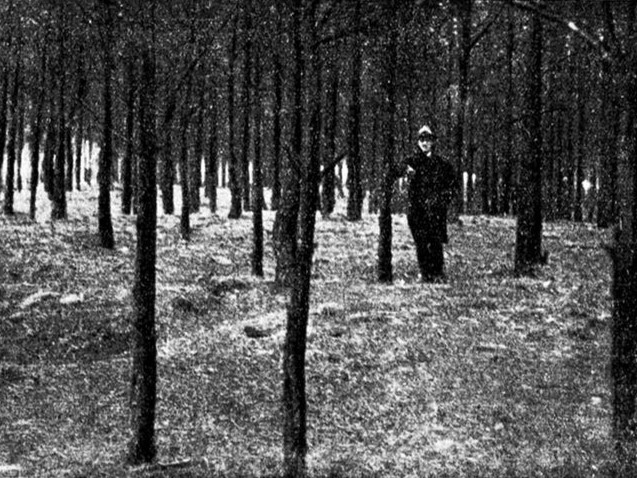
For the historian, particularly the researcher of prehistory, this wood signifies more than just a plot of woodland. For him, the lines and contours of the soil are a page of history – history from thousands of years ago. To the layman, it is a bumpy plot of pines, featuring first a rampart about 1 metre high, then a slight depression, followed once more by a rise in the centre of which is a bowl-shaped hollow.
Upon closer inspection, it appears that the outermost rampart follows a roughly egg-shaped course, with a length of about 100 metres and a width of approximately 50 metres. Within this enclosure sits the aforementioned elevation with its characteristic bowl-shaped hollow, which immediately leads the connoisseur to suspect a “tumulus” or barrow from prehistoric times. At the thickest end of this egg shape (the pointed end lies on the eastern side), we encounter the mound with its bowl-shaped hollow.
A photograph of the presumed “tumulus” in the Ringkampsbulten. Underneath the vaulted ground, 2,000-year-old graves were believed to be located.
Standing upon this mound and looking eastwards, it becomes apparent that this elevation in the terrain – which locally consists predominantly of light yellow fine sand – directly borders a plain which, as far as the eye can see, formerly consisted of marshy ground, but has been converted into agricultural land over the past forty years through effective drainage. Further north, the terrain remains fairly undulating and mainly sandy. A few lower-lying plots have already been brought into cultivation here as well.
The outermost ring or rampart (the site derives its name of “Ringkampsbulte” from this ring) has partially fallen into decay on the western side due to a cart track, whilst a woodland path also intersects the ring in two places. However, when standing on the mound, the characteristic shape of the ring is clearly delineated. The terrain is entirely overgrown with pines, the falling needles forming a soft carpet over the firm ground into which our feet sink. Rabbits, burrowing their holes into the mound, have brought the pure sand to the surface here and there.
Pixies
In popular folklore, it is said that “eerdmannekes” (pixies) have been seen playing on the rampart; furthermore, the mound was reputedly haunted, while older folk recall tales of urns that are supposedly present there. According to the scholars, one is dealing here with a barrow from the Neolithic period – that is to say, from the third or indeed the final period of the Stone Age. The outermost ring, however, is unique.
Mr A.J.G. Beernink of this town, who had been aware of these conditions for years and sensed the history of this piece of nature, informed the government commissioner for the detection of historically valuable monuments of this some years ago, because so much of value had already been lost on the Haart. This warning, however, yielded no result. To prevent unskilful digging and searching, Mr Beernink did not publicise the matter. Fortunately, the land, which is municipal property, remained intact.
In August 1930, the aforementioned gentleman informed Mr Hoefer in Hattem, chairman of the prehistoric society, of his suspicion that a grave or cremation site of the ancient Germanic peoples was to be found here. Initially, nothing was heard in response to this either, but after Mr Beernink had once again pressed the matter with the society, Mr Westerbeek van Eerten came here as the plenipotentiary of the “Foundation for the Protection of Prehistoric Monuments in Gelderland”. Then the ball was set rolling.
Scientific investigation
Shortly, a systematic scientific investigation will begin under the direction of Dr van Giffen. Dr van Giffen considers the find highly important, all the more so since traces of timber construction have been found and the dimensions are unique. The excavation, which must of course be carried out with the necessary caution and usually consists of hoeing away the soil layer by layer in thin slices, will commence before long. This will be done from the south-western side towards the centre, because experience has shown that over such a vast span of time, the topsoil shifts somewhat in a north-easterly direction due to weather influences. With this method, one therefore stands the best chance of finding the actual dome-shaped graves as quickly as possible.
What will be found? Perhaps interesting discoveries will be made even for a layman, in the form of urns and stone objects. The urns, if found, are extremely fragile upon discovery because, being mostly fashioned from clay, they were dried in the sun. Baked urns, which are consequently stronger, invariably dated from a later period. If dried urns are found and are handled and dried carefully, they can sometimes still be saved. For the expert, however, every non-natural modification in the strata provides an invaluable clue.
Thus, for example, dark round spots in the excavation point to a post that was driven in previously, whilst in this manner it has been possible to establish the site where a hut stood thousands of years ago. A ring-shaped site, for instance, enclosed by round dark spots in the lighter-coloured soil, indicates the posts that propped up the hut. Inside such a ring, one then sometimes finds remnants of ash and occasionally prehistoric objects as well.
All objects that are found will be handed over to the local Oudheidkamer (historical museum). When presently the hoe is thrust into the soil, when the scanning eye of the historian searchingly contemplates the exposed earth and finds what is presumed to be found, then this find will prove to be one such as has not been made in the Netherlands, indeed perhaps in Europe, to date. May it be so.
Unexpected result
On 25 July 1933, the Zutphensche Courant reported:
In its annual report for 1932, the board of the Foundation for the Protection of Prehistoric Cultural Monuments in Gelderland states, among other things, the following: At the general meeting of 26 February 1932, a commission was granted to Dr van Giffen to carry out an excavation on the Ringkampsbulte near Aalten, after which Dr van Giffen made a start on the investigation at the beginning of April. Just a few days later, the excavation was halted, as to the astonishment of Dr van Giffen and his staff, it had become apparent that one was dealing here with a natural ring dyke (ringwal), the highly peculiar shape of which had misled the experts.
Close to the ring dyke, however, lies a grave from the La Tène period, and Dr van Giffen suspects the presence of a necropolis there, for which further investigation would undoubtedly be rewarding. This investigation, however, was impossible for the moment due to the condition of the land, so that we hope to be able to return to this later.
Whether any matters of interest have been found in the Ringkampsbulten (since then) remains unknown to us for the time being. Do you have more information? We would love to hear from you!
Historical sources reveal that Aalten was mentioned in 1152 as the parish of Aladon1. This indicates that a church existed at that time, which was presumably located on the same site as the current Old Helenakerk. A mention from 828 (Aladna)2 is not undisputed, although such an early dating for Aalten is certainly possible from an archaeological perspective. Indeed, traces of human habitation from that period have been found both at De Hoven and on the Damstraat.
Burial Ground
In the late 19th and early 20th centuries, a large number of objects were collected during excavation work on Damstraat. Among the finds are 15 pots of widely varying shapes, some of which are beautifully decorated.
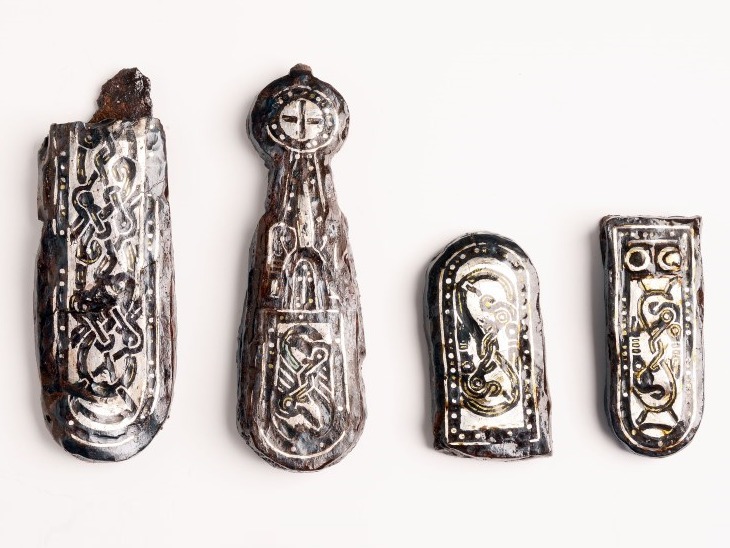
In 1932, under the direction of Professor A.E. van Giffen, a burial ground was uncovered in Aalten behind the Manschot factory, now Manschotplein. Spearheads, stirrups, a shield boss, several small pots, and ten silver links from a belt were found.3 It is not unlikely that these finds originate from the grave of a single warrior.
Part of the Damstraat was likely a Merovingian-Frankish burial ground around the year 800. The Merovingians were a dynasty of Frankish kings. The site has been heavily disturbed by house construction.
Belt fitting, found at Damstraat in Aalten
Medieval Cellar
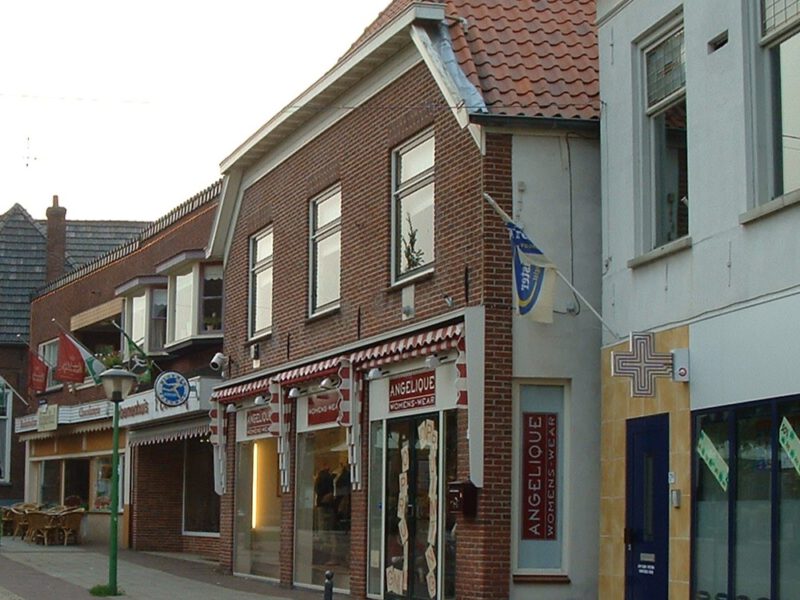
Naturally, a burial ground is associated with a settlement. You will understand that we were very curious about where this settlement was located. In recent decades, a working group from the archaeological society A.D.W. has closely monitored excavation and construction activities in and around the current center of Aalten. In 1981, this resulted in the discovery of a cellar from the 12th century. The find was made in the renovated premises of what was then the Welkamp company (Bredevoortsestraatweg 5). No remains were found of the farmhouse of which the cellar was a part. However, the cellar itself yielded a wealth of information.
Because the cellar had been destroyed by fire, all objects present at the time of the fire were recovered within it. A total of six pots were found which, given their size, must have been used as storage jars. Unfortunately, five of the six pots were broken. A handle from a saucepan, in the shape of an animal head, was also found. Iron slag and a piece of lime indicate a smithy in the vicinity. It is possible that two hinges found were manufactured in this smithy.
Bone remains showed that horses, sheep or goats, cattle, and pigs were kept. Charred grain remains of oats, wheat, and rye were found in a soil sample. With this find, the mention from 1152 was archaeologically confirmed. Several imported shards from Germany point to a dating in the second quarter of the 12th century.4
Settlement
Although this find was important in itself, no traces had yet been found of the older settlement associated with the burial ground. However, during the redevelopment of De Hoven in December 1982, traces of a Frankish-Merovingian settlement were discovered. The remains of a sunken hut from the 9th century5 are an indication that Aalten already existed at that time, albeit under a different name.
A sunken hut should be imagined as a rectangular pit topped by a gable roof. Usually, these sunken huts had a craft function (e.g., a weaving hut) or a storage function. Only the larger ones were possibly also used as dwellings.
This is what the Aalten hut bowl could have looked like (sketch made by Willem Doodeheefver)
After the sunken hut was abandoned, the pit was used as a refuse pit. A large number of bones from the same livestock as in the cellar find were discovered here. The discovery of bone remains from a deer indicates a minor role for hunting. Furthermore, charred grains and seeds such as barley, rye, emmer wheat (a prehistoric grain type), oats, lentils (possibly peas or vetch), pale-yellow hemp-nettle, goosefoot, and sheep’s sorrel were found.
From the fact that pottery types found in the sunken hut also occur in the burial ground, we may conclude that both are contemporaneous. It is therefore not far-fetched to assume that the people who lived at De Hoven buried their dead at the current Damstraat.
Second Find
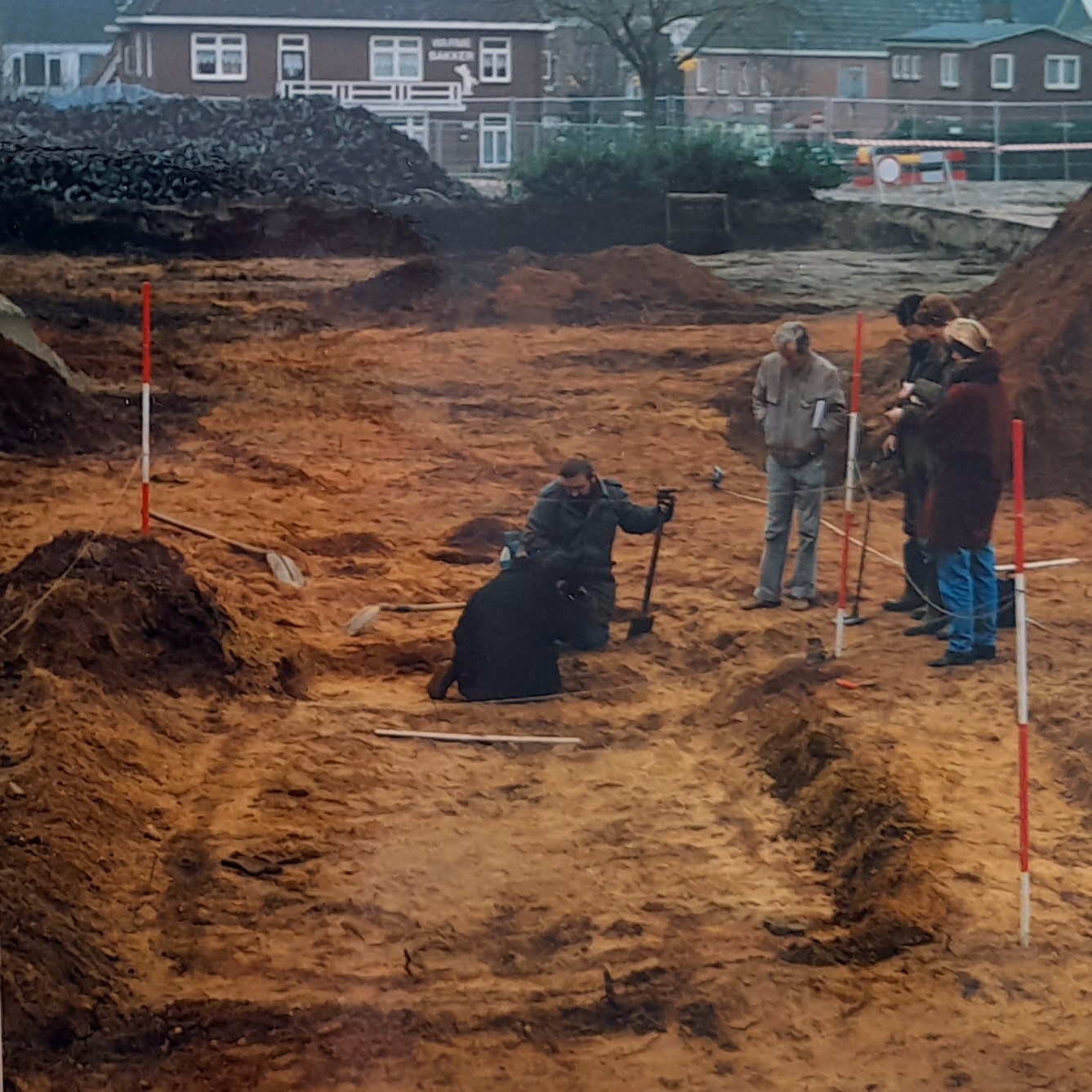
In December 1992, during work at De Hoven, not far from the previous site, remains of a sunken hut were found again, this time probably dating from the 8th century. This sunken hut was found on the grounds of De Hoven where road builder Jaartsveld was carrying out excavation work for the construction of a new parking lot.6
This sunken hut was quite small and had almost certainly been the workshop of a weaver. A groove on the side of the pattern found indicated where the loom had stood. Spindle whorls and clay balls that served as weights for the loom were also found. The sunken hut was smaller than the one discovered in 1982. That one may have been a hut where a family lived.
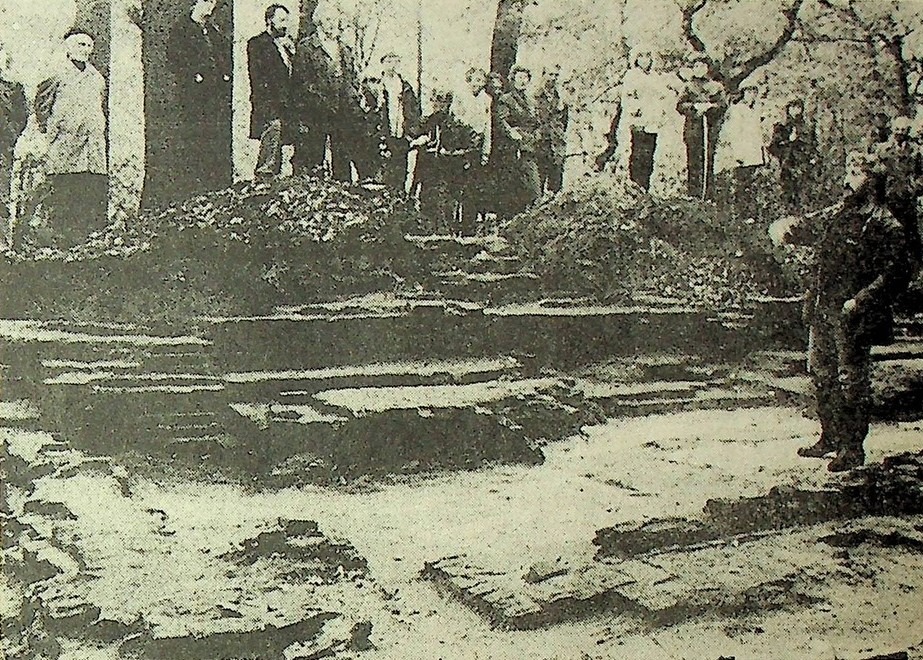
Archaeological research at De Hoven, 1992. Photo: Peter Rhebergen
Willem Doodeheefver, one of the amateur archaeologists involved in the research, told a reporter:
“You know it is an area in the vicinity of which something has been found before. You could see it very clearly during the excavation. Suddenly, in the red sand, the black imprints became visible where posts used to stand. That is always a huge surprise.”
The National Service for Archaeological Heritage (ROB) recognized the importance of the finds and asked the Soil Research Working Group of the Archaeological Society A.D.W. to continue the investigation. An employee of Jaartsveld specifically returned from vacation to further excavate the site using a loader. Several new finds were made during this process. Many of the aforementioned finds can be viewed in the museum on the Markt.
Origin of the place name
Several theories circulate regarding the origin of the name Aalten. But what are they based on and how credible are they? Old Aalten delved into history to discover more about this.