
Historical sources reveal that Aalten was mentioned in 1152 as the parish of Aladon1. This indicates that a church existed at that time, which was presumably located on the same site as the current Old Helenakerk. A mention from 828 (Aladna)2 is not undisputed, although such an early dating for Aalten is certainly possible from an archaeological perspective. Indeed, traces of human habitation from that period have been found both at De Hoven and on the Damstraat.
Burial Ground
In the late 19th and early 20th centuries, a large number of objects were collected during excavation work on Damstraat. Among the finds are 15 pots of widely varying shapes, some of which are beautifully decorated.
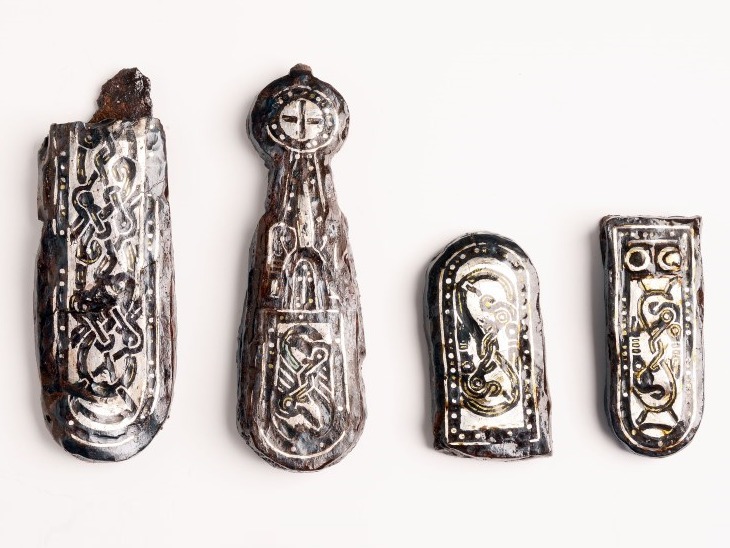
In 1932, under the direction of Professor A.E. van Giffen, a burial ground was uncovered in Aalten behind the Manschot factory, now Manschotplein. Spearheads, stirrups, a shield boss, several small pots, and ten silver links from a belt were found.3 It is not unlikely that these finds originate from the grave of a single warrior.
Part of the Damstraat was likely a Merovingian-Frankish burial ground around the year 800. The Merovingians were a dynasty of Frankish kings. The site has been heavily disturbed by house construction.
Medieval Cellar
Naturally, a burial ground is associated with a settlement. You will understand that we were very curious about where this settlement was located. In recent decades, a working group from the archaeological society A.D.W. has closely monitored excavation and construction activities in and around the current center of Aalten. In 1981, this resulted in the discovery of a cellar from the 12th century. The find was made in the renovated premises of what was then the Welkamp company (Bredevoortsestraatweg 5). No remains were found of the farmhouse of which the cellar was a part. However, the cellar itself yielded a wealth of information.
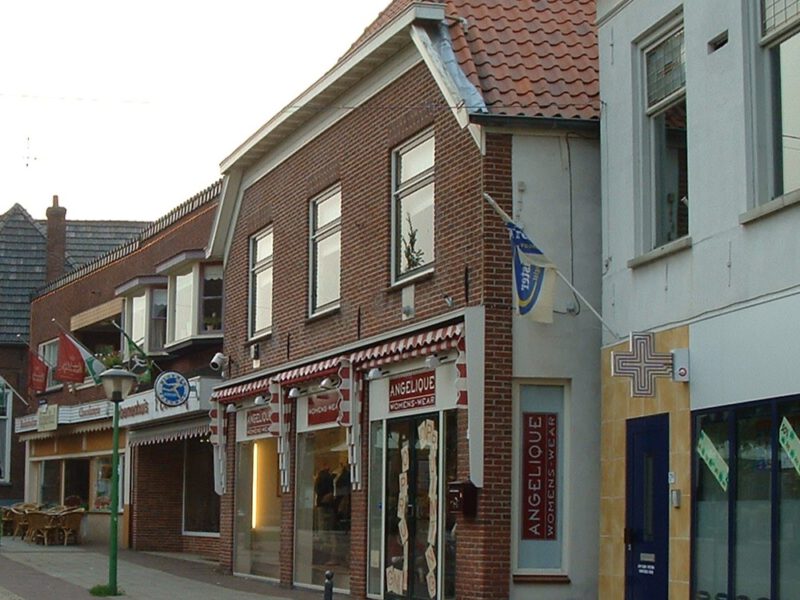
Because the cellar had been destroyed by fire, all objects present at the time of the fire were recovered within it. A total of six pots were found which, given their size, must have been used as storage jars. Unfortunately, five of the six pots were broken. A handle from a saucepan, in the shape of an animal head, was also found. Iron slag and a piece of lime indicate a smithy in the vicinity. It is possible that two hinges found were manufactured in this smithy.
Bone remains showed that horses, sheep or goats, cattle, and pigs were kept. Charred grain remains of oats, wheat, and rye were found in a soil sample. With this find, the mention from 1152 was archaeologically confirmed. Several imported shards from Germany point to a dating in the second quarter of the 12th century.4
Settlement
Although this find was important in itself, no traces had yet been found of the older settlement associated with the burial ground. However, during the redevelopment of De Hoven in December 1982, traces of a Frankish-Merovingian settlement were discovered. The remains of a sunken hut from the 9th century5 are an indication that Aalten already existed at that time, albeit under a different name.
A sunken hut should be imagined as a rectangular pit topped by a gable roof. Usually, these sunken huts had a craft function (e.g., a weaving hut) or a storage function. Only the larger ones were possibly also used as dwellings.
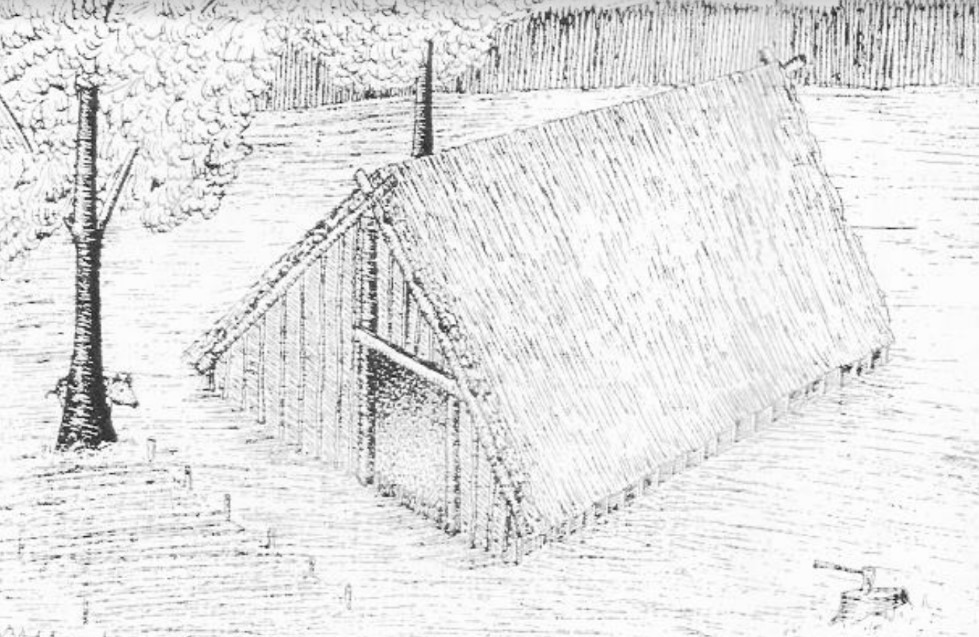
After the sunken hut was abandoned, the pit was used as a refuse pit. A large number of bones from the same livestock as in the cellar find were discovered here. The discovery of bone remains from a deer indicates a minor role for hunting. Furthermore, charred grains and seeds such as barley, rye, emmer wheat (a prehistoric grain type), oats, lentils (possibly peas or vetch), pale-yellow hemp-nettle, goosefoot, and sheep’s sorrel were found.
From the fact that pottery types found in the sunken hut also occur in the burial ground, we may conclude that both are contemporaneous. It is therefore not far-fetched to assume that the people who lived at De Hoven buried their dead at the current Damstraat.
Second Find
In December 1992, during work at De Hoven, not far from the previous site, remains of a sunken hut were found again, this time probably dating from the 8th century. This sunken hut was found on the grounds of De Hoven where road builder Jaartsveld was carrying out excavation work for the construction of a new parking lot.6
This sunken hut was quite small and had almost certainly been the workshop of a weaver. A groove on the side of the pattern found indicated where the loom had stood. Spindle whorls and clay balls that served as weights for the loom were also found. The sunken hut was smaller than the one discovered in 1982. That one may have been a hut where a family lived.
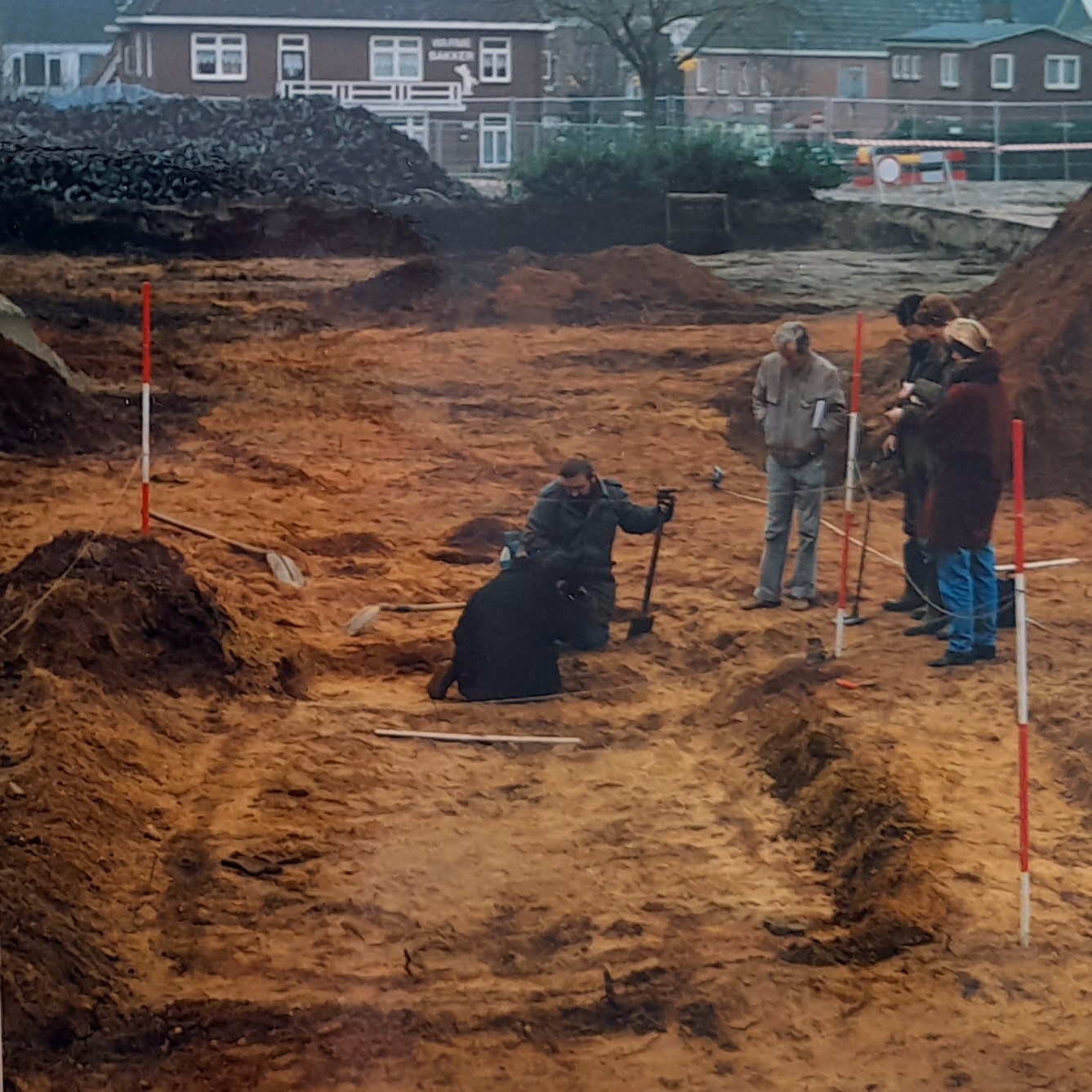
Willem Doodeheefver, one of the amateur archaeologists involved in the research, told a reporter:
“You know it is an area in the vicinity of which something has been found before. You could see it very clearly during the excavation. Suddenly, in the red sand, the black imprints became visible where posts used to stand. That is always a huge surprise.”
The National Service for Archaeological Heritage (ROB) recognized the importance of the finds and asked the Soil Research Working Group of the Archaeological Society A.D.W. to continue the investigation. An employee of Jaartsveld specifically returned from vacation to further excavate the site using a loader. Several new finds were made during this process. Many of the aforementioned finds can be viewed in the museum on the Markt.
Origin of the place name
Several theories circulate regarding the origin of the name Aalten. But what are they based on and how credible are they? Old Aalten delved into history to discover more about this.
Read the full article: Origin of the place name Aalten.
Sources
- Sloet, L.A.J.W. (1872) Oorkondenboek der Graafschappen Gelre en Zutfen, p.292 ↩︎
- Aladna in the Year 828 ↩︎
- Collectie Gelderland, Schatkamers van Gelderland ↩︎
- Schut, P. (1982) Een hutkom of kelder uit de 12de eeuw te Aalten (Gld.) ↩︎
- Schut, P. (1984) Een hutkom uit de 9de eeuw te Aalten (Gld.) ↩︎
- Willink, Joop (dec. 1992) Sporen Frankisch-Merovingische nederzetting (krantartikel) ↩︎