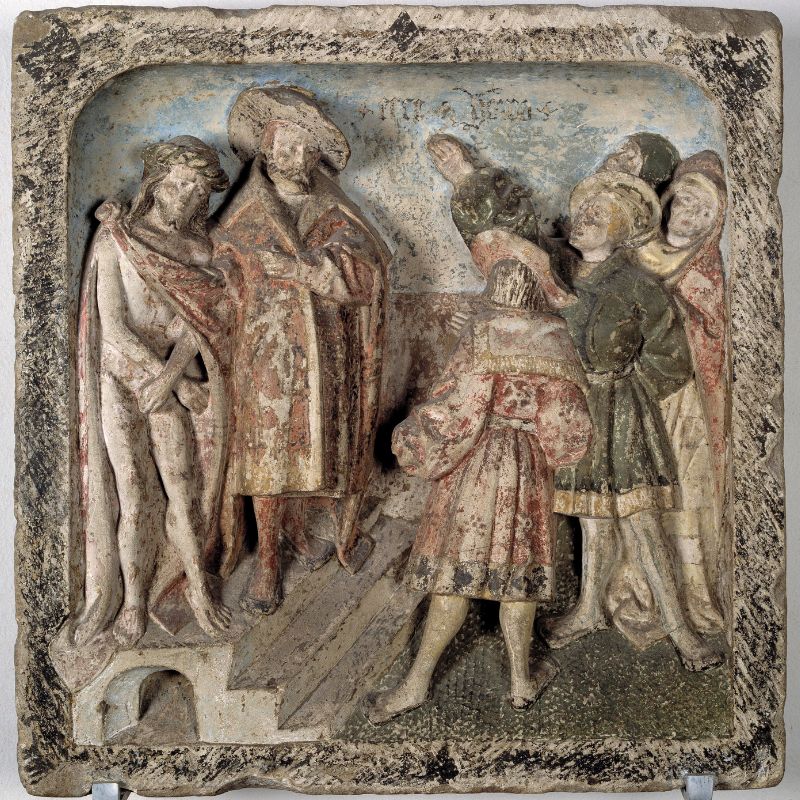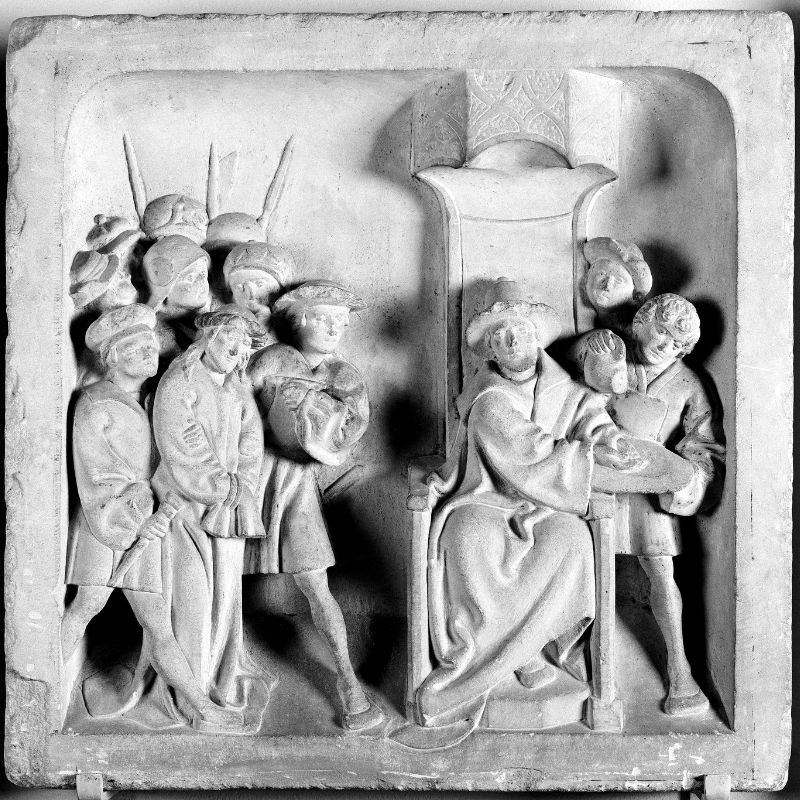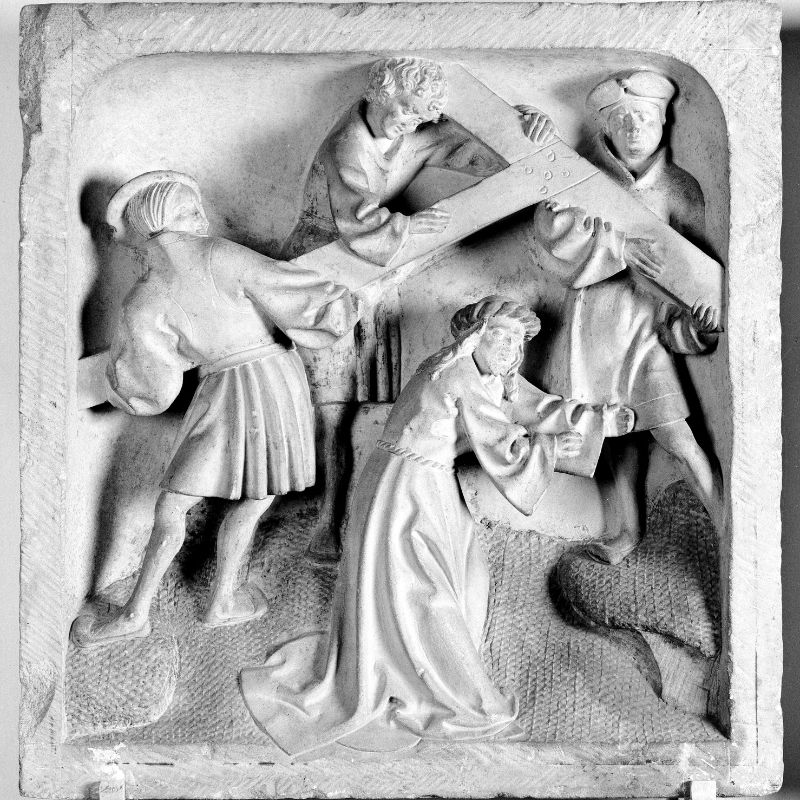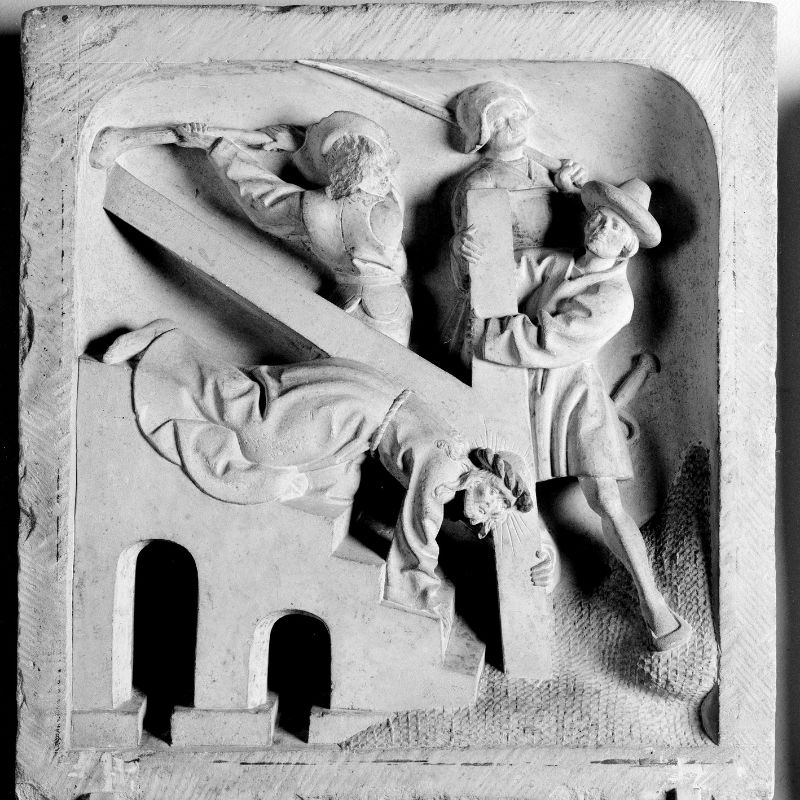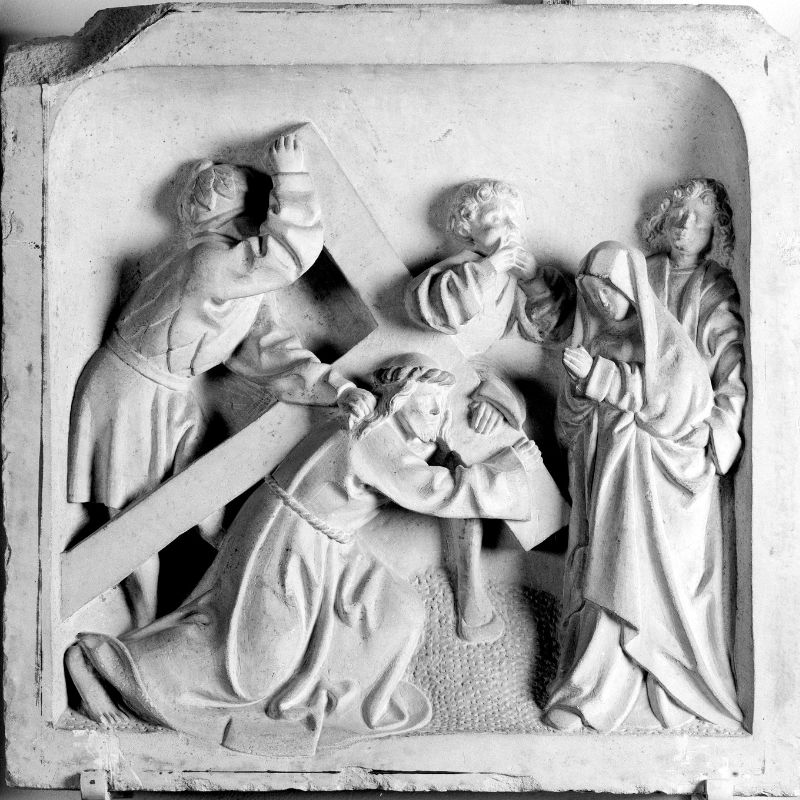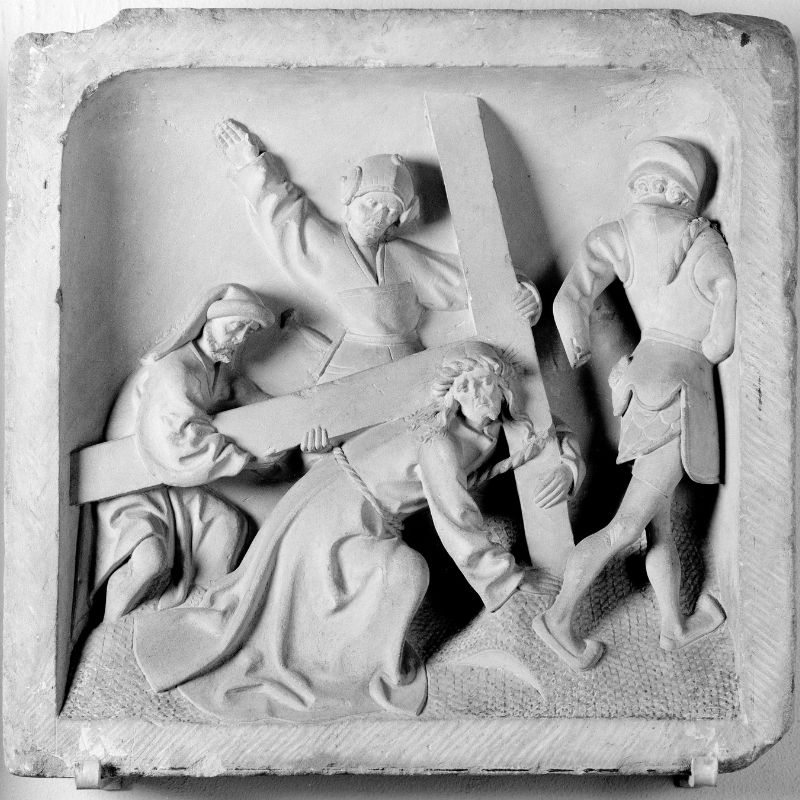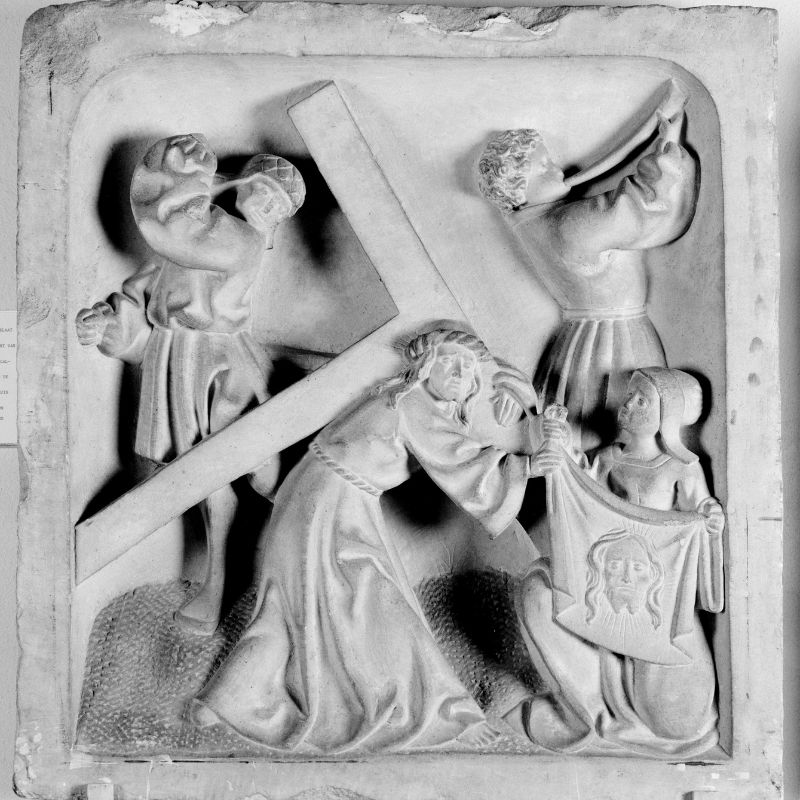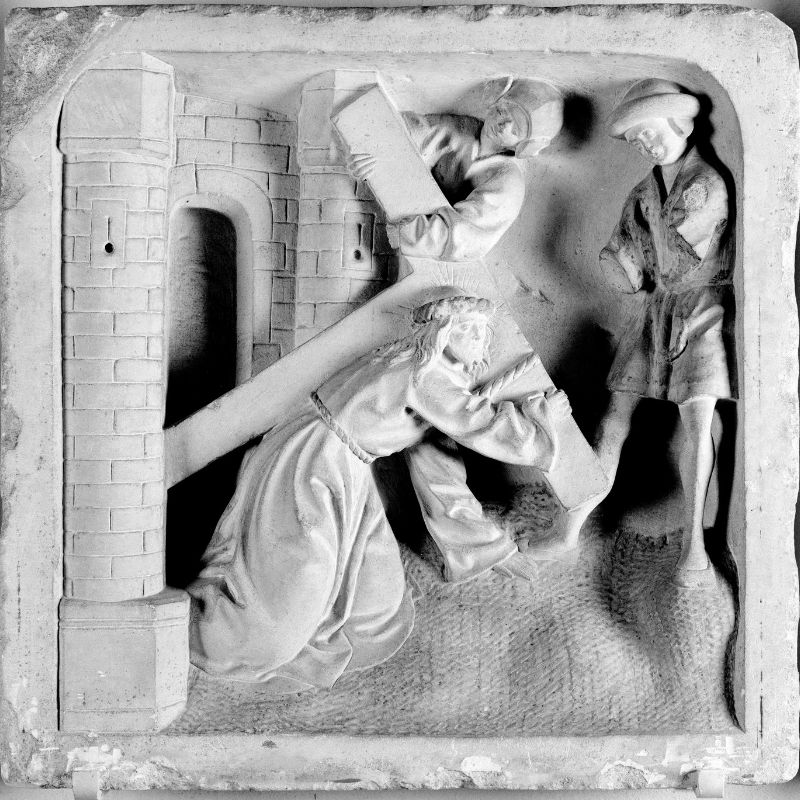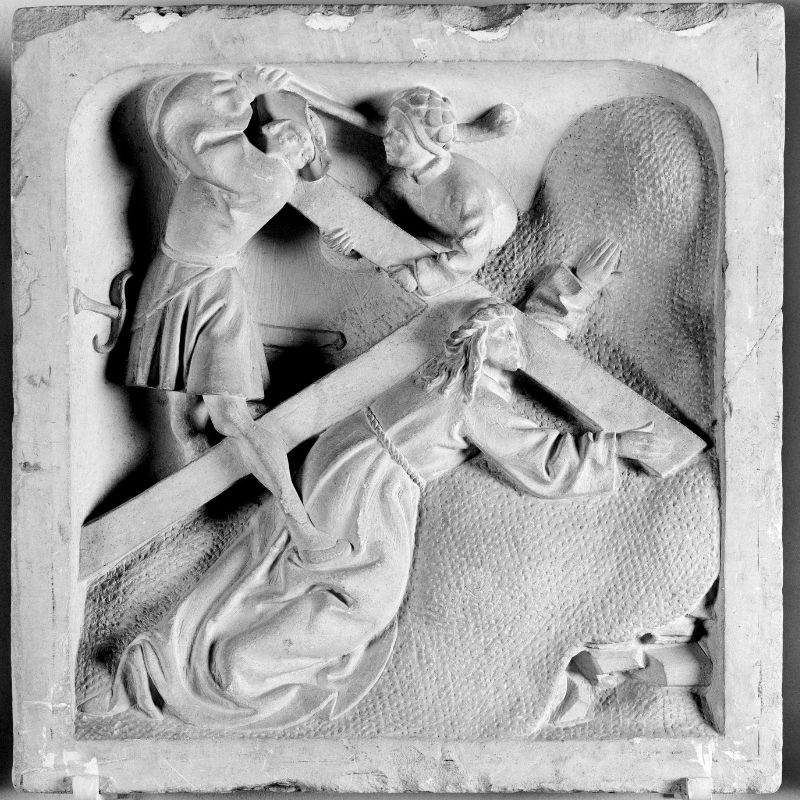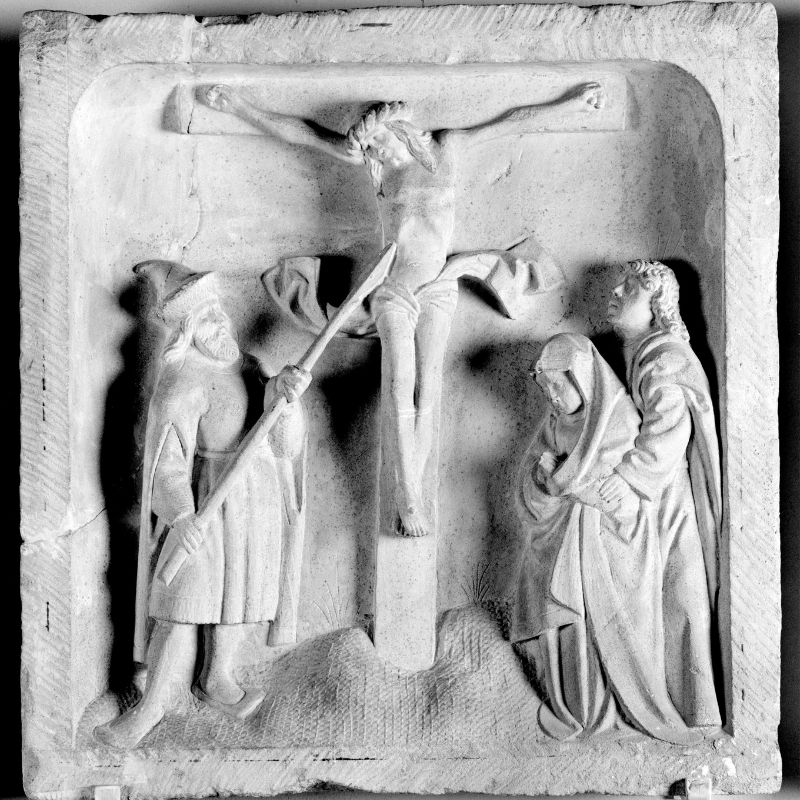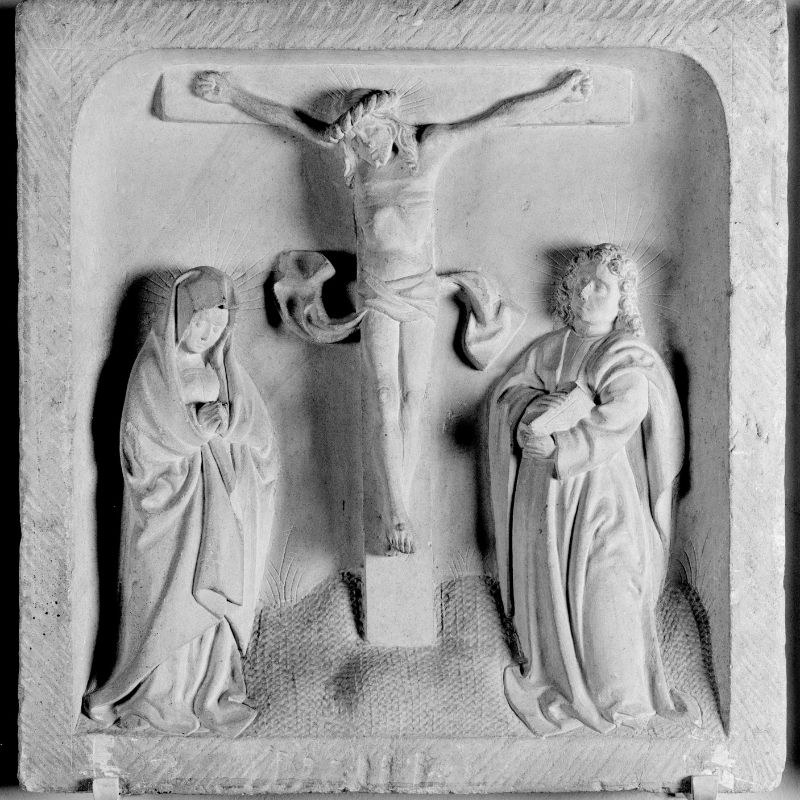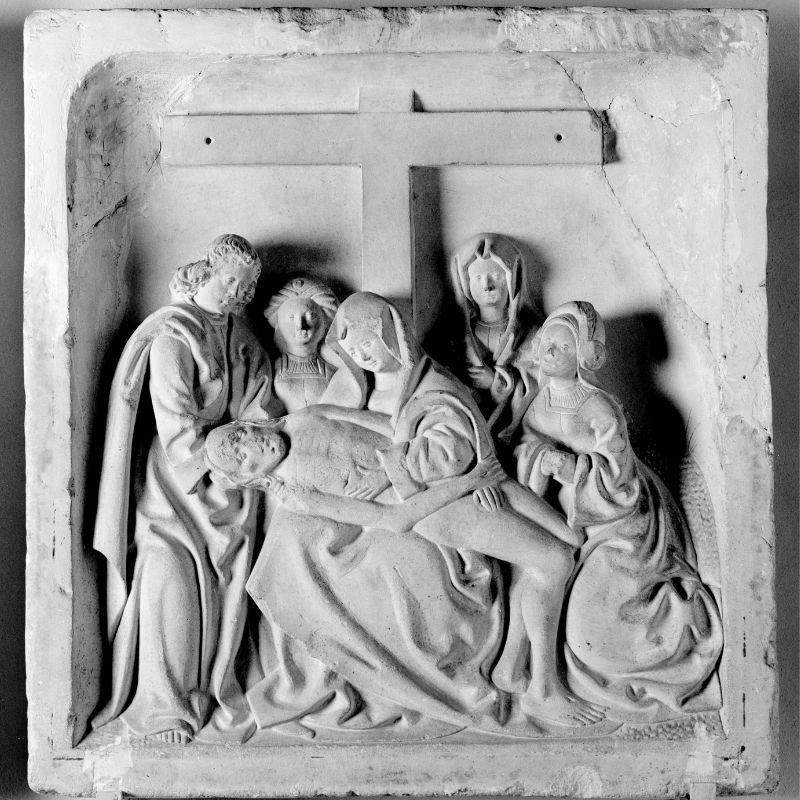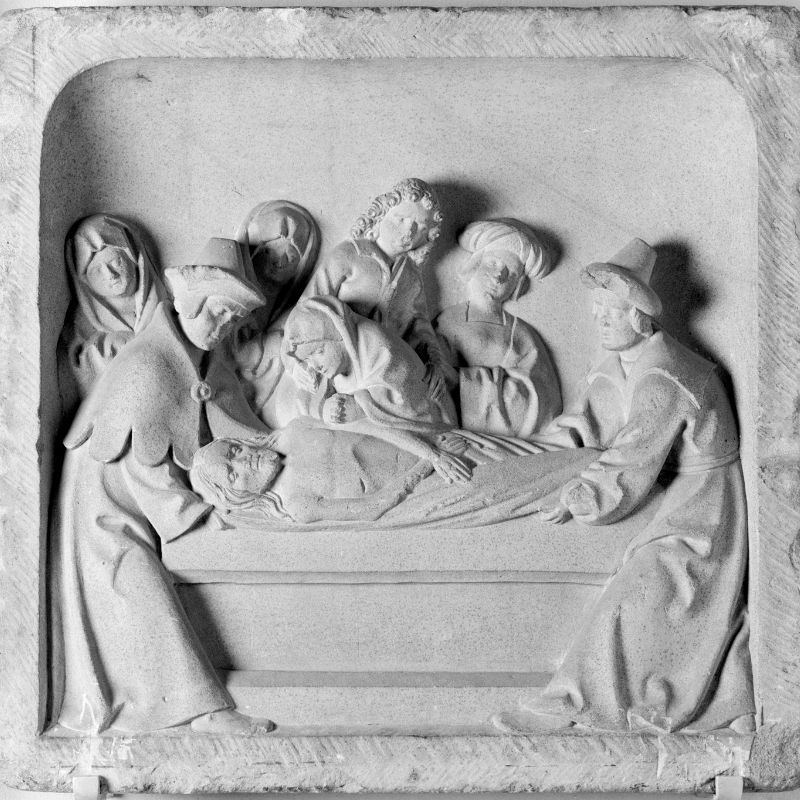
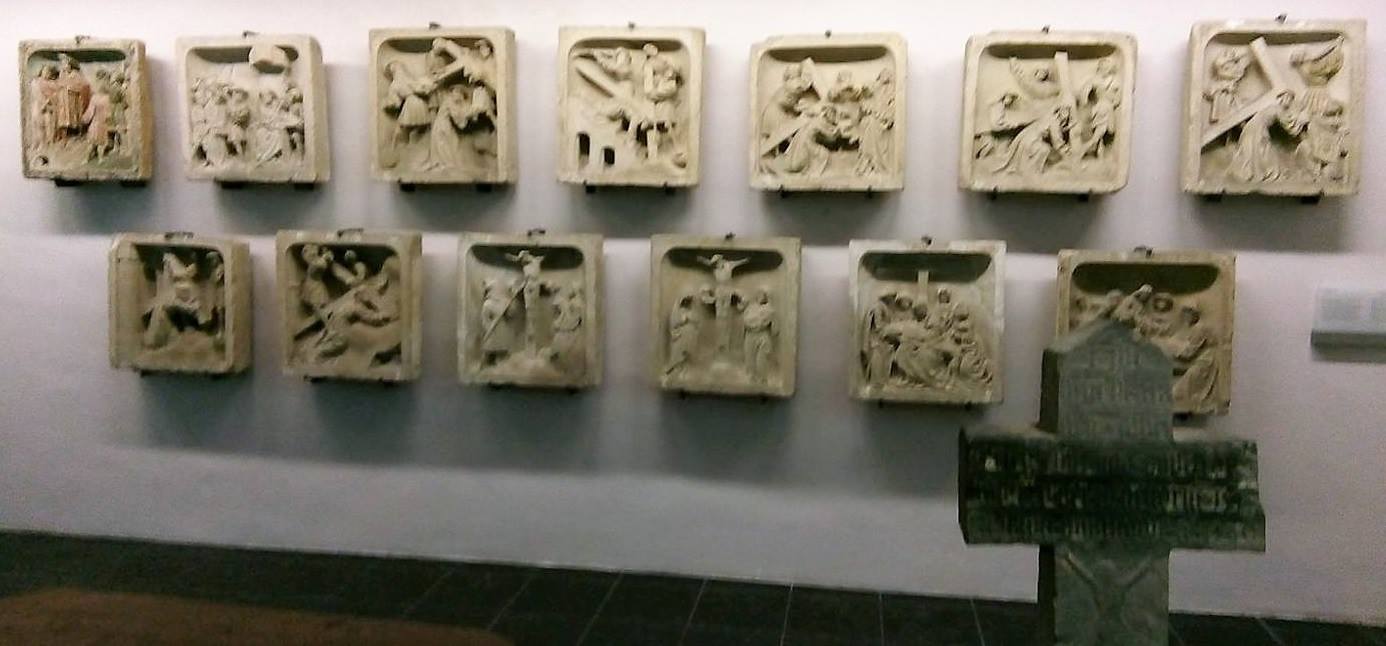
In the Late Middle Ages, a series of thirteen Stations of the Cross depicting the Passion of Christ was erected in Aalten. The stations are believed to have been crafted around 1530 by the Westphalian sculptor Heinrich Brabender. They vanished during the Reformation at the end of the 16th century, but were rediscovered in 1859. The Aalten Stations of the Cross are unique of their kind in the Low Countries. Today, they can be admired in the Museum Catharijneconvent in Utrecht.
Origin of the Devotion to the Stations of the Cross
Towards the end of the Middle Ages, devotion to the Stations of the Cross emerged as a means for the faithful to contemplate the suffering of Christ. The stations depicted the various events that took place during Christ’s journey to Mount Golgotha, where he was crucified. The earliest Stations of the Cross were established by pilgrims who had visited the Holy Land – present-day Israel. The stations were presumably intended to re-enact the journey and served as a status symbol for the founder. By reciting the corresponding prayers at each station, the faithful could earn indulgences, just as they would on an actual pilgrimage.
The Aalten Stations of the Cross
In the Late Middle Ages, thirteen stone Stations of the Cross were placed in Aalten. These square, sculpted reliefs are crafted from Baumberg sandstone, measure approximately 60 by 60 cm, and are about 10 cm thick.
The erection of the Aalten Stations of the Cross must be viewed within the context of the veneration of the Cross in this region, particularly in Westphalia, where Stations of the Cross were common in the Middle Ages. The reliefs were likely made around 1530 in Münster, which was an important centre for Westphalian sculpture at the time. The style of the stations bears a strong resemblance to the work of Johann Brabender, who took over his father Heinrich’s workshop in 1538. Similar stations were discovered in 1934 in the domestic chapel of Havixbeck Castle, near Münster.
The Van Lintelo family may have been involved in the founding of the Aalten Stations of the Cross. In the first half of the 16th century, father and son Evert van Lintelo served as bailiffs of the Lordship of Bredevoort, under which Aalten fell. Bernhard van Lintelo (died 1511), a nephew of Evert senior and cousin of Evert junior, was a canon in Münster and a pilgrim to the Holy Land. Given that Evert senior died in 1529, it is a compelling assumption that he bequeathed money for the creation of the Aalten Stations of the Cross.
Calvary Mount
The original location of the Stations of the Cross is unknown. One theory holds that the stations were built into the churchyard wall or stood along an approach road to the church. Another suggests that the first station stood near the Old St Helena Church, with the remaining stations positioned along the gently rising road through the Aalten Es. The final station is thought to have stood near the present-day water tower, at one of Aalten’s highest points, a place reportedly known at the time as Calvary Hill.
In the Volontaire Protocollen (voluntary registers) of Bredevoort, a mention of the Stations of the Cross on the Aalten Es can be found dated 5 February 1638:
“(…) a piece of arable land (…) situated on the Aalten Esch by the Stations of the Cross (Kruijsswech), with one side adjacent to Bruijninck Land, with one end also adjacent to Bruininck Land, and the other end adjacent to the Heelweg (…)”
Disappearance and Rediscovery
Until the end of the 16th century, the parish of Aalten fell under the Bishopric of Münster. However, with the capture of Bredevoort – the administrative centre of the eponymous lordship to which Aalten belonged – by Prince Maurice on 8 October 1597, the Reformation began in this region as well. This led to the removal of Catholic symbols, including the Aalten Stations of the Cross.
The stations were preserved, however, albeit in an unexpected location. In 1800, the house at Kerkstraat 15 in Aalten was purchased by Roman Catholics, who converted the building into a presbytery and church. In 1859, the property was sold to the manufacturer Eduard Driessen, who had it demolished and rebuilt into a residence. It was on this occasion that the reliefs were discovered. They were found to have been placed upside down and used as a kitchen floor.
On 28 August 1870, Driessen donated the reliefs to the Archbishopric Museum in Utrecht.
Religious Heritage
Today, the Aalten Stations of the Cross form part of the permanent exhibition at the Museum Catharijneconvent in Utrecht. The reliefs are considered the most complete and earliest known example of Stations of the Cross in the Low Countries. As religious cultural heritage, they are of national significance and constitute an important part of the religious heritage of Aalten.
Below are the thirteen Aalten Stations of the Cross. The images are sourced from the website of the Museum Catharijneconvent in Utrecht, photographs by Ruben de Heer (click to enlarge).