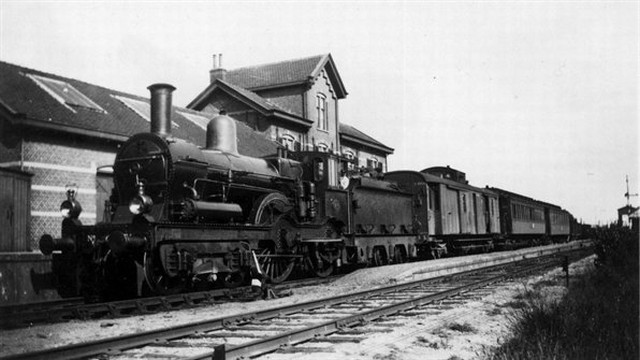
Aalten is situated on the Arnhem–Winterswijk railway line, which traverses the municipality from west to east (or vice versa, if you prefer). However, in the second half of the 19th century, there were also various plans to construct alternative routes running in a (more or less) north-south direction.
Below is some information regarding these plans. It is perhaps superfluous to mention that none of these projects ever came to fruition.
Zutphen–Aalten
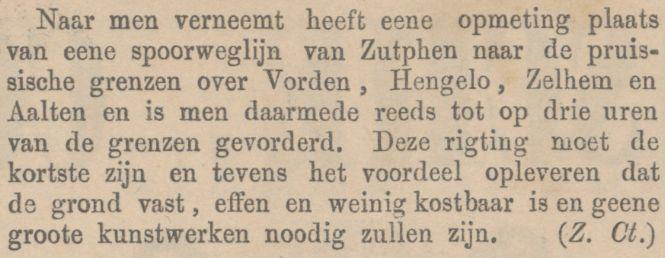
Arnhemsche Courant, 8 September 1865
In the mid-19th century, there were no railways in the Achterhoek yet. However, in 1865, plans were drawn up to build a railway line from Zutphen to the ‘Prussian borders’. The line was intended to run via Vorden, Hengelo, Zelhem, and Aalten. This route would be the shortest and, moreover, offered the advantages that the ground was ‘firm, level, and inexpensive, and no major engineering works would be required’. It is unknown to us why these plans were never executed.
Gelsenkirchen–Aalten–Zutphen
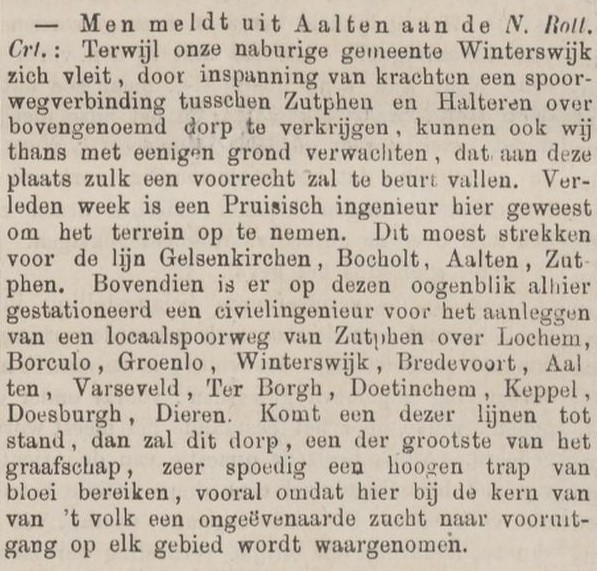
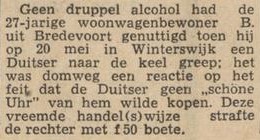
In the spring of 1872, an engineer from the German Eisenbahn-Gesellschaft (Railway Company) in Berlin arrived at Aalten town hall to gather information for the potential construction of a railway line from Gelsenkirchen, via Bocholt and Aalten, to Zutphen. As the adjacent newspaper article shows, plans were already underway at that very same moment for a railway line from Winterswijk heading westwards, passing Aalten.
“Should one of these lines come into being, this village, one of the largest in the county, will very swiftly attain a high degree of prosperity, particularly as an unparalleled desire for progress in every field is observed here among the core of the populace.”
However, these plans were never carried out. This was likely due to the fact that the Nederlandsch-Westfaalsche Spoorweg-Maatschappij (NWS) had only just been founded, having already been granted the concession to build the Zutphen–Winterswijk railway line on 27 March. A year later, the Bergisch-Märkische Eisenbahn-Gesellschaft received the concession for the Winterswijk–Borken–Gelsenkirchen railway line, which would connect to the Dutch line.
Zutphensche Courant, 18 April 1872
Rees–Aalten
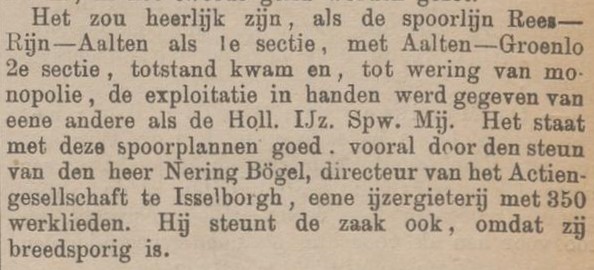
Zutphensche Courant, 5 June 1885
In 1885, there was once again talk of the potential construction of a railway line that would pass Aalten in a north-south direction. This time, the planned route ran from Rees, via Isselburg and Dinxperlo to Aalten. Later, we also found Groenlo added to this list. It was, incidentally, also considered as a steam tramway. At the end of the year, however, the Graafschapbode reported that the preparatory work had been halted due to a disagreement between the German and Dutch sides regarding the location of the Dinxperlo-Suderwick station.
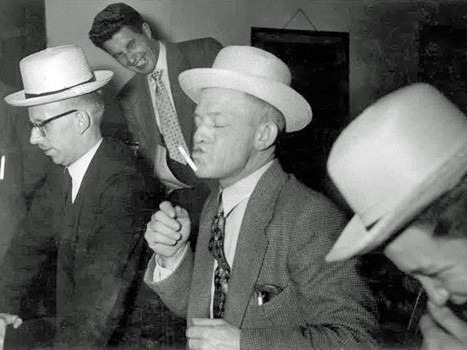
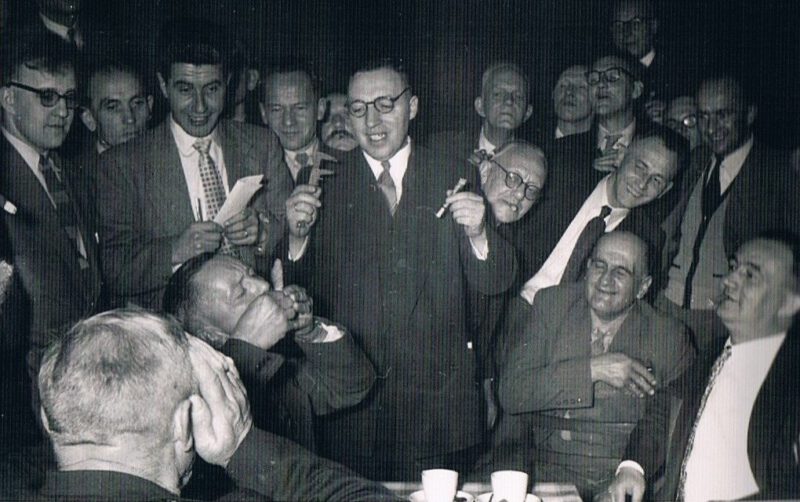
We can hardly imagine it nowadays, but in the last century, competitions were organised in which participants competed against each other in various disciplines related to the smoking of cigars and cigarettes.
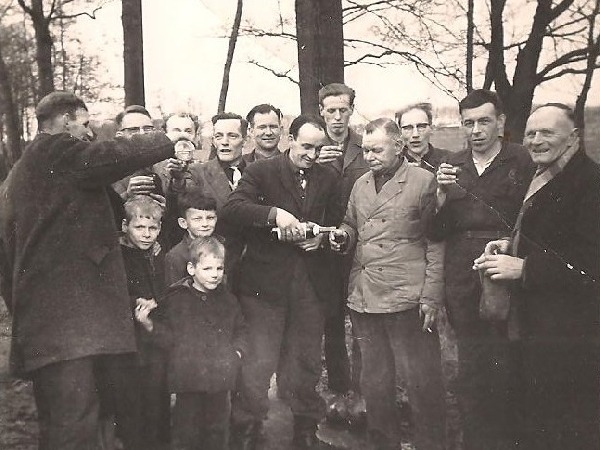
Smoking Competition in Aalten – Photo: Annemieke Klein Hesselink
The Arnhemsche Courant wrote on 6 March 1908:
In the Catholic circle in Aalten, a smoking competition was held in slow and fast smoking. Mr J. Betting received the first prize for fast smoking, smoking his cigar in 7 minutes, and in slow smoking, the 1st prize was won by H. Weijkamp, who took an hour and 45 minutes over his pipe of tobacco. A useful way to pass the time as well!
In the 1960s, Dick Fries organised smoking competitions in Aalten. On the right, you can see a photo of the “Throwing a cigarette butt in the air and catching it in the mouth” event.
Photo: André Heersink
On 21 March 1961, the Dagblad Tubantia wrote:
Aalten has another smoking champion
Mr E. Jentink, Lintelo 67, became the champion cigar smoker of Aalten on Monday evening, for the time being for a year. He won this title during the annual smoking competition held at the Sociëteit on the Hofstraat. As is known, this competition is about the longest cone of ash on a 110 mm cigar. Mr Jentink managed to produce one of no less than 104 mm, however 1 mm shorter than last year’s champion.
The interest in this smoking festival grows every year and had already grown to over 200 participants yesterday. It went without saying that when the command “fire” was given around half-past eight and the brand was lit in over 200 cigars simultaneously, all were soon shrouded in dense mists.
It cost the participants effort to see how far his neighbour was progressing with the ash cone. It did not take long, however, before exclamations of “Oh, what a shame, I’ve lost it” rang through the hall.
After about an hour, there were only a few left who could be eligible for the championship. Very carefully, an attempt was still made to take one last puff in order to stretch for another millimetre. The result, however, was usually a couple of “glowing” fingers and an avalanche of ash over their clothing.
When the last cone had fallen and the balance could be made, it turned out that Mr Jentink had become champion with 104 mm. Mr A. Pokhuizen occupied second place with a cone of 103 mm. For the third prize, there were two candidates, namely Mr A. Driessen and Mr W. Winkelhorst, each with a cone of 102 mm.
After this battle, the participants were treated to a somewhat “lighter” programme, namely with a performance by Rudi Carell and Dick Harris.
Dagblad Tubantia, 19 March 1963:
Champion smoker produced an ash cone of 100 millimetres
Geert did not have it easy
With an ash cone of exactly 100 mm, Mr G. te Lindert, Lankhofstraat 23, became the champion cigar smoker of Aalten last night. It was certainly not an easy task for Geert, because more than 200 hopefuls competed with him for this title. It was the tenth time in succession that this competition was held.
Great tension and “avalanches”
Little has changed, however, over the course of the years. This was hardly possible, for since the first time this competition was held, this gathering has been at the centre of attention. Only the occasion with which numerous participants enter the fray has grown larger annually. For many, it is no longer a “gamble,” as they practise busily months in advance, and many let their nails grow longer to be able to hold the “butt” for as long as possible.
The sociability of the evening and the tension are certainly no less. From the moment the over 200 cigars go “into the fire,” a deathly silence prevails in the hall. “Shrouded in mists,” the jury members move between the tables to use the callipers where necessary.
“Skew burners” and “curvers” are already plentiful halfway through the competition. Familiar phenomena yesterday were again the avalanches of ash, under which a face, lapel, or jacket were often buried.
Geert te Lindert, a true lover of the cigar, succeeded in bringing the ash cone to 100 mm before it fell. How tense the battle was is proven by the 99½ mm ash cone that his competitor, and last year’s cup holder, Mr D.A. Driessen managed to produce. With a cone of 99 mm, Mr L.C. Rodenburg, who also won prizes last year, took third place.
After this exciting battle, a sociable evening was made of it with the cooperation of Lubbert van Gortel and Kees Schilperoort. The NCRV broadcaster recorded the competition for broadcast in the radio newspaper.
Dagblad Tubantia, 9 March 1965:
Smoking competition was a success
With an ash cone of exactly 100 mm, Mr A. Driessen became the winner on Monday evening of the annual and 12th smoking competition, which was held to great interest in the sociëteit. When the starting signal was given at a quarter to eight, the fire was lit in over 200 substantial cigars at once.
Within a few minutes, the smoke was so thick you could cut it, and the participants could hardly distinguish their neighbour. Of course, that was not necessary, as everyone had enough to do with themselves. Especially when the ash cone increases in length, and then often tends to start pulling askew, no one has any need to interfere with their neighbour’s smoking art.
It becomes different when, after half an hour, the first “victims” see their ash cone fall into pieces with a face of “Oh, what a shame.” Then the dropouts gather in large numbers around the survivors who, often at the cost of a blister and twisting themselves into all sorts of contortions, try to add a few millimetres to the wobbly cone by taking a few more puffs. It becomes deathly quiet in the hall, and the tension can be read on the faces.
So too last night, when all attention was focused on the smoking art of Mr Driessen, who finally succeeded in emerging from the smoke screen as the winner. Last year, he also won the 1st prize. If he succeeds in winning the championship again next year, he will become the definitive owner of the challenge cup.
In second place finished Mr H. Arentsen with a cone of 99½ mm. Mr J. Pluimers came in third place with a cone of 99 mm.
After the smoke screen had cleared somewhat, the participants were treated to a cheerful programme, provided by a cabaret company from Apeldoorn, under the motto: “Lachen is troef” (Laughter is trump).
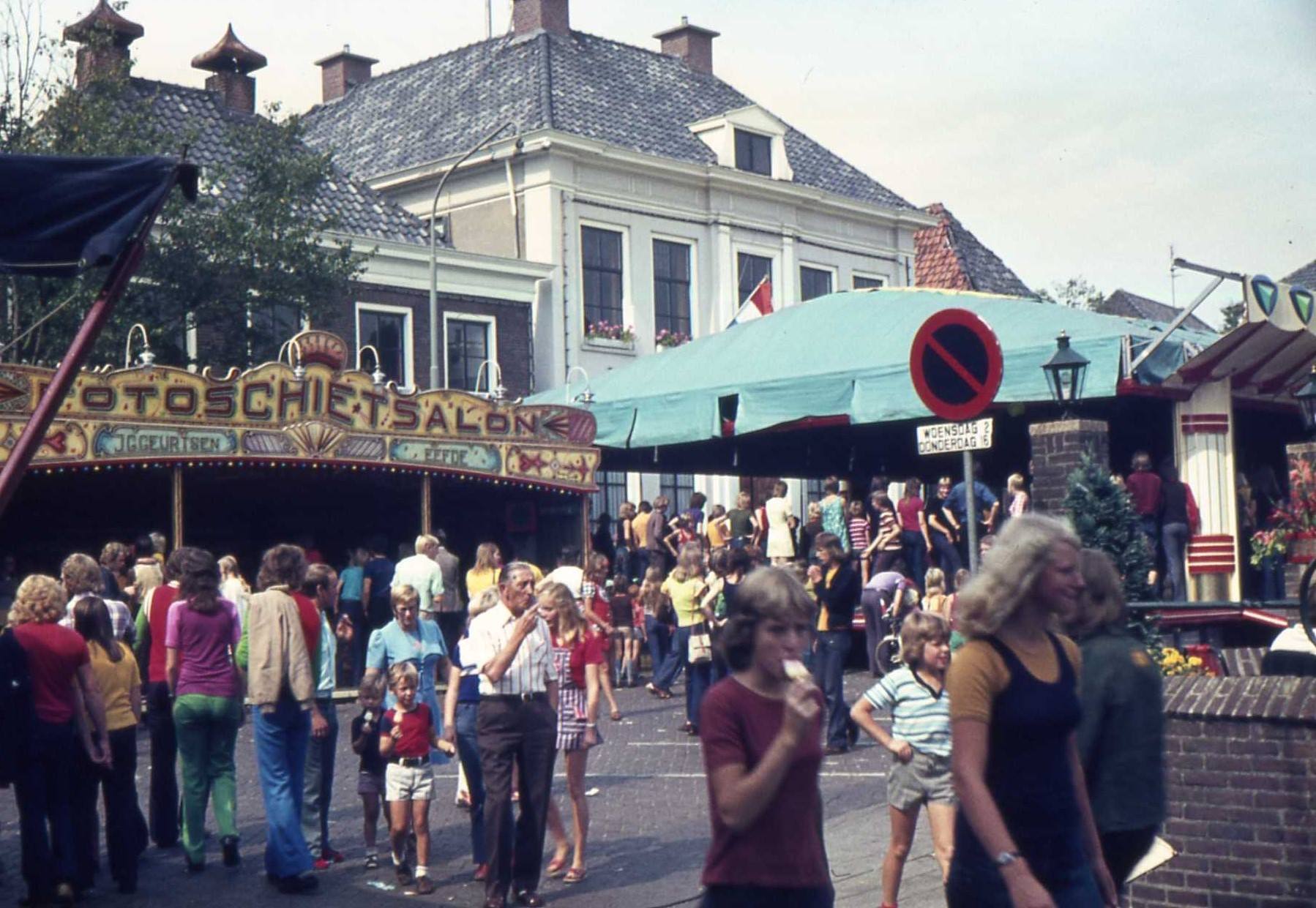
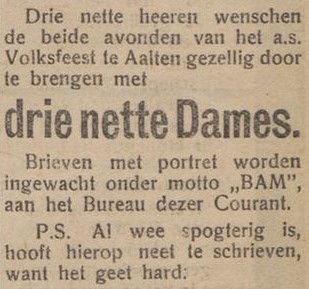
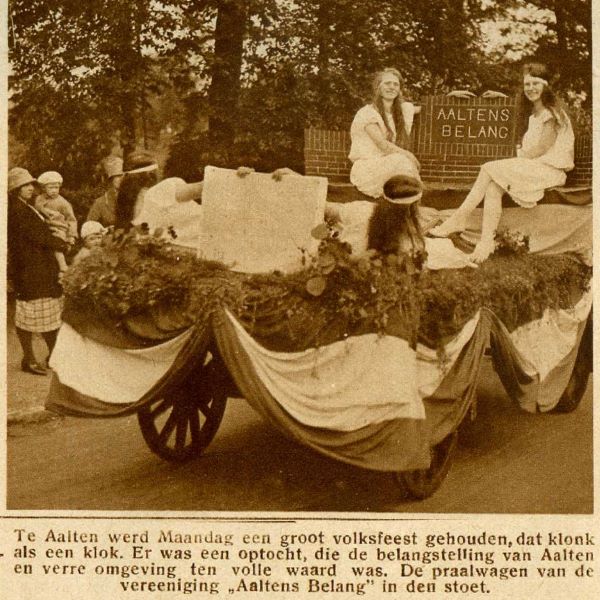
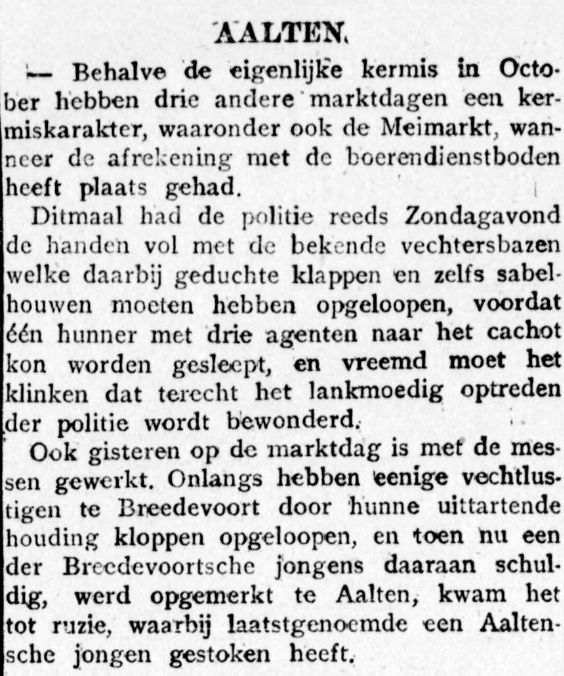
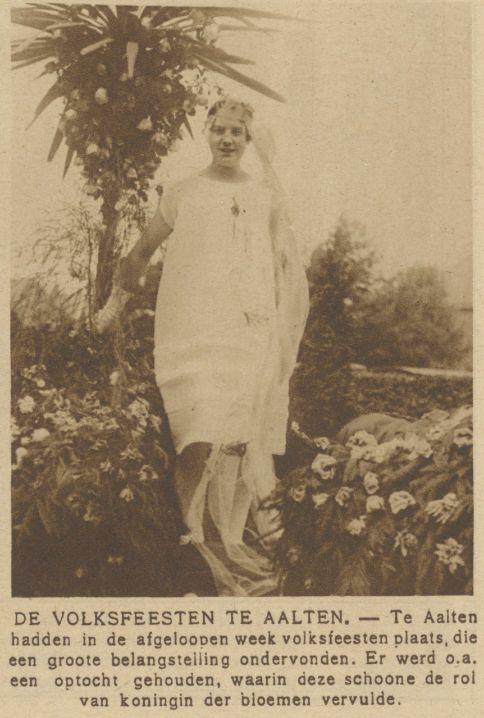
The Aalten Volksfeest is an event that many residents of Aalten look forward to every year. Nowadays, it is celebrated during the third weekend of September. In earlier years, it was also celebrated on other dates. The folk festival is also often referred to as the ‘kermis’ (fair). However, the actual fair, meaning the attractions, is nowadays called the ‘lunapark’.
For many decades, the king shooting and the fair were held on the grounds near the Community Hall / ‘De Pol’. Nowadays, however, these activities take place in the center, primarily on the Markt and the Hoge Blik.1
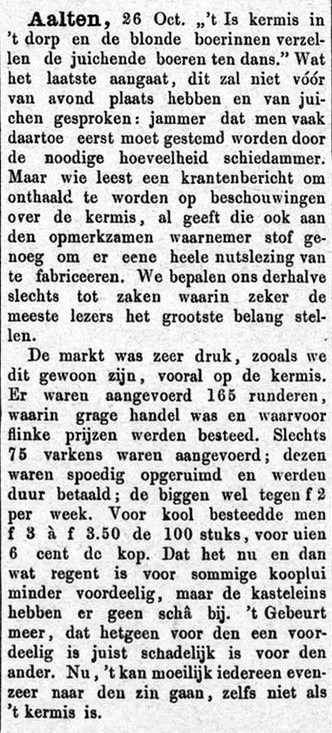
The oldest mention of the fair in Aalten dates back to 1835. That year, the ‘Geldersche Volks-almanak’ mentioned that the fair in Aalten would take place on October 19.2
In the ‘Eleventh report on the state and activities of the Dutch association for the abolition of strong drink’, published in 1855, it is written: “the fair in Aalten is insignificant, mostly children’s joy”.3
Volksfeest 1876 – silver medal
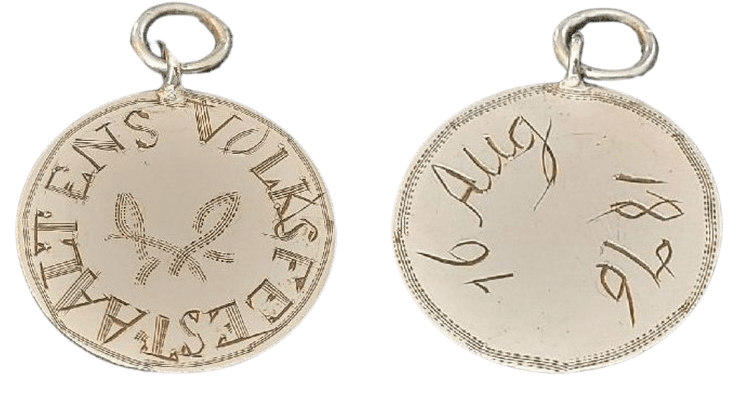
Medals are often a material reminder of an event in the past. This also applies to the small medal depicted here:
Silver medal Aalten Volksfeest, 1876 (photo: H. Schutte)Zutphensche Courant, August 12, 1876
The medal consists of a silver plate with a diameter of 22 mm, to which an eyelet has been soldered. The front is engraved with the text: AALTENS VOLKSFEEST, with a ribbon surrounded by a border of stripes. On the reverse is the date 16 Aug 1876, within a border of small lines and stripes. The edge of the medal is serrated; the plate is presumably a ground-down coin. It is striking that the engraving was carried out quite amateurishly.
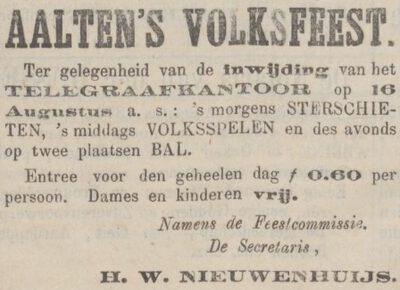
Regarding the occasion for the folk festival, the Zutphensche Courant of August 12, 1876, reports: the opening of the Telegraph Office in Aalten. The precise reason for the production of the medal is unknown; it may have been awarded as a prize during the star shooting.4
Stichting Volksfeest Aalten
In September 1973, a ‘Volksfeest Committee’ was established, created by the merger of the Community Hall, the Schuttersvereniging (Marksmen’s Association), and the Fair Committee. Later, this became the ‘Stichting Volksfeest Aalten’. Ten years later, Wout Delleman (1927), Jan Willem Bilderbeek (1920), and Johan Diederik Beskers (1918) appeared before notary Obbink for the establishment of Stichting Volksfeest Aalten (SVA).
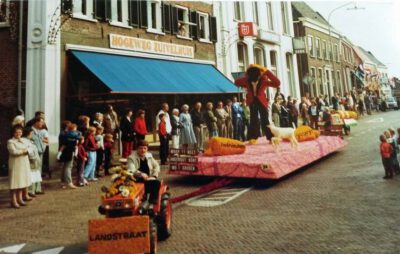
Parade during the Volksfeest in Aalten, 1970s
The core activities of Stichting Volksfeest have hardly changed in 50 years. Long before SVA was established, a festival, then called a fair, was organized every year. Children’s games, a lantern parade, king shooting, and the Allegorical parade are traditionally part of the ‘festival for everyone’. The locations have changed several times, and the Volksfeest has also moved from June to the third weekend of September.
Previously, the Volksfeest was held from Thursday to Saturday. Since 2014, Sunday has been added to the program with Frühshoppen.
The tradition of king shooting has been known in Aalten since well into the last century. In addition to king shooting, Aalten also had ‘fladder’ and target shooting, and bird clubbing for ladies. Furthermore, at the beginning of the last century, one could also participate in ring tilting on horseback or bicycle.
The winners of the shooting competitions on Friday may call themselves king, queen, and youth king/queen of Aalten for a year. The following day, they are driven around in a carriage or cabriolet during the allegorical parade to greet the public. This is followed by the tribute to the flag by the flag wavers of St. Helena on the Markt.
King Shooting
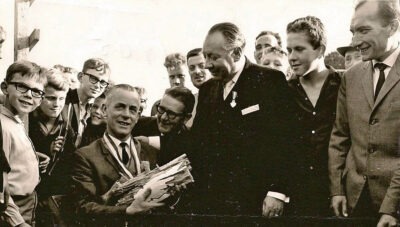
Marksman King Mr. Veldhuis, ca. 1965 (photo via H. Schutte)
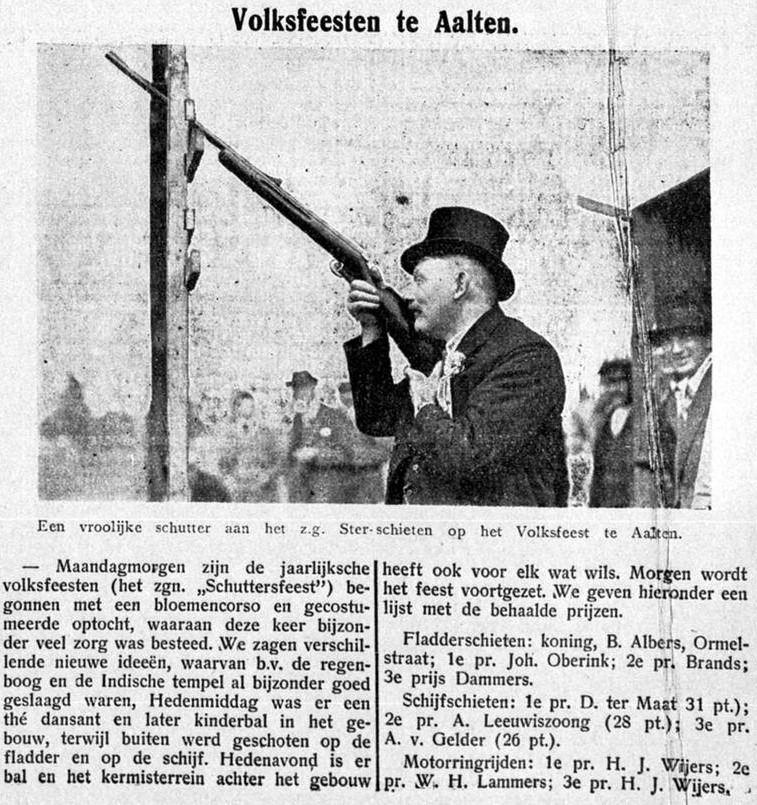
A traditional part of the folk festival is the king shooting or bird shooting. King shooting is an old custom found in large parts of Europe. King shooting originates from the schuttersfeest, the annual festive folk entertainment of the local marksmen’s guild.
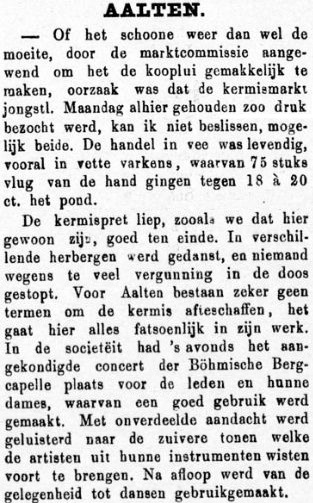
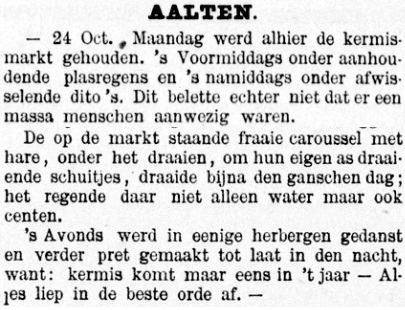
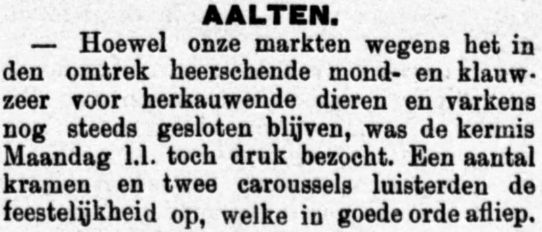
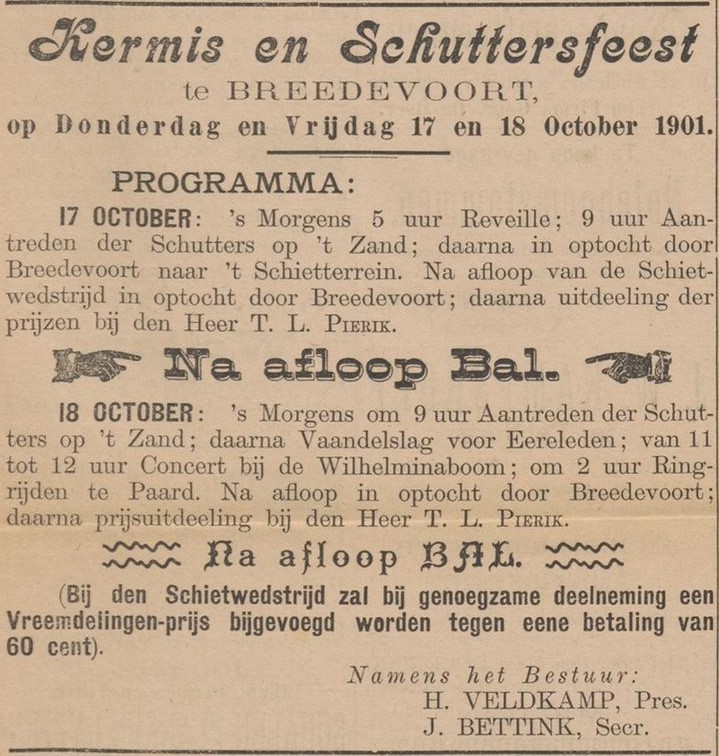
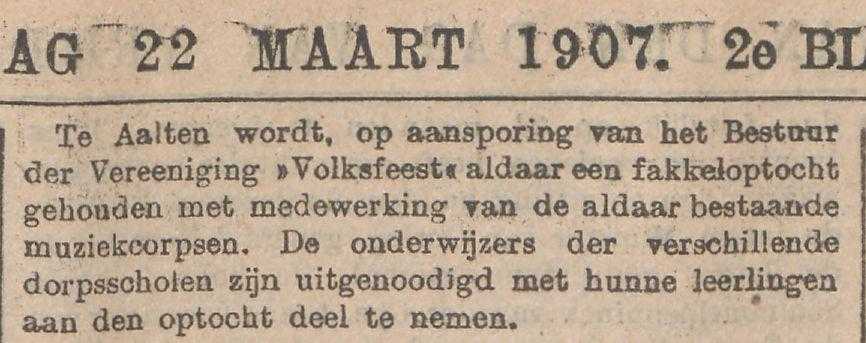
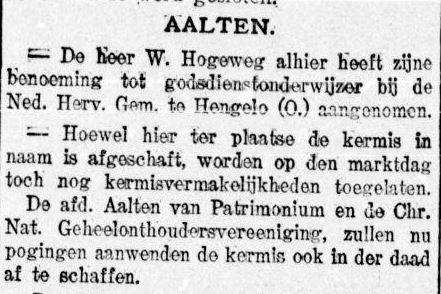
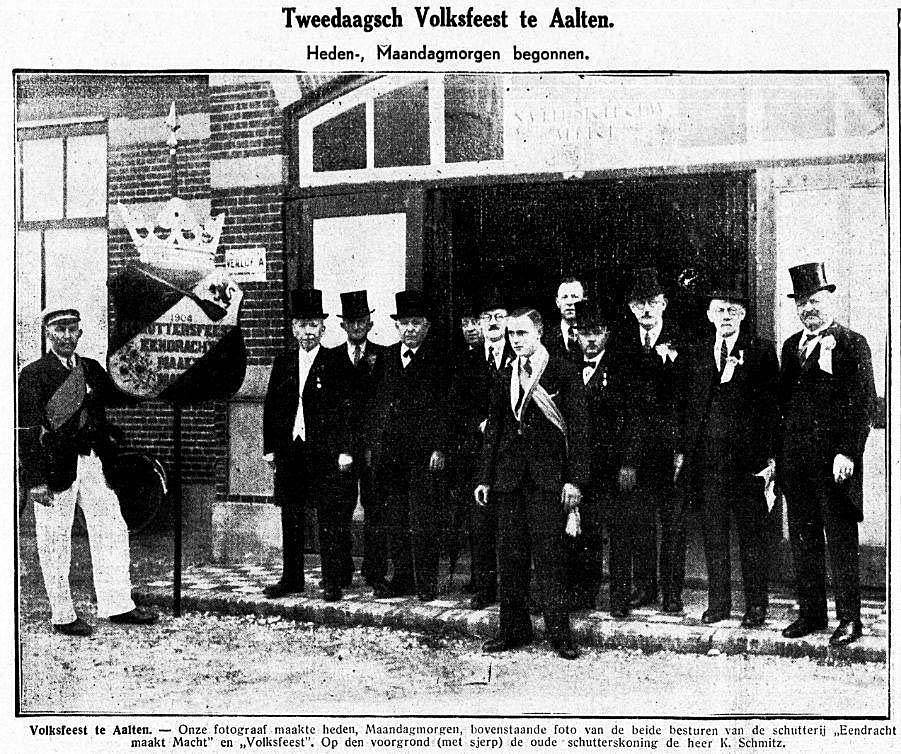
De Graafschapbode, 30 October 1880De Graafschapbode, 20 October 1888De Graafschapbode, 26 October 1889De Graafschapbode, 24 October 1891
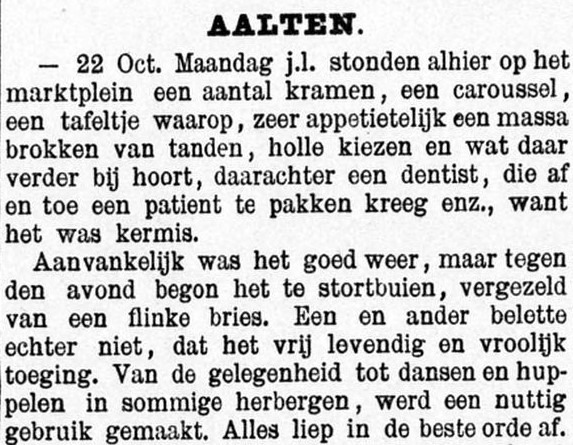
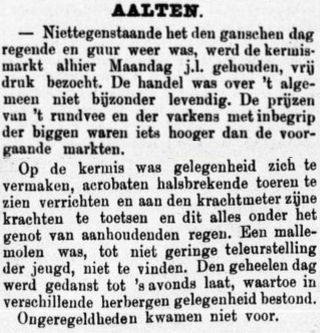
De Graafschapbode, 20 October 1894De Graafschapbode, 24 October 1896Aaltensche Courant, 12 October 190122 March 1907De Graafschapbode, 14 November 1908Aaltensche Courant, 15 July 19191927
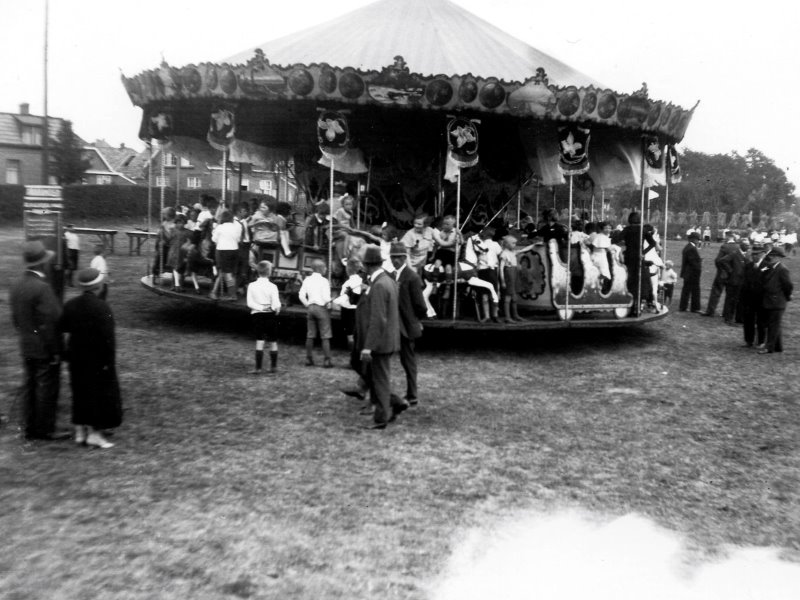
5 May 19141928Carousel at the fair behind the ‘Festival Hall’, year unknownDe Graafschapbode, 22 July 1930De Graafschapbode, 20 July 1936
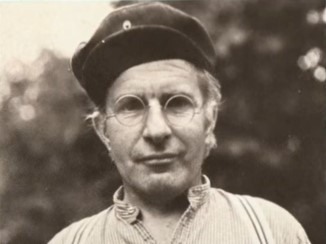
Decades ago, Johan Bennink from Aalten performed as a compère under this name. Nowadays, he might be called a ‘stand-up comedian’. His stage name was a reference to his actual profession: a plasterer.
A visitor to our Facebook page reported the following:
Johan Bennink regularly came to have his car washed in the car wash at Kempers. Most cars got a good service, but some cars needed extra attention. His car always fell into the latter category. Johan had an oversized, gold-coloured Fiat sedan that sagged quite a bit on its suspension because of its contents. He used it for his work as a plasterer. You can probably imagine that there could be thick clumps of mud from the building site on and under the car. For me, as a lad, it was always a challenge to make his car look beautiful again when Johan drove out of the garage. We couldn’t do much about the interior. Nor did we have to. It was packed to the rafters with a small ladder, tools, overalls, and all sorts of buckets with stuff that he would spread on walls or ceilings during the week. He always said: “Leave that to me, it’s my own little shed.”
Achterhoek Plat
On YouTube, we found a recording of Johannes de Gladstrieker from the well-known series ‘Achterhoek Plat’:
Who has more information about Johan Bennink, alias Johannes de Gladstrieker? We are also interested in information about other Old Aalten artists, especially if they performed in the regional dialect.
‘Hide the outcasts; Do not betray him who escapes’. This text (Isaiah 16:3) was used by several pastors at the beginning of World War II. With this, the congregation members were called upon to contribute to helping people fleeing the Nazi regime. And with success: at one point, one in five residents of Aalten was in hiding, relatively more than anywhere else in the Netherlands.
The inhabitants of Aalten played an important role in protecting people in hiding during the war. Their courage and determination have saved the lives of many. The church’s involvement, close family ties and rural location are seen as reasons for the great willingness to offer help. It is relatively easier to hide people in a remote farmyard than in a city. But despite that, helping people in hiding and other refugees took a lot of courage and sometimes cost lives.
Hiding and resistance
During the war years, there were several reasons why people chose to go into hiding. For example, Jews tried to escape deportation to concentration camps. In addition, there were people who wanted to avoid the Arbeitseinsatz or who wanted to resist the German occupier.
Heleen Kuipers-Rietberg uit Winterswijk, beter bekend als tante Riek, zorgde voor schuilplaatsen voor veel werkweigeraars en Joden. Samen met Ome Jan Wikkerink, een aannemer uit Aalten en leider van de plaatselijke verzetsorganisatie, en met dominee Slomp stond zij aan de wieg van de Landelijke Onderduikorganisatie (LO).
People in hiding were often hidden in attics, in barns, in secret rooms or in remote places in the landscape. Although there was always a risk of betrayal and arrest, relatively few people in hiding in Aalten were discovered by the German occupiers. The local population had a strong mutual solidarity and the resistance was well organized. Moreover, there was an active network that helped people in hiding to cross the border to safer areas abroad.
In 1947 schonken oud-onderduikers de Aaltense bevolking een monument als dankbetuiging voor hun gastvrijheid en aan de verzetsmensen die de stuwende kracht waren bij het onderbrengen van de onderduikers. Het monument bevindt zich in de Stationsstraat, tegenover het treinstation.
Secret door, Markt 12 in Aalten (Nationaal Onderduikmuseum)
Most probably the beautiful village in the Gelderschen Achterhoek Aalten was the place that housed proportionally the most people in hiding during the war. The village has only 11,000 inhabitants and no less than 2500 people were placed in hiding. For the time being, we will be able to assume that this is a record in the Netherlands.
Aalten’s taak is hiermede niet af geweest. Boven dit getal zijn er nog honderden kinderen, vooral uit Rotterdam en omgeving, geweest die daar hun zomervacantie hebben doorgebracht. We overdrijven verder niet dat duizenden in den lande in den voedselnood geprofiteerd hebben van de honderdduizenden roggebrooden, zakjes meel en havermout, spek en eieren, die vanuit dit dorp het land zijn ingezonden. De directeur van het Aaltensche postkantoor droeg den naam onder zijn collega’s van roggebrood-directeur.
We will remain grateful to Aalten for this war activity. The 2500 people in hiding are too. They sent a request to H.M. the Queen and asked her to visit Aalten during a trip through the liberated Netherlands. We sincerely hope that it will happen. Aalten deserves it.
Almost a quarter of a century after the liberation, on March 14, 1970, the newspaper Trouw wrote in an article about a planned reunion of former people in hiding and former combatants:
In the years that the Germans occupied the Netherlands, in the small, agricultural town of Aalten, there was hardly a house in which there were no people in hiding. The people who live there are closed by nature. The Hague resident and the Amsterdammer, who went under water, had to get used to it. The Germans too, by the way, and once an SD officer spoke in anger of ‘abscheuliche Leute’ and he added: ‘Wir sind Luft, Luft!’ However, the silence of the Aaltenaar has benefited many people in hiding.
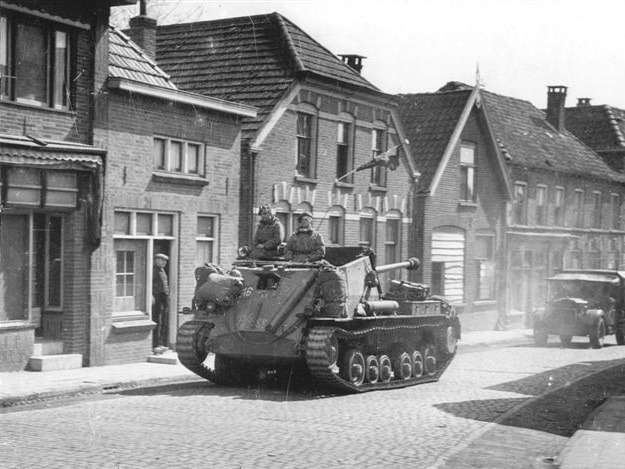
During the war years, Rev. J. Klijn (of De Open Deur), Rev. P. Kuyper and Rev. J. van Dijken respectively as a reformed, reformed and christian-reformed minister. One evening, two farmers, who had made a long bike ride for it, arrived at one of the three rectories. It matters little which one. They told the preacher about a naober, who was unwilling to take in people in hiding. In some houses there are eight, why doesn’t he want to accommodate one? Can’t the pastor go and talk to that man and point out his responsibility? They get the promise from the pastor that he will exchange a hearty word with the brother in question. It turned out not to be necessary. On the day that the Allied tanks thunder into Aalten, the farmer, who has been complained about, stands in front of his stee, laughing and waving. He is there with his wife and his family, but also with a bunch of Jews. He accommodated them, without the nearest neighbors having any suspicion of it.
Not all Jews who were given shelter in Aalten survived the years of occupation. A number of them were discovered, sent to Poland and liquidated there.
Church services
Aalten would not be Aalten if it had only provided the people in hiding with equipment. The churches held special church services for people in hiding, usually on remote farms, where people met in smaller groups. The congregation of God started to function here as a hidden church, in the summer the services were held on the deel, in the winter in the large Achterhoek kitchen. People did not ‘go’ in large numbers, but came with two or three people at a time. Guard posts were often posted to be alert to danger. There were also special catechisms for people in hiding. Even separate Jewish catechisms. A number of Jews came to believe in the Messiah.
Begin ’44, tijdens een gewone dienst in de gereformeerde Westerkerk, omsingelden de Duitsers de kerk. Eén jongeman die in Scheveningse vrouwenkleren de kerk verliet, ontkwam. Hoe die knaap aan dat Scheveningse gewaad kwam? Tussen neus en lippen door had Aalten ook nog een flinke groep Scheveningers, die uit de kuststreek weg moesten, gastvrij opgenomen. 48 Onderduikers werden in een vrachtauto geladen en naar Amersfoort getransporteerd, en van daaruit voor een groot deel naar Duitsland. Ook werd de christelijke gereformeerde kerk op een zondag overvallen. Hierbij werd een dozijn onderduikers gepakt.
Some boys did not return. In an issue of De Open Deur, which appeared the following year, Rev. Klijn of a service that was held on Christmas Eve ’44 on a farm in Aalten. We quote a few passages: “The Christmas Gospel was read in many wonderful places last year, in that time of need and misery, of shelters and shelters. But it was robbery in order. Also here in this simple peasant kitchen with its international circle of resistance fighters, herded together from all over the world; Achterhoek farm boys, heavily wanted illegals, navy people in hiding and secretarial staff, and allied pilots from San Francisco and Florida. Brighton and Plato Sask, Canada. It was as quiet as in a church, when the familiar words of Luke 2 were read, first in Dutch and then from the Moffat translation in English. And there was a twilight of emotion over some of those tough faces, when the old Christmas message came to them in their own language, here, so far from home, Christmas after all, the Christmas message: Today you have a Saviour born in the town of David, the Lord Messiah. And in the silence of Christmas night, their hearts, filled with thoughts of war by day and by night, knocked on the door of a different peace from that for which they were fighting, the peace of which the English sang: Glory to God in high heaven, and peace on earth for men whom the favours! By a puzzling achievement, the underground from the Achterhoek had also collected a few English church books and so the Christmas carols were sung bilingually: Honor be to God, Now sijt wellecome and the Silent Night, Holy Night, known all over the world…”
Nationaal Onderduikmuseum
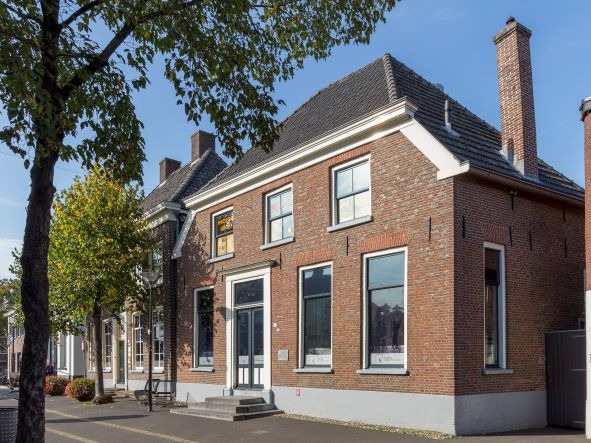
‘Hiding house’ Markt 12, Aalten
To record the memory of this part of history and to keep it alive, the National Hiding Museum was established in Aalten. The museum focuses on showing and documenting the stories of people in hiding and the people who helped them. It shows how ordinary people can show courage and humanity in extraordinary circumstances.
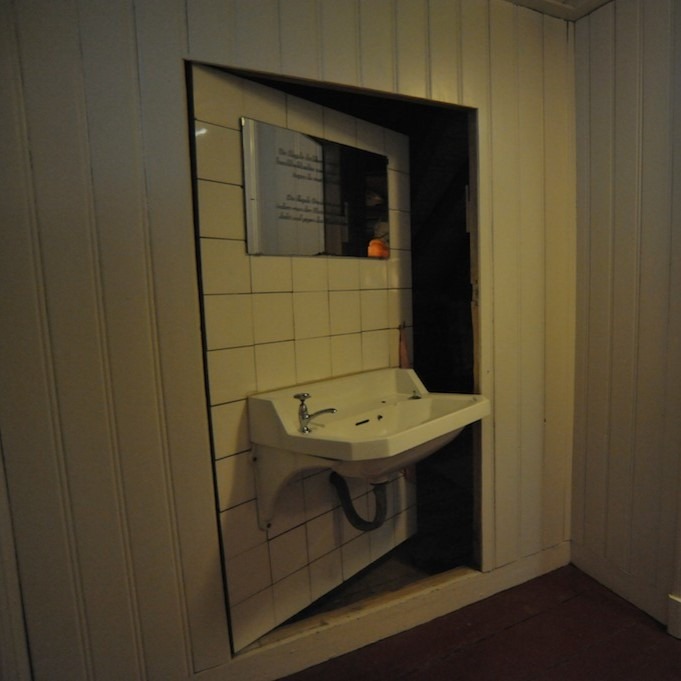
Het museum is deels gevestigd in een pand met een bijzondere onderduikgeschiedenis: Markt 12. Dit was indertijd het woonhuis van een gezin met kinderen, maar op zolder werden onderduikers (tijdelijk) verstopt en de kelder was de schuilplaats voor buurtbewoners tijdens bombardementen. Extra opmerkelijk: de grote woonkamer was door de bezetter gevorderd en in gebruik als ‘Ortskommandatur’.
The Nationaal Onderduikmuseum also has an escape room. Players are confronted with issues and dilemmas that everyone will encounter when they have to flee. If you choose to flee from your world, you have to renounce what you know and know. You will have to do everything in your power to keep yourself going in your new situation.
It is now important that you have insight into that new situation, have a sharp vision, so that you can recognize signs, dare to make decisions and distance yourself from what you have known until now. “Can you manage to dive under the radar, become invisible, become inaudible to the enemy?”
Your contribution is welcome! We would appreciate receiving more (historical) information and photographs regarding traveller caravans, families, residential sites, and related matters within the municipality of Aalten. Can you help us? Please comment below or send us a message!
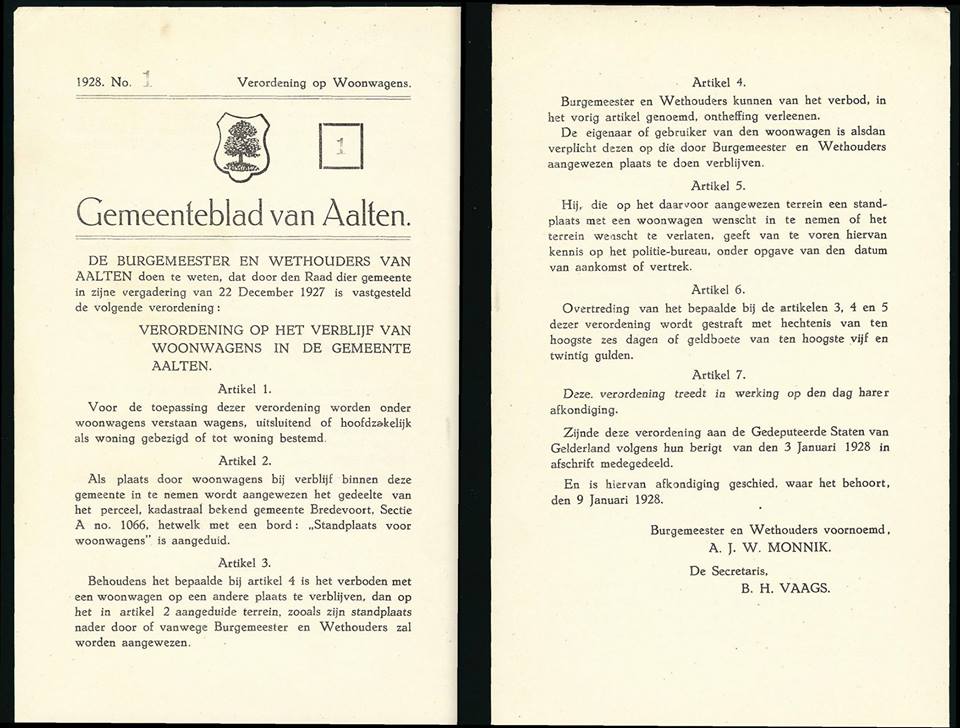
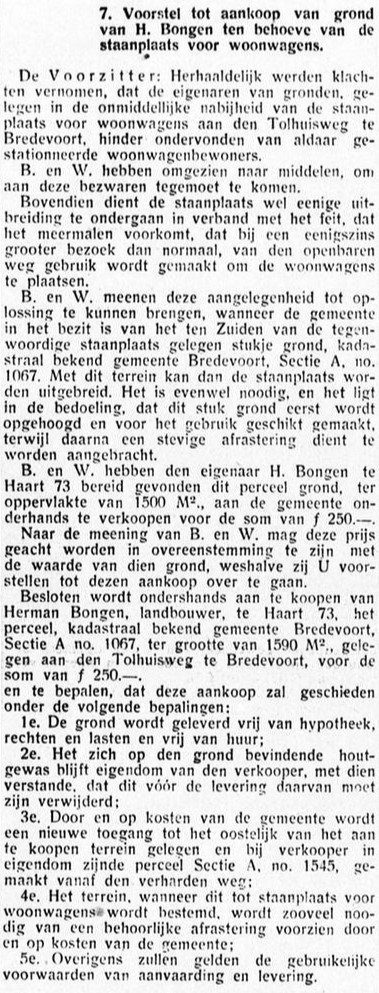
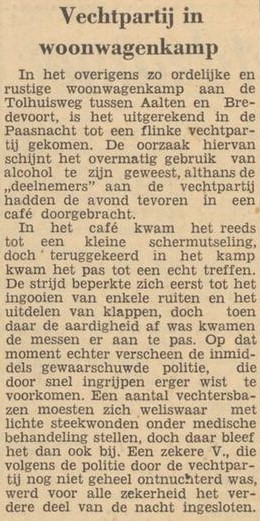
In 1928, the municipality of Aalten published an ‘Ordinance on Caravans’. This designated a site on Tolhuisweg as the only location where caravans were permitted to park.
Ordinance of 22 Dec 1927 regarding the designation of a site for caravans in Bredevoort
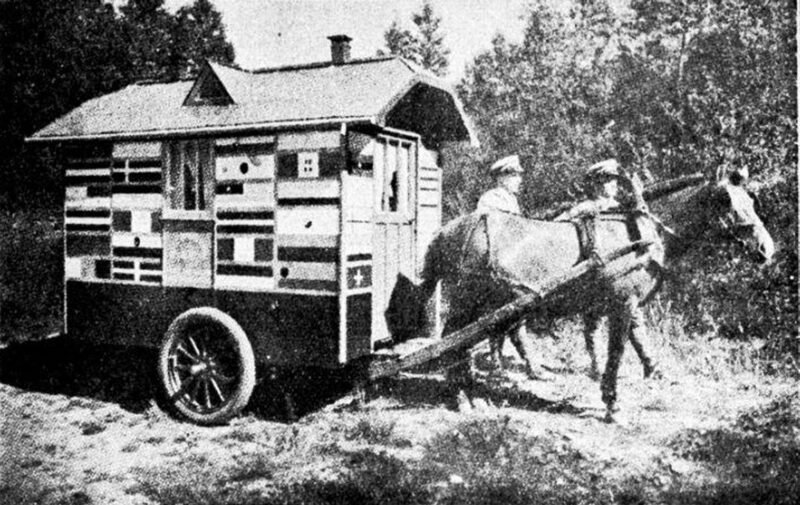
World Travellers in Bredevoort
De Graafschapbode, 22 February 1935:
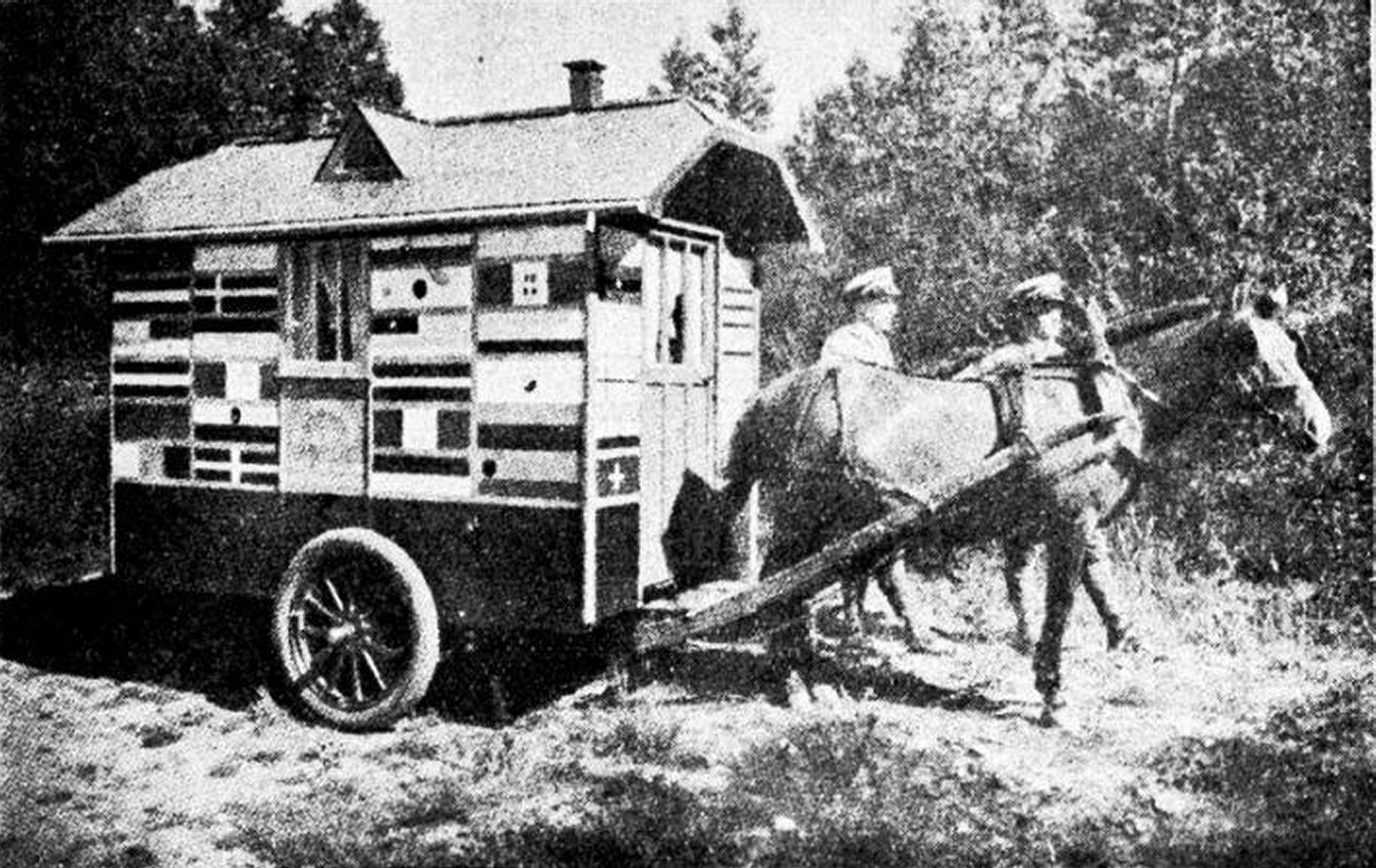
“Our Gelderland Achterhoek region is currently enjoying the honour of a visit from two ‘world travellers’, who are housed in the pictured, very practically and efficiently equipped caravan. In the front section is the sleeping area for the pair, as is understandable primitive in design, yet just sufficient. They provide for their livelihood by selling postcards.
From a chat with the travellers, it emerged that they originate from South Slavia, one of the Balkan states. Since 1928, they have been busy completing their ‘Journey Around the World’. A large part of the mainland of the European continent has already been ‘covered’, while currently, the Dutch—in this case, Achterhoek—soil is the focus of their visit.
The living area in the wagon contains ‘furniture’ of, believe it or not, a table and two chairs. The wall decoration consists of an extensive and certainly noteworthy collection of postcards from almost most countries and larger cities in Europe. To the question: ‘How is travelling here in Holland?’ we received the reply in broken Dutch that it is far preferable here to most other countries. A police officer might come to your bedside at night, but they have had almost no trouble with raids by rowdy youths or, as sometimes happens, from bandits trying to make their move. We also learned that another four years will be needed before the trip can be considered finished as a whole.”
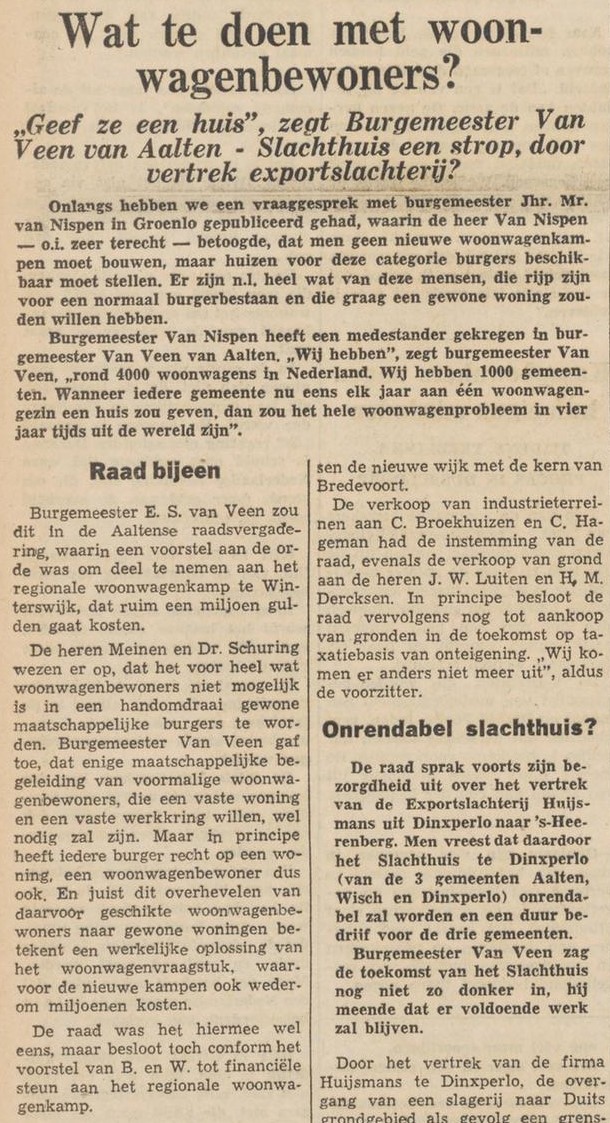
What to do with Travellers?
Graafschapbode, 15 October 1937
Nieuwe Winterswijksche Courant, 21 October 1964
1968 Caravan Act
In 1968, the national government prohibited the nomadic lifestyle of the Traveller community as a result of a new Caravan Act (Woonwagenwet). They were forced to relocate to large, regional caravan sites. On 1 May 1970, the regional camp ‘Dennenoord’ was opened in Winterswijk.
All Traveller families, from Winterswijk to Zevenaar, were obliged to live at this site. The site featured a primary school, a clubhouse, and a scrapyard. There were paved roads, and every caravan had its own toilet.
With the abolition of the Caravan Act in 1999, housing policy for Traveller communities became the responsibility of local municipalities. In the municipality of Aalten, there are currently only a few residential sites for caravans remaining on the Singelweg.
Traveller site, Singelweg, Aalten
Newspaper clippings
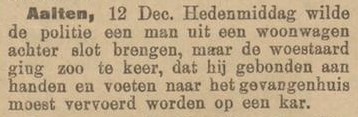
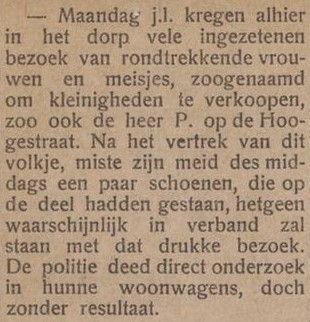
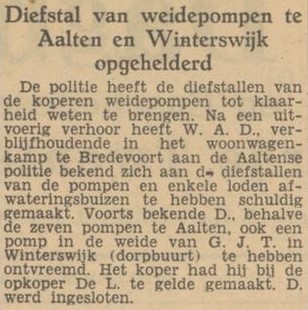
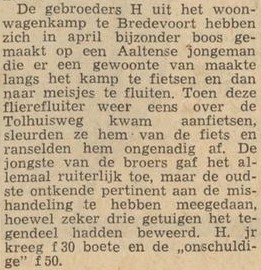
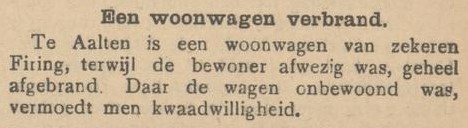
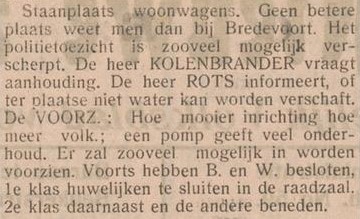
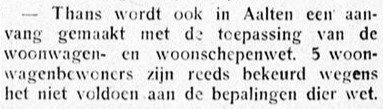
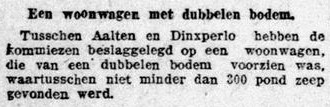
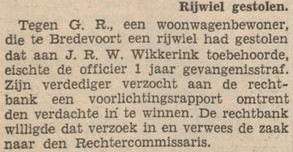
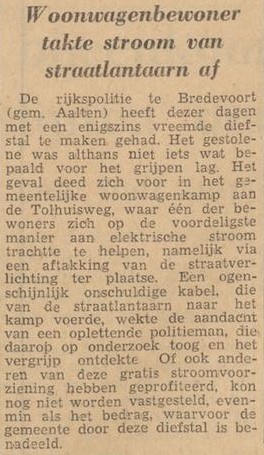
Whenever Traveller families were mentioned in the Aalten news, it was often in a negative context. A search on Delpher yielded, among other things, the following reports:
Zutphensche Courant, 14 December 1904Aaltensche Courant, 23 October 1917Tubantia, 14 November 1951Tubantia, 28 June 1962
Arnhemsche Courant, 9 December 1912Nieuwe Aaltensche Courant, 6 July 1923Graafschapbode, 19 December 1924Tubantia 19 April 1960
De Telegraaf, 5 April 1917Zutphensch Dagblad, 14 April 1947Tubantia, 8 August 1961Tubantia, 19 October 1961
During the final years of the Second World War, many people in hiding (onderduikers) found refuge in the Achterhoek region. Aalten topped the list, with an estimated 2,400 people pursued by the Germans. “The inhabitants were not only devout, but also linked that faith to providing shelter to those who had been driven from their homes.”
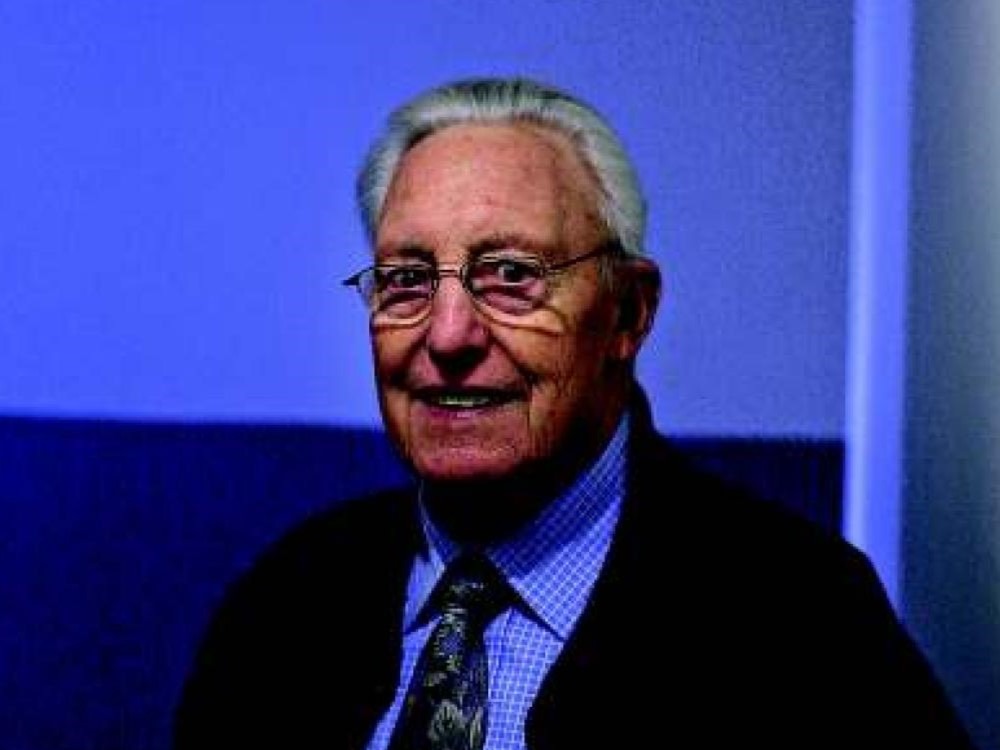
Pieter Schaap (84) now lives in a tidy apartment in the centre of Aalten, having purchased the property with his wife, who is nearly 80, several years ago. “We lived a little further away, but the house was too big, and we could no longer keep up with the garden.”
That is not to say that the Aalten resident and his wife are not spry. The couple regularly visits their children in the west of the Netherlands and travels by plane to visit a son in Norway. Pieter’s wife regrets that they can no longer make those trips by car and boat. “You see so much more that way.”
The Aalten resident, distinguished by a thick shock of grey hair, still drives in the Netherlands. Among other things, he delivers meals for Tafeltje Dekje (Meals on Wheels). “But the physical ailments are starting to show. I recently had cataract surgery on one eye, and my hands shake a little; I can no longer write properly. I am considering stopping with the meal deliveries this year.”
Spoiled butter
Sixty-five years ago, Pieter Schaap came to the Achterhoek for the first time. The native of The Hague was forced to report to Winterswijk in late 1942 following a summons from the Germans, who were coercing young men into forced labour. “I reported to Kamp Vosseveld as instructed. It was very German there, very strict. We were allowed to go to church on Sundays, at least.”
Schaap grew up in a Reformed family but later joined the Gereformeerde church. “After the service, the minister invited us for coffee. We were regularly allowed to stay for a meal. They thought we were starving in that camp. That wasn’t true, but as a young guy, you could always manage a bit extra.”
Photo: Jan Ruland van den Brink
He disliked the conditions. “We repaired backroads and replaced sections of railway track. Everything was done by hand. You only had a spade and a wheelbarrow. Meanwhile, you were being drilled. We had to sing all sorts of nasty songs. I didn’t like the regime. I spoke about it, and then the minister said: ‘Why don’t you go into hiding?’ He said he could arrange an address. However, we were being watched closely; there were constant roll calls, making it impossible to escape. Until the moment we were served spoiled butter. That was early 1943; I don’t remember the exact date. Almost everyone had diarrhoea, and there was no roll call. That was when I slipped away. Together with Henk Bossemeijer, a lad from the Alphen aan den Rijn area.”
Pieter and Henk exchanged their uniforms at a family’s home in Winterswijk, put on civilian clothes that had been laid out for them, and boarded the train to Aalten. “The minister had said we would be taken care of. And indeed, we were met by members of the resistance. Through Ome Jan, the leader in Aalten, we were given shelter for the night. The next day, we went to ‘t Paske farm in the rural district of Dale.”
Schaap immediately felt that the presence of him and Bossemeijer was too much of a burden on the farming family. “The responsibility for two people in hiding was too great. ‘Do you know of another place for one of us?’ I asked. After a few weeks, I was able to go to ‘t Heegt farm in Lintelo, another rural district. There, with the Rensink family, I stayed until the end of the war.”
A hollow above the horse stable
The young man from the west with a technical background was quickly retrained as a farmer. He ploughed and harrowed the land using horses, cleaned stables, and fed the cows. “I even learned to milk, thanks to the family’s eldest daughter, who had just taken a course in it.”
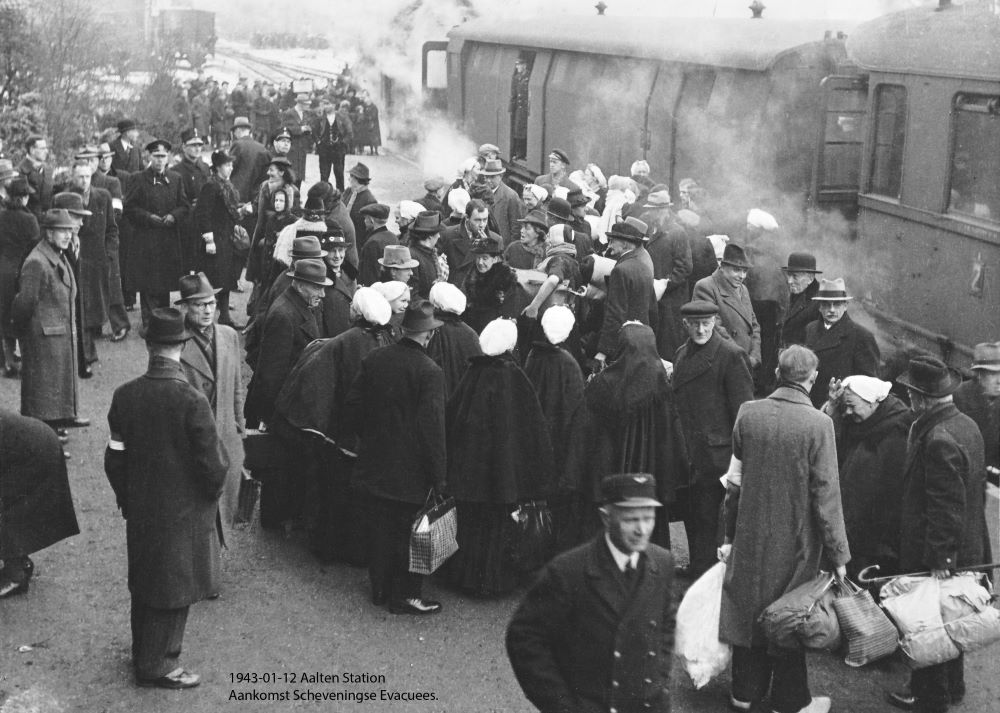
At first, Schaap slept in the opkamer (parlour) of the farmhouse. Later, a group of 500 people from Scheveningen arrived in Aalten, having been driven from their village by the Germans in connection with the construction of the Atlantikwall. Schaap remembers it well. “The Gereformeerde evacuees went to Aalten, while the Hervormde evacuees from Scheveningen went to Winterswijk. That had been agreed upon with the local churches. Some of the Scheveningen evacuees were also offered shelter at ‘t Heegt.”
For the rest of the war, he slept in a hollow above the horse stable. “Above the manger where the horses ate. If I stood on that, I could just reach a small hatch that couldn’t be seen from below. I had a bed there, and some light fell in through a glass roof tile.”
He was not there often. Pieter spent most of his time in the fields. The man in hiding did not find it truly dangerous. “We didn’t have much trouble from the Germans. We did have to watch out for landwachters (Dutch collaborators), but they were always spotted in this area long in advance. I would usually go to a piece of land further away, somewhat hidden behind the trees. Or I would crawl away. I never stayed on the farm if there was trouble.”
A wagon full of crispbread
He stayed at ‘t Heegt for two and a half years, amidst many other people in hiding. Aalten was teeming with them. “There were more and more of them. The Germans also began to notice, and on 30 January 1944, the Westerkerk was surrounded by SS soldiers during a service. A number of people in hiding tried in vain to escape past the organ. The churchgoers were checked and fined if they had left their identity cards at home.”
The story of Gerrit Hoopman (19), a person in hiding, is well-known; in the chaos, he was provided with an outer skirt, a shawl, and a traditional headpiece by a woman from Scheveningen, allowing him to escape the church. That did not apply to a large group of other people in hiding; more than forty men were arrested.
Schaap, a faithful visitor to the Westerkerk, was not there that day. “We felt it was becoming too dangerous, so that Sunday we organised a service in a secret location for one of the first times. We called that the ‘underground church’. We did that at farms, always at different addresses. Often one of the boys would lead the service; sometimes we had a minister.”
Later, German soldiers were billeted at the farm. “They were young boys, paratroopers who no longer had any planes and therefore had to serve in the infantry.” He had little trouble from them. “To them, I belonged to the family. When they requisitioned a horse and wagon from the farmer at one point and gave the command ‘Bauer mit!’ (Farmer, come with us!), I jumped onto the driver’s seat. We headed toward Bocholt, but during a bombing raid, my passengers quickly disappeared—they looked for cover elsewhere. I waited for a while until I saw farmers with horses and wagons driving back and forth from a large warehouse in the area. I went over and said I had been sent to pick something up. I was given a wagon full of knäckebröd (crispbread), ha ha! I drove back with that.”
He was also part of the farming family to others. “All those years, I was ‘Piet van ‘t Heegt’. Some people still know me by that name today. We were recently at a gathering where we met an acquaintance from that time. She lives in Zeeland now. ‘Hey, there’s Piet van ‘t Heegt,’ she said.”
He did not suffer from hunger in the Achterhoek. “Every two weeks, I even sent a large rye bread to my parents. The postman was called ‘the baker’ at their place; he helped distribute the bread.”
Until his retirement, Schaap worked as a technician for the Royal Netherlands Army. His pre-war ideal of becoming a marine engineer did not come to fruition due to the war. In the hamlet, Pieter met his future wife. “She lived a few farms away.” The courtship did not go smoothly, as her father thought she was too young, and after the liberation, Pieter signed up as a volunteer for the Dutch East Indies. Only years later did he return to Aalten, where the farmer’s daughter was still waiting for him. “We have now been married for 56 years. We were truly destined for one another.”
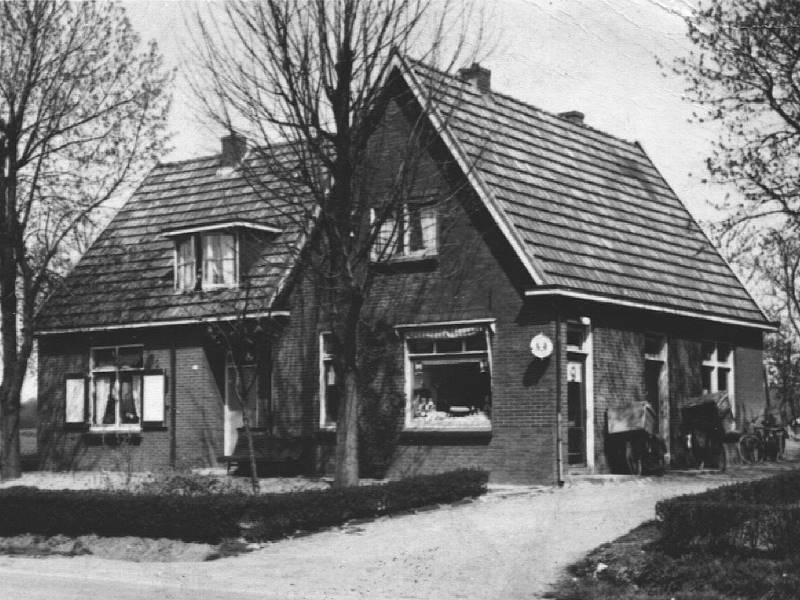
Until the end of the 19th century, tolls were levied on many through roads in the Achterhoek. Travellers, merchants and farmers had to pay to use certain routes. The revenues generated from this were used for the maintenance of roads and bridges. Several tollhouses stood in Aalten, where the toll collector lived. In addition to collecting tolls, he often followed another trade, such as farming.
Below is an overview of the tollhouses in Aalten known to us. This overview is presumably not complete.
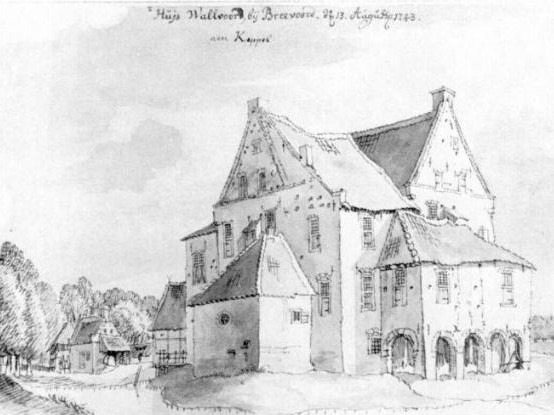
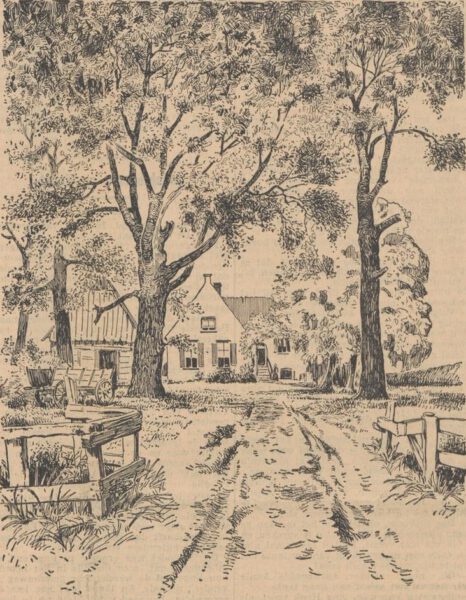
In the Middle Ages, a so-called veemgericht (vehmic court) was established in the vicinity of manor house ‘t Walfort near Aalten. Veem is Low Saxon for ‘punishment’. It was a special court whose hearings took place in the open air near a grove called “Sleehegge”. Here, justice was administered four times a year at sunrise.
The court was presided over by a free-count, a judge after the old Westphalian model. A free-count represented a so-called free seat. A free seat covered a certain area, usually similar to the gauges of Carolingian times. The free-count has its origins with the Saxons. After the subjugation of the Saxons by Charlemagne, the old vehmic courts continued to exist for a long time.
This free-count and a number of free vehmic jurors or assessors ruled on the charges, after summoning the suspect. The vehmic court would have intervened if there were concerns that a privileged person could not be brought before a regular court, thus filling a gap in the legal system.
Havezathe ‘t Walfort, Jan de Beijer, 1743
The Dücker will get you
The most famous and notorious free-count at ‘t Walfort was Berend de Dücker, also mayor of Bocholt. He was appointed to ‘t Walfort in 1430 and was particularly feared, because his convictions often ended in death. The condemned man was hung by three anonymous vehmic jurors on a noose of willow branches. De Dücker presided over the vehmic court for 61 years. A well-known threat from parents to their children, if they did not want to obey, was still until the 20th century: “The Dücker will get you”.
Because the vehmic courts undermined the government’s monopoly to impose punishments, the Duke of Guelders forbade his subjects to comply with a summons to the vehmic court. At the end of the sixteenth century, the vehmic court on ‘t Walfort disappeared. It is the only place in the Netherlands where it has been proven that there was a vehmic court.
In 1936, the Rotterdamsch Nieuwsblad wrote about the vehmic court at ‘t Walfort:
The vehmic court on the Walfort.
Arising from the pressure of the times and as a reaction to the tyrannical domination of the Pledgers, it [the cattle court, ed.] met at night. The citizens, who formed the court, sometimes did not know each other. They appeared masked. To prevent the prisoners from revealing what had happened, and where the hearings, or rather the meetings, were held, the sentence that was passed was always the death penalty. The easiest punishment to carry out was that of the noose.
In order to show the passing that they were dealing with a vehmic sentence, the sign of the vehmic court was cut in the tree on which the hanged man had been sentenced with an axe, a so-called ‘Wolfshaak’ [or Wolfs’ Hook, ed.]. All this seems to us, at the present time, very cruel. But it must not be forgotten that the bitterness in connection with the need of the times has led to these measures.
For chiefly the majesties turned against the dismissed soldiers of the many armies of the many little armies of the many little potentates who were constantly fighting each other.
These warriors, who spared neither friend nor foe, scoured the countryside in larger or smaller troops. They stole cattle, chickens and food. Also money, which was scarce among the peasant population of those ancient times, as well as household goods and jewelry. And church treasures were to their liking.
These people behaved shamefully towards women and children. And woe betide the farmer who lived on a lonely farm dared to resist their crimes. His family was abused in front of his eyes, while he watched, bound. His farm was set on fire, and he himself was the last to be beaten to death.
The vehmic court, which was composed of residents of Bredevoort and Aalten, was later officially established on the Walfort, where the van Lintelo family, the judge, free-count or president of the court were elected. In 1573 we find Arend van Lintelo as such.
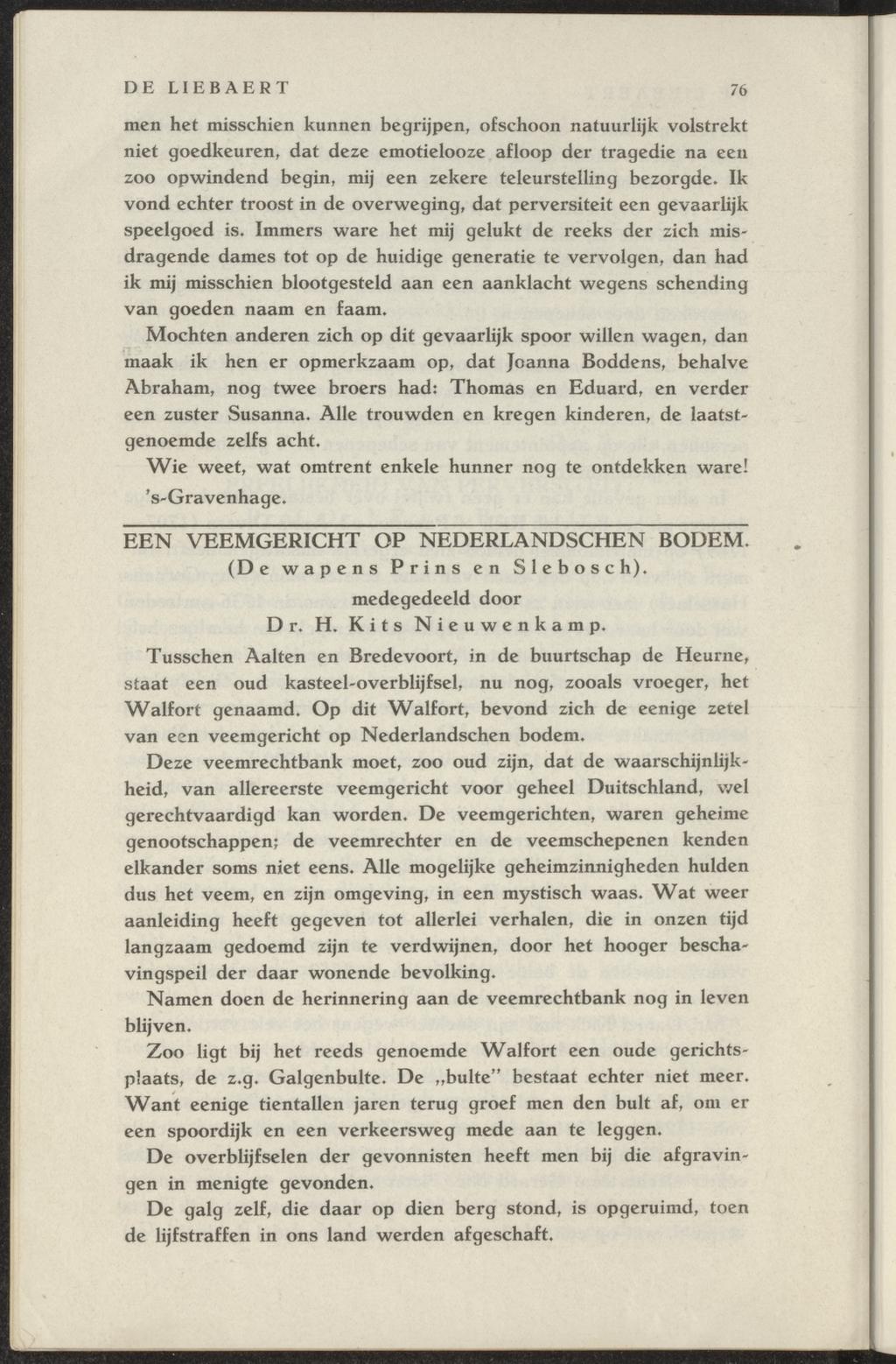
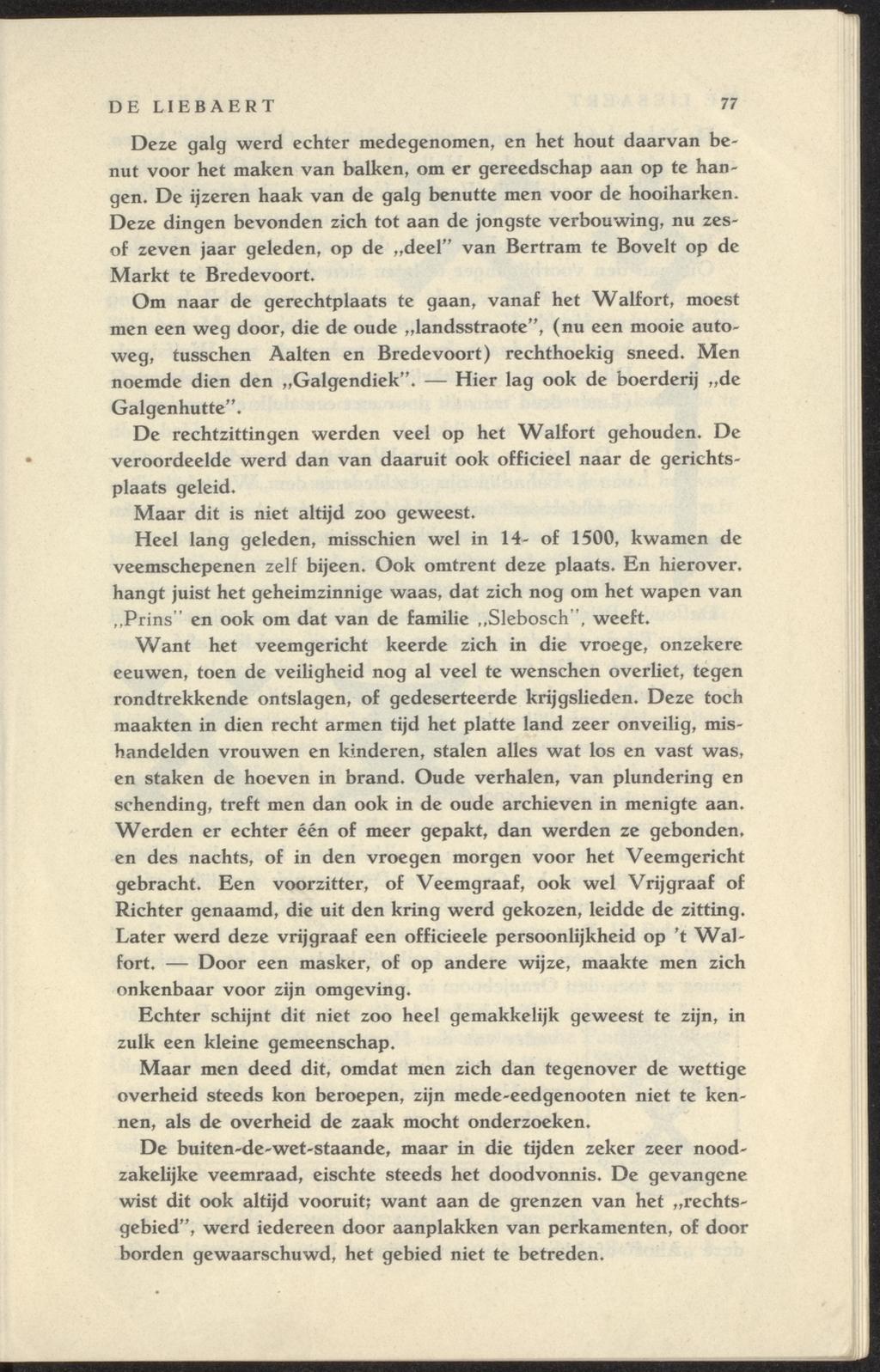
Also read “A vehmic court on Dutch soil”, by Dr. H. Kits Nieuwenkamp (1938):
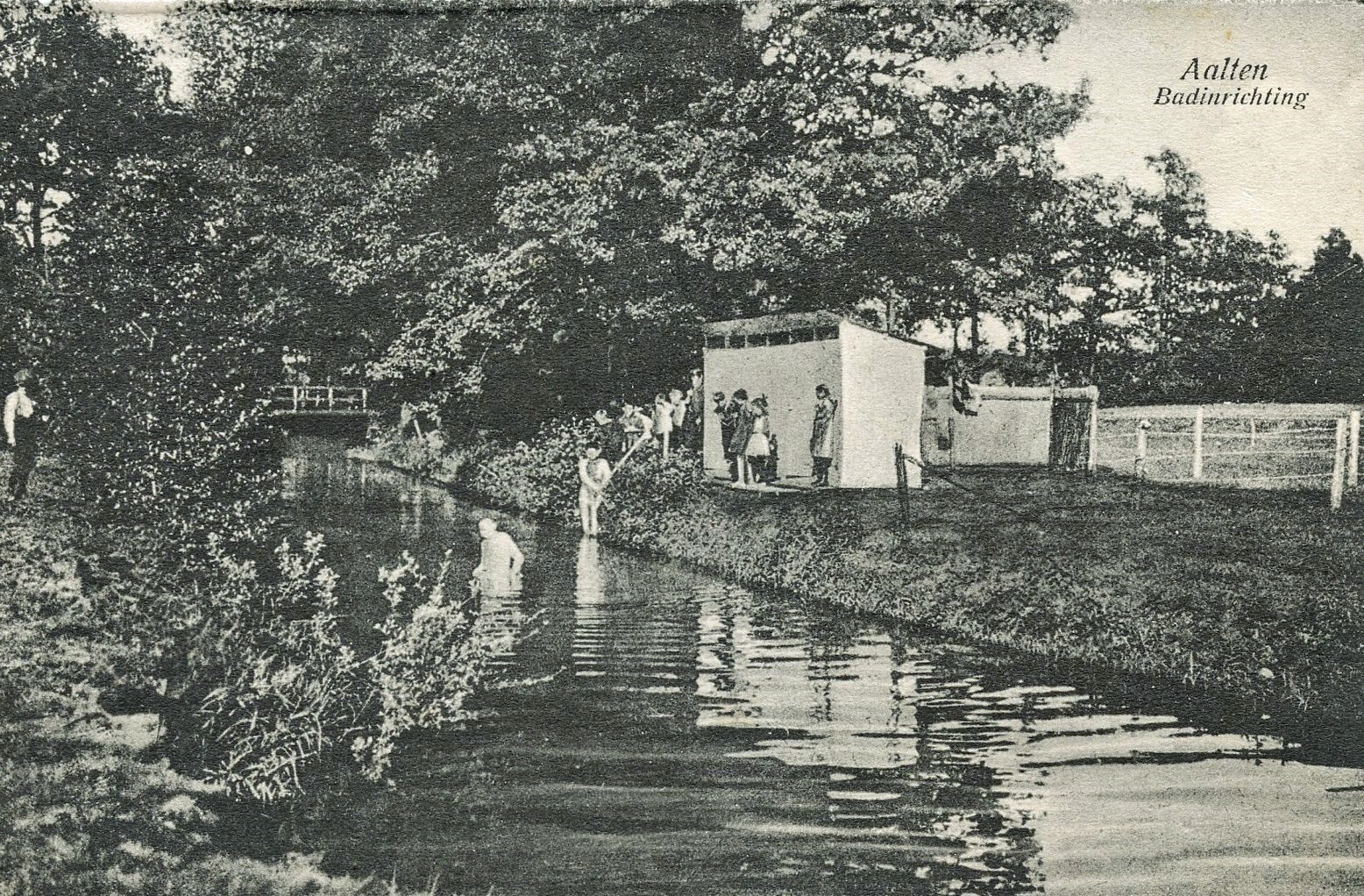
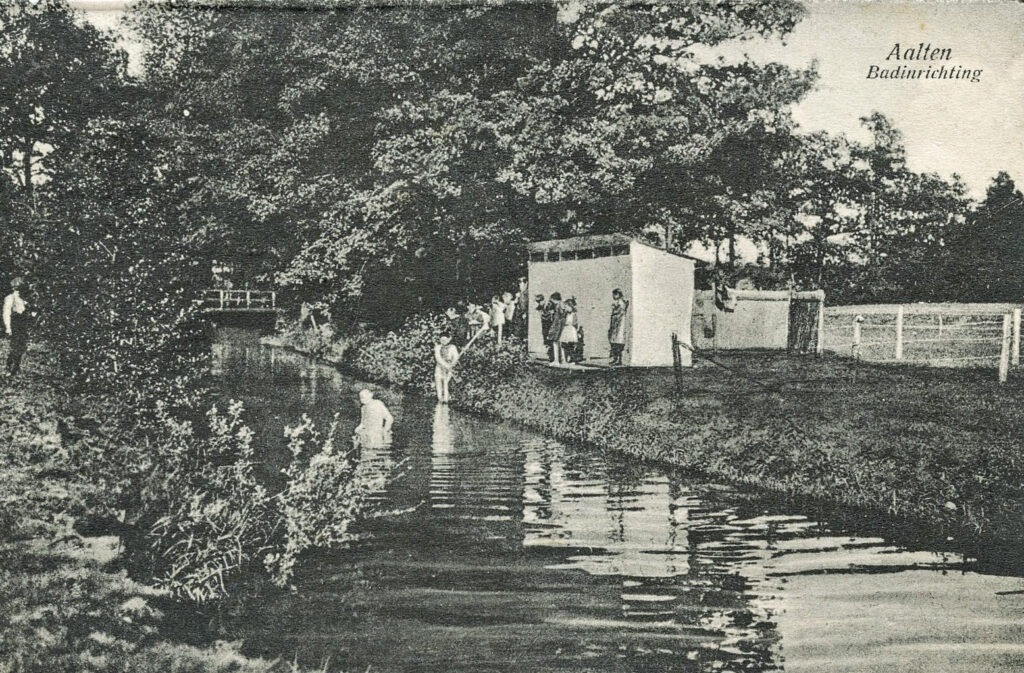
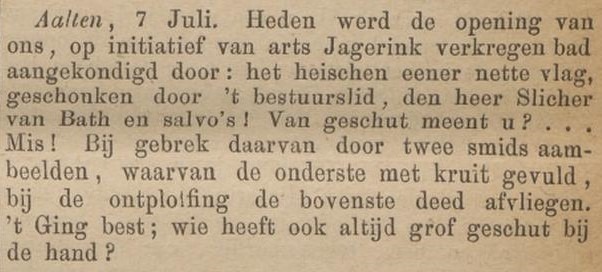
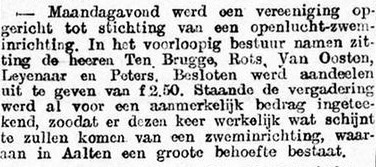
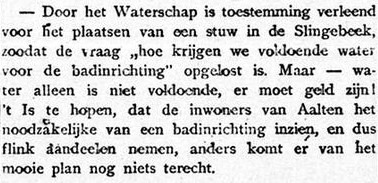
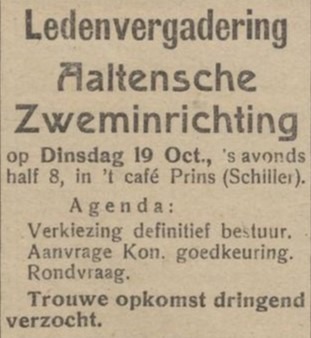
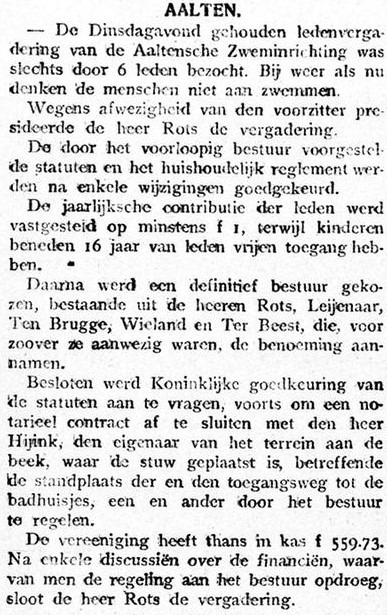
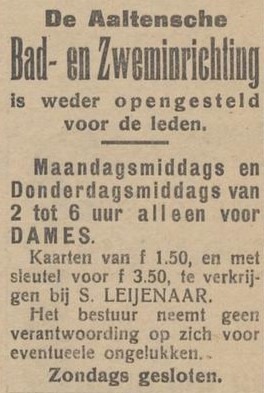
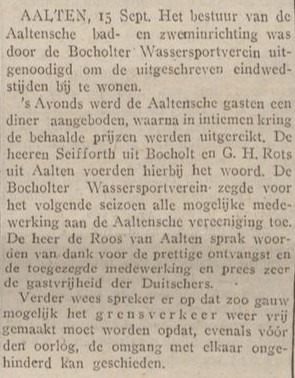
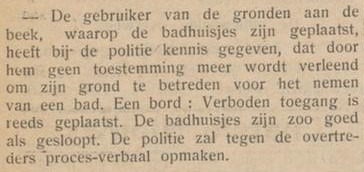
Before the construction of formal bathing facilities, the people of Aalten sought cooling in the Slingebeek during warm days.
As early as 1906, local interest group ‘Aaltens Belang‘ searched for a suitable place to swim. The location had to be reliable, but the stream was occasionally too shallow. The most suitable spot was found to be the pool at De Pol, where the water mill once stood. Swimming once took place there within a casing, a type of weir. Around 1920, people could “enter the water” in the stream near Nannielaantje (Smeeslaantje); however, the water board removed the weirs from the stream.
Bathing facility near the Smeeslaantje in Aalten, 1924
In 1920, the municipality purchased a site between Aalten and Bredevoort known as ‘Oosterman’ with the intention of establishing a new general cemetery there. This plan was later reconsidered. On 4 July 1930, during a meeting of the municipal council, the question was raised whether the Mayor and Aldermen were inclined to submit proposals regarding the establishment of a municipal bathing and swimming facility.
In 1933, it was decided to construct a swimming pool on the Oosterman site. Seventy unemployed individuals were deployed as part of the job creation scheme, and the work was completed under the direction of D. Roenhorst of the Nederlandse Heidemaatschappij. Using wooden wheelbarrows with iron-rimmed wheels and shovels, the sand was moved to the sides, creating an earthen embankment around the pool. The construction costs amounted to approximately 14,500 guilders. On 23 June 1934, the ‘Walfort’ swimming pool was opened with swimming and diving demonstrations provided by the Winterswijk water sports association and the women’s swimming club ‘Inter Nos’ from Amsterdam.
Newspaper reports
Zutphensche Courant, 11 July 1885De Graafschapbode, 1 June 1920De Graafschapbode, 22 June 1920Aaltensche Courant, 15 October 1920
De Graafschapbode, 22 October 1920Aaltensche Courant, 11 May 1923
Zutphensche Courant, 16 September 1925De Graafschapper, 4 August 1931
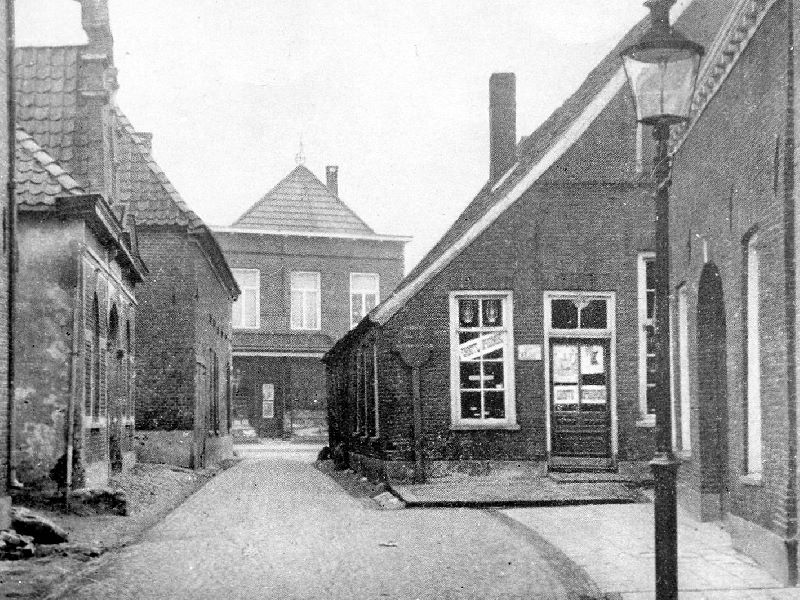
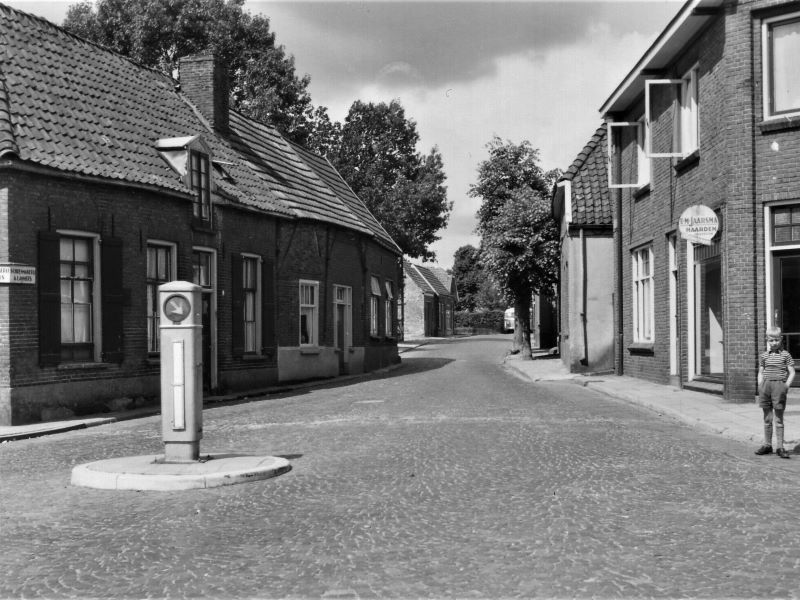
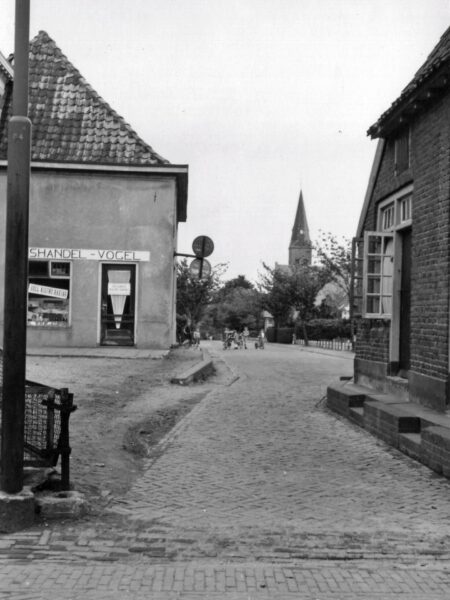
Due to the increase in motorised traffic in the twentieth century, several houses in the old village centre of Aalten at one point stood – both literally and figuratively – ‘in the way’. On this page, we have gathered a number of these so-called ‘bottlenecks’. Do you know of any others?
A “Stumbling Block” in Aalten, which is to disappear very shortly!
The 203-year-old house and smithy of Mr Buesink in Aalten, situated on the corner and entrance of the Peperstraat there, had long stood in the way of widening the busy Peperstraat, located right in the heart of the village.
In the last council meeting, it was decided, in agreement with the owner, to have this property demolished, whereby the owner will be given compensation of ƒ2,500, on condition that the street at that point achieves a width of 13 metres and that his new property will have risen within 8 months.
Whilst it is highly commendable that this street, which is always so busy but so narrow at that spot, is to be significantly widened and that the new building will embellish the surrounding area and the square there, it is at the same time a pity, viewed from an antiquarian standpoint and from that of picturesque village beauty, that yet another of the oldest and most typical houses from the heart of the village is to disappear for the benefit of modern traffic. It should also be mentioned that until now, the Peperstraat was closed to all motor vehicles due to its narrowness!
The beautiful village of Aalten, built on hills by past generations, has several steeply sloping, rather narrow streets with sharp bends, as a result of which the village, as a traffic junction, often presents difficulties. In particular, the confluence of Landstraat, Kerkhofstraat and Veemarktstraat can be designated as a “dangerous intersection”, where collisions and accidents are a near-daily occurrence and where, with the development of today’s fast-moving traffic, double the caution and alertness are required.
This problem has engaged the attention of the local authority for years and years, and the Vereeniging „Plaatselijk Belang” (Local Interest Association) and the K.N.A.C. (Royal Dutch Automobile Club) have also been active in this matter for many years, though without tangible result. The right solution seems hard to find, but given the large number of accidents, which for understandable reasons are increasing rather than decreasing, it really is high time that vigorous action is taken here by the authority concerned, before even more serious accidents than have occurred hitherto force them to look to locking the stable door.
The Aalten council will convene for a meeting this coming Thursday afternoon at half past two. The agenda to be dealt with is by no means unimportant. For instance, a decision will have to be made on a proposal from the executive executive (College van B. en W.) regarding the purchase of the house on the corner of Oosterkerkstraat and Lichtenvoordsestraat. This house is a major obstacle to traffic and a thorn in the side of all motorists who have the misfortune of having to go from Oosterkerkstraat to Lichtenvoordsestraat.
Lately, parking signs have even been erected, indicating that the last five metres of Oosterkerkstraat are a prohibited area for four-wheeled vehicles. Thus, one can now see almost daily that cars coming out of Oosterkerkstraat clandestinely drive across the forbidden section of the road to the Lichtenvoordsestraat. Usually, a fellow passenger is first asked to have a quick look to see if there happens to be a policeman nearby. It is absurd, people judge, that one has to drive out of the entire Oosterkerkstraat in reverse – as one cannot turn in this street – in order to reach the Lichtenvoordsestraat via a massive detour.
Mr M. Meijerman, the current owner of the house that is the cause of all the trouble, has declared his willingness to part with the property for ƒ4,000, and the executive are eagerly seizing the opportunity. The council undoubtedly no less so. We do not know whether the executive consider it justifiable to demolish the house in the near future. On the one hand, the current housing shortage has a strong say in the matter, but on the other hand, the question is whether the house should remain standing until accidents happen, especially now that traffic is becoming heavier.
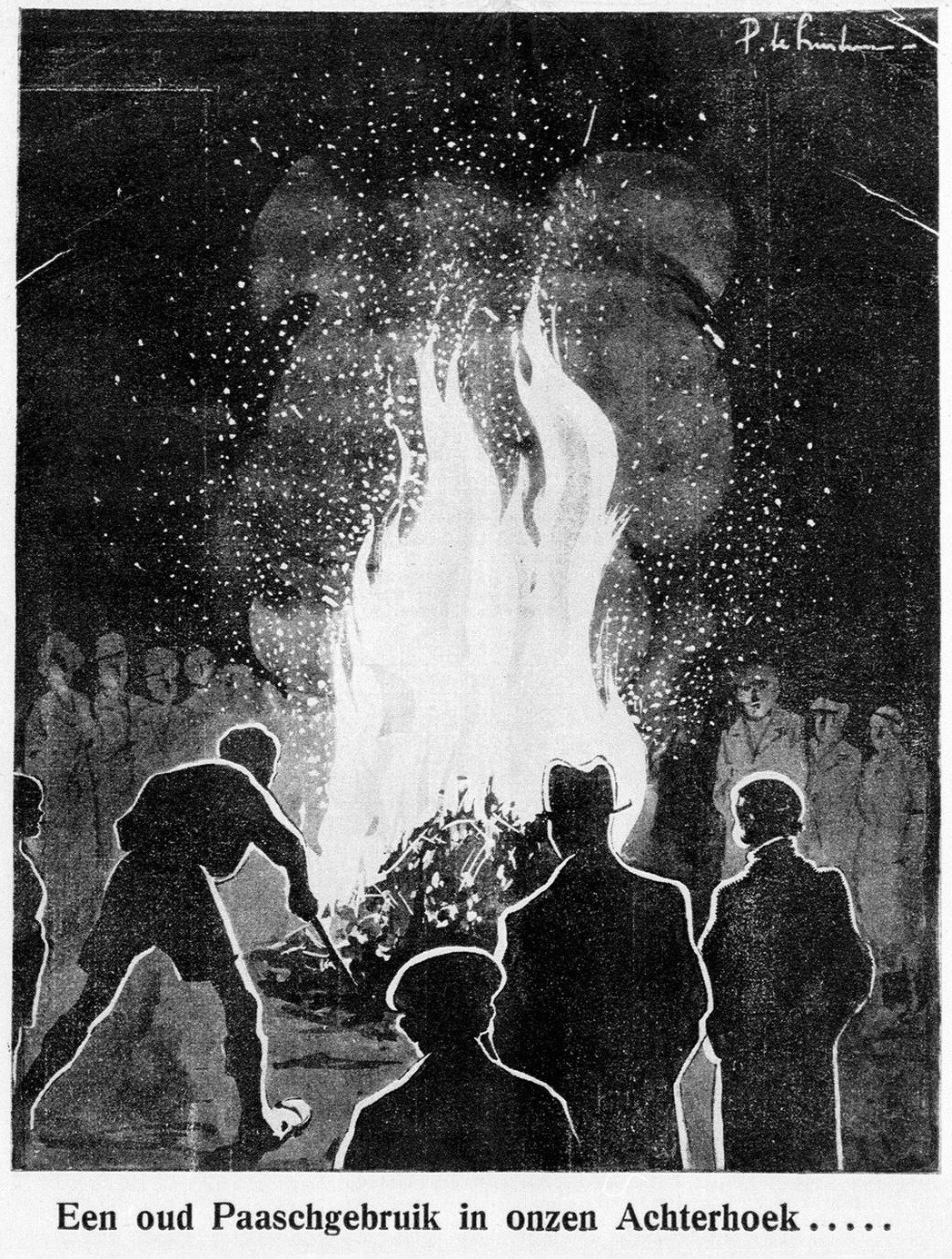
An Easter bonfire is a type of bonfire lit during Easter in parts of Europe. For this purpose, wood is collected and placed in a large pile, which is sometimes dozens of meters high. As darkness falls, the entire stack is set ablaze.
The spectacle often attracts many spectators and is usually a true community event. Originally, it was a Germanic festival dedicated to Ostara, the goddess of spring. After Christianization, the tradition was given a Christian interpretation.
Easter bonfire, illustration from 1934 by Piet te Lintum
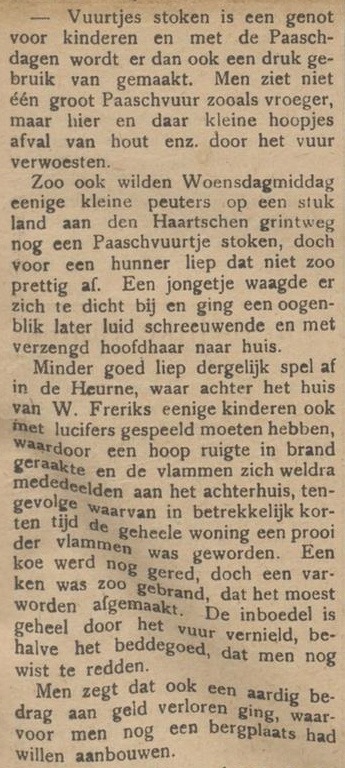
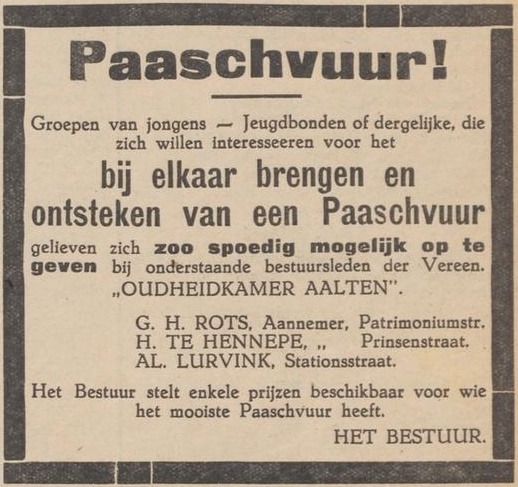
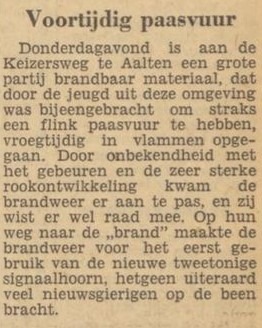
Easter Bonfire in Aalten
G.H. Rots described the Aalten Easter bonfire tradition in 1937 as follows:
“Every spring as Easter approached, the boys from a ‘rot‘ (= district/neighborhood) gathered to discuss plans for the ‘Easter fire.’ They appointed a board, in which the treasurer in particular played a significant role.
They went from house to house to ask if people had anything left for the Easter fire. Those who had no wood usually offered a small contribution in hard cash, forming a ‘fund.’ The treasurer had to manage this fund, which could sometimes amount to thirty cents. It occasionally happened that the treasurer used the fund, or part of it, for his own purposes. Then there was trouble brewing. Sometimes heavy fighting broke out, and mutual quarrels were the order of the day.
But the end of the story was always: there was an Easter fire. Every district had such a fire, and it was all about who had the largest one. It was not uncommon for one group of boys to head out late at night to hijack wood from another group and supplement their own supply with it.
The fire was lit on Easter Sunday. In the middle was a pole, above which a tar barrel was hung, causing the fire to flare up high. And so, one could see several fires burning around Aalten, a spectacle that had numerous onlookers.”
Palm Sunday
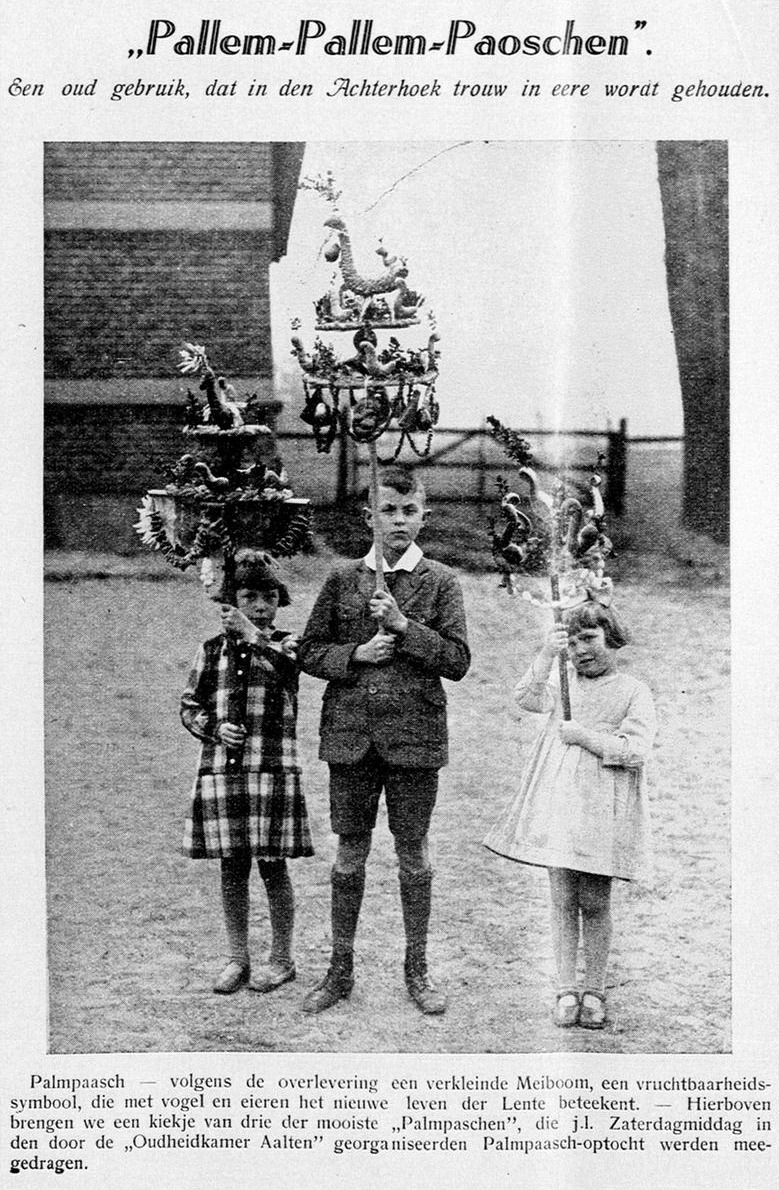
“Egg throwing was still frequently done by small children in the morning. If they wanted them to be a beautiful brown color, they were boiled in chicory porridge. On Palm Sunday, one could see the children walking with beautifully decorated pine branches, so-called ‘palmpaschen,’ while the children sang Palm Sunday songs, including this one:
Eikorij, eikorij, When it is one more Sunday, we get an Easter egg. One egg is no egg. Two eggs is an Easter egg.
These types of songs were sometimes supplemented in other municipalities. These songs are mentioned in folkloric contributions regarding Easter customs.”
Aaltensche Courant, 6 April 1907Aaltensche Courant, 9 April 1935Dagblad Tubantia, 15 April 1960Dagblad Tubantia, 12 April 1966De Graafschapbode, 15 April 1930
After the Union of Utrecht , freedom of religion prevailed in the Netherlands. As a result, many Jews came to the Netherlands at the beginning of the 17th century. The first Jews in Aalten were documented around 1630. At that time, Aalten was a small, isolated and closed agricultural-artisan village community with a poor and still highly superstitious population.
People looked strangely at the Jews with their different religion, customs and clothing. The local population considered them strangers for a long time. Until the Napoleonic era, the number of Jews was limited to four families, who lived in the remote streets of the village of Aalten. The profession was usually ‘merchant’.
Bredevoort
As early as 1631, Bredevoort had Jewish residents. At the time, they lived mainly around the Hozenstraat, where they also had their own cemetery, popularly called ‘De Timp’. Around 1700, a Jewish merchant in manufactures set up a house synagogue in Bredevoort. In 1714, this house synagogue moved to a more spacious location, a large stone barn on the Ganzenmarkt between Hozenstraat and Gasthuisstraat. This barn is still there. Jews from Aalten and Lichtenvoorde also visited this synagogue.
Until 1821 the community was still part of Winterswijk, but in 1830 it became an independent municipality. Around 1830, a real synagogue was built on the Vismarkt.
Around 1800, the Jewish community in Bredevoort had almost as many members as the Aalten community, but steadily declined in size in the course of the 19th century. In 1900 there were not enough members to hold regular services and the Bredevoort congregation was merged with that of Aalten.
The building on the Vismarkt served as a synagogue until the beginning of the First World War. Around 1920 the synagogue was converted into a residence. Nowadays the building is a municipal monument.
Former synagogue Vismarkt 9, Bredevoort
Aalten
It was not until 1776 that a ‘Jewish church’ in Aalten was first mentioned. That must also have been a house synagogue. Between 1800 and 1850, the number of Jewish communities in Aalten grew from 39 to 70, mainly due to the expansion of the family in the existing Jewish families: the number of households hardly increased.
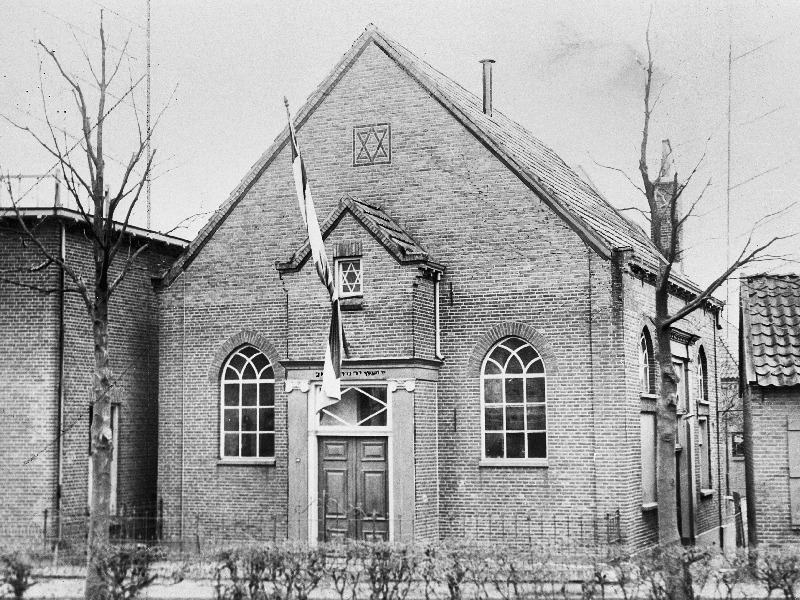
In 1857 the synagogue on the Stationsstraat was put into use. The Jewish community acquired ownership of the cemetery on Haartsestraat in 1852, but had already been used there (we do not know for how long) to bury the dead.
In the period 1870-1900, the number of Jewish inhabitants in Aalten decreased from 80 to 50. This must be explained by local circumstances: the number of Jews who had to earn a living with a small business had become too large for the hardly grown population of Aalten (which even decreased slightly due to emigration) due to the strong growth in the preceding years. Some of the Jews from Aalten therefore also moved away, especially to the larger cities in the east of the Netherlands (Arnhem, Zutphen, Deventer).
Only when the total population of Aalten started to increase again, the number of people working in the small trade could also grow again. And that happened, not only because of birth surplus, but for the first time in a long time also because of the settlement of new families.
Synagogue, Stationsstraat 7, Aalten
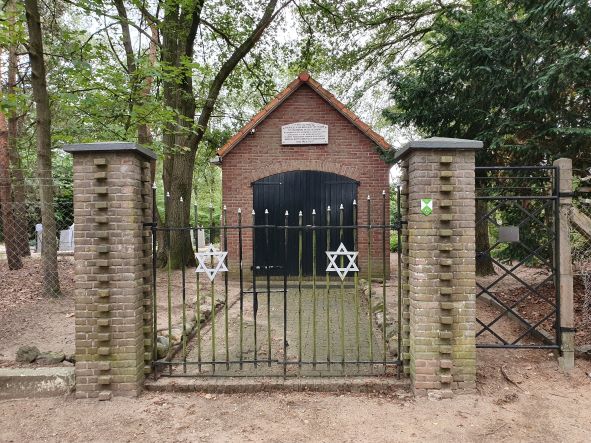
Entrance Jewish cemetery, Aalten
Around 1900
At the beginning of 1900, the church board had three members. There was a religious school with one teacher and a ritual bath. In addition to a funeral association for men, Aalten had a women’s society that offered help in case of illness and death.
The Jewish community in Aalten was religious, although some may have done a little more about it than others. Social control did play a role in this. However, the Sabbath rules were not always strictly observed for economic reasons.
The Jewish community in Aalten consisted mainly of cattle traders and butchers. The fact that many within the small congregation belonged to the same professional group often led to quarrels, which were often fought out in or near the synagogue. These tensions and quarrels, between ritual butchers who had to determine whether a cow was kosher, and between butchers who wanted to sell, were just as much a part of the Jewish culture in Aalten as the mutual aid in case of illness and poverty.
Integration
In the 17th and 18th centuries, Jews were still tolerated as foreigners, but in the 19th century a process of integration gradually took place. This led to the fact that the Jews were an accepted minority in the early 20th century. For example, they held board positions in associations such as Aaltens Belang, the Oudheidkamer and the Feestgebouw.
Marcus Gans was co-founder of the Peters en Gans pipe factory on the former Gasthuisstraat. Jewish cattle traders were involved as shareholders in the establishment of the dairy . The public school had Jewish teachers, the Aalten Orchestra Society, the Thalia drama society and Symphonia had Jewish members. Jewish members were part of the Aalten branch of the National Crisis Committee and the volunteer fire brigade.
Most Jewish children also had non-Jewish friends and the older ones were also usually friendly with non-Jews. The municipal council was officially represented at official events in Jewish circles.
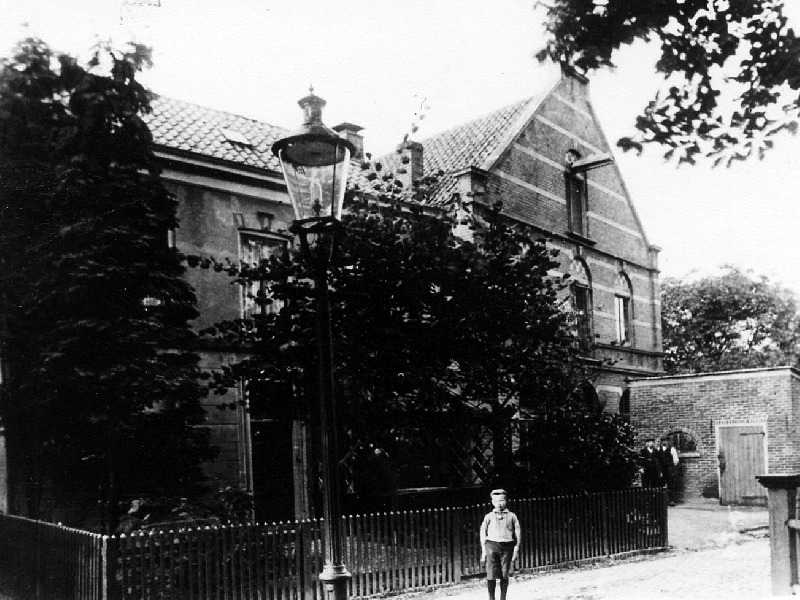
Pipe factory Peters & Gans (right), Gasthuisstraat, ca. 1910
Refugees from Germany
In the years after 1933, a stream of refugees started from Germany. After the Reichskristallnacht in 1938, this flow increased sharply. A small part of those who were admitted to the Netherlands were allowed to settle in Aalten. Most were sent to special refugee camps that had been set up in various places in the country.
On 1 January 1942, Aalten had 17 inhabitants with German nationality (which, by the way, they had officially lost on 25 November 1941: the German refugees had effectively become stateless citizens). In the first weeks and months of the German occupation, everything remained quiet in Aalten. Measures taken against the Jews did not directly affect the Jewish community in Aalten in the first year. What would have consequences in the long run was the registration of all Jewish residents in the autumn of 1940. 63 cards were sent to Arnhem.
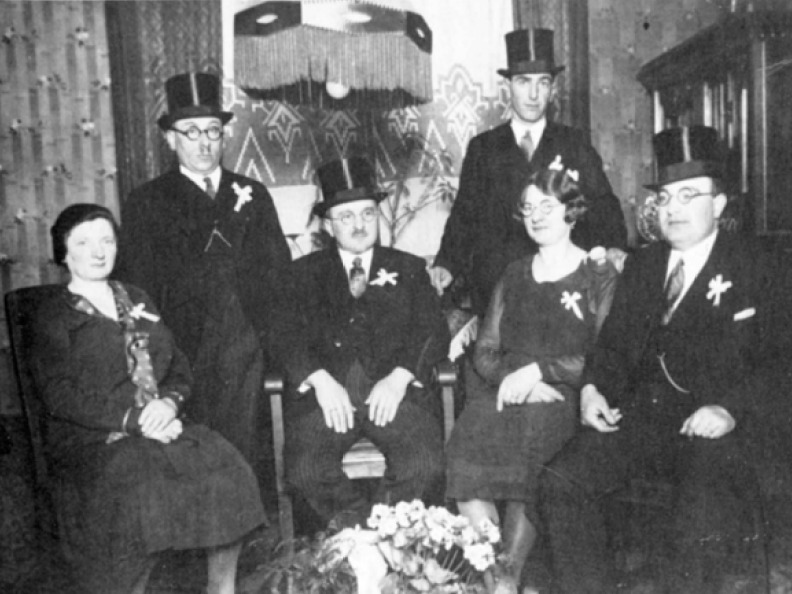
Members of the Jewish community of Aalten in 1932
Choices
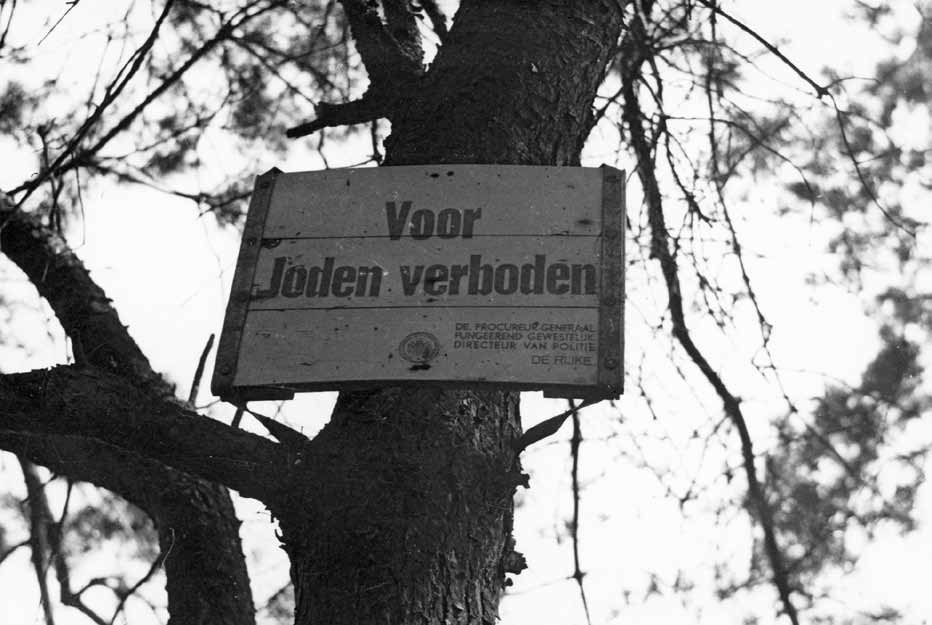
Prohibition at the entrance of the Loohuis
In 1941, the expulsion of Jews from public life began. First there were fewer and fewer advertisements from Jewish shopkeepers in the newspapers, then came the regulations that forbade them to participate in public meetings and access to public spaces. Jewish pupils were banned from education. In the same year 1941, the first Jewish victim fell from the Jewish community in Aalten as a result of a raid.
The list of prohibitions and obligations that applied specifically to Jews continued to grow and in the summer of 1942 the deportations began. They had to decide whether or not to go into hiding. Those who did not opt for the latter were deployed for what was called ‘the expansion of work in the east’ and – as we know afterwards – murdered in the gas chambers.
Hiding
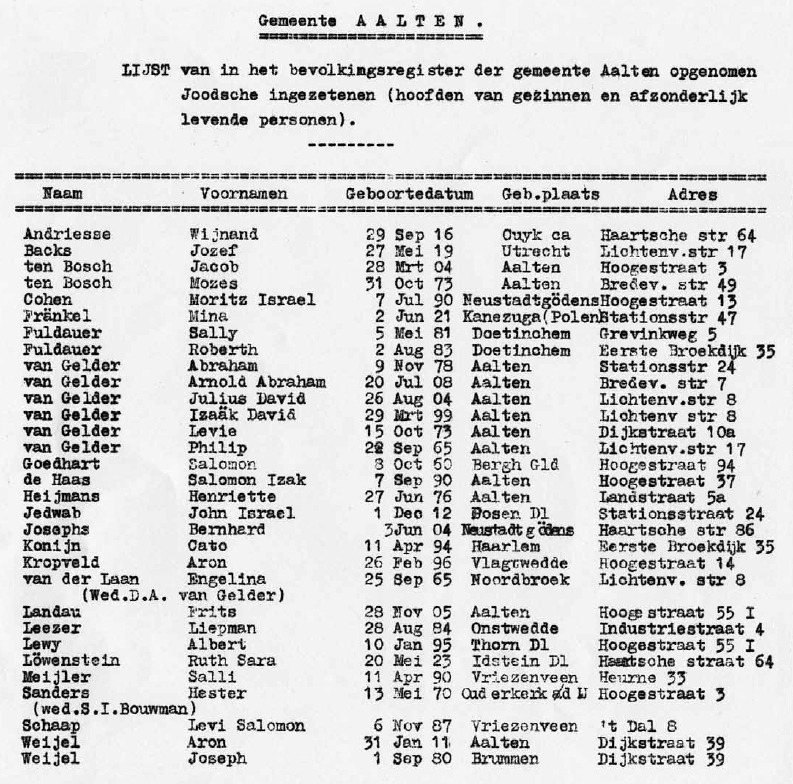
On 13 July 1942, the overview of the Jews in Aalten was sent in five copies to the Zentralstelle für jüdische Auswanderung in Amsterdam. That was the beginning of the end.
With the exception of the NSB members, the non-Jewish population of Aalten generally behaved helpfully. In retrospect, however, one can say that both Jews and non-Jews underestimated the danger and did not see the severity of the measures.
On 4 October 1942, 10 Jews from Aalten, family members of Jews who had been transferred to Westerbork from a number of closed labour camps, were put on a transport to the transit camp and from there to Poland. Shortly afterwards they were removed from the population register ‘because they left for abroad’.
Within a month of that, 37 Jews from Aalten were in hiding. They were also removed from the population register with the addition v.o.w. (left, unknown whereto). At the beginning of 1943, another 15 Jews from Aalten went into hiding. The other 25 were deported via Vught or Westerbork. This made Aalten officially Judenrein on 10 April 1943.
List of Jewish residents of Aalten, 1942
Victims
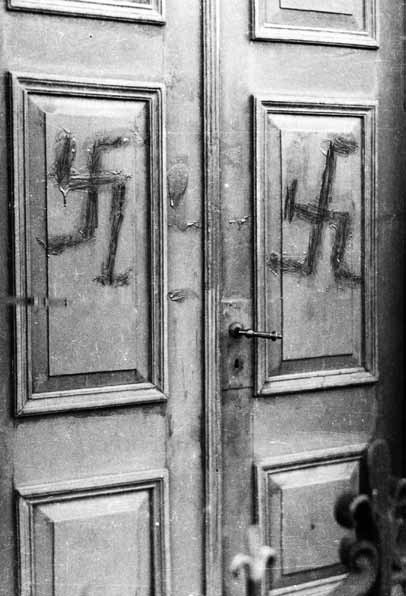
Graffiti synagogue in Aalten
The houses of the deported families were emptied (for the benefit of German Bombengeschädigte) and rented out again. Outstanding bills and transport costs were paid by Lippmann and Rosenthal, the bank in Amsterdam where all Jewish assets were housed.
In 1941 people went into hiding temporarily, but from October 1942 the hiding took on a permanent character. Not everyone returned from hiding.
Of the 52 Jews in hiding, three eventually died during their hiding period and six were arrested, deported and murdered after being betrayed. There have also been Jews who were born in Aalten, who may or may not have spent a large part of their lives there, but who lived elsewhere in the Netherlands during the occupation due to relocation. The information about their fate is not complete. If we count them, the number of victims from Aalten is much larger than the 34 of whom we know for sure.
After the war
The 46 members of the Jewish community in Aalten who had survived the war were distraught. Many had lost a large part of their family and no longer owned anything. Their attempts to get some of their former possessions back did not always meet with cooperation and often met with reluctance.
The number of Jews in Aalten steadily declined after the war. Young people left for Israel or to the west of the country, the older ones died. In 1965 the number was 28, in 1981 21, and now there are only a few.
Hint
The National Hiding Museum in Aalten tells the great history of resistance, hiding and freedom before, during and after the Second World War with ‘small’ stories. The museum examines the choices and dilemmas of ordinary citizens on the Dutch-German border and uses the stories of the past to have a conversation about today.
In the east of the Netherlands, the concept of naoberschap is widely known. This phenomenon, also referred to as neighborly duty or neighborly aid, refers to the tradition in which neighbors support one another during both joyful and sorrowful events.
In 1874, J. ter Gouw, with the cooperation of E.F. Avenarius, a teacher in Lintelo, and Is. de Waal, a former minister in Aalten, described the customs and duties of the naoberschap as they were common in Aalten at that time.1 The article is presented below.
N.B. In the original article, naoberschap is spelled with oa. Because we are Old Aalten and the article concerns Aalten, we have chosen to adapt this term to the WALD spelling, thus using ao.2
“Although these customs are still in vogue in the municipality of Aalten, they nevertheless belong to the olden days. They are remnants of ancestral morals, mere fragments that still live on there, but which may also disappear after only a few years.“
New Construction
‘Foezel’ as thanks for the (naober) help
When building a new home, the future resident visits eight or twelve of the nearest neighbors and asks them if they wish to be his “naober.” This is usually accepted, as a refusal is considered an insult, and terminating the naoberschap also signifies the breaking off of all mutual social interaction.
Mutual obligations rest upon the naobers. For instance, every naober is obliged to help erect the wooden frames and the roof free of charge when a house is being built. In the evening, the naober youth then place the May trees (a few pines) in front of the house, for which the owner must treat them.
This is followed by a so-called “rigtemaal” (topping out meal) for the naobers, who also take this opportunity to give the new building a name, by which name the resident is subsequently called, and often better known than by his family name.
Before the new home is occupied, the naober women, or their daughters or servants, arrive with baskets full of peat and wood to “aan te bueten” the fire, which is to say: to light it. And if the new resident is among the needy, his more affluent naobers often bring him such a large quantity of fuel that he can provide for his hearth for several months.
J. ter Gouw
Marriage
When a young man or young woman is to enter into marriage, the other young people from the naoberschap go to the residents with whom the newlyweds will take up residence, before the second marriage banns take place, and ask the bridegroom or the bride if they may “make it beautiful.” This beautification consists of planting four tall pine trees in front of the door, which are interconnected with arches, wound with palm, and adorned with small flags of colored paper; while in the center a crown is hung, wound with cut paper and decorated with gilded eggs. Inside this crown hangs a wooden dove, as the symbol of love, which is neatly covered with gold paper.
These wedding crowns are held in high honor and preserved for as long as possible. At many farms, one can still see the crowns that were hung at their grandfathers’ weddings.
The fetching of the bridegroom or the bride to bring them to their destined home is also performed by the naober youth. The wagon is decorated with greenery and often drawn by four horses; the girls from the naoberschap take their places upon it, and while singing or rather shouting out: “To Austria we wish to sail, almost across the heath, etc.”, they set off on their way.
If it is a bridegroom fetching his bride, he sits at the front of the wagon smoking a long Gouda pipe — if possible a steel pipe, decorated by his naober girls with red, white, and blue silk ribbon. Now, that is of course long out of fashion; bridegrooms now smoke cigars or do not smoke at all. But in the time of pipes, a bridegroom had to smoke. I have seen some who actually belonged to the non-smokers, and yet sat with the bridegroom’s pipe between their teeth during the ‘bride’s tears’ and at the wedding, and had to pack and light it every now and then.
Upon arriving at the bride’s home, a bouquet of colored and gilded paper is fastened to the left side of his hat, so that many would take him for a coachman with a cockade on his hat. The bride receives a similar bouquet on the left side of her chest.
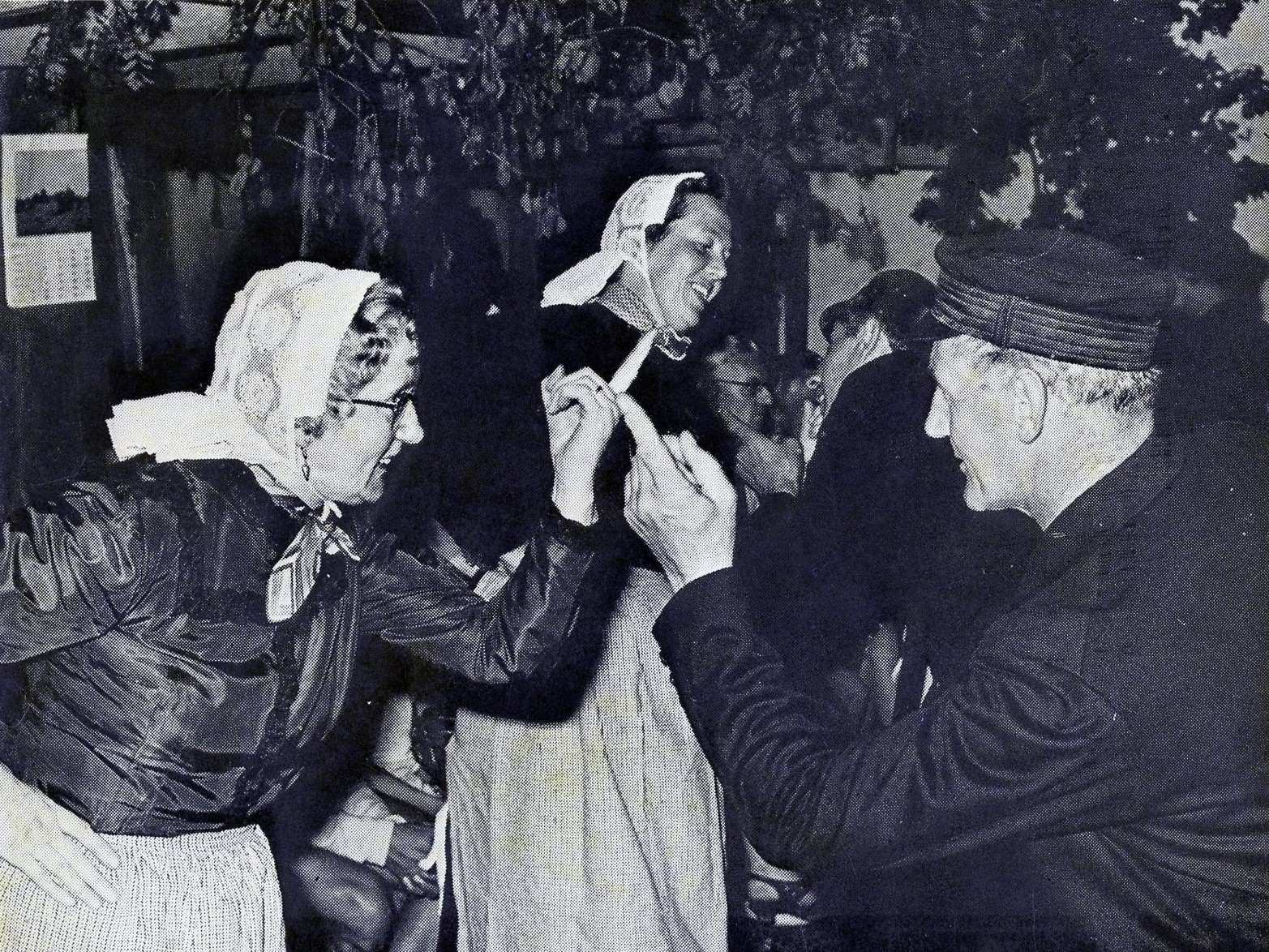
Achterhoek peasant wedding; they dance the ‘Driekusman‘
Once some bread and coffee have been consumed, the bride is led to the wagon by a naober boy and the bridegroom by a naober girl, while the other naober boys fetch the “bride’s cow” from the stable and lead it behind the wagon. If the bride’s parents are well-to-do people, the naober boys take the liberty of also bringing some sausage, bacon, meat, chickens, and more of that nature for the newlyweds.
Often, the bride’s cupboard, well-stocked with rolls of linen, napkins, and table linens, along with eight or twelve chairs, a spinning wheel, and a reel, has already been brought to the future home the day before.
When the bridal wagon has arrived there, the naober youth spend not only the evening but also a large part of the night drinking “foesel” (gin) and shouting out all kinds of songs, for one cannot call it singing, and finally return to their homes to pay for the frequent use of that “plague drink,” as some call it, with headaches and listlessness the following day.
Sometimes the wedding or “broedlagt” follows weeks, even months later, or is combined with the ‘kinderbier’ (child-beer) of the first offspring.
J. ter Gouw
Death
In the event of a death, the obligations of the naobers are even more numerous. As soon as someone dies in a household, one of the nearest naobers is notified, if none are present, and he immediately goes around the entire naoberschap; thereafter, the naobers go together to the house of the deceased to “verhennekleeden” the dead, which is: to remove their clothes and shroud them in the burial garment.
The next day, the passing of the deceased is tolled, and the naobers must announce the death to the family, even up to a distance of five hours away. In the evening, two or three naobers bring the coffin and place the body inside. If the deceased died of a contagious disease, or if the unpleasant odor already indicates decomposition, he is given a glass of “plague drink.” But this is then also the only gin used in a house of mourning.
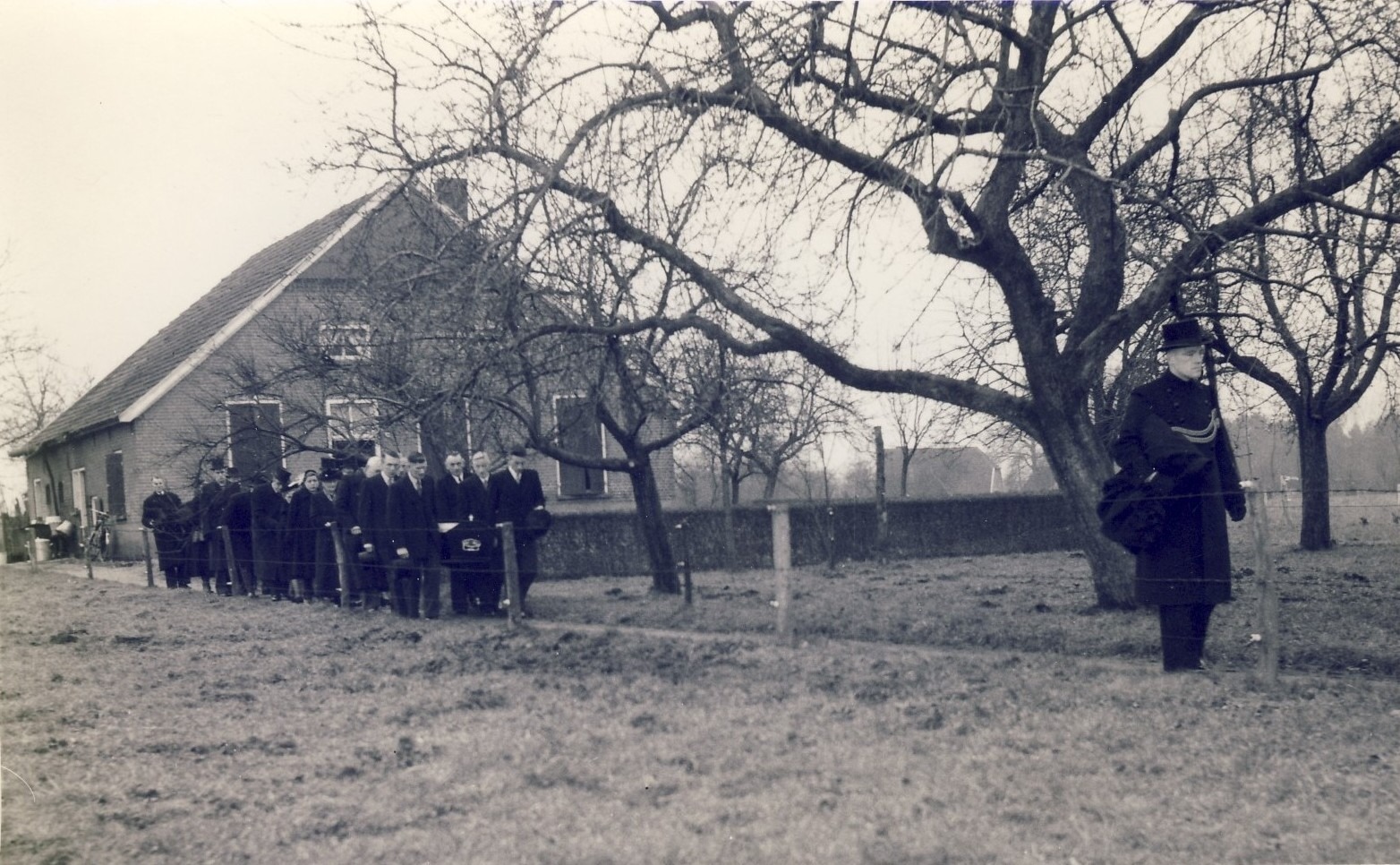
Funeral of Gerhard Aalbers, 1954. Departure from ‘t Slat in IJzerlo. From right to left: 1 gravedigger Rensink; 2 Gerrit Hengeveld of de Smit; 3 Herman Lammers of Lurvink; 4 Bernard Nijman of de Scheel; 5 ?; 6 Johan Lammers of ‘t Nije Loo; 7 Johan Kraaijenbrink of de Wikker; 8 Hendrik van Eerden; 9 mother Betje; 10 Annie; 13 Derk H.; 12 ?; 14 Derk W.; 15 ?
From the time of death until the funeral, the naobers manage everything. They must take the grain required for the funeral meal to the mill and provide everything else that is needed. The naober women must sift the flour and bake bread, and because of this, there is a bustle in the house of mourning that is bothersome to the relatives, who would prefer to be alone with their beloved dead. One can form an idea of that bustle when one knows that more than a hundred households may be invited to a funeral or ‘groeve’.
(This was the case with one of my farmers, who was quite well-to-do but still had only a small farm, when there was a ‘groeve’ at the house upon the death of his elderly mother. On that occasion, four mud of rye were baked, yielding 75 loaves of bread, and since the bread was intended for four people, they had counted on three hundred eaters. Furthermore, the following was purchased: one full Leiden cheese and one nearly full, together 33 old pounds; twelve old pounds of coffee, and 1.25 old pounds of white sugar lumps. A barrel of beer was ordered from the brewer, which they expected would not be sufficient. The bell-ringers drank three guilders’ worth of gin.)
On the day of the funeral, at ten o’clock in the morning, the body is placed on “den deel” (the threshing floor), and the coffin is opened far enough so that the face of the dead is visible. The naober women now pour coffee and present bread to the guests, while that naober woman whose husband must drive the body to the cemetery has the privilege of serving the immediate family, and thus every naober woman has her specific task according to her rank and status.
After all the guests, which include the naobers and the residents of het rot (the district), have satisfied themselves with bread and coffee, everyone goes to the threshing floor to see the deceased for the last time. If a minister is present, he gives a speech by the open coffin; he seeks to comfort the bereaved, reminds everyone of the memento mori, and concludes with an appropriate prayer.
Now the coffin is placed on the back of a wagon, and the two closest relatives of the deceased sit at the foot of the coffin, followed by the next two, and so on until all seats are occupied. The women have a black rain cloak or ‘folie’ hanging over their heads and know how to indicate their relationship to the deceased very precisely by covering themselves entirely or partially with it.
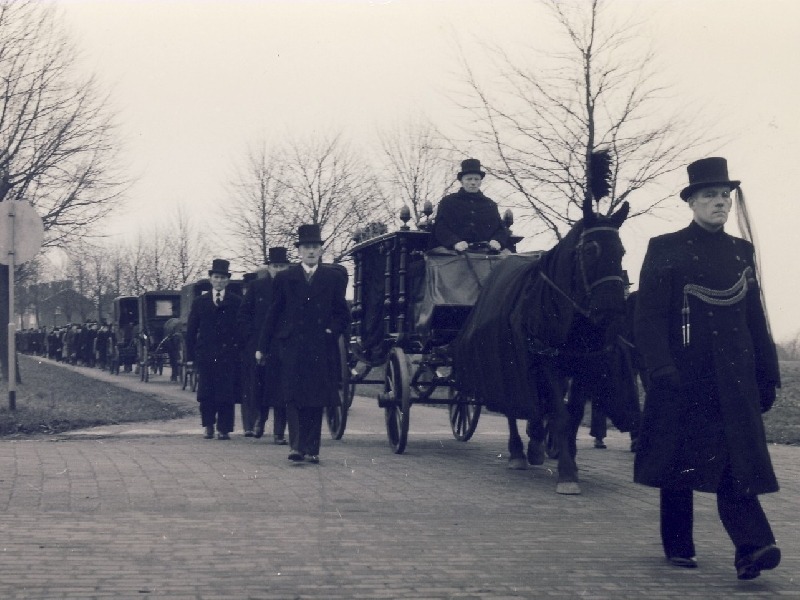
The procession to the grave forms a long, sometimes endless line, as not only the relatives but also the naobers and those belonging to the ‘rot’ follow the body, and moreover, as soon as the funeral procession approaches the village, many from there also join in; so that not infrequently one hundred and fifty men, women, and children take part in that procession.
Funeral procession of Gerhard Aalbers from ‘t Slat in IJzerlo
From the moment the procession comes into view of the village until it has left the cemetery again, all the bells are tolled, and from the grave, they go to the brewer, where a few drink tea, but most drink beer, and the latter in very generous amounts. From the brewer, they return to the house of mourning; here bread and coffee are consumed once more, and the ceremony is concluded.
But the next day, a small after-reflection follows. Already at the crack of dawn, the poor stand at the door (fifty or a hundred sometimes) to be able to carry away “a morsel” from the house of mourning. They are given the not very carefully sifted bran from the consumed rye and the leftover bread.
In the afternoon, the naober women come to the house of mourning once more; they again consume coffee and a sandwich, and thereafter each gathers her borrowed cups, saucers, knives, etc., and departs with the customary: “I wish you the best.”
Lintelo, E.F. Avenarius
In the village
What has been communicated by my friend Avenarius, and to which I have added a few remarks, specifically concerns the naoberschap among the country folk. In the center of the municipality, one has the same theme but with some variation.
Upon moving into a home, an offer soon comes from the naobers who belong to the house (according to a choice once made) to “aan te bueten a fire,” i.e., to light it. This being accepted and the hour determined, the naobers send daughters or maidens (servants) with fuel — “kluwen” or dredged peat from one, wood from the other — and everything is piled up at the empty hearth, as if it were to be set ablaze immediately. If one wishes to make it truly beautiful, a wreath of colored paper is placed over everything. After this “fire-lighting,” a glass of “foesel” (gin) is immediately expected, and if there is something to go with it, all the better; thereafter the naobers themselves are “geneugd” (invited), and consequently, the heads of the families are received for “a cup of coffee” with “kluntje” (sugar lump), currant bread, and finally “foesel with sugar” (gin with sugar).
Also after the conclusion of a wedding and funeral, the naobers are invited in the same manner, and then Jew and Christian, Roman Catholic and non-Roman Catholic, rich and poor, sit together in brotherly friendship; and such an evening leaves pleasant memories behind, while one feels newly inclined to perform for one another all the services that the duties of naoberschap prescribe.
Within the town, funerals are generally not arranged on such a large scale as we have just heard; yet the gathering is sometimes so numerous that the minister, who leads in prayer before the refreshments are consumed, must sometimes place himself between two spacious rooms in order to be heard in both. It even happens that a third room is necessary, where the guests must then make do with a few sounds from a distance.
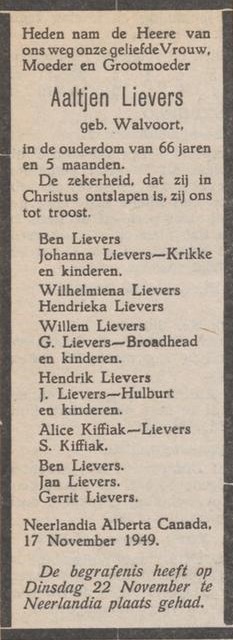
In the 19th century, thousands of Achterhoekers emigrated to the United States in search of land, freedom and new opportunities. Among them was the Walvoord family. They were among the early European pioneers who sought refuge in the fertile but unexplored territories of Wisconsin.
The family name Walvoort/Walvoord comes from manor house ‘t Walfort in Aalten. Scott Anthony Walvoord, who lives in the United States and is a descendant of emigrants from the Achterhoek, has spent years researching his roots. On his website he has collected an enormous amount of information about the Walvoort/Walvoord families, in the Netherlands and the US.
The information below is mostly taken from Scott Walvoord’s website.
Ancestors of ‘The Founding Five’
Scott has been able to distinguish five branches of the Walvoort family that have emigrated to America. He calls these the ‘Founding Five’. They are all grandsons of Derk and Janna Walvoort, three brothers and two of their nephews. Most Walvoords and Walvoorts living in America today descend from this ‘Founding Five’.
Salomon Walvoord (Winterswijk, 21 April 1778) married in 1801 Maria Elisabeth Klumpenhouwer (Dinxperlo, 21 June 1781). They went to live on the Gantvoort farm in Barlo and had ten children there. Maria died on January 6, 1840 at the age of 58. Salomon then moved with his youngest daughter, Janna Diena (1825) to the adjacent farm Leeland. On May 1, 1846, Salomon moved in again, he moved in with his eldest son Hendrik (1802) who lived on a farm in Vragender. There he died on 8 June 1848 at the age of 70.
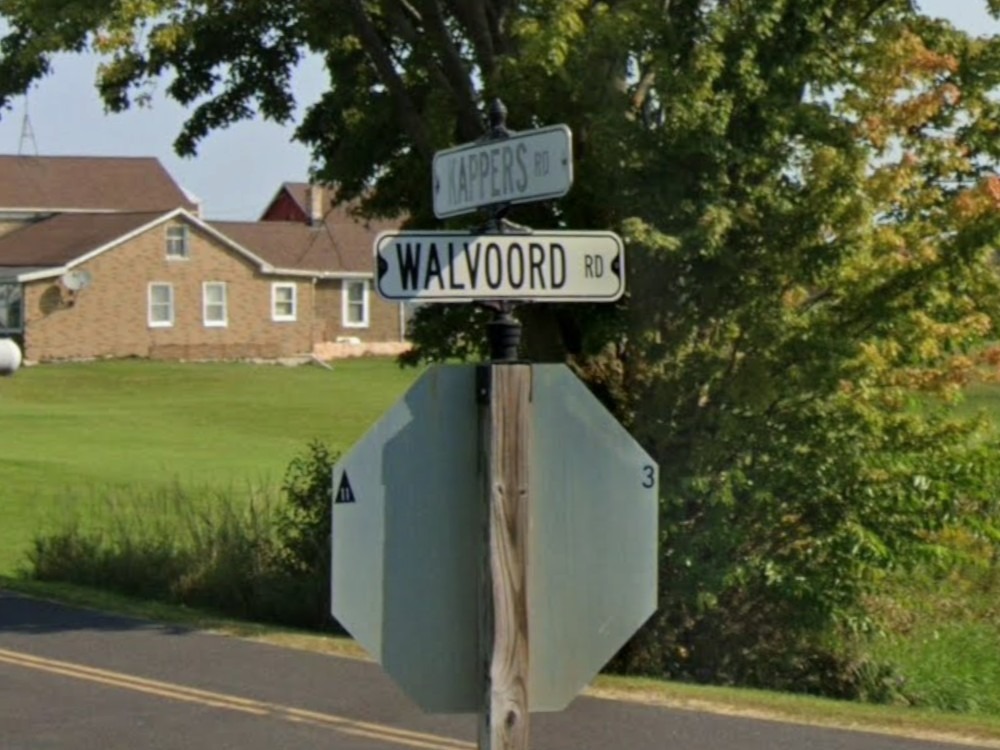
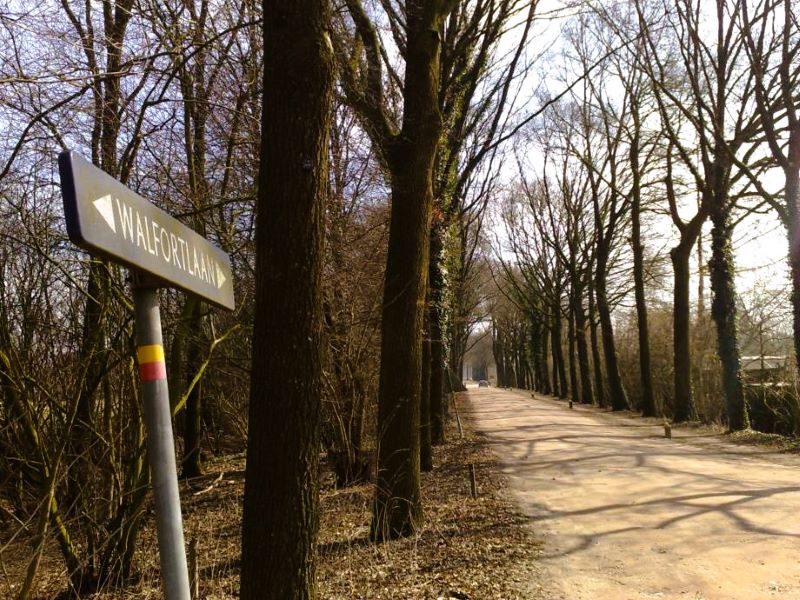
Walfortlaan, Aalten (photo: Google Streetview)Walvoord Road, Sheboygan (photo: Google Streetview)
Hendrik Walvoord (1802-1865)
Hendrik (Aalten, 21-03-1802) was tall, dark and slender as a young man. He married three times, twice to sisters, daughters of Garrit Doornink and Dersken Wesselink. His first marriage was with Teunisken Doornink (Vragender, 16-02-1800). They married in 1824 and he moved in with his parents-in-law. Together they had two children, Gerrit Jan (Vragender, 22 January 1826) and Derk Antoni (Vragender, 24 July 1827). Derk Antoni died on January 24, 1828, at the age of six months. Five months later, Teunisken died on June 22, 1828, at the age of only 27.
Hendrik’s eldest son Gerrit Jan was cradled in the same cradle as Hendrik’s youngest sister, Janna Diena (Gerrit Jan’s aunt, born only one year earlier).
Hendrik remarried on 24 July 1829 to Teunisken’s sister, Johanna Berendina Doornink (1806). Together they had a son, Antoni (Tonie) (Vragender, 29 April 1830). But Tonie died on January 23, 1833 at the age of two, while staying with his grandfather and grandmother in Barlo (Gantvoort farm). They may have taken care of Tonie temporarily because of the death of his mother, ten days earlier, on 13 January 1833 in Vragender, at the age of only 26 years.
Hendrik’s third marriage took place on 4 May 1833 to Johanna Berendina Walvoord (1816). She was a daughter of Antonij Walvoord and Willemina Geertruid Konings. Hendrik and Johanna had two daughters together, Johanna Wilhelmina (1834) and Theodora Maria (1835). Theodora died at the age of five on November 29, 1840. Mother Johanna died on July 27, 1839 in Vragender, 27 years old.
Emigration to America
After the death of his parents, Hendrik Walvoord, three times a widower, left the Netherlands for America in 1849. He had made some investments with his inheritance before crossing the Atlantic and had six thousand dollars with him.
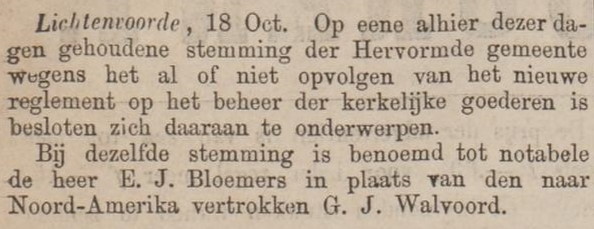
Hendrik’s nephew Gerrit Jan Walvoord (Lichtenvoorde, 1816), not to be confused with Hendrik’s son of the same name, took over the family farm in Vragender. Later, in 1870, Gerrit Jan also emigrated with his family to America where he joined his son Toni Willem (William) Walvoord (Lintelo, 1843) in Nebraska. William had preceded his father and had sent back enthusiastic messages from bountiful prairie land.
Zutphensche Courant, 20 October 1870 (source: Delpher)
Hendrik left with his youngest sister, 24-year-old Janna Diena Walvoord, on the sailing ship Hector from Rotterdam to New York and arrived on 16 September. In America, he joined his son Gerrit Jan in Pittsburgh, Pennsylvania. Gerrit Jan had preceded his father and sister a few years earlier. Immediately afterwards, the whole family moved to Holland, Sheboygan County in Wisconsin, where Henry purchased 65 acres of wooded land and began developing a farm, which he expanded from time to time. Shortly after arriving in the US, he acquired 49 shares in the Holland Trading Company, which was engaged in the trade and transport of timber.
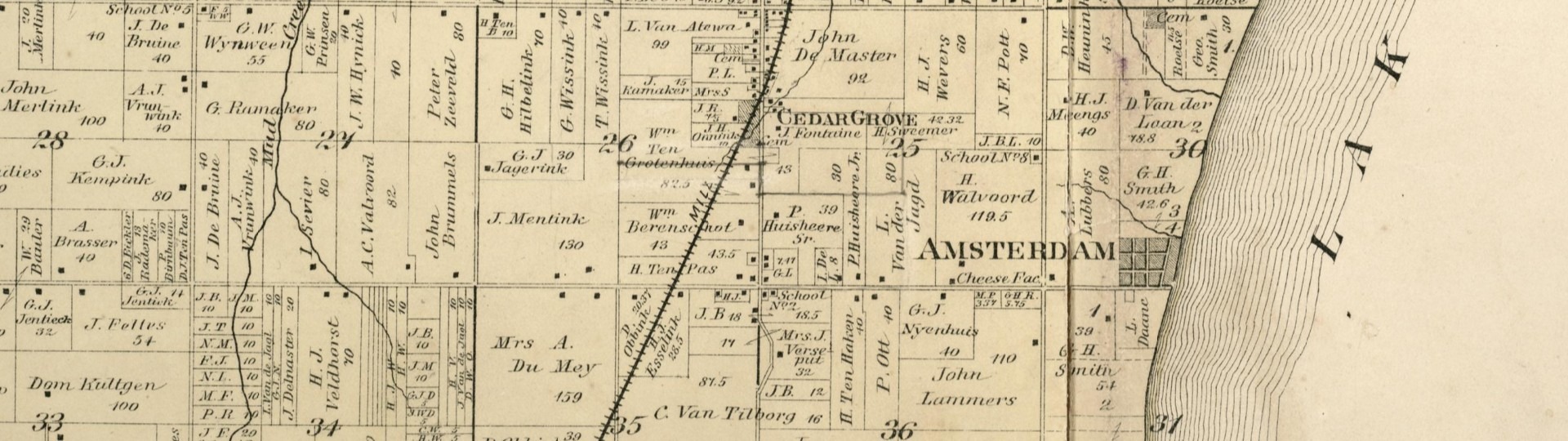
After coming to Wisconsin, Henry sold plots of land to new immigrants in a region he had called Amsterdam. It would take some time for the authorities to officially recognize this name. Every lot he sold had a view of Lake Michigan. Hendrik also became known as a timber merchant. He needed a jetty for boats, which came to collect the wood. He rented a dredger from the government and dredged a small port two meters deep. There, piles of wood were waiting for boats.
Map of Amsterdam and surroundings, Sheboygan County, 1889 (image: University of Wisconsin–Madison)
Every day, two or three ships left the jetty, loaded with wood. There were usually four or five ships in the bay at the same time. Seven or eight teams of men dragged the wood to the pier (according to Tony Walvoord, 80+ years old, who told all this to Louise Walvoord). Although the original pier has disappeared, the wooden piles of Walvoord’s pier are still visible. Hendrik not only owned shares in the timber company and the jetty, he had also bought a shop and large plots of land near Amsterdam.
Henry Walvoord co-founded the Presbyterian Church at Cedar Grove in 1853 and served as an elder for many years. On March 17, 1855, Henry became an American citizen. Two days later, his son Gerrit Jan did the same.
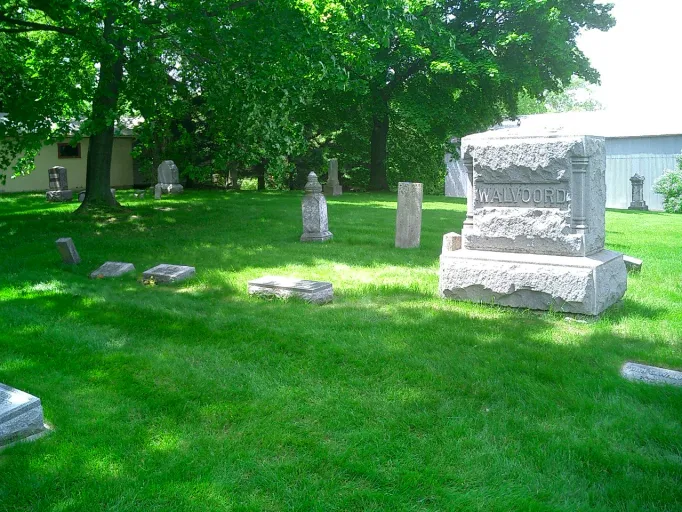
On July 11, 1856, Hendrik lost his only son Gerrit Jan, who drowned in Lake Michigan at the age of thirty. Henry bought a plot of land for a cemetery that is now in the village of Cedar Grove (Walvoord Cemetery) and buried his son there.
Hendrik Walvoord died on 21 December 1865. After his death, his land was inherited by Gerrit Jan’s children (Henry, Jane, Mary, Tonia, and Delia). Henry, his grandson, inherited 32 hectares and the granddaughters each inherited 16 hectares. In addition, Henry received all movable property from his grandfather, namely: horses, cattle, wagons and furniture. The four granddaughters each received $15 for a cow and another $300 when they turned twenty-one. When he turned twenty-one, Henry received the rest of his grandfather’s property (mortgages, notes, securities, credits, and money). When Tonia died, her brother Henry bought her land.
Gerrit Jan Walvoord (1826-1856)
Gerrit Jan Walvoord (Vragender, 22 January 1826) was spry and clever, a man of quick action. He was tall and slim, had black hair and good looking. At the age of twenty, he left his native country to seek his fortune in the New World. His father, Henry, would follow him later. Gerrit Jan may have sailed from Rotterdam to Baltimore with the ship Garrone. He first settled in Pittsburgh, Pennsylvania, where he farmed and also worked in the coal mines. There he married a German girl, Anna Maria Engel Nolten, who had emigrated to America with her brother in 1846.
Their eldest son, Henry, was born in Pittsburgh in 1847. When Henry was about two years old, in the fall of 1849, the Walvoord family moved to Sheboygan County, Wisconsin. They settled in the small settlement of Amsterdam on Lake Michigan, southeast of the village of Cedar Grove. The Walvoords had a shop there and shipped wood from the pier.
Gerrit Jan Walvoord was not allowed to enjoy his new home for long. While he was measuring wood on the aforementioned pier, he accidentally drowned, thirty years old. No one saw the accident. He was found in the water. According to one story, Gerrit Jan heard a ship approaching while he was eating. He jumped off the table, ran to the harbor, climbed over the wood on the pier and lost his balance. He fell into the water, which was very cold, and although he was a good swimmer, the wood that had also slipped into the water kept him down and he drowned. Gerrit Jan died in Lake Michigan on July 11, 1856 and was buried in Walvoord Cemetery.
At his death, Gerrit Jan left behind a family with five children. Son Henry was eight at the time of the accident. Gerrit Jan’s daughters were Jane, Mary, Tonia and Delia. Delia, the youngest, was only three months old when her father died. Soon after, the case on the pier would cause the Walvoord family even more suffering. In January 1857, the shop and home burned down and the family lost most of their possessions and almost everything they had invested there.
The elder Hendrik Walvoord had money and bought some land. Both his family and Gerrit Jan’s family moved to a farm near Amsterdam. The house was built for the two families and they lived there together for some time. Henry Walvoord (son of Gerrit Jan) was married there.
Janna Diena Walvoord (1825–1894)
Janna Diena (Jane) Walvoord (born 27 June 1825) was the youngest sister of Hendrik Walvoord. Jane came to America in 1849 with her brother Henry. After arriving in America, she married a man also named Walvoord: Derk Antonij (Dirk Tony) Walvoord (Lichtenvoorde, 1820). Jane died on October 8, 1894 in Holland, Sheboygan. Jane and Dirk Tony had three sons: Garrett, Tony and William.
Garrett married Delia Huenink in 1886 and had six children: Jennie, Minnie, Anna, Elmer, Alice and Della. Tony married Janna Pot in 1886 and had four children: Antoinette, Mabel, Agnes and Alvin. Tony’s second marriage in 1900 to Sarah Hilbelink produced no children. William married Jennie Flipse in 1892, an older sister of Mary Flipse who later married a distant cousin of William’s, John Garrett Walvoord. William and Jennie had five children: Louis, Clarence, Marion, Esther, and Harvey.
Walvoord Cemetery
On 11 July 1856, Hendrik Walvoord (1802-1865) lost his only son Gerrit Jan, who had drowned in Lake Michigan at the age of thirty. In his will, Henry reserved an acre of land (about 0.4 hectares) for a family cemetery in section 26 of Holland Township. As stated in the will:
“First, I give and bequeath to the children of my son Gerrit Jan Walvoord (deceased) and to their children who may be born and their grandchildren, great-grandchildren, in a word to the descendants of the said children of my son Gerrit Jan Walvoord (deceased), an acre of land lying and located in the County of Sheboygan and the State of Wisconsin, known and described as follows: …” (then the exact location is described).
Walvoord Cemetery, Cedar Grove, Wisconsin (photo: FindAGrave)
So according to Henry’s will, every descendant of Gerrit Jan Walvoord (“down to posterity”) could be buried on this family plot. Over time, the Walvoord Cemetery was surrounded by Cedar Grove as the village grew. Today, the cemetery is located in downtown Cedar Grove on Main Street.
In April 1939, a border guard detachment of 36 men was stationed in Aalten, housed in farms. Sand filled tubes are placed here and there as obstacles. Around 1 September, at the beginning of the Second World War, several hundred residents of Aalten left by train for the various garrison places. On 9 May 1940, the municipal architect was instructed to install barricades on several roads.
On 10 May, German army units thundered into Aalten. The soldiers stationed around farms offer no resistance. A few days later, Dutch prisoners of war are seen being transported to Germany in open trucks. Four people from Aalten are killed at the Grebbeberg. A group of five hundred returned prisoners of war are enthusiastically welcomed in the party building and then travel on by train.
Two hundred and fifty Rotterdam children stayed here in the summer months. This was also the case in 1941. A lot of (young) people go to work in Germany because it earns well. There is already a lot on the coupon. Food production comes under control, for which Aalten is divided into three districts, each under a local office holder.
In the summer of 1942, the first people in hiding came to Aalten to evade the Arbeidseinsatz. Shortly before, the first group of employees of Dutch Button Works in Bredevoort had themselves photographed neatly in their suits with a view to employment in Germany. A group from the Driessen textile factory is also deployed.
About five hundred Scheveningen evacuees found shelter here in January 1943. Almost all of them belong to the Reformed Church. In Winterswijk there are eight hundred, all Reformed. Once every three weeks a Scheveningen pastor stays here who also leads a church service.
Hostages
The Germans increased the pressure to get men to dig. The most intimidating thing was the detention of 12 hostages on October 18. The next day, 550 men leave for Zevenaar. Ten days later, another seven men are taken hostage and 250 people report. The pastors and R.C. clergy had made an appeal to ‘show mercy and charity towards those who are in immediate danger of death’.
By circular, a representative group of municipal residents insists on a repayment scheme. It will come. A pastor in Zevenaar will be there at all times for support and spiritual care. But there is also a clandestine stencil circulating with the call to ask oneself ‘whether it is responsible to cooperate in the enemy’s defences, as a result of which many more than eleven human lives (…) will soon be lost.’
The last months
A few moments from the last three dark months: Individual food collectors keep coming, but a committee ‘Aid to the West’ also manages to collect a few cartloads of mainly grain. Doctor Der Weduwen succeeds in transferring sick people from camp Rees to the emergency hospital in Avondvrede on the Hogestraat. Serious cases go to the hospital set up in the boys’ boarding school in Harreveld. Der Weduwen is killed when his car is shot at from the air.
A drama is taking place around a resistance group that is hiding in the abandoned farm ‘De Bark‘. Close to the door, in ‘Somsenhuus‘, Germans were billeted while seven Allied pilots were in hiding there. The total number of soldiers in Aalten at this time is estimated at about four thousand.
Liberation
In the last days of March, it is clear that the denouement is near. How hard will there be fighting? Many leave the village, others seek protection in their shelter. There were still German soldiers roaming around. Then, on Good Friday, March 30, early in the morning, the English tanks rolled into Aalten from Germany. Here and there, Germans still put up fierce resistance. Ten British were killed on that day, in Barlo seven people were killed in a grenade hit in an air-raid shelter. Sadness and joy, Aalten has been liberated.
In 1937, G.H. Rots described in a series of articles how things were in Aalten in former times. Regarding New Year’s Eve and Day, he wrote:
“Towards the end of the year, one could see two men walking with a large ‘arm basket’, going from house to house in the village. They were the night watchmen selling almanacs. Not a single household was without an almanac, especially the Zutphen almanac. By offering and selling the almanacs, the night watchmen simultaneously provided the residents with the opportunity to give an unsolicited contribution for the guarding of their property at night. Depending on the financial means of the residents, the aforementioned literature was paid for above the asking price.”
New Year’s Eve
“Then came New Year’s Eve. The cafés had permission to stay open until one o’clock in the morning. The transition from the old to the new year was then celebrated in these establishments, mainly by the local youth. Once the clock had struck twelve, the night watchmen began to deliver their New Year’s wishes. They started with the municipal secretary. A song was sung during this process. The rounds were made to several notables and café owners. It goes without saying that the night watchmen were followed by a large group of curious onlookers, who diligently sang along… and there were free drinks.”
And now the song that the Night Watch and their followers sang on New Year’s Eve:
The old year has now passed by, The new has now arrived. So I wish you with a joyful heart, And you, and all the pious: A new spirit in the new year And a pious life together, So let us praise God here.
How many began the previous year In good health with us, Who have indeed through death Spun out their thread of life. They live in eternity, Life is still prepared for us, So let us now praise God.
It is God who brought forth the light, Who makes the sun and moon rise, To show us the passage of day and night, And month and year. Let us for the past year With thanks to the Supreme Blesser, Praise the God of ages.
The first two stanzas were original creations. The third is from the Evangelical Hymns no. 159 verse 1. Verse 3 of that hymn was also occasionally sung.
One can imagine that these New Year’s greetings on New Year’s Night took quite some time, and the solemnity of it likely faded, especially towards the end of the rounds, particularly as the sound of spirits played the leading role. But for the elderly, the memory of this event is not lost. Especially when reading these articles, the old incidents are recalled and discussed once more, and many look back with nostalgia to the days of yore, remembering, during sleepless nights or when watching over the sick or injured in the quiet of the living room, the monotonous step of the man who traversed Aalten’s streets: “Hark, there is the night watchman!”
“On New Year’s Day, the youth were active again. They and the poorer folk went from house to house to wish people a Happy New Year. One can understand that the population was glad when noon arrived, as it was no longer applicable after that. The downside of all this was that King Alcohol swayed his scepter on those days. In the numerous cafés and taverns, many sacrifices were made to that monarch. Gin was cheap. There were several gin distilleries or ‘branderijen’ in Aalten. Four of these distilleries can still be named. It is no wonder, then, that the use of strong spirits was prevalent on almost all occasions.”
Carbide Shooting
In parts of the eastern Netherlands, including Aalten, it is a tradition to shoot carbide on New Year’s Eve. A small amount of carbide (calcium carbide) is placed in a milk churn, paint tin, or modified gas cylinder, water or saliva is added, and the churn is sealed with a (plastic) ball. Ethyne gas forms, and after waiting about 30 seconds, the gas is ignited through a small touch-hole (or with a spark plug). The gas explodes with a booming bang, launching the ball out of the churn, where it can land dozens of meters away.
The history of carbide shooting is not well known. The tradition may date back to Germanic Yule festivals. In the 19th century, it was customary in both rural and urban areas to make noise on special days. Carbide shooting likely evolved from this practice.
Before acetylene gas was available in cylinders, most village blacksmiths used carbide for welding. It was therefore easy to obtain.
New Year’s Eve, a day like any other. Yet, around four o’clock in the afternoon, many become restless. It is about to happen. There is no other day in the year when we check the clock so often. Outside, in the twilight, we smell the frying of ‘oliebollen’ in the thin winter air. Among children between the ages of four and twelve, a certain tension can be sensed. Tomorrow is the day. Then they will go ‘winning the New Year’.
Winning the New Year in exchange for a treat is a very old custom whose origins are difficult to trace. In our region, it occurs in the former Lordship of Bredevoort, but not in the Roman Catholic enclave of Lichtenvoorde-Groenlo. It possibly relates to religion and the practices surrounding it.
Long before the Reformation, November 11 was an important day: Saint Martin’s Day. According to legend, he gave half of his red cloak to a beggar. He was the patron saint of Utrecht, among other places. The city’s coat of arms is a red-and-white divided shield—red from his cloak and white from his undergarment after he cut part of his cloak away with his sword. This gesture strongly appealed to the popular imagination. As a folk saint, he was venerated and depicted as a rider on a white horse. This was true not only in neighboring Germany but also in the south of our country, in North Holland, Groningen, and Friesland. On his feast day, a mock Saint on a white horse would lead a lantern procession through villages and towns, distributing treats. In Bocholt, just across the border, there was a large lantern procession through a completely darkened city in 1988 and later years. A fairy-tale sight. Upon arriving at the Market, he stood there on a white horse in front of the beautiful town hall, bathed in spotlights. A martial figure. All the children were allowed to walk past him and receive a bag of sweets.
It is not inconceivable that after the Reformation, people wanted to move away from the veneration of saints. A ‘Sint’ was out of fashion. At a meeting of the Zutphen classis in 1668, much was discussed. They wanted to abolish bird shooting, goose pulling, ‘boksebier’, and other irregularities. These were called superstition, or ‘popish insolence’. It is possible that a shift occurred from November 11 to January 1 so as not to forget the children and the needy. Perhaps also because New Year’s Day moved several times on the calendar. Such shifts happened frequently. Moreover, Saint Martin himself had already replaced an old Germanic autumn festival with thank-offerings for the harvest to Wodan.
When shifting the date, other special days had to be taken into account. Saint Nicholas was not an option. This may be how they arrived at January 1. It is an assumption, but not an unlikely one. At that time, they were also troubled by Saint Nicholas; Calvinist ministers wished to do away with it thoroughly. They did not succeed. Bird shooting also continued.
Originally, in the countryside, laborers went to the farmer and his wife—their employers—to wish them a Happy New Year. Belief in omens was strong. If the person delivering the wish was a woman or girl, one was assured of a fertile year with many heifer calves. It seemed almost a competition to be the first to deliver the good wishes. It still is to some extent. There was a firm belief that the wished-for luck would return to the one who spoke the wish first. This was duly rewarded.
In times of great poverty, which were frequent, it could happen that food items were given. It is known that during times of potato shortages, people gave a few potatoes. These were then taken home in a knotted red handkerchief. In the last century, children went out in groups in the neighborhood to ‘win the New Year’. After speaking the good wishes, red handkerchiefs were spread out on the chairs in the kitchen, and all sorts of treats appeared: peanuts, a ‘pöfferken’, ‘opzettertjes’, meringues, figs, an ‘oliebol’ or currant bun, and an apple. Over the years, many customs have disappeared, but ‘winning the New Year’ has remained in our border region.
It has, however, adapted to the times. No red handkerchiefs spread out on chairs with rush mats. Between 1950 and 1980, plastic conquered the world. The red handkerchiefs have made way for well-filled plastic bags, sometimes prepared by businessmen or charitable institutions.
Nowadays, fireworks play an important role on New Year’s Eve. Twenty-five years ago, New Year’s Day was more important. It had to happen on the first day of the new year. Excitement for the children. First to the neighbors. What abundance when they saw thirty or more bags lying on the kitchen counter there. After speaking the good wishes, hands went up almost automatically to take the ‘toete’ (bag).
The older boys would grab their bikes and rush from one house to the next. Formerly with a shoebox under the luggage strap, later with a plastic bag on the handlebars. They were told to look people in the eye and speak politely, but they didn’t allow themselves much time to talk. It was as if they sensed it might be the last time. Once home, the harvest was sorted and placed in portions. Eating until you were sick was something you did on the way. Mother would also start rummaging through it. Cookies went into a tin and sweets into a jar. You could snack on it for a month. It seemed as if that variety symbolized a great number of wishes.
In our time, the fun ends when children are in the first year of secondary school. At most, they shout as they cycle past: ‘Happy New Year, do you have the bags ready?’
Sources
‘From Aalten’s Past’, by G.H. Rots, Aaltensche Courant, 19 November 1937 (via Delpher, part IV & part VI)
After the Second World War, several hundred people from Aalten emigrated to Canada. Here you will find a number of newspaper clippings on this subject, including advertisements from emigrants saying goodbye to their loved ones in the Netherlands.
Aaltensche Courant, 26 August 1947De Graafschapper, 3 January 1948Aaltensche Courant, 20 January 1948De Graafschapper, 31 March 1948 Graafschapper, 10 April 1948Aaltensche Courant, 13 April 1948De Graafschapper, 26 April 1948Aaltensche Courant, 30 April 1948De Graafschapper, 7 May 1948Aaltensche Courant, 11 May 1948De Graafschapper, 26 May 1948
Aaltensche Courant, 4 June 1948De Graafschapper, 7 June 1948De Graafschapper, 7 August 1948De Graafschapper, 11 August 1948De Graafschapper, 18 August 1948De Graafschapper, 13 November 1948Aaltensche Courant, 4 January 1949Aaltensche Courant, 14 January 1949Aaltensche Courant, 13 May 1949
Aaltensche Courant, 17 May 1949Aaltensche Courant, 11 March 1949Aaltensche Courant, 26 April 1949Aaltensche Courant, 23 September 1949Aaltensche Courant, 15 July 1949Aaltensche Courant, 18 October 1949Aaltensche Courant, 25 November 1949Aaltensche Courant, 28 March 1950Weekly magazine ‘De Spiegel’, 17-23 January 1954
Dagblad Tubantia, 24 April 1951Tubantia, 18 June 1952Zutphens Dagblad, 19 June 1952Tubantia, 21 September 1953Zutphens Dagblad, 30 January 1954Tubantia, 13 March 1956Fam. Stronks, Iron Springs, Alberta, 1983
In former times, November was the season for slaughtering. At that time, slaughtering did not yet take place at slaughterhouses, but simply on the farmer’s yard. It was usually outsourced to a ‘home slaughterer’, a butcher who performed the slaughter at the client’s home. Regarding home slaughtering in Aalten and the customs surrounding it, G.H. Rots wrote the following in 1937:
“The busiest and most significant days of the year were when slaughtering had to take place. When November arrived in the land, the slaughtering period began. The ‘wieme’ (drying rack) was empty, and in every household, people thought about slaughtering one or more pigs or a ‘small beast’. The home slaughterers had their hands full.
If the slaughtering had taken place in the morning, the ‘fat-praisers’ would arrive around half past eleven. The neighbors would then judge whether the ‘kidneys were well-covered in fat’. The thickness of the bacon was estimated, and finally the lady of the house appeared with the ‘bottle’, for teetotalers were unknown in those days. On slaughter days, people made sure they had something ‘in the bottle’. The slaughterers received their first ‘drink’ in the morning, the fat-praisers in the afternoon, and in the evening came the great celebration: the slaughter visit.”
Drika Wijnveen-Stapelkamp and home slaughterer Bertus ter Maat
How the slaughtering process worked
In the 1950s and 1960s, it was still permitted to perform home slaughtering yourself. A large boiler pot with plenty of water was brought to a boil. The pig was killed using a captive bolt pistol, which fired a pin into its head. The pig became unconscious. The animal’s throat was then slit, and the blood was collected in a special flat pan.
The pig was cleaned and doused with boiling water so that the hair could be removed more easily, a process known as ‘scraping’ the pig. The animal was then hung from a ‘ladder’ and cut open.
The entrails were collected in a large tub. The intestines were cleaned. First, they were rinsed with water and then scraped clean so they could be used to make sausage. The intestines were tied shut with sausage pins and hung from the ceiling.
Every part of the pig was used. The head meat was used to make ‘head cheese’ or brawn. The sausages and hams were hung from the ceiling to dry. Slaughtering and processing a pig took a week of work but provided meat for personal use for an entire year. One way to prevent meat from spoiling was salting. The meat was placed in a tub of salt, and the salt was rubbed thoroughly into the meat. Meat could also be preserved in canning jars. This allowed the meat to be kept for many months.
A well-known home slaughterer in Aalten and the surrounding area was Bertus ter Maat. The above interview with the then 77-year-old Aalten resident was filmed in 1991 by FilmAalten.
Slaughter visit
Regarding the slaughter visit, Rots wrote: “Those slaughter visits were the social evenings for the population. Neighbors would gather and enjoy each other’s company. It began with a cup of coffee and a rusk. Then the bottle appeared on the table. On those evenings, the events of the time were discussed. One person knew this, another had heard that, and a third had ‘recently read the newspaper’, and thus knew for certain. And the women told each other the secrets of the civil registry and related matters. Meanwhile, the hostess would invite them again: ‘Have another drink’. ‘The pigs turned out well’. And finally, when it was time to go home, everyone was in the merriest of moods.
One should not imagine that all the pigs that had been fattened were intended for personal use, as you can understand. At least one pig had to be sold, and from the other that was kept, the hams or gammons were also sold, because keeping the hams yourself ‘was just for the sake of using them up’; no, they had to be turned into cash. And if a heifer or ‘bull’ was slaughtered, the nagelhout (smoked beef) was certainly sold. There were several buyers who salted and smoked these finer meats and sent them to the larger towns. The money the pigs brought in was often intended for the payment of hay, mortgage interest, etc., or at least for extraordinary expenses.”
Sources
‘From Aalten’s Past’, by G.H. Rots, Aaltensche Courant, 5 November 1937 (via Delpher)
Photo: collection Leo van der Linde, with thanks to Anton Stapelkamp