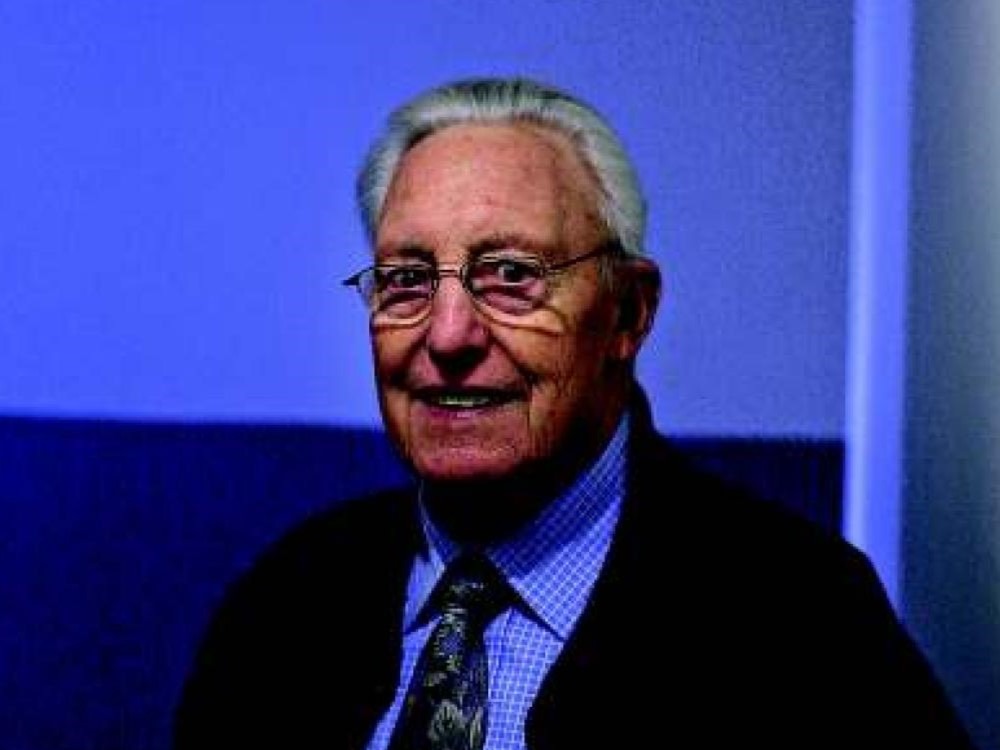
Text: Ad Ermstrang
During the final years of the Second World War, many people in hiding (onderduikers) found refuge in the Achterhoek region. Aalten topped the list, with an estimated 2,400 people pursued by the Germans. “The inhabitants were not only devout, but also linked that faith to providing shelter to those who had been driven from their homes.”
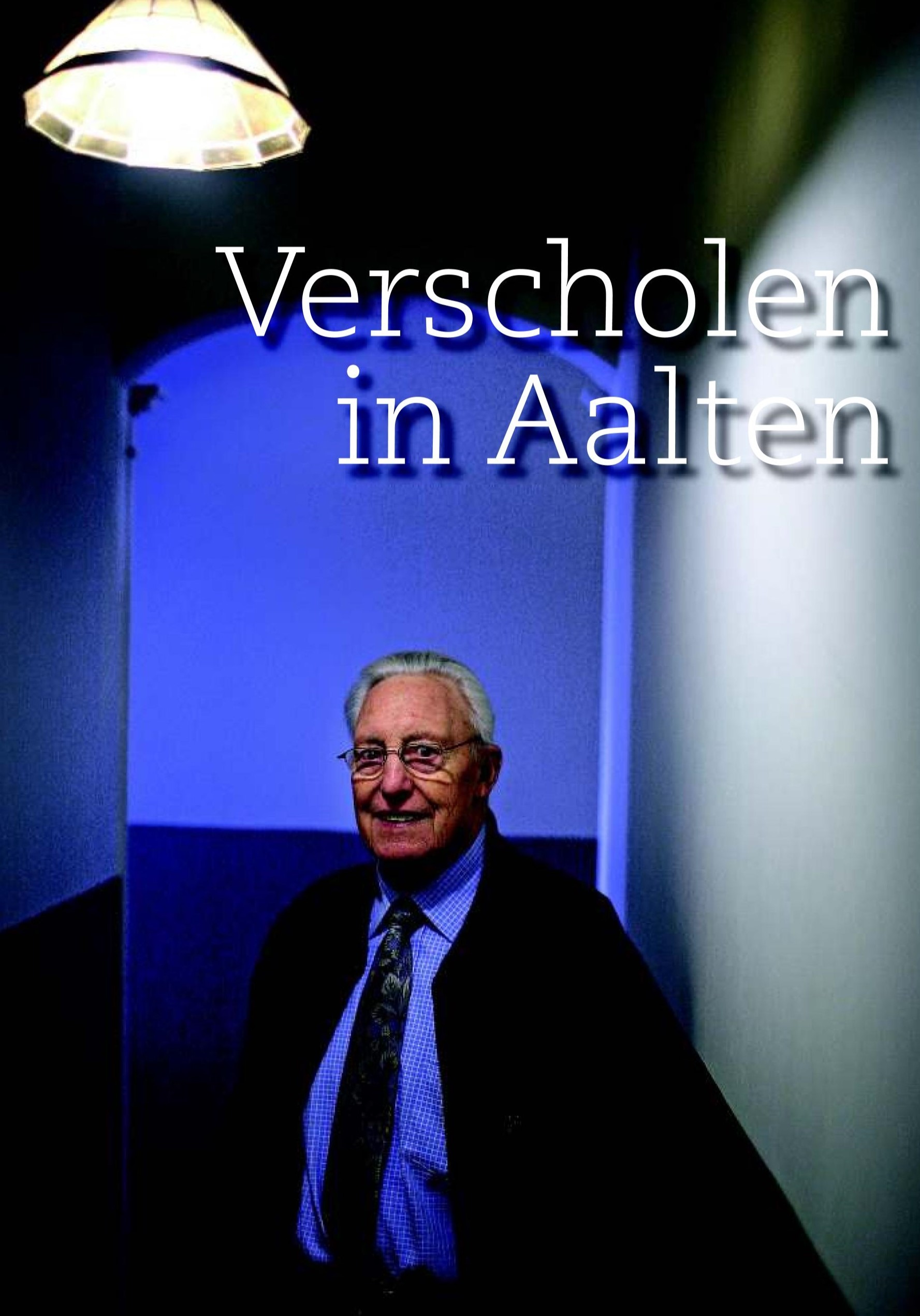
Pieter Schaap (84) now lives in a tidy apartment in the centre of Aalten, having purchased the property with his wife, who is nearly 80, several years ago. “We lived a little further away, but the house was too big, and we could no longer keep up with the garden.”
That is not to say that the Aalten resident and his wife are not spry. The couple regularly visits their children in the west of the Netherlands and travels by plane to visit a son in Norway. Pieter’s wife regrets that they can no longer make those trips by car and boat. “You see so much more that way.”
The Aalten resident, distinguished by a thick shock of grey hair, still drives in the Netherlands. Among other things, he delivers meals for Tafeltje Dekje (Meals on Wheels). “But the physical ailments are starting to show. I recently had cataract surgery on one eye, and my hands shake a little; I can no longer write properly. I am considering stopping with the meal deliveries this year.”
Spoiled butter
Sixty-five years ago, Pieter Schaap came to the Achterhoek for the first time. The native of The Hague was forced to report to Winterswijk in late 1942 following a summons from the Germans, who were coercing young men into forced labour. “I reported to Kamp Vosseveld as instructed. It was very German there, very strict. We were allowed to go to church on Sundays, at least.”
Schaap grew up in a Reformed family but later joined the Gereformeerde church. “After the service, the minister invited us for coffee. We were regularly allowed to stay for a meal. They thought we were starving in that camp. That wasn’t true, but as a young guy, you could always manage a bit extra.”
He disliked the conditions. “We repaired backroads and replaced sections of railway track. Everything was done by hand. You only had a spade and a wheelbarrow. Meanwhile, you were being drilled. We had to sing all sorts of nasty songs. I didn’t like the regime. I spoke about it, and then the minister said: ‘Why don’t you go into hiding?’ He said he could arrange an address. However, we were being watched closely; there were constant roll calls, making it impossible to escape. Until the moment we were served spoiled butter. That was early 1943; I don’t remember the exact date. Almost everyone had diarrhoea, and there was no roll call. That was when I slipped away. Together with Henk Bossemeijer, a lad from the Alphen aan den Rijn area.”
Pieter and Henk exchanged their uniforms at a family’s home in Winterswijk, put on civilian clothes that had been laid out for them, and boarded the train to Aalten. “The minister had said we would be taken care of. And indeed, we were met by members of the resistance. Through Ome Jan, the leader in Aalten, we were given shelter for the night. The next day, we went to ‘t Paske farm in the rural district of Dale.”
Schaap immediately felt that the presence of him and Bossemeijer was too much of a burden on the farming family. “The responsibility for two people in hiding was too great. ‘Do you know of another place for one of us?’ I asked. After a few weeks, I was able to go to ‘t Heegt farm in Lintelo, another rural district. There, with the Rensink family, I stayed until the end of the war.”
A hollow above the horse stable
The young man from the west with a technical background was quickly retrained as a farmer. He ploughed and harrowed the land using horses, cleaned stables, and fed the cows. “I even learned to milk, thanks to the family’s eldest daughter, who had just taken a course in it.”
At first, Schaap slept in the opkamer (parlour) of the farmhouse. Later, a group of 500 people from Scheveningen arrived in Aalten, having been driven from their village by the Germans in connection with the construction of the Atlantikwall. Schaap remembers it well. “The Gereformeerde evacuees went to Aalten, while the Hervormde evacuees from Scheveningen went to Winterswijk. That had been agreed upon with the local churches. Some of the Scheveningen evacuees were also offered shelter at ‘t Heegt.”
For the rest of the war, he slept in a hollow above the horse stable. “Above the manger where the horses ate. If I stood on that, I could just reach a small hatch that couldn’t be seen from below. I had a bed there, and some light fell in through a glass roof tile.”
He was not there often. Pieter spent most of his time in the fields. The man in hiding did not find it truly dangerous. “We didn’t have much trouble from the Germans. We did have to watch out for landwachters (Dutch collaborators), but they were always spotted in this area long in advance. I would usually go to a piece of land further away, somewhat hidden behind the trees. Or I would crawl away. I never stayed on the farm if there was trouble.”
A wagon full of crispbread
He stayed at ‘t Heegt for two and a half years, amidst many other people in hiding. Aalten was teeming with them. “There were more and more of them. The Germans also began to notice, and on 30 January 1944, the Westerkerk was surrounded by SS soldiers during a service. A number of people in hiding tried in vain to escape past the organ. The churchgoers were checked and fined if they had left their identity cards at home.”
The story of Gerrit Hoopman (19), a person in hiding, is well-known; in the chaos, he was provided with an outer skirt, a shawl, and a traditional headpiece by a woman from Scheveningen, allowing him to escape the church. That did not apply to a large group of other people in hiding; more than forty men were arrested.
Schaap, a faithful visitor to the Westerkerk, was not there that day. “We felt it was becoming too dangerous, so that Sunday we organised a service in a secret location for one of the first times. We called that the ‘underground church’. We did that at farms, always at different addresses. Often one of the boys would lead the service; sometimes we had a minister.”
Later, German soldiers were billeted at the farm. “They were young boys, paratroopers who no longer had any planes and therefore had to serve in the infantry.” He had little trouble from them. “To them, I belonged to the family. When they requisitioned a horse and wagon from the farmer at one point and gave the command ‘Bauer mit!’ (Farmer, come with us!), I jumped onto the driver’s seat. We headed toward Bocholt, but during a bombing raid, my passengers quickly disappeared—they looked for cover elsewhere. I waited for a while until I saw farmers with horses and wagons driving back and forth from a large warehouse in the area. I went over and said I had been sent to pick something up. I was given a wagon full of knäckebröd (crispbread), ha ha! I drove back with that.”
He was also part of the farming family to others. “All those years, I was ‘Piet van ‘t Heegt’. Some people still know me by that name today. We were recently at a gathering where we met an acquaintance from that time. She lives in Zeeland now. ‘Hey, there’s Piet van ‘t Heegt,’ she said.”
He did not suffer from hunger in the Achterhoek. “Every two weeks, I even sent a large rye bread to my parents. The postman was called ‘the baker’ at their place; he helped distribute the bread.”
Until his retirement, Schaap worked as a technician for the Royal Netherlands Army. His pre-war ideal of becoming a marine engineer did not come to fruition due to the war. In the hamlet, Pieter met his future wife. “She lived a few farms away.” The courtship did not go smoothly, as her father thought she was too young, and after the liberation, Pieter signed up as a volunteer for the Dutch East Indies. Only years later did he return to Aalten, where the farmer’s daughter was still waiting for him. “We have now been married for 56 years. We were truly destined for one another.”
Pieter Schaap passed away on 11 October 2013.
For more information on the period in hiding: Nationaal Onderduikmuseum, Aalten

Leave a Reply