
During World War II, host families in Aalten provided shelter to approximately 800 children from heavily bombed Rotterdam. The initiative was spearheaded by Rev. Th. Delleman, a minister in Kralingen who had recently served in Aalten. Thanks to his dedication and the networks of both church communities, Rotterdam children were able to find temporary respite in the Achterhoek – far removed from the violence of war.

In May 1940, Rotterdam was struck by a devastating German bombardment. Almost the entire historical city centre was destroyed. In the Kralingen district, Reverend Thomas Delleman witnessed the consequences first-hand. He saw how, above all, the children were scarred by fear and grief.
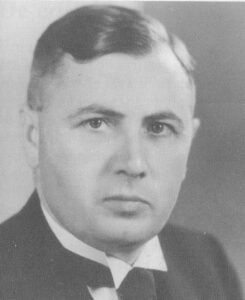
Amidst this chaos, Delleman decided to take action. He knew the Achterhoek well: from 1930 to 1938, he had been a minister in Aalten, where he had experienced the hospitality of the local people. He believed that a temporary stay in the peaceful surroundings of Aalten would benefit the children – a place where silence and care could help them forget the war for a moment.
A committee was soon formed with the support of deacons and congregation members from both Rotterdam and Aalten. In July 1940, the first groups of children departed for the Achterhoek, where they were placed with host families.
Over the course of the war, an estimated 800 children from Rotterdam were cared for in Aalten and the surrounding area. Upon their departure for home, they often took gifts with them: eggs, bacon, rye bread, and sometimes even live animals. Later, the visits were supported by local diaconates. The last group of children travelled back to Rotterdam in February 1945. However, the connection remained: many children continued to return to their Achterhoek host families annually long after the war had ended.
A Wartime Letter
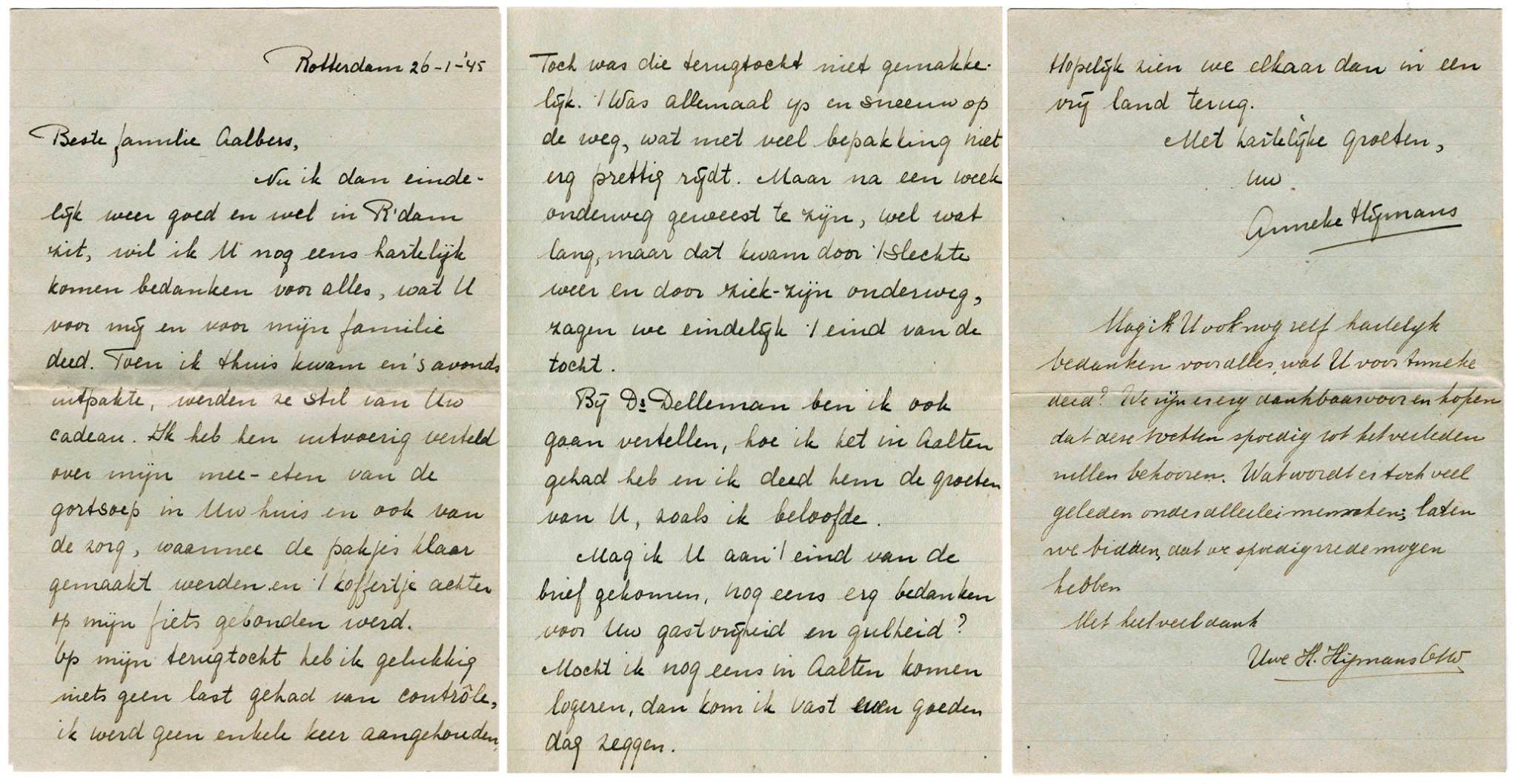
One of the children who came to Aalten thanks to Rev. Delleman was Anneke Hijmans. She stayed with the Aalbers family at ‘t Slat farm in IJzerlo. After her stay, she cycled back to Rotterdam in a single week. Shortly thereafter, on 26 January 1945, she wrote a letter to her host family — a personal document filled with memory and gratitude.
Letter from Anneke Hijmans to the Aalbers family in IJzerlo:
Commemorative Window as Thanks
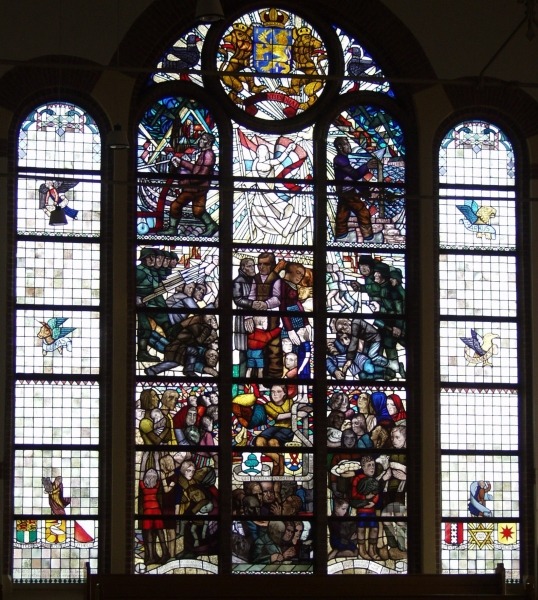
After the war, a committee was formed in the Reformed Church of Kralingen to present a commemorative window to the citizenry of Aalten on behalf of the collective churches and the Jewish community. It was a lasting gift in gratitude for the hospitality offered during the war years.
The window, designed by artist Marius Richters, depicts among other scenes how Aalten farmers and families welcomed children from Rotterdam. It was installed in the Oosterkerk in Aalten and officially unveiled on 13 July 1946 by Rev. Delleman himself.
Newspaper reports
‘Rotterdammertjes’ in Aalten
“Thanks to the benevolent hospitality of the Aalten Community, we were enabled to send approximately 100 children, largely from afflicted Rotterdam, to Aalten,” stated Mr B. Hoving in the Rotterdamsche Kerkbode. These children are now enjoying the peaceful rest and excellent care that Aalten offers them, far away from their devastated city.
Rotterdamsch Nieuwsblad, 17 August 1940
The ‘Rotterdammertjes’ Depart
Six weeks ago, we published a photograph of the arrival of the first ‘Rotterdammertjes’. This morning, the departure took place. At ‘Elim‘, the Reformed children bid their farewells. Each child was presented with a lovely souvenir of this holiday: a fountain pen and pencil in a case, kindly provided by Mr F. Buesink, ‘Febea’.
It was a scene of cheerful bustle. The children appeared in ‘full regalia’—which, in this context, meant with an average of three times as much luggage as they had arrived with. Naturally, there were all sorts of boxes, parcels, and bags filled with apples and pears (how fortunate that they are all ripe just now), as well as bouquets of various flowers, which, together with bunches of heather, are intended to provide a hearty welcome home. One child was so fortunate as to have stayed with a friendly baker, with the result that the little one was sent home with a currant loaf almost as large as the ‘Rotterdammertje’ itself!
There was an unprecedented crowd at the station; it was estimated that over 500 people were present. Rev. Th. Delleman spoke a brief word of thanks on behalf of all groups. He had not dared to hope that Aalten would have been so hospitable. “Rotterdam has been impoverished in many things, but your love has made us rich. Never shall Rotterdam forget the benevolence shown to her children.”
De Graafschapper, 30 August 1940
‘Rotterdammertjes’ return after a four-week holiday in Aalten
Loud cheering erupted from the special train that brought 128 children from afflicted Rotterdam families back to the ‘Maas City’ on Friday afternoon around four o’clock. The waving and shouting children would have liked nothing more than to jump straight out of the train windows to greet their mothers, brothers, and sisters, and to tell them all about their time in the Gelderland Achterhoek, in the friendly village of Aalten.
No sooner had they spotted one another than the children began to show what they had received from their foster parents. Almost all of them carried a box of flowers and gifts; one had received a rabbit, another a chicken, and one ‘Rotterdammertje’ had even been treated to a currant loaf… a metre long! Furthermore, everyone had received a fountain pen and a propelling pencil as a memento of their stay in Aalten.
The citizenry of Aalten has certainly spoilt the ‘Rotterdammertjes’. People had spontaneously approached the Diaconate of the Dutch Reformed Church with the request to send children from affected families, to provide them with a carefree month-long holiday. During this long holiday, thanks to the minister, Rev. Klijn, and the headteacher, Mr Hopman, the children visited numerous beautiful spots in the Achterhoek, while film afternoons also provided the necessary variety.
It goes without saying that the children thoroughly enjoyed themselves in Aalten. The acquaintance seems to have been mutually appreciated, as many Aalten foster parents invited the children to spend their holiday with them again next year upon their departure.
Rotterdamsch Nieuwsblad, 31 August 1940