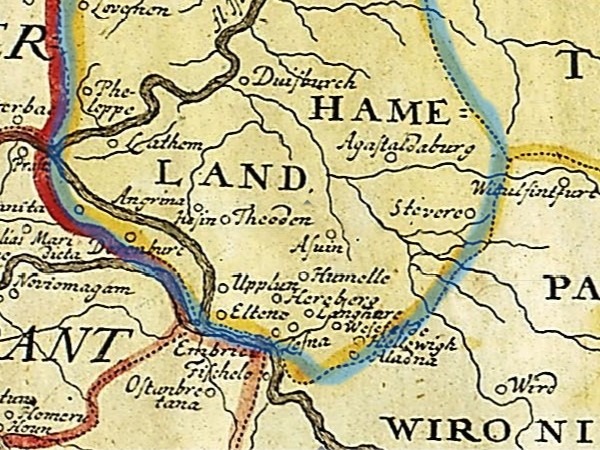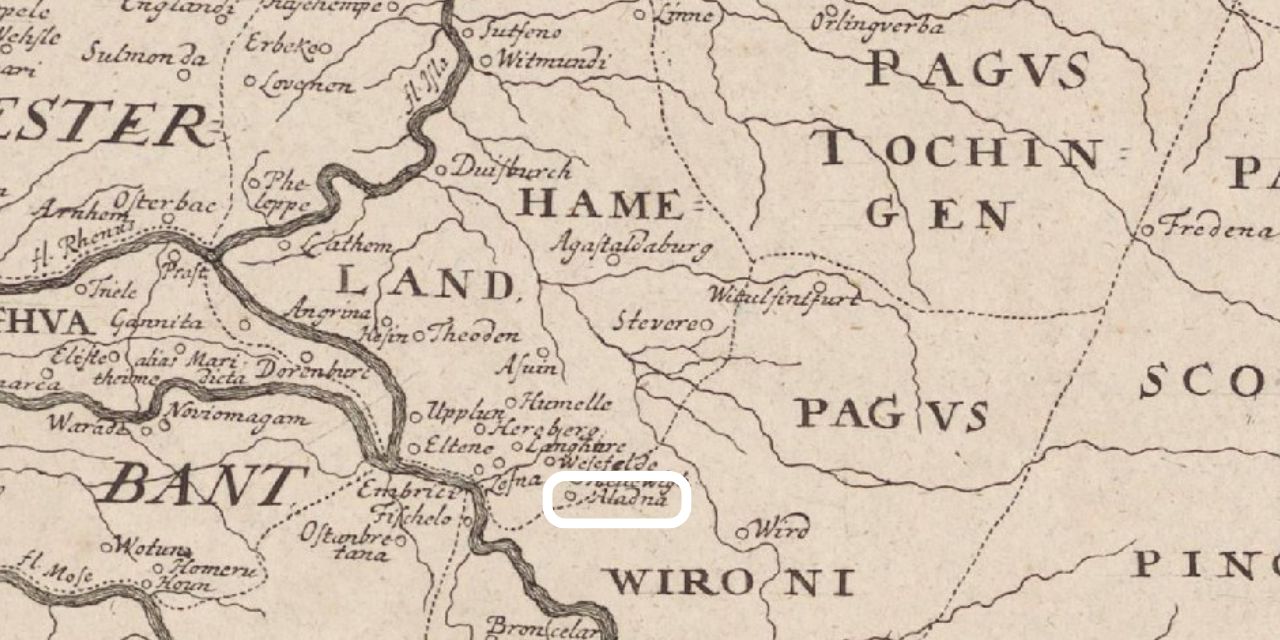
The year 2026 marks exactly seven centuries since the political map of the eastern Achterhoek was drawn. On 28 June 1326, the Treaty of Wesel and an astronomical mortgage sum put an end to the ‘Bredevoorter Fehde’ (the Feud of Bredevoort). Consequently, the Lordship of Bredevoort – including the jurisdictions of Aalten, Winterswijk, and Dinxperlo – came under Guelders control. This is a reconstruction of a bitter, four-year war of attrition that would change the region forever.
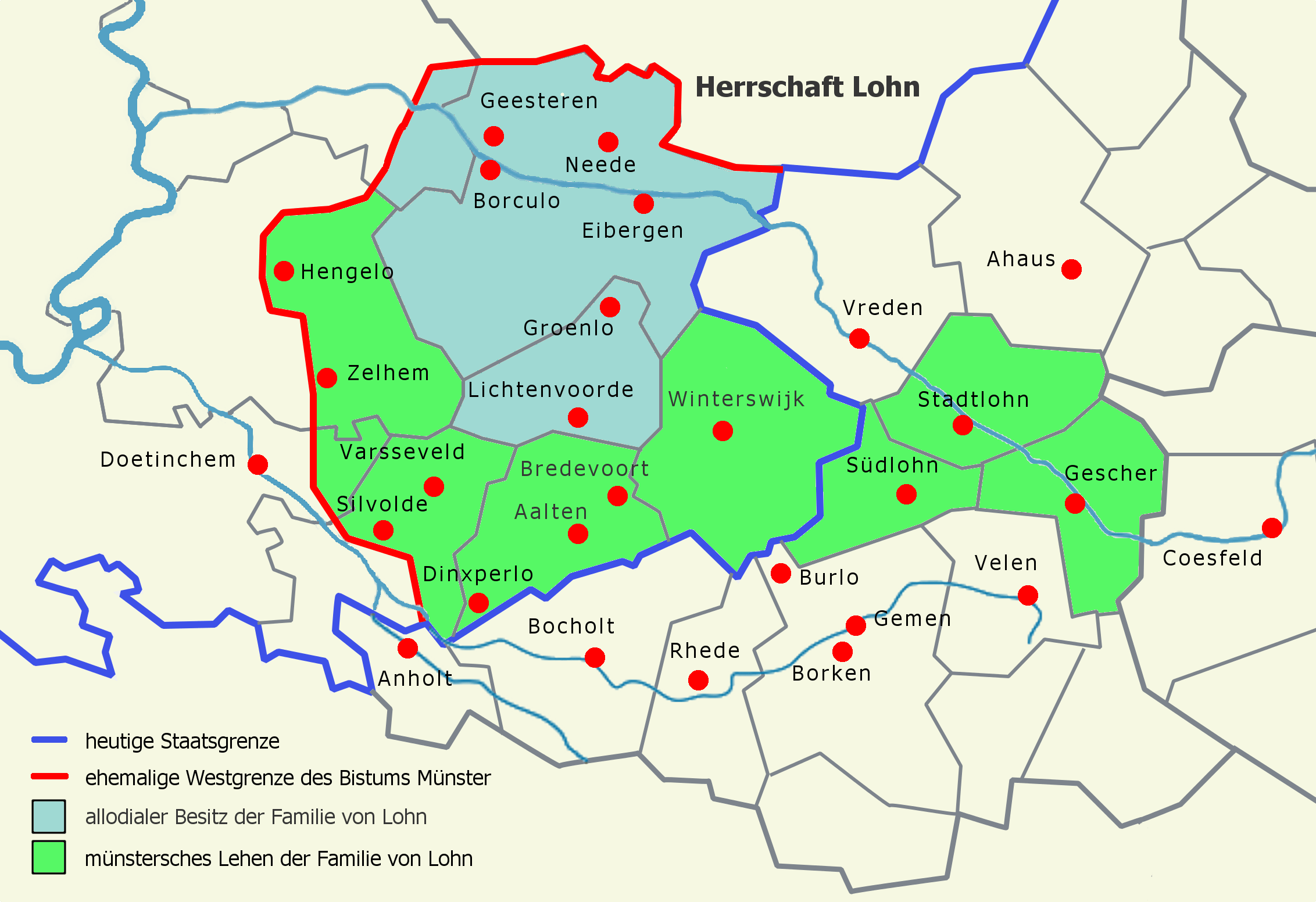
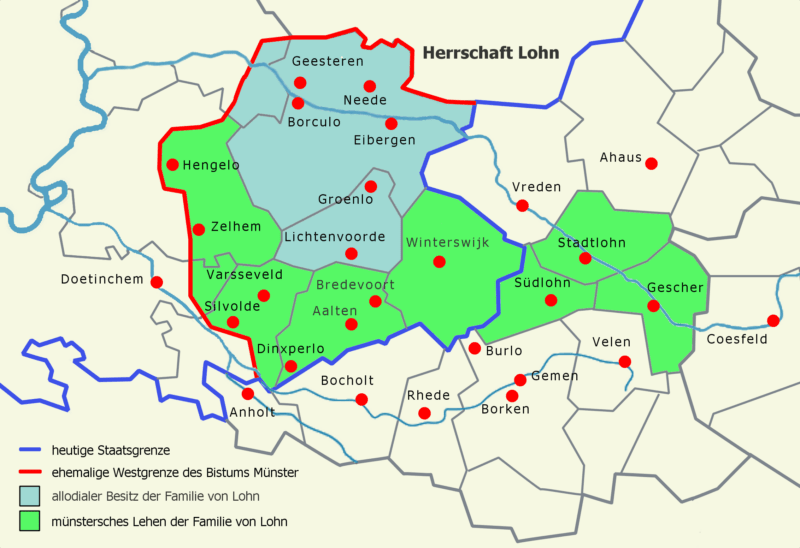
Anyone looking at the national borders around Aalten today will see a historical relic that leads straight back to the Middle Ages. The fact that this region belongs to Gelderland, rather than Germany, is due to geopolitical entanglements in the early fourteenth century. Until 1316, the border area was ruled by the Counts of Lohn. When Count Herman II of Lohn died childless that year, the county vanished, creating a power vacuum around the strategic castle of Bredevoort.
The post-Lohn vacuum
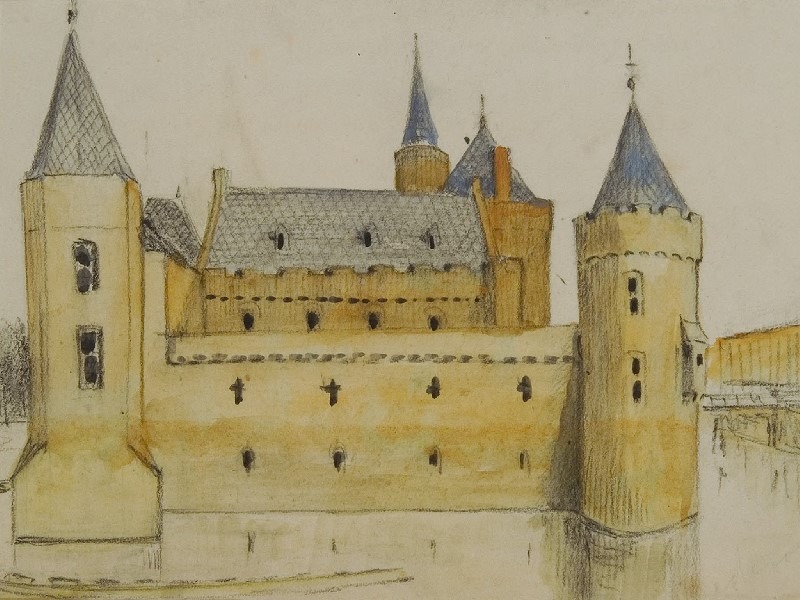
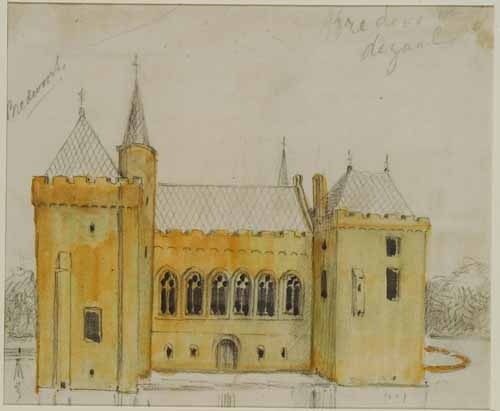
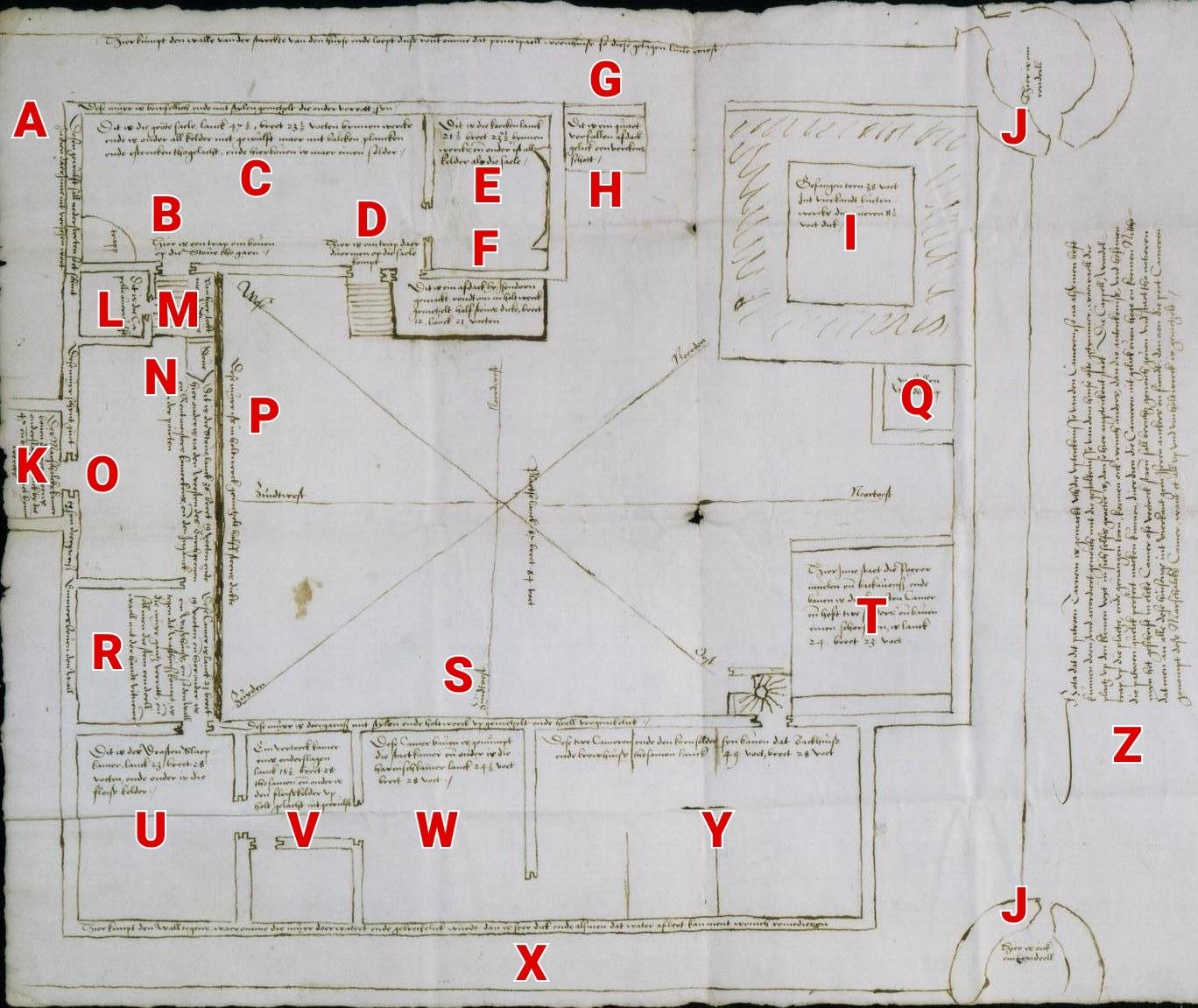
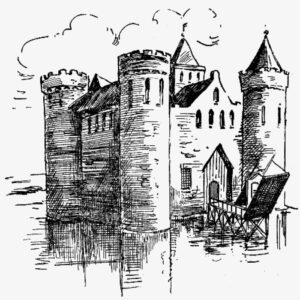
Even then, Bredevoort Castle was a flashpoint. Half of it had been held by the Bishopric of Münster since 1284; the other half was inherited by Otto of Ahaus in 1316. Troops belonging to Ludwig II, the Prince-Bishop of Münster, immediately occupied the entire castle. Although the Count of Guelders, Reinald I, also laid claim to the territory, he did not intervene militarily straight away. Instead, he concluded a three-year truce. It was only under his successor, Reinald II, that the conflict escalated into a true status war, with Guelders receiving active support from Count William III of Holland.
In the summer of 1322, Reinald II managed to capture Bredevoort Castle in a surprise attack. To offset the expenses incurred, he marched through the Münster lands with 700 knights and infantry, plundering as they went. This heralded a ruthless four-year guerrilla war.
Sleeping knights and a captured bishop
The conflict was characterised by lightning raids and heavy casualties. One of the most remarkable confrontations took place in March 1323 near the town of Dülmen. A military unit from Borken, supporting the Bishop of Münster, surprised the Guelders army while the knights were asleep. The Borken forces deliberately killed the knights’ horses. Encased in their heavy armour, the Guelders warriors were virtually defenceless without their mounts; 86 knights and squires were killed, and a hundred knights were captured for ransom.
However, the tables turned quickly. In May 1323, Prince-Bishop Ludwig II of Münster himself was captured by Engelbert II van der Mark, an ally of Guelders. The bishop was only released in November of that year, following the payment of an astronomical ransom of 5,000 silver marks.
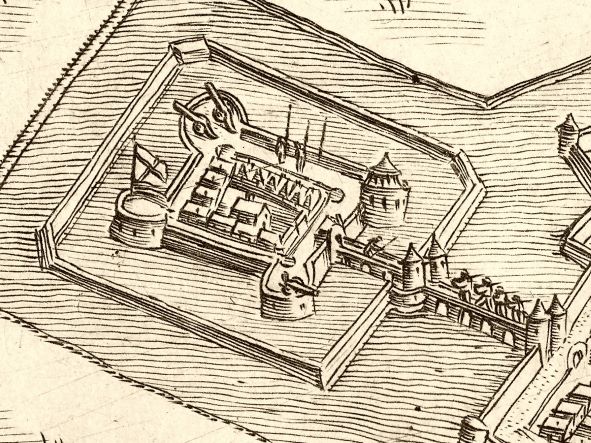
The peace that followed was short-lived. As soon as the bishop was free, he recaptured Bredevoort. By 1324, the armies faced each other once more near Coesfeld. It had become a full-blown European conflict: Reinald II had assembled an army of 7,000 cavalry, backed by the King of Bohemia, the Counts of Flanders, Holland, Artois, Van der Mark, Jülich, and Van den Bergh, as well as the Bishops of Liège and Utrecht. Münster was supported by troops from Osnabrück, the Lords of Lippe, the Counts of Waldeck and Sayn, and a host of Frisians, Hessians, Thuringians, and Franks.
As the armies stood face-to-face near Coesfeld, a massive pitched battle loomed. However, King John of Bohemia and Count William III of Holland managed to persuade the sparring factions to reach a compromise, leading to the signing of a treaty on 1 September 1324. The Bishop of Utrecht subsequently delivered a binding, yet nuanced, arbitration on the claims in Deventer. Münster demanded that Guelders renounce its rights to Bredevoort, the Honborn jurisdiction, and the Reken estate. The Bishop of Utrecht ruled that both parties had to defer to the feudal overlord regarding Bredevoort. He was unable to rule on the remaining territories due to ancient feuds, though Münster was awarded 500 marks in damages.
Since this ruling did not resolve the underlying tensions, the war flared up again unabated in early 1325. This led to the brutal destruction of the Münster-held part of the town of Vreden by Guelders troops on 3 January 1325.
The Treaty of Wesel (1326)
By 1326, both sides were financially and militarily exhausted. Mediated by Count Dietrich of Cleves and his brother John, the parties reached a definitive agreement in the Hanseatic city of Wesel.
The peace terms dictated that Bredevoort Castle was permanently awarded to Reinald II of Guelders. In return, the Count of Guelders had to return the occupied Lordship of Bermentfelde (present-day Barnsfeld near Südlohn) to Münster, in exchange for 3,500 marks in compensation.
It was here that the decisive financial mechanism came into play: bankrupt from the earlier ransoms and years of warfare, the Bishopric of Münster could not afford to pay these 3,500 marks. As security (a pledge) for this sum, the bishop mortgaged the jurisdictions of Winterswijk, Aalten, and Dinxperlo, along with the corresponding county court (vrijgraafschap), to Guelders. On 28 June 1326, this official peace treaty was signed, co-sealed by the Guelders towns of Zutphen, Groenlo, Arnhem, and Emmerich.
The legacy of an outstanding debt
The treaty stipulated that Münster could redeem the pledge — and thus regain governance over the three parishes — at any time by repaying the mortgage sum to the magistrates (schepenen) of Wesel. However, over the following centuries, Münster never managed to raise the funds.
What began as a temporary mortgage thus became a permanent arrangement. The Lordship of Bredevoort remained permanently part of Guelders territory and later formed the Bailiwick (Ambt) of Bredevoort. The borders of these medieval jurisdictions are still visible today in the municipal boundaries of the eastern Achterhoek. An unredeemed debt from 1326 thus determined that the residents of Aalten, Winterswijk, and Dinxperlo are Gelderlanders today, and not Westphalians.
Sources
Archival Sources
- Erfgoedcentrum Achterhoek en Liemers (ECAL) – Archief Ambt Bredevoort
- Landesarchiv NRW Abteilung Westfalen
Digital Sources
- [Compas, T. / Mijn Gelderland] De geschiedenis van de Heerlijkheid Bredevoort. Available via: mijngelderland.nl
- [Genealogy.net] GenWiki: Amt Ahaus. Available via: genealogy.net
Printed Sources and Literature
- Arend, J.P. & Van Rees, O. (1840-1871). Algemeene geschiedenis des vaderlands, van de vroegste tijden tot op heden. Amsterdam: J.F. Schleijer.
- Nijhoff, I.A. (1830-1875). Gedenkwaardigheden uit de geschiedenis van Gelderland. Arnhem: Is. An. Nijhoff.
- Rabich, A. (2010). Die Regionalgeschichte von Dülmen und Umgebung. Dülmen: Laumann-Verlag.
- Schmidt, F. (1903). Die Bredevorter Fehde zwischen Geldern und Münster (1319-1326). Münster: Wulf.
- Scholz, K. (1995). Das Stift Alter Dom St. Pauli in Münster. Berlin/New York: Walter de Gruyter.
- Spaen la Lecq, W.A. van (1801-1805). Oordeelkundige inleiding tot de historie van Gelderland (4 delen). Utrecht: Wild en Altheer.
- Wisplinghoff, E. (1992). Germania Sacra: Historisch-statistische Beschreibung der Kirche des alten Reichs. Berlin/New York: Walter de Gruyter.