
27 October 1980
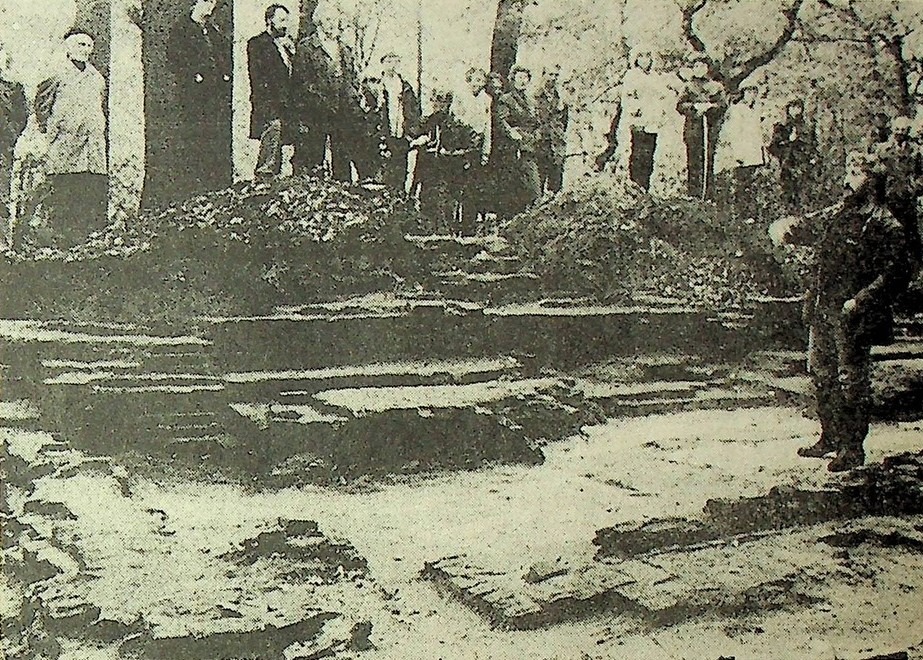
Mr H. Hofs from Varsseveld described the uncovering of the remains of an old ticheloven (brick kiln) in the hamlet of ’t Klooster near Bredevoort as a unique find. The kiln dates from 1708. The archaeological fieldwork group of the Antiquarian Working Community of Aalten, Dinxperlo, and Wisch (ADW) has been working for quite some time to carefully uncover the remains of the brick kiln.
The site of the old brick kiln was found partly thanks to Mr W. Lobeek, who used to live on the Götter farmstead. It was this former resident of ’t Klooster who was able to welcome at least eighty interested visitors to the excavation site on Saturday morning. The level of interest was so high that another excursion to ’t Klooster will be organised this coming Saturday. Mr R. Wartena, the regional archivist and an ADW board member, gave an introductory talk on what is known about the brick kiln.
It is virtually certain that this concerns the kiln of Matthijs van ’t Waliën. In return for his services – the planting of a large forest – he received, among other things, approval to build and operate a brick kiln here. The clay was allowed to be dug on the grounds of the monastery. Matthijs, however, was unable to meet his obligations. Many trees died immediately, and the severe winter of 1709 ensured that a third of the trees bit the dust.
Without ceremony
He saw no way to replant the trees, and in those days, protecting employment was not a priority. In 1719, Matthijs was forced to demolish the brick kiln within six months and to remove the bricks within a year. According to the agreement, the waarmanshuis (a worker’s or overseer’s cottage) had to remain standing. No trace of this cottage has been found so far. It is possible, however, that the Götter farmstead is the former waarmanshuis.
The kiln was indeed demolished, but apparently no further than ground level. The floor, with a surface area of 9 by 11 metres, and some small walls have remained, and the clay pits are also still clearly recognisable. Mr Hofs shared some details about the excavations, which the working group has been engaged in since July 1979. The investigations have yielded good results so far, even though they had hoped to find a few more traces in the immediate vicinity of the kiln.
The working group has mapped the remains and will cover them up again shortly. If they were to remain exposed to the open air, not much of them would be left.